Florida Last Will and Testament with All Property to Trust called a Pour Over Will
Understanding this form
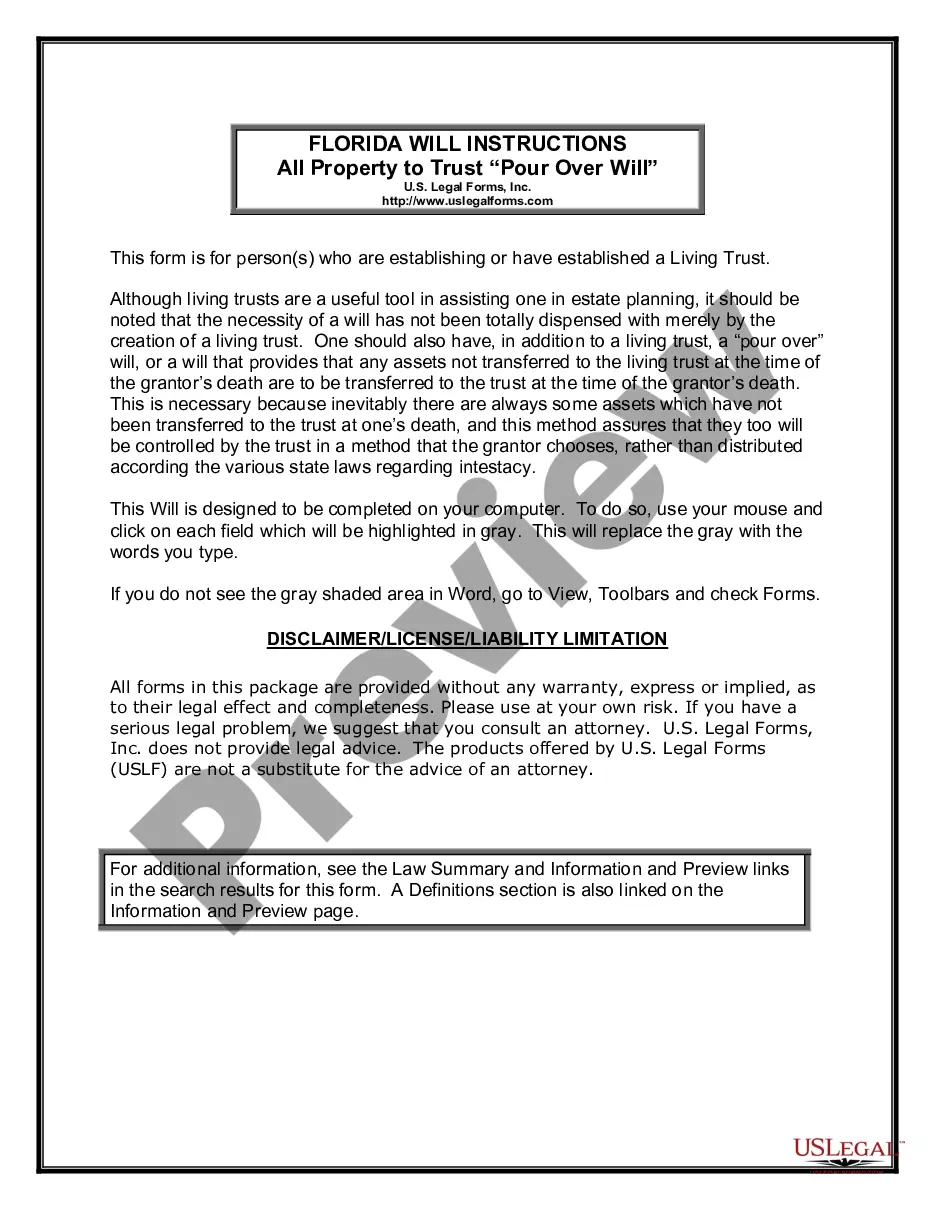
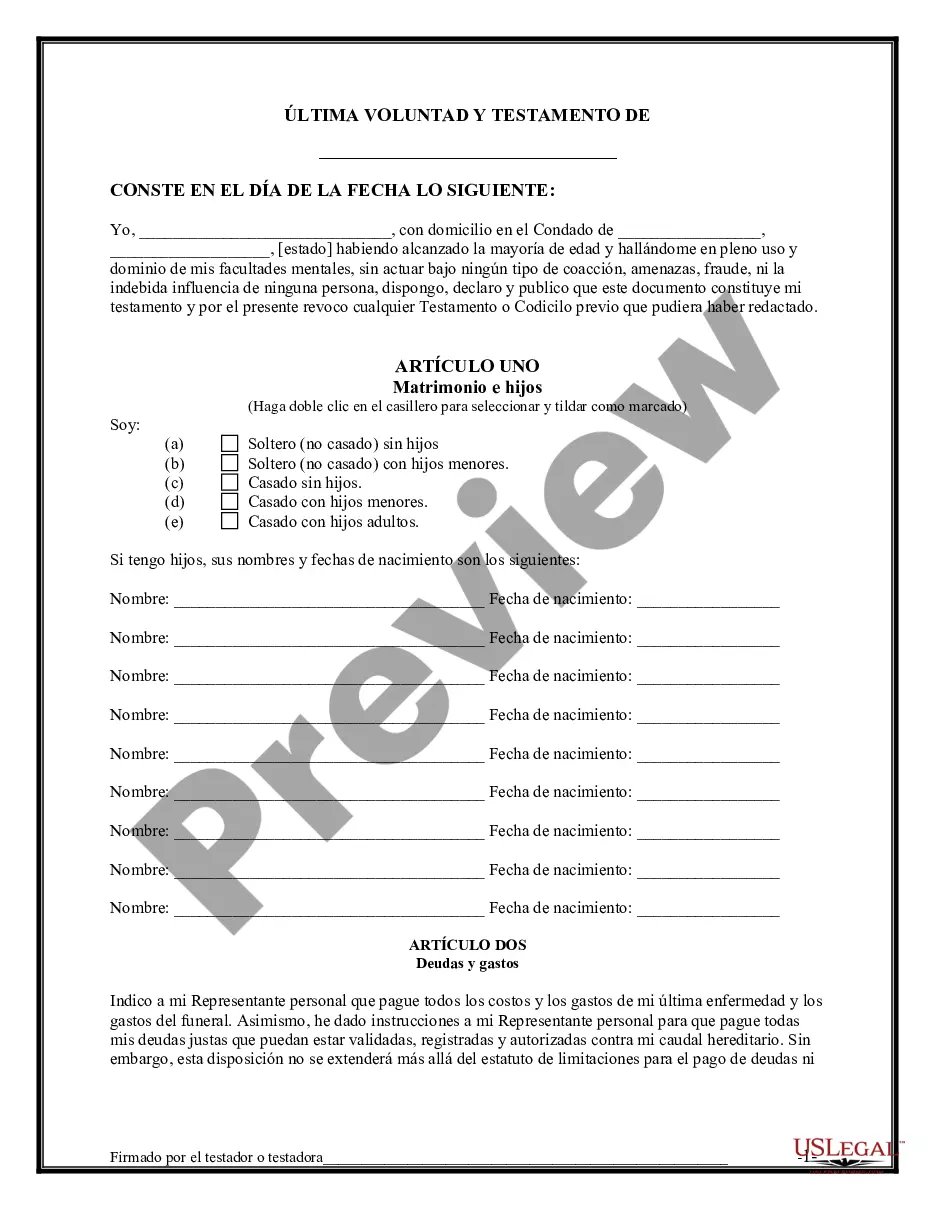
The Last Will and Testament with All Property to Trust, commonly known as a Pour Over Will, is a legal document that ensures all assets not already transferred to a trust are directed to that trust upon the testator's death. This form is particularly useful for individuals who have established or are establishing a Living Trust, as it complements the trust by handling any remaining property in a manner specified by the testator, rather than defaulting to state intestacy laws.
Key parts of this document
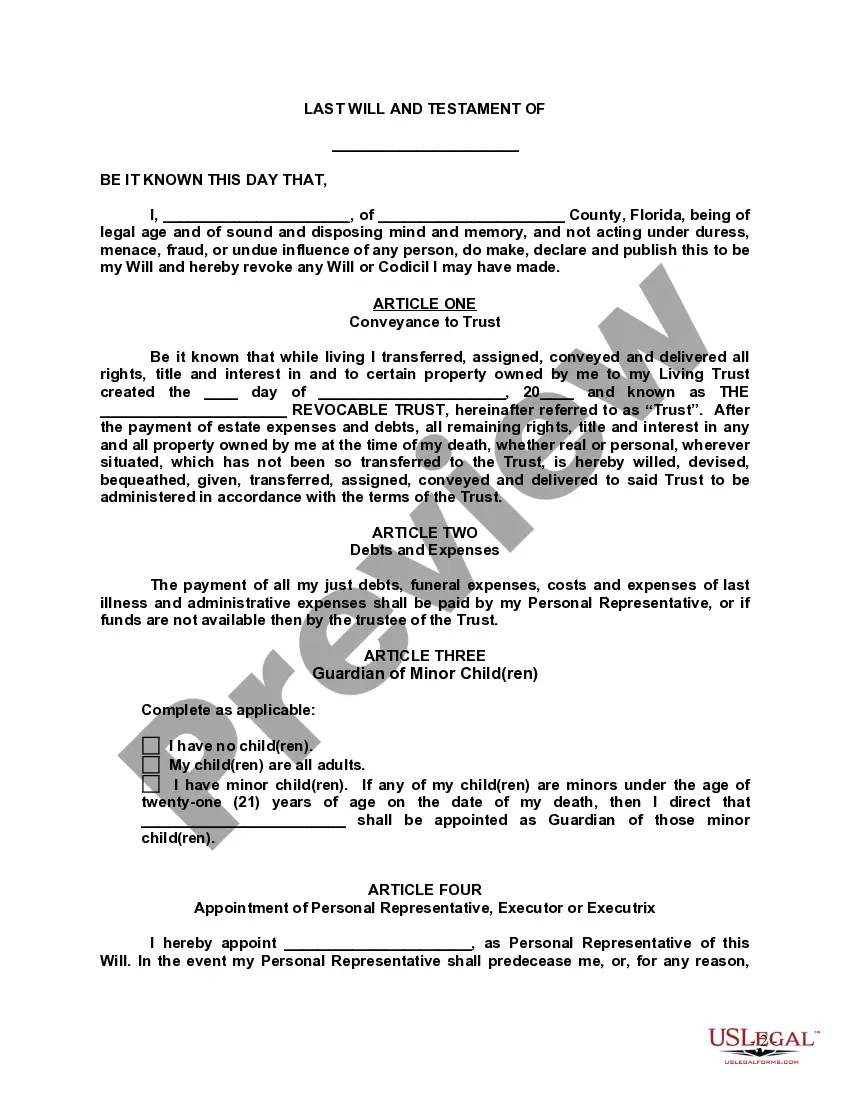
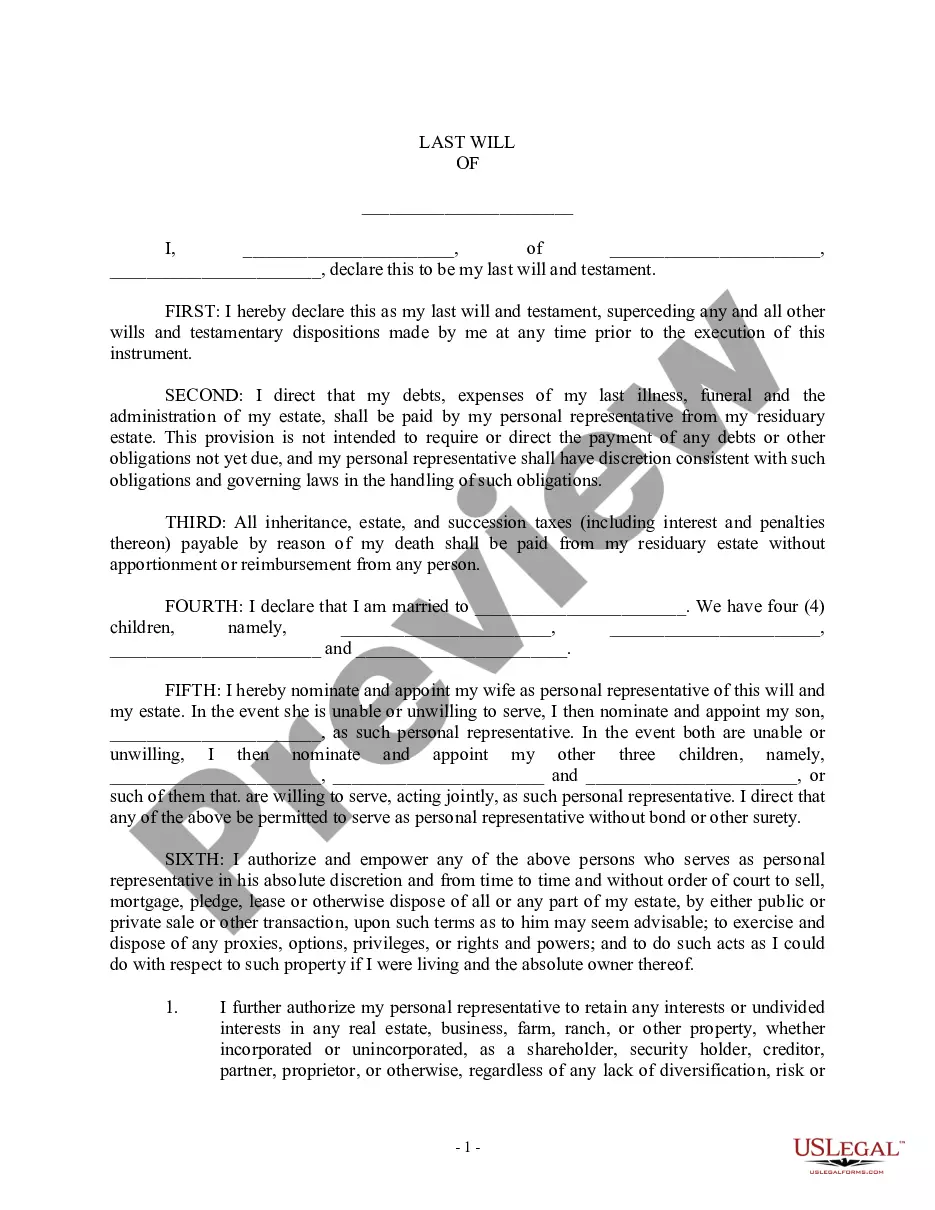
- Conveyance to Trust: Outlines the transfer of remaining property to the established trust upon the testator's death.
- Debts and Expenses: Addresses the payment of debts, funeral expenses, and administrative costs from the estate.
- Guardian of Minor Children: Provides space to appoint a guardian for any minor children.
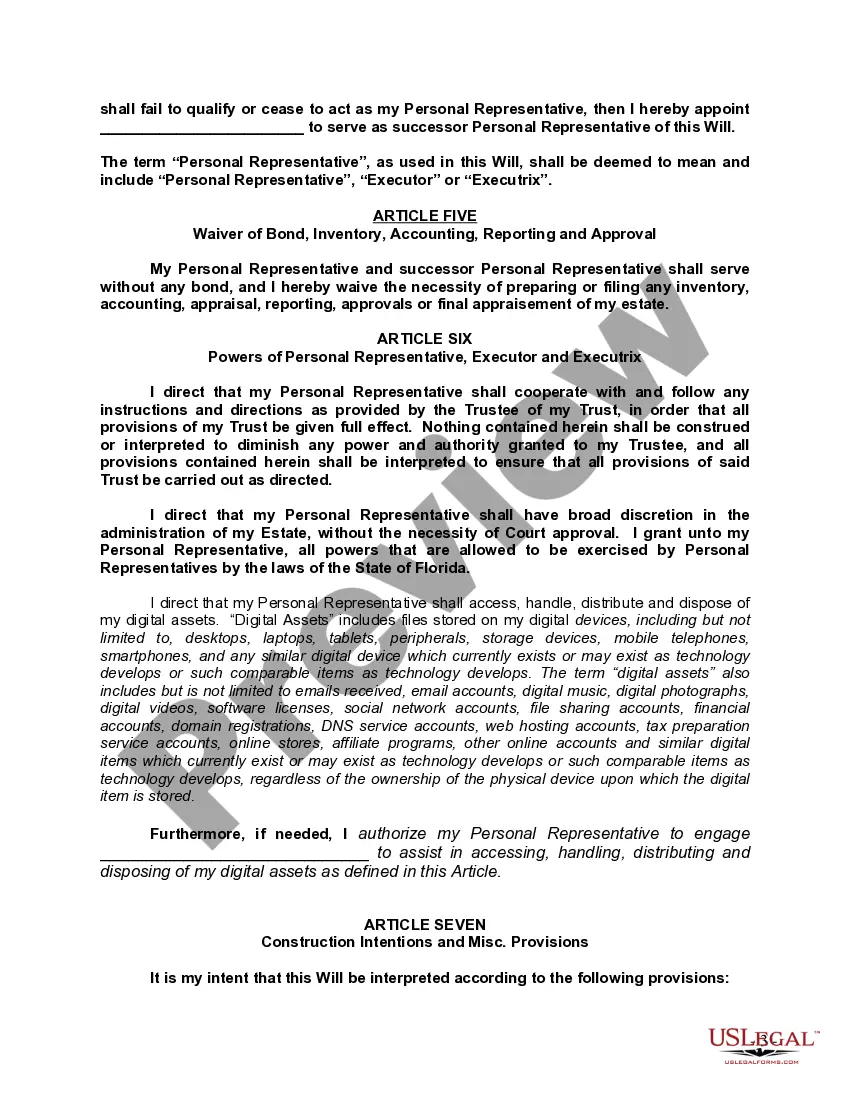
- Appointment of Personal Representative: Specifies the individual responsible for executing the will.
- Waiver of Bond: Allows the personal representative to serve without the need for a bond, simplifying the process.
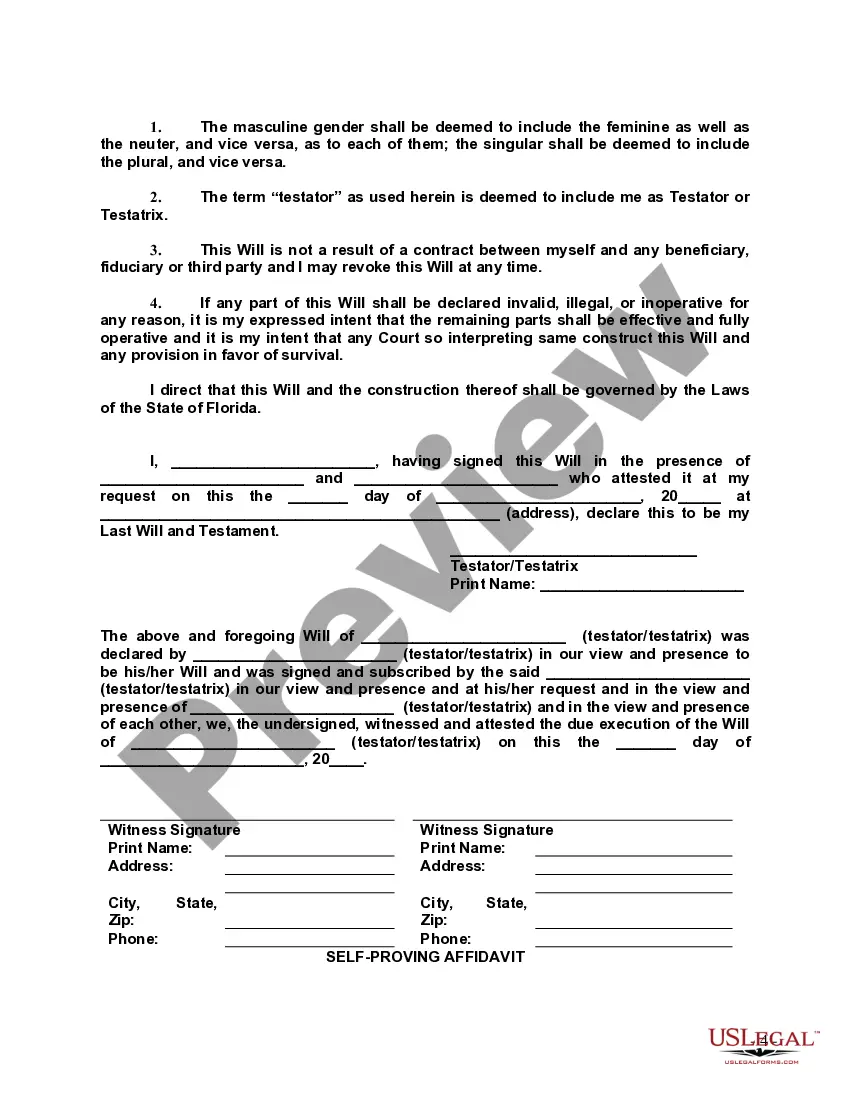
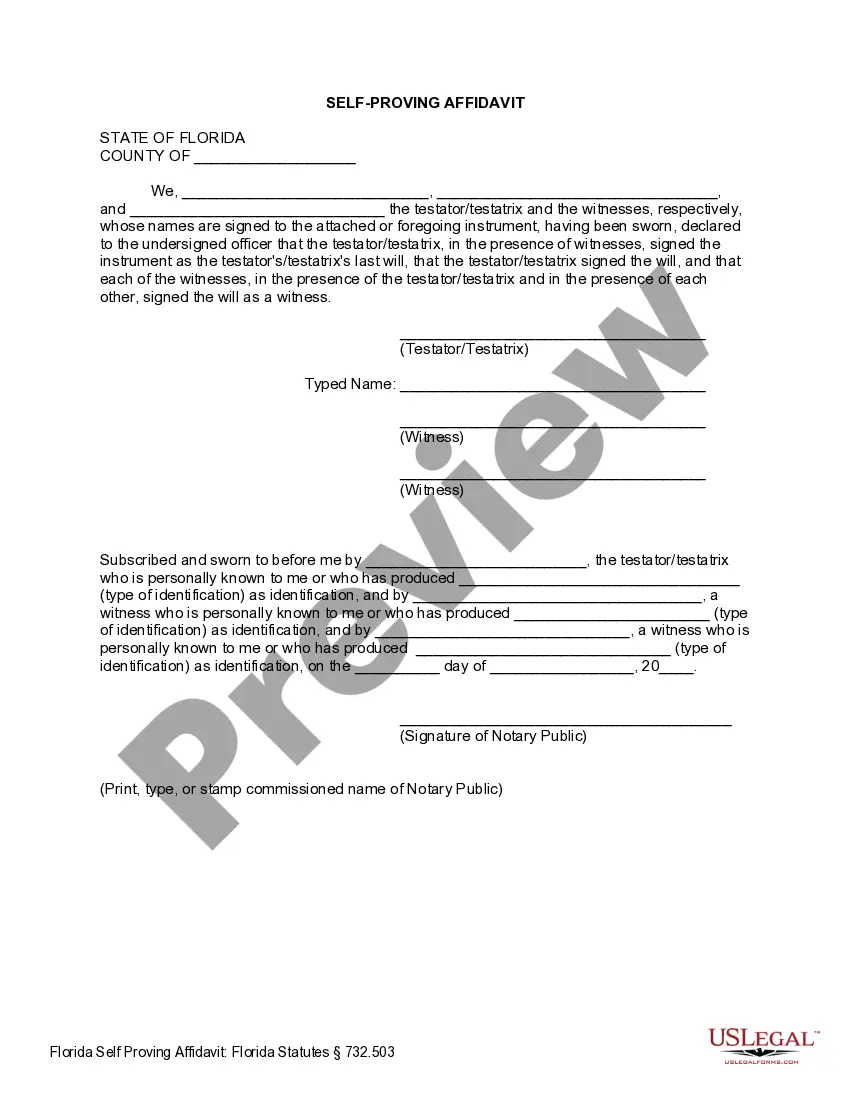
- Self-Proving Affidavit: Acknowledges the validity of the will through witness signatures, which may simplify probate proceedings.


When to use this document
This form should be used when an individual wants to create a comprehensive estate plan that includes a Living Trust, ensuring that any remaining assets at the time of death will automatically transfer to the trust. It is particularly relevant for those who wish to streamline the estate administration process and maintain control over the distribution of their assets, avoiding complications from state laws.
Who this form is for
- Individuals who have established or are in the process of setting up a Living Trust.
- Anyone who wants to ensure that all property, including that not formally transferred to the trust, is directed to the trust upon their death.
- People with minor children who need to designate guardians within their estate planning.
Instructions for completing this form
- Identify yourself as the testator and provide your complete legal name and address.
- Indicate the name of your Living Trust and the date it was established.
- Fill in details regarding any minor children and appoint a guardian if applicable.
- Select a personal representative to execute your will and provide their details.
- Ensure all fields are completed and signatures are obtained from witnesses and a notary public as required.
Does this form need to be notarized?
This form needs to be notarized to ensure legal validity. US Legal Forms provides secure online notarization powered by Notarize, allowing you to complete the process through a verified video call, available anytime.
Get your form ready online
Our built-in tools help you complete, sign, share, and store your documents in one place.
Make edits, fill in missing information, and update formatting in US Legal Forms—just like you would in MS Word.
Download a copy, print it, send it by email, or mail it via USPS—whatever works best for your next step.
Sign and collect signatures with our SignNow integration. Send to multiple recipients, set reminders, and more. Go Premium to unlock E-Sign.
If this form requires notarization, complete it online through a secure video call—no need to meet a notary in person or wait for an appointment.
We protect your documents and personal data by following strict security and privacy standards.

Make edits, fill in missing information, and update formatting in US Legal Forms—just like you would in MS Word.

Download a copy, print it, send it by email, or mail it via USPS—whatever works best for your next step.

Sign and collect signatures with our SignNow integration. Send to multiple recipients, set reminders, and more. Go Premium to unlock E-Sign.

If this form requires notarization, complete it online through a secure video call—no need to meet a notary in person or wait for an appointment.

We protect your documents and personal data by following strict security and privacy standards.
Mistakes to watch out for
- Failing to transfer all assets to the trust before death, which can complicate the estate settlement process.
- Not designating a guardian for minor children, leading to potential disputes or delays.
- Neglecting to have the will witnessed or properly notarized, which can result in challenges to its validity.
Benefits of completing this form online
- Convenience of completing the form from anywhere at any time.
- Editability allows users to update information easily as circumstances change.
- Access to attorney-drafted forms ensures legal compliance and completeness.
Legal use & context
- This will is a legally binding document that directs the distribution of property upon death.
- Pour Over Wills are commonly used in conjunction with Living Trusts to ensure a smooth transfer of assets.
Looking for another form?
Form popularity
FAQ
A Florida Last Will and Testament with All Property to Trust called a Pour Over Will does not avoid probate. Instead, it directs the distribution of your assets into a trust once the will has gone through probate. This means that while the assets will eventually be transferred to the trust, the probate process must take place first. Utilizing platforms like USLegalForms can help you prepare your pour-over will efficiently, ensuring your estate planning is robust and effective.
In Florida, certain types of property are exempt from probate, which can streamline estate management. For example, assets held in a living trust, joint tenancy accounts, and those with designated beneficiaries do not require probate. Additionally, personal property valued under a specific threshold, along with certain financial accounts, can also avoid probate. This exemption can make estate planning easier when utilizing a Florida Last Will and Testament with All Property to Trust called a Pour Over Will.
A drawback of a Florida Last Will and Testament with All Property to Trust called a Pour Over Will is that it does not provide immediate distribution of assets. Instead, the assets must go through probate before they transfer to the trust. This process can take time and may lead to delays in accessing the assets. Therefore, while a pour-over will helps ensure that your assets end up in your trust, the probate process can be a potential downside.
over trust in Florida is a legal arrangement designed to transfer your assets into a trust automatically upon your death. This trust becomes effective when you have a valid Florida Last Will and Testament with All Property to Trust called a Pour Over Will. By using a pourover trust, you can simplify the management of your estate and ensure that your assets are handled according to your wishes. If you need assistance in creating these documents, U.S. Legal Forms provides valuable resources that can help you navigate this important process.
over will works handinhand with a trust to provide a clear plan for your assets after you pass away. When you create a Florida Last Will and Testament with All Property to Trust called a Pour Over Will, any assets not already in your trust will be transferred to it upon your death. This ensures that your estate is managed according to the terms you specified in your trust, avoiding the complexities of probate for most assets. Using this combination helps streamline the process and enhances the efficiency of your estate plan.
The purpose of a pour over trust is to ensure that your assets are efficiently transferred into the trust upon your passing. This type of trust simplifies the estate planning process by making sure all of your property goes directly into the trust, assisting in the management and distribution of your estate. Essentially, it acts as a safety net that captures any assets not previously placed in the trust while you were alive, aligning with your intentions laid out in your Florida Last Will and Testament with All Property to Trust called a Pour Over Will. This creates a seamless transition of your estate to your beneficiaries.
A notarized will does not need to be probated.When a person dies leaving behind a will that is not notarized, the law requires that its validity be ascertained by a notary or by a court. Similarly, any non-notarized modification made to a will must be probated, whether the will is notarized or not.
A note about wills: Whether or not probate will be necessary, Florida law requires that anyone who has possession of a will must file it with the local circuit court within 10 days of learning of the death. If a probate court proceeding is necessary, the court will determine whether or not the will is valid.
Your will must be written. Your will must be witnessed and notarized in the special manner provided by law for wills. It is necessary to follow exactly the formalities required by Florida law for the execution of a will. To be effective, your will must be proved valid in and allowed by the probate court.
Make a List of All Your Assets. Be sure to include make a list of your assets that includes everything you own. Find the Paperwork for Your Assets. Choose Beneficiaries. Choose a Successor Trustee. Choose a Guardian for Your Minor Children.