Florida Notice of Default on Residential Lease
Overview of this form
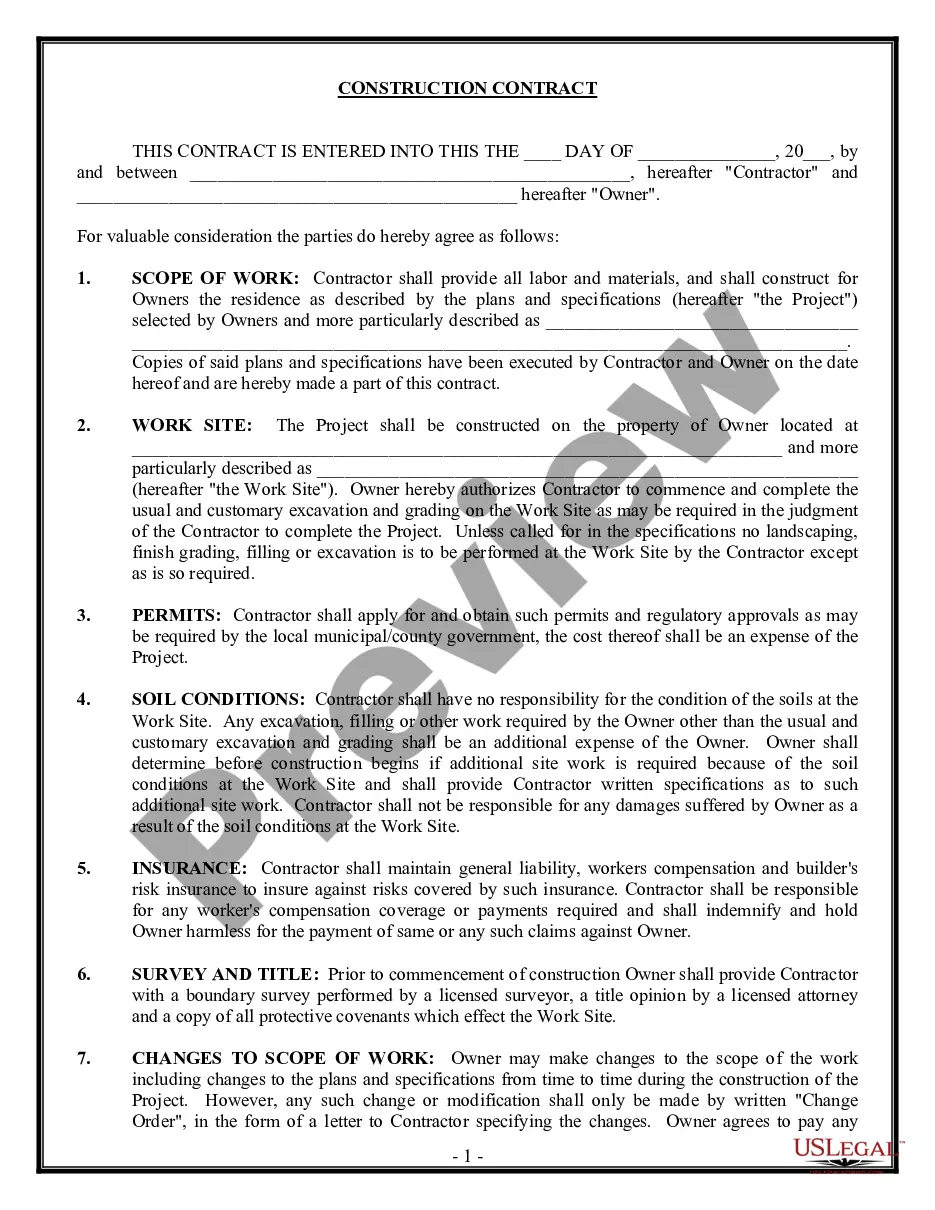
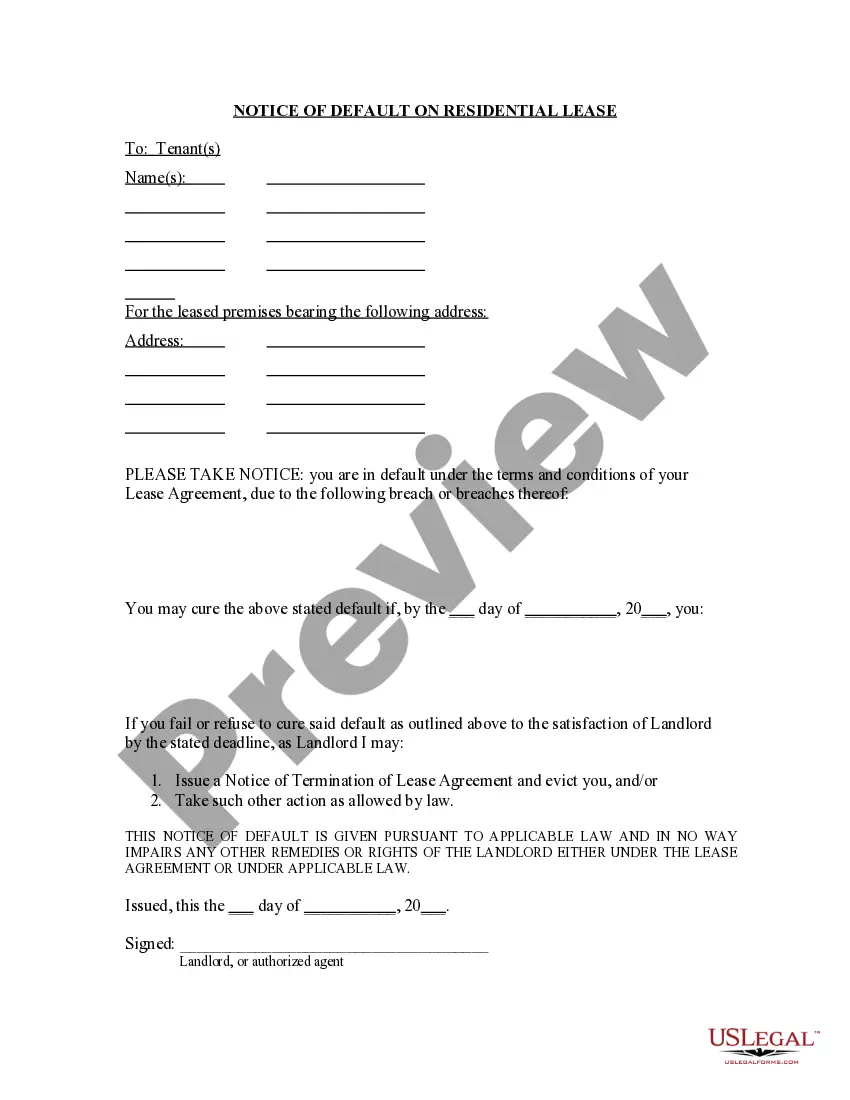
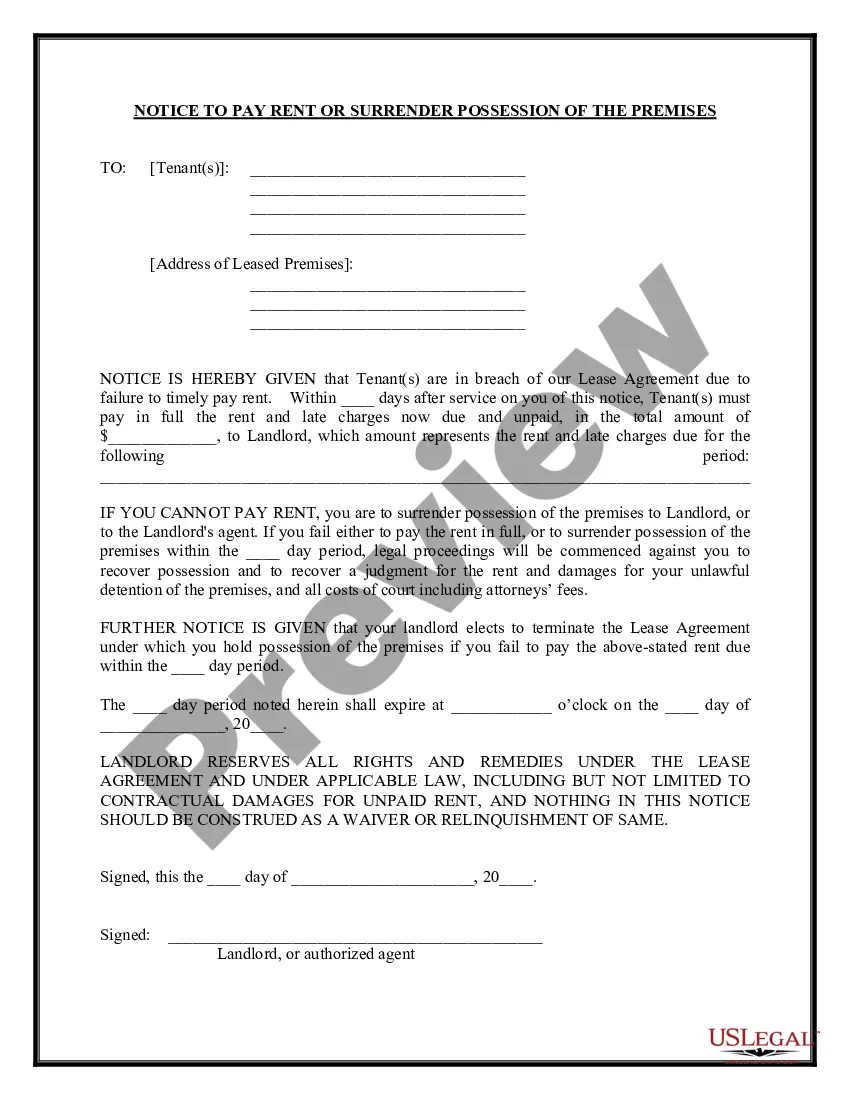
The Notice of Default on Residential Lease is a legal document used by landlords to inform tenants that they are in violation of their lease agreement, typically for failing to pay rent. This form outlines specific reasons for the default and sets a deadline for the tenant to rectify the situation. Unlike a Notice of Termination, which signifies the end of the lease, this notice serves as a formal warning that corrective action is necessary to avoid eviction proceedings.
Key parts of this document
- Identification of the parties: Names and contact information of the landlord and tenant.
- Specific reasons for default: Clearly outlines the failure, typically related to payment issues.
- Deadline to cure the default: Specifies the time frame the tenant has to address the issue.
- Consequences of non-compliance: Indicates potential legal actions the landlord may take, including eviction.
- Signature section: Landlord or authorized agent's signature to validate the notice.


When this form is needed
Use the Notice of Default on Residential Lease when a tenant has failed to pay rent or has breached specific terms of the lease agreement. This form is crucial for landlords who wish to provide formal notice to tenants prior to taking further legal actions, including eviction. It is particularly relevant when the landlord wants to document the tenant's default and ensure compliance with local laws regarding eviction processes.
Intended users of this form
- Residential landlords: Anyone who rents out property to tenants and needs to establish grounds for eviction.
- Property management companies: Professionals managing rental properties on behalf of landlords.
- Real estate agents: Agents assisting landlords in managing leases and addressing tenant issues.
- Tenants receiving notice: Individuals who need clarity on their obligations and potential remedies when they receive this form from their landlord.
Steps to complete this form
- Identify the parties: Enter the landlord's and tenant's names and addresses.
- State the reason for default: Clearly describe the default, such as unpaid rent or other lease violations.
- Set a deadline: Specify the date by which the tenant must correct the default.
- Detail consequences: Outline the actions the landlord may take if the tenant does not comply.
- Sign the notice: The landlord or authorized agent must sign and date the notice for it to be valid.
Notarization guidance
In most cases, this form does not require notarization. However, some jurisdictions or signing circumstances might. US Legal Forms offers online notarization powered by Notarize, accessible 24/7 for a quick, remote process.
Get your form ready online
Our built-in tools help you complete, sign, share, and store your documents in one place.
Make edits, fill in missing information, and update formatting in US Legal Forms—just like you would in MS Word.
Download a copy, print it, send it by email, or mail it via USPS—whatever works best for your next step.
Sign and collect signatures with our SignNow integration. Send to multiple recipients, set reminders, and more. Go Premium to unlock E-Sign.
If this form requires notarization, complete it online through a secure video call—no need to meet a notary in person or wait for an appointment.
We protect your documents and personal data by following strict security and privacy standards.
Make edits, fill in missing information, and update formatting in US Legal Forms—just like you would in MS Word.
Download a copy, print it, send it by email, or mail it via USPS—whatever works best for your next step.
Sign and collect signatures with our SignNow integration. Send to multiple recipients, set reminders, and more. Go Premium to unlock E-Sign.
If this form requires notarization, complete it online through a secure video call—no need to meet a notary in person or wait for an appointment.
We protect your documents and personal data by following strict security and privacy standards.
Common mistakes to avoid
- Failing to specify the reason for default clearly.
- Not providing a sufficient deadline for tenants to cure the default.
- Omitting the signature of the landlord or authorized agent.
- Not keeping a copy of the notice for personal records.
Advantages of online completion
- Convenience: Downloadable and easily accessible from any device at any time.
- Editability: Tailor the form to your specific situation and needs before printing.
- Reliability: Form is drafted by licensed attorneys, ensuring it meets legal standards.
Looking for another form?

Form popularity
FAQ
To give notice to a tenant to vacate in Florida, you should prepare a written notice that includes the reason for eviction and the deadline for the tenant to leave. Ensure the notice adheres to Florida law, which typically requires a specific number of days' notice based on the situation. Utilizing a proper Florida Notice of Default on Residential Lease can clarify the terms and streamline the process of vacating the rental property.
A notice of default in Florida serves as a formal notification to a tenant regarding their failure to comply with a lease agreement. This notice outlines the specific defaults, such as unpaid rent, and provides the tenant a chance to remedy the situation. Understanding the implications and timeline of a Florida Notice of Default on Residential Lease is crucial for maintaining a positive landlord-tenant relationship.
Once a motion for default is filed in a Florida eviction case, the court will review the motion and may grant a default judgment. This judgment can lead to an order for the tenant to vacate the premises. Following this process after receiving a Florida Notice of Default on Residential Lease can significantly expedite the eviction procedure and ensure your rights as a landlord are upheld.
To vacate a default in Florida, a party generally must demonstrate a valid reason for their failure to respond and show that their case has merit. The court usually considers factors like neglect, surprise, or inadvertence when reviewing such motions. If you face a Florida Notice of Default on Residential Lease, it's important to act promptly, as vacating a default can alleviate further legal consequences.
In Florida, a motion for clerk's default can be filed using Bar Form 76 or Form 77, depending on the case specifics. These forms assist landlords in obtaining a default judgment against a tenant who has not responded to a notice or complaint. Understanding how to correctly utilize these forms can streamline your process following a Florida Notice of Default on Residential Lease.
A motion for clerk's default in Florida is a formal request made to the court when a defendant fails to respond to a lawsuit, such as an eviction case. This motion allows the landlord to seek a default judgment due to the lack of response from the tenant. In the context of a Florida Notice of Default on Residential Lease, this step is essential to move forward with the eviction proceedings if the tenant does not take action.
Defaulting on a lease typically occurs when the tenant fails to fulfill the terms outlined in the rental agreement. Common causes include not paying rent, violating lease terms, or damaging the property. If you find yourself in this situation, it is crucial to understand the implications of a Florida Notice of Default on Residential Lease. This notice informs the tenant of their default status and may initiate the eviction process.
In Florida, the amount of notice required to terminate a lease often depends on the lease terms and the duration of tenancy. Generally, landlords must provide a written notice, which can vary from three days to 60 days, based on the type of lease agreement. If you face challenges regarding lease termination, a Florida Notice of Default on Residential Lease can help clarify your options. Utilizing the resources available at USLegalForms can streamline this process and provide essential guidance.
In Florida, the notice period to vacate can depend on the specifics of the lease and the reason for the notice. Generally, landlords must provide a 3-day notice for non-payment of rent and a 30-day notice for other breaches. A Florida Notice of Default on Residential Lease often serves as a precursor to these notices, giving the tenant a chance to correct the issue before facing eviction.
An example of a default clause might state that if rent is not received by the due date, the tenant will be in default. This clause can specifically require the landlord to send a Florida Notice of Default on Residential Lease if the tenant does not remedy the default within a certain period. Such clarity helps both parties navigate potential disputes more effectively.