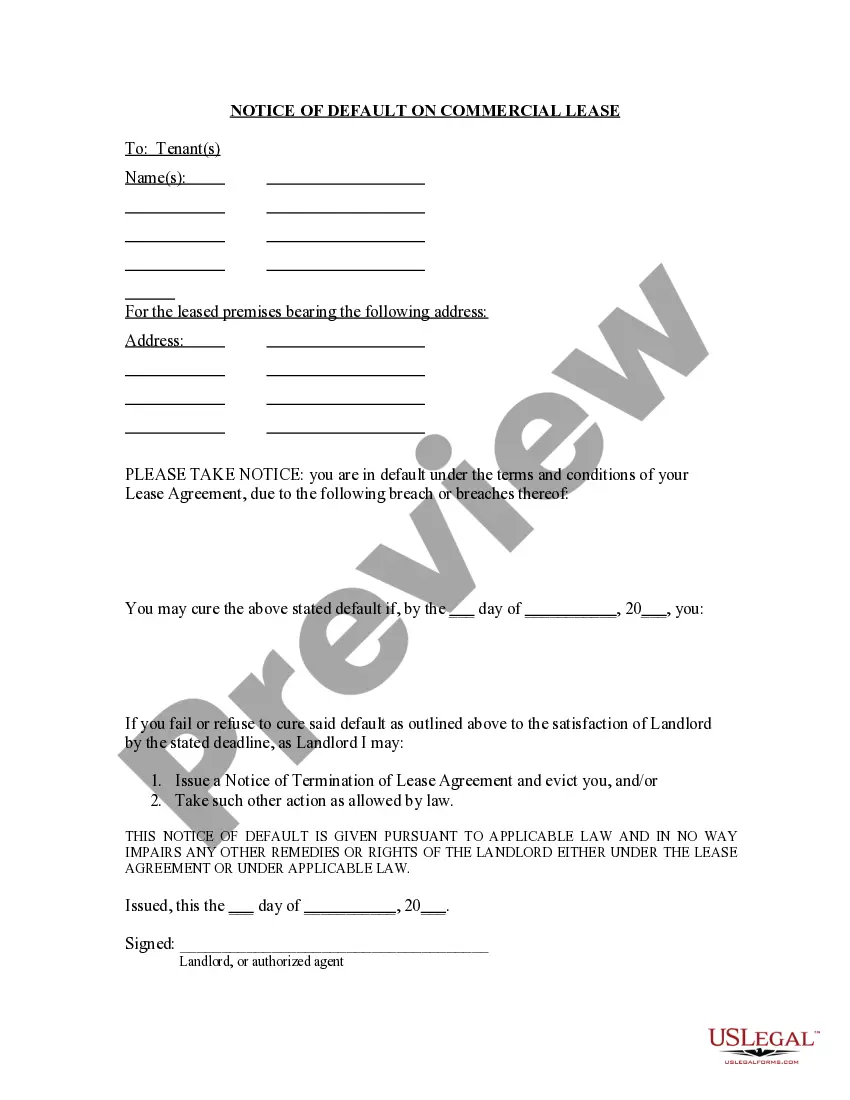
Florida Letter from Landlord to Tenant as Notice of Default on Commercial Lease
What this document covers
This Letter from Landlord to Tenant as Notice of Default on Commercial Lease is a formal notice informing a tenant of breaches in their lease agreement. This document specifically outlines the defaults and provides a deadline for the tenant to remedy the situation. It is essential for landlords to issue this notice before pursuing eviction or taking any other legal action, ensuring compliance with applicable laws. Understanding this form can help both landlords and tenants navigate potential conflicts effectively.
What’s included in this form
- Identification of the landlord and tenant involved in the lease agreement.
- A clear description of the specific breaches or defaults by the tenant.
- A stated deadline by which the tenant must remedy the defaults.
- Notification of potential actions the landlord may take if the issues are not resolved.
- Signature of the landlord or an authorized agent to validate the notice.


When to use this form
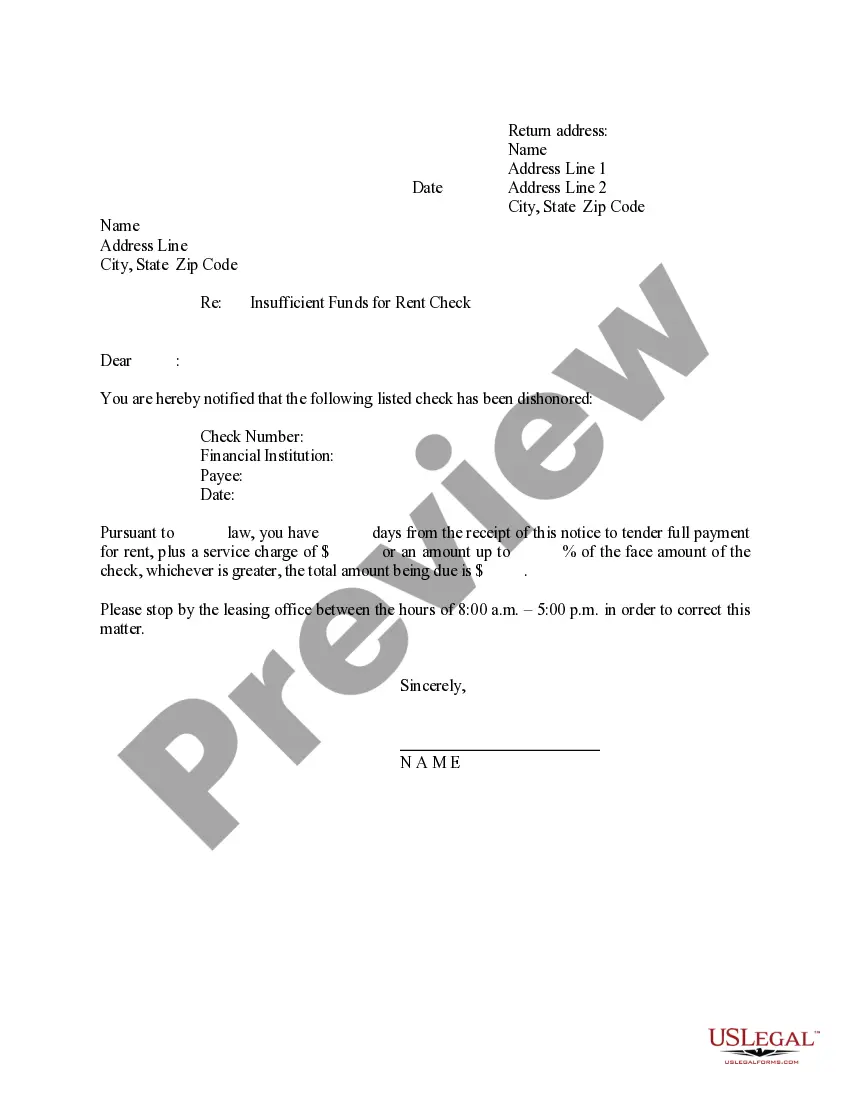
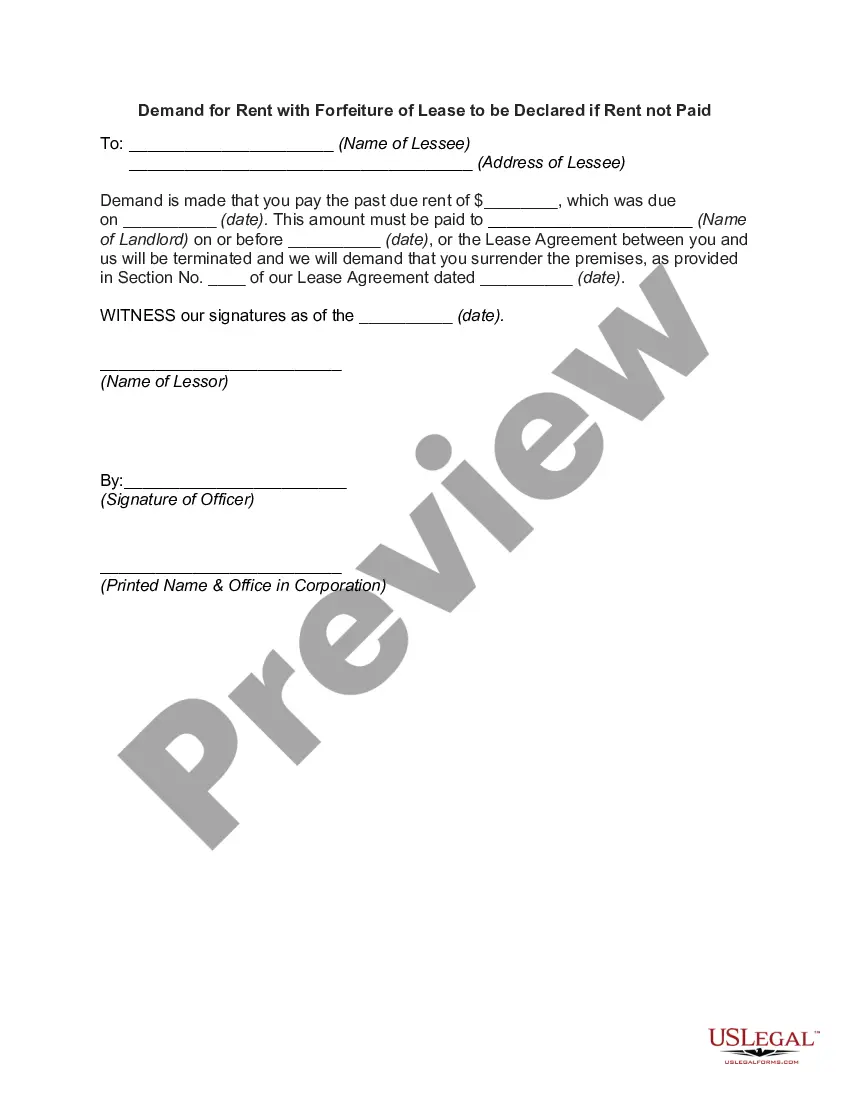
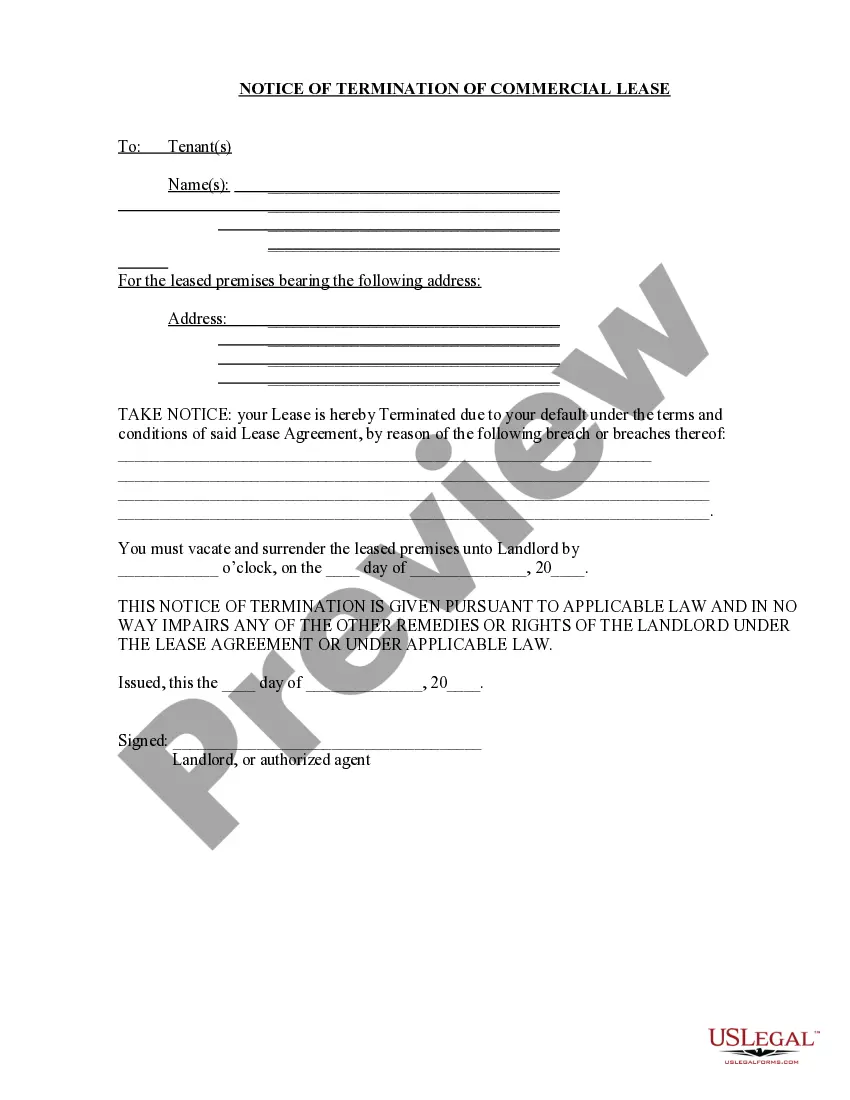
This form should be used when a tenant fails to comply with the terms of their commercial lease, such as not paying rent on time or breaching other significant terms of the agreement. It is a crucial step for landlords before initiating eviction proceedings or claiming security deposits to cover outstanding rent or damages.
Intended users of this form
- Landlords who are managing commercial properties.
- Property management companies acting on behalf of landlords.
- Tenants wishing to understand their rights and obligations upon receiving such a notice.
Instructions for completing this form
- Identify the parties involved by entering the landlord's and tenant's names and addresses.
- Specify the breaches in the lease agreement that warrant this notice.
- Set a clear deadline by which the tenant must address the defaults.
- Include a statement of what actions may follow if the tenant does not cure the defaults.
- Sign and date the form to finalize the notice.
Does this form need to be notarized?
This form does not typically require notarization to be legally valid. However, some jurisdictions or document types may still require it. US Legal Forms provides secure online notarization powered by Notarize, available 24/7 for added convenience.
Get your form ready online
Our built-in tools help you complete, sign, share, and store your documents in one place.
Make edits, fill in missing information, and update formatting in US Legal Forms—just like you would in MS Word.
Download a copy, print it, send it by email, or mail it via USPS—whatever works best for your next step.
Sign and collect signatures with our SignNow integration. Send to multiple recipients, set reminders, and more. Go Premium to unlock E-Sign.
If this form requires notarization, complete it online through a secure video call—no need to meet a notary in person or wait for an appointment.
We protect your documents and personal data by following strict security and privacy standards.

Make edits, fill in missing information, and update formatting in US Legal Forms—just like you would in MS Word.

Download a copy, print it, send it by email, or mail it via USPS—whatever works best for your next step.

Sign and collect signatures with our SignNow integration. Send to multiple recipients, set reminders, and more. Go Premium to unlock E-Sign.

If this form requires notarization, complete it online through a secure video call—no need to meet a notary in person or wait for an appointment.

We protect your documents and personal data by following strict security and privacy standards.
Typical mistakes to avoid
- Failing to specify the exact breaches, which can lead to confusion.
- Not providing a reasonable timeline for the tenant to remedy the default.
- Neglecting to sign the notice, making it invalid.
Benefits of completing this form online
- Convenient access to legal templates from anywhere.
- Editable format allows for quick adjustments to fit specific situations.
- Reliability of forms drafted by licensed attorneys, ensuring legal accuracy.
Legal use & context
- The notice must comply with state laws governing landlord-tenant relationships.
- Proper use of this form can prevent legal claims of improper eviction.
- Ensures that tenants are aware of their obligations and the consequences of non-compliance.
Summary of main points
- The form acts as a formal notification of lease default.
- It allows tenants an opportunity to correct their breaches.
- Proper completion is necessary for legal enforceability.
- State-specific requirements should be reviewed for compliance.
Looking for another form?
Form popularity
FAQ
Locking out a commercial tenant in Florida requires adherence to legal procedures. A landlord must issue a Florida Letter from Landlord to Tenant as Notice of Default on Commercial Lease and give the tenant an opportunity to rectify the issue before taking lockout action. This process protects both parties and ensures fair treatment.
To evict a commercial tenant in Florida, landlords must follow specific legal steps. This process typically starts with giving a Florida Letter from Landlord to Tenant as Notice of Default on Commercial Lease, allowing the tenant to address the default. If the tenant does not rectify the situation, landlords may proceed with filing for eviction through the court.
In Florida, a commercial landlord may not lock out a tenant without a court order. Landlords must first provide a Florida Letter from Landlord to Tenant as Notice of Default on Commercial Lease and allow the tenant a chance to resolve the issue. This approach ensures compliance with state laws and protects the landlord from potential legal repercussions.
Generally, a landlord cannot lock out a commercial tenant without following legal procedures. Doing so could lead to legal liability for the landlord. In such situations, landlords should properly issue a Florida Letter from Landlord to Tenant as Notice of Default on Commercial Lease before taking any drastic measures.
A notice of default on a commercial lease is a formal notification to a tenant that they are in breach of the lease agreement. It serves as a critical step before eviction proceedings can begin. Landlords often use a Florida Letter from Landlord to Tenant as Notice of Default on Commercial Lease to ensure all legal obligations are met before further action.
When tenants default on a commercial lease, landlords have several remedies available. These may include terminating the lease, pursuing eviction, or seeking monetary damages for unpaid rent. Typically, landlords will issue a Florida Letter from Landlord to Tenant as Notice of Default on Commercial Lease to give formal notice and outline the next steps.
In Florida, a landlord can take strong action to evict a commercial tenant involved in illegal activity. The landlord must follow the proper legal process, ensuring the tenant receives a Florida Letter from Landlord to Tenant as Notice of Default on Commercial Lease, stating the illegal activity. By documenting this, landlords can fortify their case for eviction in court.
A commercial lease default in Florida occurs when a tenant fails to fulfill their obligations under the lease agreement. This may include missing rent payments or violating terms specified in the lease. When such defaults happen, the landlord may issue a Florida Letter from Landlord to Tenant as Notice of Default on Commercial Lease to formally notify the tenant of the issue.
A notice of default letter to a tenant is a crucial communication from the landlord, signaling that the tenant has not complied with lease terms. The Florida Letter from Landlord to Tenant as Notice of Default on Commercial Lease typically outlines the specific actions or payments that are required to rectify the situation. This letter is essential for documenting the landlord's concerns and protecting their legal rights. If you find yourself in this situation, seeking advice from professionals can provide clarity on your next steps.
A default notice letter is a formal communication from a landlord to a tenant stating that they are in breach of the lease agreement. Specifically, a Florida Letter from Landlord to Tenant as Notice of Default on Commercial Lease serves to inform tenants of specific lease violations. This letter outlines the issues that need to be resolved, often regarding payment or maintenance requirements. Understanding the contents of this letter can help you respond effectively.