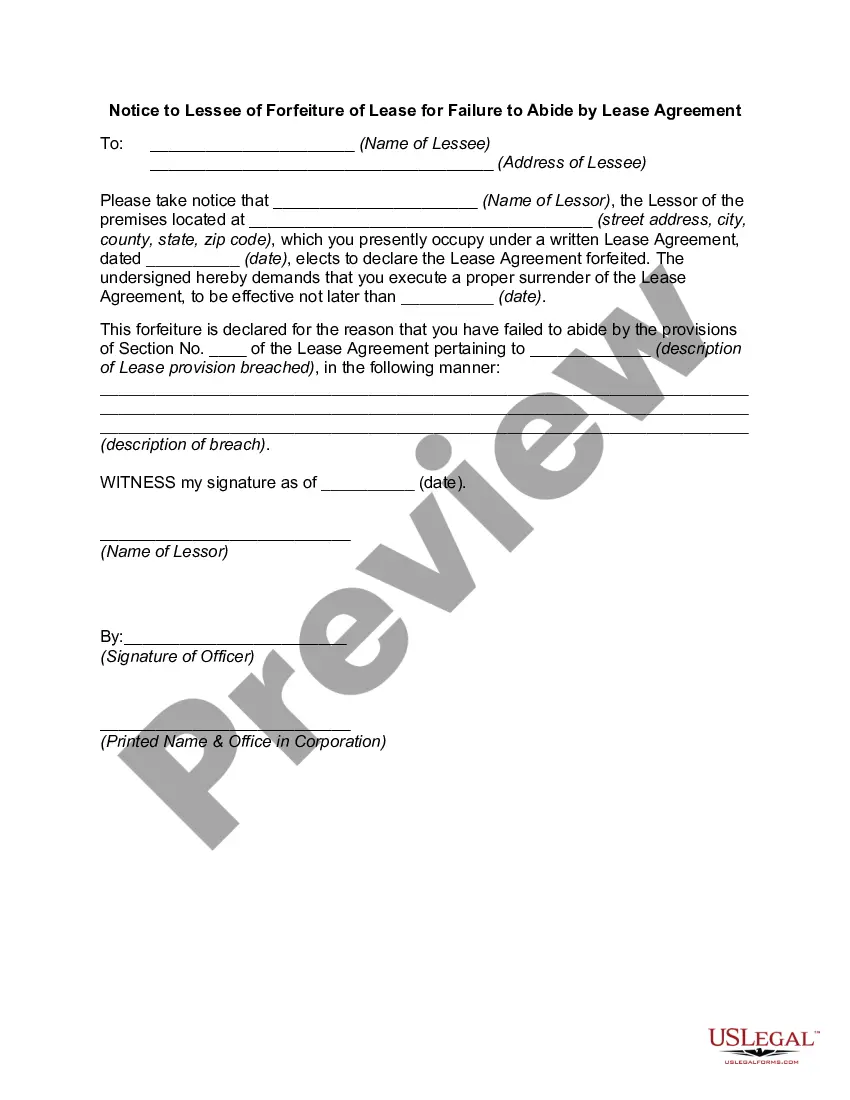
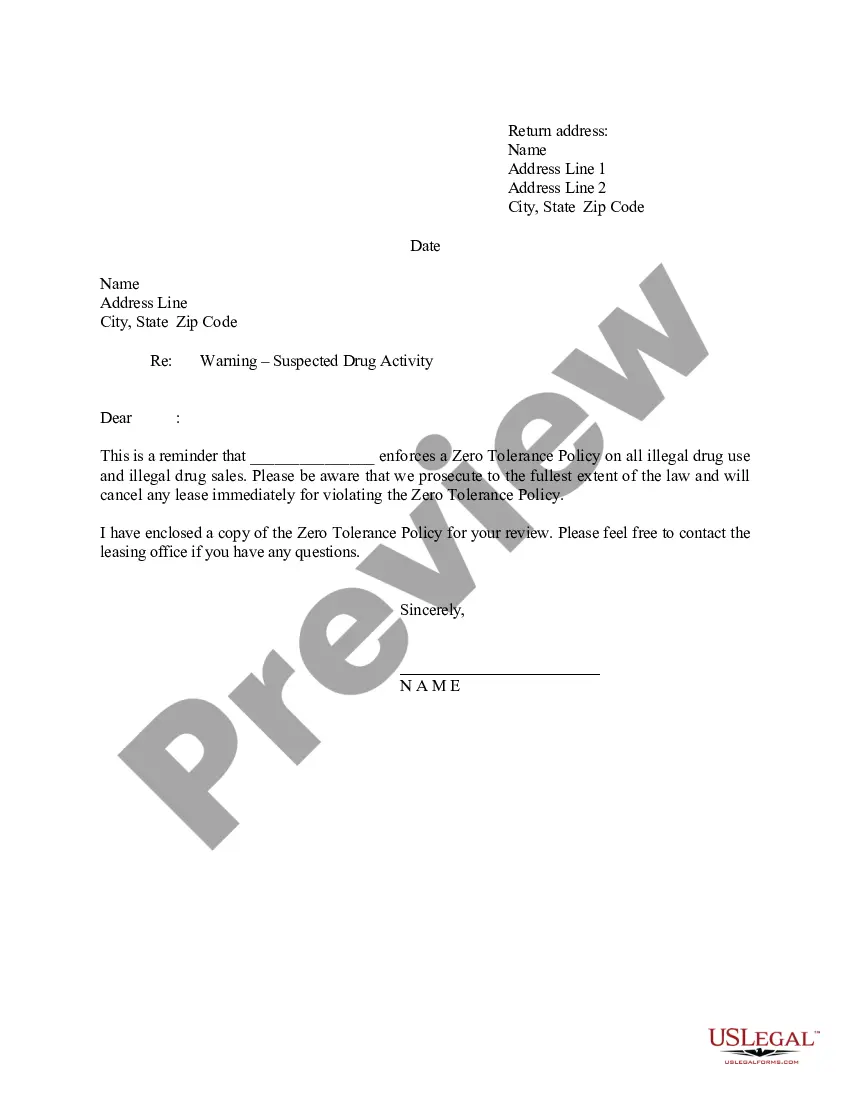
Florida Letter from Landlord to Tenant about Tenant engaging in illegal activity in premises as documented by law enforcement and if repeated, lease terminates
Understanding this form
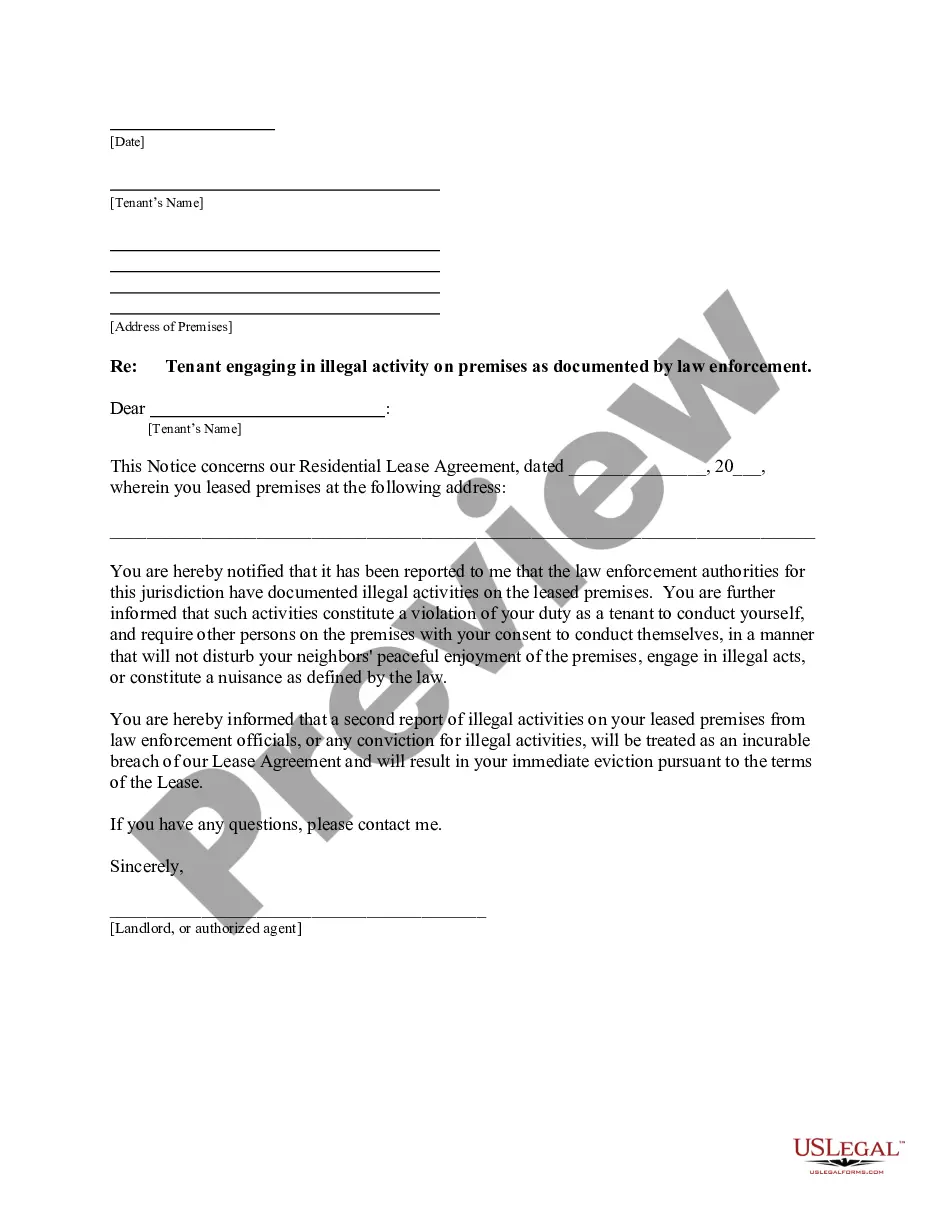
This form is a formal Letter from Landlord to Tenant addressing illegal activities occurring on the leased premises, as documented by law enforcement. It serves to notify the tenant of these violations and outlines the consequences of repeated infractions, including potential eviction. Unlike other communication forms, this letter focuses specifically on illegal conduct and the legal implications of such actions within a residential lease context.
Form components explained
- Notification of illegal activities documented by law enforcement.
- Explanation of the tenant's obligations under the lease agreement.
- Consequences of continued illegal activities, including eviction.
- Instructions for the tenant to seek clarification or discuss the situation.

Common use cases
This form should be used when a landlord has been informed by law enforcement that illegal activities are taking place in a rental property. It is suitable for situations where the landlord needs to formally address such behavior with the tenant and warn them of the legal repercussions if the activity continues. This helps protect the landlord's rights and ensures a safe living environment for other tenants.
Who this form is for
- Landlords who suspect illegal activities by their tenants.
- Property managers representing landlords in residential leases.
- Tenants who have been notified of such allegations and wish to understand their rights.
Instructions for completing this form
- Identify the landlords and tenants involved by entering their full names.
- Specify the property address where the lease is active.
- Include details of the illegal activities as reported by law enforcement.
- State the consequences of further violations clearly.
- Sign and date the letter, including your contact information for follow-up.
Does this document require notarization?
This form does not typically require notarization to be legally valid. However, some jurisdictions or document types may still require it. US Legal Forms provides secure online notarization powered by Notarize, available 24/7 for added convenience.
Get your form ready online
Our built-in tools help you complete, sign, share, and store your documents in one place.
Make edits, fill in missing information, and update formatting in US Legal Forms—just like you would in MS Word.
Download a copy, print it, send it by email, or mail it via USPS—whatever works best for your next step.
Sign and collect signatures with our SignNow integration. Send to multiple recipients, set reminders, and more. Go Premium to unlock E-Sign.
If this form requires notarization, complete it online through a secure video call—no need to meet a notary in person or wait for an appointment.
We protect your documents and personal data by following strict security and privacy standards.

Make edits, fill in missing information, and update formatting in US Legal Forms—just like you would in MS Word.

Download a copy, print it, send it by email, or mail it via USPS—whatever works best for your next step.

Sign and collect signatures with our SignNow integration. Send to multiple recipients, set reminders, and more. Go Premium to unlock E-Sign.

If this form requires notarization, complete it online through a secure video call—no need to meet a notary in person or wait for an appointment.

We protect your documents and personal data by following strict security and privacy standards.
Common mistakes to avoid
- Failing to specify the two requirements of illegal activity documentation.
- Not including the correct property address, leading to confusion.
- Missing or vague contact information, making follow-up difficult.
Why complete this form online
- Instant access to a ready-to-use legal form, saving time.
- Edit and customize the template to fit your specific situation easily.
- Confidence in the reliability of the content, drafted by licensed attorneys.
Main things to remember
- This letter formally addresses illegal activities and their consequences.
- It is essential for landlords to document issues concerning illegal tenant behavior.
- Timely communication can prevent further legal complications.
Looking for another form?
Form popularity
FAQ
To draft a warning letter to a tenant, begin by clearly stating the purpose of the letter. Mention the specific illegal activities and cite relevant lease provisions and legal statutes. Furthermore, emphasize the serious implications of their actions by referring to the Florida Letter from Landlord to Tenant about Tenant engaging in illegal activity in premises as documented by law enforcement and if repeated, lease terminates, ensuring the tenant understands the need to rectify their behavior.
When writing a violation notice, be direct and concise. Document the illegal activities as observed and include any supporting evidence, such as law enforcement reports. Reference how these actions fall under the stipulations in the lease agreement, particularly in relation to a Florida Letter from Landlord to Tenant about Tenant engaging in illegal activity in premises as documented by law enforcement and if repeated, lease terminates.
To write a lease violation notice, start by identifying the specific lease terms that the tenant has violated. Clearly state the illegal activity observed and reference the Florida Letter from Landlord to Tenant about Tenant engaging in illegal activity in premises as documented by law enforcement and if repeated, lease terminates. Be sure to outline the potential consequences if the violations continue, creating a clear understanding of the situation for the tenant.
Yes, Florida does have tenant protection laws, which safeguard renters' rights. These laws can address various issues including illegal activities on the premises. Understanding the Tenant Protection Act can help landlords communicate effectively through a Florida Letter from Landlord to Tenant about Tenant engaging in illegal activity in premises as documented by law enforcement and if repeated, lease terminates.
To write a complaint letter about a tenant, clearly outline the issues you have observed. Include specific details about the illegal activities, referencing the Florida Letter from Landlord to Tenant about Tenant engaging in illegal activity in premises as documented by law enforcement and if repeated, lease terminates. Additionally, provide context about the lease agreement and the potential consequences of continued violations.
To write a violation letter to a tenant, begin with clear identification of the tenant and property details. Outline the specific violations, emphasizing the seriousness of engaging in illegal activities. Reference the Florida Letter from Landlord to Tenant about Tenant engaging in illegal activity in premises as documented by law enforcement and if repeated, lease terminates to underscore the potential consequences of non-compliance, ensuring the tenant understands the need for immediate change.
Section 83.53 details the specific legal procedures landlords must follow when addressing tenant violations. This includes issuing notices for illegal activities and the potential for lease termination if these activities persist. By employing the Florida Letter from Landlord to Tenant about Tenant engaging in illegal activity in premises as documented by law enforcement and if repeated, lease terminates, landlords can ensure they abide by legal standards while protecting their property.
Statute 83.63 outlines the tenant's rights concerning the use of the property. This statute also highlights circumstances when landlords may act against tenants who violate lease agreements. If a tenant engages in illegal activities, the landlord can rely on the Florida Letter from Landlord to Tenant about Tenant engaging in illegal activity in premises as documented by law enforcement and if repeated, lease terminates to enforce their rights.
Section 83.682 addresses the responsibilities of landlords in maintaining a safe and habitable living environment. This section emphasizes the importance of ensuring tenants do not engage in illegal activities that could jeopardize the safety of others. If such activities occur, landlords can utilize the Florida Letter from Landlord to Tenant about Tenant engaging in illegal activity in premises as documented by law enforcement and if repeated, lease terminates to take appropriate action.
Statute 83.03 in Florida defines essential terms used within landlord-tenant law, including what constitutes a 'tenant' and a 'landlord.' Understanding these definitions helps in navigating the legal landscape regarding property rentals. When dealing with illegal activities on premises, knowing these definitions aids in effectively employing the Florida Letter from Landlord to Tenant about Tenant engaging in illegal activity in premises as documented by law enforcement and if repeated, lease terminates.