Delaware Commercial Lease Assignment from Tenant to New Tenant
About this form
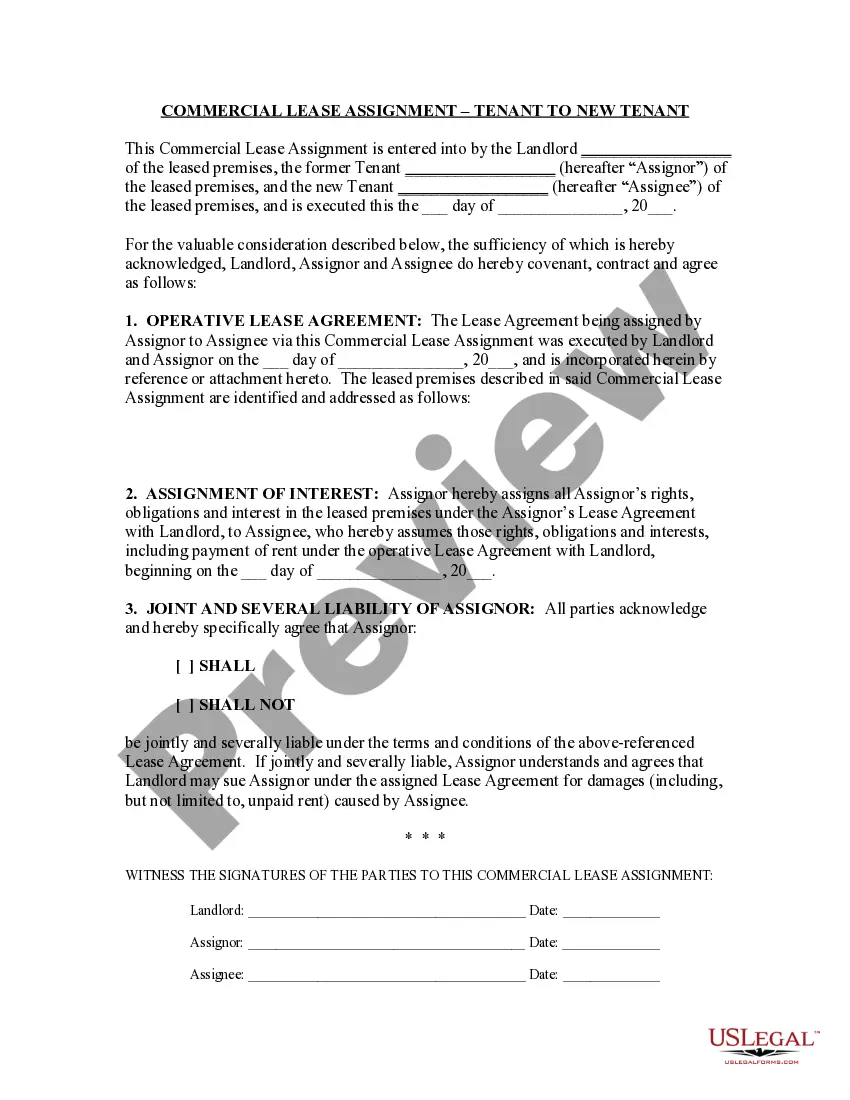
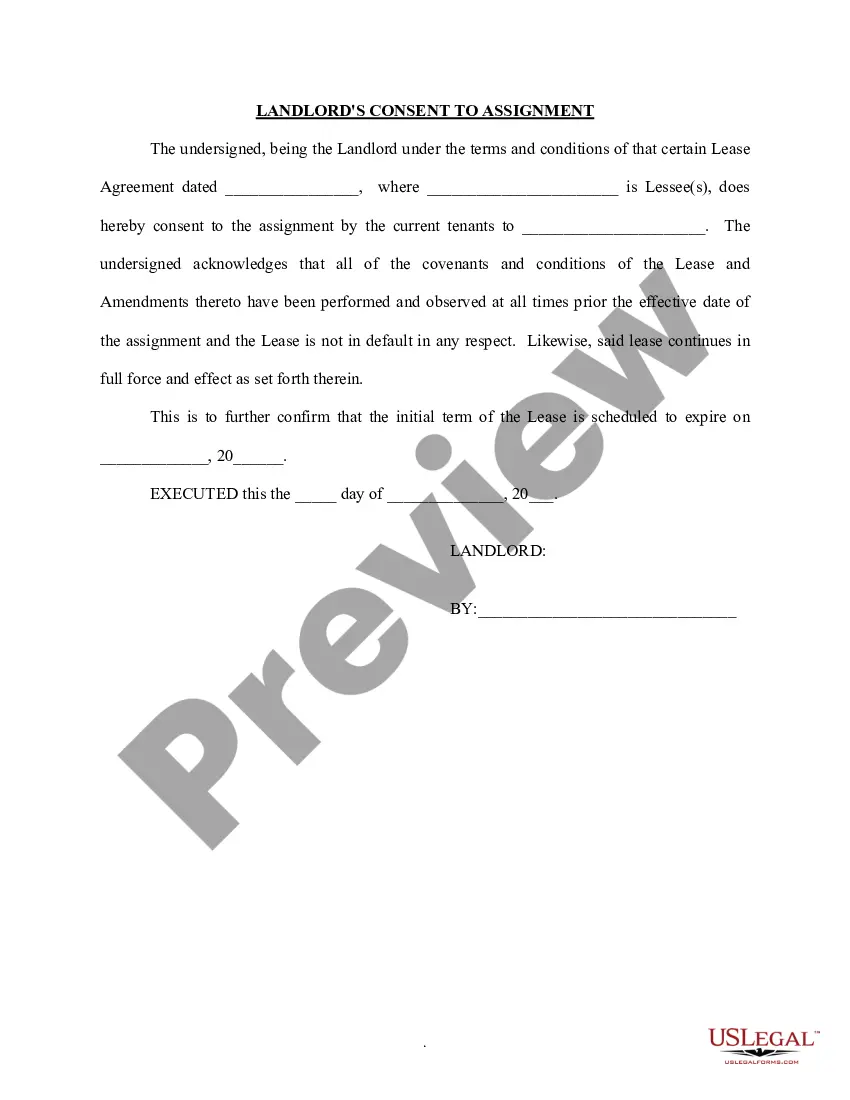
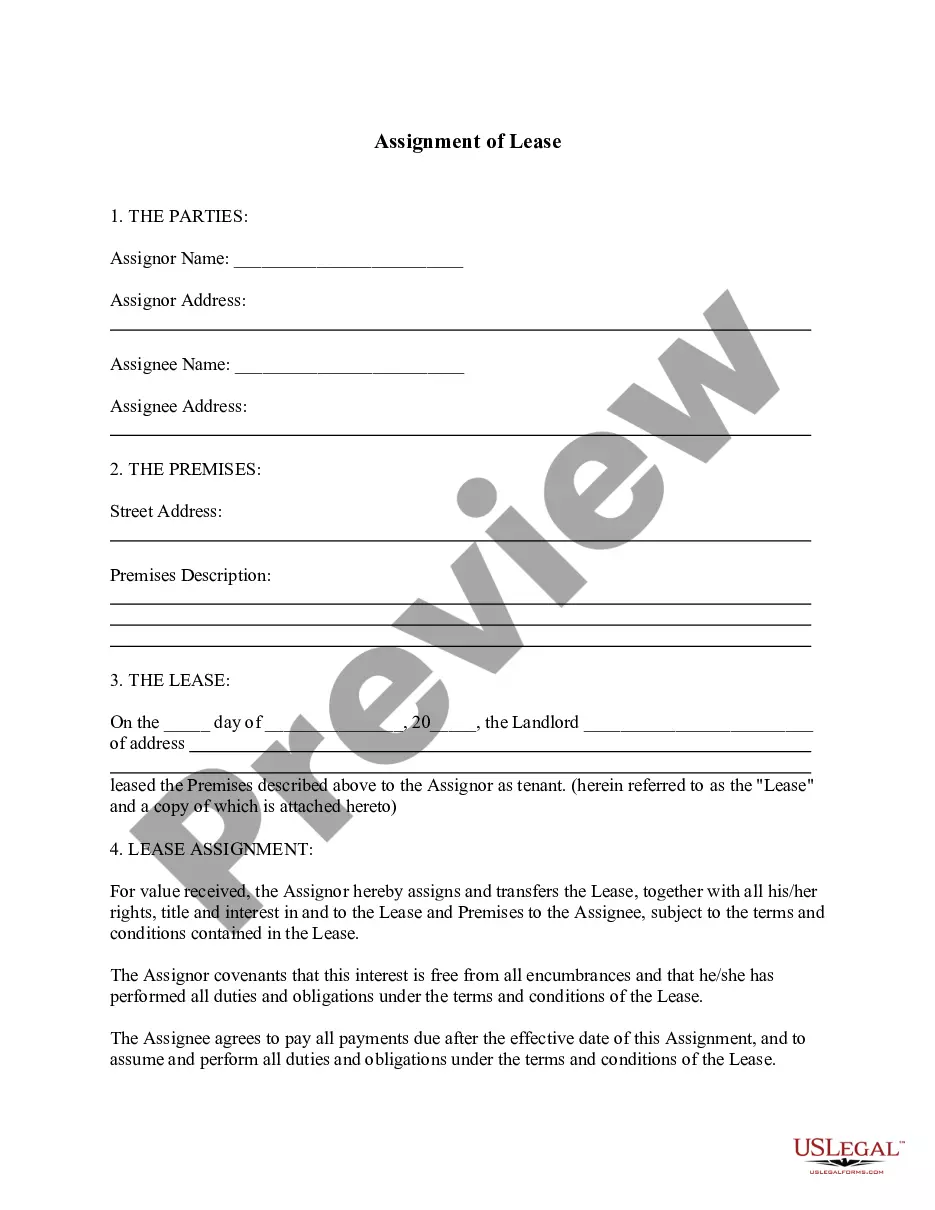
The Commercial Lease Assignment from Tenant to New Tenant is a legal document that facilitates the transfer of lease obligations and rights from one tenant to another, while leaving the landlord's position unchanged. This form is essential for ensuring that responsibilities related to the leased premises are clearly defined and legally binding. Unlike a lease termination, an assignment allows for continuity of the lease agreement with the new tenant stepping into the previous tenant's role, subject to any agreed-upon terms regarding liability.
What’s included in this form
- Identification of the landlord, former tenant (Assignor), and new tenant (Assignee).
- Provisions for the joint and several liability of the Assignor for lease obligations.
- Clear acknowledgment of the assignment date and signatures of all parties involved.
When to use this document
This form should be used when a tenant wishes to transfer their rights and obligations under a commercial lease to a new tenant. Common scenarios include business transfers, changes in business structure, or when the original tenant can no longer fulfill their lease requirements. It is essential for situations where the landlord's terms permit assignment and the original tenant wishes to exit the lease without breaching it.
Who needs this form
- Original tenants who want to assign their lease to another party.
- New tenants seeking to take over an existing lease agreement.
- Landlords looking to formalize the transfer of lease responsibilities between tenants.
How to prepare this document
- Identify the parties involved: Landlord, Assignor (former tenant), and Assignee (new tenant).
- Specify the leased property accurately.
- Indicate the date on which the assignment is being executed.
- Decide whether the Assignor will remain jointly and severally liable for lease obligations and mark the appropriate box.
- Ensure all parties sign and date the document to validate the assignment.
Notarization guidance
This form does not typically require notarization unless specified by local law. However, confirming the need for notarization based on local regulations is essential for ensuring the document's enforceability.
Get your form ready online
Our built-in tools help you complete, sign, share, and store your documents in one place.
Make edits, fill in missing information, and update formatting in US Legal Forms—just like you would in MS Word.
Download a copy, print it, send it by email, or mail it via USPS—whatever works best for your next step.
Sign and collect signatures with our SignNow integration. Send to multiple recipients, set reminders, and more. Go Premium to unlock E-Sign.
If this form requires notarization, complete it online through a secure video call—no need to meet a notary in person or wait for an appointment.
We protect your documents and personal data by following strict security and privacy standards.

Make edits, fill in missing information, and update formatting in US Legal Forms—just like you would in MS Word.

Download a copy, print it, send it by email, or mail it via USPS—whatever works best for your next step.

Sign and collect signatures with our SignNow integration. Send to multiple recipients, set reminders, and more. Go Premium to unlock E-Sign.

If this form requires notarization, complete it online through a secure video call—no need to meet a notary in person or wait for an appointment.

We protect your documents and personal data by following strict security and privacy standards.
Typical mistakes to avoid
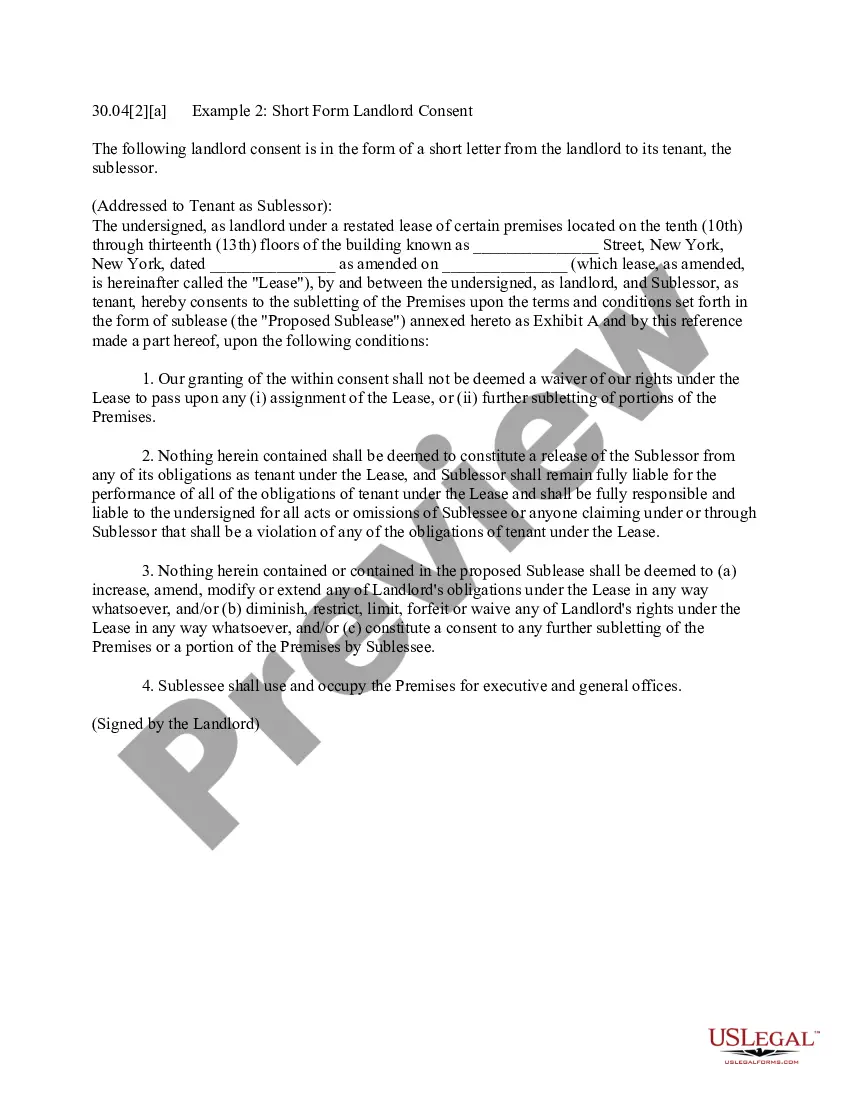
- Failing to obtain landlord consent if required by the lease agreement.
- Not specifying the joint and several liability status, leading to confusion about the responsibilities of the original tenant.
- Incomplete signatures or incorrect dates which can invalidate the assignment.
Advantages of online completion
- Convenience of accessing the form at any time without needing to visit a lawyer.
- Editability to customize the document to meet specific needs.
- Reliability, as forms are drafted by licensed attorneys to ensure all legal requirements are met.
Looking for another form?
Form popularity
FAQ
Yes, a lease can be transferred to another person, typically through a process known as lease assignment. Both the landlord and the original tenant must agree on the transfer, ensuring the new tenant understands the lease terms. This step is crucial for executing a proper Delaware Commercial Lease Assignment from Tenant to New Tenant, making sure all parties are in alignment.
Adding a new tenant to an existing tenancy agreement requires you to amend your lease with the landlord’s consent. You should detail the new tenant's obligations in the amendment to clarify everyone’s responsibilities. This process is essential for a successful Delaware Commercial Lease Assignment from Tenant to New Tenant, safeguarding the interests of all parties.
To transfer a commercial lease to a new owner, you must follow the specific terms outlined in your lease agreement. Generally, you need to notify your landlord and obtain their consent. Completing this step properly is key for a successful Delaware Commercial Lease Assignment from Tenant to New Tenant, ensuring that the new owner fully understands the lease’s terms.
You can add someone to an existing tenancy agreement with the landlord’s permission. This usually requires a formal amendment to the lease that details the new tenant's information and responsibilities. Enacting this change is vital during a Delaware Commercial Lease Assignment from Tenant to New Tenant to ensure compliance.
Yes, you can add someone to your lease after signing, but it generally requires the landlord's consent. This addition usually involves amending the existing lease to officially recognize the new tenant. This step is a vital aspect of the Delaware Commercial Lease Assignment from Tenant to New Tenant, ensuring that all parties are aware of their roles.
To add another tenant, begin by reviewing your lease agreement to understand any requirements for changes. Next, seek the landlord's approval and create a written amendment that includes the new tenant. This is crucial for a proper Delaware Commercial Lease Assignment from Tenant to New Tenant, helping to clarify each tenant’s responsibilities.
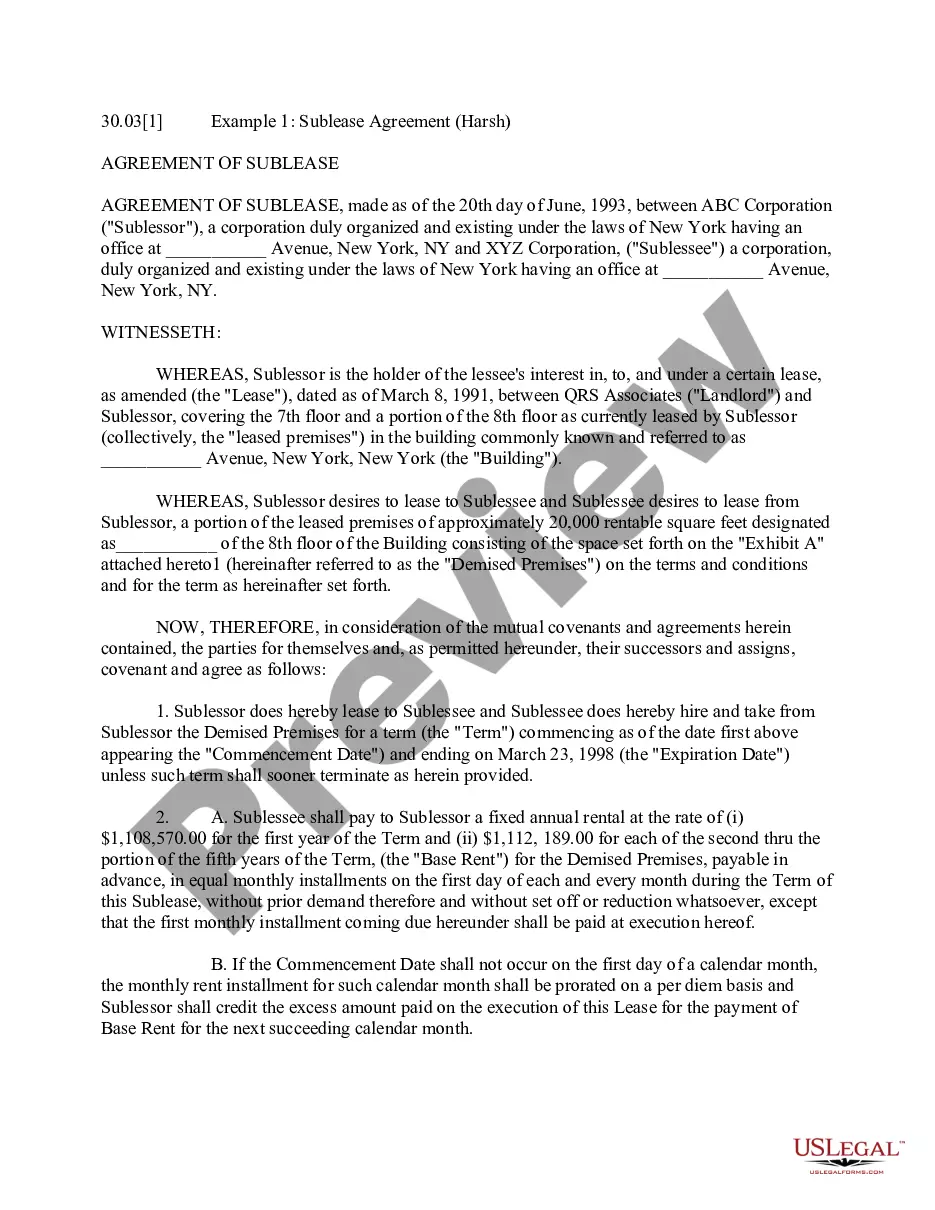
When you assign a commercial lease, the new tenant assumes the obligations and rights of the original tenant under the lease agreement. The landlord typically must consent to the assignment, ensuring that they are satisfactory with the new tenant. This process is part of the Delaware Commercial Lease Assignment from Tenant to New Tenant, allowing for seamless transitions between tenants.
To add a tenant to an existing tenancy agreement, you typically need to obtain the landlord's approval. You should draft an amendment to the lease that outlines the new tenant's responsibilities, ensuring it is signed by all parties involved. This process is important for a smooth Delaware Commercial Lease Assignment from Tenant to New Tenant, as all tenants should be aware of their obligations under the lease.
A landlord in Delaware is required to provide a notice period, which is typically a minimum of 60 days, depending on the lease terms and conditions. This timeframe allows you to make necessary arrangements, especially if you’re facilitating a Delaware Commercial Lease Assignment from Tenant to New Tenant. Understanding this process can help you negotiate with your landlord and ensure a smoother transition. Consider using a platform like uslegalforms to assist with lease agreements and notifications.
In Delaware, a landlord must inform a tenant with adequate notice, usually at least 60 days before terminating a lease. This notice period can vary based on the reasons for termination or the specific lease terms in the agreement. If you're facing a lease termination and looking into a Delaware Commercial Lease Assignment from Tenant to New Tenant, understanding these terms is critical. It may provide you with options to find a new tenant in time.