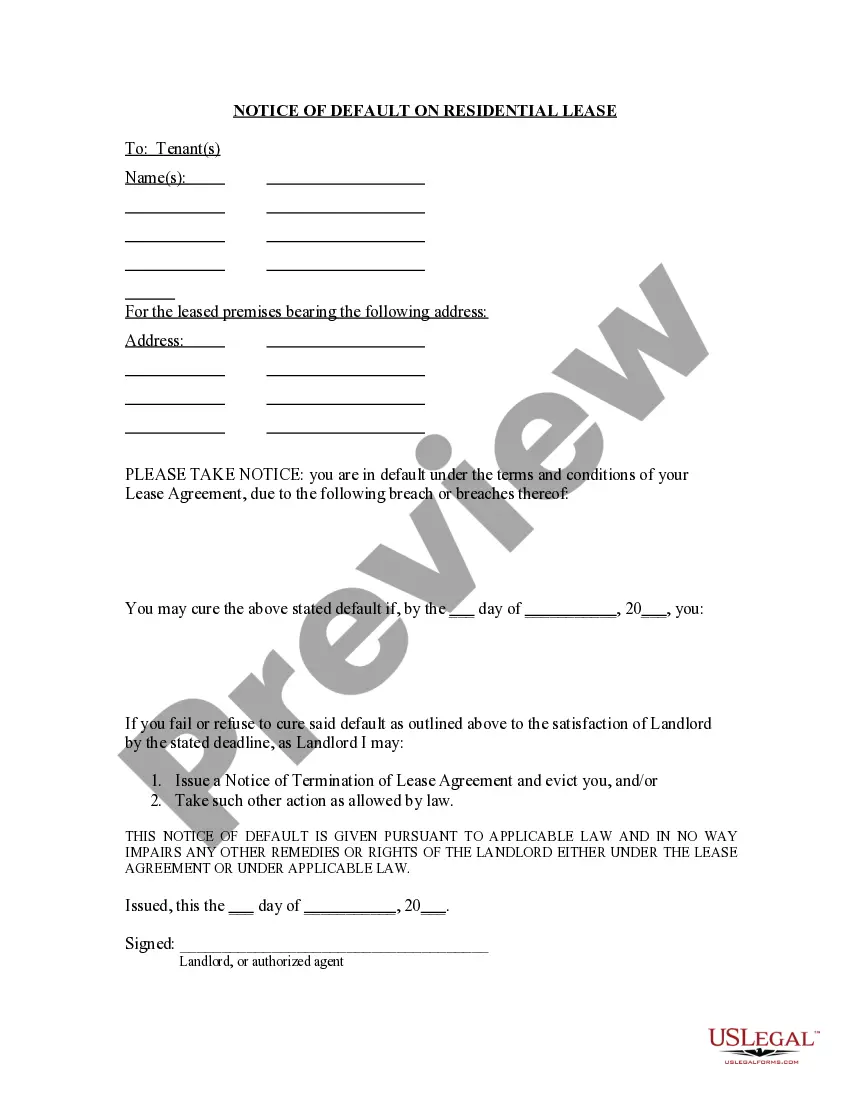
Delaware Notice of Default on Residential Lease
What this document covers
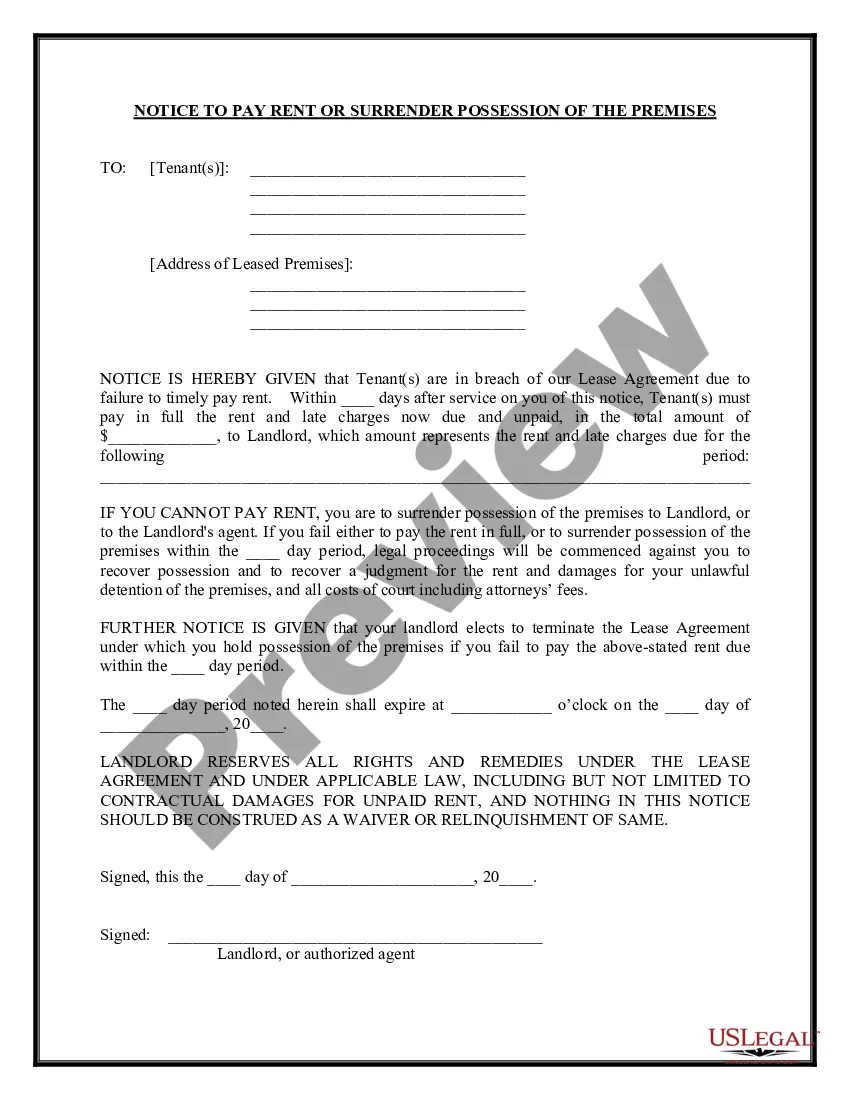
The Notice of Default on Residential Lease is a legal document that notifies a tenant of their failure to meet specific obligations under their lease agreement. This notice lays out the reasons for the default and provides a timeline for the tenant to remedy the situation. Unlike general lease agreements, this form is specifically designed to formally communicate the landlord's intention to potentially terminate the lease should the tenant fail to resolve the issues within the specified timeframe.
Main sections of this form
- Identification of the tenant and property
- Specific reasons for the default
- Clearly stated deadline for the tenant to cure the default
- Landlord's signature and date of issuance
- Notice of potential termination of the lease if the default is not cured
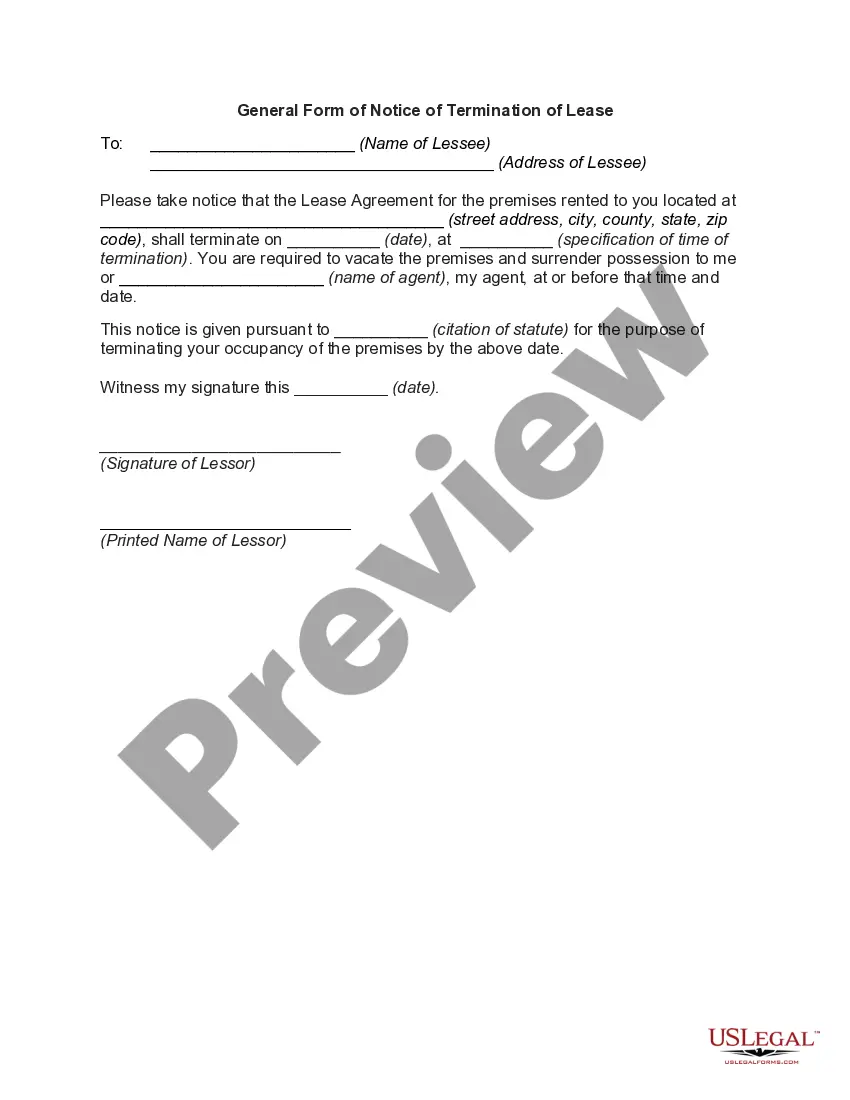
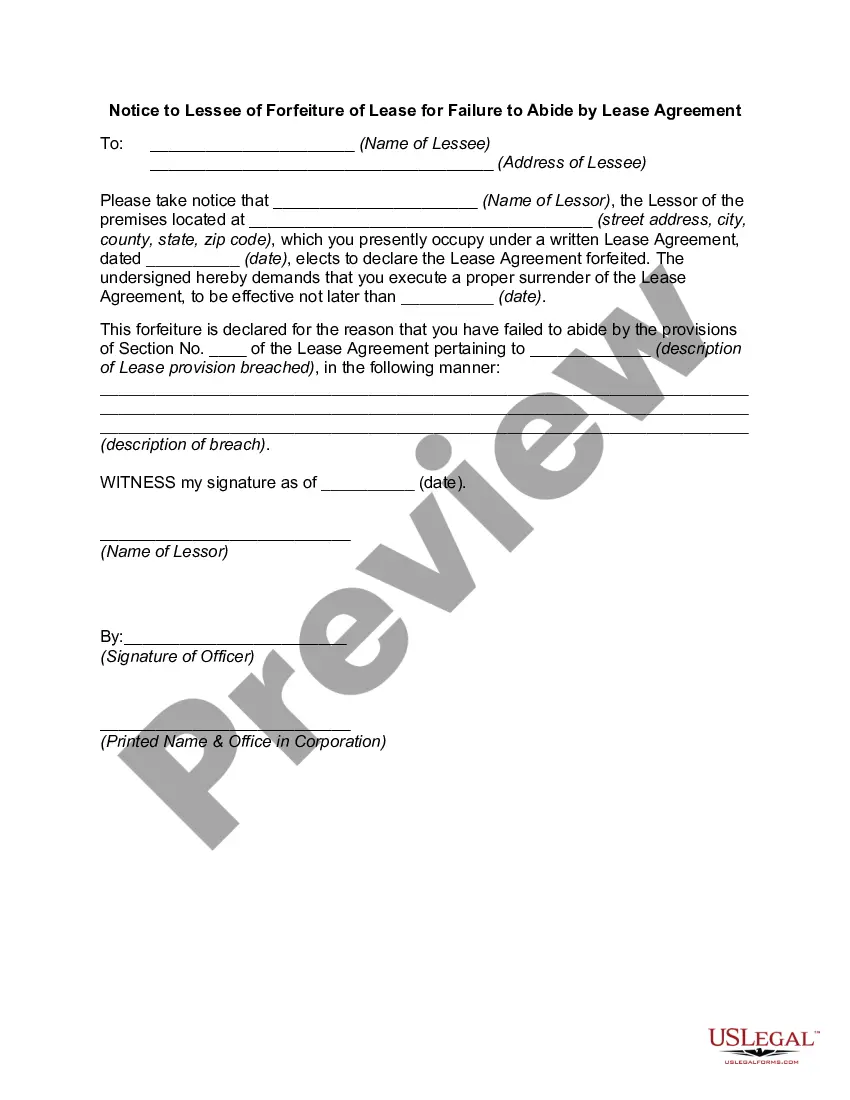
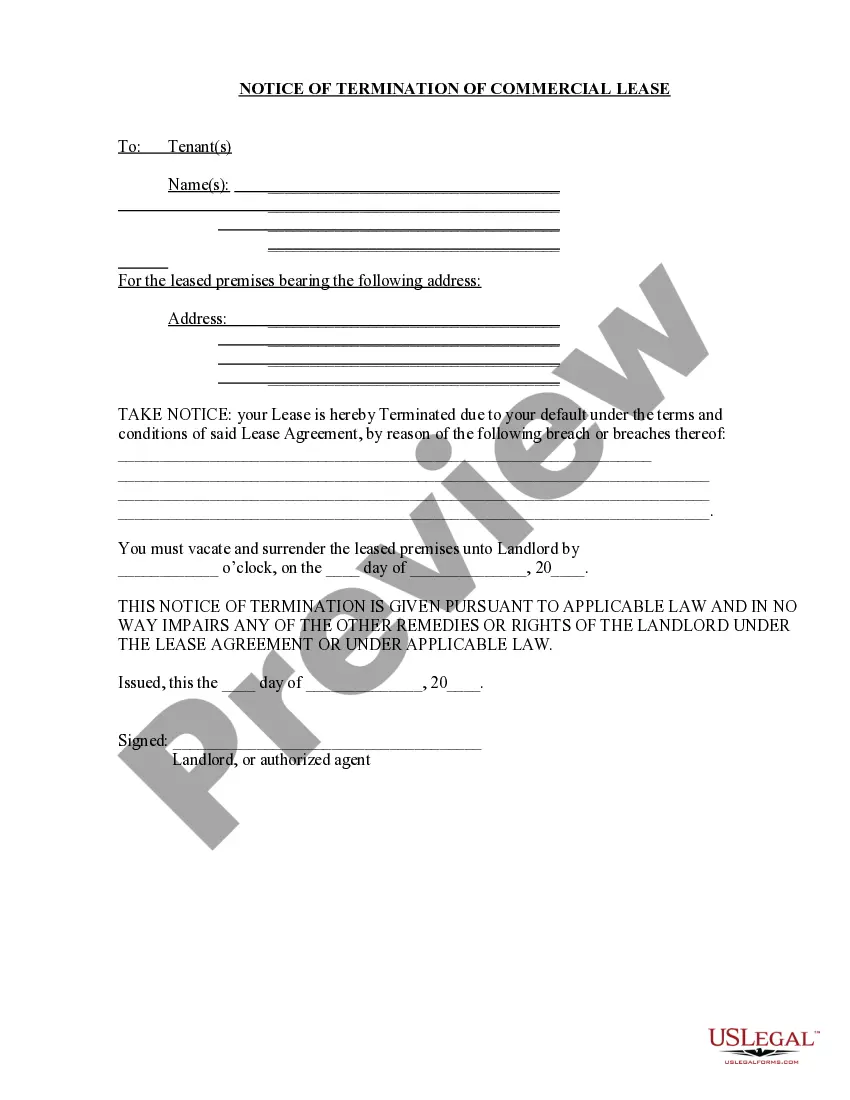

When to use this form
This notice is typically used when a tenant fails to pay rent or otherwise violates the terms of the lease agreement. Landlords should issue this notice as a preliminary step before pursuing eviction or applying any security deposits to cover the default in payment.
Who should use this form
- Landlords seeking to notify tenants of lease violations
- Property managers handling tenant matters
- Landlords familiarizing themselves with eviction processes
How to prepare this document
- Identify the parties involved, including the landlord and tenant details.
- Specify the property address where the tenant resides.
- Clearly state the reasons for the tenant's default.
- Enter the deadline date by which the tenant must remedy the default.
- Sign and date the notice, ensuring proper documentation.
Notarization requirements for this form
In most cases, this form does not require notarization. However, some jurisdictions or signing circumstances might. US Legal Forms offers online notarization powered by Notarize, accessible 24/7 for a quick, remote process.
Get your form ready online
Our built-in tools help you complete, sign, share, and store your documents in one place.
Make edits, fill in missing information, and update formatting in US Legal Forms—just like you would in MS Word.
Download a copy, print it, send it by email, or mail it via USPS—whatever works best for your next step.
Sign and collect signatures with our SignNow integration. Send to multiple recipients, set reminders, and more. Go Premium to unlock E-Sign.
If this form requires notarization, complete it online through a secure video call—no need to meet a notary in person or wait for an appointment.
We protect your documents and personal data by following strict security and privacy standards.

Make edits, fill in missing information, and update formatting in US Legal Forms—just like you would in MS Word.

Download a copy, print it, send it by email, or mail it via USPS—whatever works best for your next step.

Sign and collect signatures with our SignNow integration. Send to multiple recipients, set reminders, and more. Go Premium to unlock E-Sign.

If this form requires notarization, complete it online through a secure video call—no need to meet a notary in person or wait for an appointment.

We protect your documents and personal data by following strict security and privacy standards.
Common mistakes
- Failing to specify all reasons for the default can lead to disputes.
- Not providing a clear deadline for curing the default may invalidate the notice.
- Omitting signatures or dates can cause legal complications.
Advantages of online completion
- Convenience of instant access and download.
- Editability to customize the form as needed for specific situations.
- Reliability, with templates drafted by licensed attorneys.
Looking for another form?
Form popularity
FAQ
Receiving a default judgment means that the court has ruled in favor of the other party because you did not respond or appear in court. This ruling can result in financial obligations you are required to fulfill. If you've received a Delaware Notice of Default on Residential Lease, it is vital to understand the implications of any default judgments to protect your rights.
A default judgment in Delaware generally lasts for 5 to 10 years, similar to other types of judgments. It can be renewed if certain criteria are met. Being aware of this timeframe is crucial, especially if a Delaware Notice of Default on Residential Lease is involved, as it can influence your situation and future actions.
Judgments in Delaware typically last for 5 to 10 years, depending on the nature of the judgment. After this period, a judgment can be renewed if necessary. If you're facing legal issues related to a Delaware Notice of Default on Residential Lease, knowing the judgment duration can help you strategize your next steps.
In Delaware, a landlord must return your security deposit within 60 days after you vacate the property. If a landlord withholds part or all of the deposit, they must provide an itemized list explaining the deductions. Understanding the rules surrounding security deposits can help you avoid surprises, especially if you've received a Delaware Notice of Default on Residential Lease.
In Delaware, there is no statewide limit on how much a landlord can raise rent. However, rental increases should reflect the terms outlined in your lease agreement. If you receive a Delaware Notice of Default on Residential Lease, it may indicate disputes over rent payments that further impact lease renewals or increases.
The default clause in a lease agreement outlines the actions that can be taken when one party fails to fulfill their obligations. This may include non-payment of rent or violating lease terms, which can lead to a Delaware Notice of Default on Residential Lease being issued. Understanding this clause can help you avoid default situations and maintain a good relationship with your landlord.
To default on a lease, you typically stop making payments or fail to comply with terms outlined in your lease agreement. However, I advise against this, as it can lead to serious consequences, such as receiving a Delaware Notice of Default on Residential Lease. If you’re facing financial difficulties, it’s wiser to explore negotiation options with your landlord or seek guidance from resources like uslegalforms for better outcomes.
Section 5513 of the Delaware Landlord-Tenant Code provides details on the rights and remedies available to landlords when a tenant defaults. This section ensures that landlords must follow specific procedures before taking legal action, which may include issuing a Delaware Notice of Default on Residential Lease. Familiarizing yourself with this code can empower both landlords and tenants to understand their legal standing.
Yes, defaulting on a lease can significantly harm your credit score. Late payments or legal actions, such as receiving a Delaware Notice of Default on Residential Lease, reflect negatively on your credit report. This can make it more challenging to secure future leases or loans, emphasizing the importance of understanding your lease terms.
Section 5314 of the Delaware Residential Landlord-Tenant Code outlines the procedures for serving notices related to lease defaults. This section ensures that tenants receive proper communication regarding any default issues, which may include a Delaware Notice of Default on Residential Lease. Understanding this section helps tenants know their rights and obligations in case of disputes.