Delaware Commercial Sublease
About this form
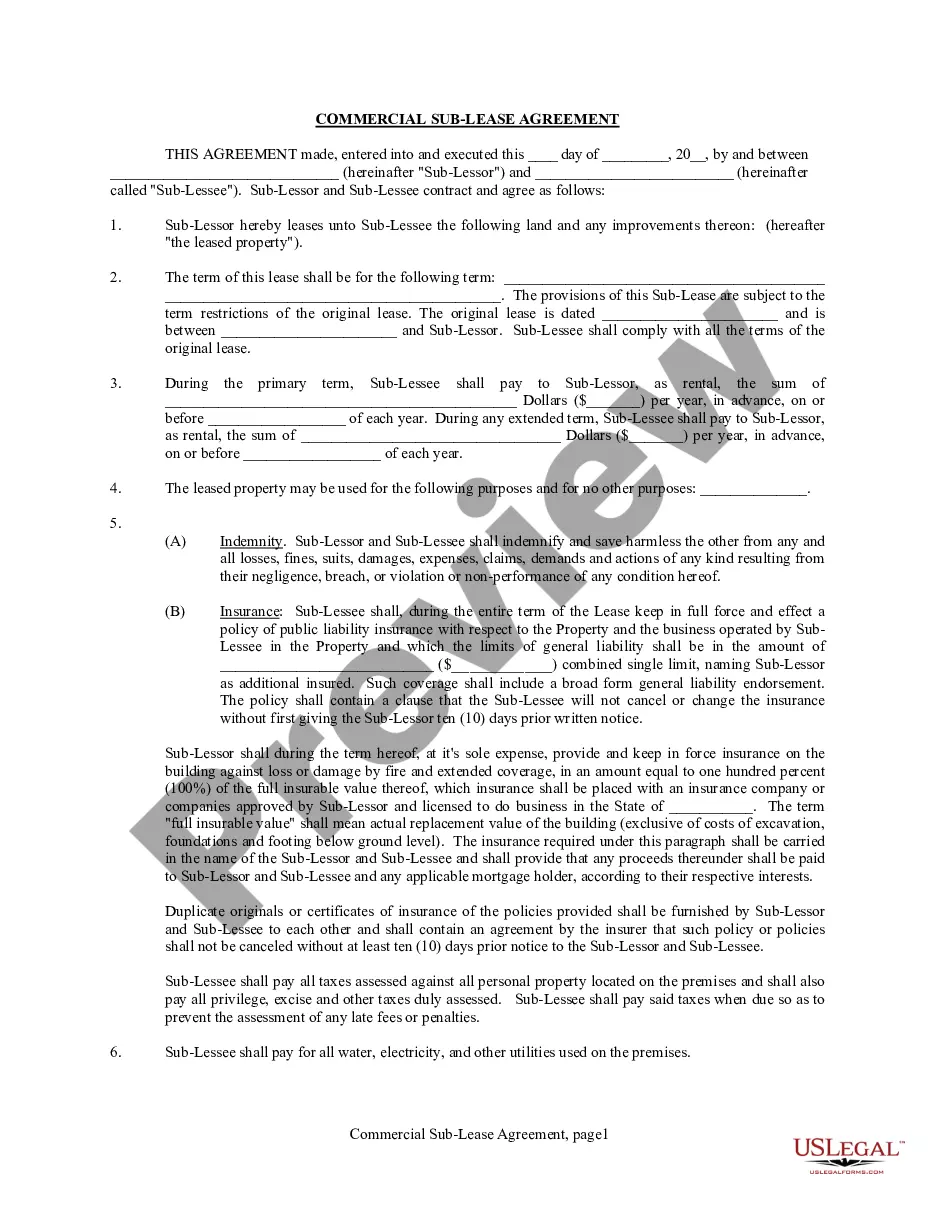
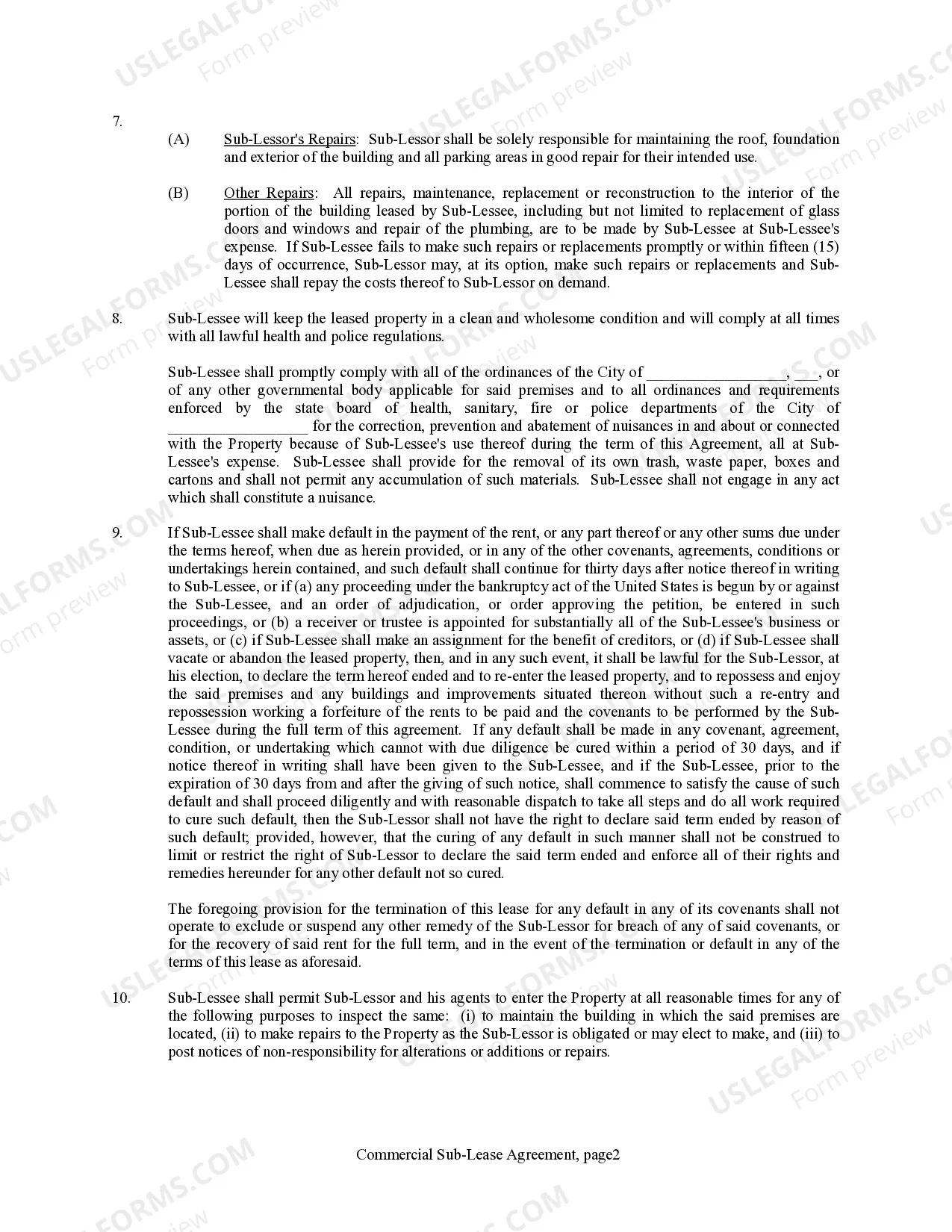
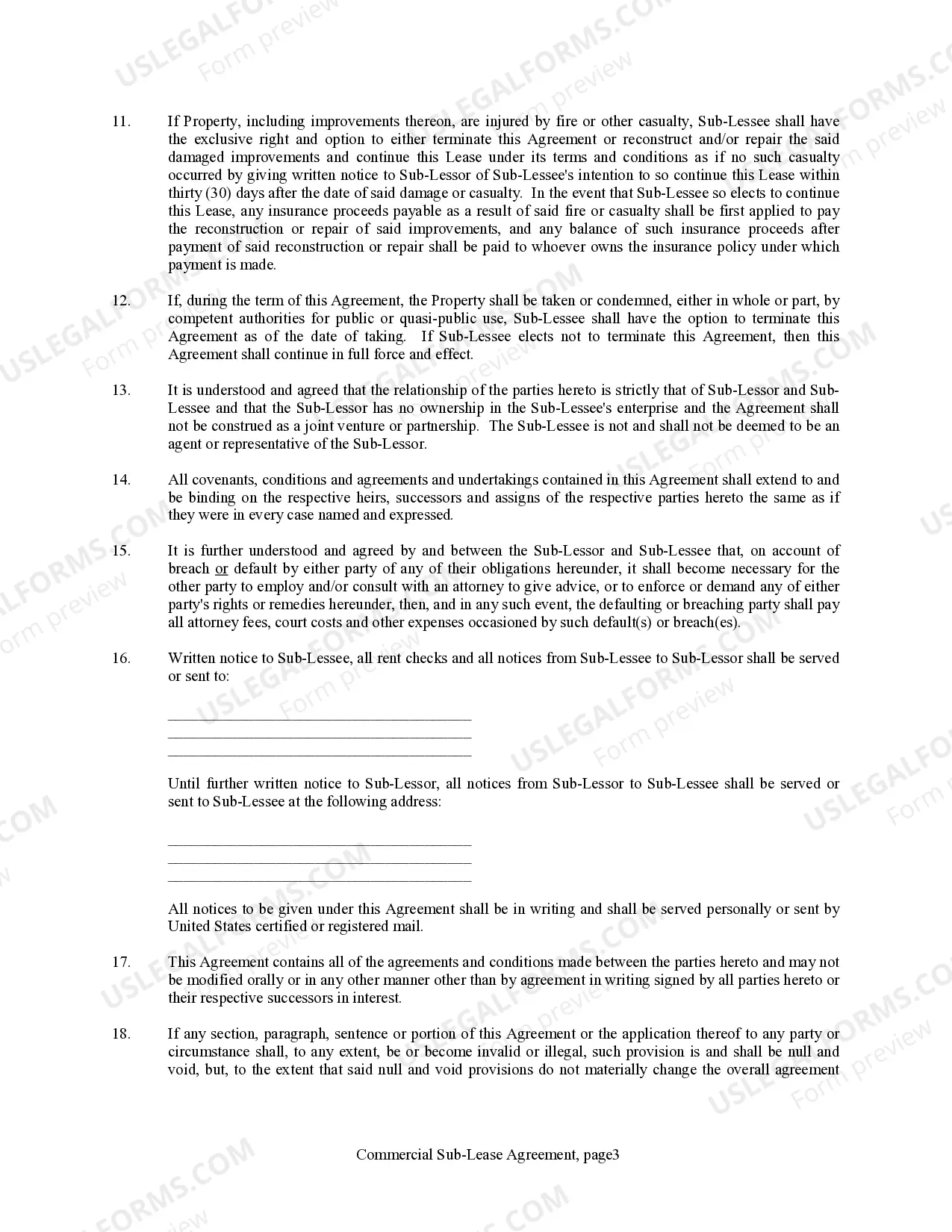
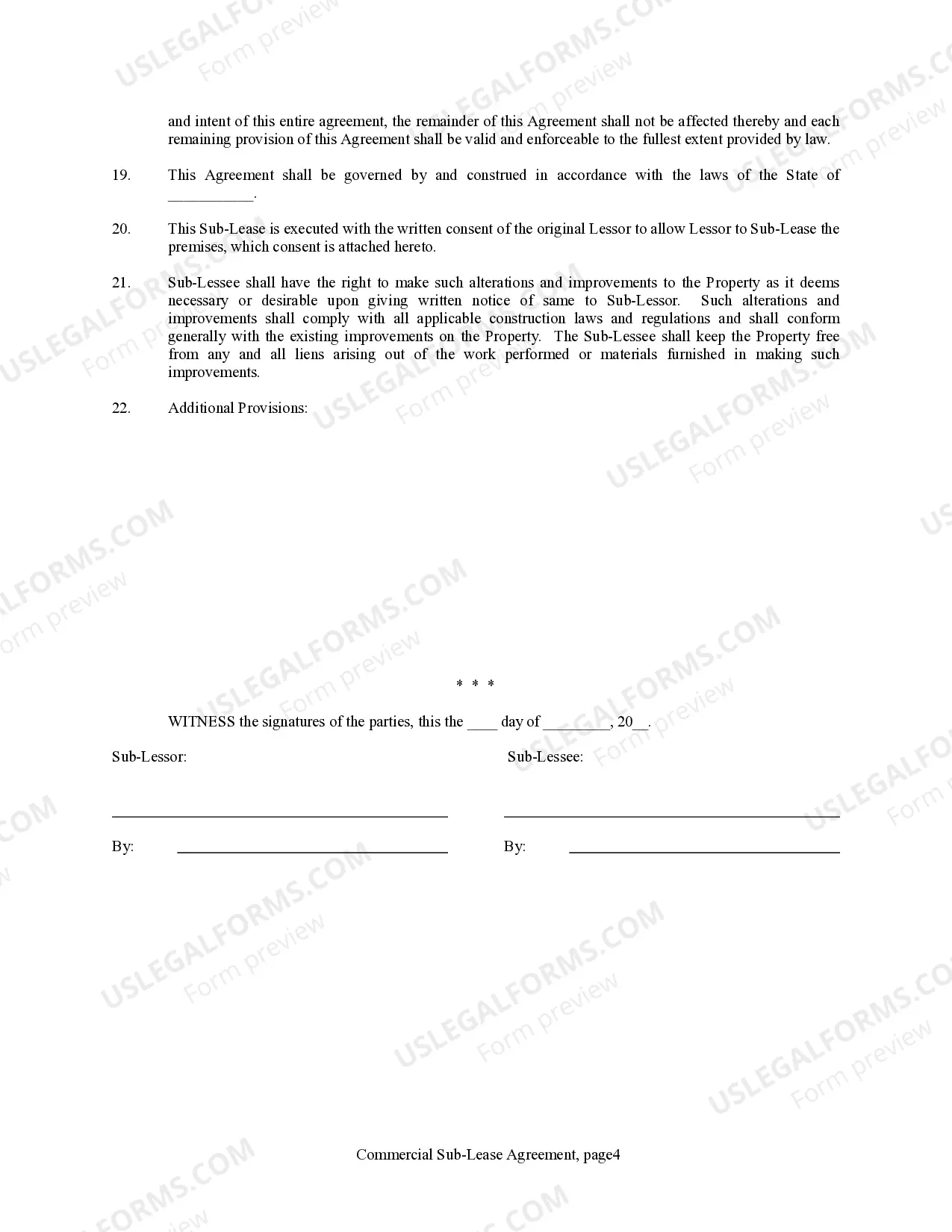
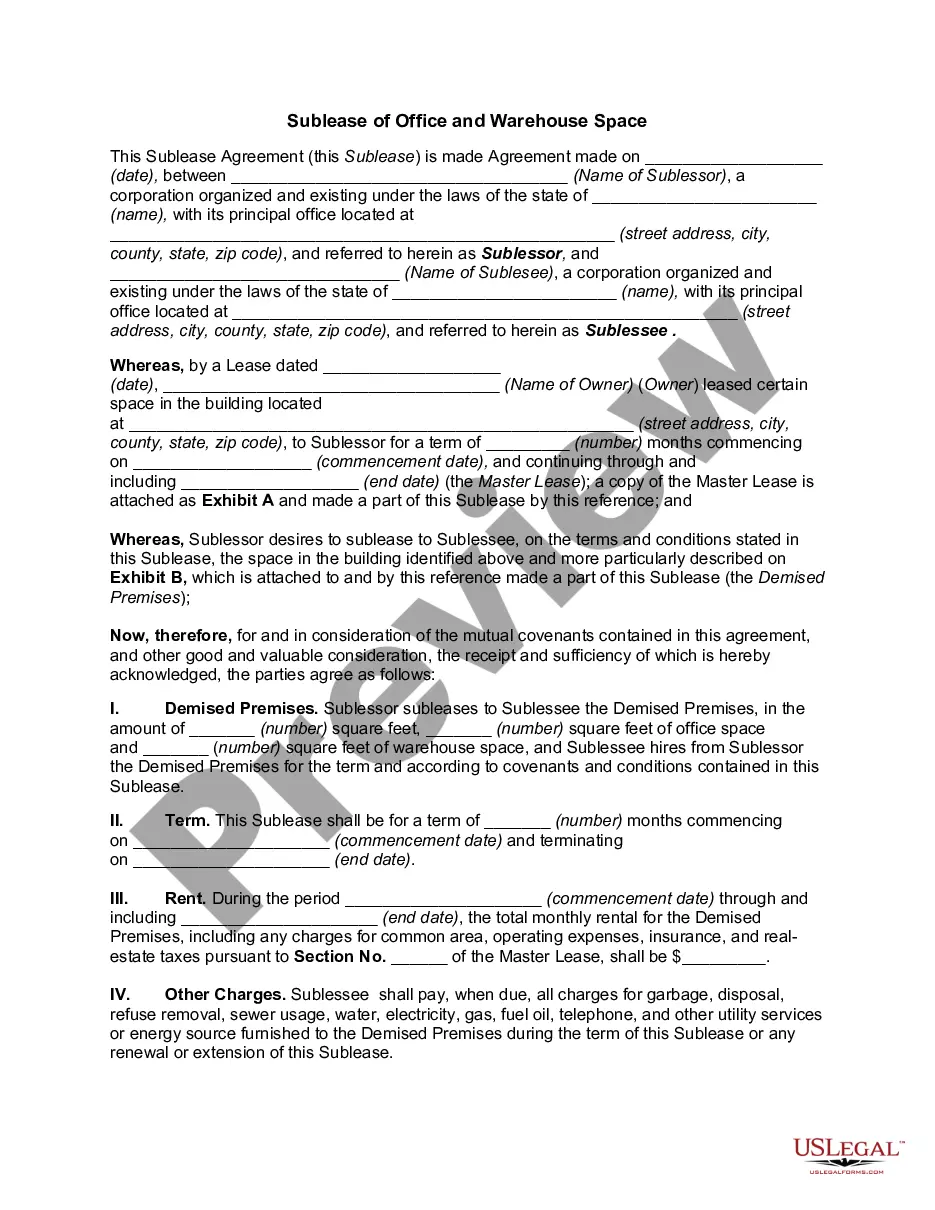
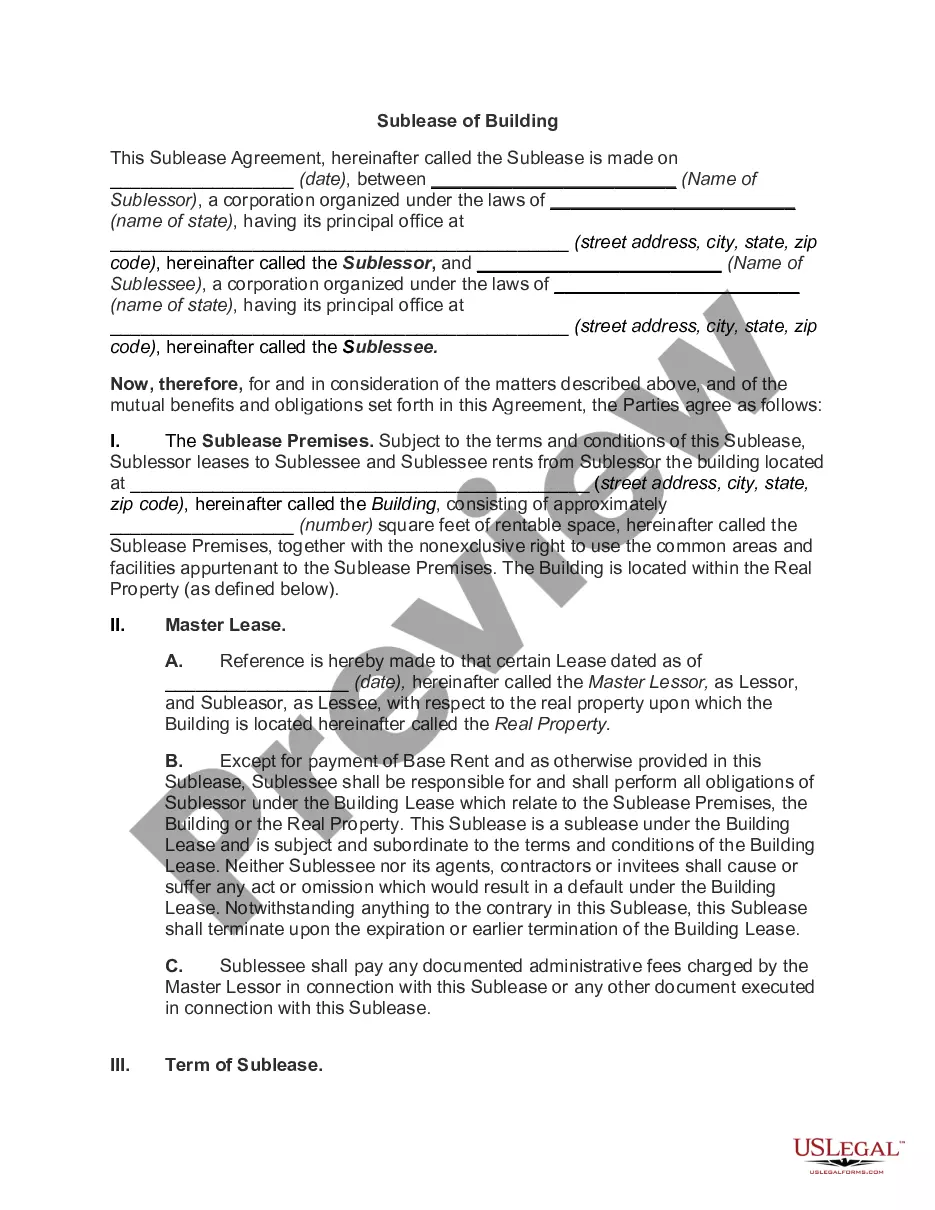
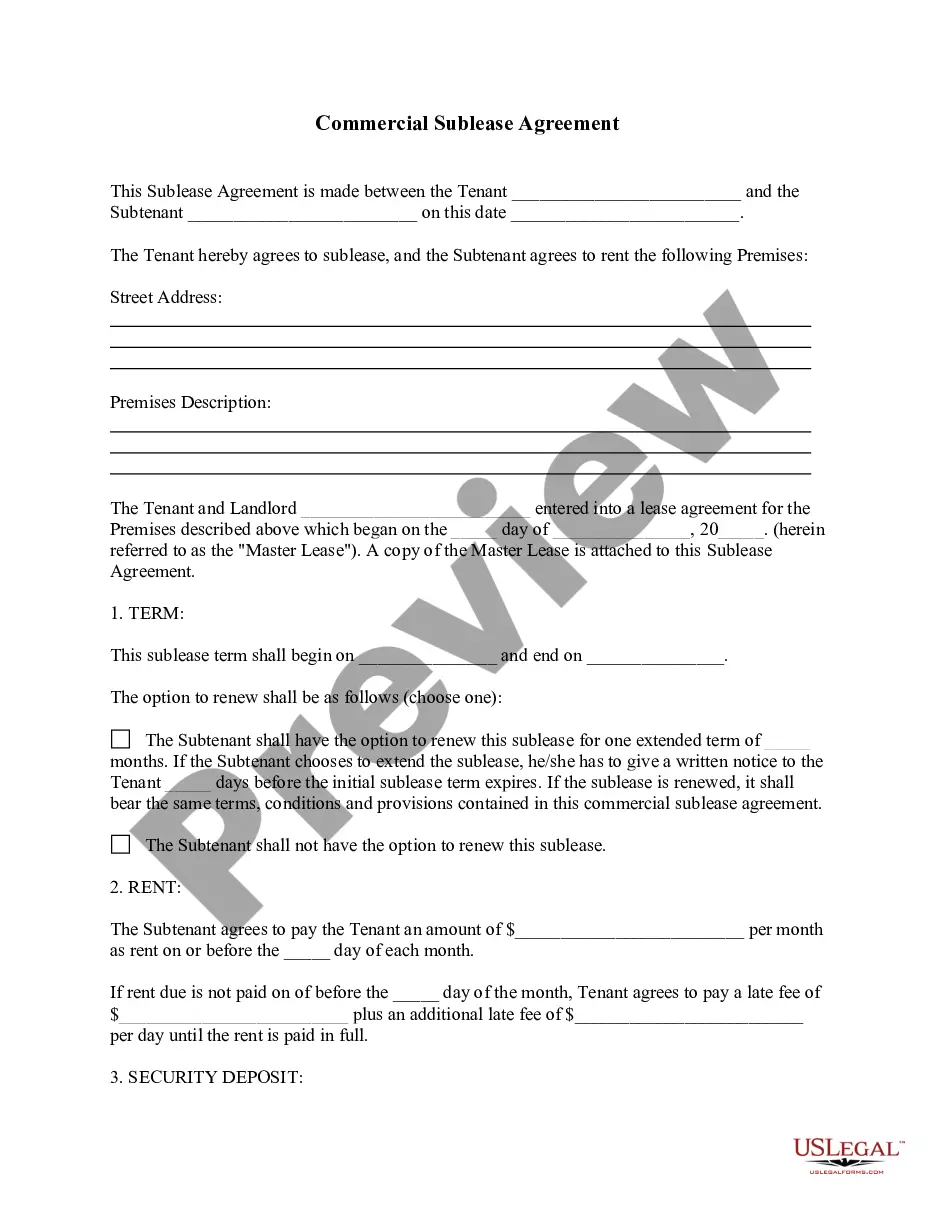
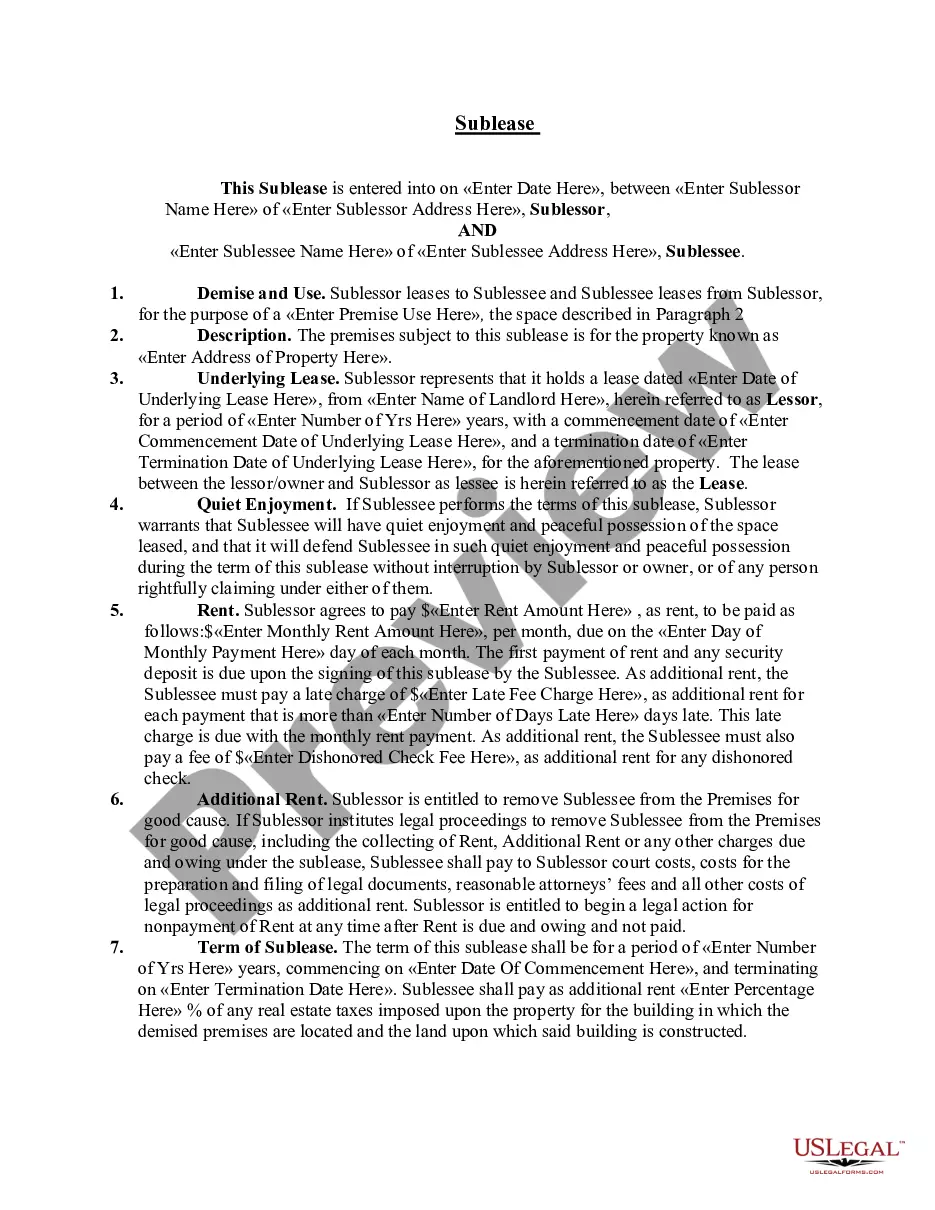
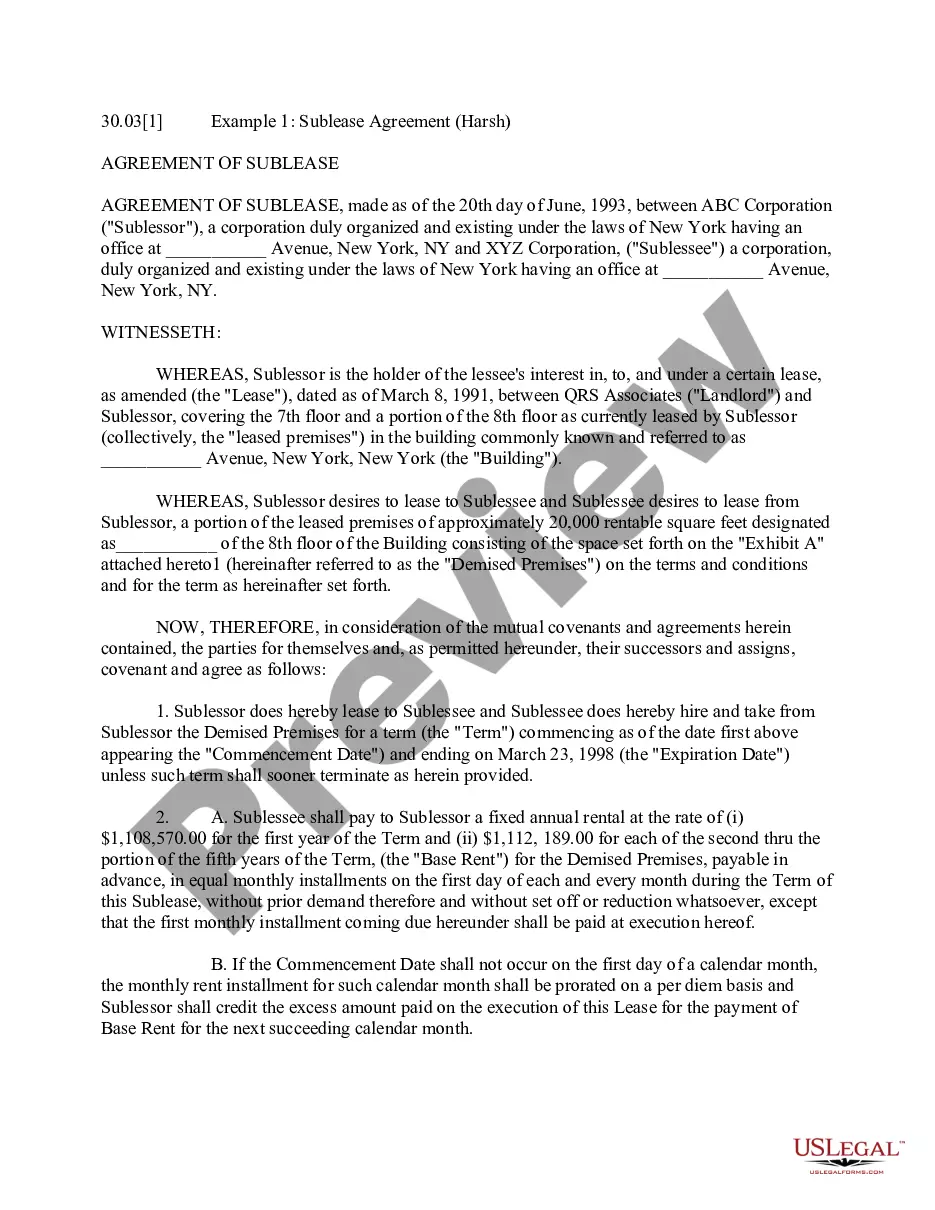
The Commercial Sublease form is a legal agreement that allows a tenant (Sub-Lessor) to lease their rented commercial property to another party (Sub-Lessee). This form outlines the terms of the sublease and establishes the Sub-Lessee's responsibilities, all while adhering to the original lease agreement with the property owner. Unlike a direct lease, a sublease transfers part of the tenant's rights and obligations to a new tenant, making it crucial for both parties to understand their roles and responsibilities.
Form components explained
- Identification of the Sub-Lessor and Sub-Lessee.
- Description of the leased property and its intended use.
- Term of the lease, including rental payment details.
- Insurance and indemnity requirements.
- Maintenance responsibilities and repair obligations.
- Grounds for termination of the agreement.
When to use this document
This form is ideal in situations where a tenant needs to temporarily lease out their commercial space to another party. Scenarios might include a business relocating for a project, a tenant requiring additional funds, or a company downsizing. It's a way to ensure continuity of the lease while maintaining the propertyâs use for business purposes.
Intended users of this form
Intended Audience:
- Current tenants looking to sublease their commercial space.
- Businesses requiring flexible leasing arrangements.
- Landlords who allow subleasing in their lease agreements.
Completing this form step by step
Steps to Complete This Form:
- Identify the parties involved: the Sub-Lessor and Sub-Lessee.
- Specify the leased property, including any improvements and intended use.
- Enter the rental payment details, including amounts and payment frequency.
- Detail responsibilities for maintenance, repairs, and insurance.
- Outline terms for termination and any specific conditions that must be satisfied.
Does this document require notarization?
This form does not typically require notarization unless specified by local law. However, it is advisable to check with a legal expert to confirm specific state requirements regarding notarization for subleases. If you need assistance, US Legal Forms offers a secure online notarization service available 24/7.
Get your form ready online
Our built-in tools help you complete, sign, share, and store your documents in one place.
Make edits, fill in missing information, and update formatting in US Legal Forms—just like you would in MS Word.
Download a copy, print it, send it by email, or mail it via USPS—whatever works best for your next step.
Sign and collect signatures with our SignNow integration. Send to multiple recipients, set reminders, and more. Go Premium to unlock E-Sign.
If this form requires notarization, complete it online through a secure video call—no need to meet a notary in person or wait for an appointment.
We protect your documents and personal data by following strict security and privacy standards.

Make edits, fill in missing information, and update formatting in US Legal Forms—just like you would in MS Word.

Download a copy, print it, send it by email, or mail it via USPS—whatever works best for your next step.

Sign and collect signatures with our SignNow integration. Send to multiple recipients, set reminders, and more. Go Premium to unlock E-Sign.

If this form requires notarization, complete it online through a secure video call—no need to meet a notary in person or wait for an appointment.

We protect your documents and personal data by following strict security and privacy standards.
Common mistakes to avoid
- Failing to clearly state the duration of the sublease.
- Not specifying the exact use of the property, leading to misuse.
- Neglecting to ensure the original lease allows for subleasing.
Why use this form online
- Conveniently complete the form online without the need for paper.
- Editable fields allow for customization specific to your agreement.
- Access templates crafted by licensed attorneys, ensuring legal robustness.
- Sublease agreements are legally binding provided both parties understand their rights and responsibilities.
- Most jurisdictions require the original landlordâs consent for any subleasing arrangements.
- Failure to comply with the original lease terms may lead to disputes or legal enforcement actions.
Quick recap
- The Commercial Sublease form facilitates a tenant subletting their leased space to another party.
- It is crucial that the sublease adheres to the provisions of the original lease.
- Understanding the form's components and when to use it can help prevent common legal misunderstandings.
Looking for another form?

Form popularity
FAQ
Yes, you can sublease in Delaware, but certain conditions apply. The original lease must permit subleasing, and tenants should verify with their landlord before proceeding. To facilitate this process, resources like US Legal Forms can provide templates and legal guidance for creating a Delaware Commercial Sublease agreement that meets all local requirements. Understanding these elements can ensure a smooth subleasing experience.
Landlords may have reservations about subletting due to potential risks such as damage to the property or non-compliance with lease terms by the subtenant. They also prefer to maintain control over who occupies their property. When considering a Delaware Commercial Sublease, it's advisable for tenants to communicate openly with landlords and possibly seek their approval to ease concerns. Proper documentation and assurances can help foster a positive relationship.
Yes, there is a distinction between subleasing and subletting. A sublease involves the original tenant renting out the leased property to a new tenant, while the original tenant remains responsible for the lease terms. In the context of a Delaware Commercial Sublease, the original tenant must ensure compliance with the lease agreement and understand local regulations. It's essential to draft a clear sublease agreement to protect all parties involved.
If you want to exit a Delaware Commercial Sublease, first review your sublease agreement for any termination clauses. Next, communicate with your subtenant and consider negotiating an exit plan that works for both parties. If complications arise, seeking advice through platforms like US Legal Forms can guide you in creating proper documentation. Clear communication and understanding the terms will make the process smoother.
A Delaware Commercial Sublease involves a tenant renting out leased property to another party, with the landlord's consent. This arrangement allows businesses to share space and costs, making it an attractive option for many. Subleasing can provide flexibility for both the original tenant and the subtenant. Understanding the terms of the commercial lease is crucial before entering a sublease.
When considering a Delaware Commercial Sublease, it's essential to check your original lease agreement. Most landlords require written permission before you can sublet the space. If you sublet without permission, you risk facing legal issues, including eviction. Always communicate with your landlord to avoid complications.
Writing a subleasing agreement for a Delaware Commercial Sublease involves outlining all terms between the original tenant and the subtenant. Begin with basic information such as property address, parties' names, and effective dates. Clearly define the rental amount, payment methods, and any restrictions or conditions. Using resources like uslegalforms can provide organized templates that guide you in crafting a comprehensive agreement to protect your interests.
Consent to a sublease is often documented as a specific statement in the original lease, allowing the tenant to sublet the space. For example, the clause could read, 'Tenant may sublease the premises, pending written approval from the landlord.' This protects all parties involved and ensures that the landlord's interests are safeguarded. Always check your lease terms and consult uslegalforms for well-structured documents that can facilitate this requirement.
An example of a sublease clause in a Delaware Commercial Sublease could be a rental payment schedule or a clause detailing maintenance responsibilities. This clause ensures both parties understand their duties, such as who handles repairs or utilities. Providing clarity on these terms can prevent misunderstandings between the original tenant and the subtenant. Consider utilizing uslegalforms for customizable templates that incorporate such clauses seamlessly.
To write a sublease agreement for a Delaware Commercial Sublease, start by clearly identifying the original lease obligations and any terms that will apply to the subtenant. Include essential elements such as rental amount, duration of the sublease, and specific responsibilities of both parties. Ensure the sublease complies with the original lease and state laws to avoid potential disputes. Using a platform like uslegalforms can help simplify this process and provide templates tailored to your needs.