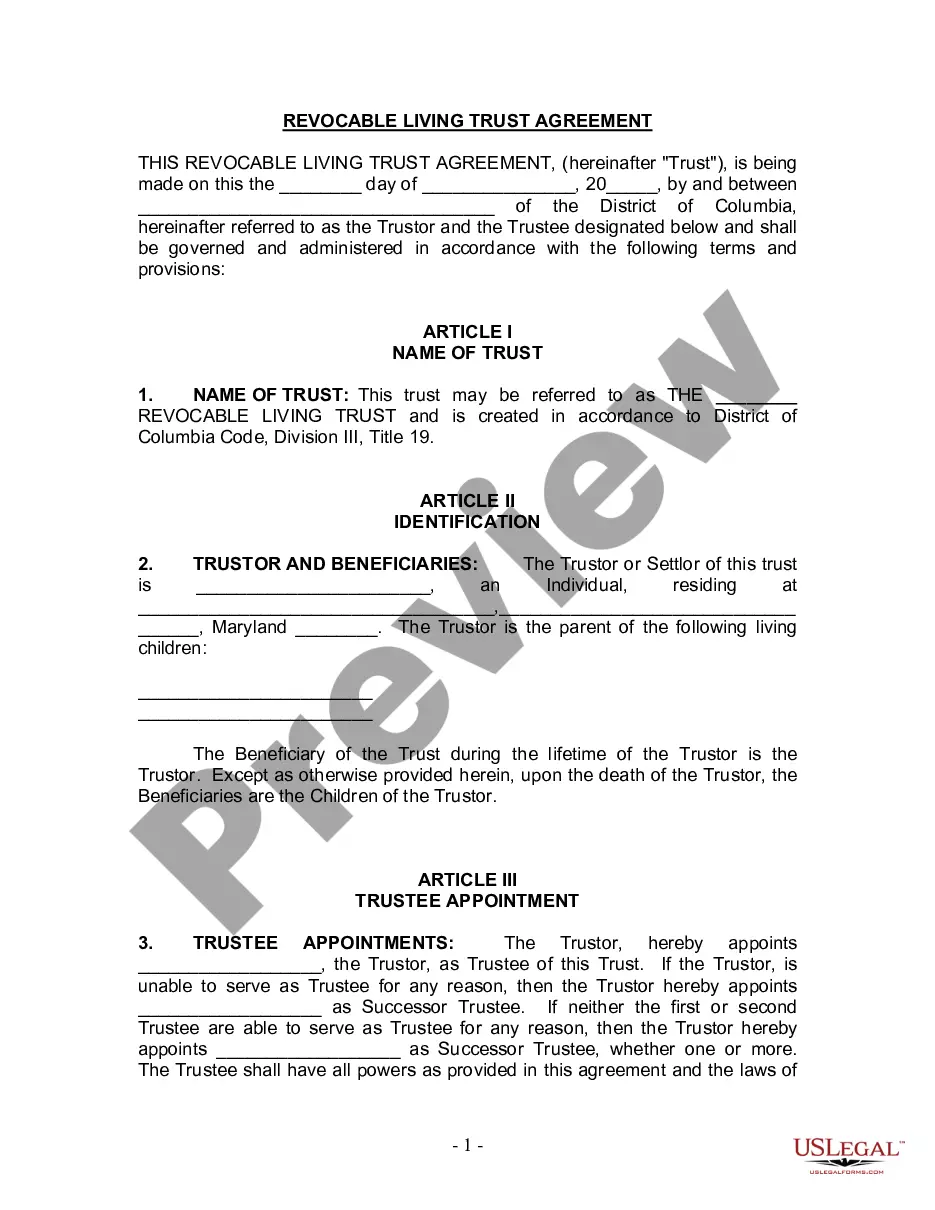
District of Columbia Living Trust for Individual Who is Single, Divorced or Widow (or Widower) with Children

What is this form?
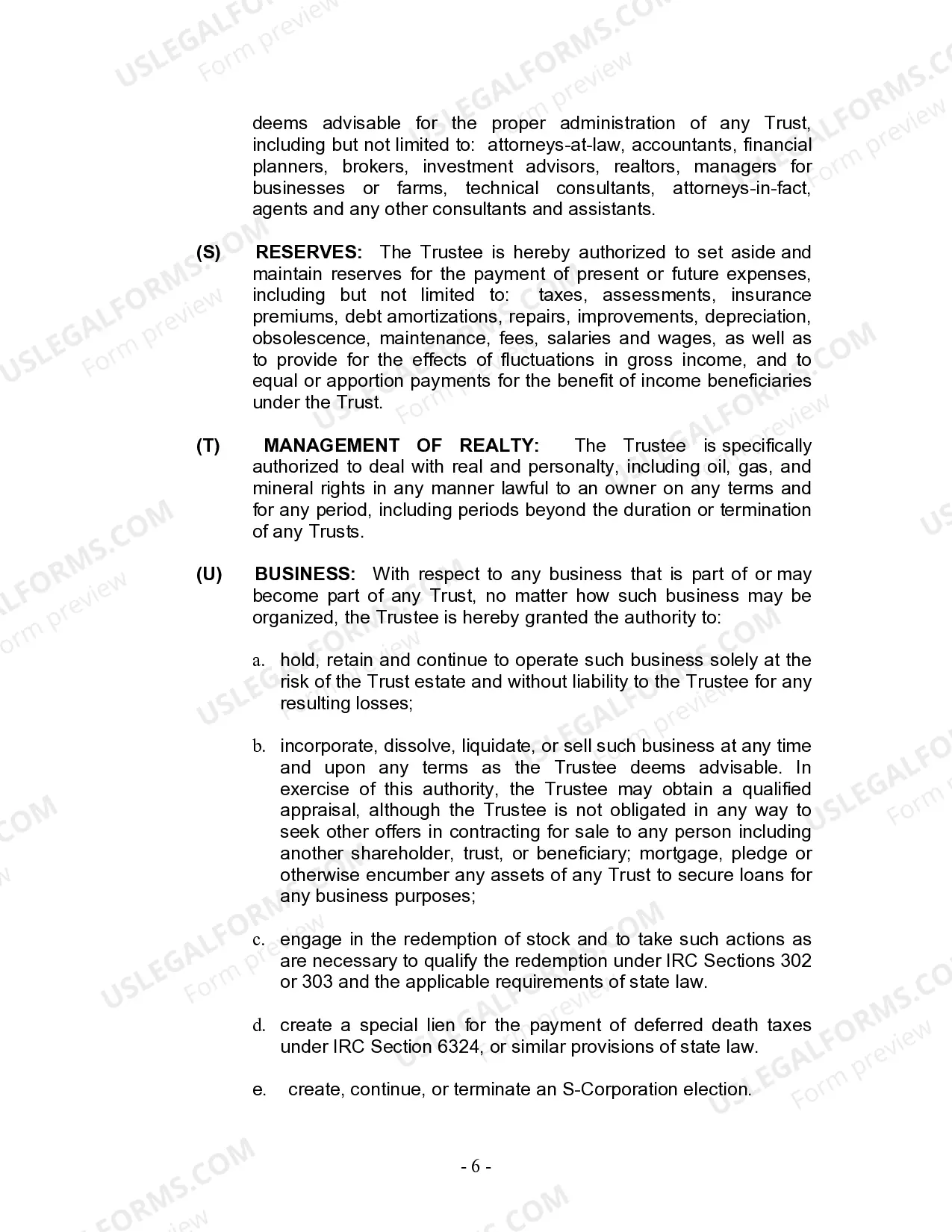
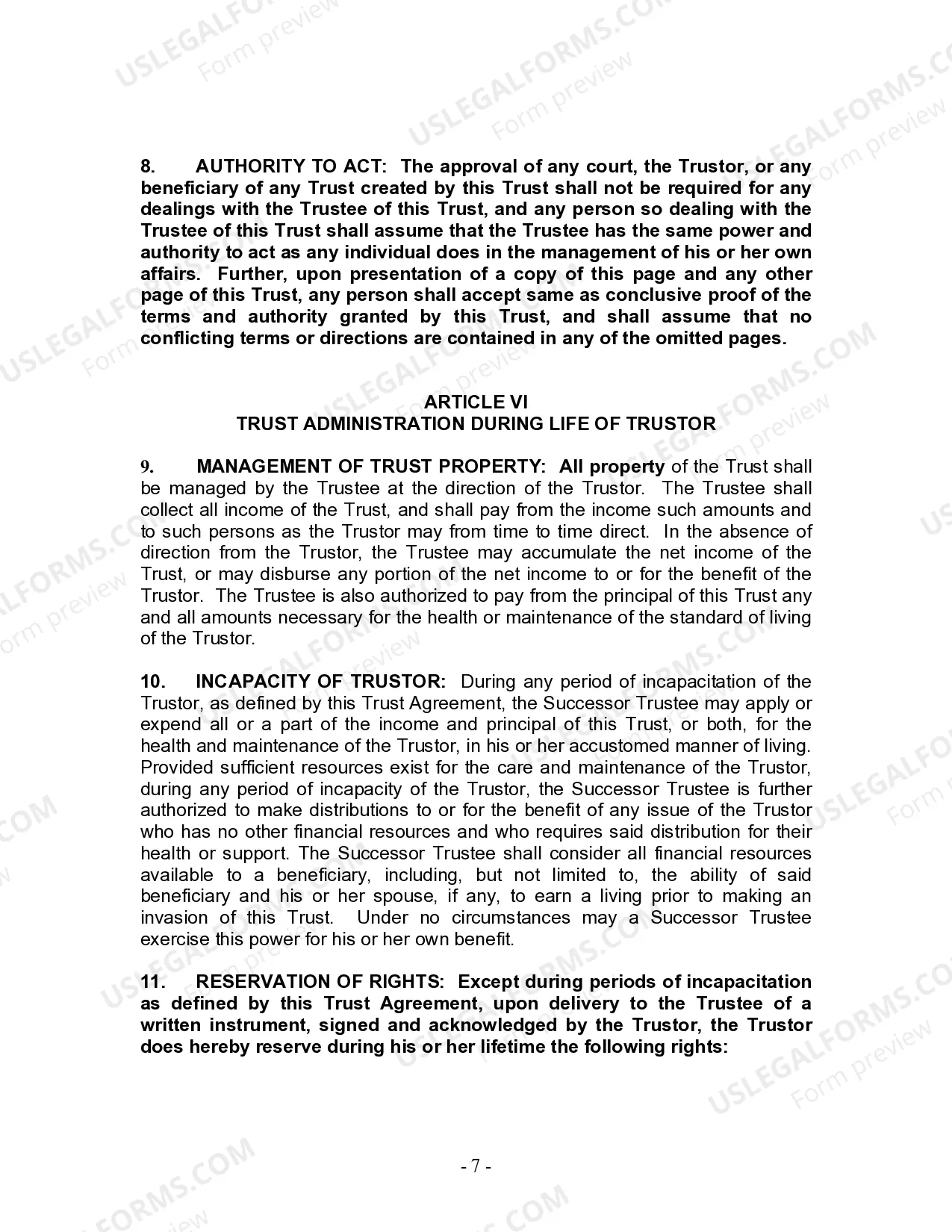
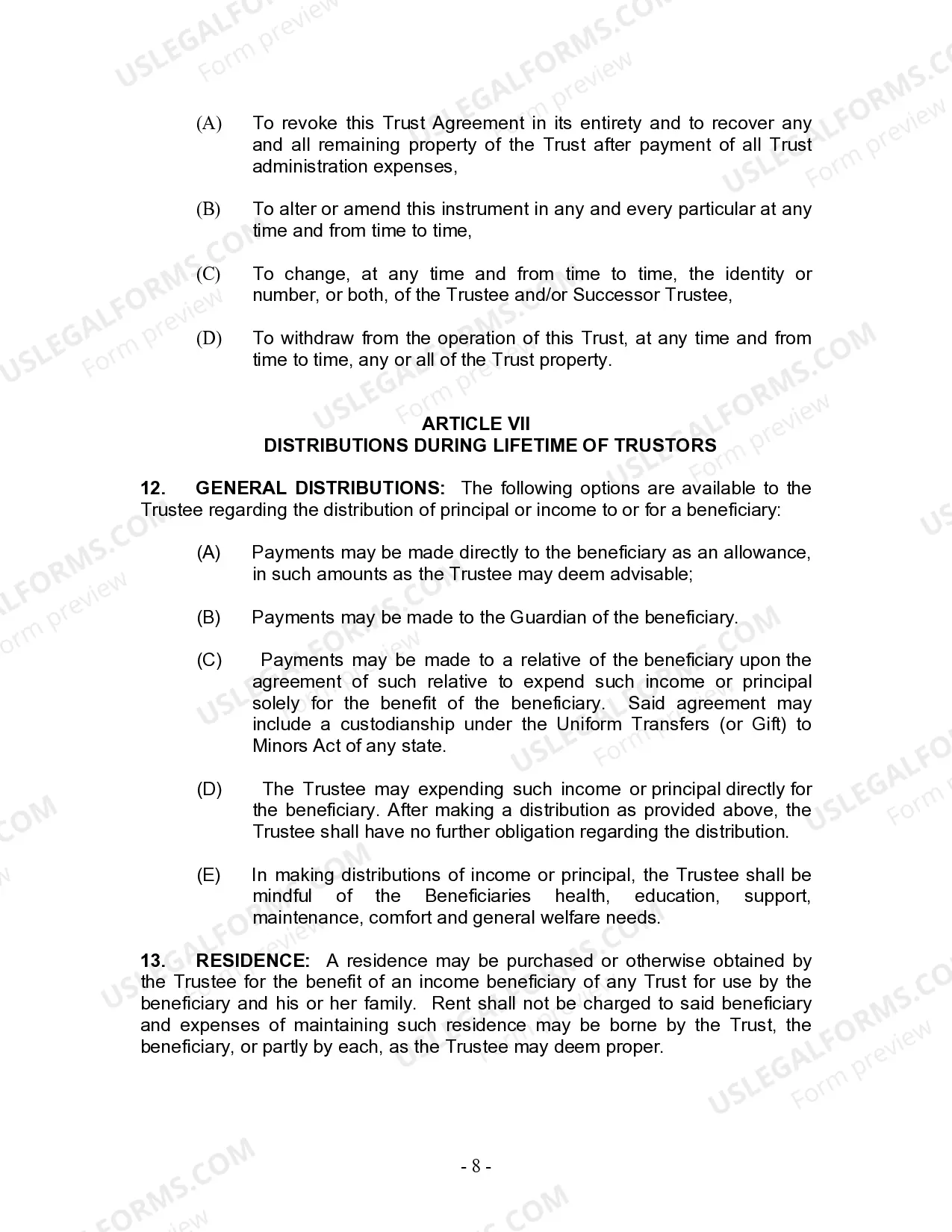
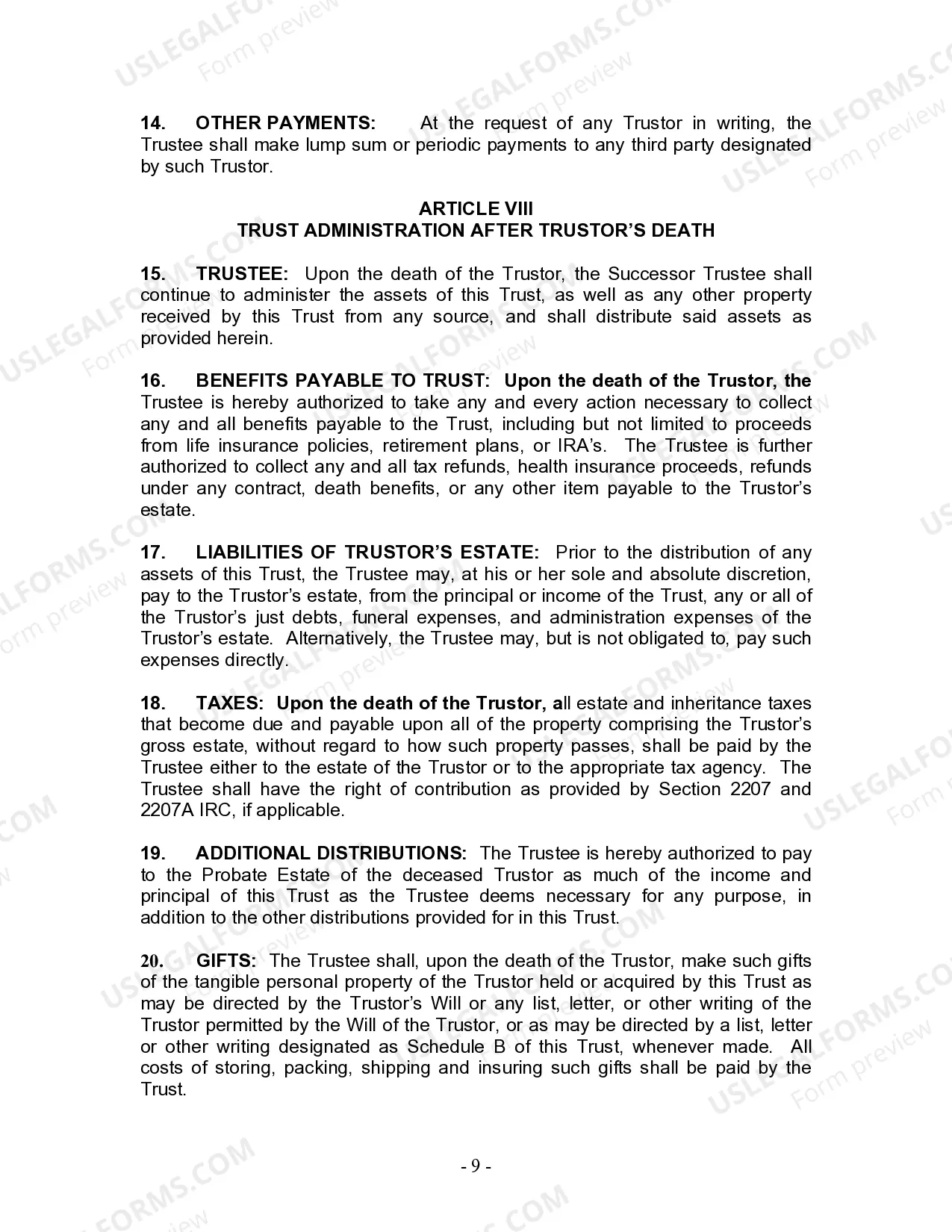
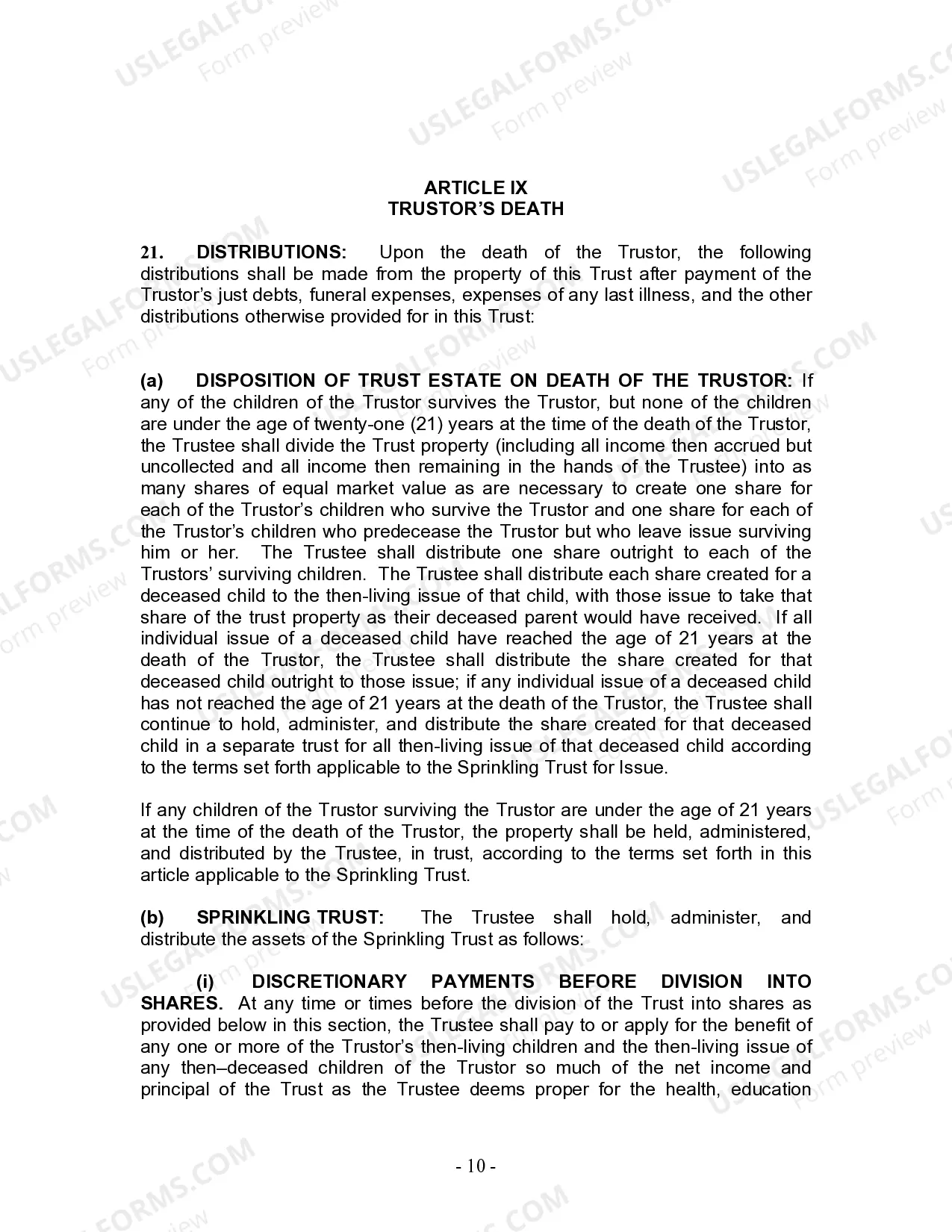
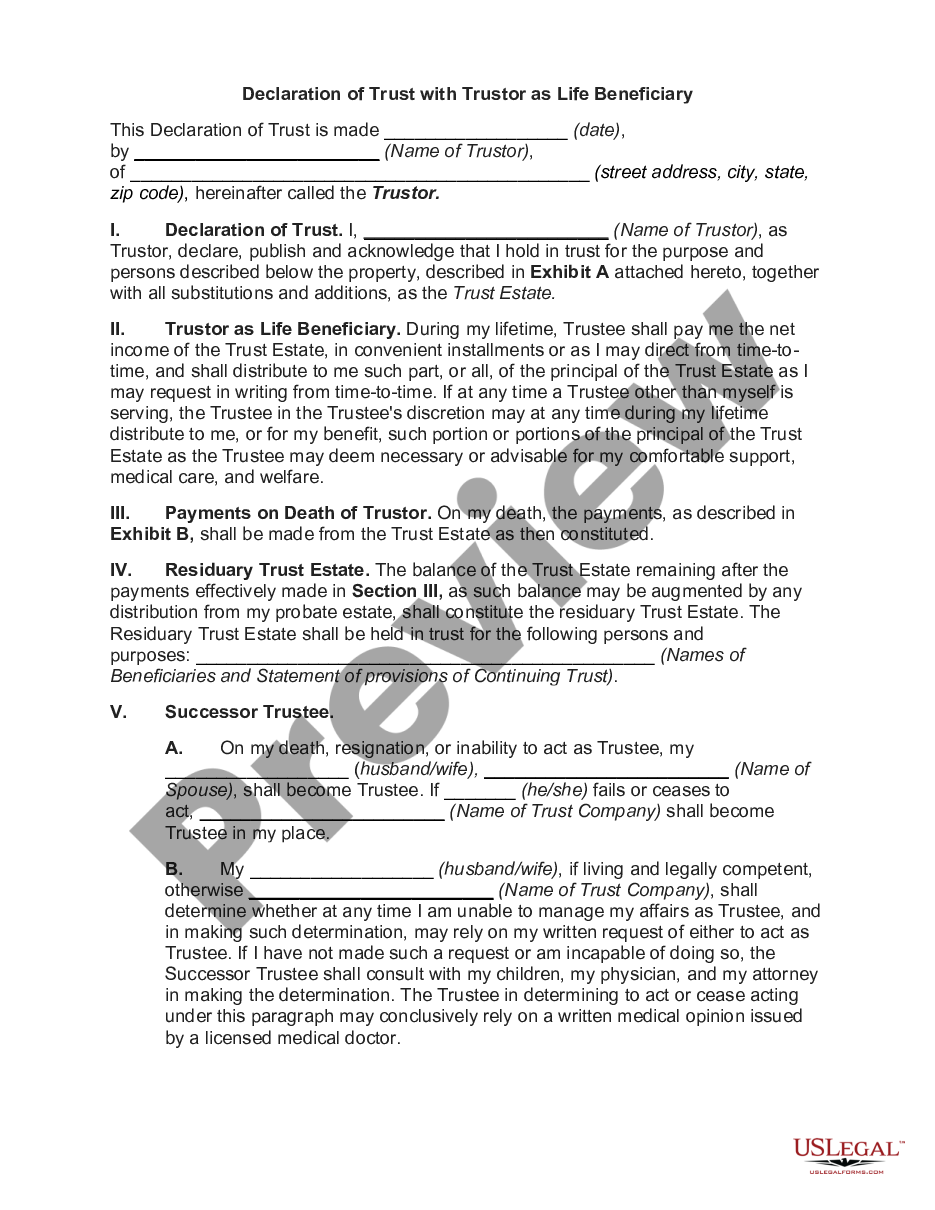
This Living Trust for Individuals Who are Single, Divorced, or Widowed with Children is a legal document that allows you to create a revocable trust during your lifetime. This trust can help manage and distribute your assets to your children after your death, eliminating the need for probate. Unlike a will, which only takes effect after your death, this living trust operates while you are still alive, giving you more control over your assets.
Form components explained
- Name of the trust and its identification.
- Designation of the Trustor (individual creating the trust), beneficiaries (children), and trustee (individual managing the trust).
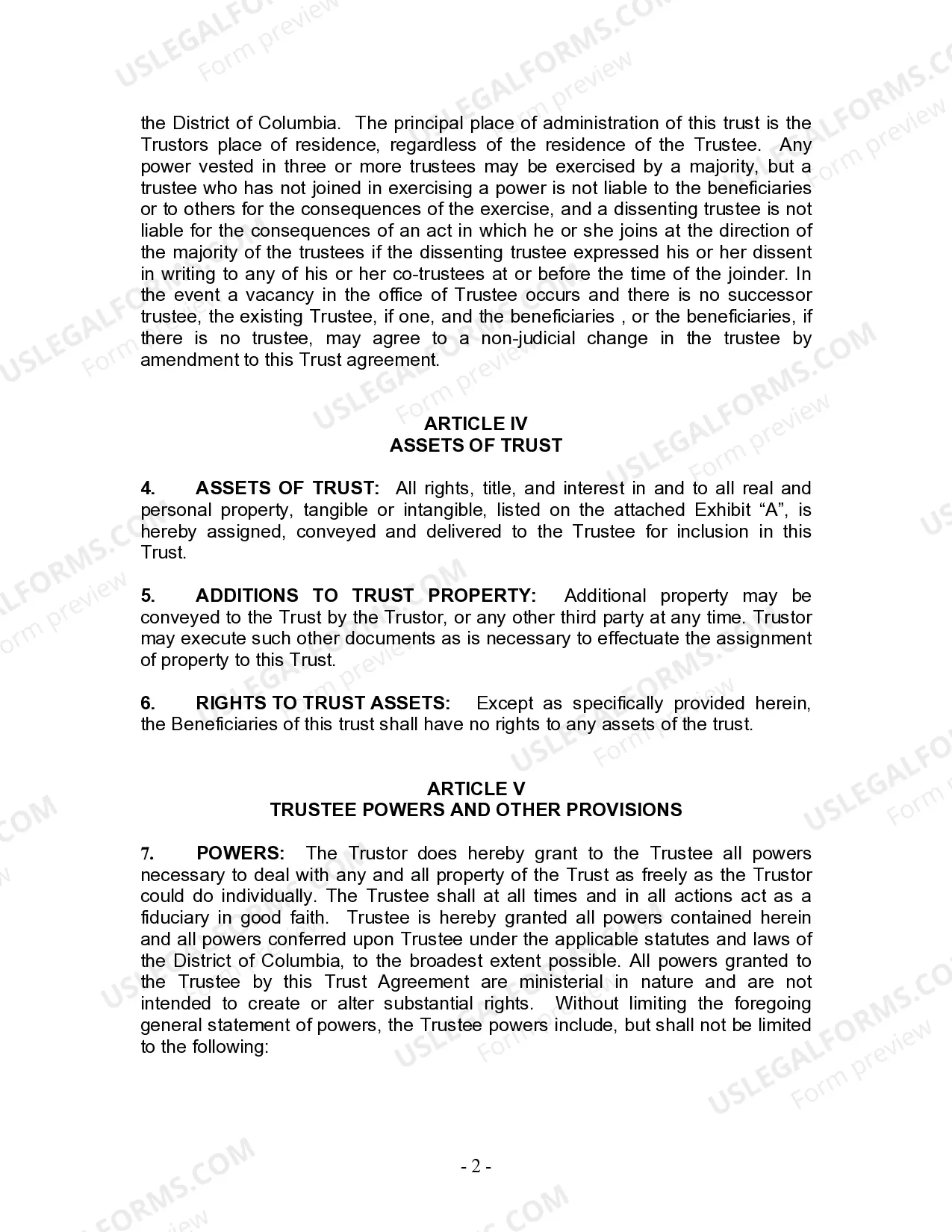
- Details about the assets included in the trust and instructions for managing these assets.
- Provisions for distributions to beneficiaries during and after the Trustor's lifetime.
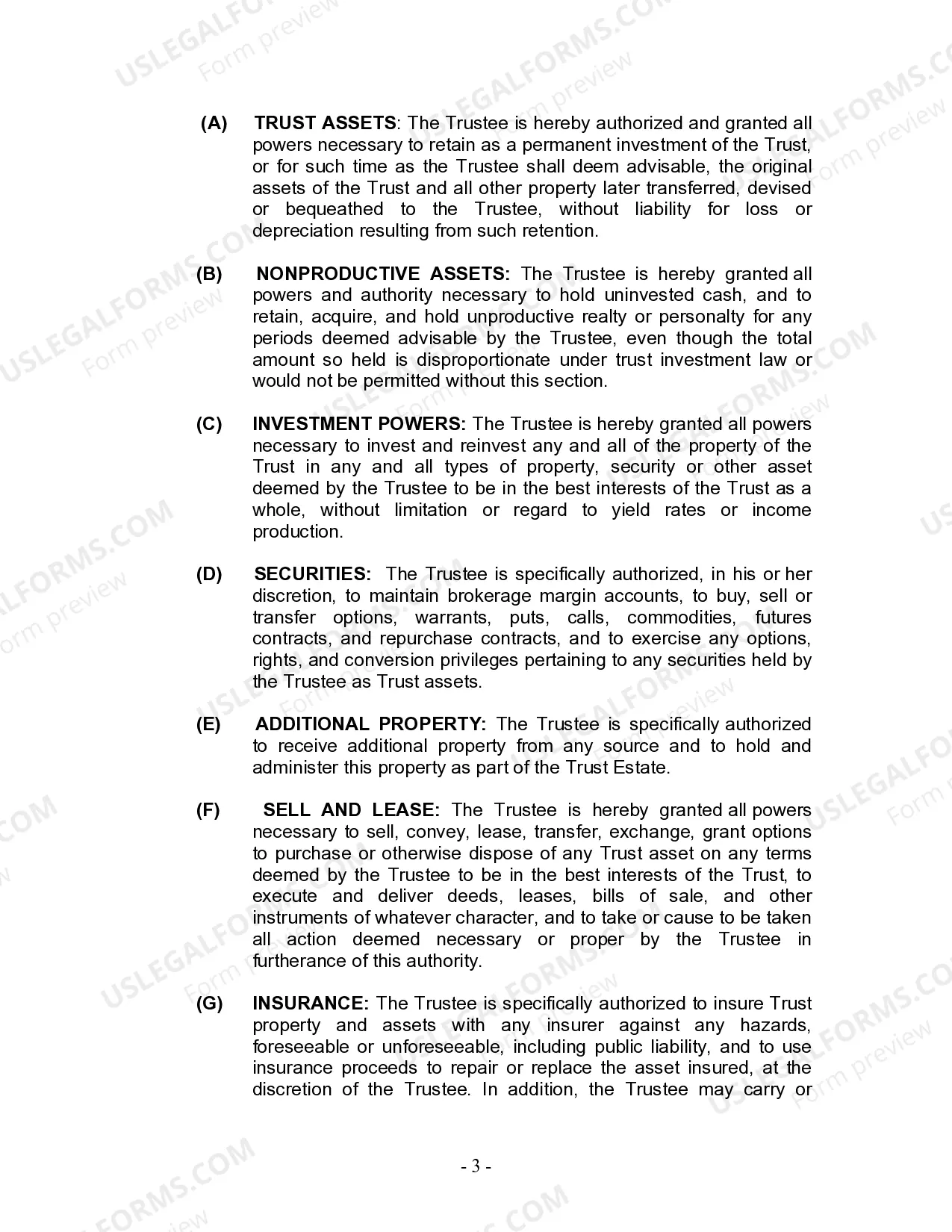
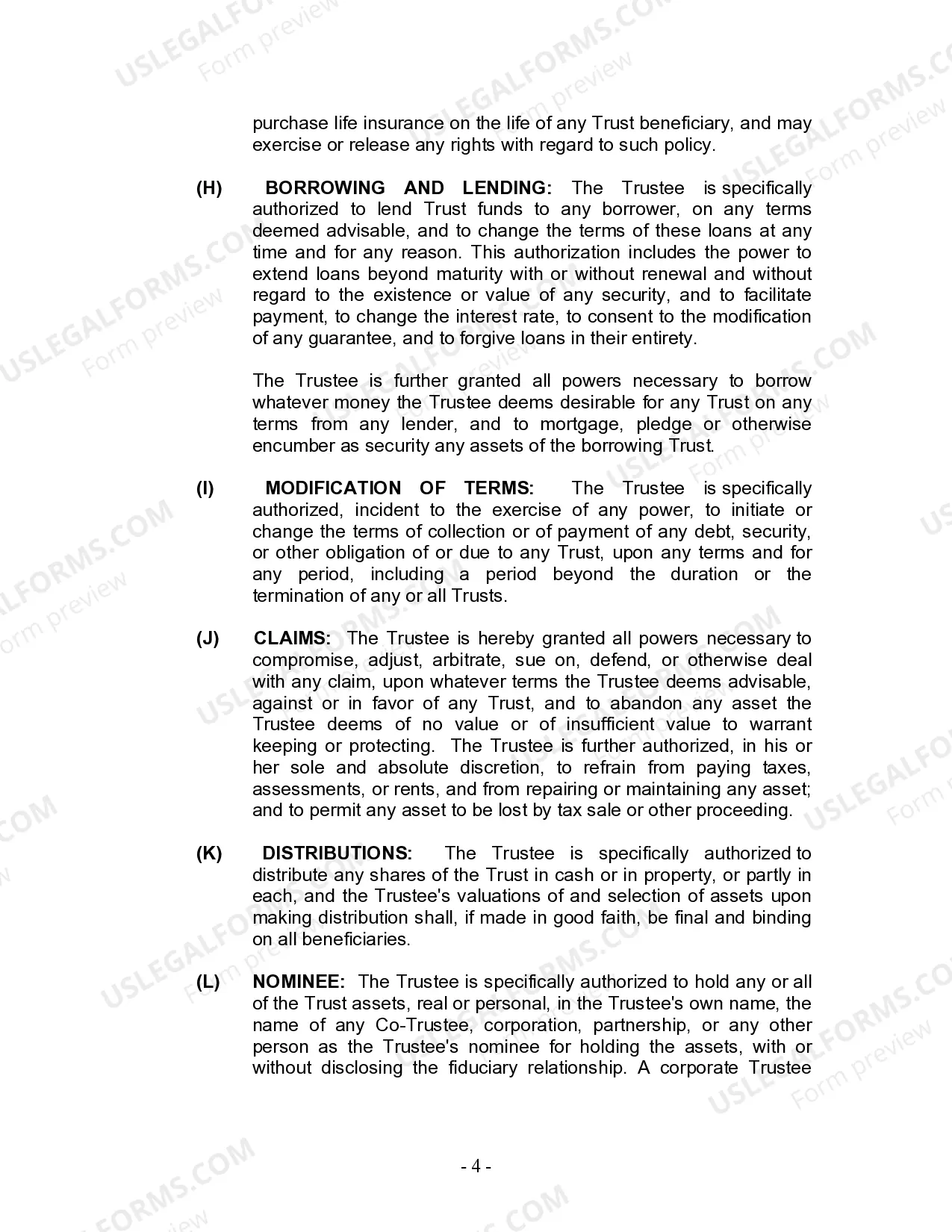
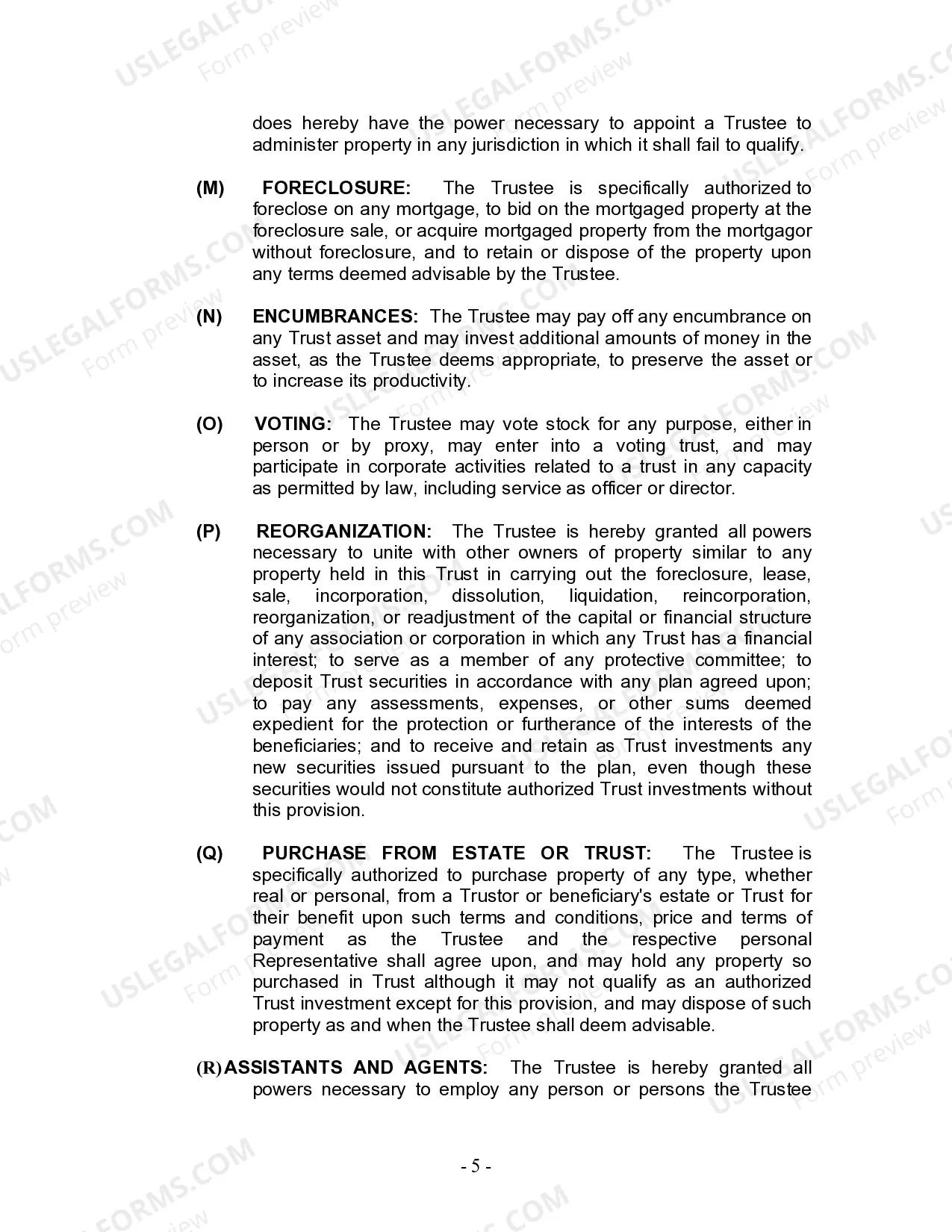
- Authority and powers granted to the trustee to manage the trust assets.



Common use cases
This form is ideal for individuals who are single, divorced, or widowed and wish to ensure that their assets are managed and distributed according to their wishes after their death. It is particularly useful for parents wanting to provide for their children in a straightforward manner, avoiding the lengthy probate process.
Who this form is for
- Individuals who are single, divorced, or widowed with one or more children.
- Persons looking to manage their assets while retaining control over them.
- Anyone wanting to avoid probate for their estate after their passing.
Steps to complete this form
- Identify the parties involved: the Trustor, Trustee, and Beneficiaries.
- Fill in the name of the trust and specify any assets you wish to include.
- Designate a successor trustee in case the primary trustee is unable to fulfill their duties.
- Sign and date the document in the presence of a notary, if applicable.
- Distribute copies to your chosen trustee and beneficiaries for their records.
Is notarization required?
This form does not typically require notarization unless specified by local law. However, obtaining notarization can help authenticate your trust document and validate its execution.
Get your form ready online
Our built-in tools help you complete, sign, share, and store your documents in one place.
Make edits, fill in missing information, and update formatting in US Legal Forms—just like you would in MS Word.
Download a copy, print it, send it by email, or mail it via USPS—whatever works best for your next step.
Sign and collect signatures with our SignNow integration. Send to multiple recipients, set reminders, and more. Go Premium to unlock E-Sign.
If this form requires notarization, complete it online through a secure video call—no need to meet a notary in person or wait for an appointment.
We protect your documents and personal data by following strict security and privacy standards.

Make edits, fill in missing information, and update formatting in US Legal Forms—just like you would in MS Word.

Download a copy, print it, send it by email, or mail it via USPS—whatever works best for your next step.

Sign and collect signatures with our SignNow integration. Send to multiple recipients, set reminders, and more. Go Premium to unlock E-Sign.

If this form requires notarization, complete it online through a secure video call—no need to meet a notary in person or wait for an appointment.

We protect your documents and personal data by following strict security and privacy standards.
Typical mistakes to avoid
- Failing to adequately identify all assets intended for the trust.
- Not naming a successor trustee or failing to specify their powers.
- Neglecting to update the trust after major life events, such as remarriage or the birth of additional children.
- Not executing the trust according to your stateâs requirements, such as notarization.
Benefits of using this form online
- Convenience in completing and downloading the form at any time.
- Editable fields that allow you to customize your trust easily.
- Access to forms prepared by licensed attorneys, ensuring they are legally sound.
Looking for another form?

Form popularity
FAQ
Establishing a trust in Washington, D.C. involves several important steps. First, you will need to decide on the type of District of Columbia Living Trust for Individuals Who are Single, Divorced, or Widow (or Widower) with Children that suits your needs. Next, drafting the trust document is crucial, and this is best done with the expertise of a qualified attorney. Finally, transferring your assets into the trust ensures that your wishes are carried out, allowing your children to benefit from your trust.
The best person to set up a District of Columbia Living Trust for Individuals Who are Single, Divorced, or Widows (or Widowers) with Children is typically an attorney who specializes in estate planning. They have the knowledge and experience needed to navigate the complexities of trust creation. Working with a professional ensures that your trust aligns with your specific needs and complies with DC laws. Furthermore, such an expert can help customize the trust to protect your children's interests effectively.
Suze Orman emphasizes the importance of a living trust in her financial advice, especially for individuals in unique situations, like those who are single, divorced, or widowed with children. She often points out that a District of Columbia Living Trust for Individuals Who are Single, Divorced, or Widow (or Widower) with Children can help ensure that your assets are passed on efficiently to your loved ones. By avoiding the costly and lengthy probate process, you can secure the future for your children without unnecessary delays or complications. If you’re considering setting one up, our US Legal Forms platform can provide the resources and forms you need to get started.
When one spouse dies, a District of Columbia Living Trust for Individuals Who are Single, Divorced, or Widowed with Children allows the surviving spouse to maintain control over the trust's assets. This means they can use, manage, and benefit from the assets without immediate court involvement. The trust ensures that any benefits you intend for your children are preserved and delivered as planned, making the process smoother during a difficult time.
In the case of a living trust created under the District of Columbia Living Trust for Individuals Who are Single, Divorced, or Widowed with Children, the trust typically remains intact when one spouse passes away. The surviving spouse usually continues to manage the trust assets without disruption. The trust's provisions will guide how the assets are distributed upon the death of either spouse, ensuring the surviving spouse and children are taken care of according to your wishes.
Setting up a District of Columbia Living Trust for Individuals Who are Single, Divorced, or Widowed with Children involves a few important steps. First, you should draft a trust document that outlines how your assets will be managed and distributed. After that, you need to transfer your assets into the trust, which can include properties, bank accounts, and investments. Utilizing a platform like uslegalforms can simplify this process by providing templates and guidance tailored specifically for your situation.
When one spouse passes away, a living trust typically remains in effect but may undergo modifications. In a District of Columbia Living Trust for Individual Who is Single, Divorced or Widow (or Widower) with Children, the surviving spouse often assumes control of the trust's assets unless stated otherwise. It is crucial to properly execute these changes to avoid unnecessary legal challenges or delays in asset distribution.
Yes, a living trust can often be modified after one spouse dies, especially if the trust allows for such changes. If you have established a District of Columbia Living Trust for Individual Who is Single, Divorced or Widow (or Widower) with Children, you may want to adjust the trust’s provisions based on your new circumstances. Consulting with a legal expert can guide you through the necessary amendments to ensure your trust remains aligned with your intentions and goals.
When a spouse passes away, the trust may require immediate attention. For individuals utilizing a District of Columbia Living Trust for Individual Who is Single, Divorced or Widow (or Widower) with Children, it’s vital to review the trust’s terms to determine how assets should be reallocated or managed. Addressing these changes swiftly ensures that beneficiaries are protected and the trust continues to fulfill its purpose according to your wishes.
One major mistake parents make when establishing a trust fund is neglecting to name a suitable trustee. For your District of Columbia Living Trust for Individual Who is Single, Divorced or Widow (or Widower) with Children, it’s crucial to select someone reliable and knowledgeable about managing these funds effectively. Additionally, failing to communicate your wishes clearly can lead to misunderstandings. Clearly stating your intentions can prevent conflicts later on.