Delaware Final Notice of Default for Past Due Payments in connection with Contract for Deed
What is this form?
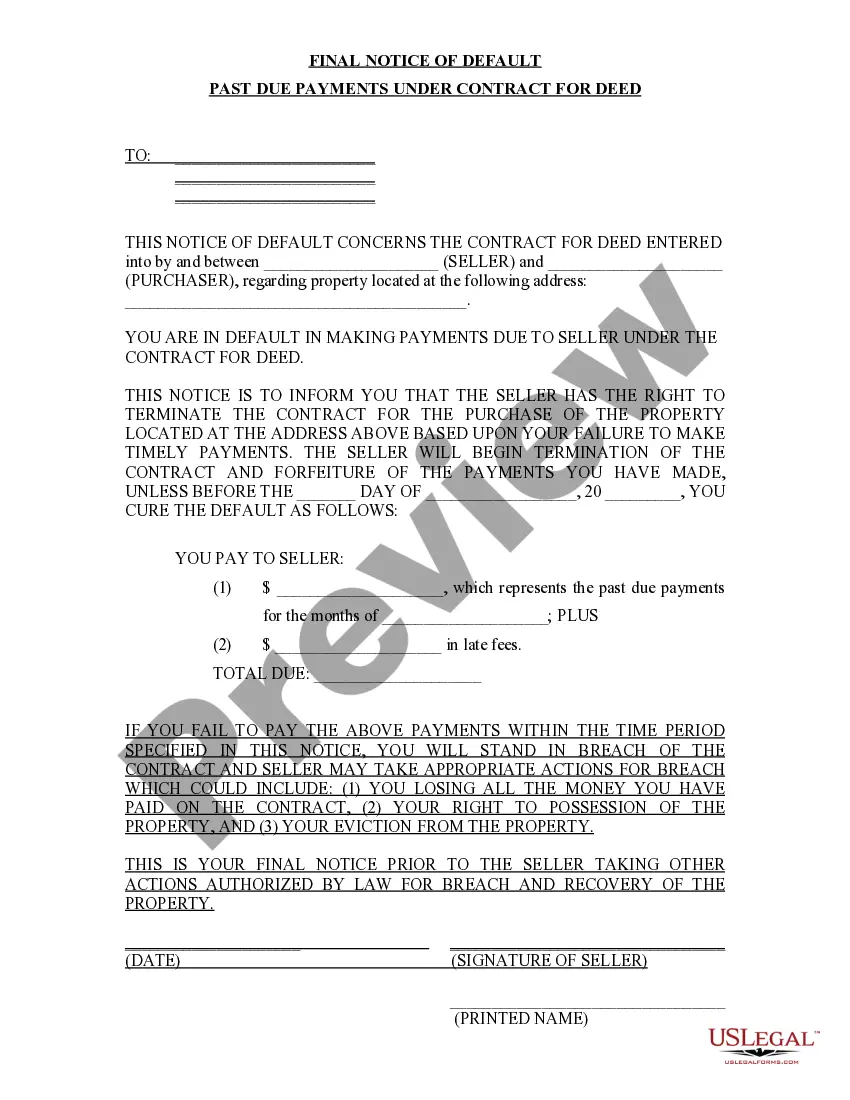
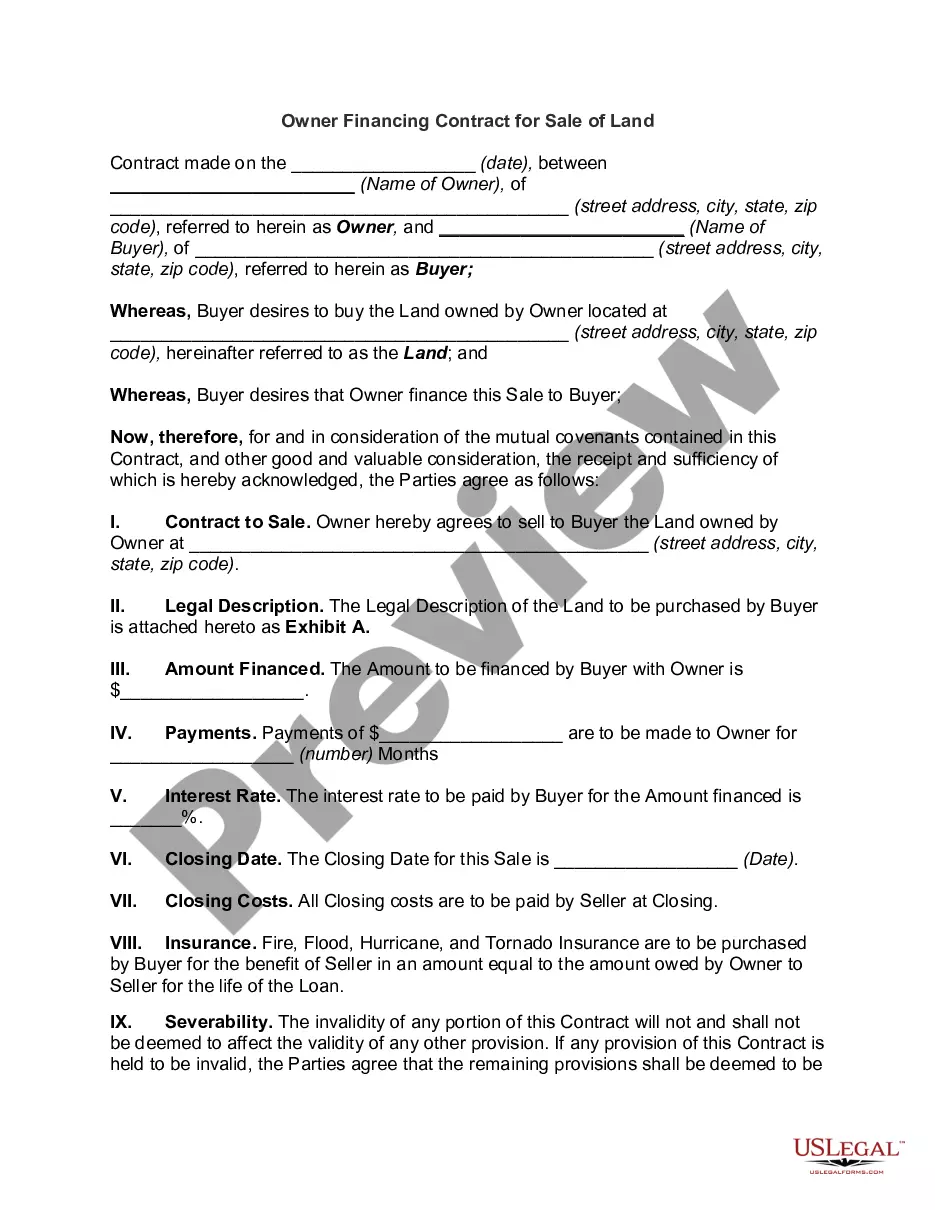
The Final Notice of Default for Past Due Payments in connection with Contract for Deed is a critical legal document used by sellers to formally notify a purchaser of their failure to make timely payments. This notice serves as the last warning before the seller may take action to terminate the contract and regain possession of the property. Unlike other notices, this form emphasizes the consequences of failing to address the past due payments promptly.
Key parts of this document
- Parties involved: Identifies the seller and purchaser in the contract.
- Property details: Specifies the location of the property under contract.
- Payment information: States the overdue payment amounts and any applicable late fees.
- Deadline for payment: Clearly indicates the date by which the payment must be made to avoid default.
- Consequences of non-payment: Outlines the repercussions, including potential eviction and loss of payments made.
When this form is needed
This form is used when a purchaser under a contract for deed has failed to make payments as agreed. Sellers should issue this notice when the purchaser is significantly behind on their payments, as it notifies them of their default status and outlines the prompt actions required to remedy the situation before further legal action is taken.
Who needs this form
This form is intended for:
- Sellers engaging in a contract for deed transaction who need to address payment defaults.
- Purchasers who have missed payments and need to understand the implications of their default.
- Real estate professionals assisting clients in managing contract for deed agreements.
How to complete this form
- Identify the seller and purchaser by filling in their names in the relevant sections.
- Specify the property address to clearly indicate the location under the contract.
- Detail the past due payments and any late fees that have accrued.
- Set a deadline for the purchaser to remedy the payment default.
- Have the seller sign and date the notice to validate it legally.
Notarization requirements for this form
This document requires notarization to meet legal standards. US Legal Forms provides secure online notarization powered by Notarize, allowing you to complete the process through a verified video call, available 24/7.
Get your form ready online
Our built-in tools help you complete, sign, share, and store your documents in one place.
Make edits, fill in missing information, and update formatting in US Legal Forms—just like you would in MS Word.
Download a copy, print it, send it by email, or mail it via USPS—whatever works best for your next step.
Sign and collect signatures with our SignNow integration. Send to multiple recipients, set reminders, and more. Go Premium to unlock E-Sign.
If this form requires notarization, complete it online through a secure video call—no need to meet a notary in person or wait for an appointment.
We protect your documents and personal data by following strict security and privacy standards.

Make edits, fill in missing information, and update formatting in US Legal Forms—just like you would in MS Word.

Download a copy, print it, send it by email, or mail it via USPS—whatever works best for your next step.

Sign and collect signatures with our SignNow integration. Send to multiple recipients, set reminders, and more. Go Premium to unlock E-Sign.

If this form requires notarization, complete it online through a secure video call—no need to meet a notary in person or wait for an appointment.

We protect your documents and personal data by following strict security and privacy standards.
Common mistakes
- Not including accurate payment amounts or due dates.
- Failing to provide the correct property address.
- Omitting details regarding late fees or consequences of non-payment.
- Not signing the notice, which can render it invalid.
Benefits of using this form online
- Convenience of downloading the form instantly from anywhere.
- Editability allows users to customize the form to their specific situation.
- Reliable access to attorney-drafted templates ensures legal compliance.
Looking for another form?
Form popularity
FAQ
Several states, including Delaware, New Jersey, and Florida, operate under judicial foreclosure laws. This means that lenders must take legal action through the courts to reclaim properties. Understanding whether you are in a judicial or non-judicial state can help you navigate the process after receiving a Delaware Final Notice of Default for Past Due Payments in connection with Contract for Deed.
The number of missed house payments that can trigger foreclosure varies by lender and state guidelines. Generally, missing three to six payments may initiate the foreclosure process, especially after receiving a Delaware Final Notice of Default for Past Due Payments in connection with Contract for Deed. It is crucial to communicate with your lender to explore options before reaching this point.
Yes, Delaware is indeed a judicial foreclosure state. This means that lenders typically must go through the court system to foreclose on a property. If you are facing a Delaware Final Notice of Default for Past Due Payments in connection with Contract for Deed, you should be prepared for potential legal proceedings.
Delaware is primarily a judicial foreclosure state, meaning most foreclosures are handled through the courts. However, there are scenarios where a non-judicial option could be available, depending on the specifics of the contract. The Delaware Final Notice of Default for Past Due Payments in connection with Contract for Deed is usually tied to judicial processes.
The main difference lies in the legal processes involved. In a judicial foreclosure, the lender files a lawsuit against the borrower, often leading to a court decision. In contrast, strict foreclosure allows the lender to take immediate ownership of the property without going through the court, typically after a Delaware Final Notice of Default for Past Due Payments in connection with Contract for Deed.
Yes, a non-judicial foreclosure can negatively impact your credit score. When you receive a Delaware Final Notice of Default for Past Due Payments in connection with Contract for Deed, it usually leads to a public record that creditors may access. This record can lower your credit score, making it more challenging to secure loans or favorable interest rates in the future.
To repossess land, you need to follow a legal procedure that typically begins with issuing a Delaware Final Notice of Default for Past Due Payments in connection with Contract for Deed. This notice must clearly inform the property owner of their overdue payments and the consequences of failing to resolve the issue. After providing this notice, if the payment is not made, you may proceed with a foreclosure process which may include court involvement. Utilizing the resources available through US Legal Forms can help you navigate this process more smoothly, ensuring you follow all necessary legal steps effectively.
The foreclosure process in Louisiana typically involves a public auction after a formal notice of default is issued. As a homeowner, it’s crucial to respond and seek options to prevent this outcome. Learning from the Delaware Final Notice of Default for Past Due Payments in connection with Contract for Deed will help you understand your rights and options.
In West Virginia, foreclosure generally involves a judicial process where the lender files a lawsuit to reclaim the property due to unpaid debt. The homeowner is provided with opportunities to reverse the situation through payments or defenses. Recognizing similar processes outlined in the Delaware Final Notice of Default for Past Due Payments in connection with Contract for Deed can help you respond appropriately.
Receiving a default notice indicates that you have not met your contractual payment obligations, which may lead to further legal actions, including foreclosure. This is a serious matter that requires immediate attention. Understanding the Delaware Final Notice of Default for Past Due Payments in connection with Contract for Deed can empower you to take necessary steps to address your situation.