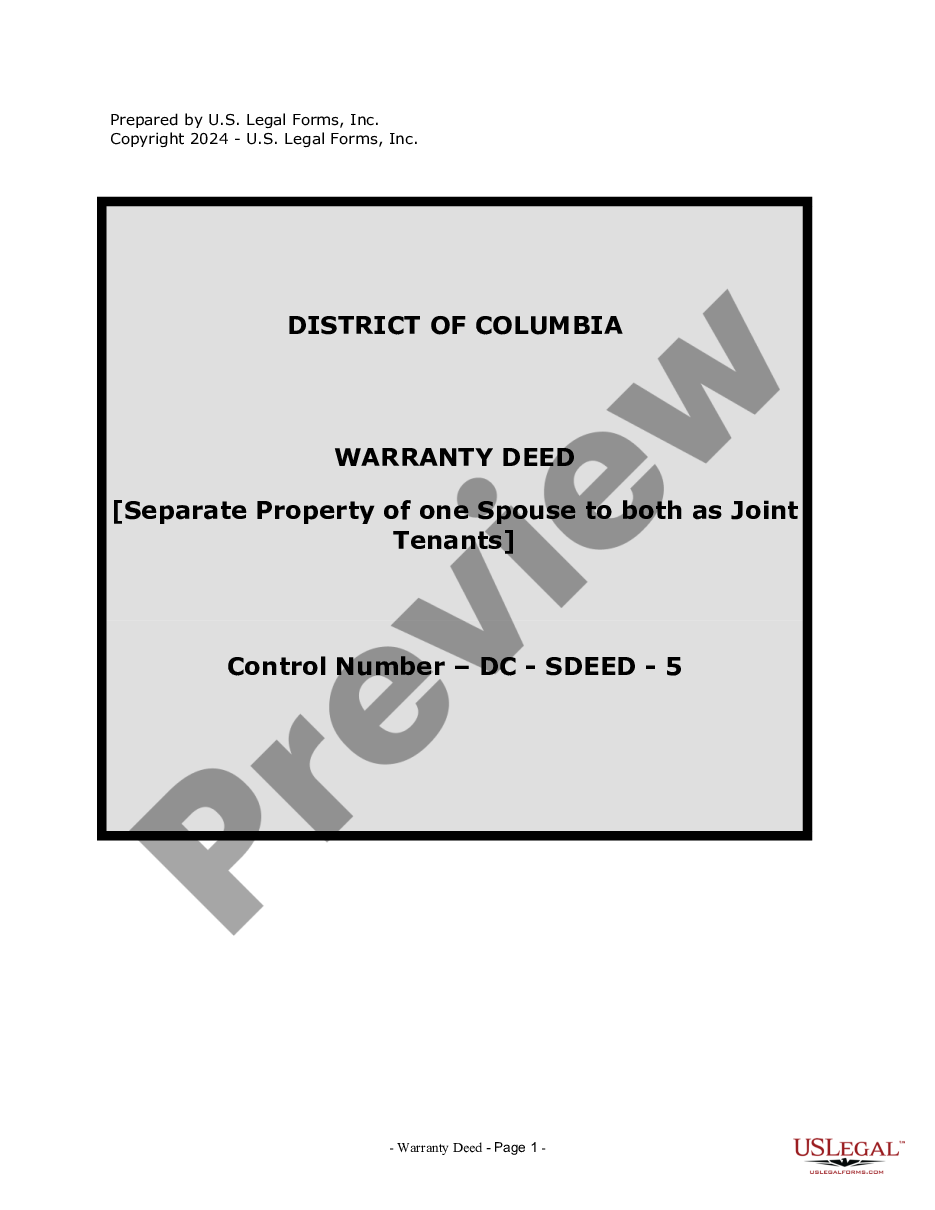
District of Columbia Warranty Deed to Separate Property of one Spouse to both as Joint Tenants
What is this form?
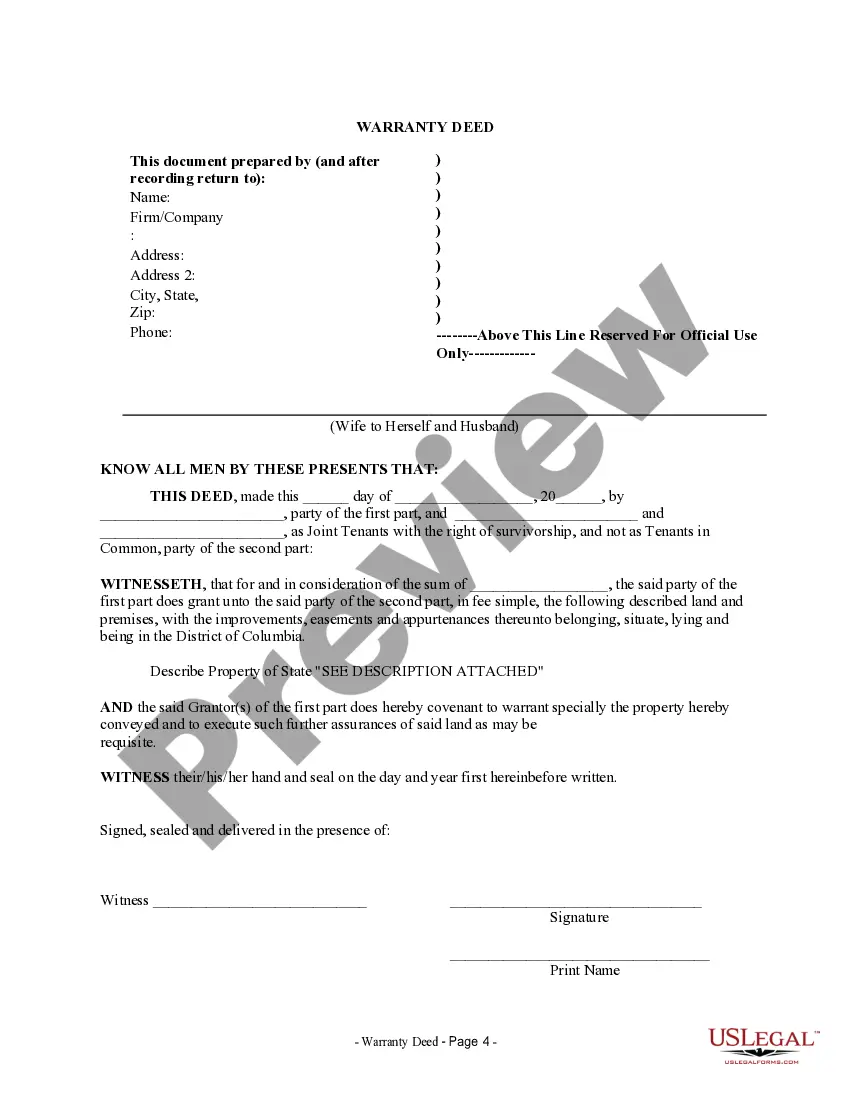
This document is a Warranty Deed dedicated to the transfer of property from one spouse to both spouses as joint tenants. It is essential for legally conveying property ownership, ensuring that both spouses share equal rights to the property. This form is distinct from other property transfer documents in that it specifically addresses transfers between spouses and establishes a joint ownership arrangement, which can have implications for inheritance and property rights.
Key parts of this document
- Identification of the grantor and grantee.
- Legal description of the property being conveyed.
- Covenant by the grantor to warrant the property.
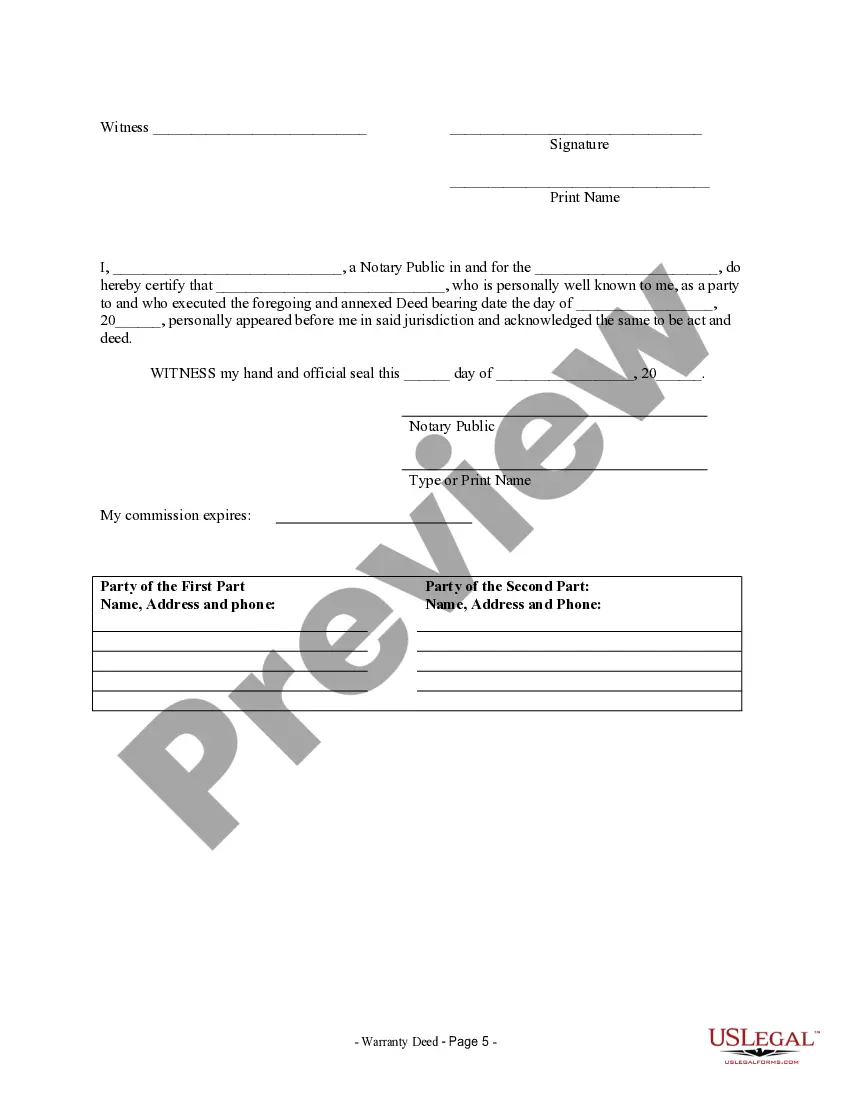
- Signatures of the parties involved and witnesses.
- Notary acknowledgment to validate the deed.


When this form is needed
This form should be used when one spouse wishes to transfer property they own separately to both spouses as joint tenants. It is particularly useful in scenarios where couples wish to clearly establish joint ownership, which can provide legal protections and simplify the transfer of ownership upon death. Ideal situations include marriage, asset protection planning, or when consolidating property ownership between spouses.
Who needs this form
- Married couples wishing to consolidate property ownership.
- One spouse having separate property they want to share with their partner.
- Individuals planning estate arrangements that involve joint property ownership.
How to prepare this document
- Identify the parties involved: the grantor and the grantee.
- Provide the legal description of the property being transferred.
- Enter the consideration amount (the price for the property transfer).
- Gather signatures from both parties and obtain witness signatures.
- Complete the notary section to verify and authorize the document.
Does this form need to be notarized?
This form must be notarized to be legally valid. US Legal Forms provides secure online notarization powered by Notarize, allowing you to complete the process through a verified video call.
Get your form ready online
Our built-in tools help you complete, sign, share, and store your documents in one place.
Make edits, fill in missing information, and update formatting in US Legal Forms—just like you would in MS Word.
Download a copy, print it, send it by email, or mail it via USPS—whatever works best for your next step.
Sign and collect signatures with our SignNow integration. Send to multiple recipients, set reminders, and more. Go Premium to unlock E-Sign.
If this form requires notarization, complete it online through a secure video call—no need to meet a notary in person or wait for an appointment.
We protect your documents and personal data by following strict security and privacy standards.

Make edits, fill in missing information, and update formatting in US Legal Forms—just like you would in MS Word.

Download a copy, print it, send it by email, or mail it via USPS—whatever works best for your next step.

Sign and collect signatures with our SignNow integration. Send to multiple recipients, set reminders, and more. Go Premium to unlock E-Sign.

If this form requires notarization, complete it online through a secure video call—no need to meet a notary in person or wait for an appointment.

We protect your documents and personal data by following strict security and privacy standards.
Common mistakes
- Failing to include a legal description of the property.
- Not obtaining the required signatures from all parties and witnesses.
- Neglecting to have the deed notarized, which may invalidate the transfer.
Benefits of using this form online
- Immediate access to the form prevents delays in the property transfer process.
- Editability allows users to customize the document to fit specific legal needs.
- Reliable templates created by licensed attorneys ensure compliance with legal standards.
Main things to remember
- The Warranty Deed allows spouses to transfer property as joint tenants effectively.
- Proper completion and notarization of the form are crucial for legal validity.
- Ensure you understand local laws regarding property ownership and transfers.
Looking for another form?
Form popularity
FAQ
A warranty deed can include provisions for survivorship, but it is not inherently a survivorship deed. The key difference lies in the intent and language used within the deed. If you wish to ensure that ownership passes automatically to your spouse, make sure the District of Columbia Warranty Deed to Separate Property of one Spouse to both as Joint Tenants explicitly states this intent, which uslegalforms can help you achieve with proper documentation.
No, a survivorship deed and a warranty deed are not the same, although they can coexist. A survivorship deed primarily focuses on how property ownership is structured upon death. Meanwhile, a District of Columbia Warranty Deed to Separate Property of one Spouse to both as Joint Tenants assures that the title is valid and clear. Understanding these distinctions can help you make informed decisions about your property ownership.
To determine if your deed has survivorship, check for specific language indicating joint tenancy or rights of survivorship. This information will typically be found in the deed itself, affirming that both parties will inherit the property automatically upon the other's death. If you're unsure, consulting a legal professional or using resources from uslegalforms can clarify the details regarding your District of Columbia Warranty Deed to Separate Property of one Spouse to both as Joint Tenants.
Having property in both spouses' names can simplify ownership and decision-making. This arrangement can also protect the interests of both parties, especially in case of divorce or legal disputes. A District of Columbia Warranty Deed to Separate Property of one Spouse to both as Joint Tenants facilitates this shared ownership effectively.
Married couples often use joint tenancy as their preferred form of ownership. This allows both spouses to benefit from rights of survivorship, ensuring that if one spouse passes away, the surviving spouse automatically inherits the entire property. Understanding the nuances of a District of Columbia Warranty Deed to Separate Property of one Spouse to both as Joint Tenants can help clarify these arrangements.
A property owned by both spouses is typically referred to as jointly owned property. This ownership arrangement often allows both partners to have equal say and rights over the property. A District of Columbia Warranty Deed to Separate Property of one Spouse to both as Joint Tenants can facilitate this form of ownership.
When joint tenants take title to real estate through the same legal instrument, it is referred to as taking title as joint tenants. This method ensures that each tenant has an equal share and right of survivorship in the property. Considering a District of Columbia Warranty Deed to Separate Property of one Spouse to both as Joint Tenants can be beneficial in this context.
When a married couple owns a house together, it is commonly termed joint ownership or joint tenancy. This arrangement allows both spouses to have equal rights to the property, which is important for financial and legal matters. Utilizing a District of Columbia Warranty Deed to Separate Property of one Spouse to both as Joint Tenants can formalize this arrangement.
A warranty deed can establish joint tenancy if it specifically includes language to that effect. This form of deed guarantees that both parties have equal ownership of the property and rights of survivorship. Thus, it is relevant when forming a District of Columbia Warranty Deed to Separate Property of one Spouse to both as Joint Tenants.
Any property acquired by either spouse during marriage is typically referred to as marital property. This type of property can include real estate, personal belongings, and financial assets. Understanding this distinction helps when considering a District of Columbia Warranty Deed to Separate Property of one Spouse to both as Joint Tenants.