District of Columbia Postnuptial Agreements Package
Understanding this form package
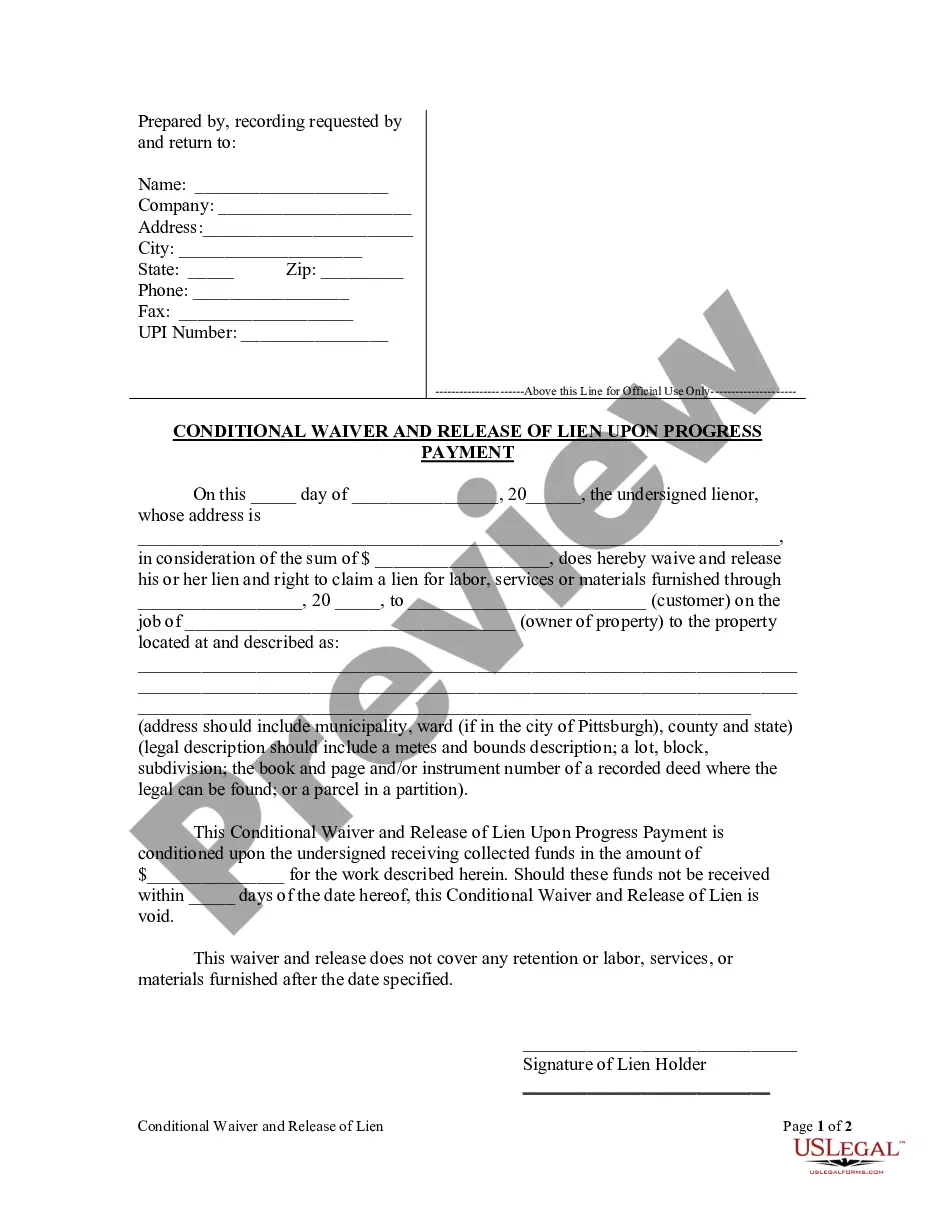
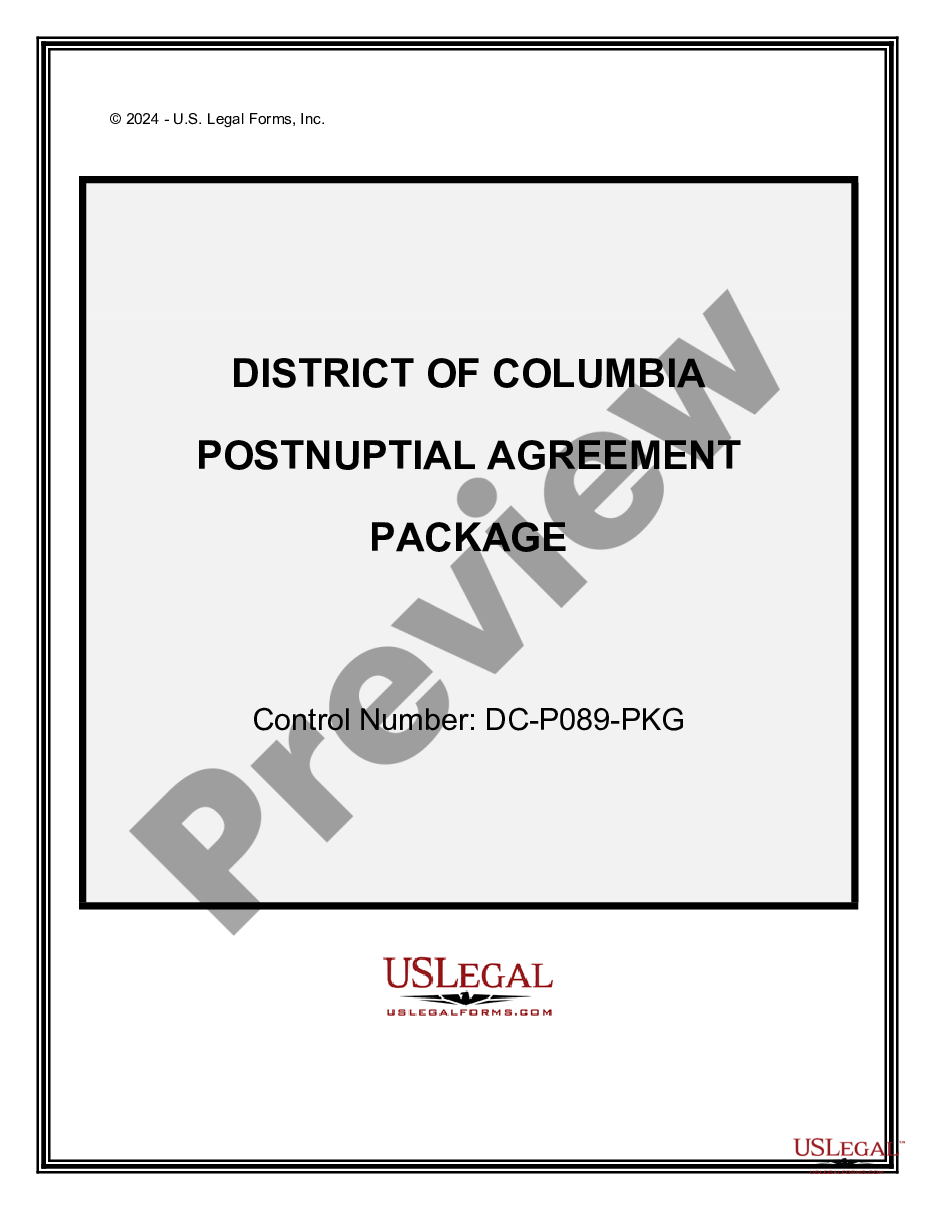
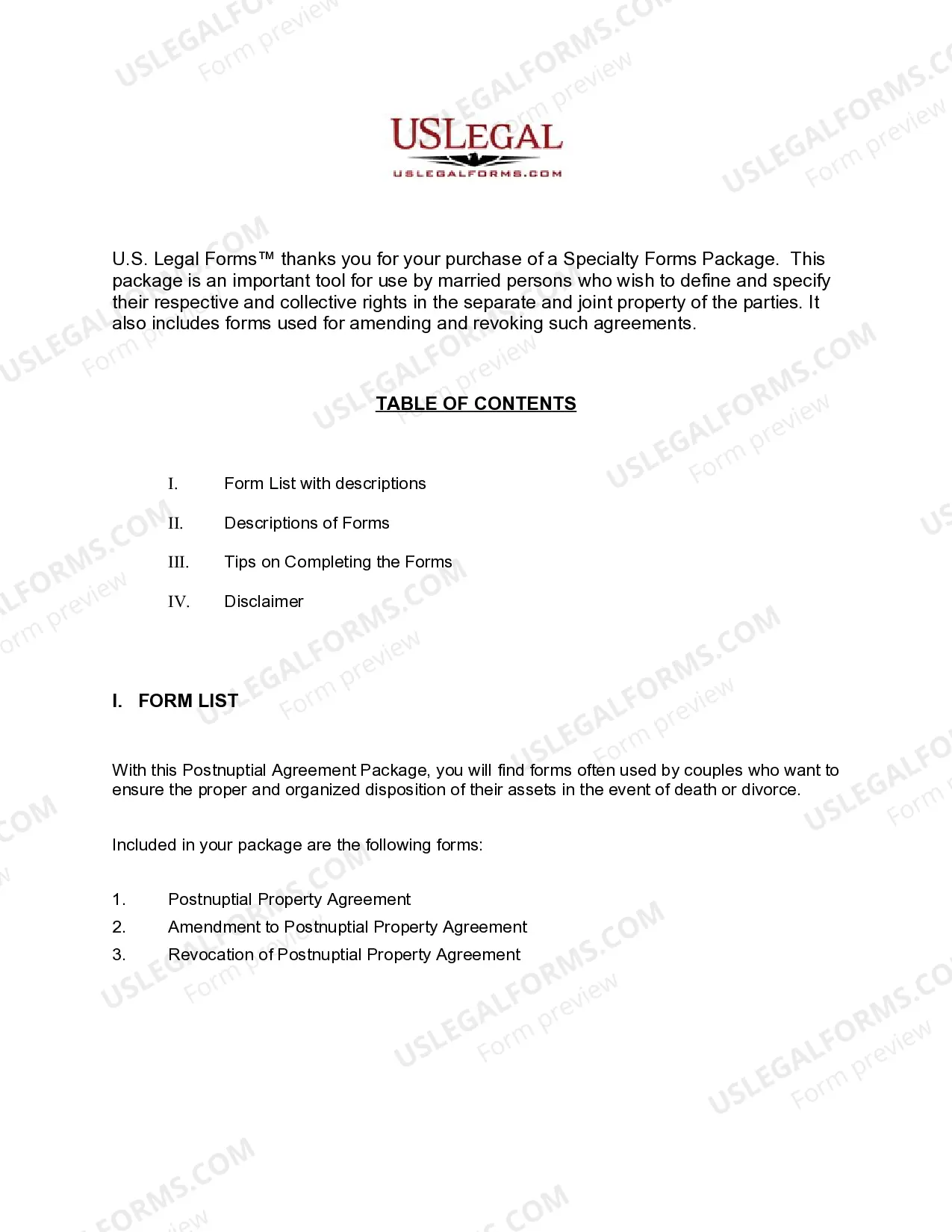
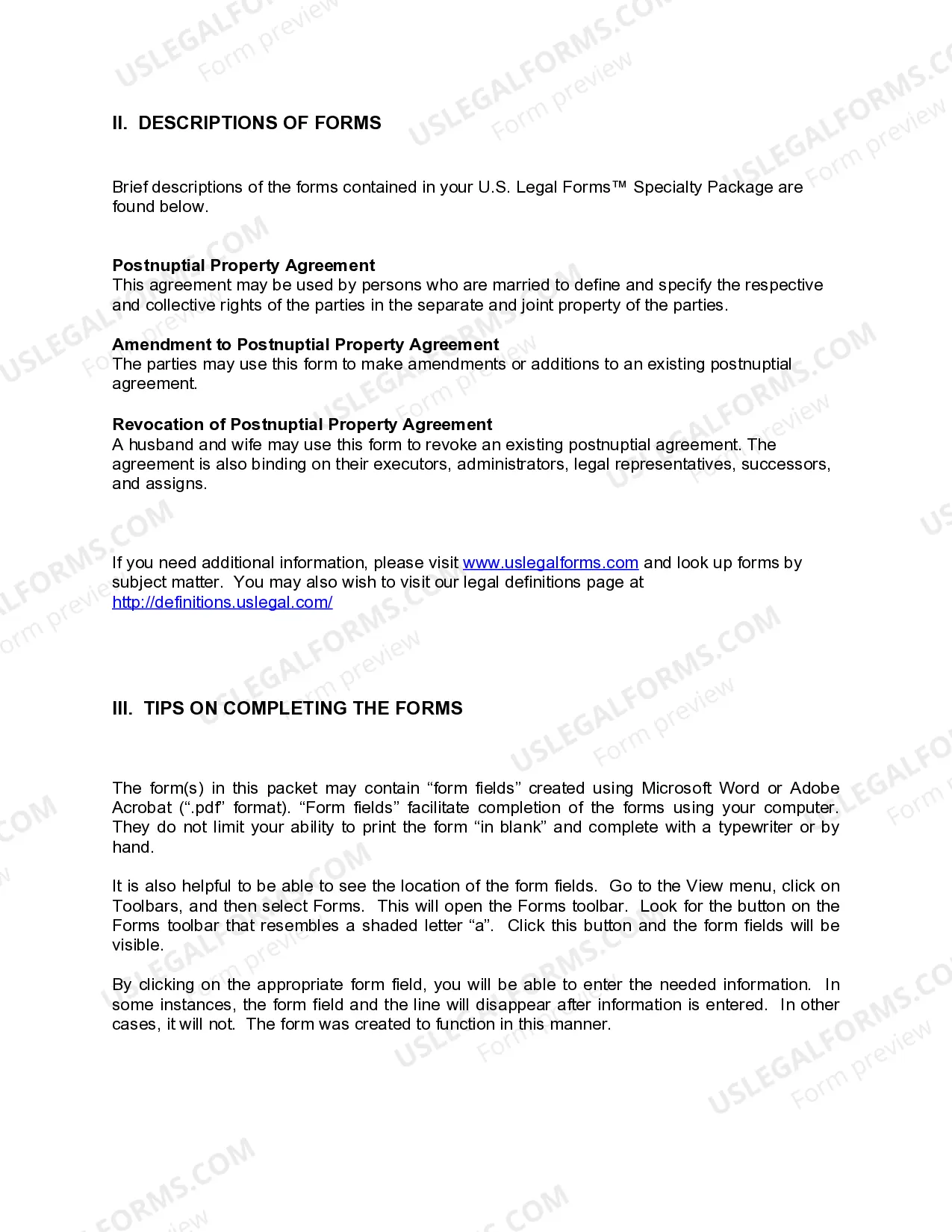
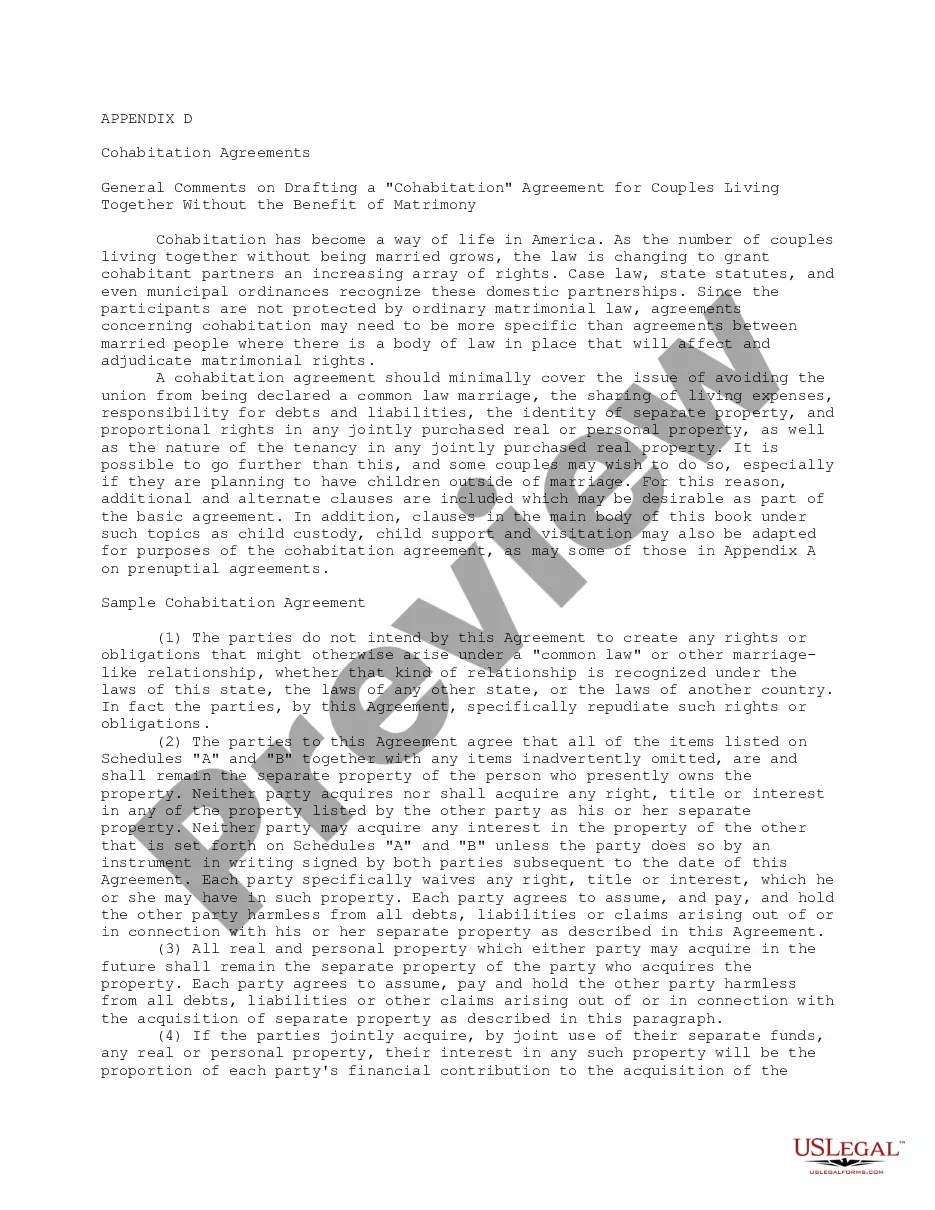
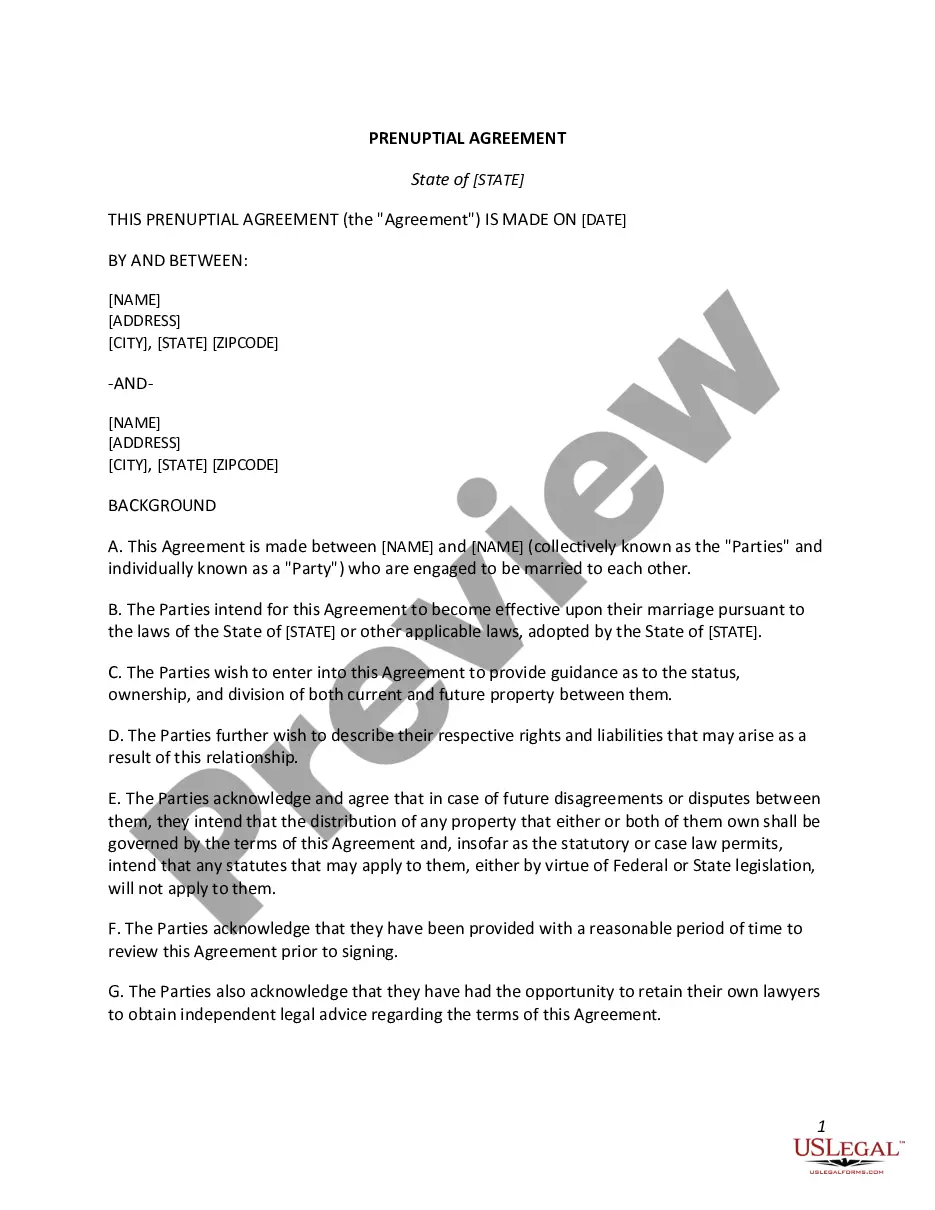
The District of Columbia Postnuptial Agreements Package includes essential legal forms for married couples seeking to define their property rights and responsibilities. This form package enables couples to create a clear agreement regarding the management and distribution of their separate and joint assets in the event of death or divorce, distinguishing it from other legal documentation focusing solely on premarital agreements or divorce settlements.
What’s included in this form package
Common use cases
This form package is particularly useful in the following scenarios:
- You are married and wish to clarify the ownership and management of your assets.
- You want to ensure that your property is distributed according to your wishes, avoiding potential disputes in case of a divorce or death.
- Your financial situation has changed, and you need to update existing property agreements.
- You want to protect your business or family assets from creditors.
Who this form package is for
- Married individuals looking to organize their property rights.
- Couples who want to protect their financial interests.
- Individuals with significant personal or business assets.
- Partners who have experienced changes in financial situations.
How to prepare this document
- Review the included forms to understand their purpose and requirements.
- Identify the parties involved in the agreement, typically both spouses.
- Complete the forms by entering all necessary information, including property details and agreements.
- Ensure that both parties sign and date the documents for validity.
- Consider consulting an attorney to review the agreement before finalization.
Notarization details for included forms
Forms in this package typically do not require notarization unless required by local law. However, having the agreement notarized may enhance its enforceability, providing additional protection for both parties involved.
Get your form ready online
Our built-in tools help you complete, sign, share, and store your documents in one place.
Make edits, fill in missing information, and update formatting in US Legal Forms—just like you would in MS Word.
Download a copy, print it, send it by email, or mail it via USPS—whatever works best for your next step.
Sign and collect signatures with our SignNow integration. Send to multiple recipients, set reminders, and more. Go Premium to unlock E-Sign.
If this form requires notarization, complete it online through a secure video call—no need to meet a notary in person or wait for an appointment.
We protect your documents and personal data by following strict security and privacy standards.

Make edits, fill in missing information, and update formatting in US Legal Forms—just like you would in MS Word.

Download a copy, print it, send it by email, or mail it via USPS—whatever works best for your next step.

Sign and collect signatures with our SignNow integration. Send to multiple recipients, set reminders, and more. Go Premium to unlock E-Sign.

If this form requires notarization, complete it online through a secure video call—no need to meet a notary in person or wait for an appointment.

We protect your documents and personal data by following strict security and privacy standards.
Common mistakes
- Failing to provide complete and accurate information.
- Not having both spouses sign the documents.
- Neglecting to update the agreement after significant life changes.
- Overlooking the legal requirements specific to the District of Columbia.
Benefits of completing this package online
- Convenient access to legally vetted forms wherever you are.
- Editability allows you to tailor the documents to fit your specific situation.
- Reliability, as forms are drafted by licensed attorneys knowledgeable in local laws.
- Streamlined process saves time and provides peace of mind regarding legal compliance.
Looking for another form?
Form popularity
FAQ
To get a postnuptial agreement, start by discussing the terms with your spouse and understanding your mutual goals. Once you agree on the key points, you can utilize the District of Columbia Postnuptial Agreements Package available through uslegalforms. This package offers templates and guidance necessary to draft a legally binding agreement tailored to your needs. It is always advisable to consult with a legal professional to ensure that the agreement complies with local laws.
You can obtain a postnuptial agreement at any time after your marriage. There is no specific time limit, allowing you to create this important document as your relationship evolves. The District of Columbia Postnuptial Agreements Package provides a clear and streamlined process for drafting and finalizing your agreement. This flexibility helps you ensure that your financial interests are protected, regardless of when you decide to create a postnuptial agreement.
You can write your own postnuptial agreement, but it is essential to ensure that it meets legal standards. Utilizing the District of Columbia Postnuptial Agreements Package can provide you with a solid foundation and necessary guidance. Additionally, consider consulting a lawyer to review your draft and make sure it protects your interests adequately. Taking these steps can help prevent misunderstandings in the future.
While notarization is not always required for a postnuptial agreement in the District of Columbia, having it notarized is highly recommended. Notarization adds an extra layer of legal validation, which can be important if the agreement is later challenged. Therefore, when using the District of Columbia Postnuptial Agreements Package, consider including notarization to reinforce the document's legitimacy.
Postnuptial agreements can be enforceable if they meet specific legal requirements. In the District of Columbia, both parties must fully disclose their assets and debts when creating the agreement. Using the District of Columbia Postnuptial Agreements Package will help ensure that your agreement is well-structured and compliant. Ultimately, having legal counsel review the document can further enhance its enforceability.
Writing a postnuptial agreement involves several vital steps. First, clearly outline the terms you and your spouse agree to regarding property, debts, and other financial matters. You can use the District of Columbia Postnuptial Agreements Package to ensure compliance with local laws. Finally, both parties should review the agreement with legal counsel to confirm it accurately reflects your wishes.
To file a post nuptial agreement in the District of Columbia, you should first prepare the document using the District of Columbia Postnuptial Agreements Package. This package simplifies the process by providing clear templates and guidance for drafting your agreement. Once completed, both you and your spouse must sign the document in the presence of a notary public to ensure its legal validity. After notarization, keep the signed copy for your records, and consider filing it with the court to protect your interests.
Yes, pursuing a postnuptial agreement can be worthwhile for many couples. The District of Columbia Postnuptial Agreements Package allows you to establish clear expectations and protect your assets in case of divorce. Moreover, it can foster a sense of security and transparency in the marriage. We believe that investing time in this agreement can ultimately strengthen your relationship.
It is recommended to have separate legal counsel for each spouse when drafting a postnuptial agreement. This ensures that both parties fully understand the implications of the District of Columbia Postnuptial Agreements Package. Each lawyer can provide independent advice, which helps protect the interests of both spouses. Having two lawyers also reduces the chances of future disputes regarding the agreement’s fairness.
While the District of Columbia Postnuptial Agreements Package offers clarity, there are potential downsides. One primary concern is that the agreement may lead to resentment or conflict between spouses if not handled delicately. Furthermore, if either party feels pressured during the negotiation process, the agreement might be challenged in court. Understanding these risks is crucial before proceeding.