District of Columbia Revocation of Postnuptial Property Agreement
Understanding this form
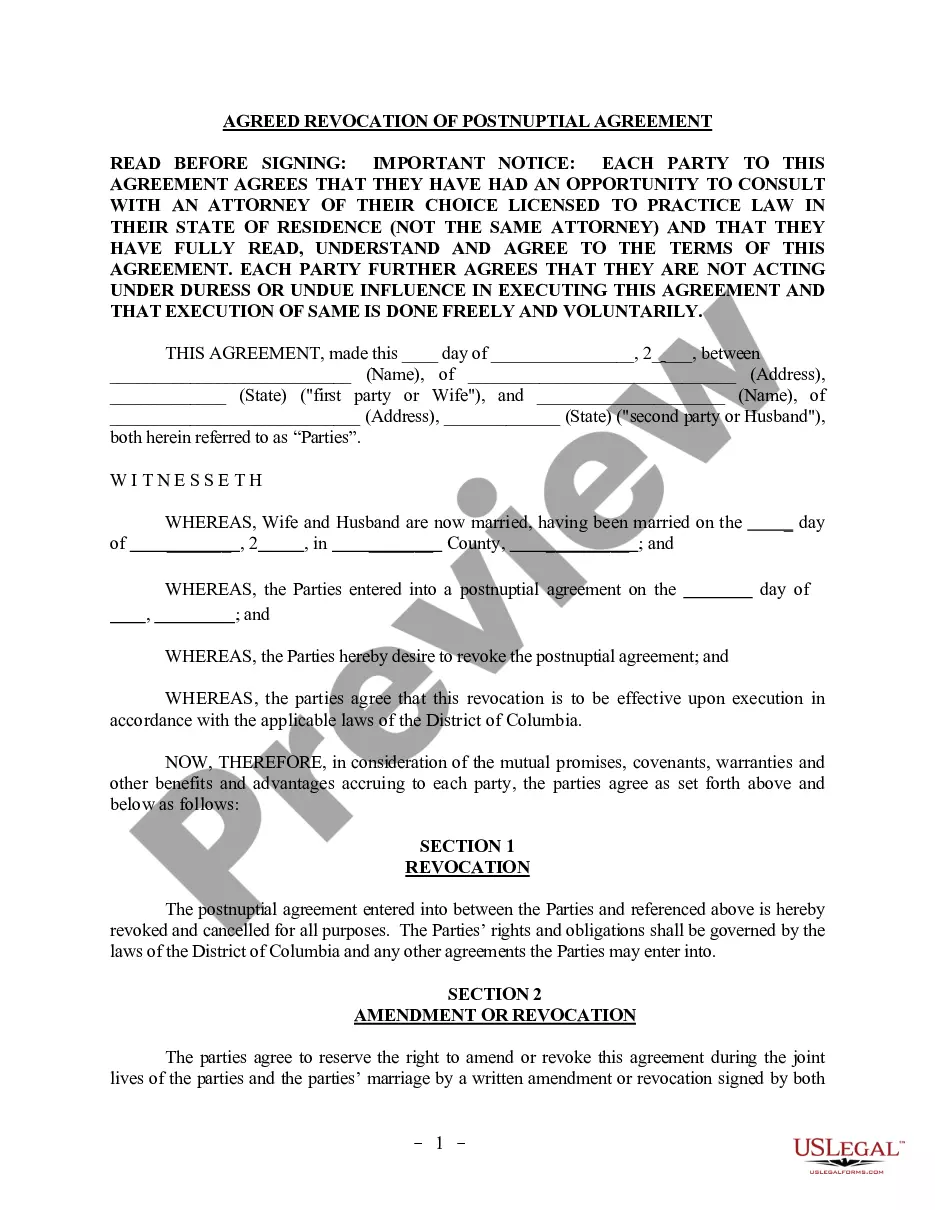
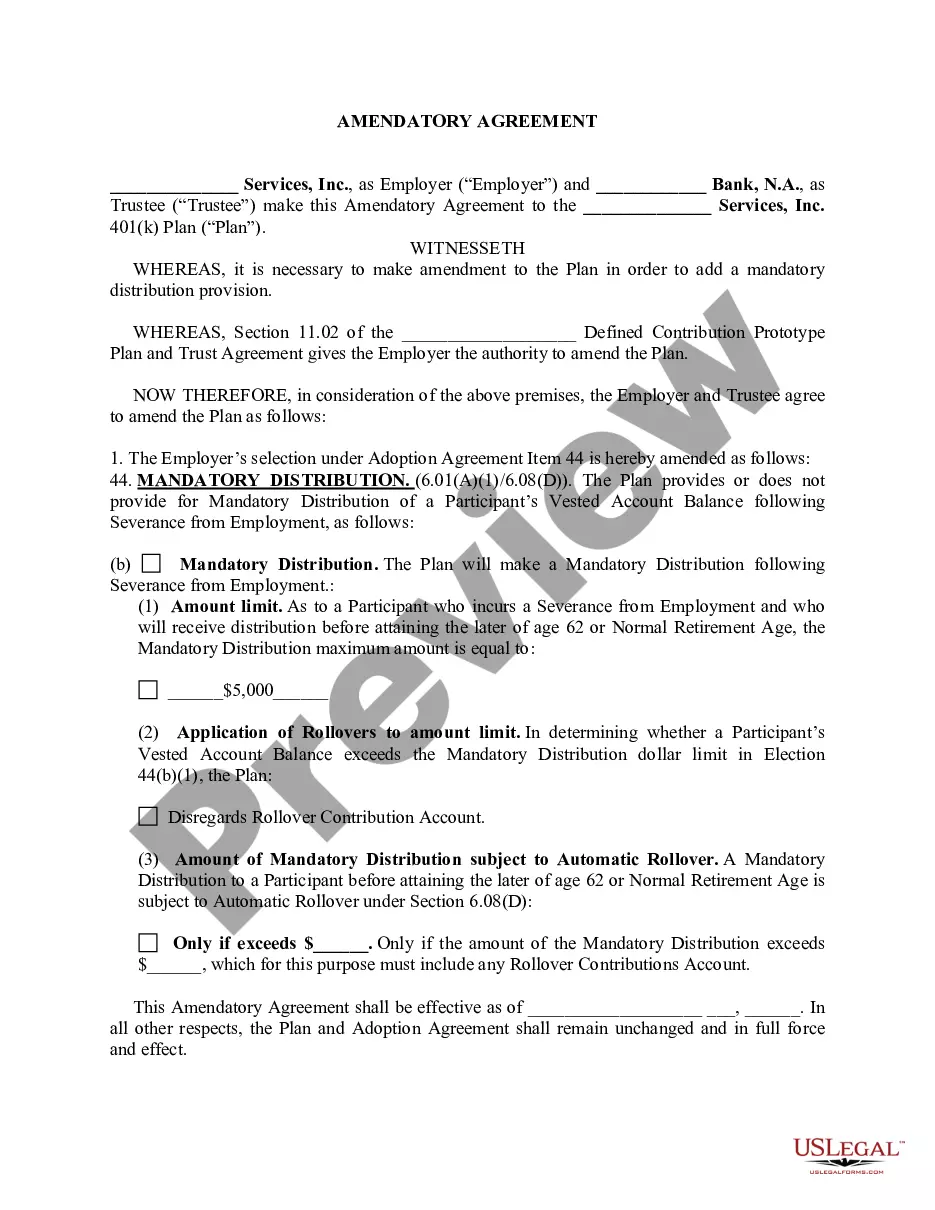
The Revocation of Postnuptial Property Agreement is a legal document used by couples to annul an existing postnuptial agreement. This form is essential when both parties wish to terminate their previously established legal arrangement regarding property rights and financial obligations. It is distinct from a divorce settlement, as it solely focuses on revoking the property agreement without dissolving the marriage itself.
Key components of this form
- Revocation Clause: Officially cancels the existing postnuptial agreement.
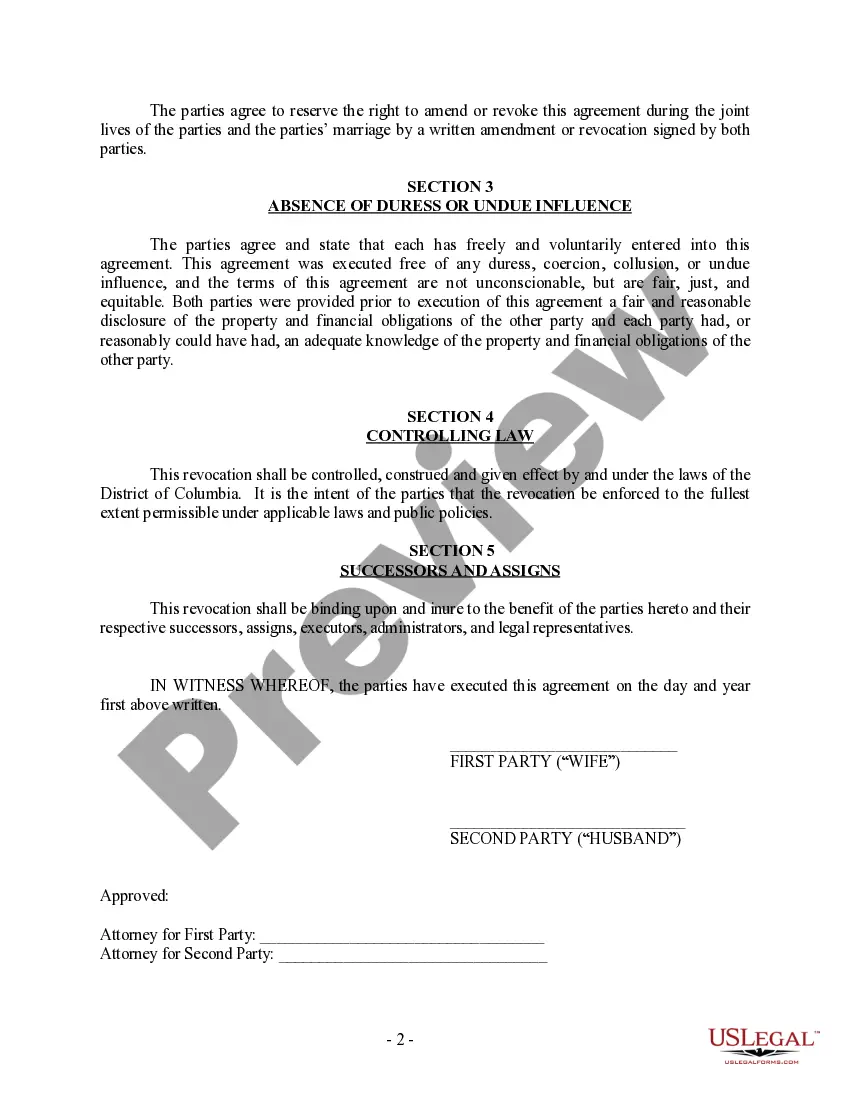
- Amendment Rights: Allows for the possibility of amendments or further revocations.
- Absence of Duress Clause: Each party confirms they are entering the agreement voluntarily and without coercion.
- Governing Law: Specifies that the agreement is governed by the laws of the District of Columbia.
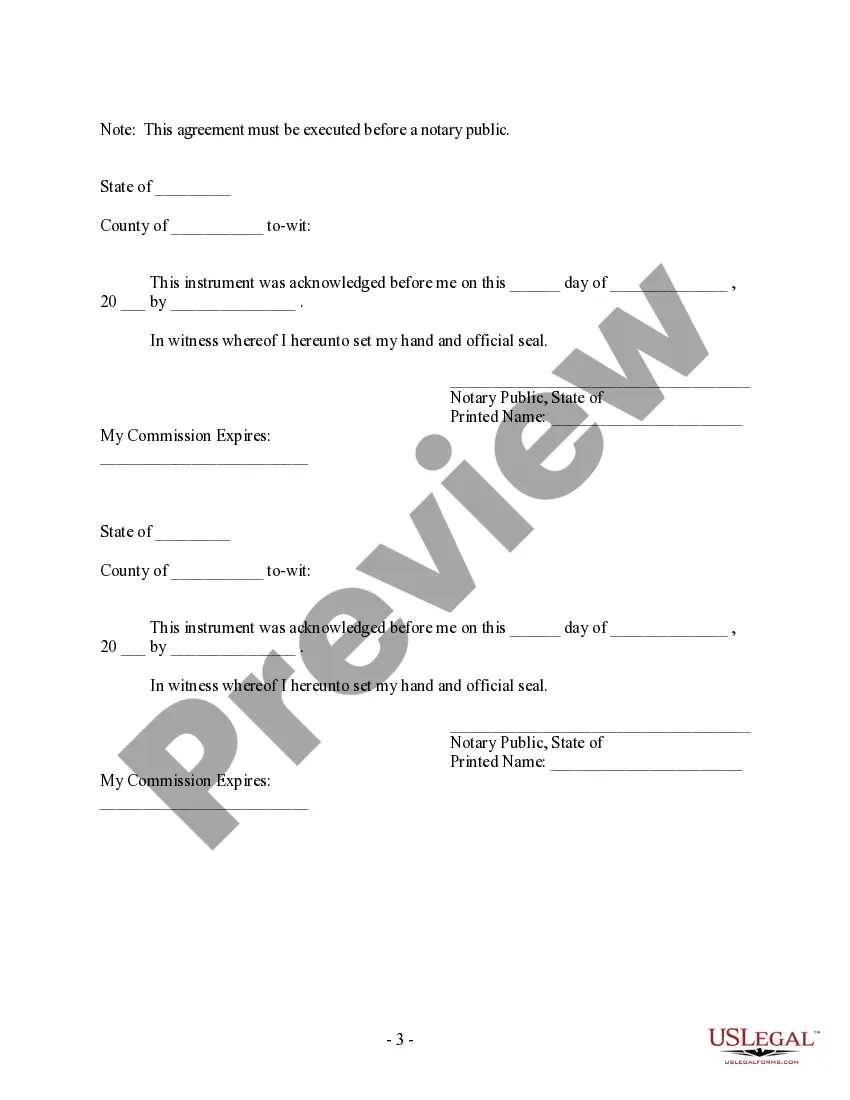
- Signatures and Notarization: Requires both parties' signatures and notarization for legal validity.
When this form is needed
This form is applicable in various situations, such as when a married couple decides that they no longer wish to be bound by their postnuptial agreement. Reasons may include changes in circumstances, reconciliation of disputes, or a desire for financial simplicity. It is also useful for couples seeking clarity on property matters as they explore new financial arrangements.
Who this form is for
- Married couples who have previously executed a postnuptial agreement.
- Individuals seeking to revoke their mutual property agreement for reasons specific to their circumstances.
- Couples planning to amend or revisit their financial obligations in a cooperative manner.
Instructions for completing this form
- Identify the parties involved by entering their names and current addresses.
- Specify the date on which the revocation is taking place.
- Both parties should read and understand the terms of the revocation before signing.
- Sign the document in the presence of a notary public, ensuring both signatures are acknowledged.
- Retain copies of the completed form for personal records and future reference.
Notarization guidance
Notarization is required for this form to take effect. Our online notarization service, powered by Notarize, lets you verify and sign documents remotely through an encrypted video session, available 24/7.
Get your form ready online
Our built-in tools help you complete, sign, share, and store your documents in one place.
Make edits, fill in missing information, and update formatting in US Legal Forms—just like you would in MS Word.
Download a copy, print it, send it by email, or mail it via USPS—whatever works best for your next step.
Sign and collect signatures with our SignNow integration. Send to multiple recipients, set reminders, and more. Go Premium to unlock E-Sign.
If this form requires notarization, complete it online through a secure video call—no need to meet a notary in person or wait for an appointment.
We protect your documents and personal data by following strict security and privacy standards.

Make edits, fill in missing information, and update formatting in US Legal Forms—just like you would in MS Word.

Download a copy, print it, send it by email, or mail it via USPS—whatever works best for your next step.

Sign and collect signatures with our SignNow integration. Send to multiple recipients, set reminders, and more. Go Premium to unlock E-Sign.

If this form requires notarization, complete it online through a secure video call—no need to meet a notary in person or wait for an appointment.

We protect your documents and personal data by following strict security and privacy standards.
Mistakes to watch out for
- Failing to have the document notarized can render it invalid.
- Not fully understanding the implications of the revocation before signing.
- Omitting signatures from one or both parties can invalidate the agreement.
- Using outdated forms rather than the latest legal templates.
Benefits of using this form online
- Convenience of downloading and completing the form from the comfort of home.
- Editability allows for customization to meet specific needs.
- Access to reliable and professionally drafted legal templates.
- Immediate availability ensures you can act quickly when needed.
Looking for another form?
Form popularity
FAQ
In the District of Columbia, there is no mandatory waiting period for divorce if you qualify for a no-fault divorce. You can file for divorce as soon as you meet the residency requirements. If you have a District of Columbia Revocation of Postnuptial Property Agreement, it’s advisable to address it early in the process to avoid complications.
Similar to the previous question, DC is not a 50/50 state when it comes to divorce. The courts aim for equitable, not equal, distribution of assets, taking into account numerous factors. This is especially relevant for those with postnuptial agreements, as these documents can clarify asset division during proceedings.
The District of Columbia does not strictly follow a 50/50 division of assets in divorce cases. Instead, it employs equitable distribution principles, which consider various factors to fairly divide property. A District of Columbia Revocation of Postnuptial Property Agreement can significantly influence how assets are divided, depending on its terms.
The new divorce law in the District of Columbia has introduced simplified procedures and clarified grounds for divorce. These changes aim to make the process more efficient and accessible. It's essential to consult a legal expert to understand how these new laws might interact with any postnuptial property agreements you have in place.
The District of Columbia Code regarding divorce is primarily found in Title 16. This code outlines the legal grounds for divorce, property division, and custody arrangements. Understanding the provisions of this code can be important, particularly when considering the implications of a District of Columbia Revocation of Postnuptial Property Agreement.
Yes, it is possible to get divorced without going to court in the District of Columbia by utilizing mediation or collaborative divorce processes. These options allow couples to negotiate their terms privately, which can be less stressful and more amicable. This approach can also simplify the settlement of any postnuptial property agreements.
The equitable distribution statute in the District of Columbia refers to how marital property is divided during a divorce. DC courts consider various factors to ensure a fair distribution, rather than a strict 50/50 split. A District of Columbia Revocation of Postnuptial Property Agreement can play a significant role in determining what is considered marital property.
In the District of Columbia, you do not need to be legally separated before filing for divorce. However, if you take steps to separate, it may help clarify issues related to property and custody. Keep in mind that if you have a postnuptial property agreement, it can affect how assets are divided during divorce proceedings.
To invalidate a postnuptial agreement, one must typically prove that there was lack of consent or understanding, among other factors. This includes demonstrating coercion, fraud, or a significant imbalance in fairness at the time of signing. Engaging a legal professional with experience in the District of Columbia Revocation of Postnuptial Property Agreement can provide crucial guidance in building a solid case. Tools available on the US Legal Forms platform can help streamline the documentation process for those looking to address these issues.
Yes, a postnuptial agreement can be voided under certain circumstances. For instance, if one party did not fully understand the terms or was coerced into signing, the agreement may be challenged in court. In addition, significant changes in circumstances, such as financial status or the relationship's nature, can also lead to the District of Columbia Revocation of Postnuptial Property Agreement. It is advisable to consult a legal expert to navigate this process effectively.