District of Columbia Protecting Minors from Identity Theft Package
About this form package
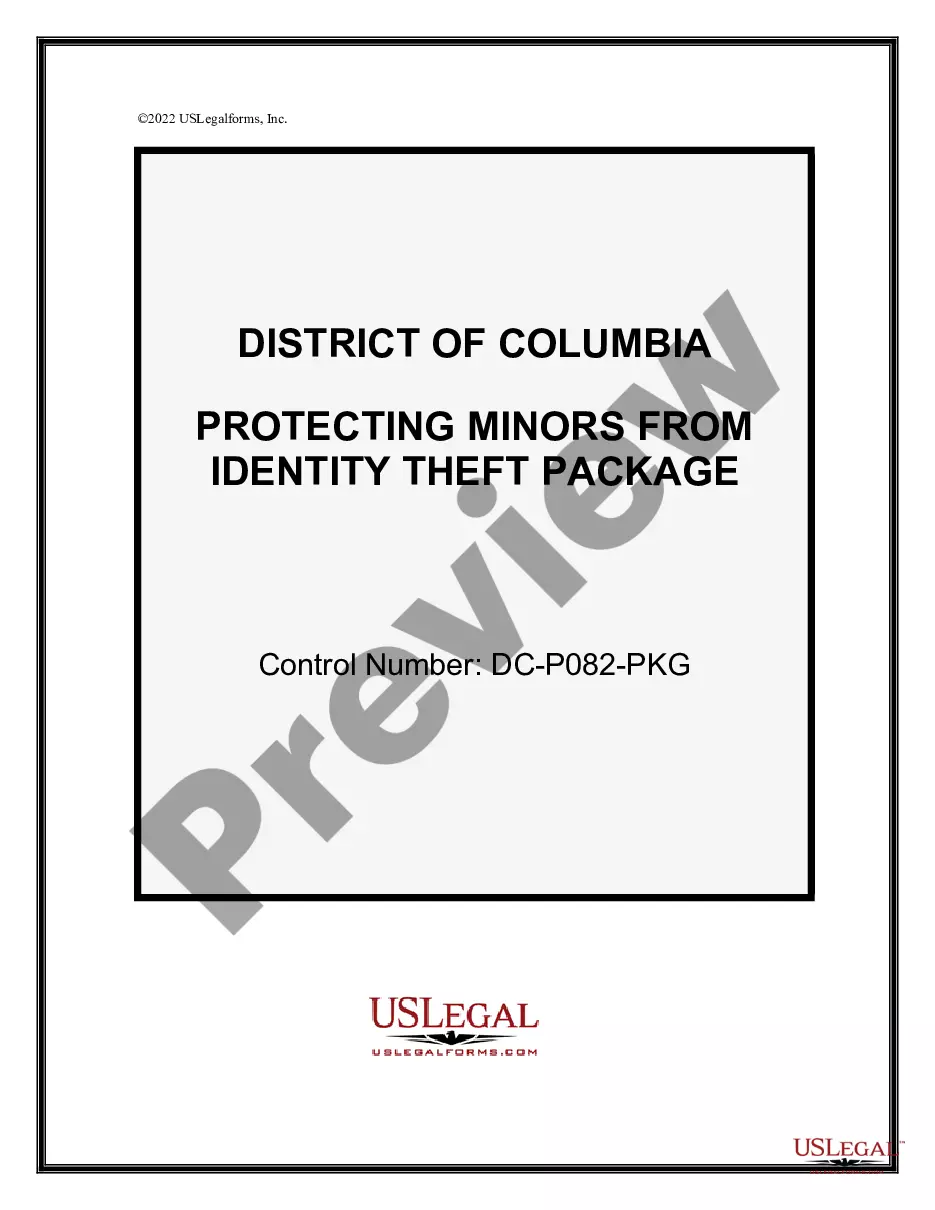
The District of Columbia Protecting Minors from Identity Theft Package contains essential forms that help parents or guardians address identity theft issues related to minors. This package is specifically designed to assist in the unfortunate event that a minor's identification is lost or stolen. It provides comprehensive tools to clear a minor's name and mitigate the time, expense, and stress experienced while dealing with identity thieves, setting it apart from similar packages aimed at adults.
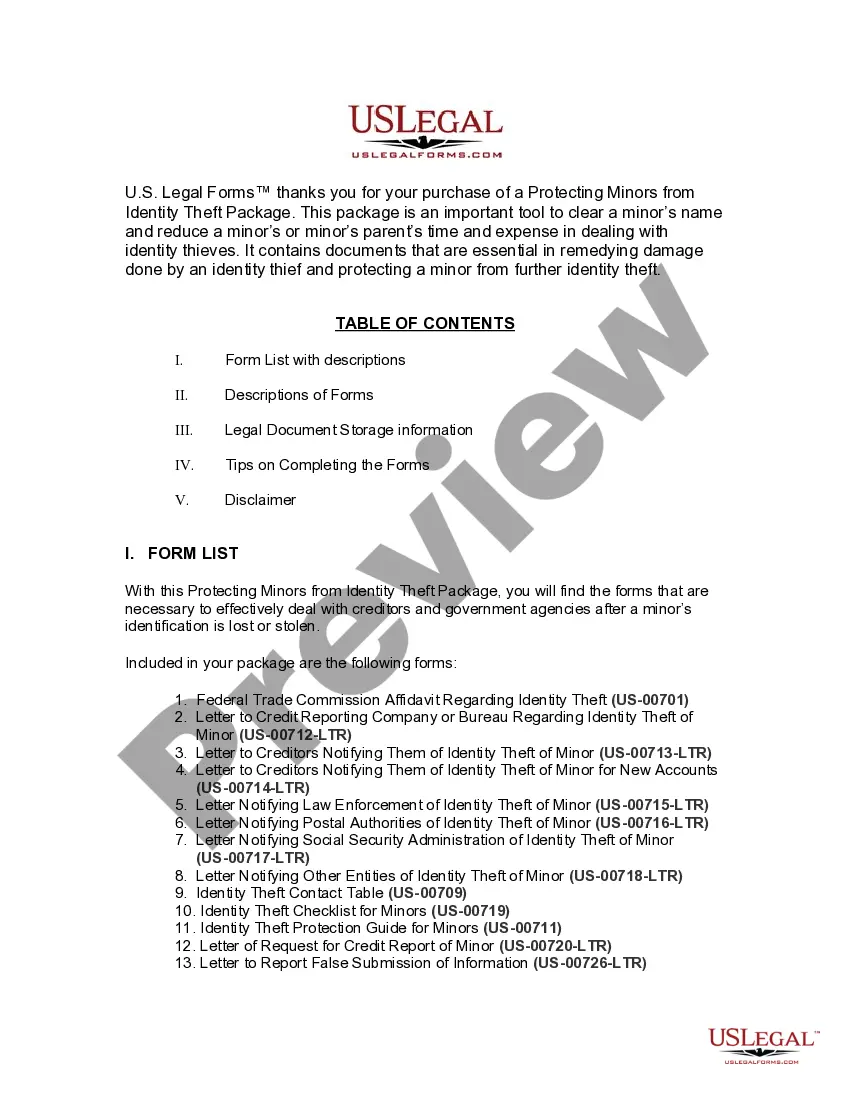
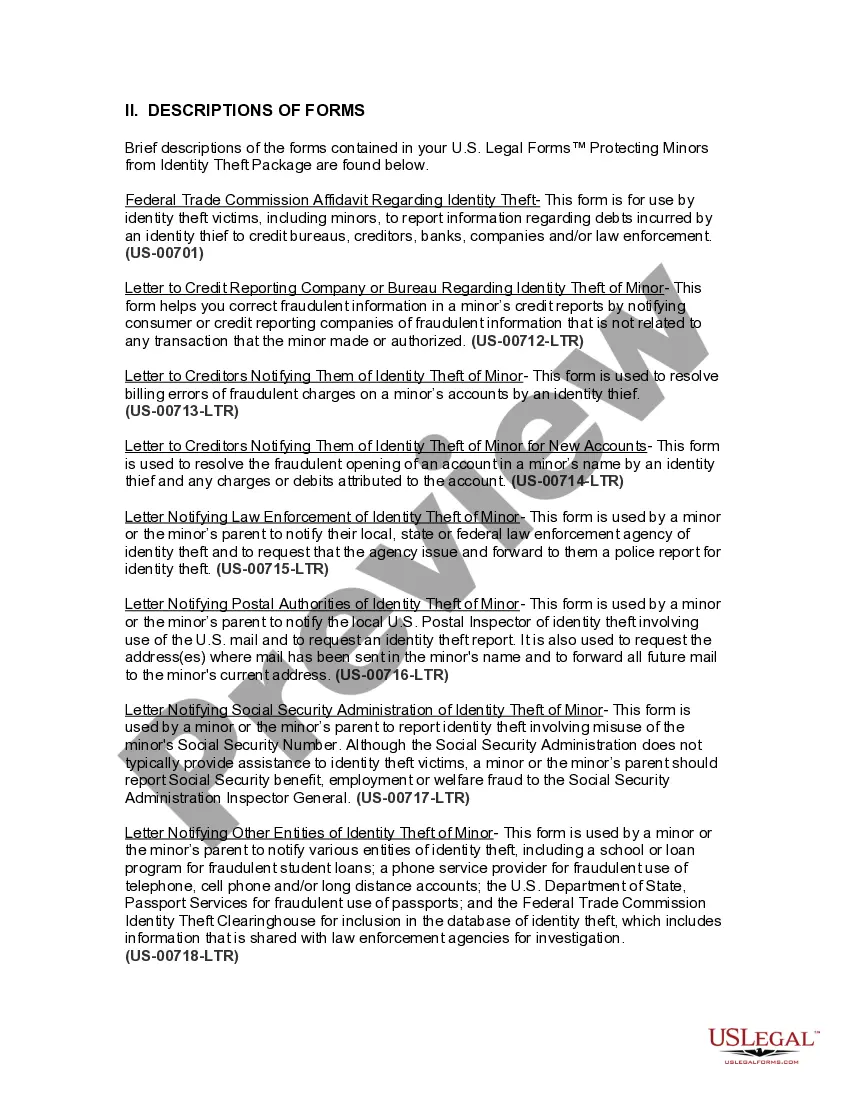
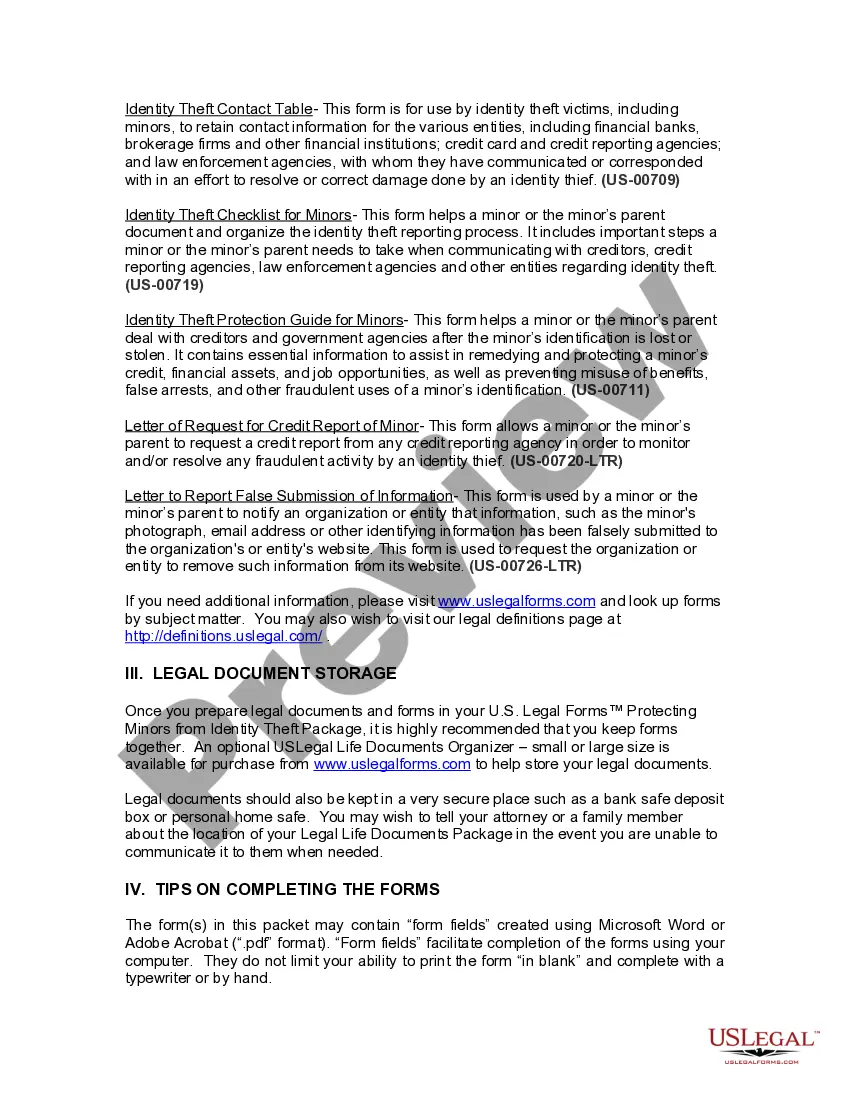
Forms provided in this package
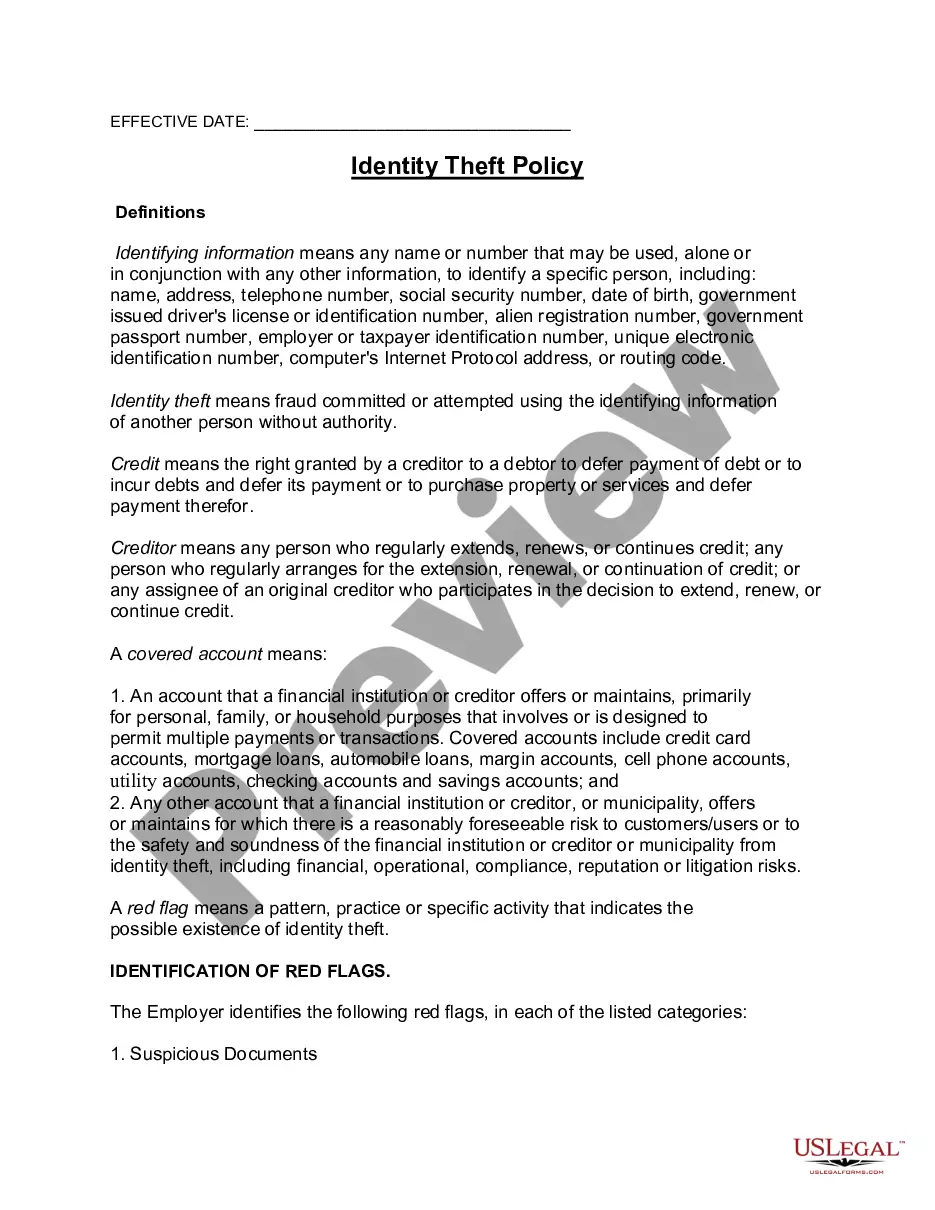
- Federal Trade Commission Affidavit regarding Identity Theft
- Identity Theft Contact Table
- Guide for Protecting Minors from Identity Theft
- Letter to Credit Reporting Company or Bureau Regarding Identity Theft of Minor
- Letter to Creditors Notifying Them of Identity Theft of Minor
- Letter to Creditors Notifying Them of Identity Theft of Minor for New Accounts
- Letter Notifying Law Enforcement of Identity Theft of Minor
- Letter Notifying Postal Authorities of Identity Theft of Minor
- Letter Notifying Social Security Administration of Identity Theft of Minor
- Letter to Other Entities Notifying Them of Identity Theft of Minor
- Identity Theft Checklist for Minors
- Sample Letter for Request for Credit Report of a Minor
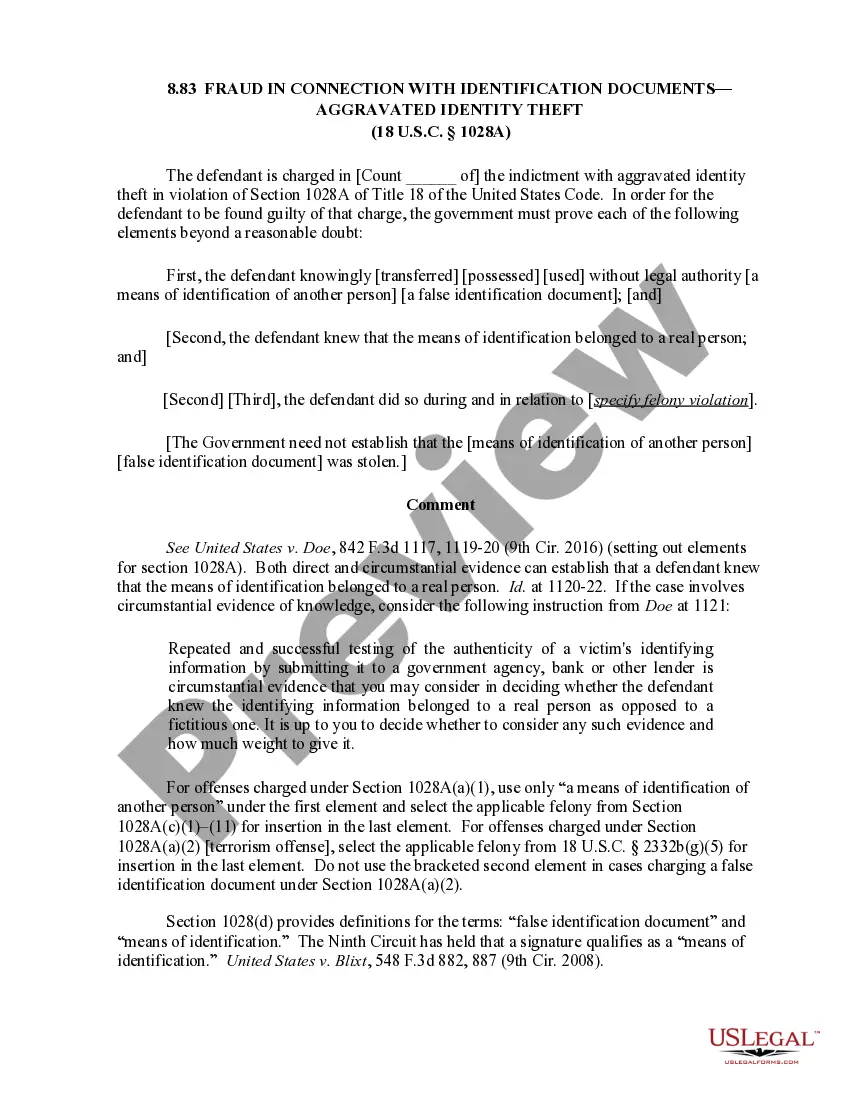
- Sample Letter to Report False Submission of Minor's Information
When this form package is needed
This form package is ideal to use when:
- A minor's identification has been lost or stolen.
- There are unauthorized charges on the minor's accounts.
- Credit reports show fraudulent activity attributed to the minor.
- A minor is a victim of identity theft affecting their financial assets or benefits.
- Parents or guardians need to notify law enforcement or government agencies about identity theft incidents involving a minor.
Who can use this document
- Parents or legal guardians of minors who are victims of identity theft.
- Minors, with consent from a parent or guardian, facing identity theft issues.
- Any individual or entity responsible for the financial wellbeing of a minor.
How to prepare this document
- Review the forms included in the package.
- Identify the necessary details specific to the minor affected.
- Complete each form carefully, ensuring accurate information is provided.
- Gather any supplementary documentation as required by the forms.
- Submit the completed documents to the relevant agencies and retain copies for your records.
Notarization details for included forms
Some forms in this package need notarization to be legally binding. Our online notarization service, powered by Notarize, lets you verify and sign documents remotely through an encrypted video session, available 24/7.
Get your form ready online
Our built-in tools help you complete, sign, share, and store your documents in one place.
Make edits, fill in missing information, and update formatting in US Legal Forms—just like you would in MS Word.
Download a copy, print it, send it by email, or mail it via USPS—whatever works best for your next step.
Sign and collect signatures with our SignNow integration. Send to multiple recipients, set reminders, and more. Go Premium to unlock E-Sign.
If this form requires notarization, complete it online through a secure video call—no need to meet a notary in person or wait for an appointment.
We protect your documents and personal data by following strict security and privacy standards.

Make edits, fill in missing information, and update formatting in US Legal Forms—just like you would in MS Word.

Download a copy, print it, send it by email, or mail it via USPS—whatever works best for your next step.

Sign and collect signatures with our SignNow integration. Send to multiple recipients, set reminders, and more. Go Premium to unlock E-Sign.

If this form requires notarization, complete it online through a secure video call—no need to meet a notary in person or wait for an appointment.

We protect your documents and personal data by following strict security and privacy standards.
Mistakes to watch out for
- Failing to notify all relevant parties about the identity theft.
- Not keeping copies of submitted documents for future reference.
- Incomplete forms that lack necessary signatures or details.
- Overlooking local regulations when addressing identity theft.
Benefits of using this package online
- Convenience of downloading documents instantly.
- Editability allows for personalization of forms to suit specific situations.
- Access to forms drafted by licensed attorneys to ensure accuracy and legal compliance.
- Helps streamline the often complex process of dealing with identity theft.
Looking for another form?


Form popularity
FAQ
To check for identity theft of a minor, begin by monitoring credit reports, even for children under 18. The District of Columbia Protecting Minors from Identity Theft Package offers tools and resources to help parents access these records. Additionally, watch for unusual activity, like credit applications or bills in your child's name. Proactive monitoring helps prevent long-term impacts from identity theft.
When you report identity theft, law enforcement will document the incident, and you will often receive a report number. This is a vital part of the District of Columbia Protecting Minors from Identity Theft Package, as it helps clear your child's name from fraudulent activities. Reporting also prompts investigations that can lead to the recovery of lost funds. It's important to follow up to ensure all necessary steps are taken.
To check if your child's Social Security Number (SSN) is being misused, you can request a credit report from the major credit bureaus. Under the District of Columbia Protecting Minors from Identity Theft Package, you will find guidance on how to initiate this process securely. Additionally, watch for unexpected bills or collection notices that may indicate an issue. Taking these steps early can help you identify problems before they escalate.
To protect a child from identity theft, start by monitoring their personal information closely. Implement the District of Columbia Protecting Minors from Identity Theft Package, which offers comprehensive strategies tailored for minor protection. Regularly review your child's financial records and online activity, ensuring their sensitive information remains private. Establish habits such as shredding documents that contain personal details.
To prevent identity theft, consider the following strategies: First, secure personal information both online and offline. Next, regularly update passwords and use two-factor authentication when possible. Third, utilize credit monitoring services provided by the District of Columbia Protecting Minors from Identity Theft Package for early detection. Fourth, shred documents containing sensitive information before disposal. Finally, educate all family members on the importance of identity security and safe internet practices.
Protecting your child from identity theft involves several key steps. First, educate them about the importance of safeguarding personal information and online behavior. Utilizing the District of Columbia Protecting Minors from Identity Theft Package can help you implement effective strategies to shield your child's identity. Additionally, consider placing a security freeze on their credit report to prevent unauthorized access.
To check if your child's identity has been stolen, start by reviewing their credit reports if they have any, as minors usually do not have established credit profiles. You can also look for unusual activity in financial accounts connected to your child's Social Security number. Enrolling in the District of Columbia Protecting Minors from Identity Theft Package provides additional tools to help monitor and identify any fraudulent activity. Stay alert to any suspicious mail or communications that could indicate identity theft.
The best defense against identity theft involves being proactive in monitoring personal information. Utilizing the District of Columbia Protecting Minors from Identity Theft Package helps safeguard your child's identity by offering resources and guidelines tailored for parents. Regularly check credit reports and consider setting up fraud alerts to prevent potential theft. Education about safe online practices also plays a crucial role in protecting your child.
D.C. Code 28 3310 pertains to the regulation of credit reporting and the rights of consumers in the District of Columbia. This law allows individuals to dispute inaccurate information on their credit reports, providing avenues for correction and protection. Awareness of this code is essential, especially when considering the well-being of your child. The District of Columbia Protecting Minors from Identity Theft Package can help parents navigate these aspects effectively.
The DC code governing identity theft is primarily found in D.C. Code 22 402. This law outlines the details of what constitutes identity theft and the penalties associated with it. Understanding this legal framework can help you protect your child against identity theft scenarios. Utilizing solutions like the District of Columbia Protecting Minors from Identity Theft Package can enhance your efforts in safeguarding your child's identity.