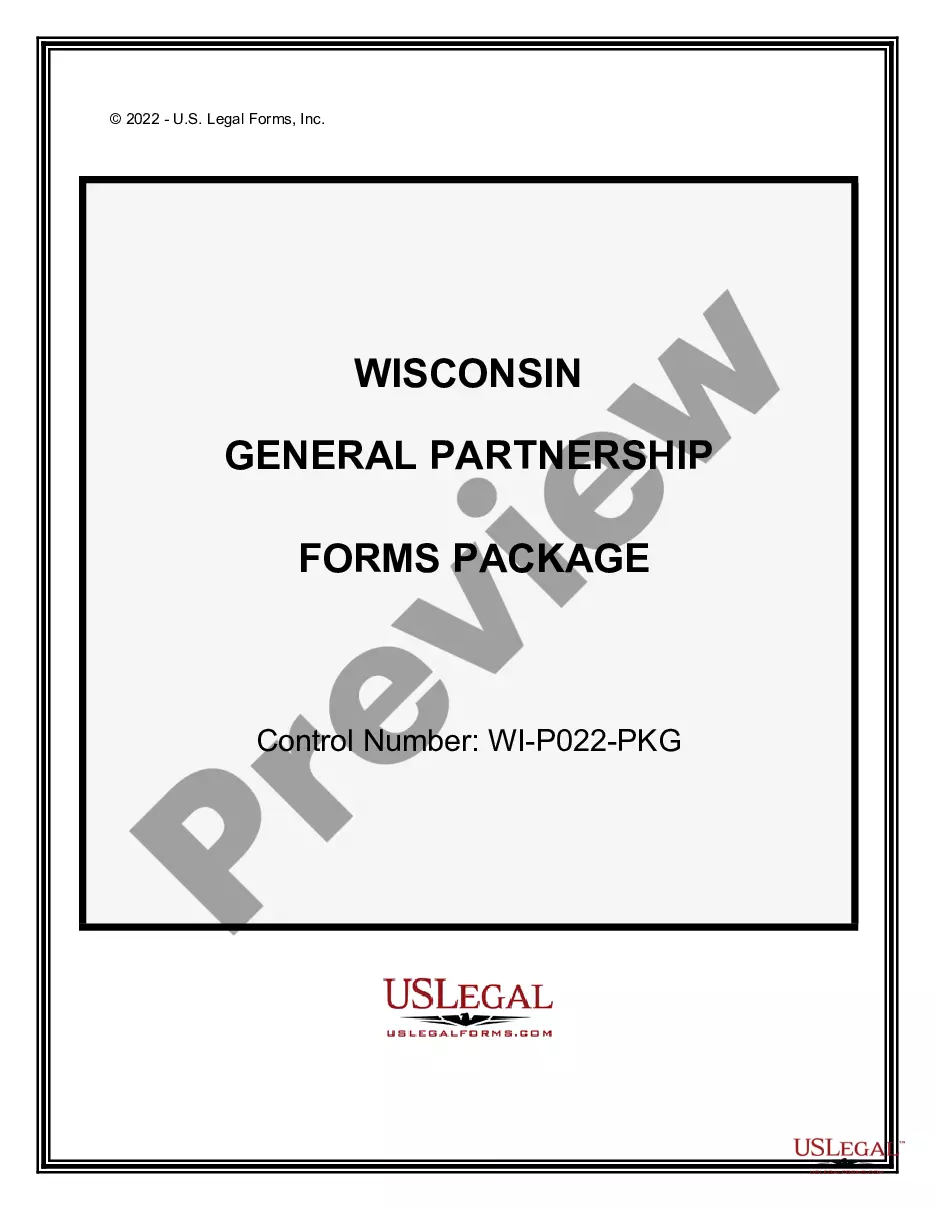
District of Columbia Lease Purchase Agreements Package
Overview of this form package
The District of Columbia Lease Purchase Agreements Package provides essential legal documents that facilitate the purchase and leasing of real property. This package includes forms specifically designed to create legally binding agreements between sellers and purchasers for the sale of real estate at the end of or during a lease term. By utilizing this package, users can ensure that all necessary contractual obligations are clearly defined and protect their interests in the transaction.
What’s included in this form package
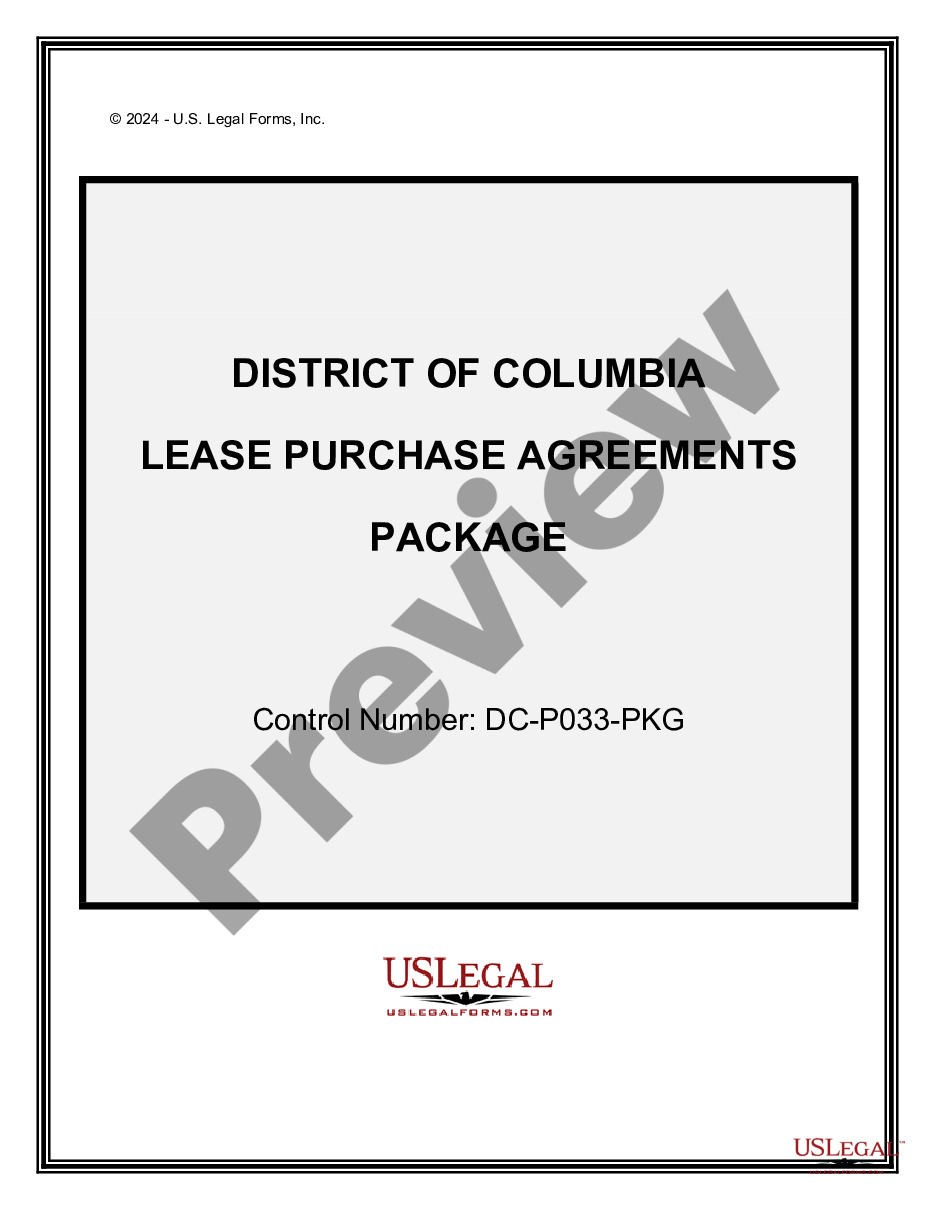
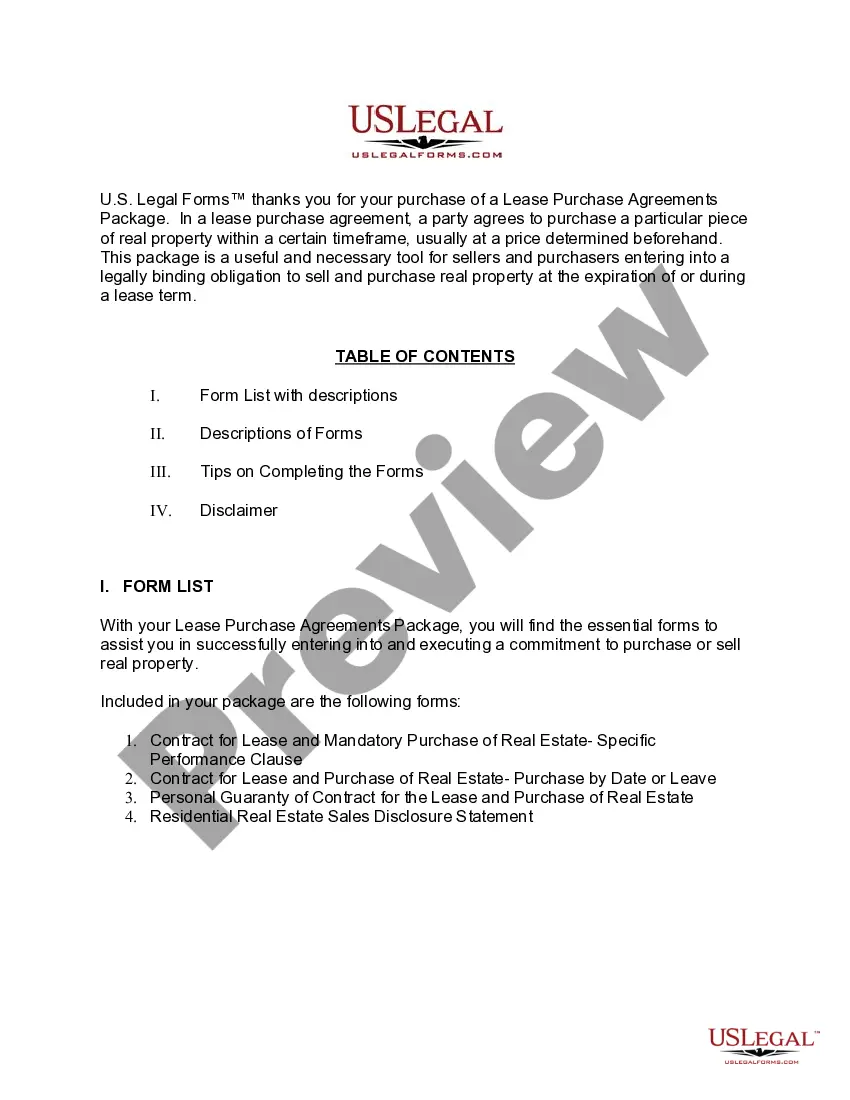
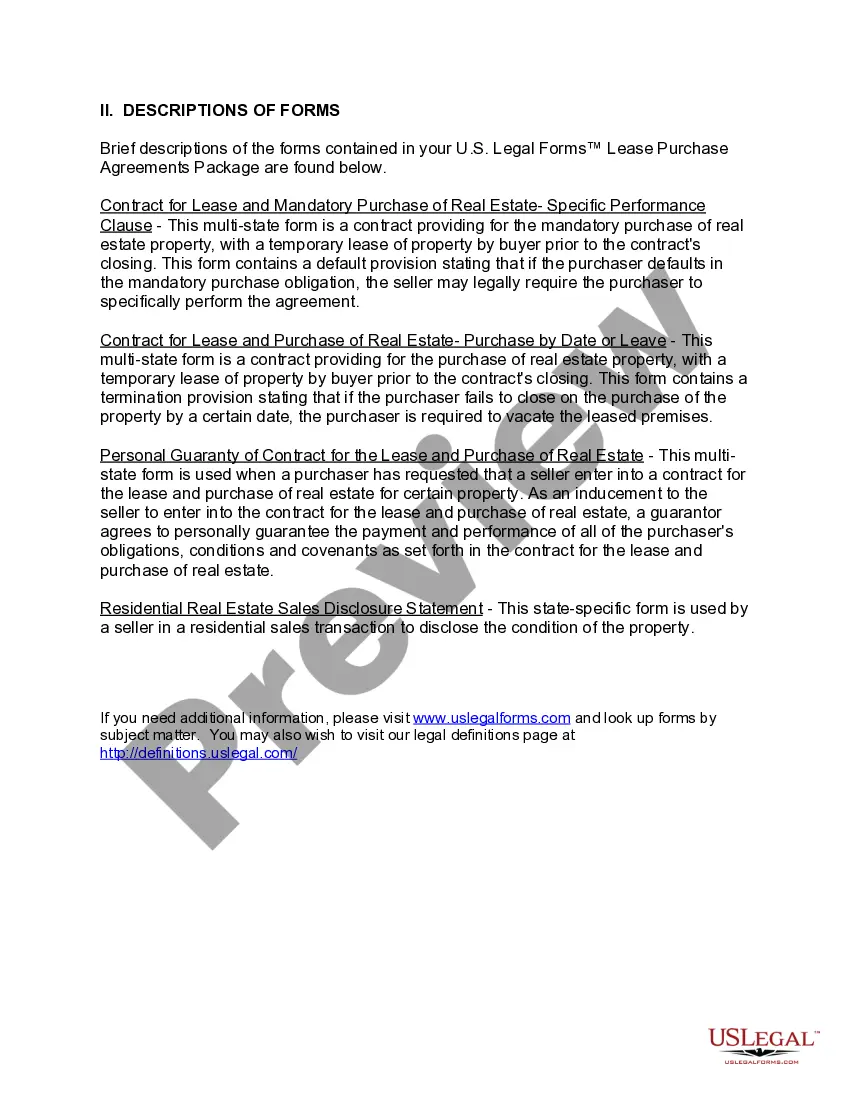
- Residential Real Estate Sales Disclosure Statement
- Contract for the Lease and Mandatory Purchase of Real Estate - Specific performance clause
- Personal Guaranty - Guarantee of Contract for the Lease and Purchase of Real Estate
- Contract for the Lease and Purchase of Real Estate - Purchase by date or leave
When this form package is needed
This package is ideal for various scenarios, including:
- When a buyer wants to lease a property with an option to purchase it later.
- When sellers want to secure buyer commitments to purchase real estate while allowing them to occupy the property.
- In situations where specific timelines and purchase prices need to be clearly articulated in a lease agreement.
Who should use this form package
- Real estate investors looking to lease with a purchase option.
- Homebuyers wanting a clear path to home ownership through a lease buy scenario.
- Property owners ready to formalize a commitment from a tenant to purchase the property.
- Real estate agents representing either sellers or buyers in lease purchase agreements.
Steps to complete these forms
- Review the included forms to understand their purpose and requirements.
- Identify the involved parties, including the seller, buyer, and any guarantors.
- Enter relevant dates, including the effective date of the lease and the purchase date.
- Complete all form fields with accurate information pertaining to the property and transaction.
- Ensure all parties review and sign the documents where indicated.
Do forms in this package need to be notarized?
Some included forms must be notarized to ensure validity. US Legal Forms provides secure online notarization powered by Notarize, allowing you to complete the process through a verified video call anytime.
Get your form ready online
Our built-in tools help you complete, sign, share, and store your documents in one place.
Make edits, fill in missing information, and update formatting in US Legal Forms—just like you would in MS Word.
Download a copy, print it, send it by email, or mail it via USPS—whatever works best for your next step.
Sign and collect signatures with our SignNow integration. Send to multiple recipients, set reminders, and more. Go Premium to unlock E-Sign.
If this form requires notarization, complete it online through a secure video call—no need to meet a notary in person or wait for an appointment.
We protect your documents and personal data by following strict security and privacy standards.

Make edits, fill in missing information, and update formatting in US Legal Forms—just like you would in MS Word.

Download a copy, print it, send it by email, or mail it via USPS—whatever works best for your next step.

Sign and collect signatures with our SignNow integration. Send to multiple recipients, set reminders, and more. Go Premium to unlock E-Sign.

If this form requires notarization, complete it online through a secure video call—no need to meet a notary in person or wait for an appointment.

We protect your documents and personal data by following strict security and privacy standards.
Avoid these common issues
- Failing to clearly specify the purchase price and lease terms.
- Not including all necessary signatures on the forms.
- Leaving out crucial details about property condition in the disclosure statement.
- Overlooking deadlines for closing the purchase, which could result in losing the property.
Why complete this package online
- Convenience of downloading forms directly from home, avoiding in-person visits.
- Editability allows users to customize the documents to their specific needs.
- Reliability of forms drafted by licensed attorneys, ensuring legal soundness.
- Access to up-to-date legal language and requirements for the District of Columbia.
Legal use & context
- Lease purchase agreements create a binding obligation for both parties, providing security for buyers and sellers.
- Using properly drafted forms helps enforce legal rights concerning property transactions.
- Understanding specific local laws is essential for the legality of these agreements.
What to keep in mind
- This package contains all necessary forms for lease purchase transactions in the District of Columbia.
- Clear completion and accurate information entry are vital for enforceability.
- Online access streamlines the process, making it easier for individuals unfamiliar with legal paperwork.
Looking for another form?
Form popularity
FAQ
The Lease Must be in Writing It does not matter if the lease is handwritten or typed. If the lease is for more than one year, it must be in written form and contain the following terms.
A written agreement can act as a roadmap for the landlord-tenant relationship, especially if a dispute arises. Also, real estate (land) leases for more than one year must be in writing. If a lease for over one year is not in writing, it will generally not be enforceable in court.
Collect each party's information. Include specifics about your property. Consider all of the property's utilities and services. Know the terms of your lease. Set the monthly rent amount and due date. Calculate any additional fees. Determine a payment method. Consider your rights and obligations.
The lease becomes legally binding when all parties have signed: the landlord and all tenants living in the unit who are 18 and older. If you're worried about situations where a lease needs to end early, learn about breaking a lease and grounds for eviction.
The Lease Must be in Writing It does not matter if the lease is handwritten or typed.
Washington DC's TOPA Act Washington's program is called TOPA the Tenant's Opportunity to Purchase Act. TOPA generally grants tenants a grace period and right of first refusal to purchase their building if it is to be sold.
The Tenant Opportunity to Purchase Act (TOPA) is a hot topic in Washington DC. In 1980, TOPA was an honorable regulation set forth to combat the gentrification in the District. Essentially this act gave tenants a first shot at purchasing the home they were renting, if their landlord decided to sell the property.
Names of all tenants. Limits on occupancy. Term of the tenancy. Rent. Deposits and fees. Repairs and maintenance. Entry to rental property. Restrictions on tenant illegal activity.
Step 1: Obtain a Written Request. Invite the tenant to submit in writing the request to add another person to the lease. Step 2: Check the Property's Occupancy Limit. Step 3: Acquire a Completed Rental Application. Step 4: Make a Decision. Step 5: Review the Details With the Tenants.