District of Columbia Training Contract - Horse Equine Forms
What is this form?
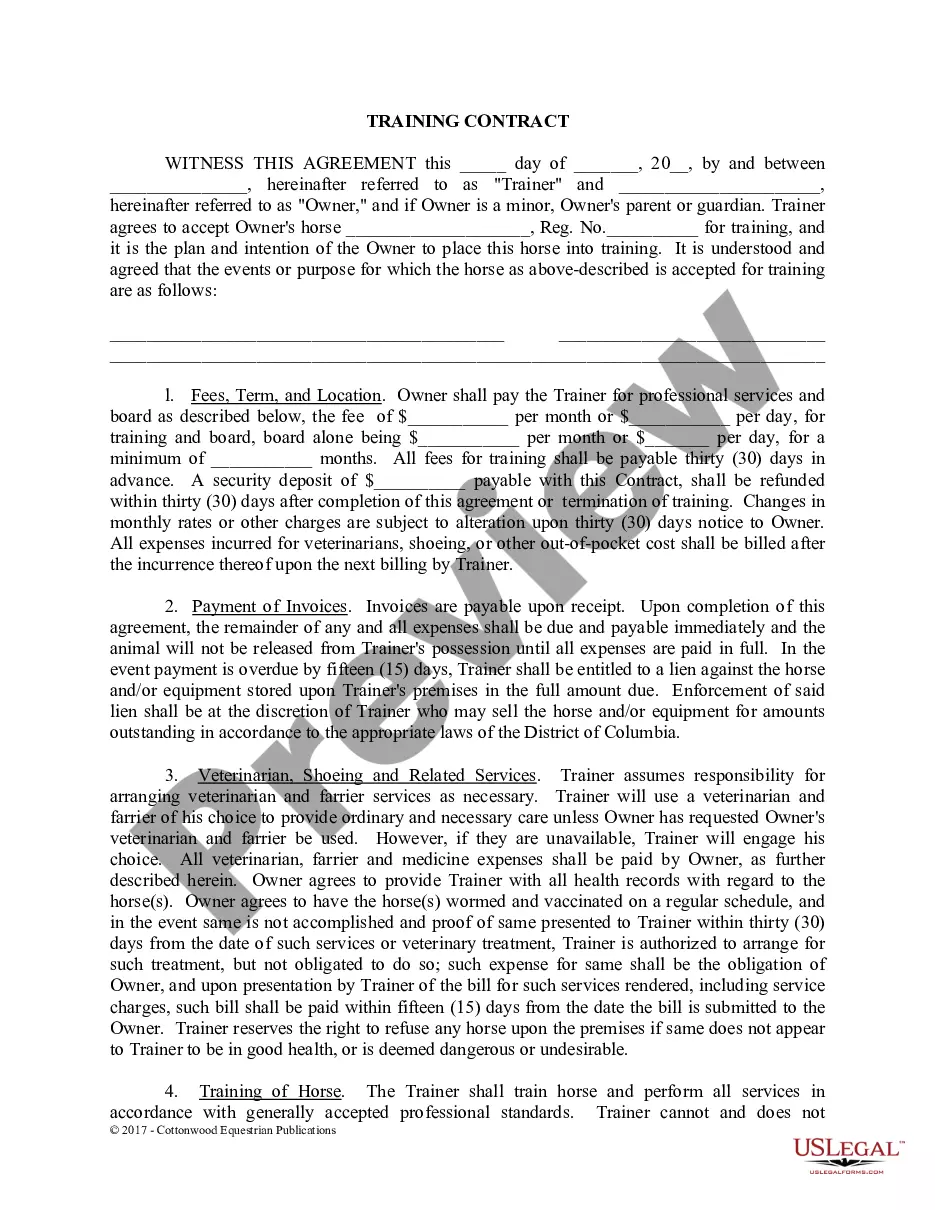
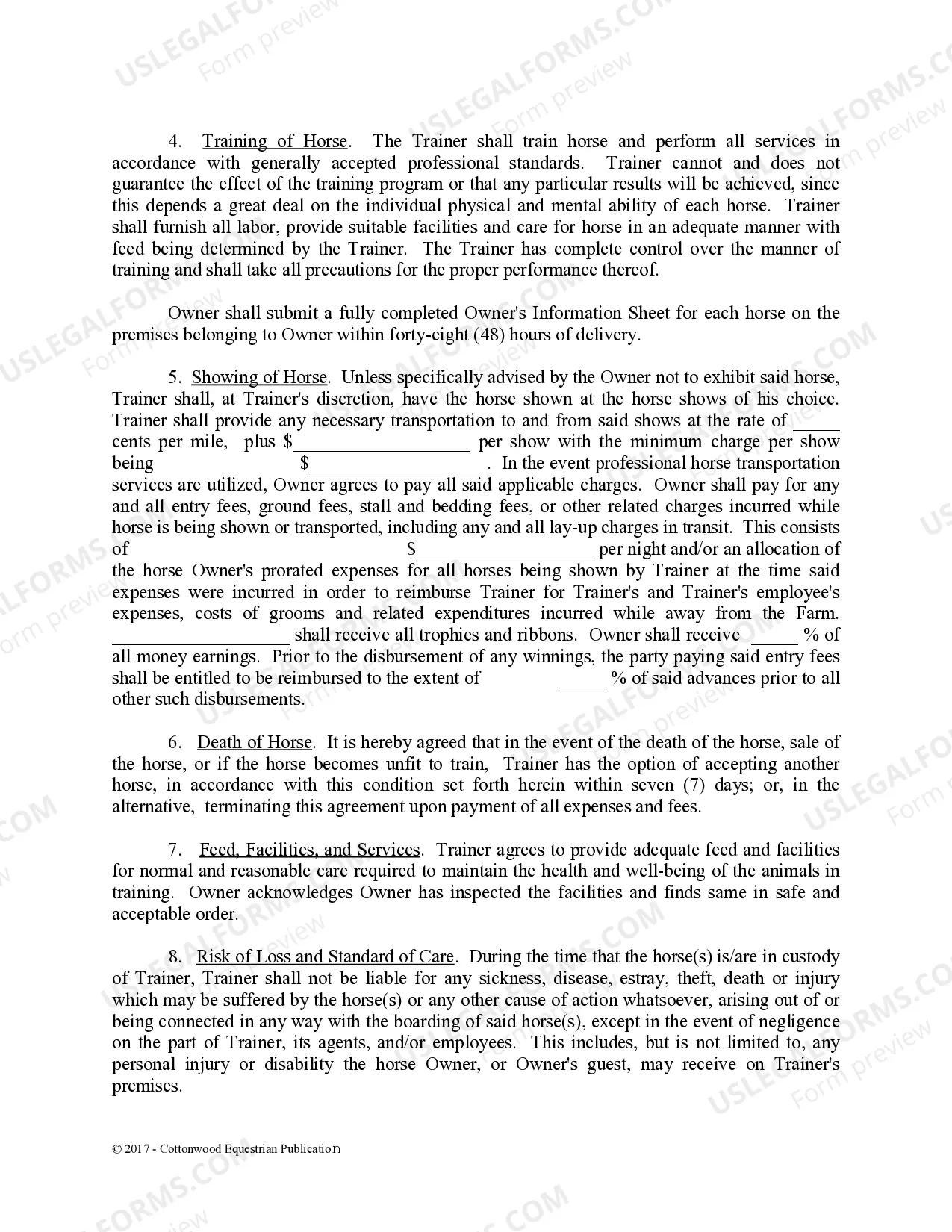
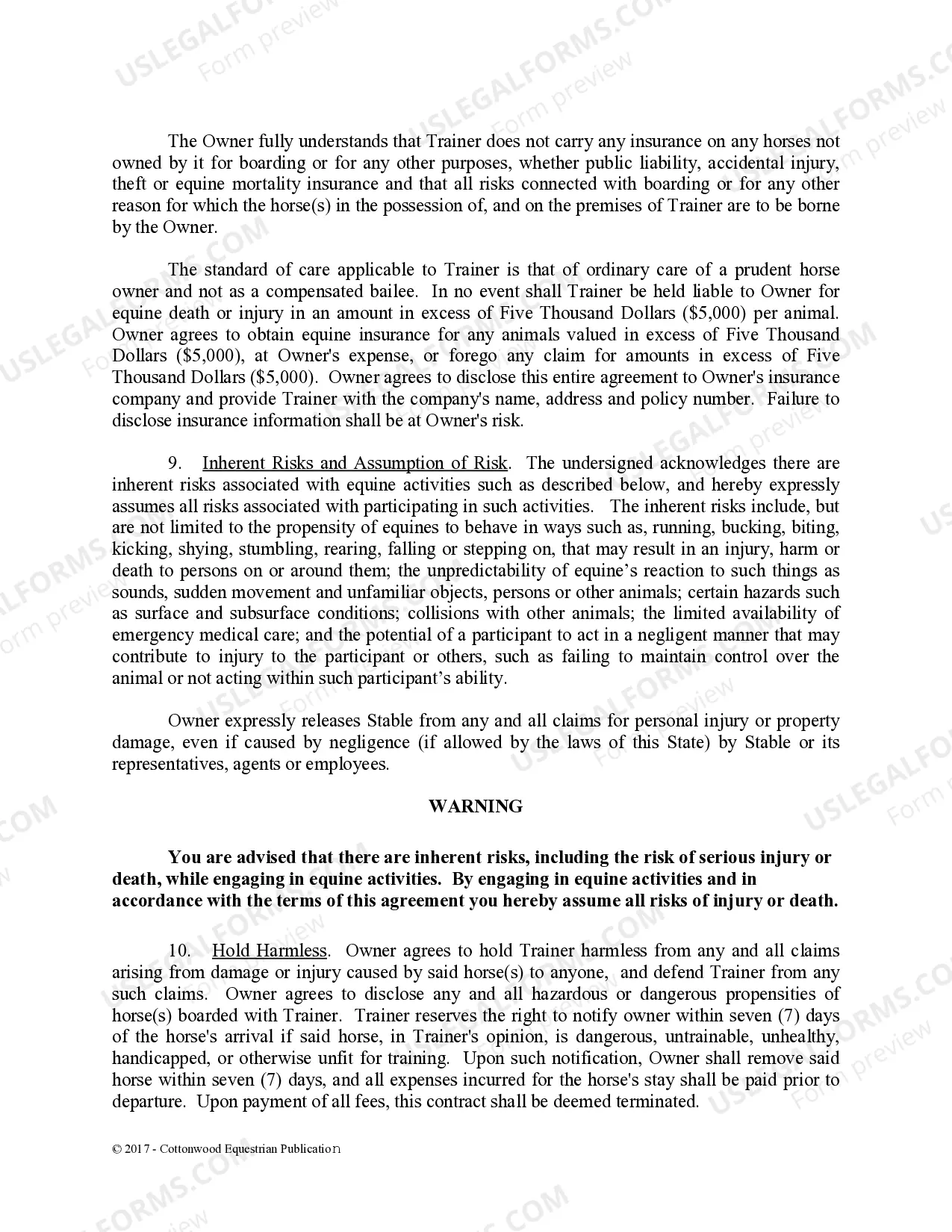
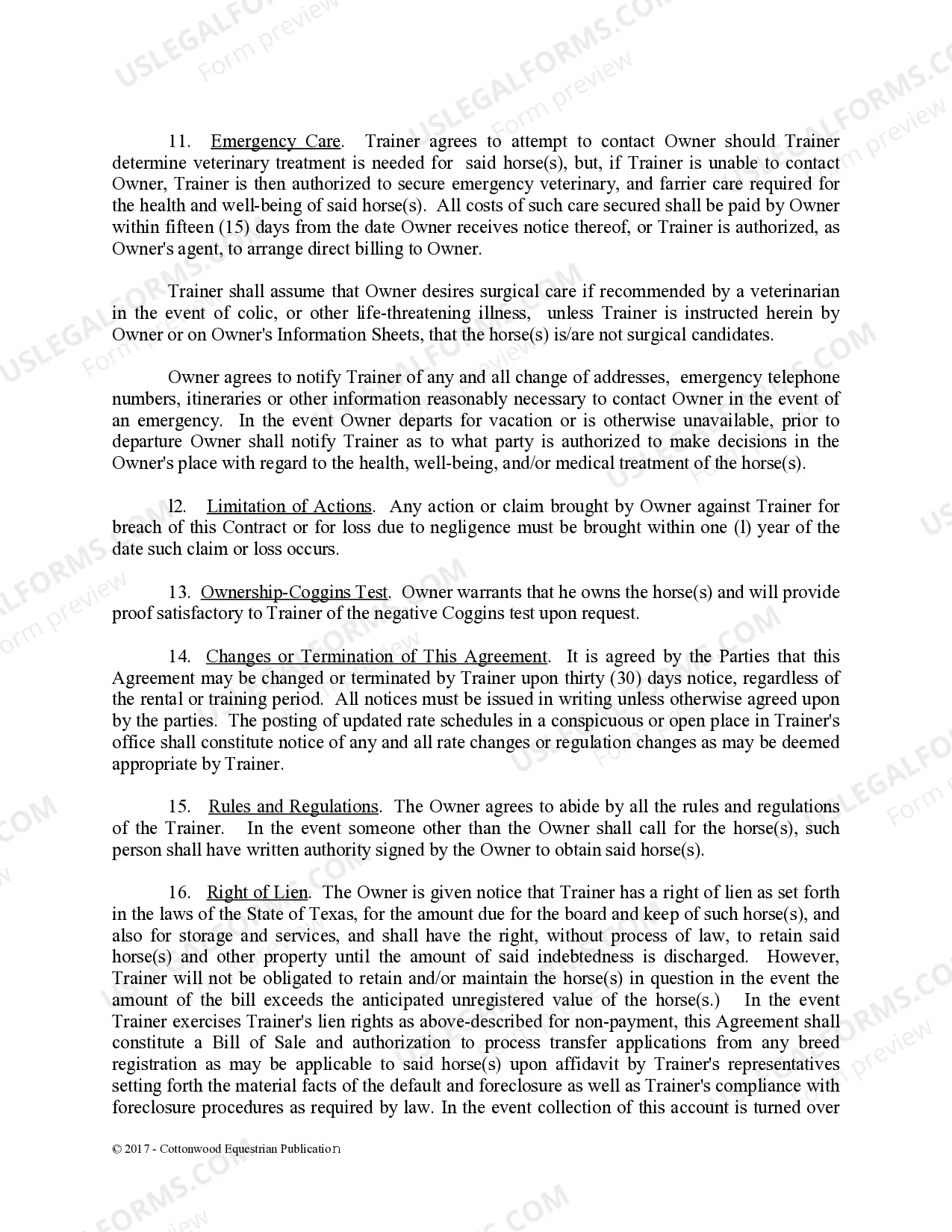
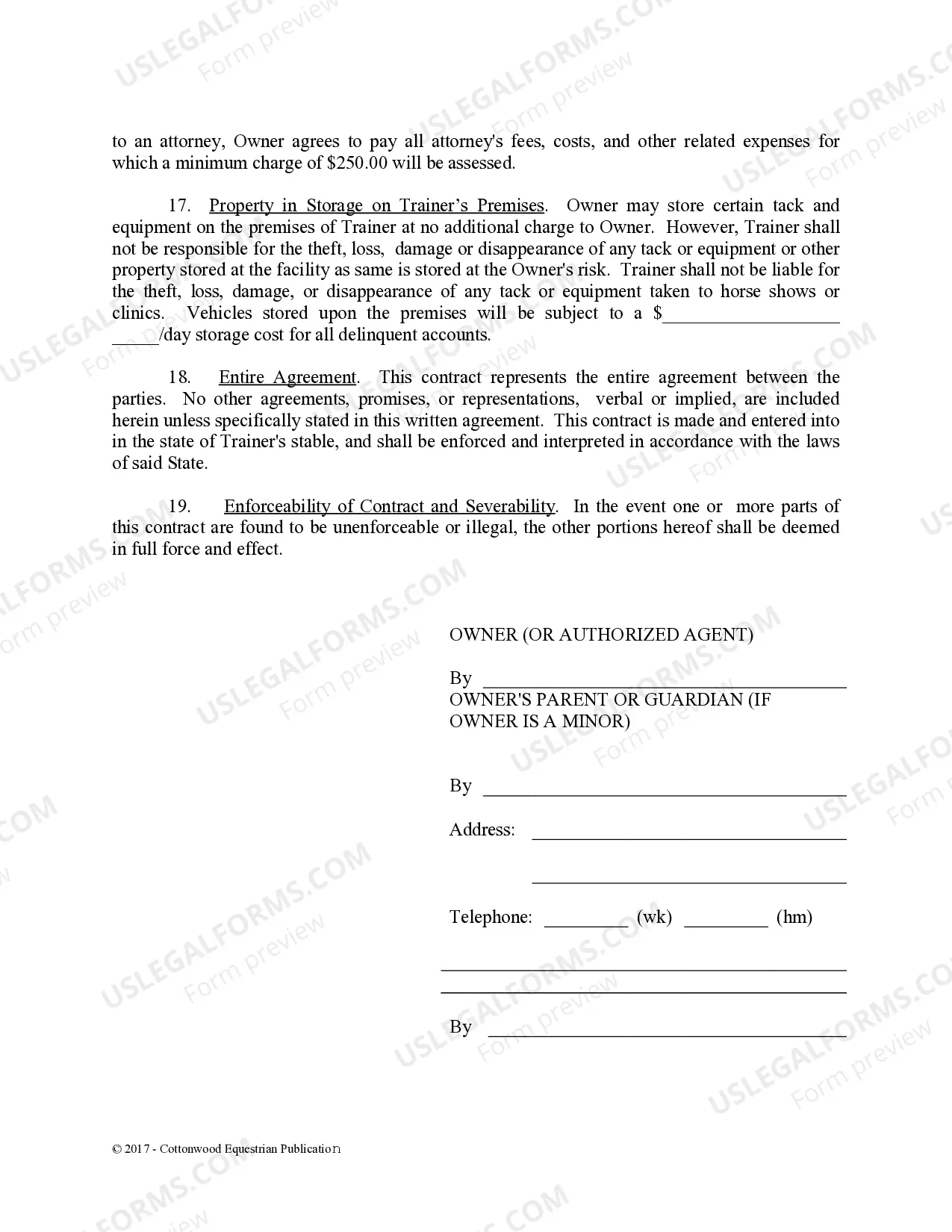
The Training Contract for horses is a legally binding agreement between a horse trainer and a horse owner. This form outlines the responsibilities of both parties regarding training services, boarding, veterinary care, and liability. Unlike other equine contracts, this form includes detailed clauses on fees, training outcomes, emergency care, and the assumption of risk associated with equine activities. It is essential for ensuring clear communication and expectations between the trainer and the owner throughout the training period.
Main sections of this form
- Identification of parties: Names of the trainer and horse owner, including provisions for minors.
- Fees, term, and location: Payment details for services and the duration of the training agreement.
- Veterinarian responsibilities: Outline of who is responsible for vet care and associated costs.
- Training clauses: Duties of the trainer in relation to horse care and training services.
- Liability and risk: Terms outlining the owner's responsibility for risks involved with equine activities.
- Emergency procedures: Guidelines for medical treatments and contact protocols in case of emergencies.

Common use cases
This Training Contract should be used when a horse owner intends to place their horse in training with a professional trainer. It is suitable for situations involving competitive training, evaluations for showing horses, or general skills enhancement. This contract is invaluable for establishing legal protections and ensuring proper care and communication during the training process.
Who can use this document
- Horse owners looking to enroll their horse in a training program.
- Professional trainers offering equine training services.
- Parents or guardians of minors involved in horse training agreements.
- Horse show participants needing formal arrangements for horse training and showing.
Instructions for completing this form
- Identify the parties: Enter the full names of the trainer and horse owner.
- Fill in horse details: Specify the horse's name and registration number.
- Outline fees: Clearly state the payment amounts, payment schedules, and any security deposits required.
- Define training terms: Describe the training goals and any specific conditions agreed upon.
- Obtain signatures: Ensure all parties, including parents or guardians for minors, sign and date the contract.
Does this document require notarization?
In most cases, this form does not require notarization. However, some jurisdictions or signing circumstances might. US Legal Forms offers online notarization powered by Notarize, accessible 24/7 for a quick, remote process.
Get your form ready online
Our built-in tools help you complete, sign, share, and store your documents in one place.
Make edits, fill in missing information, and update formatting in US Legal Forms—just like you would in MS Word.
Download a copy, print it, send it by email, or mail it via USPS—whatever works best for your next step.
Sign and collect signatures with our SignNow integration. Send to multiple recipients, set reminders, and more. Go Premium to unlock E-Sign.
If this form requires notarization, complete it online through a secure video call—no need to meet a notary in person or wait for an appointment.
We protect your documents and personal data by following strict security and privacy standards.

Make edits, fill in missing information, and update formatting in US Legal Forms—just like you would in MS Word.

Download a copy, print it, send it by email, or mail it via USPS—whatever works best for your next step.

Sign and collect signatures with our SignNow integration. Send to multiple recipients, set reminders, and more. Go Premium to unlock E-Sign.

If this form requires notarization, complete it online through a secure video call—no need to meet a notary in person or wait for an appointment.

We protect your documents and personal data by following strict security and privacy standards.
Common mistakes
- Failing to specify all fees and payment methods, leading to confusion later.
- Neglecting to include complete details about the horse's health and history.
- Not documenting emergency contact information for veterinary care.
- Overlooking the need for signatures from all necessary parties.
Why complete this form online
- Convenience: Easily download and complete the form from any location.
- Editability: Modify fields as necessary for individual circumstances.
- Reliability: Access to forms created by licensed attorneys ensures legal validity.
Legal use & context
- This Training Contract is legally binding and should be enforced as per local equine laws.
- It serves to protect both parties by outlining clear responsibilities and financial obligations.
- Failure to adhere to the terms may result in legal consequences, especially concerning payment and care obligations.
Main things to remember
- The Training Contract establishes clear expectations between horse owners and trainers.
- It includes vital information about costs, services, and liabilities associated with training.
- This agreement can help protect both parties legally in case of disputes or misunderstandings.
Looking for another form?
Form popularity
FAQ
There are colleges and programs that specifically focus on equine studies and horse training, providing students with relevant knowledge and skills. These institutions offer courses that cover different aspects of horse training, behavior, and management. If you do choose an educational path, remember that you can also benefit from practical resources like the District of Columbia Training Contract - Horse Equine Forms to complement your studies. This combination can help you prepare for a successful career in the equine industry.
Yes, many individuals work with horses without a formal degree and find success through experience and dedication. Practical training and mentorship often play a significant role in developing your skills as a horse trainer. To ensure professionalism in your work, consider utilizing resources like the District of Columbia Training Contract - Horse Equine Forms. This documentation can help you standardize your services and protect your interests while you gain experience.
You do not need a college degree to become a horse trainer, but education can enrich your training capabilities. Many successful trainers learn through apprenticeships or hands-on experience. Moreover, integrating tools such as the District of Columbia Training Contract - Horse Equine Forms can help you formalize your business practices and client agreements. This approach allows you to develop your skills while remaining compliant with professional standards.
While a formal college education is not strictly necessary for horse training, many aspiring trainers find that coursework helps build foundational skills. A degree can enhance your understanding of equine behavior and training methods. Furthermore, utilizing resources like the District of Columbia Training Contract - Horse Equine Forms can guide you through establishing professional standards as a trainer. Ultimately, practical experience is often valued just as much, if not more, than formal education.
Becoming a proficient horse trainer typically requires several years of hands-on experience with various horse breeds and training methods. Start by working alongside seasoned trainers to gather insights and learn effective practices. It's important to focus on building your skills gradually, as each horse is unique and presents its challenges. Validating your experience with a District of Columbia Training Contract - Horse Equine Forms can help in showcasing your dedication and expertise.
To obtain horse training experience, seek mentorship from a professional trainer or experienced equestrian. Participate actively in their training sessions, offering help while observing techniques. Consider enrolling in equine courses at local colleges, which often provide practical training experiences. With support from a District of Columbia Training Contract - Horse Equine Forms, you can record your training journey and establish your proficiency.
Gaining experience around horses often starts with volunteering at stables or equestrian centers. Engage in hands-on activities, such as grooming, feeding, and leading horses to build comfort and familiarity. Additionally, attending workshops or equine events can provide valuable learning opportunities. To formalize your involvement, consider utilizing a District of Columbia Training Contract - Horse Equine Forms to document your experience and learning journey.
The 20% rule with horses suggests that no more than 20% of a horse's training time should focus on intense work. This helps prevent fatigue and injury, allowing for more effective learning. The remaining training time should involve rest or light activities, which enhances retention of learned skills. Remember, including a District of Columbia Training Contract - Horse Equine Forms can help establish balanced training schedules and expectations.
The five stages of training horses include the initial groundwork, where the horse learns basic commands. Next, we introduce riding fundamentals, focusing on control and balance. Following that, we work on advancing skills, teaching the horse more complex maneuvers. Then comes refinement, where subtle cues enhance communication. Lastly, we solidify performance through practice, ensuring the horse responds consistently to commands. Utilizing a District of Columbia Training Contract - Horse Equine Forms can help formalize this training process.
A liability form for horse riding lessons protects instructors and training facilities by informing participants of the inherent risks involved. It helps ensure that students understand and accept these risks before they engage in riding lessons. By utilizing the District of Columbia Training Contract - Horse Equine Forms, you can create a comprehensive liability form that meets legal requirements and fosters a safe environment for riders.