District of Columbia Letter from Landlord to Tenant Returning security deposit less deductions
What this document covers
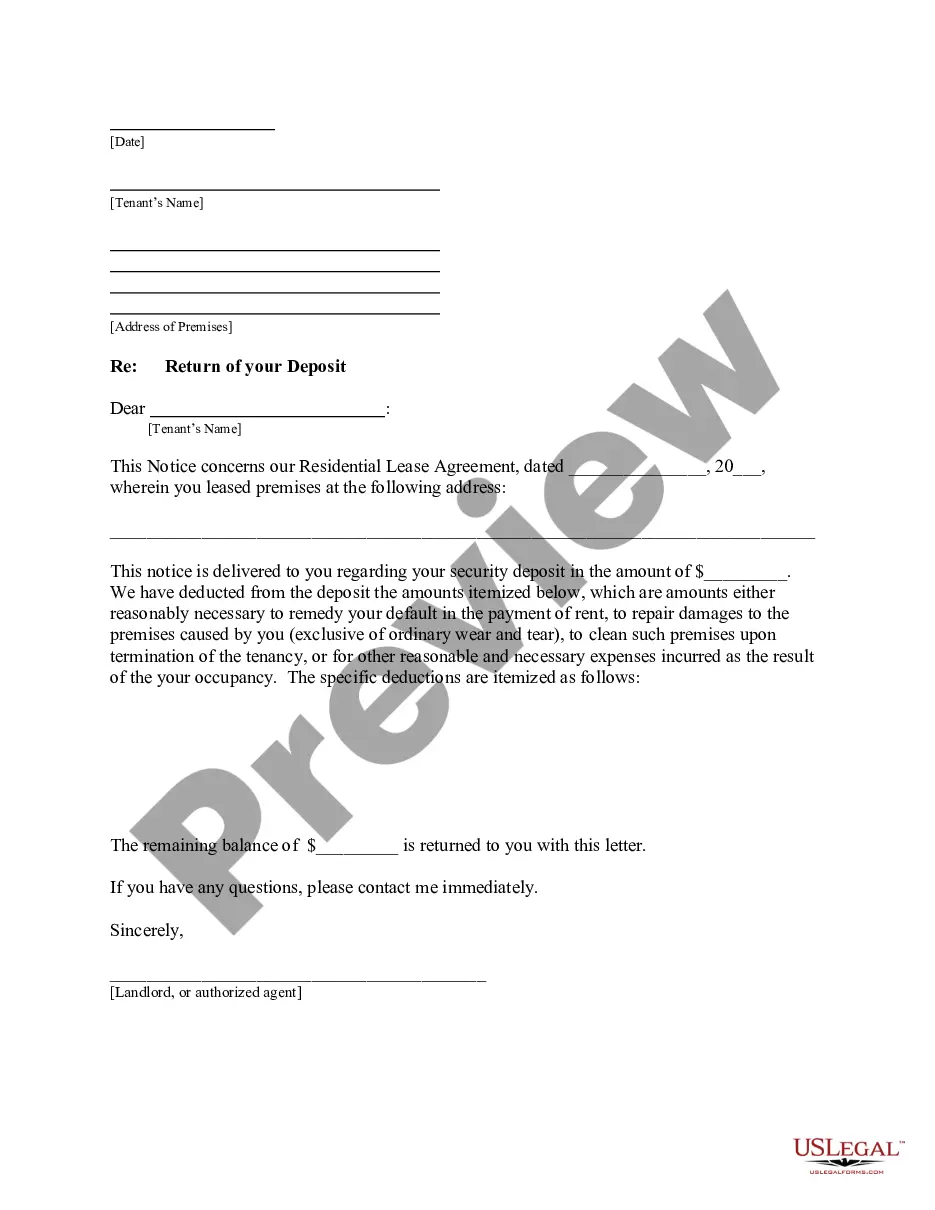
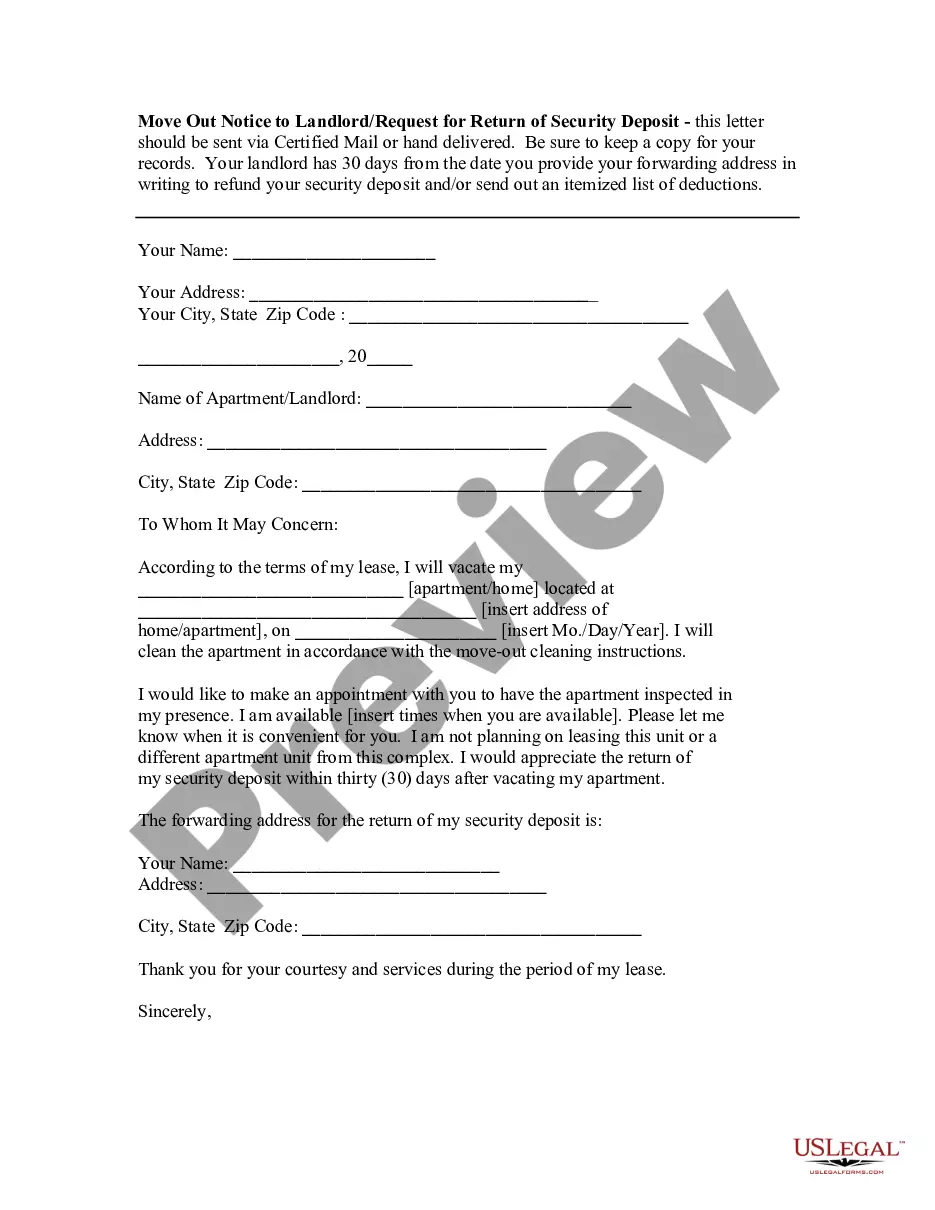
This form is a Letter from Landlord to Tenant Returning Security Deposit Less Deductions. Its primary purpose is to inform tenants about the status of their security deposit after they vacate a rental property. The letter details any deductions made for necessary repairs, unpaid rent, or cleaning costs, differentiating it from a standard return of the full deposit, which may occur in cases of no deductions. This form serves to ensure transparency and compliance with state regulations regarding security deposits.
Key parts of this document
- Details of the residential lease agreement, including the address of the leased premises.
- The total amount of the security deposit being returned.
- An itemized list of deductions from the deposit.
- Specific reasons for each deduction, such as repairs or cleaning expenses.
- Signature of the landlord or authorized representative.

When to use this form
This form should be used when a tenant has vacated a rental property, and the landlord needs to communicate the status of the security deposit. It is appropriate for scenarios where there are deductions for damages, unpaid rent, or cleaning costs beyond normal wear and tear. It serves to meet legal obligations to inform tenants about deductions and return any remaining deposit amount.
Who needs this form
This form is intended for:
- Landlords who wish to itemize and clarify deductions from a security deposit.
- Property management companies managing rental properties.
- Tenants seeking an understanding of their security deposit deductions.
How to prepare this document
- Identify the parties involved, including the landlord and tenant names.
- Specify the address of the rental property.
- Enter the date of the original lease agreement.
- Fill in the total amount of the security deposit being returned.
- List each deduction along with the reason for the deduction.
- Sign the letter to formalize the communication.
Does this form need to be notarized?
This form does not typically require notarization unless specified by local law. It is important to check if additional documentation is needed according to your state regulations.
Get your form ready online
Our built-in tools help you complete, sign, share, and store your documents in one place.
Make edits, fill in missing information, and update formatting in US Legal Forms—just like you would in MS Word.
Download a copy, print it, send it by email, or mail it via USPS—whatever works best for your next step.
Sign and collect signatures with our SignNow integration. Send to multiple recipients, set reminders, and more. Go Premium to unlock E-Sign.
If this form requires notarization, complete it online through a secure video call—no need to meet a notary in person or wait for an appointment.
We protect your documents and personal data by following strict security and privacy standards.

Make edits, fill in missing information, and update formatting in US Legal Forms—just like you would in MS Word.

Download a copy, print it, send it by email, or mail it via USPS—whatever works best for your next step.

Sign and collect signatures with our SignNow integration. Send to multiple recipients, set reminders, and more. Go Premium to unlock E-Sign.

If this form requires notarization, complete it online through a secure video call—no need to meet a notary in person or wait for an appointment.

We protect your documents and personal data by following strict security and privacy standards.
Typical mistakes to avoid
- Failing to include an itemized list of deductions.
- Not specifying the reasons for each deduction clearly.
- Leaving out important details like the property address or date.
- Not signing the letter or including the landlord's contact information.
Why complete this form online
- Instant access to a professionally drafted form tailored to legal standards.
- Easy to download and edit with specific details pertaining to your situation.
- Convenience of accessing and completing the form at any time.
Legal use & context
- The letter serves as a formal notice of deductions that may be necessary in case of disputes over the security deposit.
- Proper use of this form helps landlords fulfill their legal obligations regarding the return of security deposits.
- Documentation can be crucial in protecting both parties in case of legal action related to the tenancy.
Main things to remember
- Provides essential details regarding deductions from a security deposit.
- Ensures compliance with state laws regarding the return of tenant deposits.
- Helps maintain a clear record of landlord-tenant transactions and responsibilities.
Looking for another form?
Form popularity
FAQ
When writing a letter to request your deposit back, include your personal information and the relevant rental details at the start. Cite the District of Columbia Letter from Landlord to Tenant Returning security deposit less deductions to back up your claim. Clearly express that you wish to receive your full deposit, and provide a way for the landlord to contact you if they need more information.
In your letter to retrieve your deposit, start with your contact information and the date at the top. Identify yourself as a former tenant, and reference the District of Columbia Letter from Landlord to Tenant Returning security deposit less deductions. Clearly state the amount of your security deposit and request its return, while maintaining a friendly and direct tone.
To politely ask for your deposit back, write a brief and respectful letter that includes all necessary details. Mention your original rental agreement and the District of Columbia Letter from Landlord to Tenant Returning security deposit less deductions. Express appreciation for their attention to the matter, and provide your new address for the deposit refund.
Begin your demand letter by addressing your landlord using their full name and current address. Clearly explain your request for the return of your security deposit, referencing the District of Columbia Letter from Landlord to Tenant Returning security deposit less deductions. Specify any relevant dates and amounts, while keeping your tone respectful, to encourage a positive response.
To write a letter for a deposit refund, start by including your name and address at the top. Clearly state that you are requesting your security deposit back in accordance with the District of Columbia Letter from Landlord to Tenant Returning security deposit less deductions. Include your forwarding address and mention the date you vacated the property, ensuring the letter is polite and straightforward.
The security deposit Act in DC refers to the legislation governing how landlords manage security deposits. This Act sets forth the rights of tenants and the obligations of landlords related to the collection, holding, and return of security deposits. It’s beneficial for tenants to be aware of this Act, as it can guide them in crafting a District of Columbia Letter from Landlord to Tenant Returning security deposit less deductions if issues arise.
DC law mandates strict practices regarding security deposits, including limits on the amount a landlord can collect. Additionally, landlords must provide tenants with detailed information on how the deposit will be held and returned. Familiarizing yourself with the regulations can help you if you ever need to draft a District of Columbia Letter from Landlord to Tenant Returning security deposit less deductions.
Yes, a security deposit is typically refundable provided that there are no damages beyond normal wear and tear. In the District of Columbia, landlords must return security deposits within a specific timeframe after a tenant moves out. Understanding your rights regarding the return of your security deposit can be crucial, especially when referencing a District of Columbia Letter from Landlord to Tenant Returning security deposit less deductions.
Writing a letter to your landlord about a rent reduction involves clarity and a polite request. Start with your current rental terms, state your reasons for the reduction request, and suggest a new rental amount. Incorporating a District of Columbia Letter from Landlord to Tenant Returning security deposit less deductions can strengthen your case by highlighting your good tenancy and illustrating your financial situation.
In the District of Columbia, landlords hold specific responsibilities toward their tenants. They must ensure the rental property is safe and habitable, addressing repairs promptly. Furthermore, landlords are required to provide a written statement regarding the security deposit, giving clarity about its return and any deductions. For a comprehensive overview, consider drafting a District of Columbia Letter from Landlord to Tenant Returning security deposit less deductions.