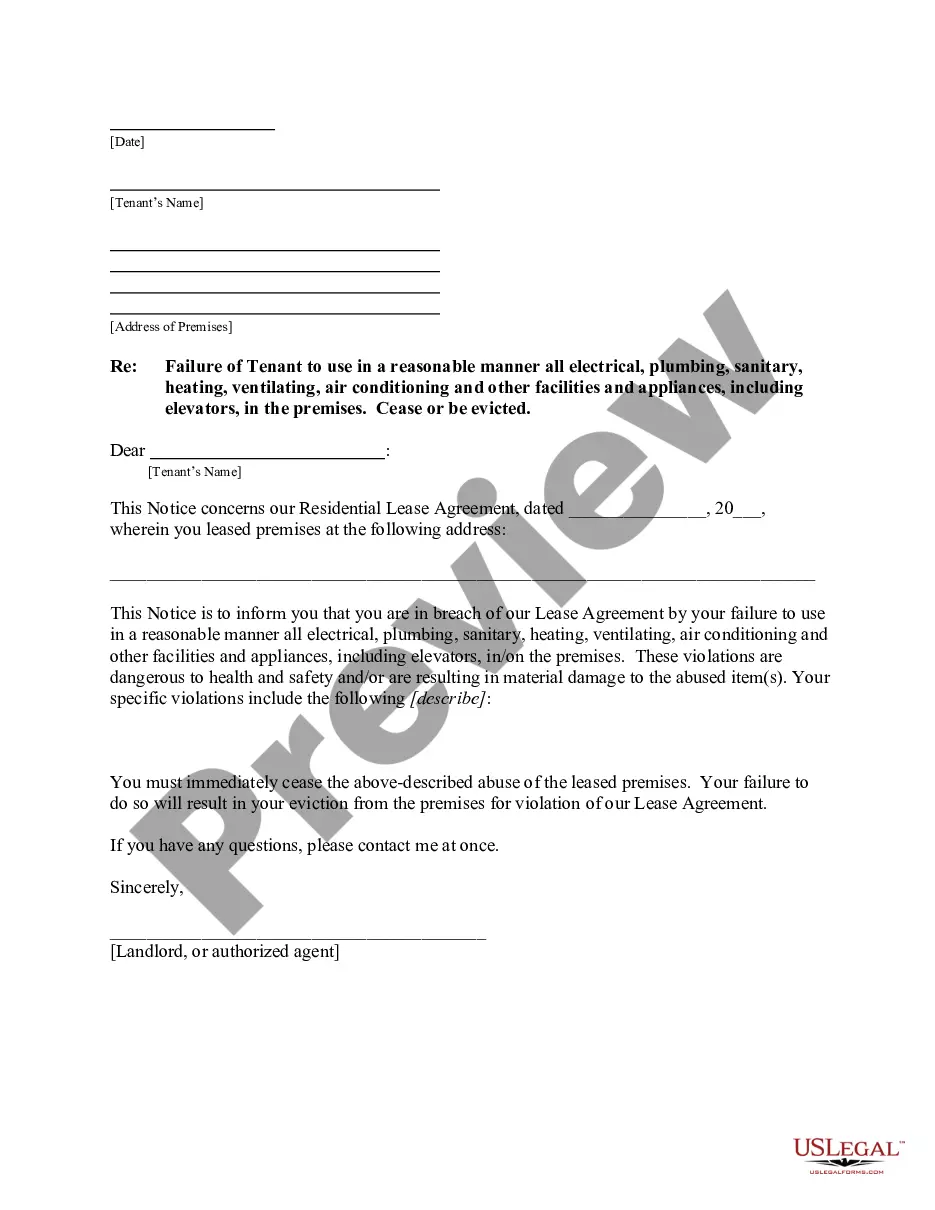
District of Columbia Letter from Landlord to Tenant for Failure to use electrical, plumbing, sanitary, heating, ventilating, air conditioning and other facilities in a reasonable manner
What is this form?
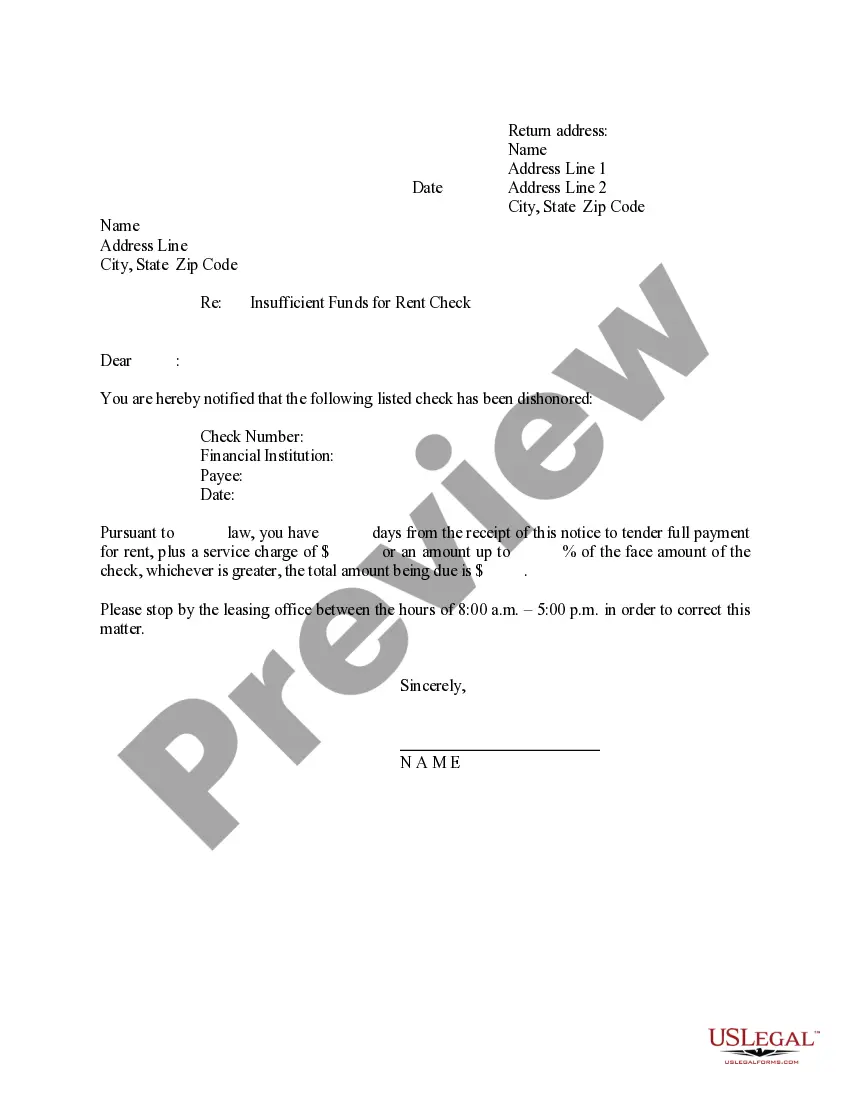
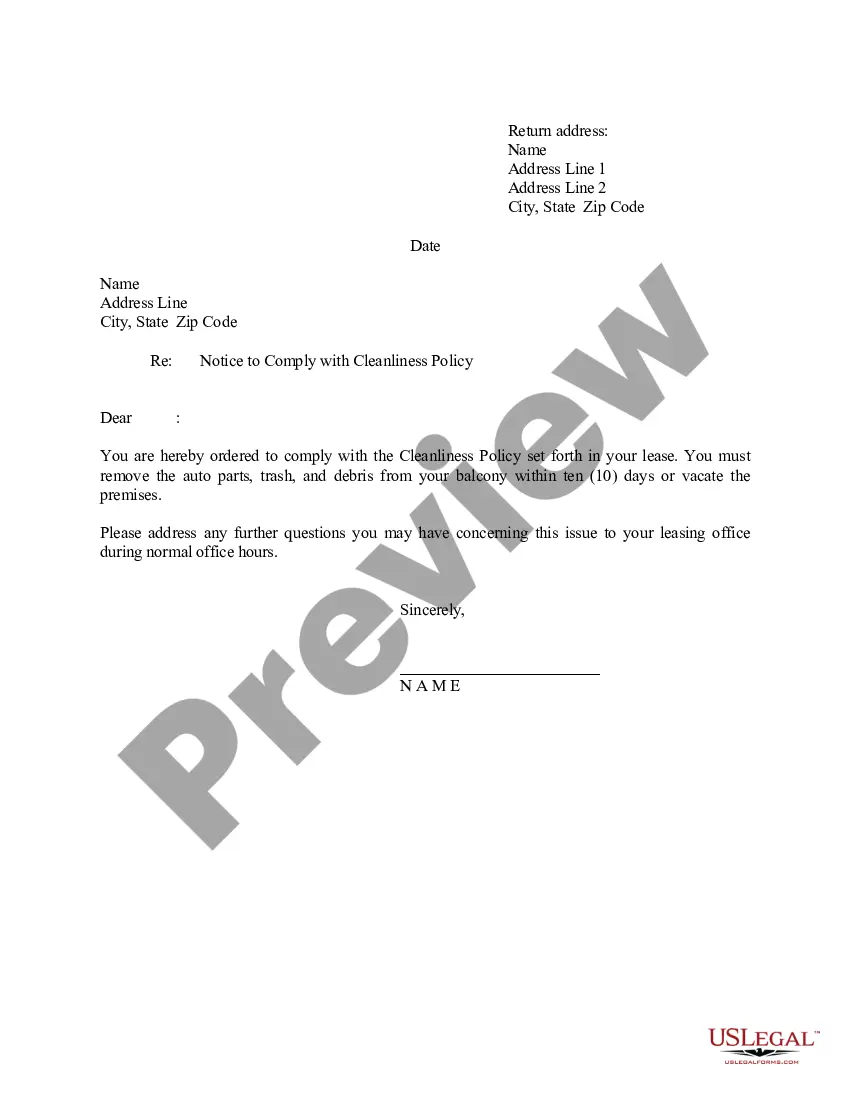
This form is a notice from a landlord to a tenant regarding the improper use of electrical, plumbing, sanitary, heating, ventilating, air conditioning, and other facilities covered in the lease. It serves as a cease notice, alerting the tenant to rectify their behavior or face potential eviction. It is important to distinguish this from standard eviction notices as it addresses minor misconduct before escalating to eviction proceedings.
Form components explained
- Identification of the landlord and tenant.
- Description of the specific misuse of facilities.
- A warning regarding potential eviction for continued misuse.
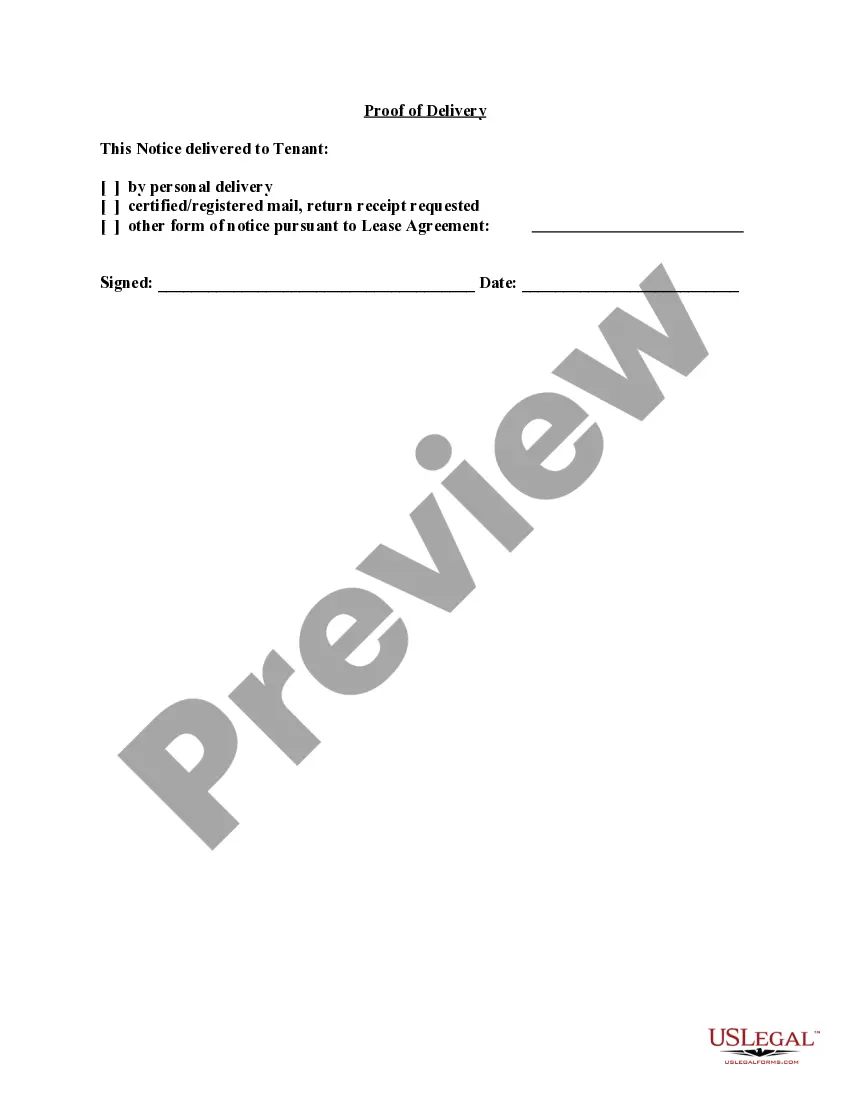
- Information on how the notice was delivered to the tenant.
- Signature line for the landlord or authorized agent.


Situations where this form applies
This form should be used when a tenant fails to use electrical, plumbing, sanitary, heating, ventilating, air conditioning, or other facilities in a reasonable manner as outlined in the lease. It is appropriate in situations where the landlord wishes to formally communicate to the tenant about issues that could lead to more severe actions, such as eviction, if not addressed promptly.
Intended users of this form
- Landlords managing rental properties.
- Property managers acting on behalf of landlords.
- Anyone involved in a landlord-tenant relationship where misuse of property has occurred.
How to prepare this document
- Identify the parties: Write the name of the landlord and tenant.
- Describe the misuse: Clearly articulate how the tenant has failed to use the facilities reasonably.
- State the consequences: Indicate that failure to rectify the situation may lead to eviction.
- Specify the method of delivery: Note if the notice is delivered personally or via certified mail.
- Sign the form: Include the landlordâs or authorized agent's signature.
Does this document require notarization?
This form does not typically require notarization unless specified by local law. Always verify your jurisdiction's requirements to ensure compliance.
Get your form ready online
Our built-in tools help you complete, sign, share, and store your documents in one place.
Make edits, fill in missing information, and update formatting in US Legal Forms—just like you would in MS Word.
Download a copy, print it, send it by email, or mail it via USPS—whatever works best for your next step.
Sign and collect signatures with our SignNow integration. Send to multiple recipients, set reminders, and more. Go Premium to unlock E-Sign.
If this form requires notarization, complete it online through a secure video call—no need to meet a notary in person or wait for an appointment.
We protect your documents and personal data by following strict security and privacy standards.

Make edits, fill in missing information, and update formatting in US Legal Forms—just like you would in MS Word.

Download a copy, print it, send it by email, or mail it via USPS—whatever works best for your next step.

Sign and collect signatures with our SignNow integration. Send to multiple recipients, set reminders, and more. Go Premium to unlock E-Sign.

If this form requires notarization, complete it online through a secure video call—no need to meet a notary in person or wait for an appointment.

We protect your documents and personal data by following strict security and privacy standards.
Common mistakes
- Failing to clearly specify the misuse leading to the notice.
- Not delivering the notice in accordance with local laws.
- Neglecting to sign the form, which may render it invalid.
- Using vague language which might confuse the tenant regarding their obligations.
Why use this form online
- Immediate access to download and customize the form as needed.
- Easy to fill out and edit to fit specific landlord-tenant situations.
- Reliable templates drafted by licensed attorneys, ensuring legal compliance.
Legal use & context
- This form serves as an official communication regarding lease violations.
- It can help protect the landlord's rights and provides documentation for potential future legal proceedings.
- Proper use of this form may prevent escalated disputes and help maintain a functional landlord-tenant relationship.
Summary of main points
- This form serves as a crucial first step in addressing tenant violations.
- Clear communication and adherence to legal protocols are essential.
- Proper documentation can provide protection for landlords in case of legal disputes.
Looking for another form?
Form popularity
FAQ
To write a strongly worded complaint to your landlord, be clear and concise. Start by stating your issue directly and include evidence, such as dates and specific incidents. Use polite yet firm language, and conclude with a request for a prompt resolution. If issues persist, consider utilizing a District of Columbia Letter from Landlord to Tenant for Failure to use electrical, plumbing, sanitary, heating, ventilating, air conditioning and other facilities in a reasonable manner to effectively communicate your rights and expectations.
In Washington, DC, landlords are required to address urgent repairs promptly, generally within 24 hours. For non-urgent issues, the timeline can vary but is typically reasonable, allowing for a few days to weeks. If landlords neglect their responsibilities, a tenant can utilize a District of Columbia Letter from Landlord to Tenant for Failure to use electrical, plumbing, sanitary, heating, ventilating, air conditioning and other facilities in a reasonable manner to urge action.
In the District of Columbia, landlords are not legally obligated to provide air conditioning. Nonetheless, if air conditioning is included in the lease, tenants have a right to have it maintained in working order. If landlords fail to address air conditioning issues, tenants may send a District of Columbia Letter from Landlord to Tenant for Failure to use electrical, plumbing, sanitary, heating, ventilating, air conditioning and other facilities in a reasonable manner to formally address their concerns.
Air conditioning requirements vary by state. Some states have specific regulations that require landlords to provide air conditioning as part of rental agreements, especially in places with extreme heat. However, in the District of Columbia, there is no specific law mandating that landlords must provide air conditioning. Instead, tenants should review their lease agreements and may utilize a District of Columbia Letter from Landlord to Tenant for Failure to use electrical, plumbing, sanitary, heating, ventilating, air conditioning and other facilities in a reasonable manner if air conditioning is absent.
You can file a complaint against your landlord with the District of Columbia Department of Consumer and Regulatory Affairs (DCRA) or the Office of the Attorney General for the District of Columbia. They handle tenant complaints and can assist with investigations. Moreover, using a District of Columbia Letter from Landlord to Tenant for Failure to use electrical, plumbing, sanitary, heating, ventilating, air conditioning and other facilities in a reasonable manner may strengthen your case when you submit a formal complaint.
Suing a landlord in D.C. involves filing a complaint in the appropriate court after compiling evidence of the issue. It's essential to document incidents thoroughly and keep all communication records. You may use a District of Columbia Letter from Landlord to Tenant for Failure to use electrical, plumbing, sanitary, heating, ventilating, air conditioning and other facilities in a reasonable manner to demonstrate that you've attempted to resolve the issue amicably before pursuing legal action. Consulting with a lawyer can further guide you through this process.
All landlords in the District of Columbia are required to adhere to a variety of housing laws, including maintenance and repair standards for living conditions. They must provide safe, habitable housing and respect tenants' rights regarding privacy and notice for entry. If landlords fail to uphold these standards, a District of Columbia Letter from Landlord to Tenant for Failure to use electrical, plumbing, sanitary, heating, ventilating, air conditioning and other facilities in a reasonable manner serves as a crucial tool for holding them accountable.
Taking legal action against a landlord begins with gathering detailed documentation of all incidents, including failed repairs and communication efforts. You might start by sending a notice through a District of Columbia Letter from Landlord to Tenant for Failure to use electrical, plumbing, sanitary, heating, ventilating, air conditioning and other facilities in a reasonable manner if applicable. If the issue persists, consult with a legal professional to understand your rights and options, including filing a suit in housing court.
Dealing with an irresponsible landlord requires clear communication and documentation. Start with addressing issues directly, ideally in writing, to maintain a record of all interactions. If the situation does not improve, consider using a District of Columbia Letter from Landlord to Tenant for Failure to use electrical, plumbing, sanitary, heating, ventilating, air conditioning and other facilities in a reasonable manner to formally outline your concerns and expectations. This step can often motivate landlords to take action.
While DC landlords are not legally required to provide air conditioning unless stated in the lease, they must maintain a habitable environment. If the lease includes air conditioning, landlords are responsible for servicing and repairing the system promptly. Understanding your lease terms can help you know what to expect.