Connecticut Foreign Judgment Enrollment
About this form
The Connecticut Foreign Judgment Enrollment form is used to enroll a judgment issued by a court outside of Connecticut, allowing the holder of the judgment to enforce it within the state. This process creates a judgment lien against the property of the judgment debtor, making it legally valid for collection in Connecticut. Unlike other forms, this one specifically addresses the enrollment of judgments from other jurisdictions under Connecticut law.
What’s included in this form
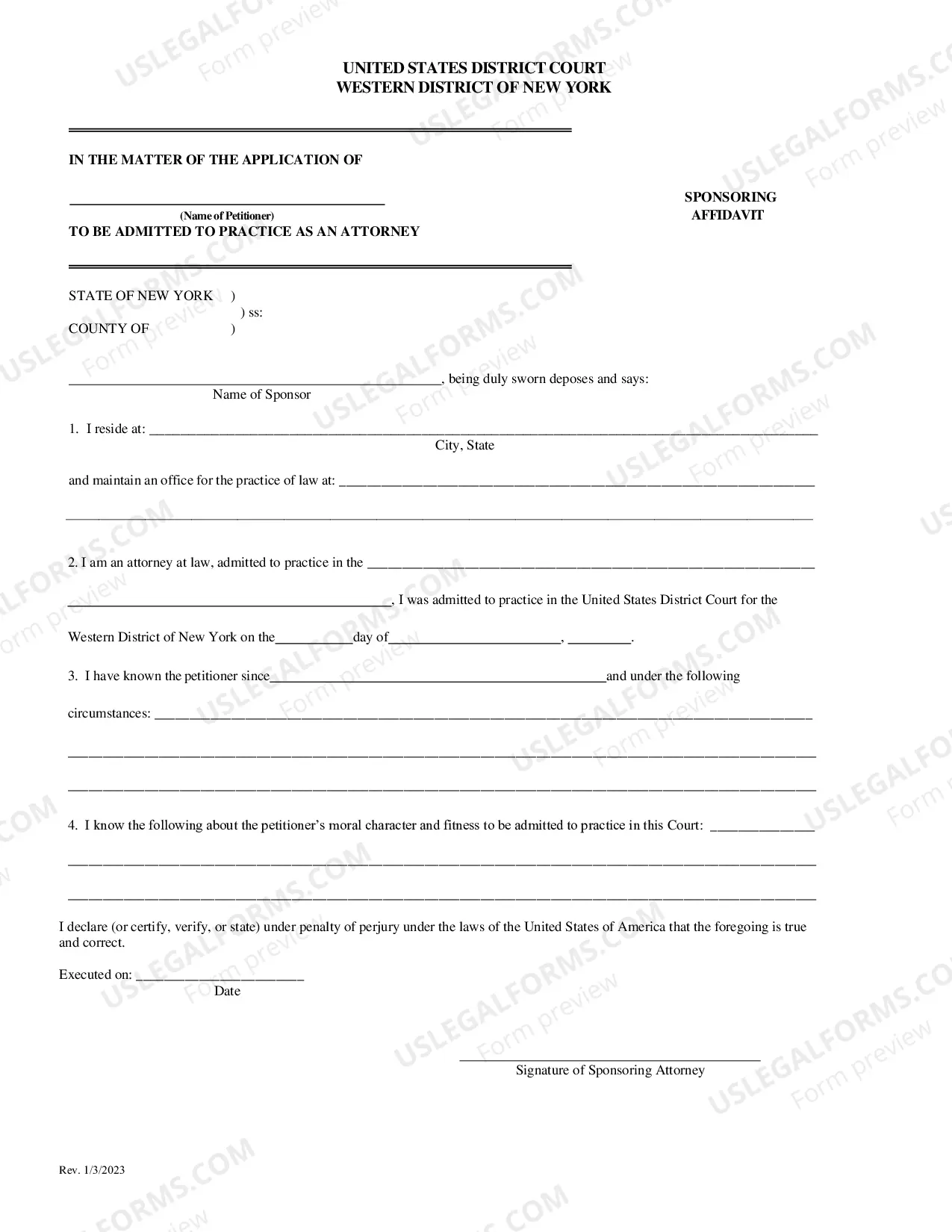
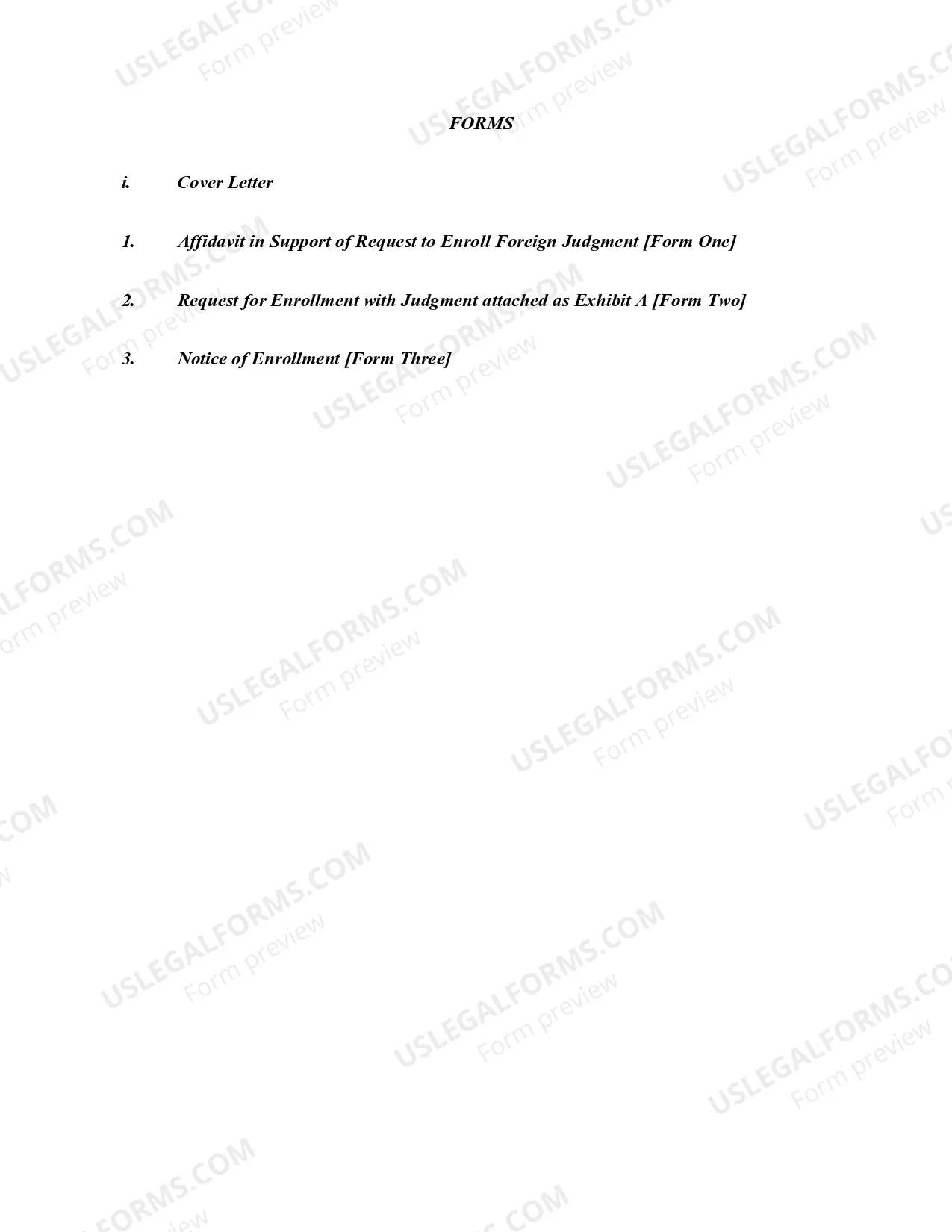
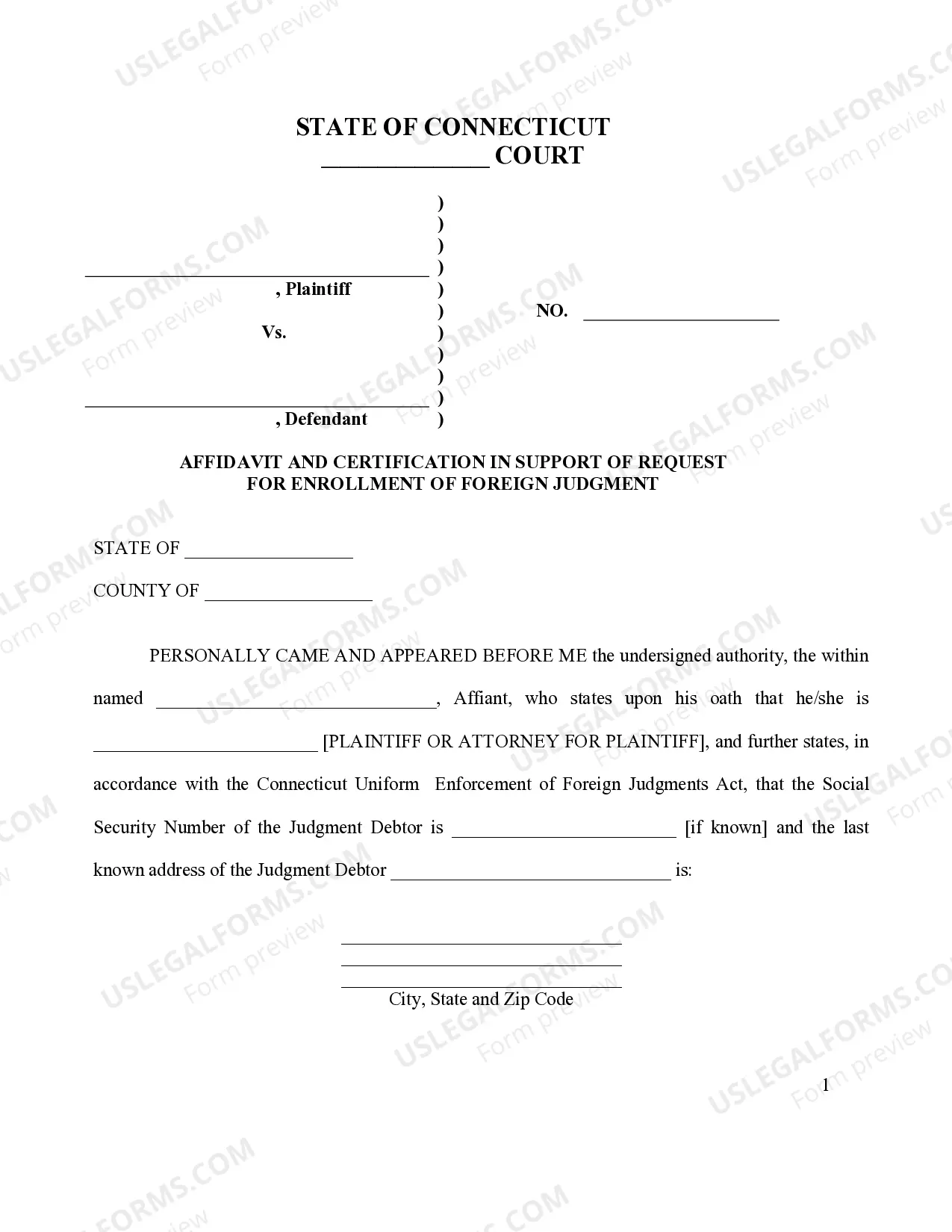
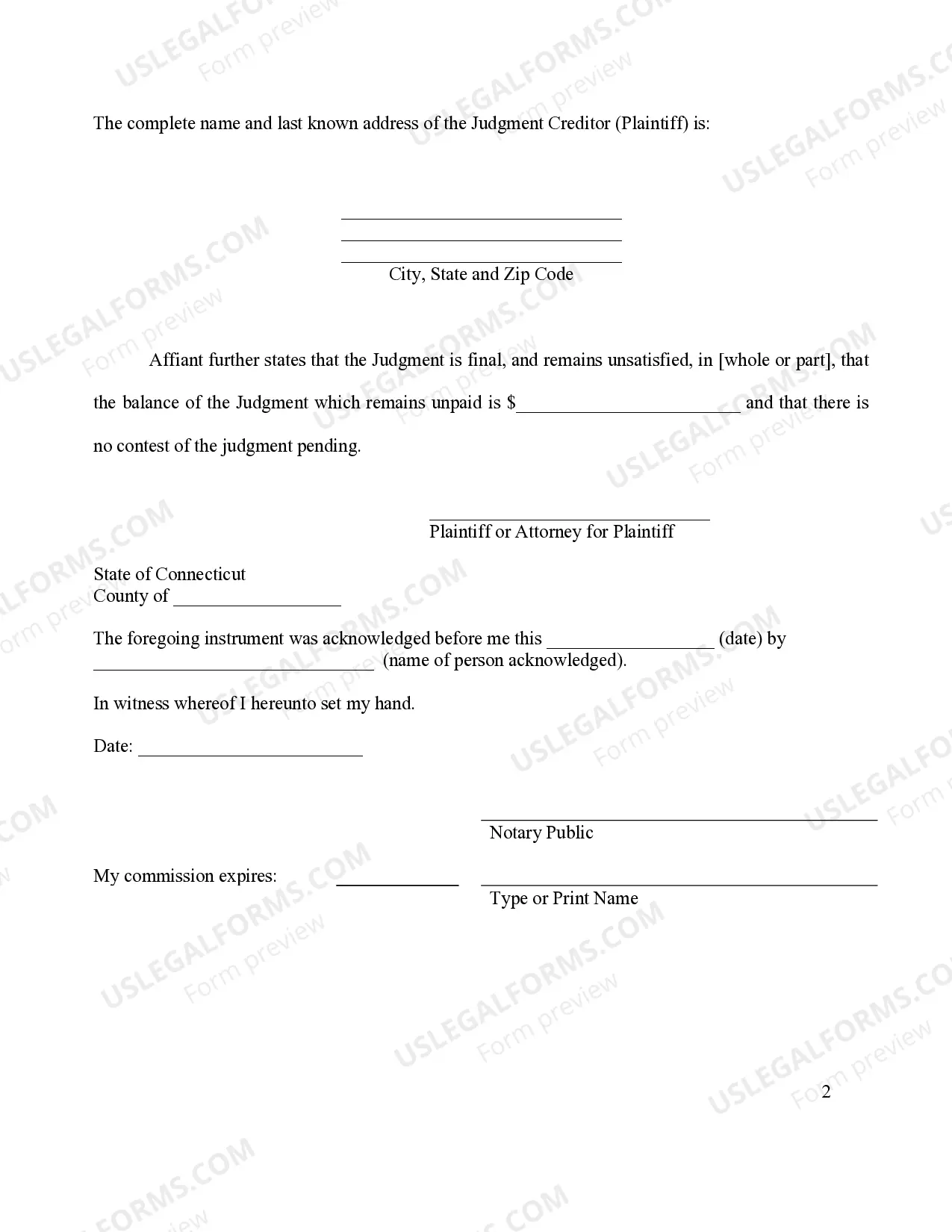
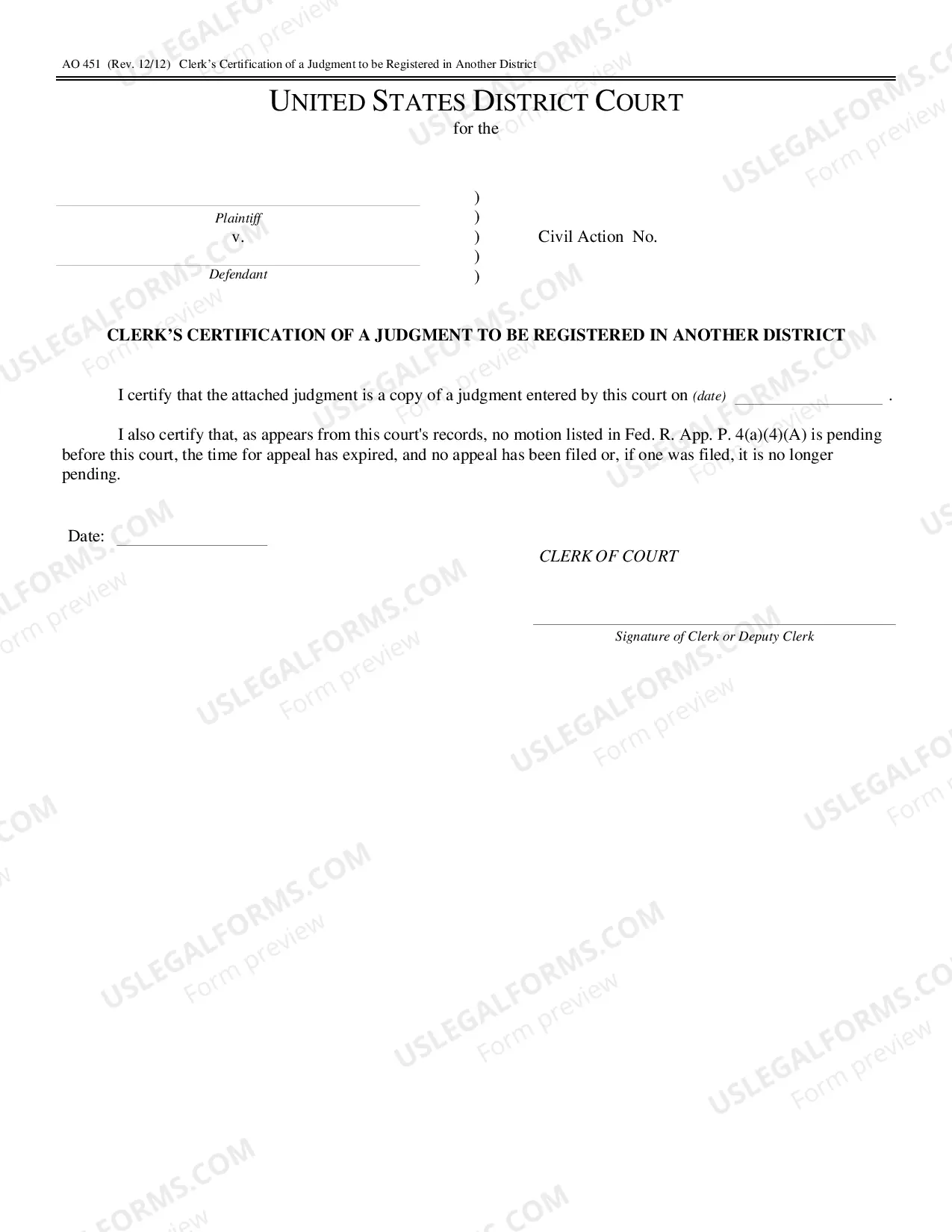
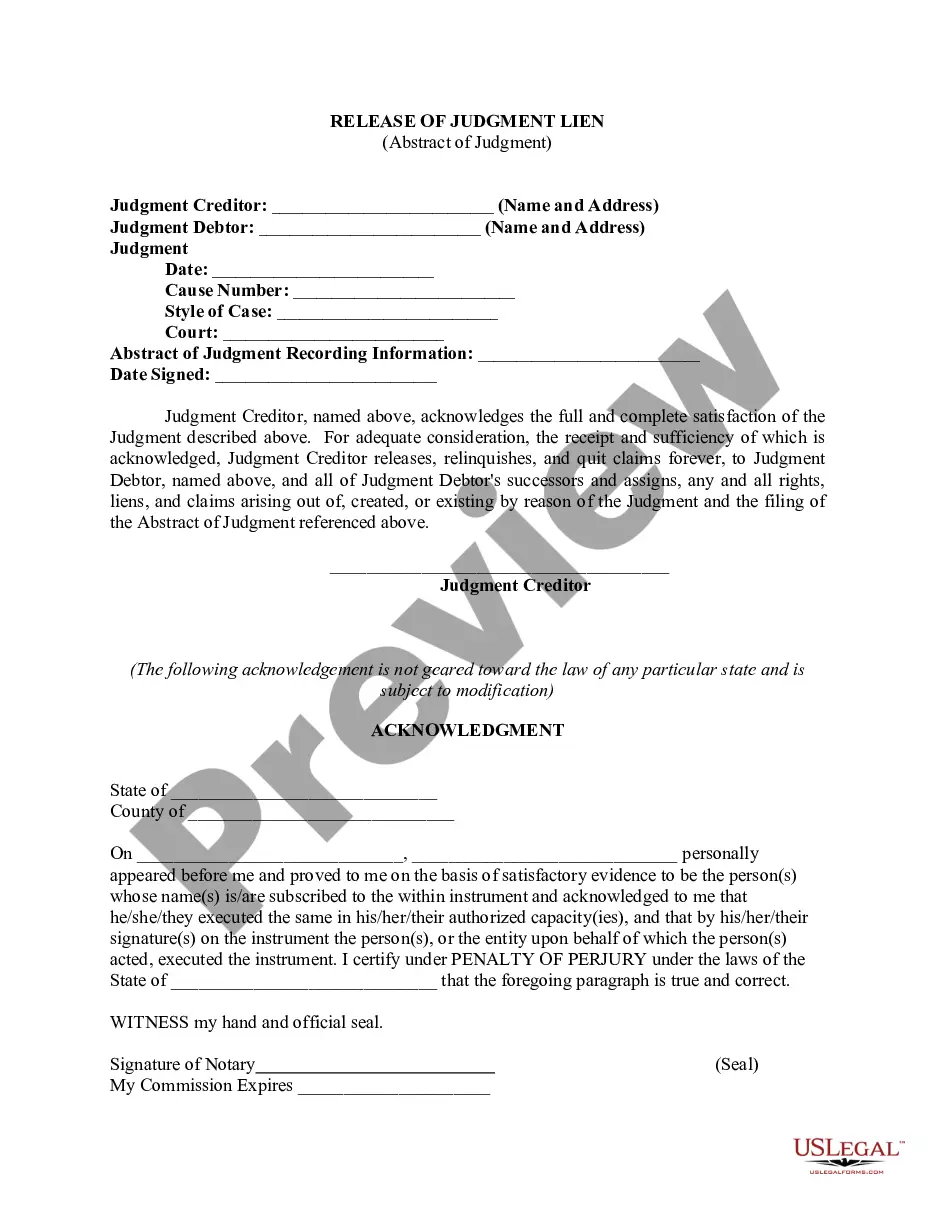
- Affidavit in Support of Request to Enroll Foreign Judgment
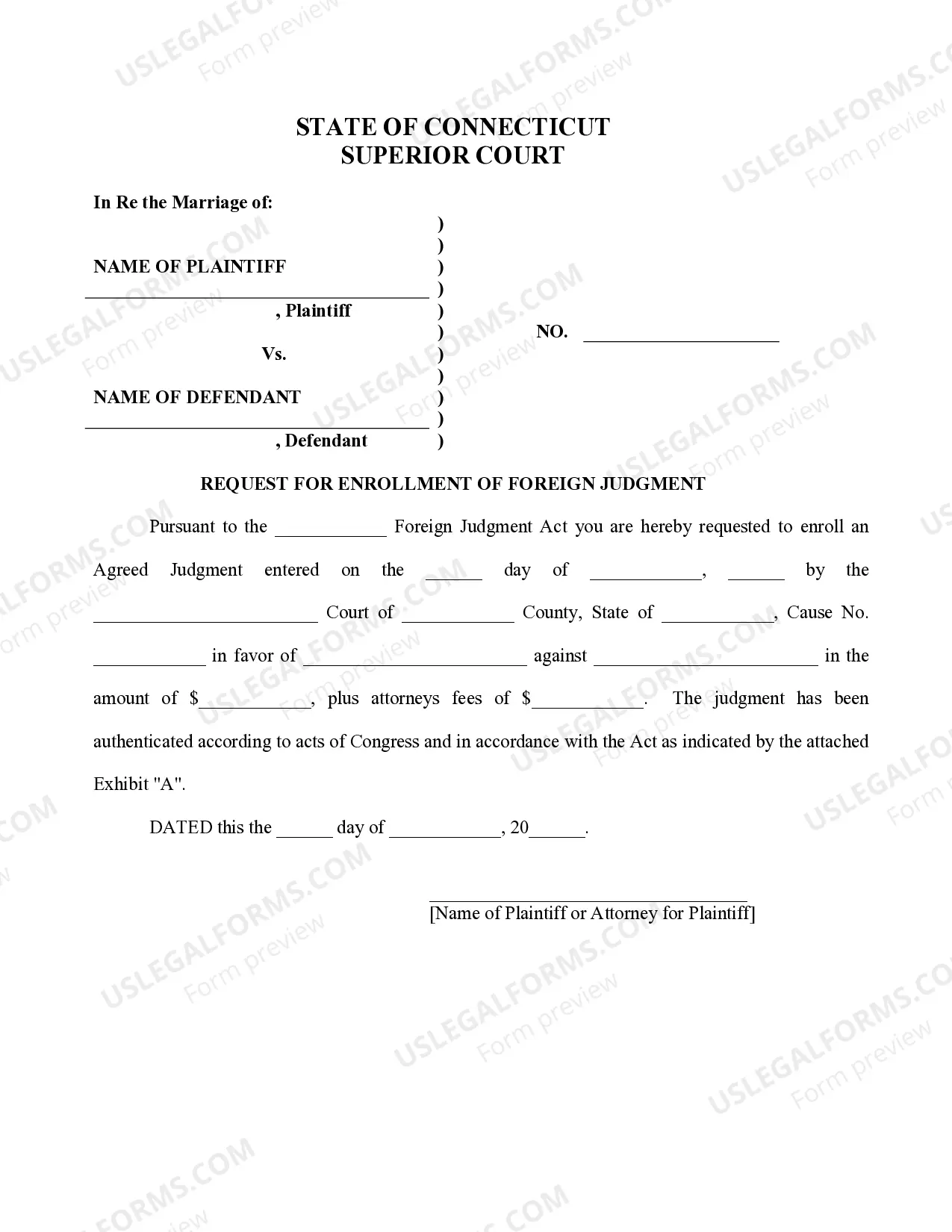
- Request for Enrollment with Judgment attached as Exhibit A
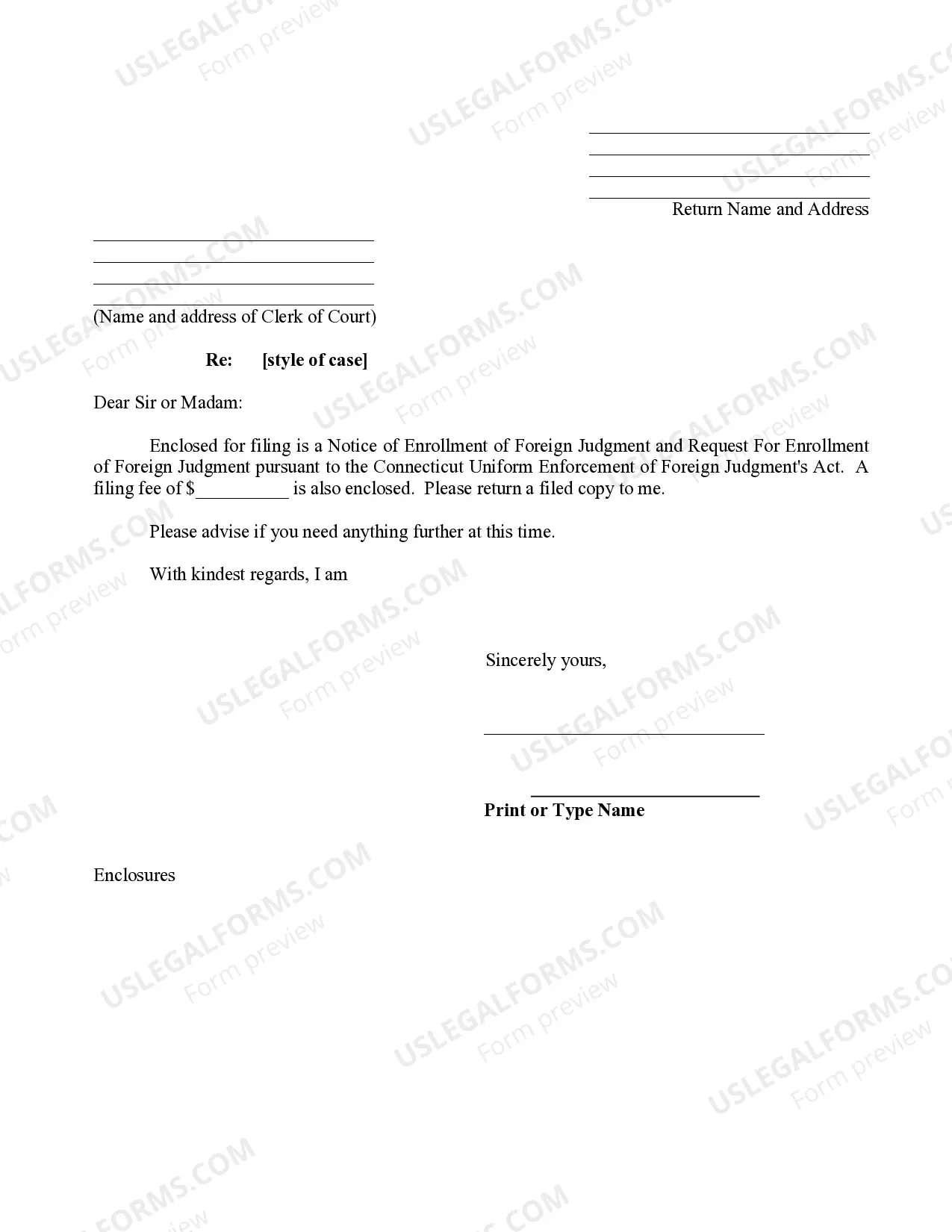
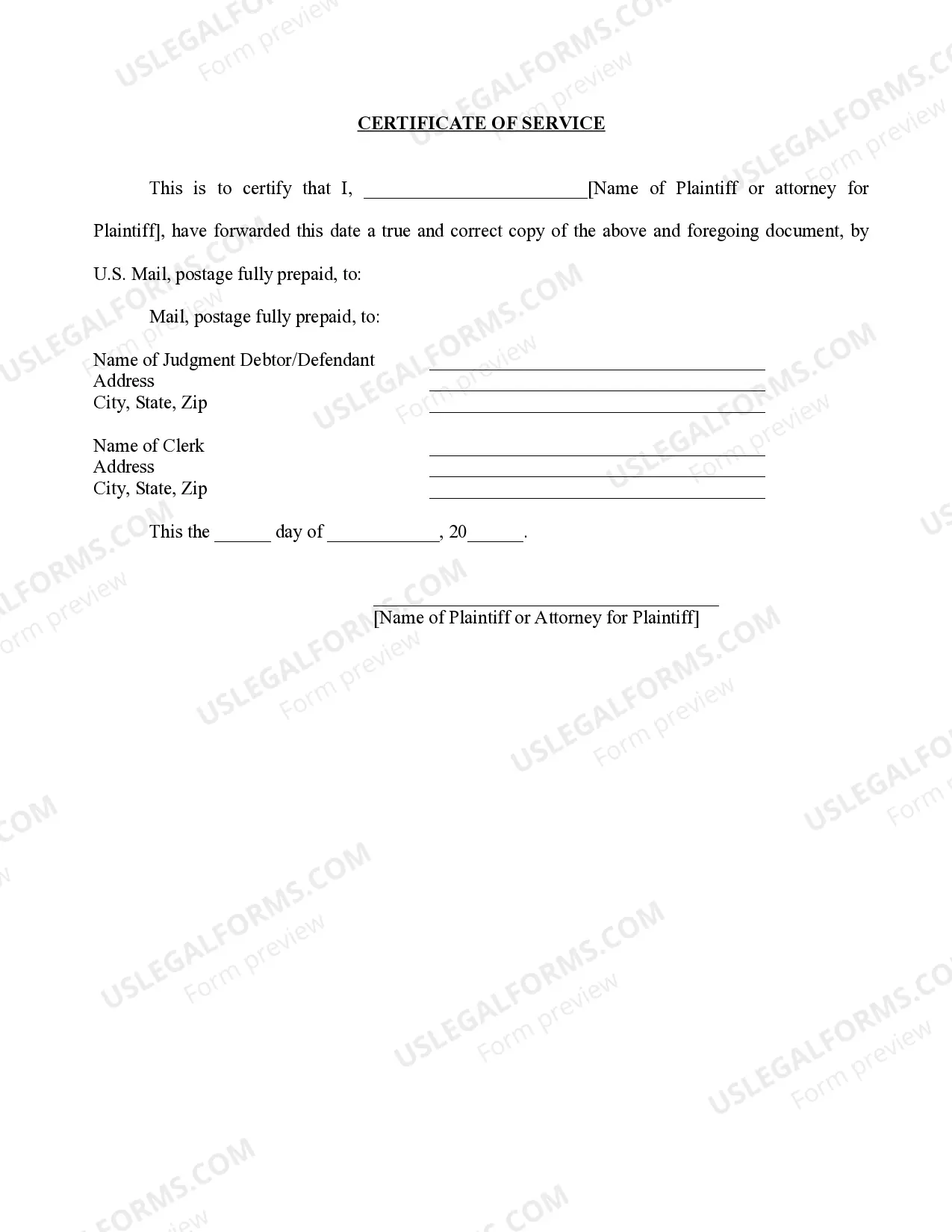
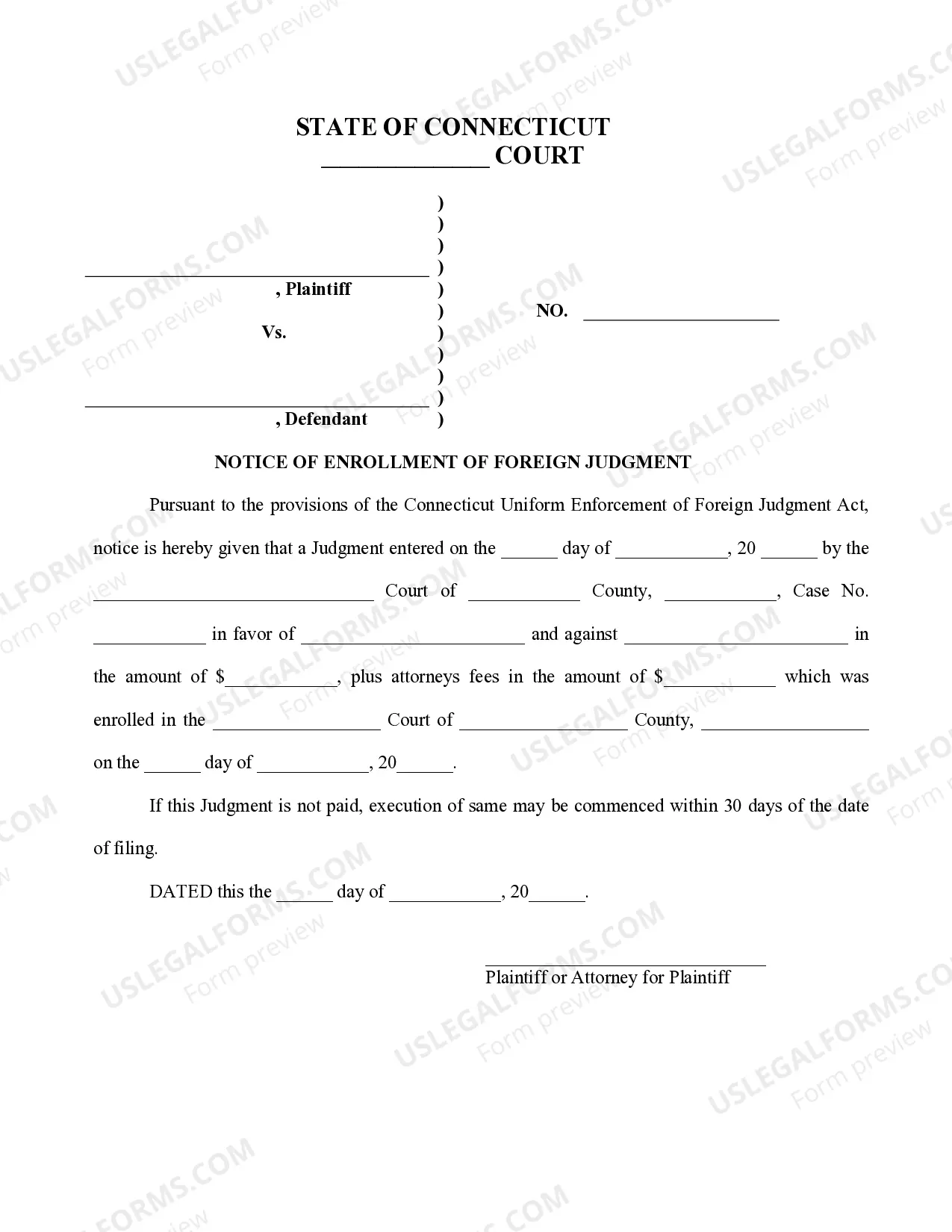
- Notice of Enrollment to inform the debtor
- Instructions for completing the forms and filing process

Common use cases
This form is necessary when a judgment creditor needs to enforce a judgment from another state in Connecticut. Situations may include the debtor moving to Connecticut post-judgment, or the creditor seeking to recover owed amounts through liens and property enforcement within Connecticut.
Who should use this form
- Judgment creditors looking to enforce a foreign judgment
- Attorneys representing clients with foreign judgments
- Individuals unfamiliar with legal proceedings but needing to enforce a judgment in Connecticut
How to prepare this document
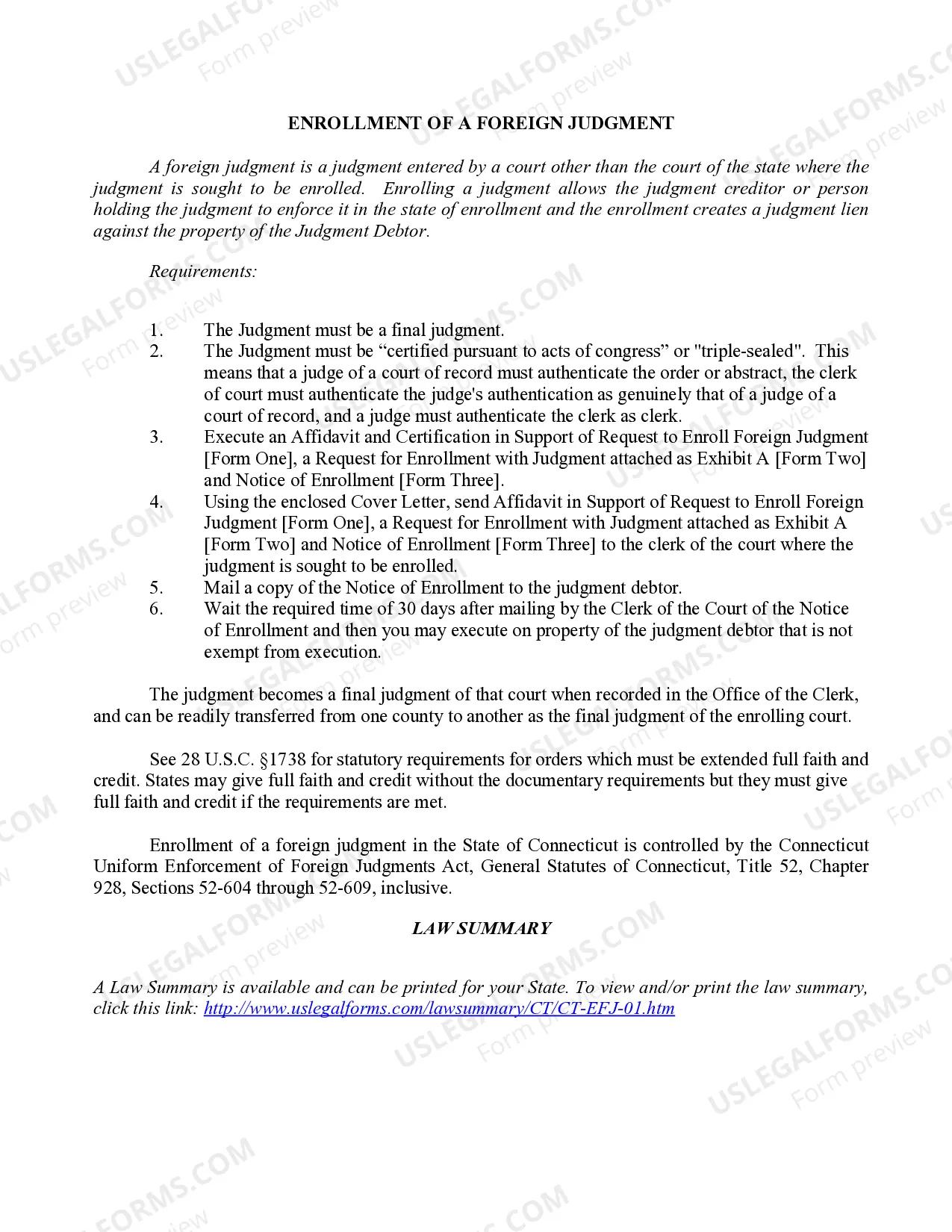
- Gather your documents, including the final judgment from the other state.
- Complete the Affidavit in Support of Request to Enroll Foreign Judgment.
- Fill out the Request for Enrollment, attaching the judgment as Exhibit A.
- Prepare and sign the Notice of Enrollment.
- Submit your forms along with any required fees to the appropriate court clerk.
- Mail a copy of the Notice of Enrollment to the judgment debtor.
Notarization guidance
Yes, this form must be notarized to be legally valid. When using U.S. Legal Forms, you can enjoy integrated online notarization services, available 24/7 through secure video calls, eliminating the need for travel.
Get your form ready online
Our built-in tools help you complete, sign, share, and store your documents in one place.
Make edits, fill in missing information, and update formatting in US Legal Forms—just like you would in MS Word.
Download a copy, print it, send it by email, or mail it via USPS—whatever works best for your next step.
Sign and collect signatures with our SignNow integration. Send to multiple recipients, set reminders, and more. Go Premium to unlock E-Sign.
If this form requires notarization, complete it online through a secure video call—no need to meet a notary in person or wait for an appointment.
We protect your documents and personal data by following strict security and privacy standards.

Make edits, fill in missing information, and update formatting in US Legal Forms—just like you would in MS Word.

Download a copy, print it, send it by email, or mail it via USPS—whatever works best for your next step.

Sign and collect signatures with our SignNow integration. Send to multiple recipients, set reminders, and more. Go Premium to unlock E-Sign.

If this form requires notarization, complete it online through a secure video call—no need to meet a notary in person or wait for an appointment.

We protect your documents and personal data by following strict security and privacy standards.
Common mistakes to avoid
- Failing to certify the foreign judgment correctly.
- Not providing the necessary supporting documents with the enrollment request.
- Neglecting to notify the judgment debtor after filing.
Why use this form online
- Easy access to forms prepared by licensed attorneys.
- Ability to complete and edit forms digitally before printing.
- Convenient and secure process for managing legal documents right from home.
Legal use & context
- The foreign judgment must be a final judgment from a legitimate court.
- Enrolling a foreign judgment establishes a lien against the judgment debtorâs property in Connecticut.
- All filed documents should adhere to the Connecticut Uniform Enforcement of Foreign Judgments Act.
Summary of main points
- Understand the process for enrolling an out-of-state judgment in Connecticut.
- Ensure all forms are completed accurately to avoid delays.
- Know your rights as a judgment creditor and the enforcement options available after enrollment.
Definitions you should know
- Foreign Judgment: A judgment issued by a court in a different state.
- Judgment Creditor: The party who has won a judgment in court and is entitled to collect on that judgment.
- Judgment Debtor: The party against whom the judgment has been awarded and who owes the debt.
- Judgment Lien: A legal claim against a debtorâs property until the debt is satisfied.
Looking for another form?
Form popularity
FAQ
Yes, the US generally recognizes foreign judgments, but the process can vary by state. In Connecticut, you can enroll a foreign judgment through a legal process known as Connecticut Foreign Judgment Enrollment. This procedure ensures that a foreign court's ruling is acknowledged and enforced within the state. To simplify this process, you may want to consider using US Legal Forms, which offers resources and forms tailored for effective foreign judgment enrollment.
Section 52-584 of the Connecticut General Statutes relates to the statute of limitations for actions concerning negligence and wrongful death incidents. Understanding this statute is crucial for anyone involved in legal disputes. Knowledge of your rights and timelines is essential to protect your interests. For resolving legal matters effectively, including Connecticut Foreign Judgment Enrollment, using dedicated resources can be highly beneficial.
Section 52-258 of the Connecticut General Statutes deals with the enforcement of foreign judgments. This provision allows for the registration of a judgment rendered in another jurisdiction within Connecticut. Its implementation simplifies how individuals enforce their rights under foreign rulings. Utilizing Connecticut Foreign Judgment Enrollment can clarify processes for those looking to enforce these judgments efficiently.
The Uniform Enforcement of Foreign Judgments Act provides a streamlined process for enforcing out-of-state judgments in Connecticut. This act ensures that foreign judgments are treated with respect within the state, promoting fairness and consistency. By facilitating Connecticut Foreign Judgment Enrollment, it allows creditors to pursue collections more effectively. This legal framework is essential for anyone engaged in interstate litigation.
The Connecticut General Statutes outline rules for various offenses, including interfering with an officer. This statute addresses actions that obstruct law enforcement in the performance of their duties. Understanding this law can help individuals avoid unintentional violations. For matters regarding law enforcement and legal processes, consider Connecticut Foreign Judgment Enrollment to navigate complex legal situations.
Failing to attend court for a judgment can lead to a default judgment, where the court automatically rules in favor of the other party. This not only affects your legal standing but can complicate Connecticut Foreign Judgment Enrollment processes if you're the one enforcing the judgment. Ignoring court summons can also result in missed opportunities to present your case and protect your interests. It’s crucial to seek legal advice and respond to court notifications promptly.
To enforce a foreign judgment in the US, you generally need to file for recognition in the appropriate state court, following state-specific procedures. The process often involves demonstrating that the judgment meets certain legal requirements, which can vary from state to state. When considering Connecticut Foreign Judgment Enrollment, using a platform like US Legal Forms can streamline the process, providing the necessary forms and guidance. This ensures smoother compliance and avoids potential legal hurdles.
In Connecticut, a judgment lien typically lasts for 20 years from the date it is recorded. This long duration allows creditors to hold a claim against a property, which can be crucial during the process of Connecticut Foreign Judgment Enrollment. If you wish to enforce a foreign judgment in Connecticut, understanding the lifespan of judgment liens is essential. Ensure you take timely action to secure your rights.
Some states, such as California, New York, and Texas, have not adopted the Uniform Enforcement of Foreign Judgments Act, which simplifies the process of Connecticut Foreign Judgment Enrollment. This means that if a foreign judgment needs enforcement in these states, the process might be more complex. It’s essential to research the specific laws of these states when enrolling a foreign judgment. Consulting with legal professionals can provide clarity and ensure compliance.
In Connecticut, a debt generally becomes uncollectible after 6 years, which is the standard statute of limitations for most debts. This means creditors must initiate collection efforts within this time frame to avoid losing their rights. Engaging in Connecticut Foreign Judgment Enrollment before the statute of limitations expires is crucial for protecting your financial interests.