Connecticut Owner's or Seller's Affidavit of No Liens
Understanding this form
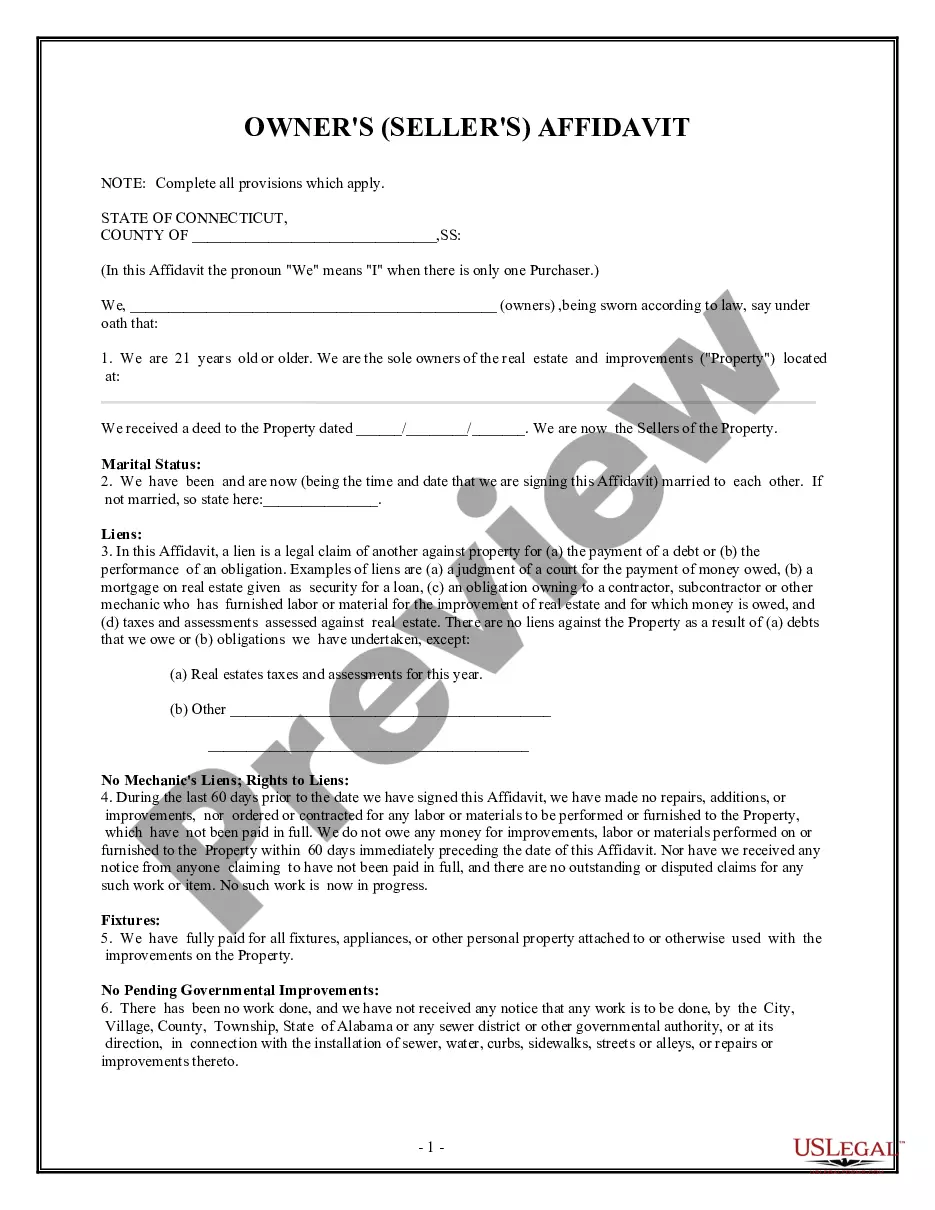
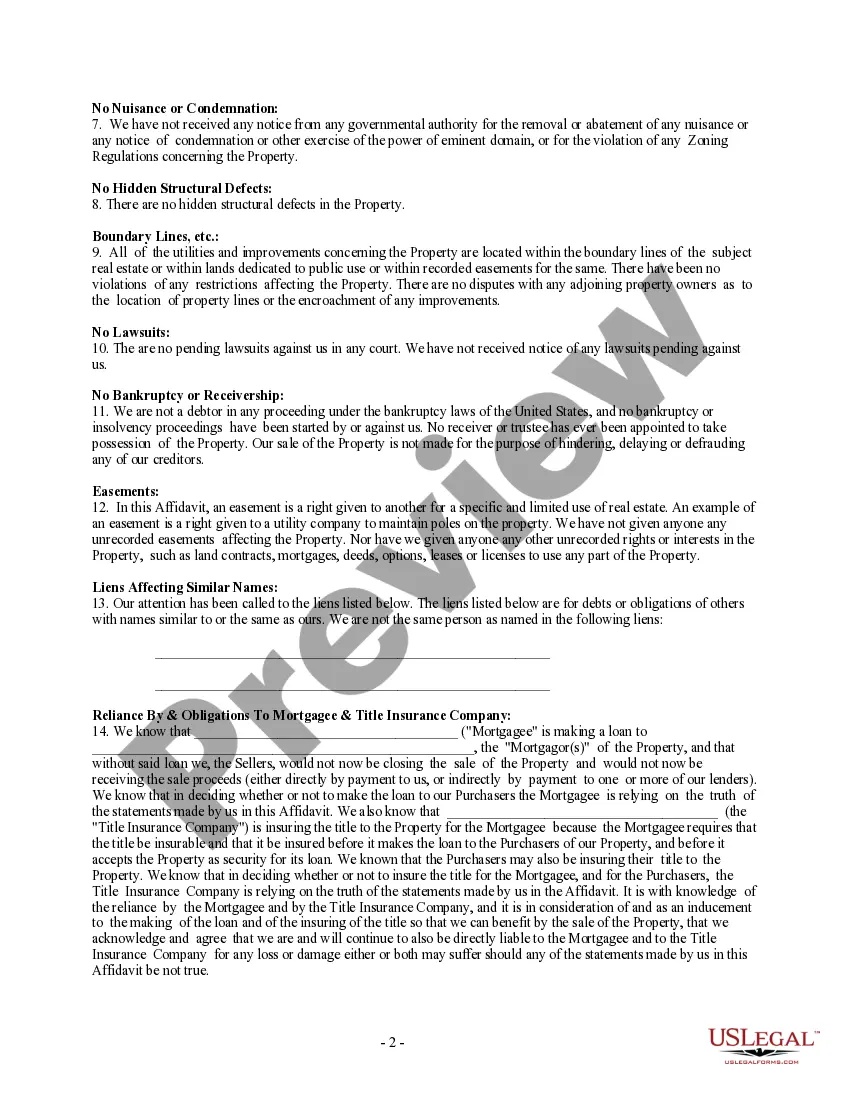
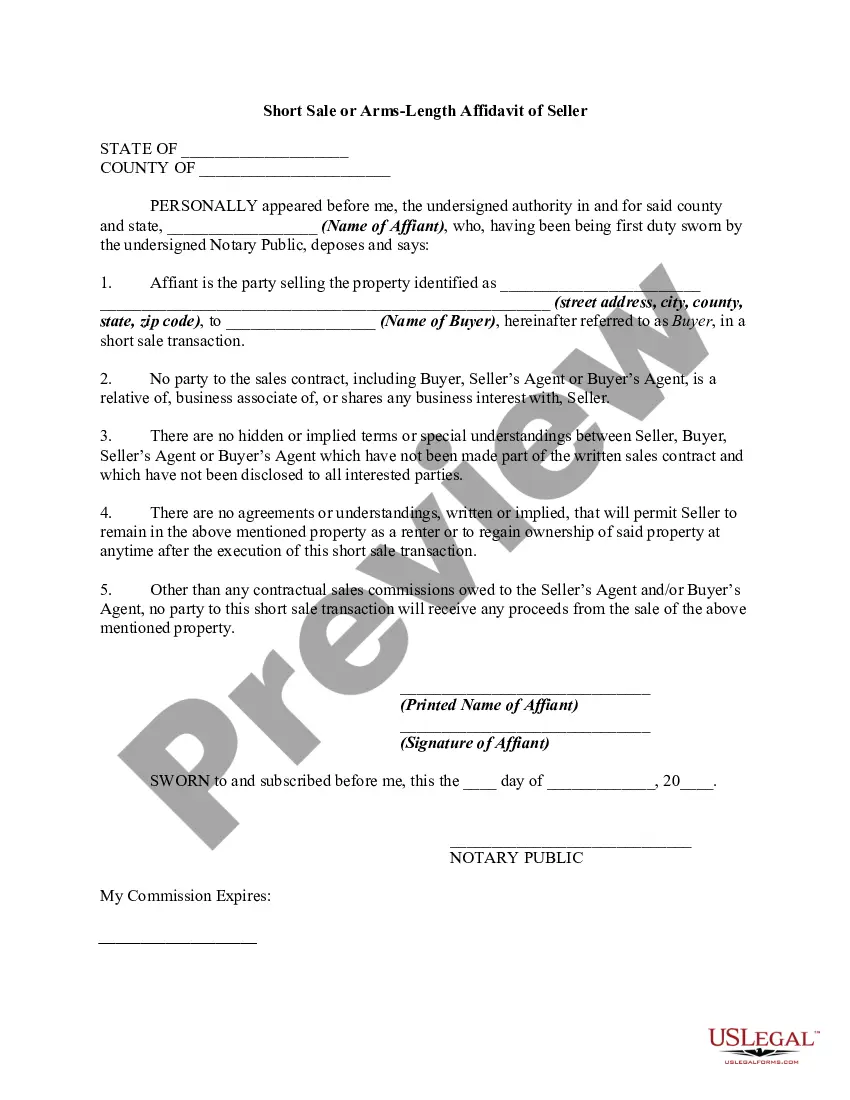
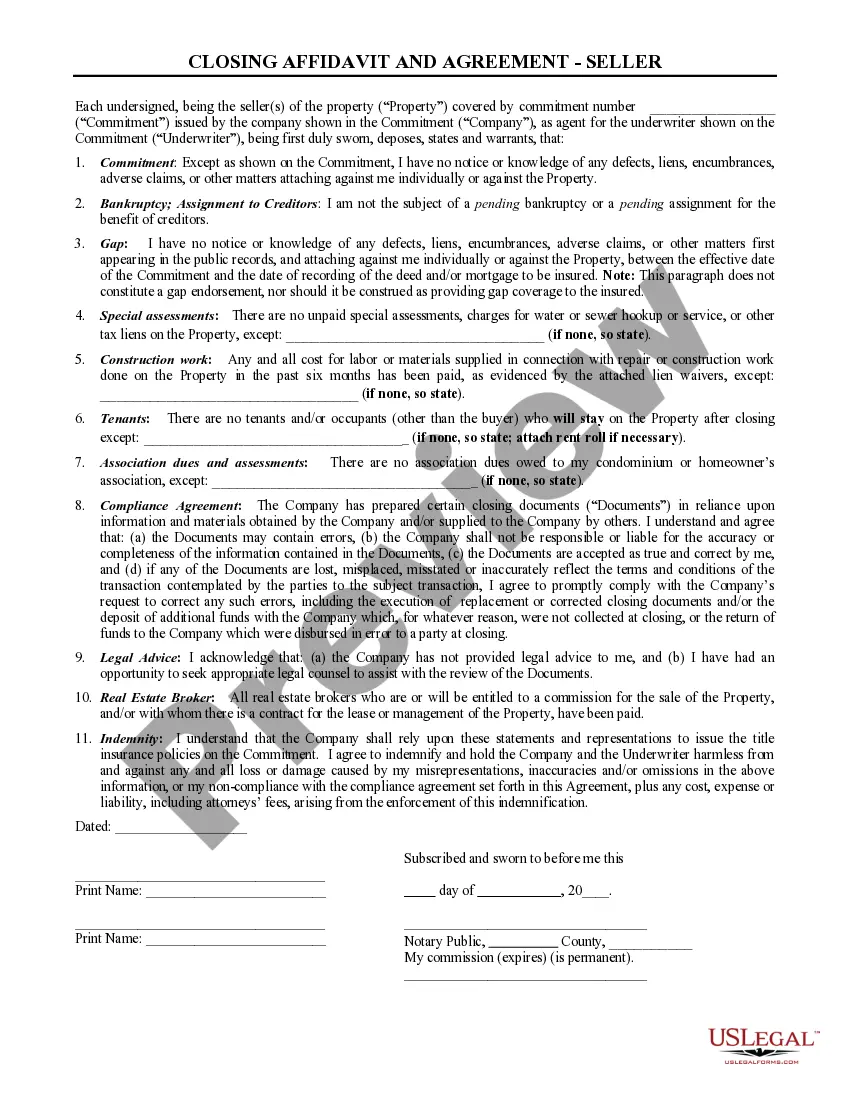
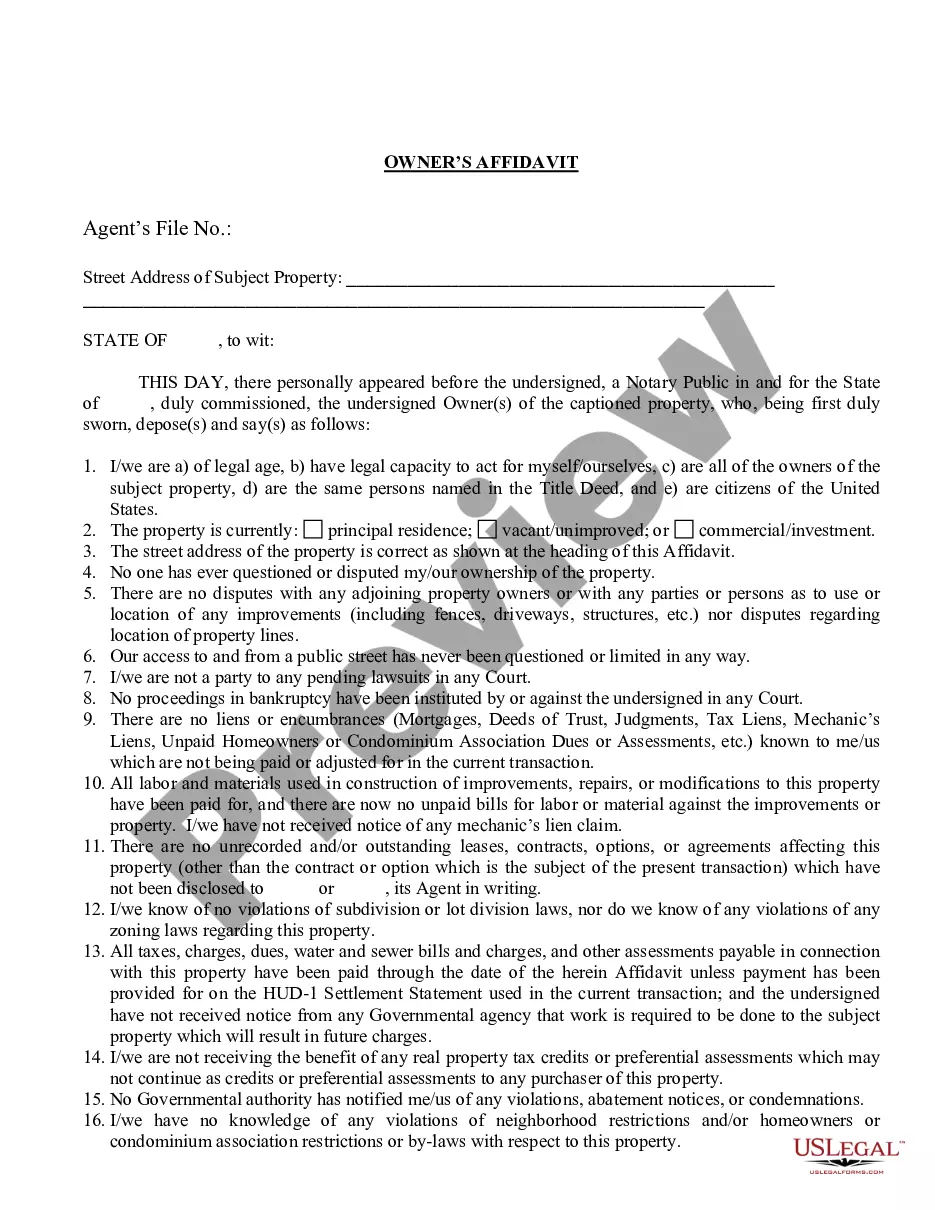
The Owner's or Seller's Affidavit of No Liens is a legal document that sellers sign during the closing of a property sale. This affidavit certifies that there are no existing liens on the property, confirming the seller's ownership and the absence of any claims against the property. It is crucial for ensuring clear title transfer and provides assurances to the buyer and mortgage lender regarding the property's status.
Key components of this form
- Identification of the property and owners involved in the sale.
- Certification that the owners are at least 21 years old.
- Declaration of marital status of the owners.
- Assurance that there are no existing liens on the property.
- Confirmation of no outstanding obligations for repairs or improvements within the last 60 days.
- Affirmation that there are no pending lawsuits or bankruptcy proceedings against the owners.

When to use this form
This form should be used when selling real estate to confirm that the property is free from liens and other claims. It is essential during the closing process, providing protection to both the buyer and the seller. Use this affidavit to support the validity of the transaction and assure all parties involved that the property can be transferred without existing legal encumbrances.
Who can use this document
- Individuals selling residential or commercial real estate.
- Property owners needing to confirm clear title during a sale.
- Real estate agents assisting clients with property transactions.
- Mortgage lenders requiring proof of lien-free status before approving loans.
Instructions for completing this form
- Identify the parties involved: list the owners and their marital status.
- Specify the property: provide the address and details of the real estate.
- Declare any existing liens: indicate if there are any liens or obligations, if applicable.
- Include dates: enter the date of the deed received and the date of signing the affidavit.
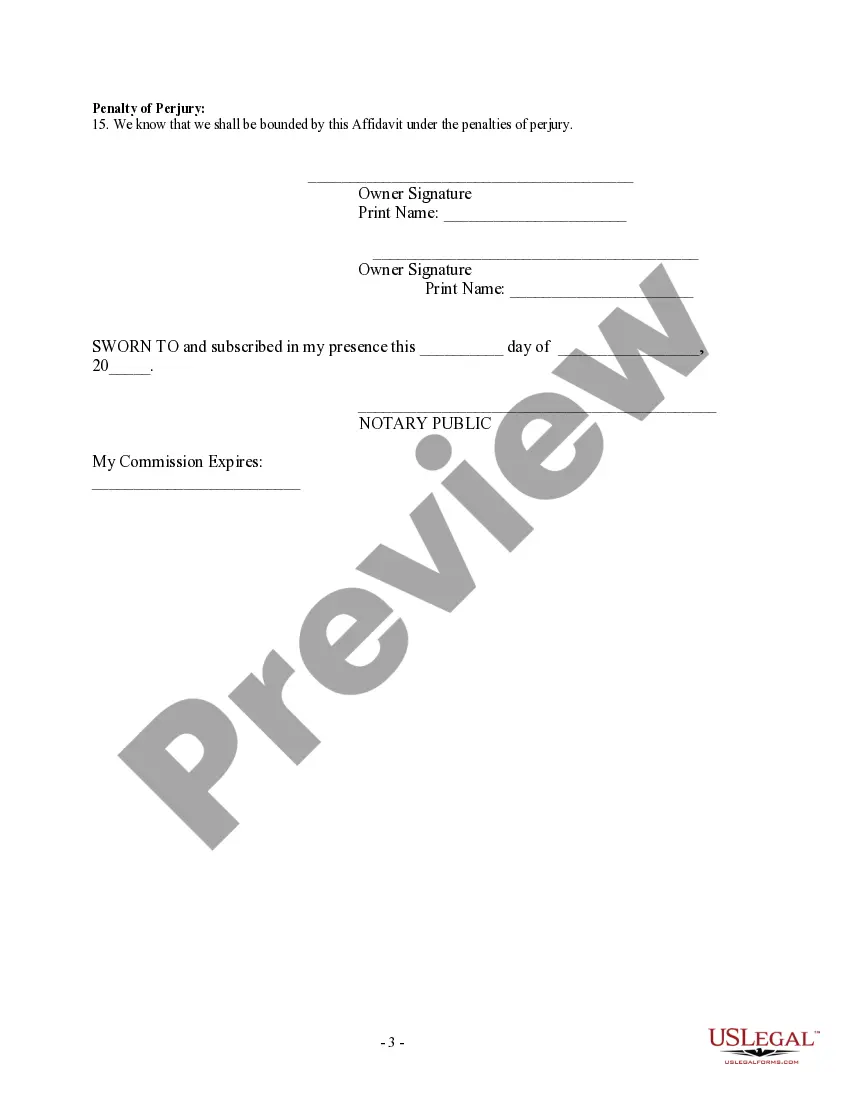
- Sign in front of a notary public to finalize the affidavit.
Notarization guidance
Yes, this form must be notarized to be legally valid. Notarization verifies the authenticity of the signatures and the identity of the signers. US Legal Forms offers integrated online notarization services, providing secure video calls and 24/7 availability, making the process efficient and convenient without the need for travel.
Get your form ready online
Our built-in tools help you complete, sign, share, and store your documents in one place.
Make edits, fill in missing information, and update formatting in US Legal Forms—just like you would in MS Word.
Download a copy, print it, send it by email, or mail it via USPS—whatever works best for your next step.
Sign and collect signatures with our SignNow integration. Send to multiple recipients, set reminders, and more. Go Premium to unlock E-Sign.
If this form requires notarization, complete it online through a secure video call—no need to meet a notary in person or wait for an appointment.
We protect your documents and personal data by following strict security and privacy standards.
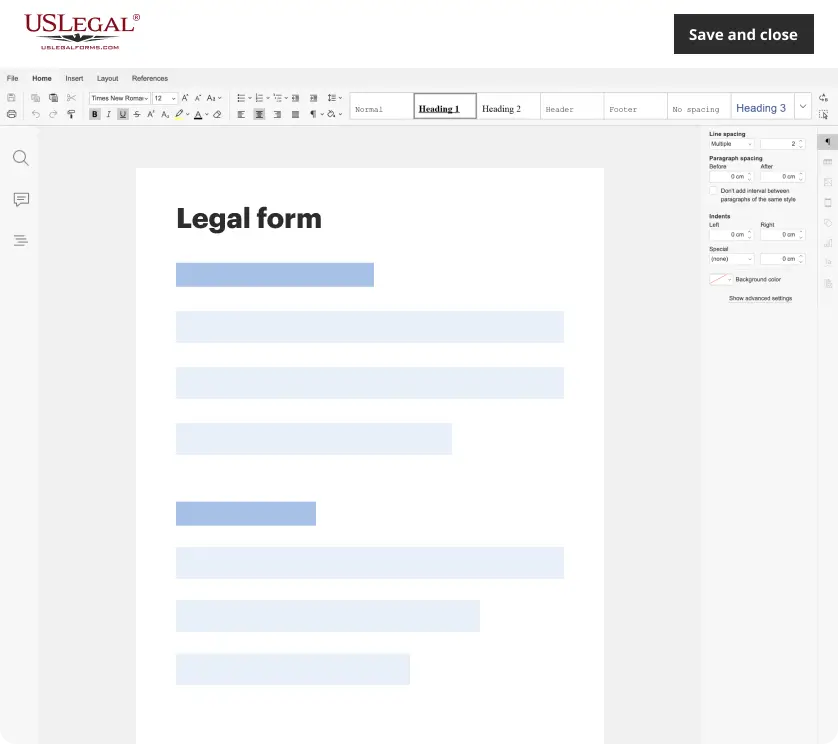
Make edits, fill in missing information, and update formatting in US Legal Forms—just like you would in MS Word.
Download a copy, print it, send it by email, or mail it via USPS—whatever works best for your next step.
Sign and collect signatures with our SignNow integration. Send to multiple recipients, set reminders, and more. Go Premium to unlock E-Sign.

If this form requires notarization, complete it online through a secure video call—no need to meet a notary in person or wait for an appointment.
We protect your documents and personal data by following strict security and privacy standards.
Common mistakes to avoid
- Failing to report existing liens or obligations, leading to potential legal issues.
- Not obtaining notarization, which may invalidate the affidavit.
- Leaving sections incomplete or unclear, causing confusion about property status.
Why complete this form online
- Convenient access to the form, allowing for easy completion.
- Editable templates that simplify customization to your specific situation.
- Reliable formats that ensure compliance with legal standards.
Quick recap
- The Owner's or Seller's Affidavit of No Liens verifies property ownership and confirms no liens exist.
- It is crucial for protecting both sellers and buyers during a real estate transaction.
- This document must be signed in front of a notary public for legal acceptance.
- Completing the affidavit accurately avoids potential legal disputes over property ownership.
Looking for another form?
Form popularity
FAQ
Every vehicle on UK roads is issued a Vehicle Registration Certificate, which is also known by its official document number, V5C, or more commonly as 'the logbook'.Your car will have been issued with its first registration certificate soon after its original owner took delivery.
On the back of the title is a transfer area that they can use to transfer the title to you. Once the previous owner has transferred the title to you, take it to the local office for your state's department of motor vehicles to apply for a new title in your name. The new title will be your proof of ownership.
The V5C is a paper document issued by the DVLA to the registered keeper of a vehicle and is used to confirm proof of ownership and the specific details of a vehicle.
A Bill of Sale is always required along with proof of ownership document for vehicle to process a new registration in CT which can be our Bill of Sale (form H-31) form H-31 or Supplemental Assignment of Ownership (form Q-1).
Vehicle log books act as proof of ownership and are used by the Driver and Vehicle Licensing Authority (DVLA) to ensure a nationwide record is kept of every vehicle and it's registered keeper.
Without the title, you cannot sell or trade in your car, and you can't register it if you move out of Connecticut. If you're moving to Connecticut, you'll need the title to register your vehicle in the state. The title does one thing it proves ownership.
Get a valid title from the current owner when you purchase the vehicle.Once the previous owner has transferred the title to you, take it to the local office for your state's department of motor vehicles to apply for a new title in your name. The new title will be your proof of ownership.
Who needs CT Form Q1? This Form is sent to both the purchaser and the ex-owner of the vehicle after the motor vehicle was sold on the auction for inappropriate personal property taxes payments either to the Connecticut municipality or taxing district. CT Form Q1 is filled out by the commissioners of courts.