Connecticut Notice of Default in Payment of Rent as Warning Prior to Demand to Pay or Terminate for Nonresidential or Commercial Property
What this document covers
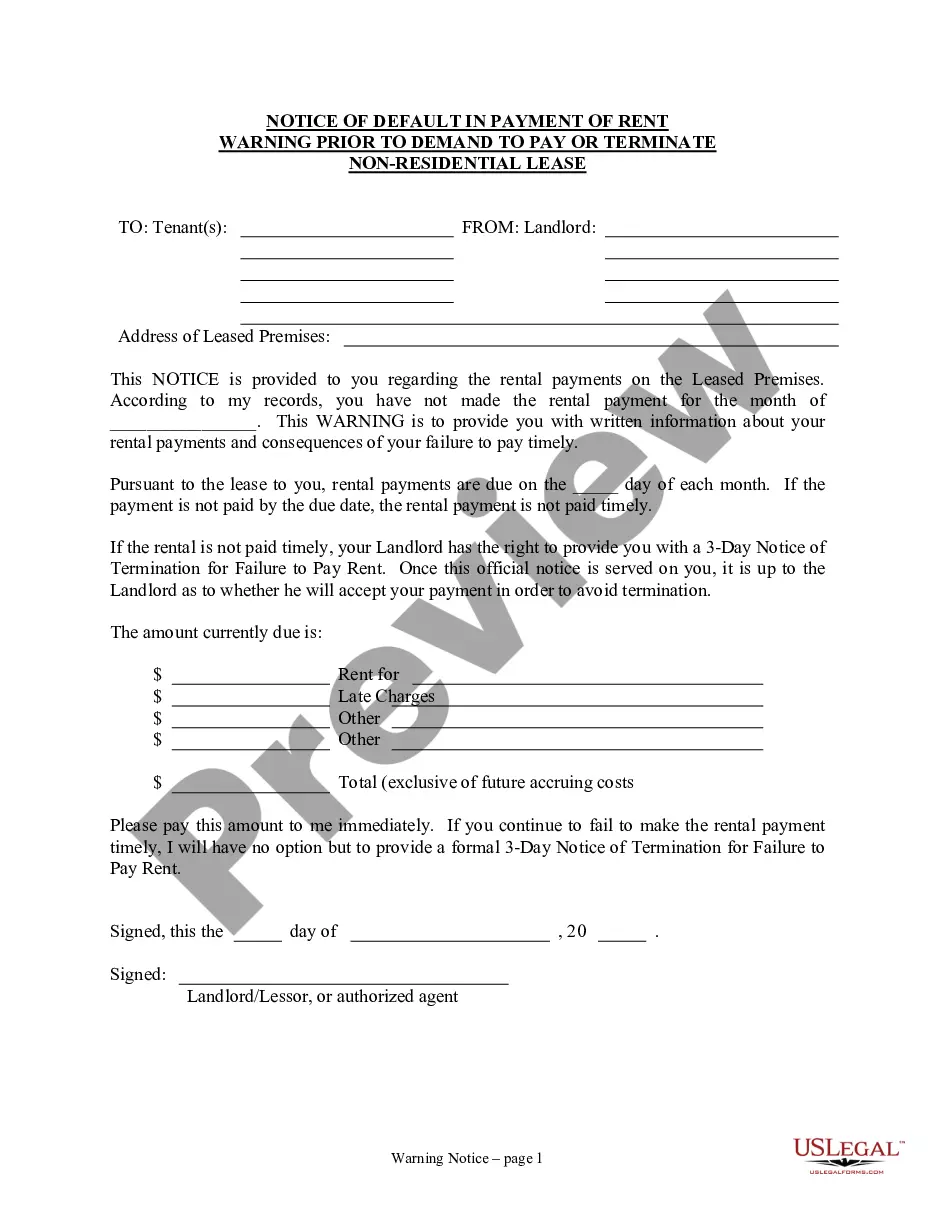
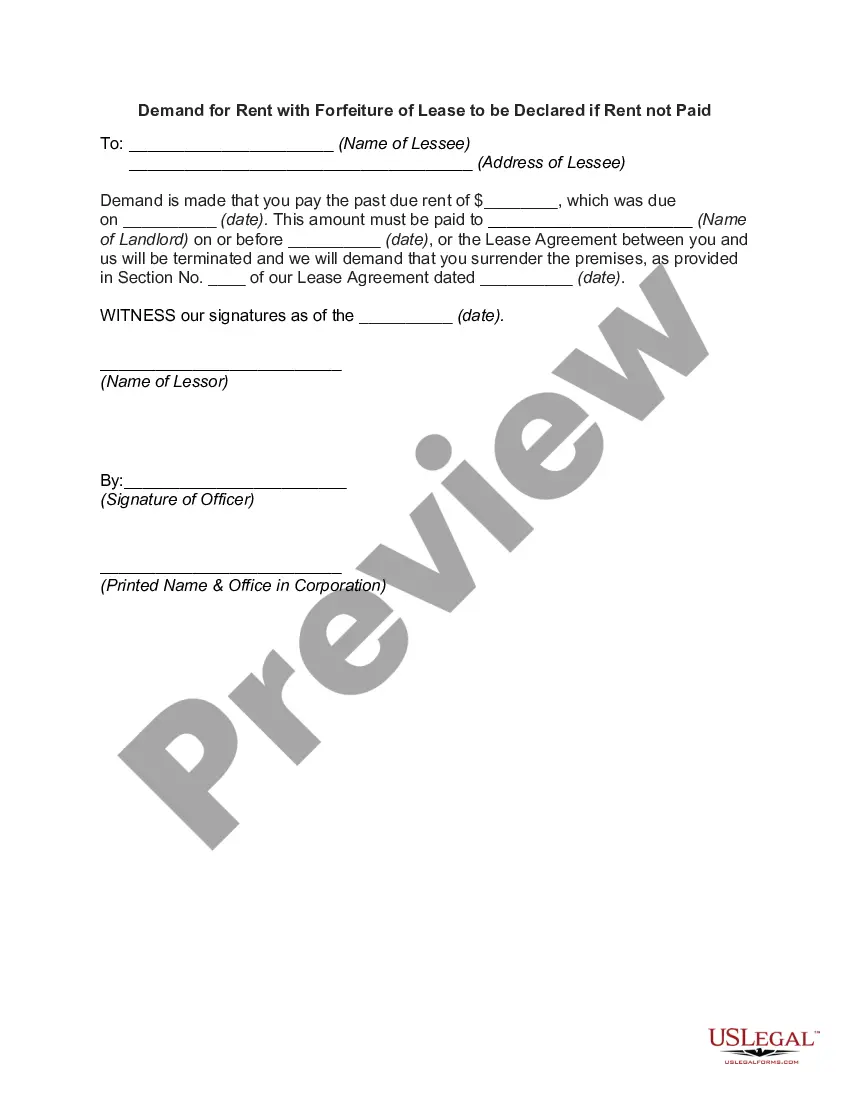
This Notice of Default in Payment of Rent serves as a formal warning from a landlord to a tenant regarding missed rent payments for non-residential or commercial properties. It functions as a precursor to a more severe demand for payment or lease termination. Unlike a formal eviction notice, this document aims to alert the tenant about their overdue payment and the subsequent risks of not addressing it promptly.
Main sections of this form
- Landlord and tenant information, including names and addresses.
- Description of the leased premises and the due date of rent.
- Statement acknowledging the missed rental payment and the total amount due.
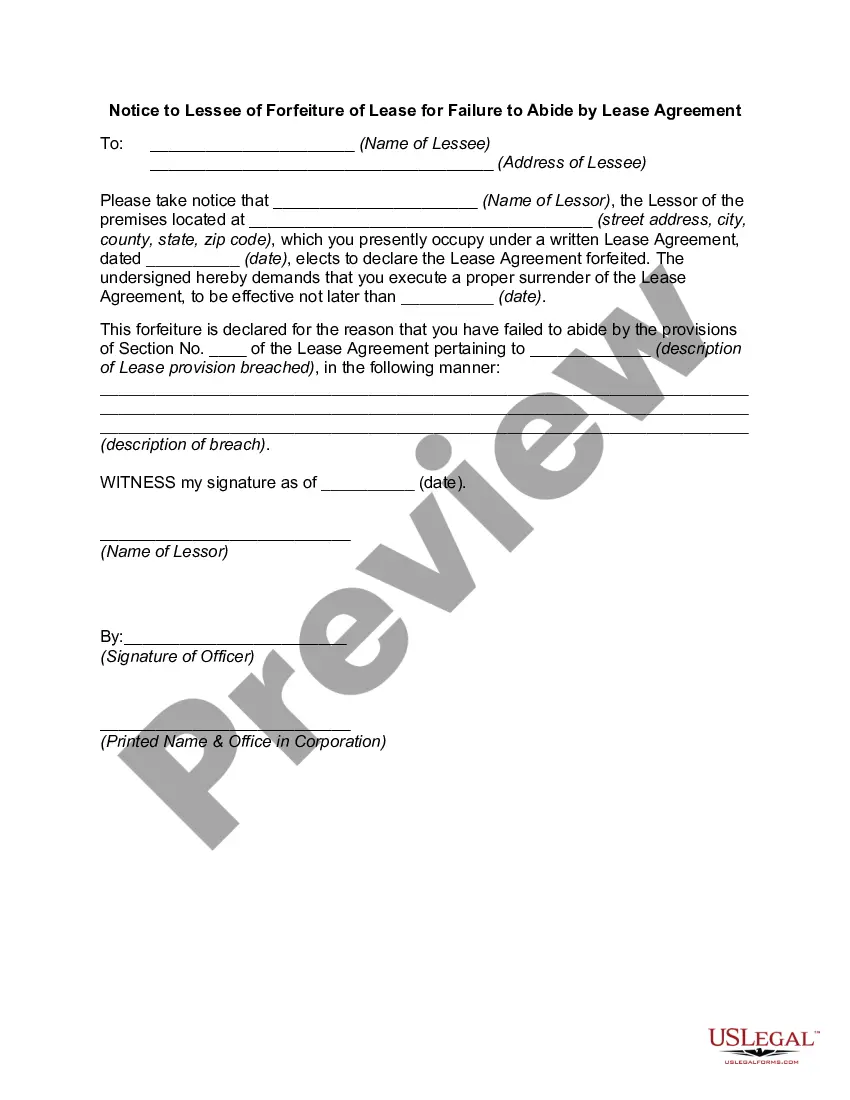
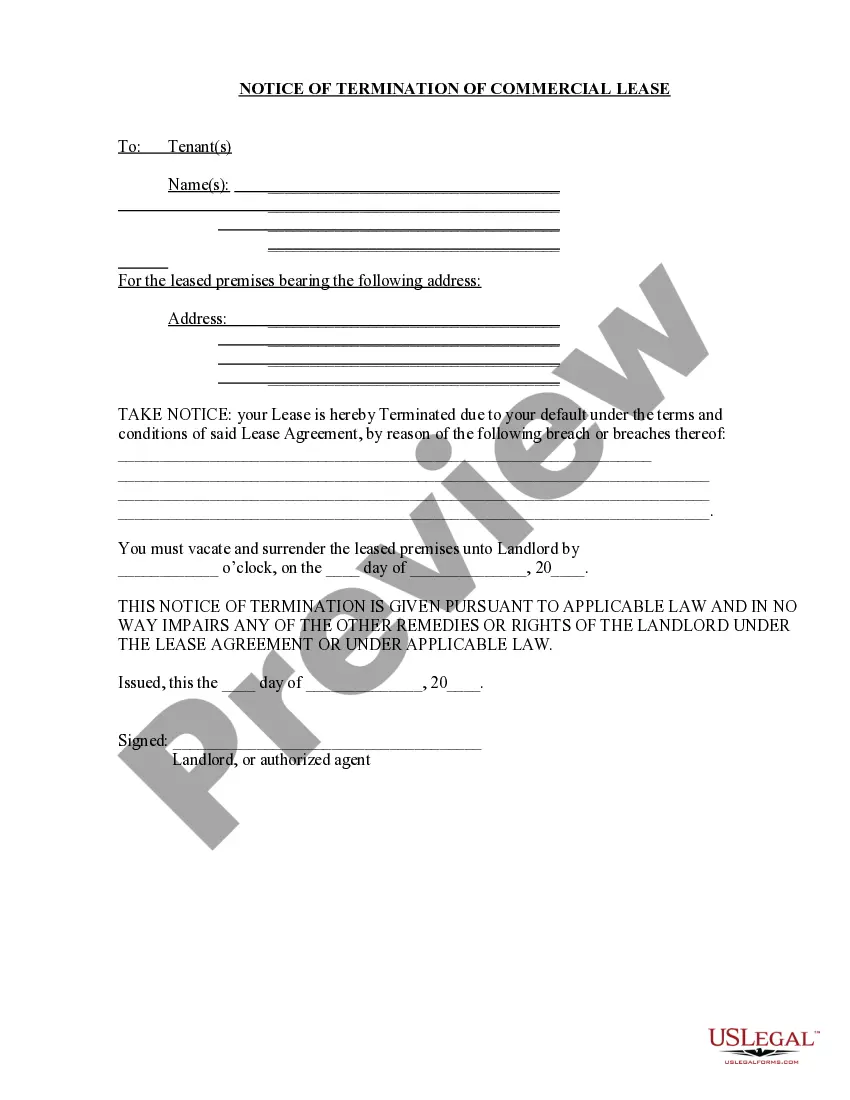
- Consequences of not paying rent on time, including the potential for lease termination.
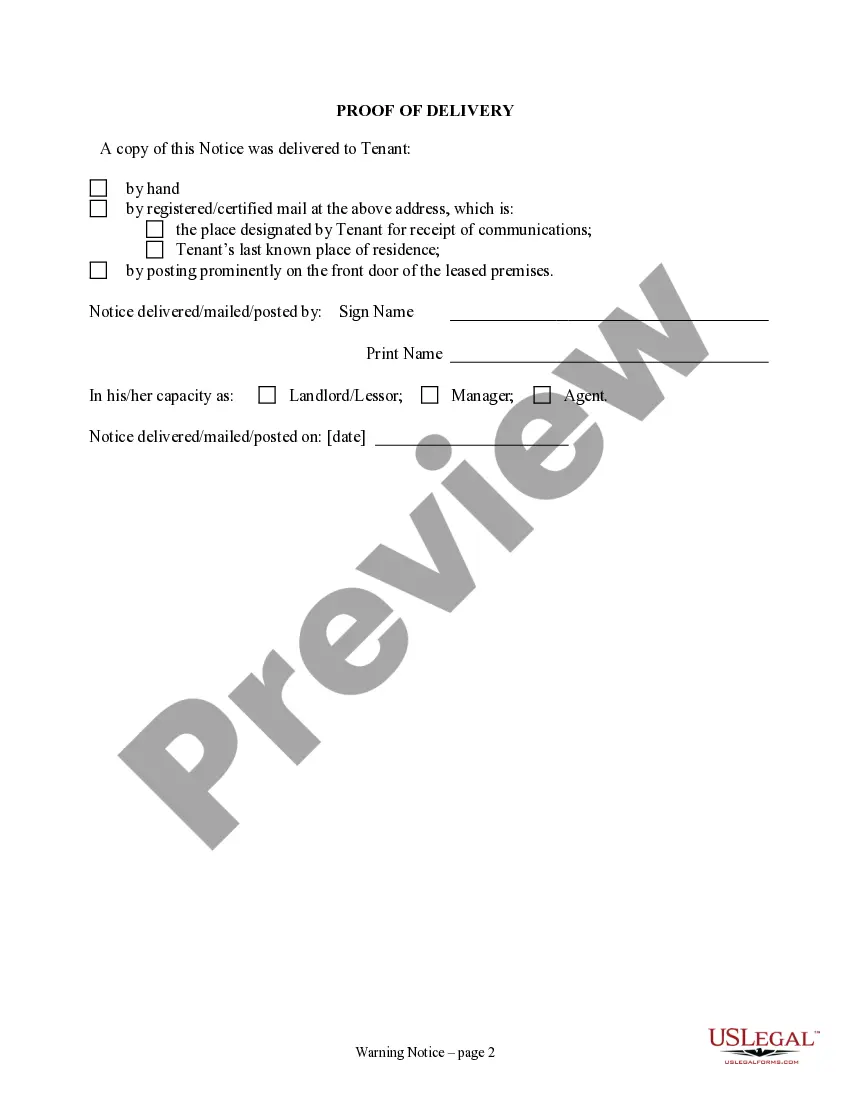
- Details of how the notice was delivered to the tenant.

Common use cases
This form should be used when a tenant has failed to make rental payments on time for a non-residential lease. It is an important first step before issuing a formal pay or terminate notice. This warning serves to remind tenants of their obligations and the potential consequences of continued non-payment, allowing them a chance to rectify the situation before facing stricter actions.
Who can use this document
- Landlords of commercial properties seeking to address overdue rent payments.
- Property managers acting on behalf of the landlord.
- Any authorized agents designated by the landlord.
How to complete this form
- Identify and enter the names and addresses of both the landlord and tenant.
- Fill in the address and description of the leased premises.
- Specify the month and year for which rent was not paid.
- Detail the total amount due, including any late charges.
- Sign and date the notice appropriately.
- Choose and document the method of delivery for the notice.
Notarization requirements for this form
Notarization is not commonly needed for this form. However, certain documents or local rules may make it necessary. Our notarization service, powered by Notarize, allows you to finalize it securely online anytime, day or night.
Get your form ready online
Our built-in tools help you complete, sign, share, and store your documents in one place.
Make edits, fill in missing information, and update formatting in US Legal Forms—just like you would in MS Word.
Download a copy, print it, send it by email, or mail it via USPS—whatever works best for your next step.
Sign and collect signatures with our SignNow integration. Send to multiple recipients, set reminders, and more. Go Premium to unlock E-Sign.
If this form requires notarization, complete it online through a secure video call—no need to meet a notary in person or wait for an appointment.
We protect your documents and personal data by following strict security and privacy standards.

Make edits, fill in missing information, and update formatting in US Legal Forms—just like you would in MS Word.

Download a copy, print it, send it by email, or mail it via USPS—whatever works best for your next step.

Sign and collect signatures with our SignNow integration. Send to multiple recipients, set reminders, and more. Go Premium to unlock E-Sign.

If this form requires notarization, complete it online through a secure video call—no need to meet a notary in person or wait for an appointment.

We protect your documents and personal data by following strict security and privacy standards.
Common mistakes to avoid
- Forgetting to specify the exact amount due, making it unclear for the tenant.
- Not including the correct due date as specified in the lease agreement.
- Failing to deliver the notice properly, which can affect its validity.
Why complete this form online
- Convenience of completing the form at any time without needing to visit a legal office.
- Easy to edit and customize to fit specific situations and requirements.
- Reliable templates designed by licensed attorneys, ensuring compliance with legal standards.
Legal use & context
- This notice must be used in accordance with state-specific laws regulating landlord-tenant relationships.
- Failure to follow proper procedure may affect the enforceability of the lease termination process.
- Landlords should retain a copy of the notice for their records as proof of notification.
Main things to remember
- The Notice of Default in Payment of Rent is a vital first step in addressing unpaid rent.
- It serves to warn the tenant of consequences, fostering communication before drastic measures.
- Properly completing and delivering this form helps safeguard a landlord's rights under the lease agreement.
Looking for another form?
Form popularity
FAQ
Getting someone out without resorting to eviction involves open communication and negotiation. You might start by discussing the situation and expressing your willingness to find a solution that works for both parties. Offering options such as a payment plan or a lease termination can sometimes motivate a tenant to vacate voluntarily. Also, consider resources from US Legal Forms for templates and guides that can help facilitate this discussion effectively.
The process for eviction in Connecticut can vary, but typically, it may take several weeks to a few months. After receiving the necessary notices, tenants have an opportunity to respond before eviction proceedings can begin. If a Connecticut Notice of Default in Payment of Rent has been issued, timely responses are crucial to avoid escalation. Engaging with legal assistance can help navigate this process efficiently.
When a landlord wishes to evict a tenant in Connecticut, they must provide a written notice. Typically, this notice must be at least 30 days, depending on the rental agreement and situation. If you’re facing a Connecticut Notice of Default in Payment of Rent, it's essential to understand your rights and obligations to ensure compliance and avoid further complications. Seeking guidance on eviction notices can enhance your understanding.
If the tenant fails to cure the issue or vacate the premises at the end of the written time-frame, the landlord must file a Summons and either a Complaint for Lapse of Time or a Complaint for Non-Payment of Rent with The Court and include a fee in the amount of $175.
If a landlord wants to evict a tenant for nonpayment of rent, then he or she must give the tenant a 3-day Notice to Vacate. For any other reason, the landlord must give the tenant at least a 15-day Notice to Vacate. If the tenant can repair the issue within 15 days, the landlord cannot evict the tenant.
A landlord may file a Notice to Quit on August 22, since Connecticut law stipulates that an eviction can proceed three days after a Notice to Quit is served. Notices to Quit for nonpayment of rent must specify the months of past-due rent.
In most cases, you give the landlord/agent a written termination notice and vacate ('give vacant posession') move out and return the keys according to your notice. You can vacate before the date in your termination notice but keep paying rent until the end of the notice period.
Give the completed notice to a state marshal or any proper officer with enough copies for each adult occupant and tenant you want to evict. After service/delivery to the tenants, the original Notice to Quit will be returned to you.
In most situations your landlord does not need to give you a reason (although acting on discriminatory or retaliatory motives is illegal). A landlord can simply give you a written notice to move, allowing you three days as required by Connecticut law and specifying the date on which your tenancy will end.
LANDLORD AND TENANT. You asked if any state bans winter evictions and for a comparison of Massachusetts' eviction laws to Connecticut's. No state bans winter evictions.