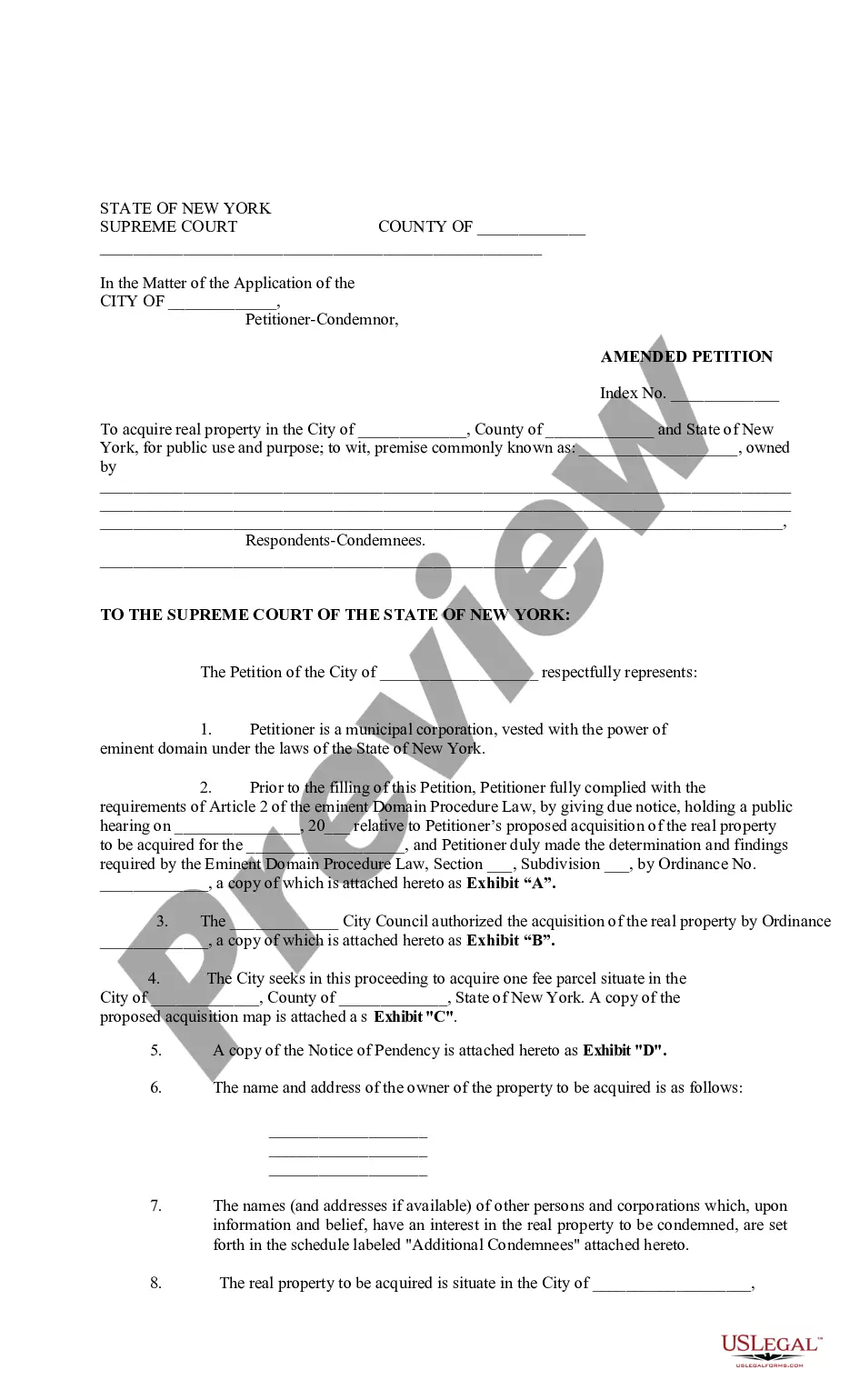
Connecticut Letter from Tenant to Landlord containing Notice of failure to return security deposit and demand for return
What this document covers
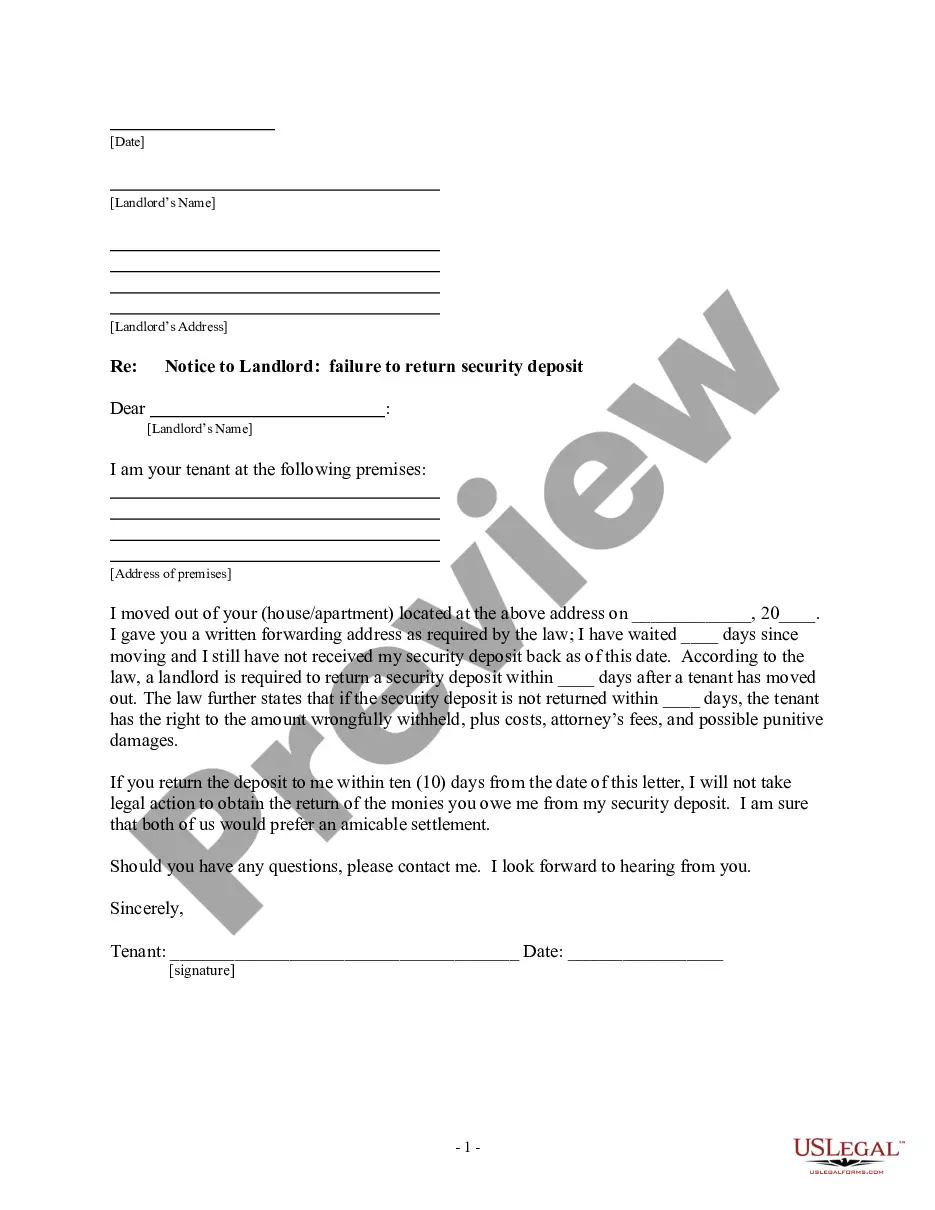
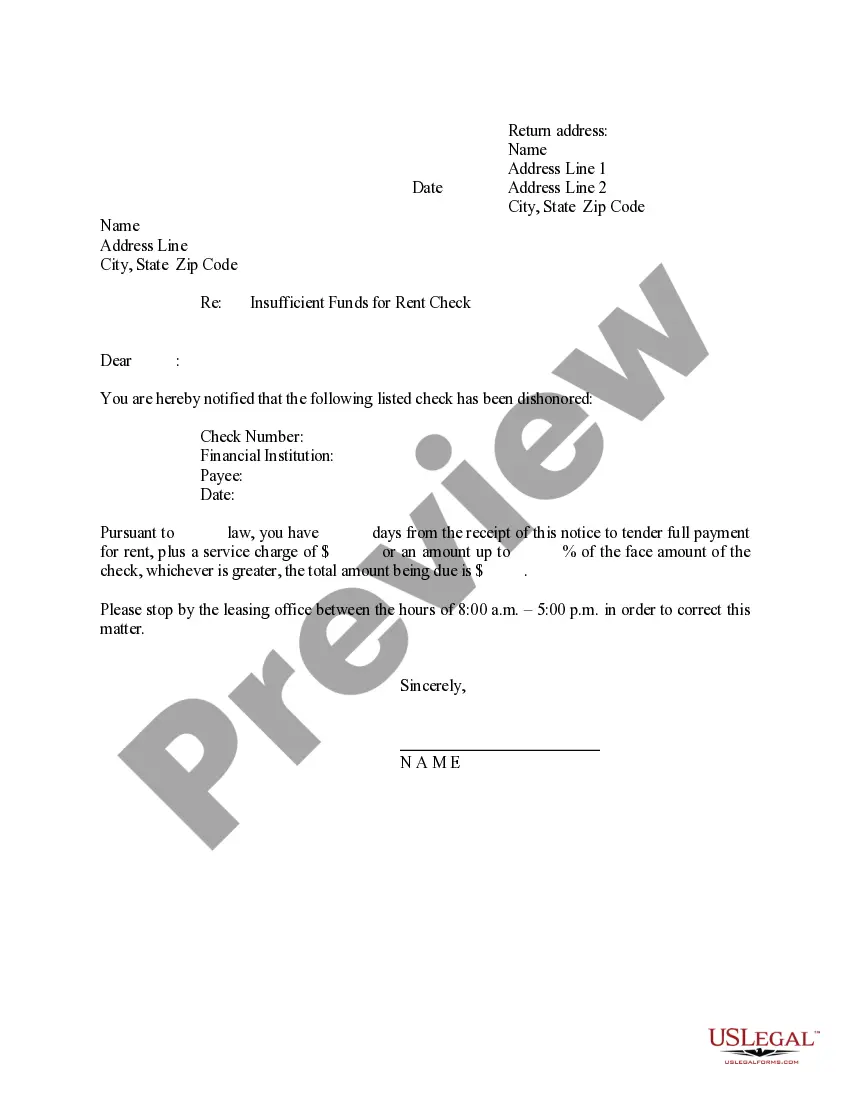
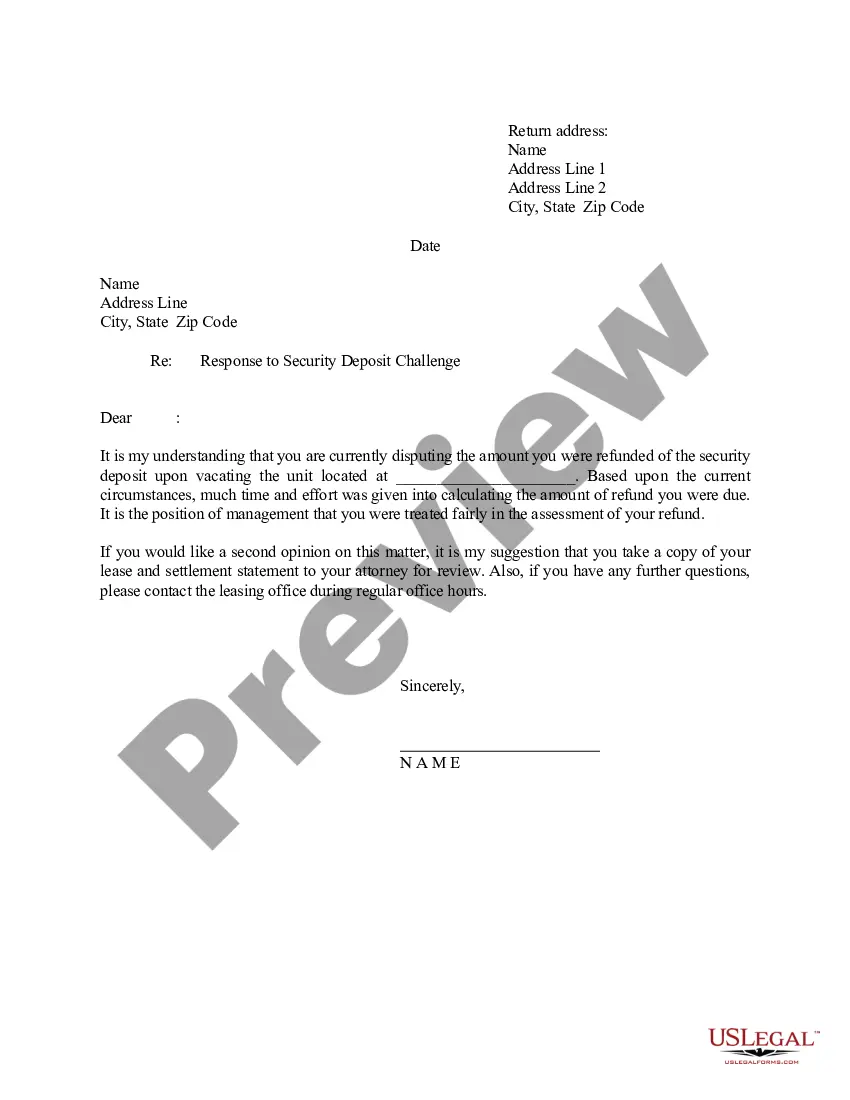
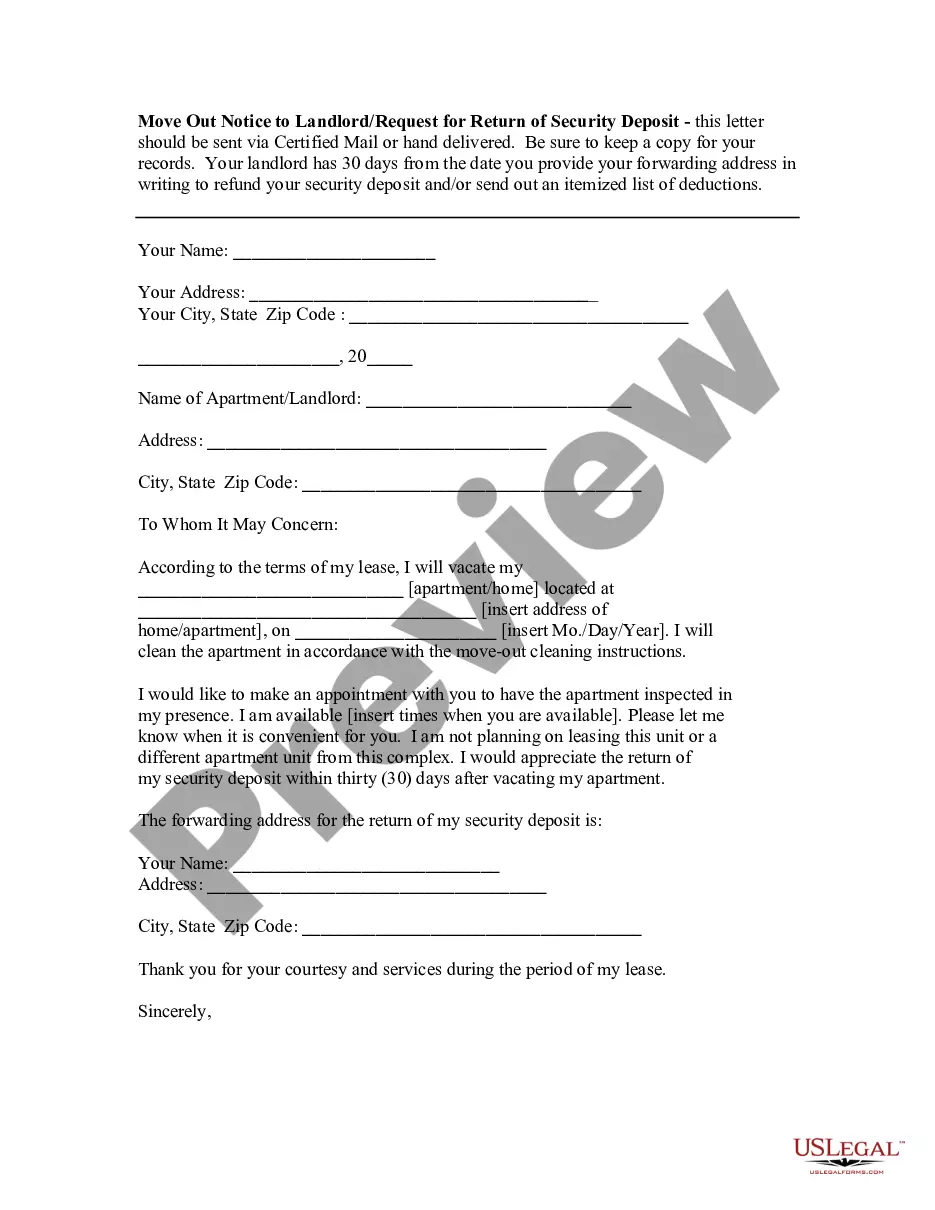
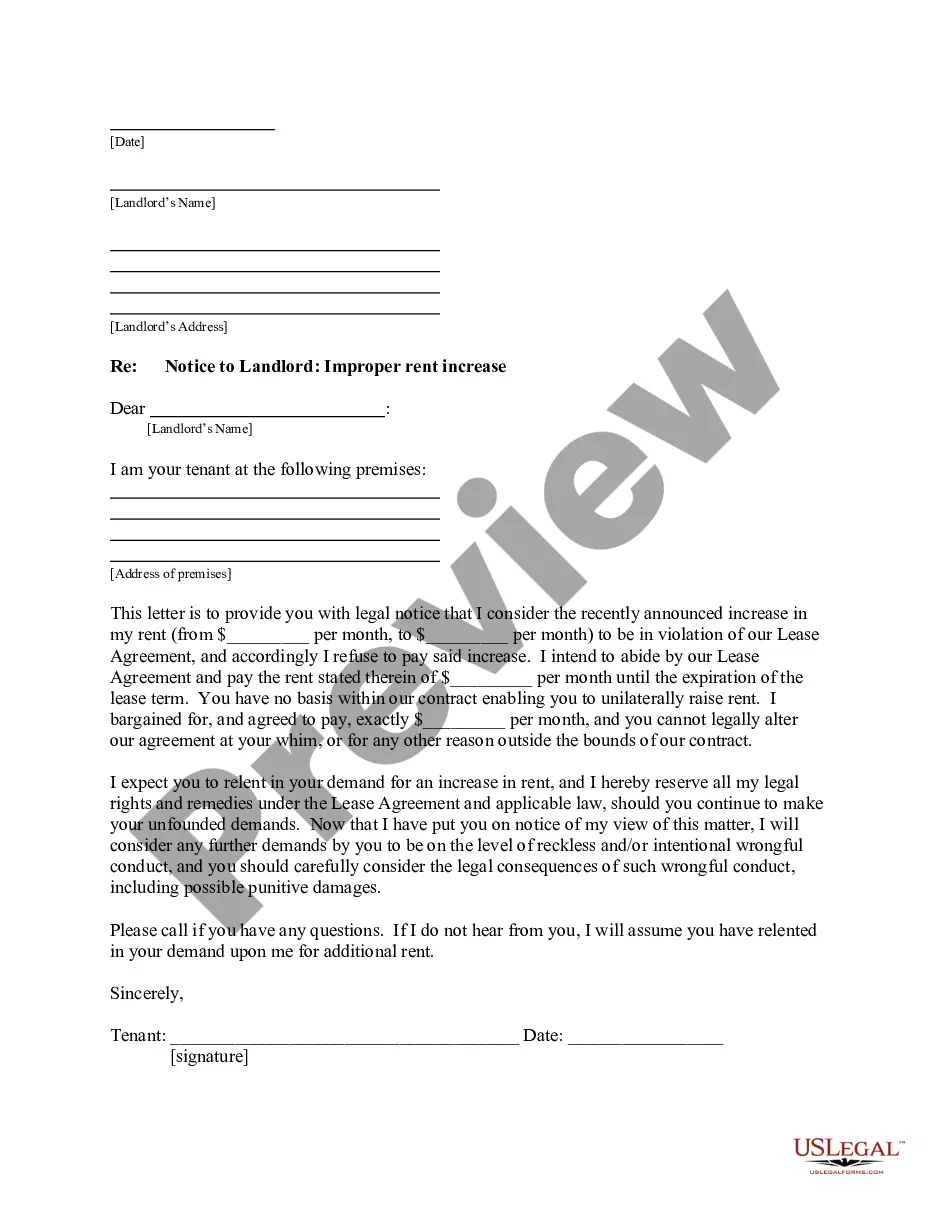
This Letter from Tenant to Landlord contains a notice of failure to return the security deposit and a demand for its return. This form serves as a formal request to your landlord, clearly stating the obligation to refund your security deposit within a specific timeframe as per state law. It emphasizes the legal consequences if the deposit is not returned promptly, distinguishing it from other types of communication related to tenancy issues.
What’s included in this form
- Tenant's name and contact information
- Landlord's name and contact information
- Date of the letter
- Statement of demand for the return of the security deposit
- Timeframe for response (ten days)
- Notice of potential legal action if the demand is not met

When to use this document
This form is used when a tenant vacates a rental property and does not receive their security deposit back within the legally required timeframe. It is appropriate for communicating with the landlord to initiate the return process and to remind them of their legal obligations regarding the deposit.
Who needs this form
- Tenants who have recently vacated a rental property
- Individuals seeking the return of their security deposit
- Those who wish to formally document their demand before pursuing further legal action
Completing this form step by step
- Identify yourself as the tenant in the document.
- Enter your landlord's name and address accurately.
- Fill in the date of your letter.
- Clearly state the demand for your security deposit and mention the ten-day timeframe for a response.
- Sign the letter and include the date.
Does this document require notarization?
This form does not typically require notarization unless specified by local law. Ensure to double-check your state's regulations regarding notarization for such legal documents.
Get your form ready online
Our built-in tools help you complete, sign, share, and store your documents in one place.
Make edits, fill in missing information, and update formatting in US Legal Forms—just like you would in MS Word.
Download a copy, print it, send it by email, or mail it via USPS—whatever works best for your next step.
Sign and collect signatures with our SignNow integration. Send to multiple recipients, set reminders, and more. Go Premium to unlock E-Sign.
If this form requires notarization, complete it online through a secure video call—no need to meet a notary in person or wait for an appointment.
We protect your documents and personal data by following strict security and privacy standards.

Make edits, fill in missing information, and update formatting in US Legal Forms—just like you would in MS Word.

Download a copy, print it, send it by email, or mail it via USPS—whatever works best for your next step.

Sign and collect signatures with our SignNow integration. Send to multiple recipients, set reminders, and more. Go Premium to unlock E-Sign.

If this form requires notarization, complete it online through a secure video call—no need to meet a notary in person or wait for an appointment.

We protect your documents and personal data by following strict security and privacy standards.
Mistakes to watch out for
- Failing to include correct contact information for both the tenant and landlord.
- Not specifying the exact amount of the security deposit owed.
- Overlooking the importance of sending the letter via a method that provides proof of delivery.
- Ignoring state-specific laws regarding security deposit refunds.
Why complete this form online
- Convenience: Easily download and fill the form at your own pace.
- Editability: Customizable to fit your specific situation and requirements.
- Reliability: Drafted by licensed attorneys to ensure legal accuracy.
Main things to remember
- This form is a formal demand for the return of your security deposit.
- Timely communication with your landlord is crucial to enforce your rights.
- Understanding your state's laws can enhance the effectiveness of your demand.
Looking for another form?
Form popularity
FAQ
This document is a formal written demand from a tenant to a landlord to return the security deposit after tenancy ends. It states the demand, identifies the property and parties, includes a date, and sets a ten‑day response window. It also warns that legal action may follow if the deposit is not returned, initiating the recovery process under CT practice.
This form instructs the landlord to respond within ten days after receiving the letter and to return the security deposit if due. It provides a clear, formal mechanism to initiate the CT recovery process and creates a written record that the tenant has asserted their rights under tenancy rules.
If the deposit is not returned within ten days, the form notes potential legal action. It serves as evidence that the tenant demanded return and informed the landlord of consequences, which can support future court claims or formal actions to recover the security deposit in Connecticut.
Yes. The form documents a failure to refund, and it is designed to support pursuing legal remedies in Connecticut if the landlord does not comply within the ten-day period. It creates a formal record of the demand and can be used in small claims or court actions to recover the security deposit.
Use this letter after you vacate and when your security deposit is not returned within the required timeframe. It formalizes your demand, lists your and the landlord’s contact details, and establishes a written record before you pursue further action in Connecticut.
Compared with a generic letter, this Connecticut form is CT-specific: it specifies a ten‑day response window, a formal notice of potential legal action if the deposit isn’t returned, and the required components (names, dates, and direct demand) tailored to CT landlord‑tenant procedures, helping ensure compliance and a clear recovery record.