Colorado Last Will and Testament for Divorced person not Remarried with Adult Children
About this form
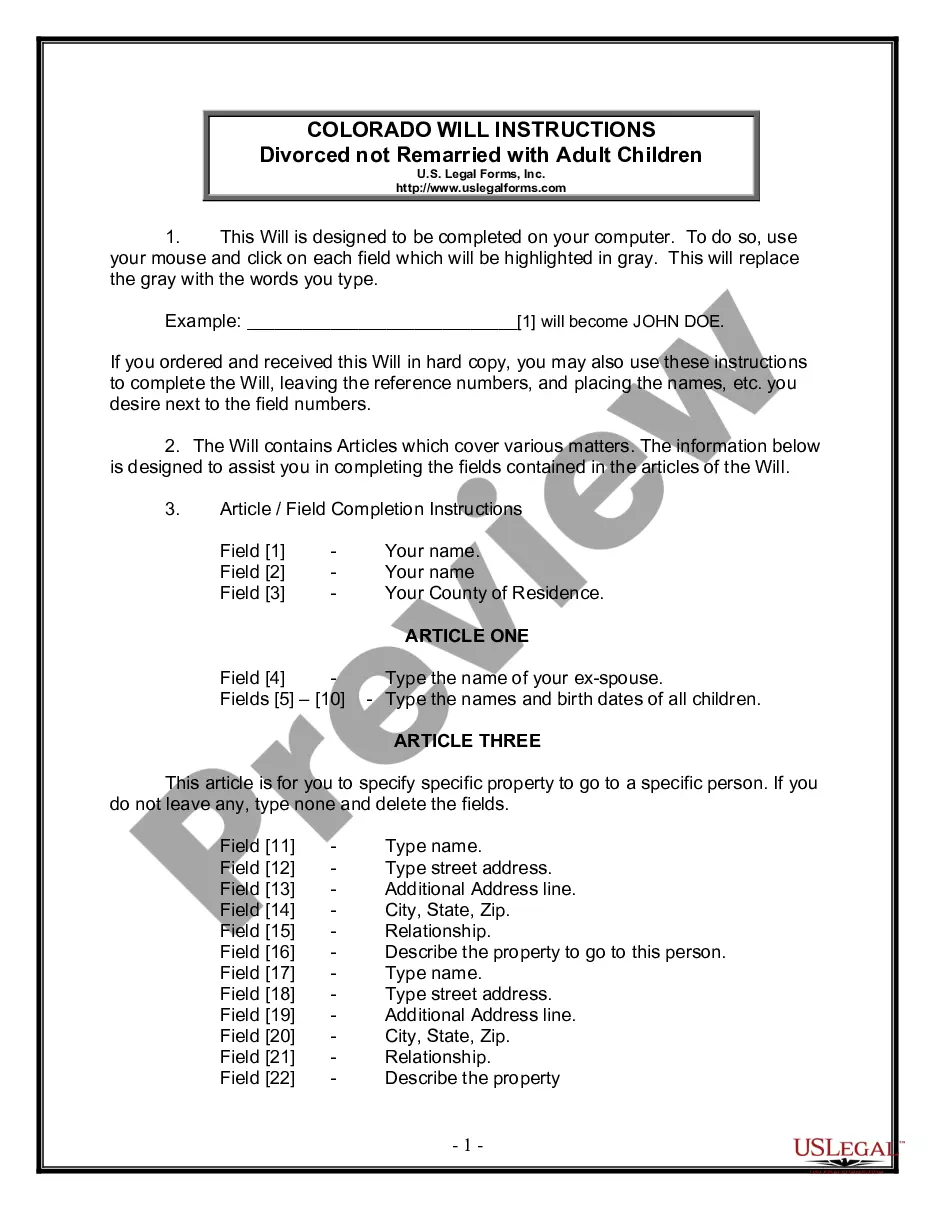
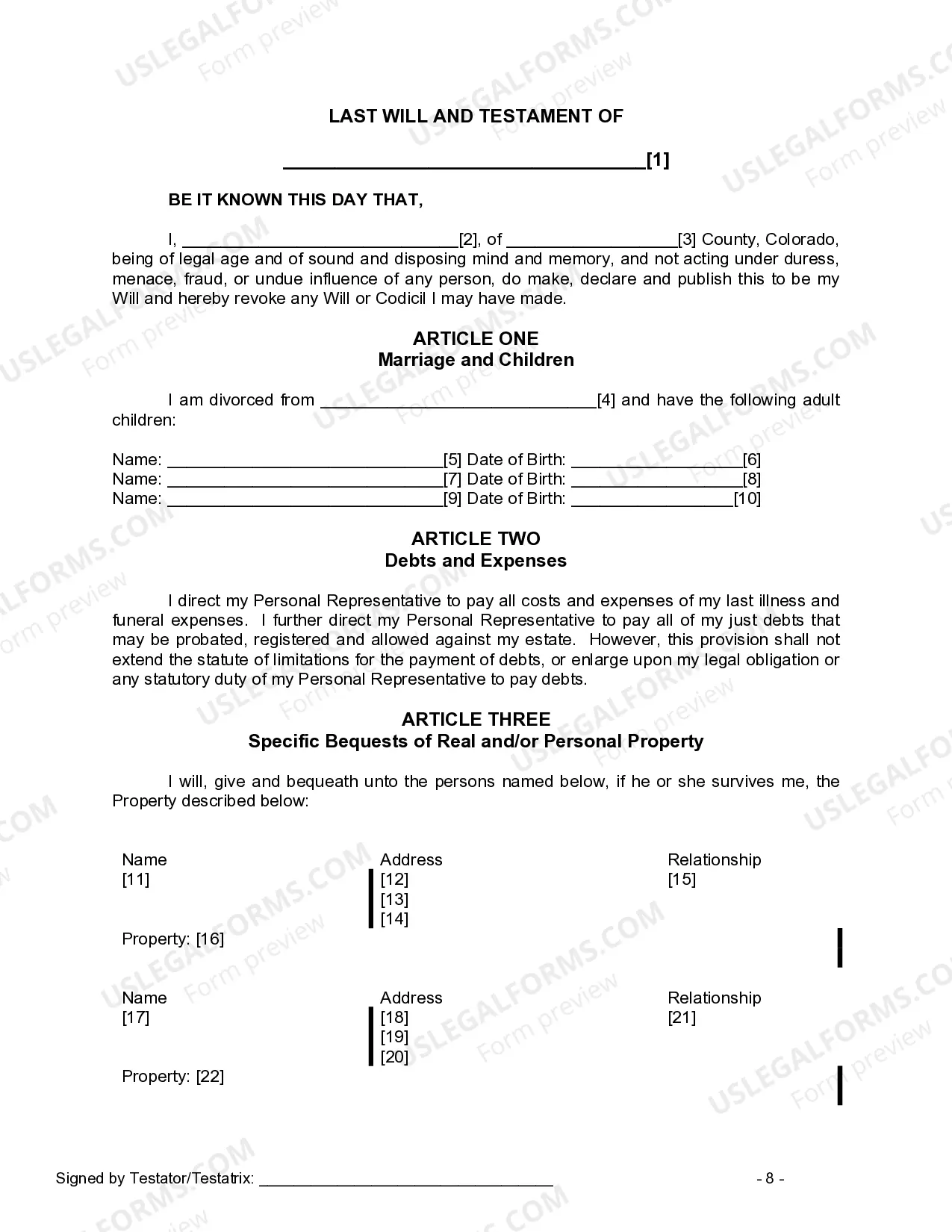
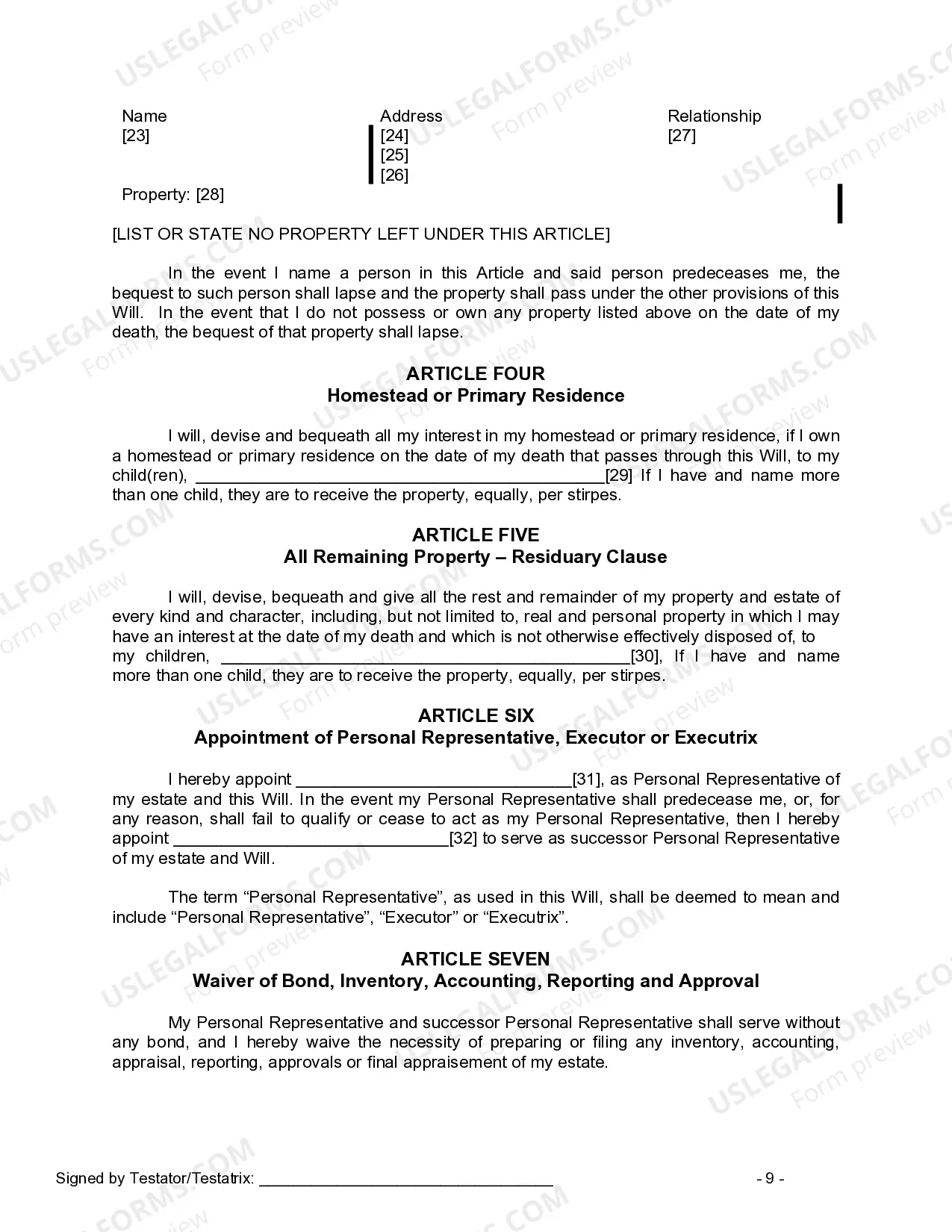
This Last Will and Testament is specifically designed for individuals who are divorced, not remarried, and have adult children. It outlines how your property will be distributed, names a personal representative to handle your estate, and includes provisions tailored for your circumstances. Unlike standard wills, this document acknowledges your divorce and addresses the dynamics of adult children, ensuring your wishes are clearly stated and legally enforceable.
Key components of this form
- Personal information: Your name and county of residence.
- Appointment of personal representative: Designates who will manage your estate.
- Distribution of property: Specifies which assets go to whom, including specific bequests.
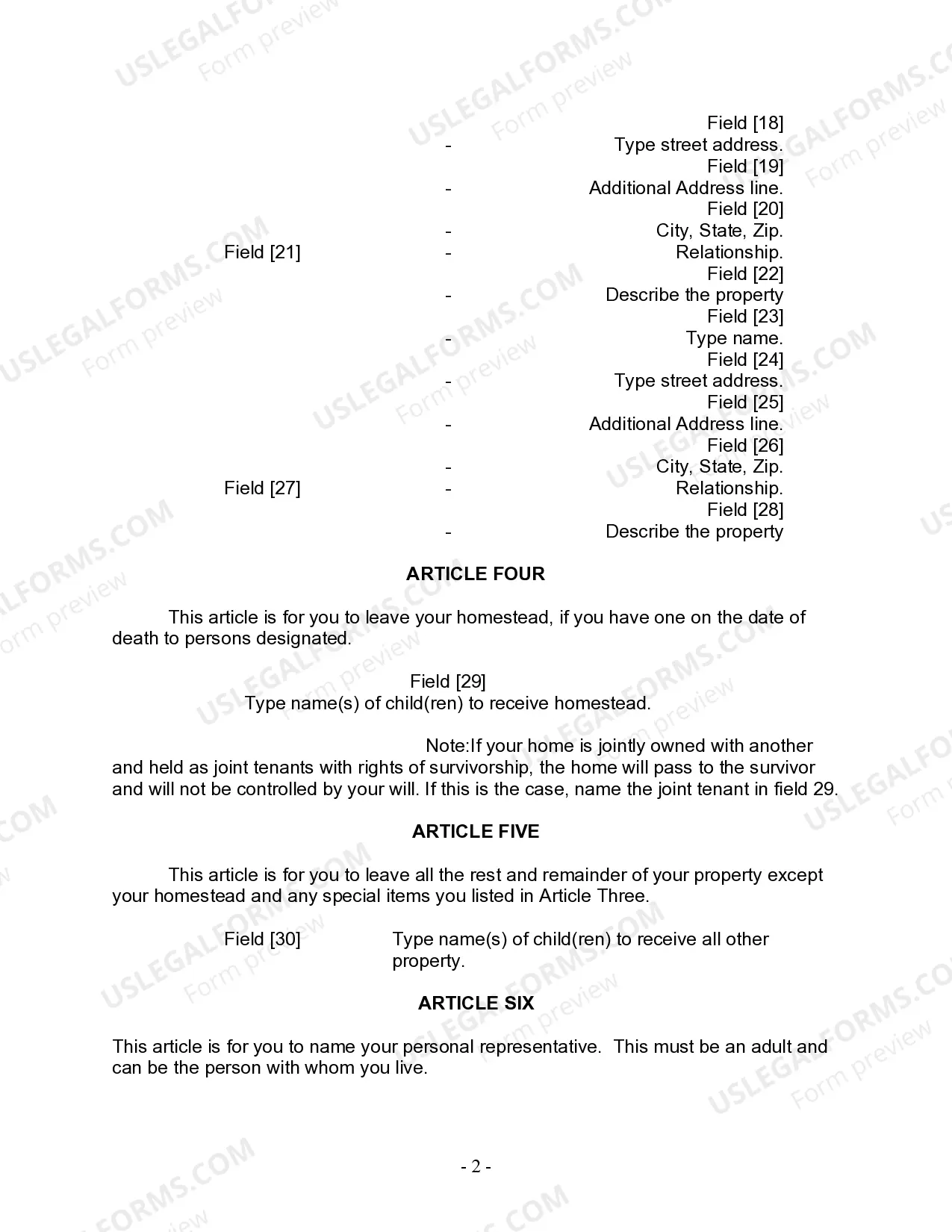
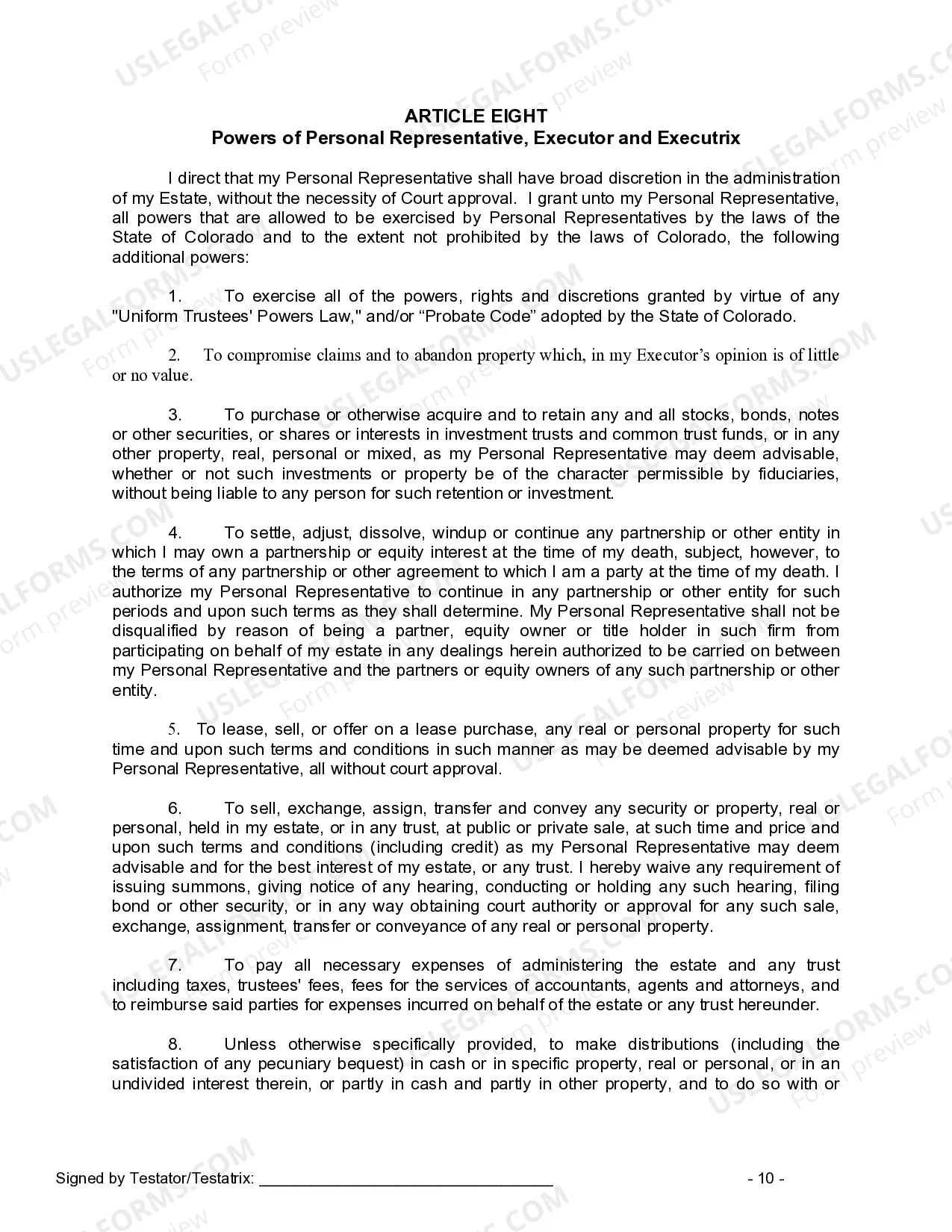
- Homestead clause: Addresses the distribution of your primary residence.
- Residue clause: Determines how remaining assets will be shared among children.
- Witness requirements: Outlines the need for signatures from two witnesses.





When to use this document
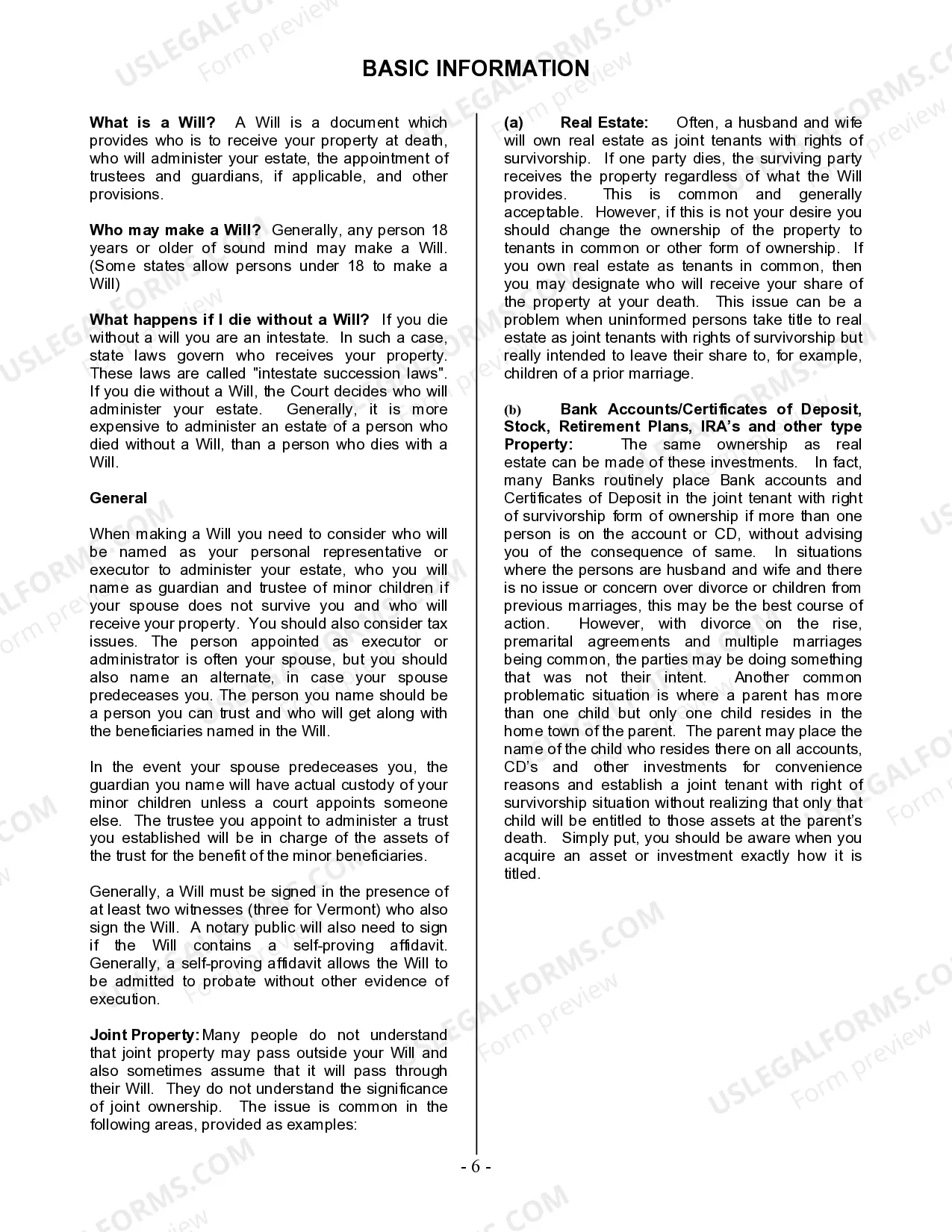
This form is necessary when you want to ensure your possessions are distributed according to your wishes after your death. It is especially relevant for divorced individuals with adult children who wish to clarify the distribution of their estate and avoid potential disputes among heirs. Completing this will can help mitigate uncertainty and provide peace of mind regarding your estate planning.
Who needs this form
- Divorced individuals who have not remarried.
- Parents of adult children looking to specify property distributions.
- Anyone wanting to appoint a personal representative for their estate.
- Individuals seeking to avoid disputes among heirs after passing.
How to complete this form
- Enter your personal information, including your name and county of residence.
- List your ex-spouse's name and details of your adult children.
- Specify any specific bequests of property to individuals.
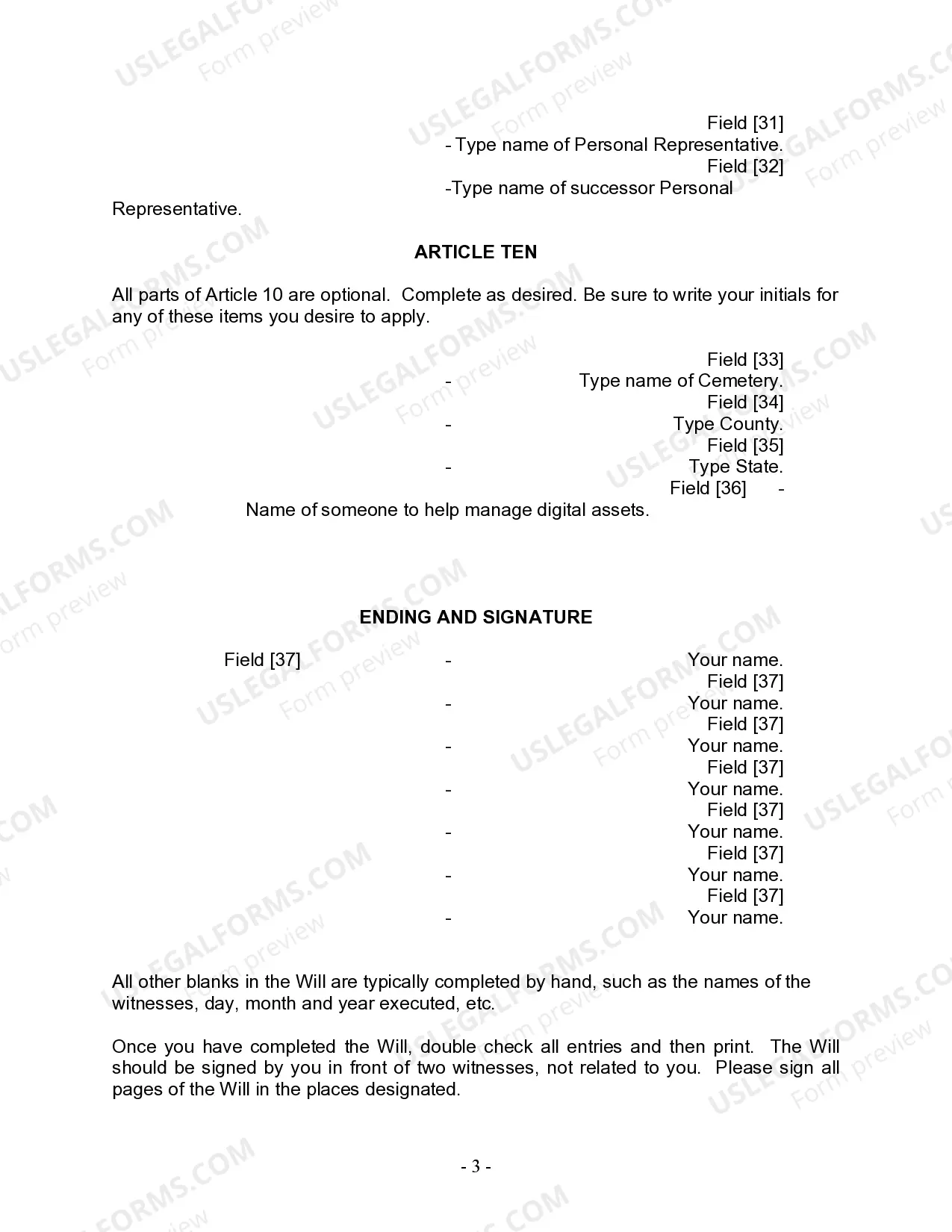
- Designate your personal representative to manage the estate.
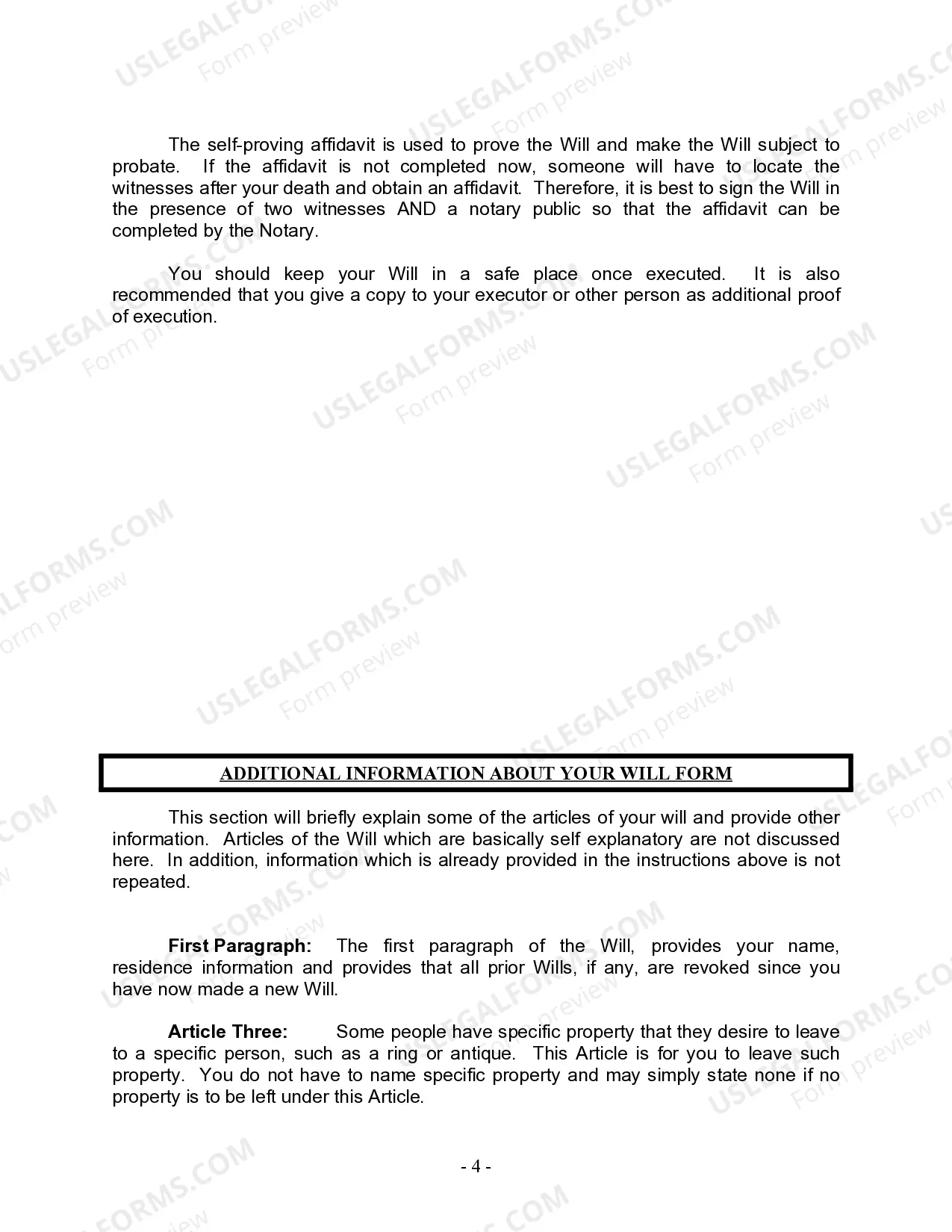
- Have the completed will signed in front of two witnesses who are not beneficiaries.
Does this document require notarization?
This form needs to be notarized to ensure legal validity. US Legal Forms provides secure online notarization powered by Notarize, allowing you to complete the process through a verified video call, available anytime.
Get your form ready online
Our built-in tools help you complete, sign, share, and store your documents in one place.
Make edits, fill in missing information, and update formatting in US Legal Forms—just like you would in MS Word.
Download a copy, print it, send it by email, or mail it via USPS—whatever works best for your next step.
Sign and collect signatures with our SignNow integration. Send to multiple recipients, set reminders, and more. Go Premium to unlock E-Sign.
If this form requires notarization, complete it online through a secure video call—no need to meet a notary in person or wait for an appointment.
We protect your documents and personal data by following strict security and privacy standards.

Make edits, fill in missing information, and update formatting in US Legal Forms—just like you would in MS Word.

Download a copy, print it, send it by email, or mail it via USPS—whatever works best for your next step.

Sign and collect signatures with our SignNow integration. Send to multiple recipients, set reminders, and more. Go Premium to unlock E-Sign.

If this form requires notarization, complete it online through a secure video call—no need to meet a notary in person or wait for an appointment.

We protect your documents and personal data by following strict security and privacy standards.
Common mistakes to avoid
- Failing to have the will signed in front of the required number of witnesses.
- Not specifying a personal representative, which can create complications.
- Leaving important property out of the will, leading to unintended distributions.
- Overlooking the need to revoke any previous wills after creating a new one.
Benefits of completing this form online
- Convenient access from anywhere, allowing you to complete it at your own pace.
- Editability ensures that you can make necessary changes easily.
- Secure storage options help protect your important documents.
- Expert guidance integrated within the form to ensure accuracy and legality.
Looking for another form?








Form popularity
FAQ
A will can be deemed invalid in Colorado for several reasons, including lack of proper signatures or if the testator was not of sound mind when creating the document. Additionally, if the will does not comply with state laws regarding witnesses or is improperly revoked, it may be ruled invalid. For a divorced person not remarried with adult children, ensuring your Colorado Last Will and Testament meets all legal requirements is essential. Using resources such as uslegalforms can guide you in creating a valid document.
If someone dies without a will in Colorado, the bank account will likely be frozen until the probate process is completed. The funds will then be distributed according to state inheritance laws, with adult children being the primary beneficiaries if you are a divorced person not remarried. To prevent financial uncertainty for your loved ones, creating a Colorado Last Will and Testament is advisable. Platforms like uslegalforms can help you draft a will that meets your needs.
When there is no will in Colorado, the state laws determine the distribution of your assets. Generally, the surviving adult children will inherit your estate if you are a divorced person not remarried with adult children. Understanding the laws of intestacy can be complex, which is why having a Colorado Last Will and Testament is beneficial. This document allows you to specify exactly who should inherit your property.
Yes, you can write your own will in Colorado, but it is crucial to follow specific legal requirements for it to be valid. Your will must be in writing, signed, and witnessed by at least two individuals who are present when you sign it. For a divorced person not remarried with adult children, drafting a clear Colorado Last Will and Testament ensures your intentions are honored. Consider using uslegalforms to simplify the process and ensure compliance with legal standards.
If no beneficiary is named on a bank account and there's no will, the account's funds will go through the probate process according to state law. In Colorado, this means the assets will typically go to the closest living relatives, such as adult children. It is important to have a clear plan in place, especially for a divorced person not remarried with adult children, to avoid complications. Creating a Colorado Last Will and Testament can help ensure your wishes are followed.
In Colorado, an inheritance is generally considered separate property and is not classified as marital property, which means it remains with the inheriting spouse. However, if you mingle inherited assets with marital assets, it could complicate your rights. Thus, for a divorced individual not remarried with adult children, it is advisable to specify these assets in your Colorado last will and testament to preserve your intent.
If your name is not on a deed but you are married in Colorado, you may still have rights to the property under state law. Colorado views assets acquired during marriage as marital property, which can impact your claim to the property. For a divorced individual not remarried with adult children, seeking assistance with a Colorado last will and testament can clarify your intentions regarding asset distribution.
For a will to be valid in Colorado, it must be written, signed by the testator, and witnessed by two people who are not beneficiaries. It’s important that your will accurately reflects your intentions, especially for a divorced person not remarried with adult children. You can utilize uslegalforms to create a compliant Colorado last will and testament easily and ensure peace of mind.
When a husband dies in Colorado, the surviving wife may be entitled to a portion of the estate, depending on various factors such as the presence of children from previous relationships. If children exist, the estate will typically be divided among the wife and the children. In creating a Colorado last will and testament for divorced individuals, clarity in asset distribution helps prevent confusion and disputes.
In Colorado, a surviving spouse does not automatically inherit everything, especially if the deceased has children from a previous marriage. The distribution of assets depends on various factors, including the presence of a will. For individuals crafting a Colorado last will and testament for a divorced person not remarried with adult children, it’s essential to clearly outline your wishes regarding asset distribution.