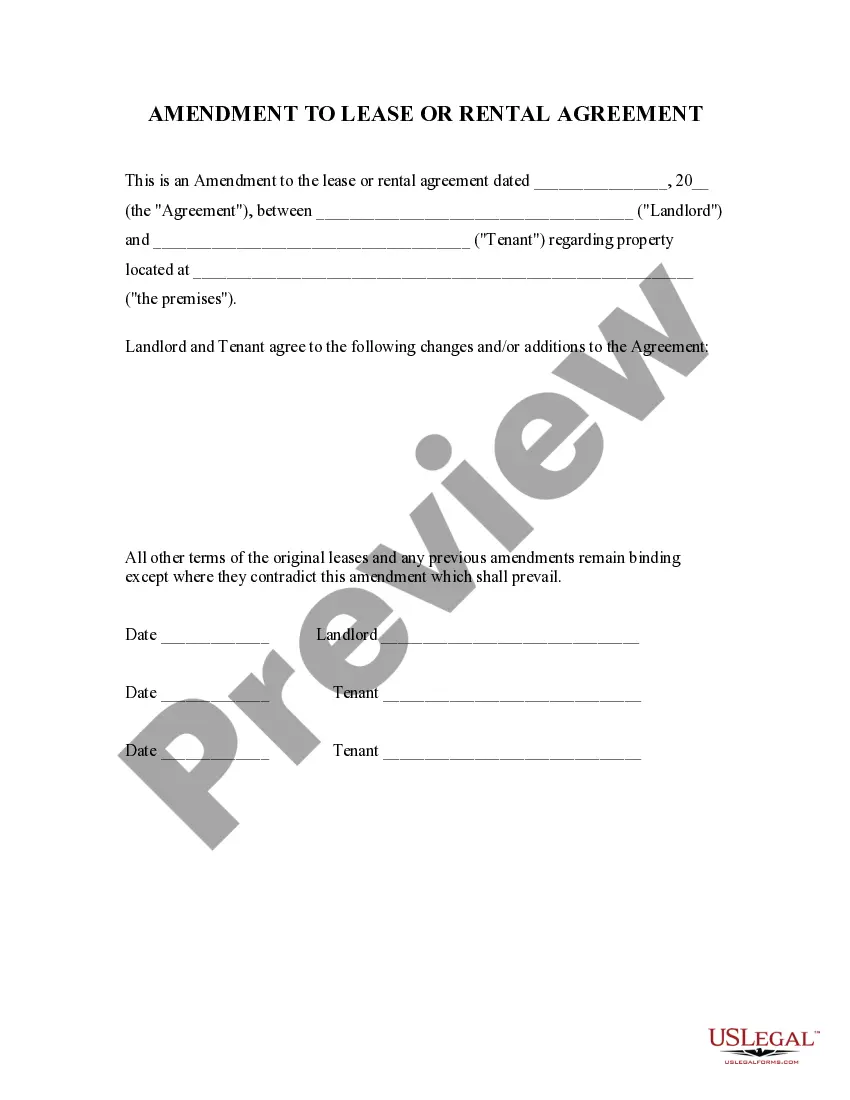
Colorado Bylaws for Corporation
About this form
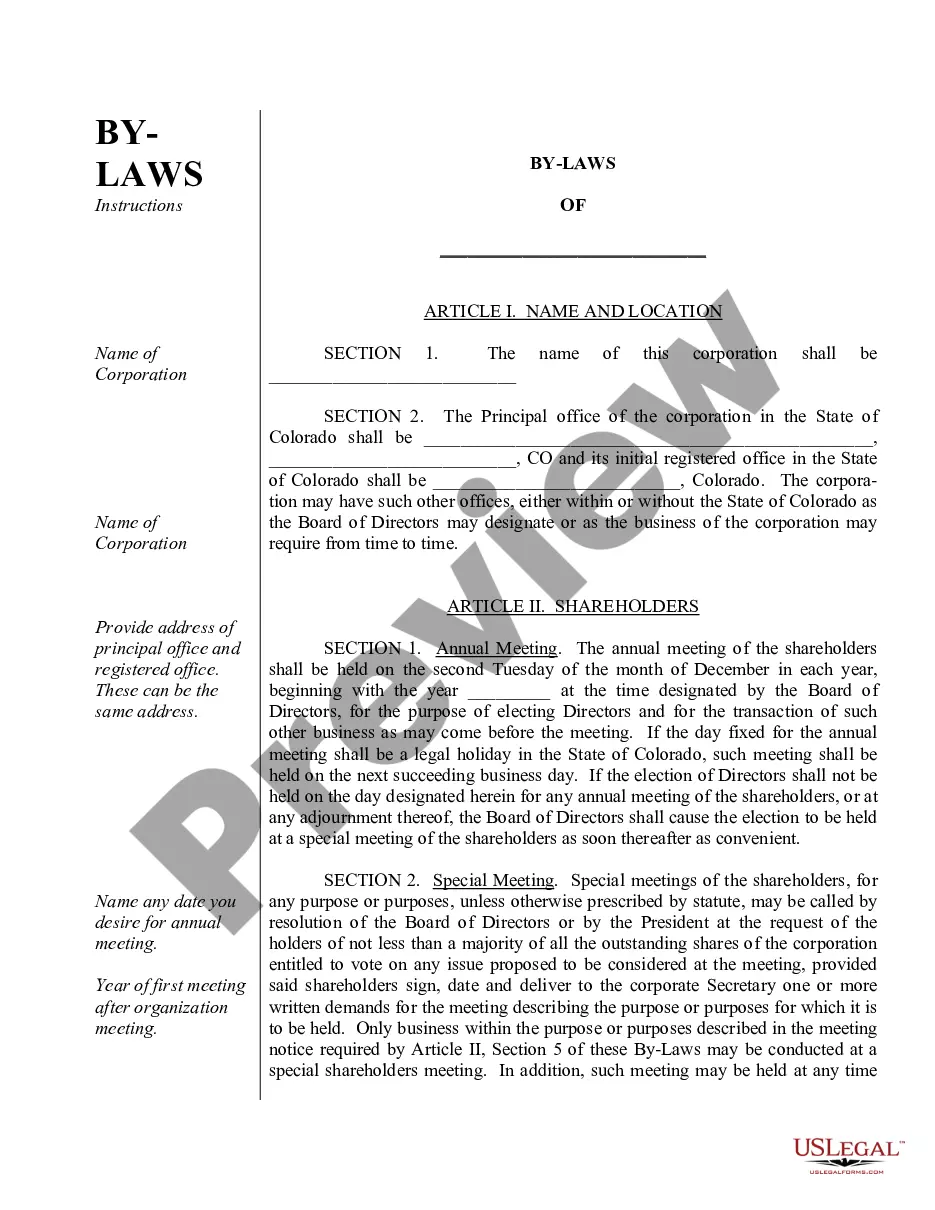
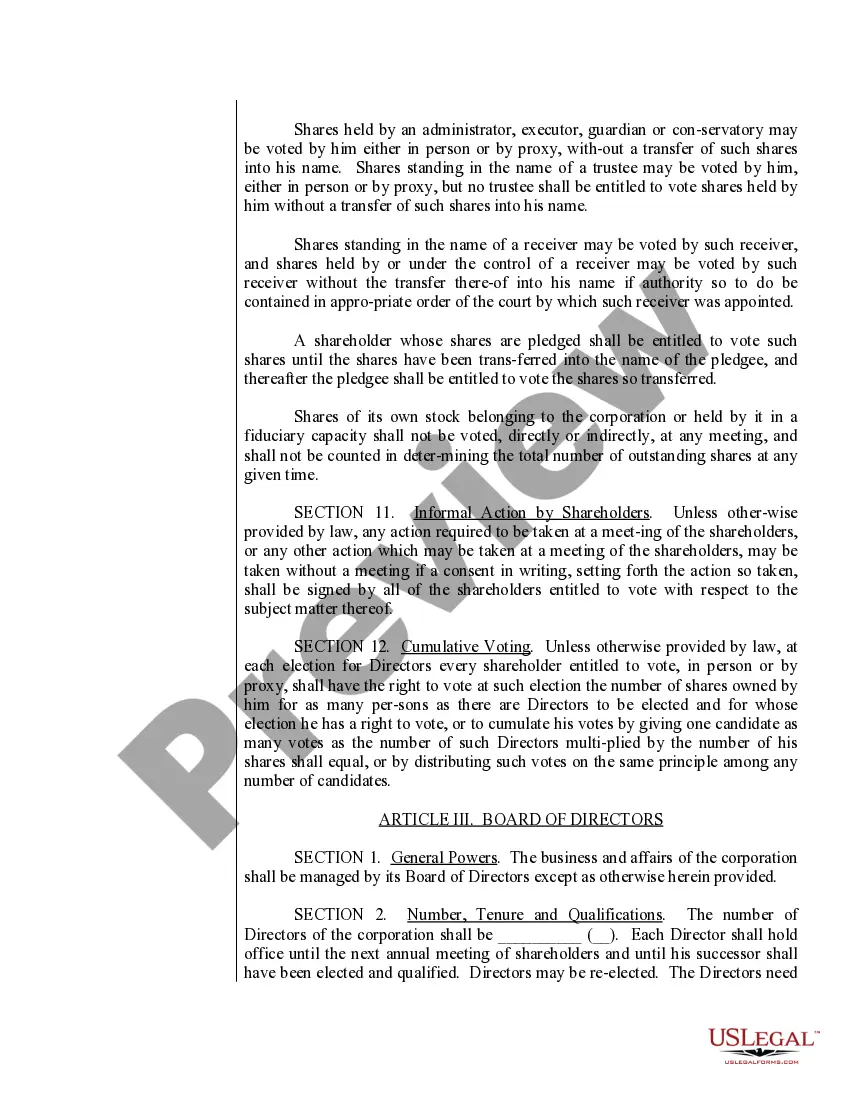
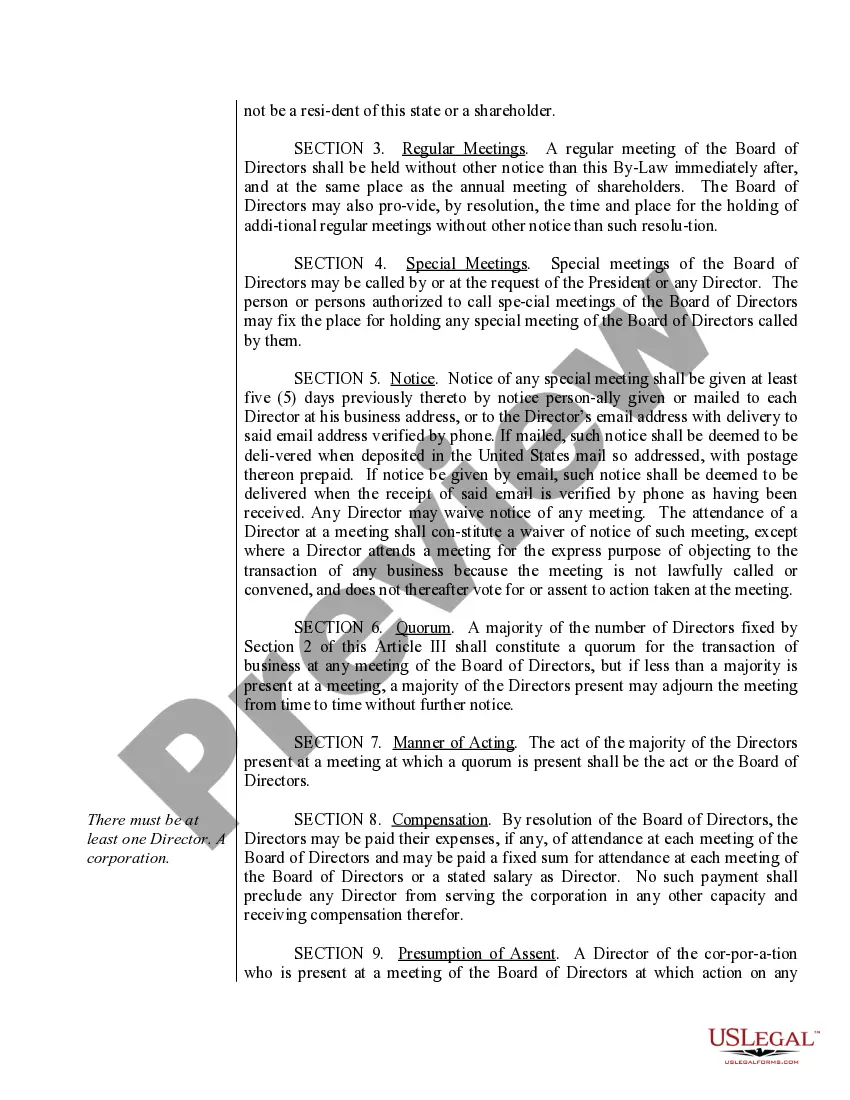
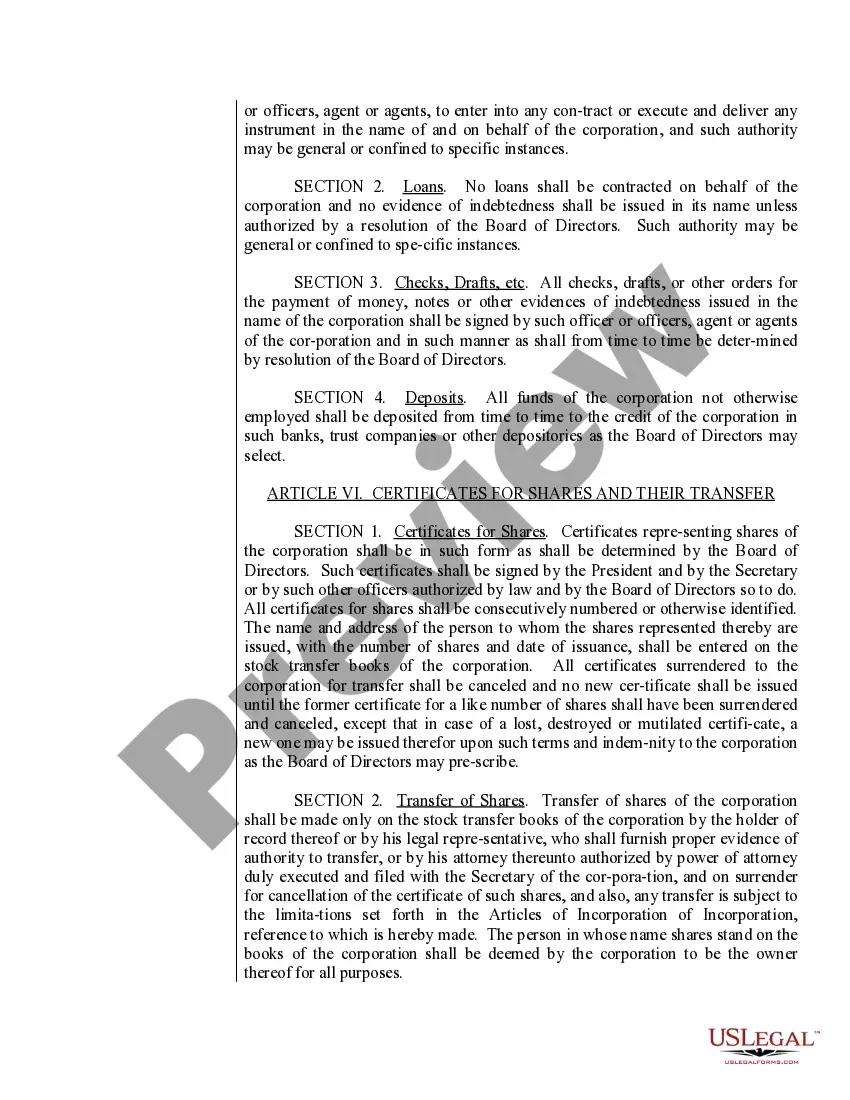
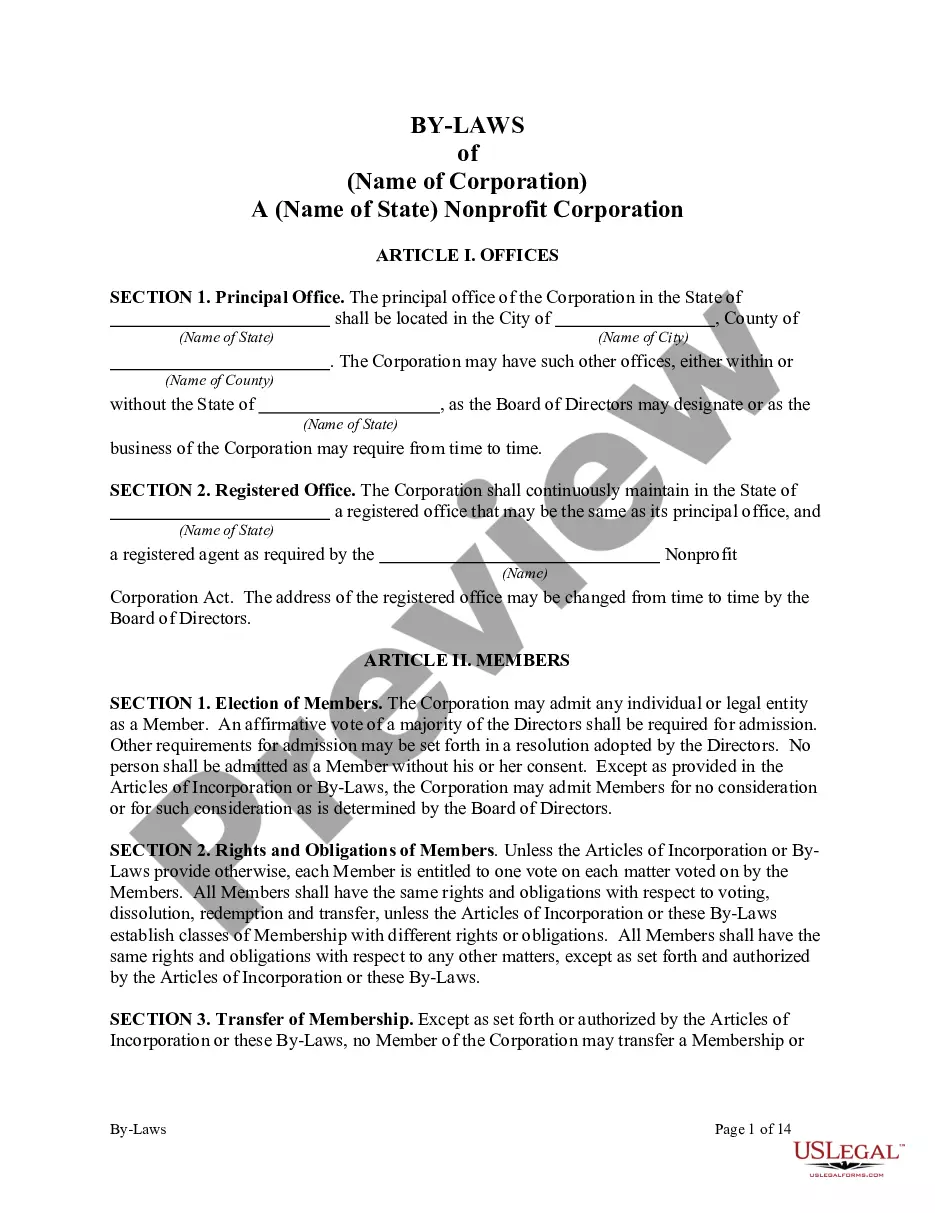
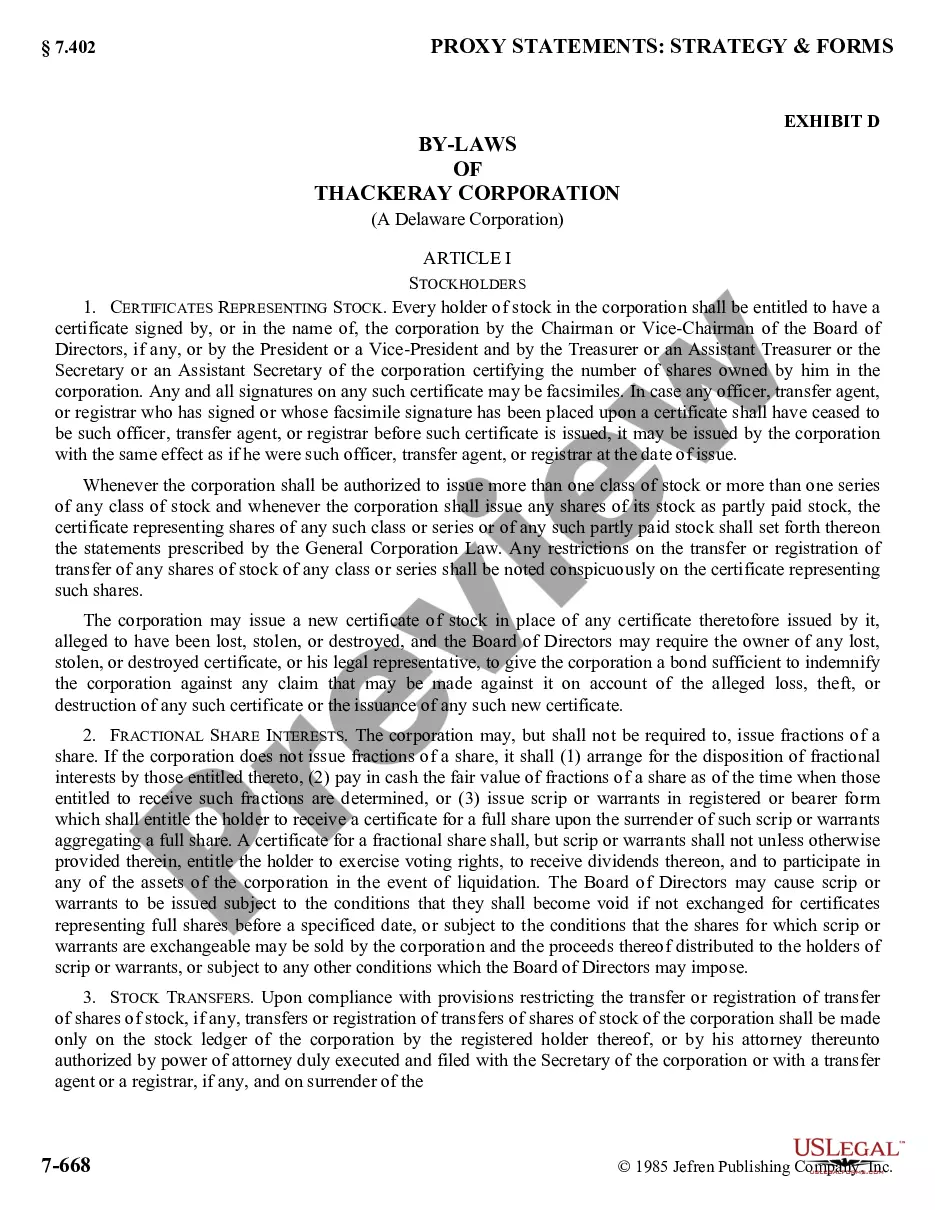
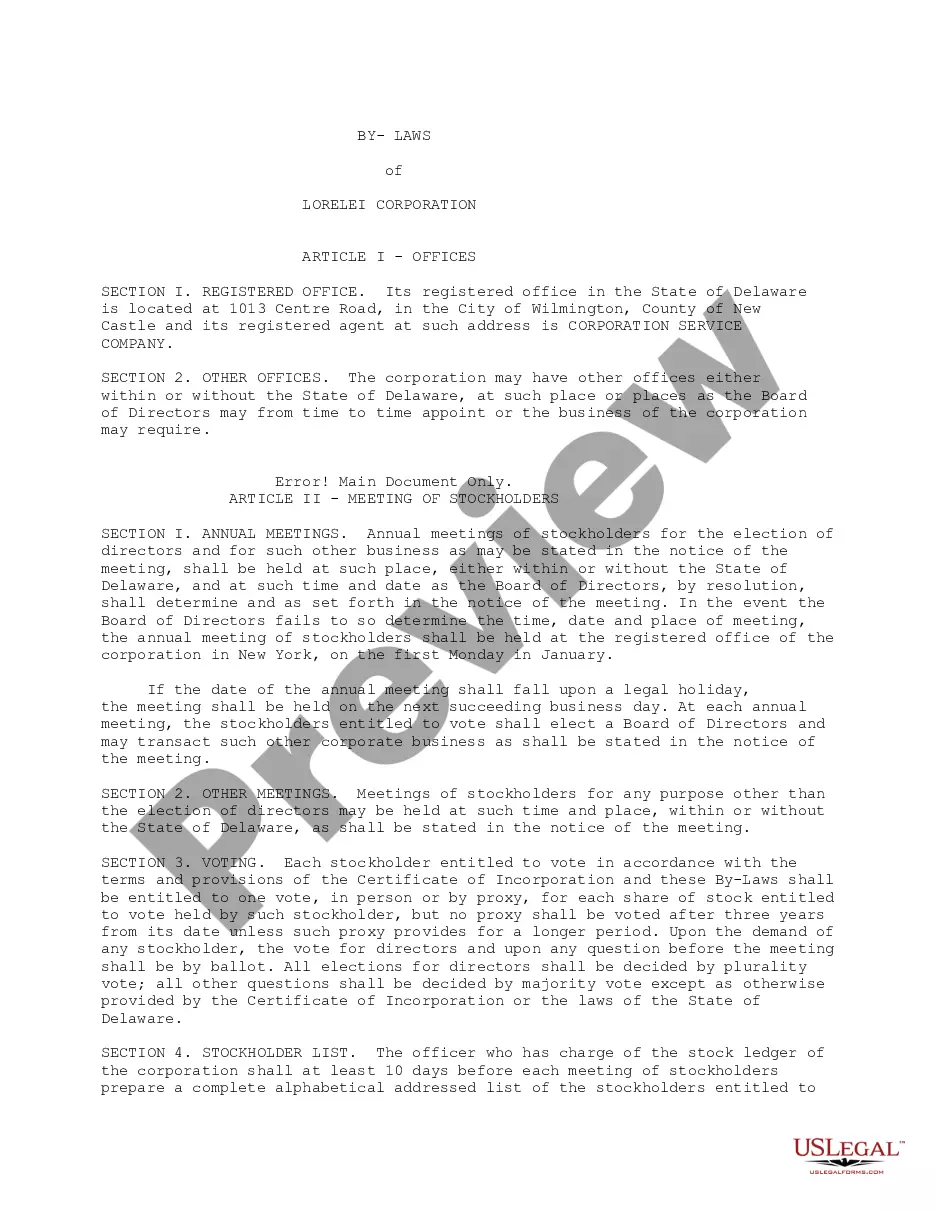
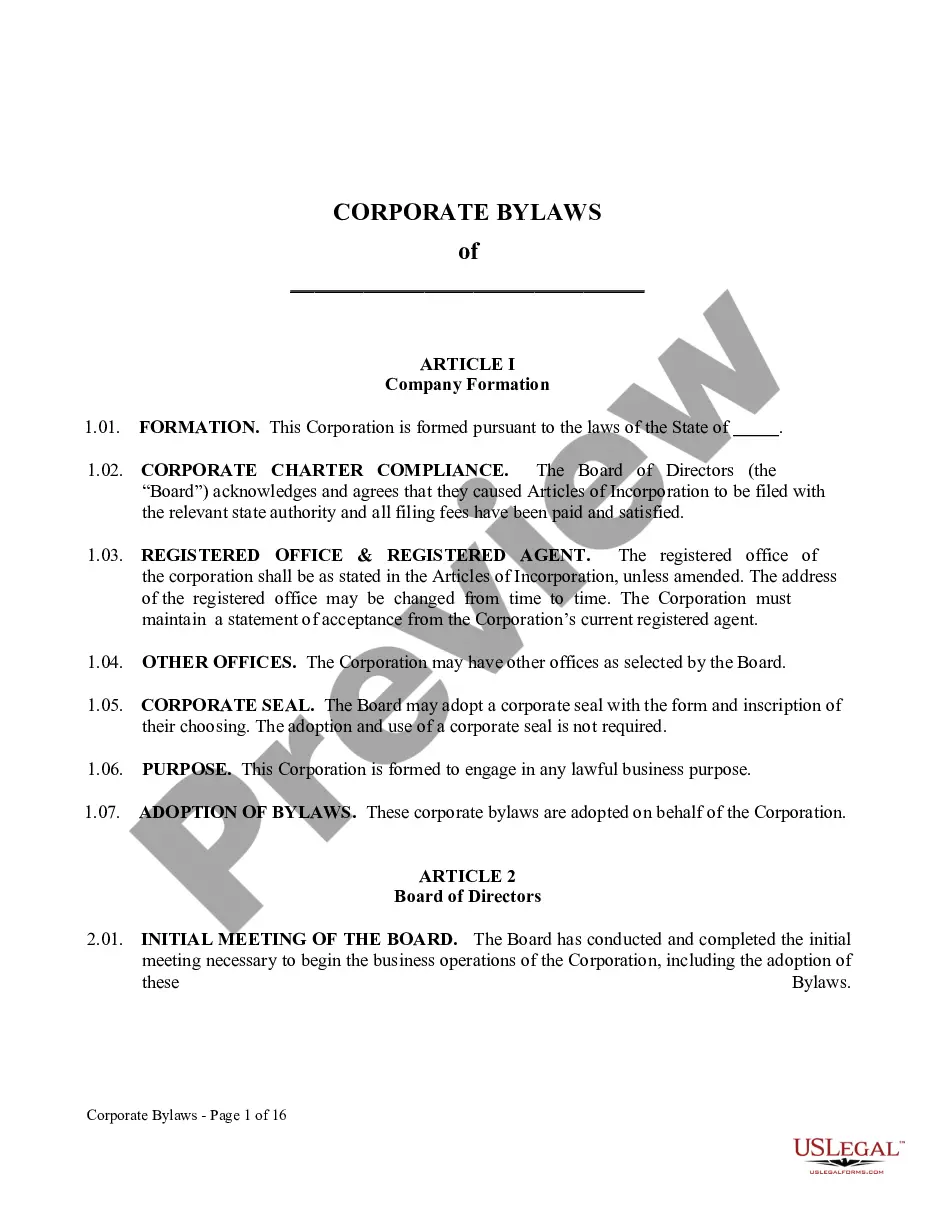
The Colorado Bylaws for Corporation is a legal document that outlines the rules and procedures governing the operation of a corporation in Colorado. This form defines the structure of the corporation, including the roles of shareholders, directors, and officers. Unlike other forms, the Colorado Bylaws provide specific regulations tailored for corporate governance within the state, ensuring compliance with local laws.
Form components explained
- Name and location of the corporation.
- Details on annual and special shareholders' meetings.
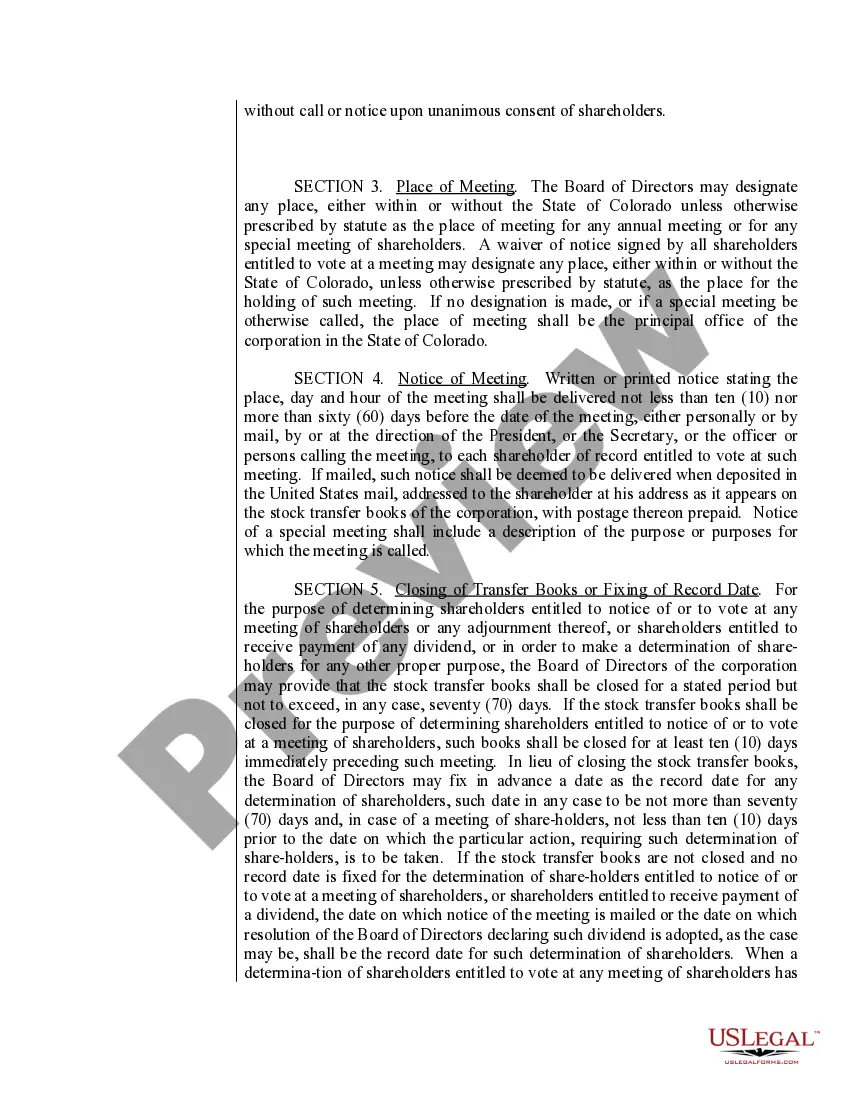
- Provisions regarding directors and officers, including powers and responsibilities.
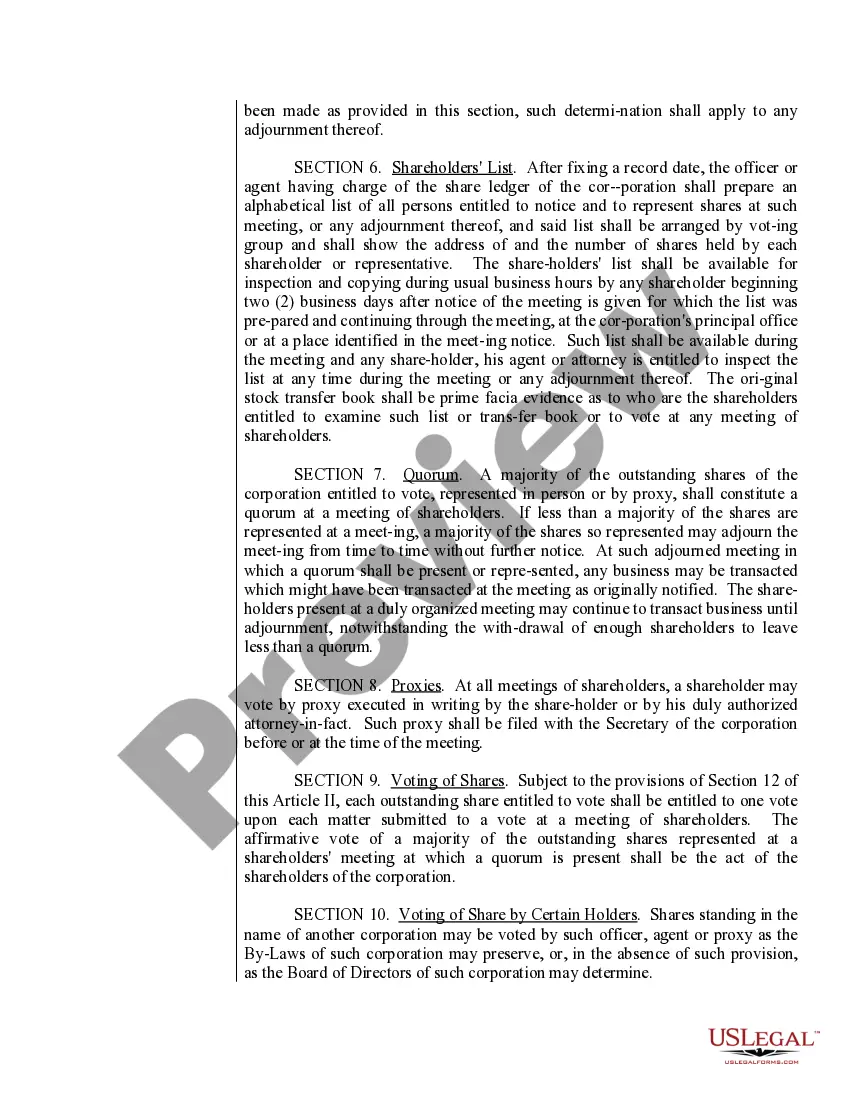
- Voting procedures and proxy voting guidelines.
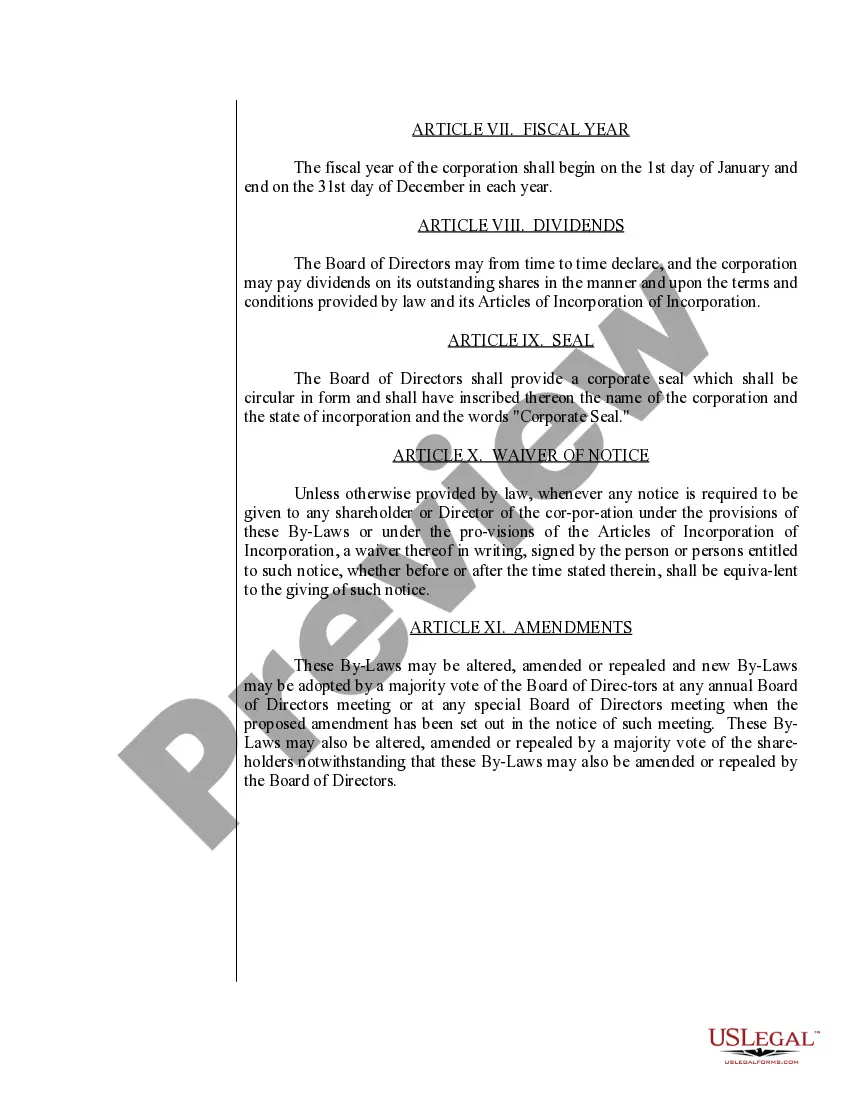
- Procedures for amending the bylaws.
- Regulations regarding fiscal year and dividends.





When to use this form
Use the Colorado Bylaws for Corporation when establishing the foundational governance structure of your corporation. This form is essential for ensuring clear rules for corporate operations, including how meetings are conducted and decisions are made. It is typically used when forming a new corporation or when existing bylaws need to be updated to reflect changes in the organization.
Intended users of this form
- Business owners forming a new corporation in Colorado.
- Corporation directors and officers responsible for governance.
- Shareholders involved in corporate decision-making processes.
- Legal representatives assisting corporations with compliance issues.
Completing this form step by step
- Enter the name of the corporation and its principal office address.
- Specify the date for the annual shareholders' meeting and any initial meeting dates.
- List the elected directors and their responsibilities.
- Outline the procedures for shareholder voting and proxy representation.
- Detail provisions for amending the bylaws as needed.
Is notarization required?
Notarization is not commonly needed for this form. However, certain documents or local rules may make it necessary. Our notarization service, powered by Notarize, allows you to finalize it securely online anytime, day or night.
Get your form ready online
Our built-in tools help you complete, sign, share, and store your documents in one place.
Make edits, fill in missing information, and update formatting in US Legal Forms—just like you would in MS Word.
Download a copy, print it, send it by email, or mail it via USPS—whatever works best for your next step.
Sign and collect signatures with our SignNow integration. Send to multiple recipients, set reminders, and more. Go Premium to unlock E-Sign.
If this form requires notarization, complete it online through a secure video call—no need to meet a notary in person or wait for an appointment.
We protect your documents and personal data by following strict security and privacy standards.

Make edits, fill in missing information, and update formatting in US Legal Forms—just like you would in MS Word.

Download a copy, print it, send it by email, or mail it via USPS—whatever works best for your next step.

Sign and collect signatures with our SignNow integration. Send to multiple recipients, set reminders, and more. Go Premium to unlock E-Sign.

If this form requires notarization, complete it online through a secure video call—no need to meet a notary in person or wait for an appointment.

We protect your documents and personal data by following strict security and privacy standards.
Common mistakes
- Failing to update the bylaws after significant changes in the corporation.
- Not properly documenting meetings or decisions made.
- Neglecting to define quorum requirements, which could affect decision-making.
- Overlooking state-specific legal requirements that differ from general practices.
Why use this form online
- Convenience of downloading and customizing the form anytime.
- Editable fields allow for easy updates as the corporation evolves.
- Access to templates drafted by licensed attorneys ensures compliance with legal standards.
What to keep in mind
- The Colorado Bylaws for Corporation is essential for establishing corporate governance.
- Correct completion of this form ensures compliance with state requirements.
- It serves as a framework for decision-making and operational structure in the corporation.
Looking for another form?
Form popularity
FAQ
A company agreement and bylaws both outline governance but are used in different contexts. Bylaws apply to corporations, dictating internal rules and procedures. In contrast, a company agreement, often seen in LLCs, details member relationships and operational guidelines. If you are looking to draft Colorado Bylaws for Corporation or an equivalent agreement, uSlegalforms provides valuable resources to guide you.
While an LLC does not have bylaws in the traditional sense, it can create an operating agreement that serves a similar purpose. This operating agreement outlines the management structure, member roles, and operating procedures of the LLC. Understanding this distinction can help you ensure that your LLC operates smoothly and legally. For expert templates, uSlegalforms may assist in drafting your LLC’s documents.
Bylaws are legally binding documents that establish the governance of a corporation. Once adopted, they govern the internal operations and decision-making processes of the corporation. However, it's essential for the bylaws to comply with state laws and the corporation's articles of incorporation to be enforceable. If you're creating Colorado Bylaws for Corporation, make sure they are clear and compliant with regulatory standards.
A partnership agreement governs the relationships and operations among partners in a partnership, while bylaws are specific to corporations and govern their internal management. Essentially, bylaws focus on corporate structure and procedures, whereas partnership agreements cover aspects like profit sharing and responsibilities between partners. Knowing these differences can help you select the proper documentation for your business needs.
Writing your own corporate bylaws involves a few key steps. Start by outlining the structure of your organization, including roles and responsibilities. Next, detail the procedures for meetings, voting, and other governance matters. For templates and comprehensive guidance on Colorado Bylaws for Corporation, consider using uSlegalforms to simplify the process.
Bylaws and shareholder agreements serve different purposes within a corporation. Bylaws outline the day-to-day operational rules of the corporation, while shareholder agreements focus on the relationship between the shareholders. Understanding the distinction is critical for maintaining clarity in corporate governance. For more guidance on crafting Colorado Bylaws for Corporation, uSlegalforms can help.
Yes, Colorado law requires corporations to adopt and maintain bylaws as part of their formation process. These bylaws outline essential operational guidelines and ensure that the corporation runs smoothly. Properly drafted Colorado Bylaws for Corporation help establish clear roles and responsibilities, thus reducing potential conflicts. Make sure to consult legal resources or services like uslegalforms to create compliant and effective bylaws.
To format bylaws, start with a clear title that identifies them as corporate bylaws. Use sections and headings for easy navigation, making sure to include an introductory statement, purpose, and definitions. Clearly outline the rules regarding meetings, voting, and officer responsibilities. For practical guidance, consider utilizing templates available through platforms like uslegalforms for creating well-structured Colorado Bylaws for Corporation.
An LLC does not require bylaws in the same way that a corporation does, but it should have an operating agreement. This agreement serves a similar purpose by outlining the management structure and operating procedures of the LLC. While not mandatory in Colorado, having an operating agreement helps prevent misunderstandings among members. By creating comprehensive documents, such as Colorado Bylaws for Corporation or an LLC operating agreement, you can ensure better governance.
Yes, bylaws are legally enforceable if they are properly adopted and comply with state laws. They serve as a binding agreement among the corporation's members regarding how the corporation will be managed. If disputes arise, courts may refer to the bylaws to determine how conflicts should be resolved. This reinforces the importance of creating clear and valid Colorado Bylaws for Corporation.