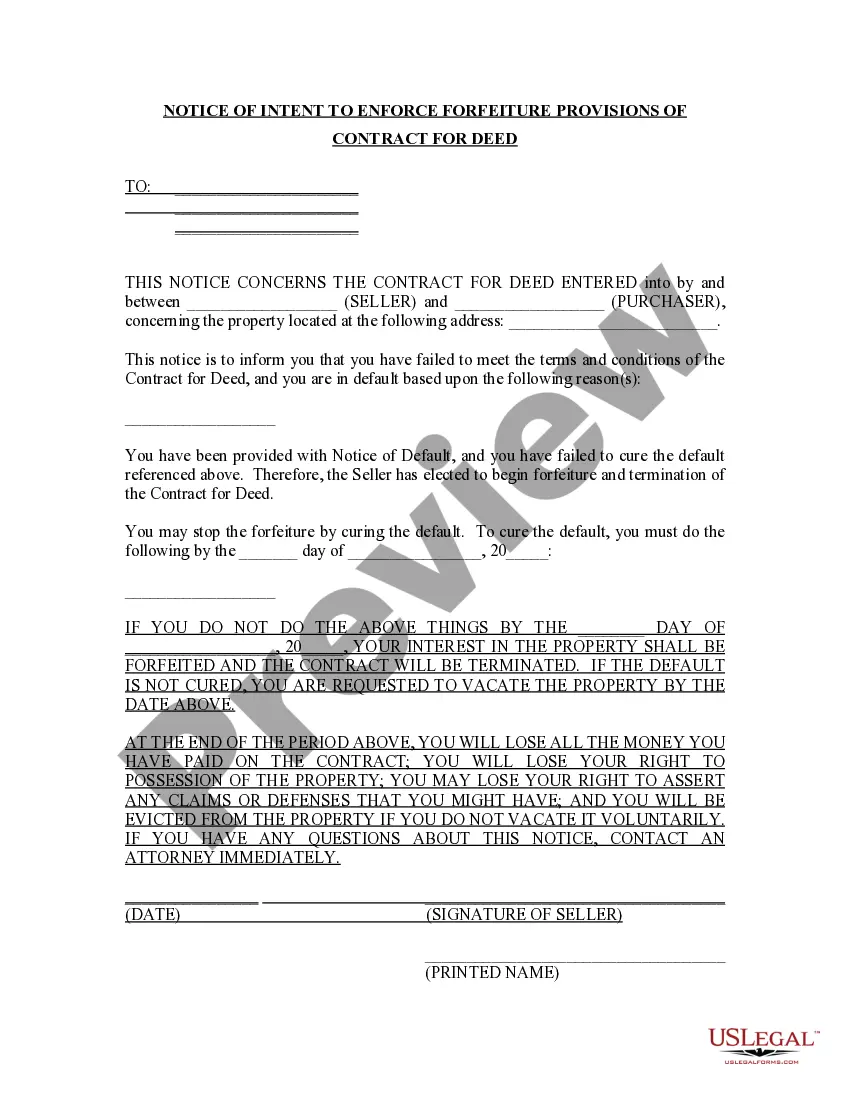
Colorado Notice of Intent to Enforce Forfeiture Provisions of Contact for Deed
What is this form?
The Notice of Intent to Enforce Forfeiture Provisions of Contract for Deed is a legal document that serves as an initial notification from the seller to the buyer regarding their default under the terms of a Contract for Deed. This form is used specifically to inform the buyer that they have not fulfilled their payment obligations or have breached other important conditions, and it outlines the seller's intent to enforce forfeiture provisions if the default is not remedied. This document differs from other notices, as it specifically targets the aftermath of nonpayment or breach related to contracts for deed transactions.
Main sections of this form
- Identification of the seller and buyer involved in the transaction.
- Description of the property subject to the Contract for Deed.
- Detailed explanation of the buyer's default, including specific terms breached.
- Notification of the seller's intent to enforce forfeiture provisions.
- Deadline for the buyer to remedy the default to avoid further action.

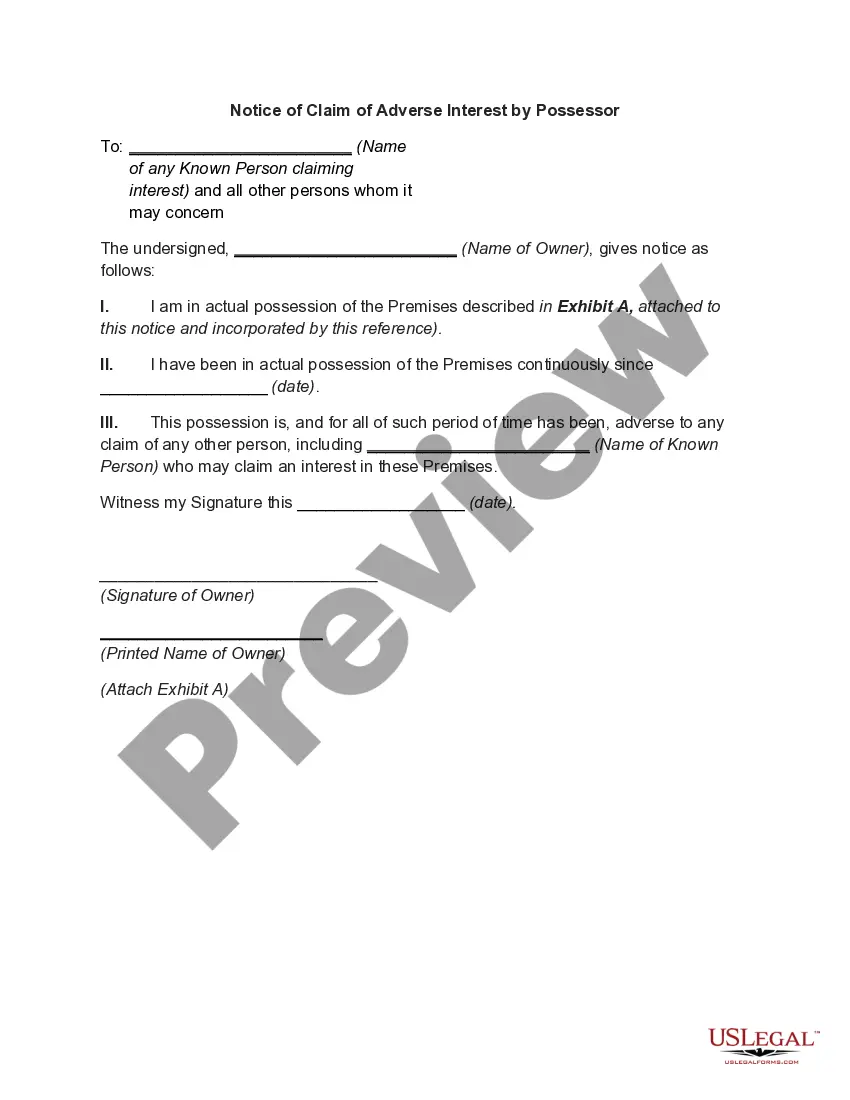
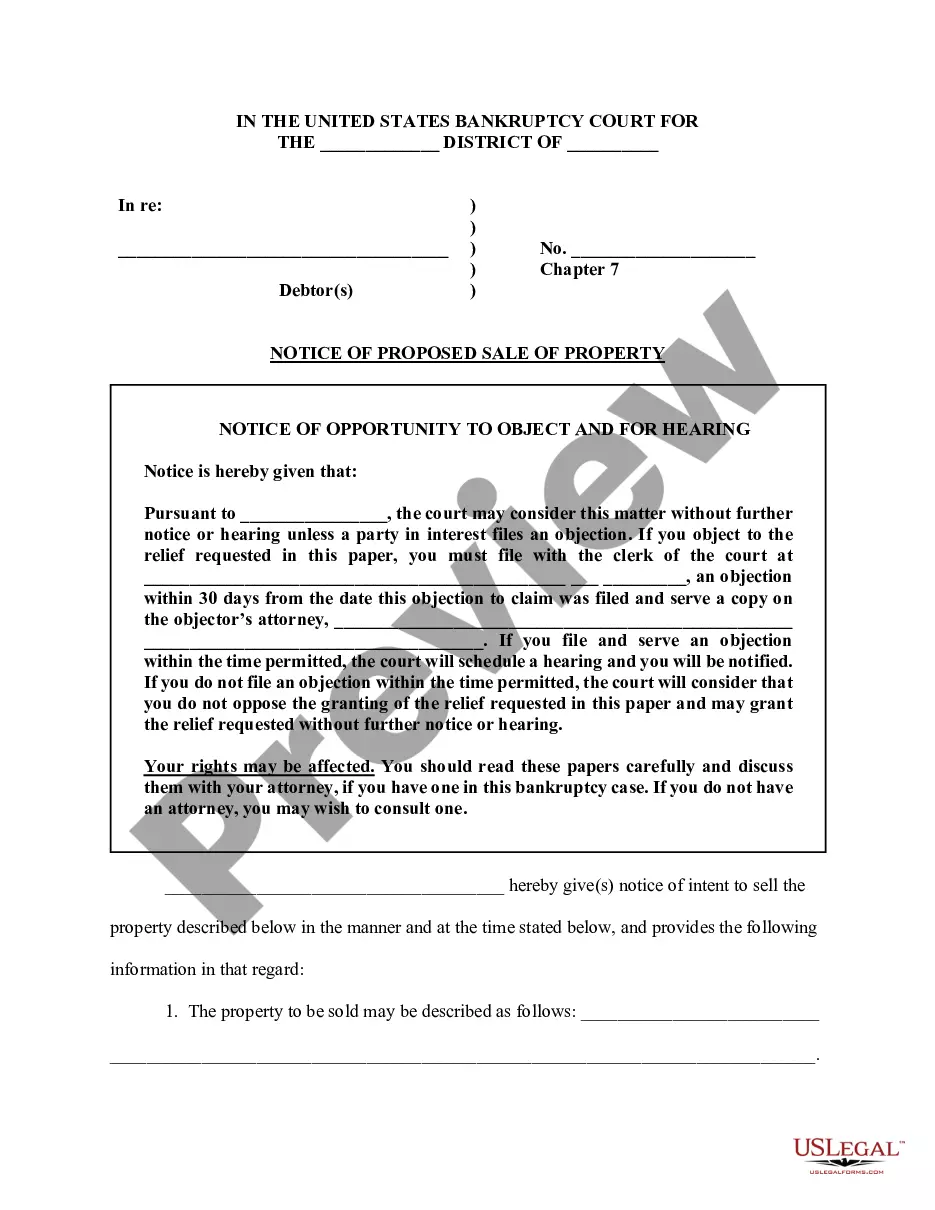
Situations where this form applies
This form is necessary when a buyer has failed to make timely payments or has otherwise breached their obligations under a Contract for Deed. Sellers should utilize this notice to formally alert the buyer of the default and provide them with an opportunity to rectify the situation before proceeding with enforcement actions.
Who can use this document
This form is intended for:
- Sellers who have entered into a Contract for Deed and wish to enforce forfeiture provisions due to buyer's default.
- Real estate agents or attorneys representing sellers in the enforcement of contract terms.
- Buyers who have received a notice of intent and need to understand their obligations and options.
How to complete this form
- Identify and enter the names and contact information for both the seller and the buyer.
- Provide a description of the property involved in the Contract for Deed.
- Clearly describe the specific terms that have been breached by the buyer.
- State the seller's intent to enforce forfeiture provisions due to the buyer's noncompliance.
- Set a deadline for the buyer to cure the default.
- Sign and date the form to validate the notice.
Notarization requirements for this form
This form does not typically require notarization unless specified by local law. It is recommended to check state-specific regulations to confirm if additional actions are needed for legal validation.
Get your form ready online
Our built-in tools help you complete, sign, share, and store your documents in one place.
Make edits, fill in missing information, and update formatting in US Legal Forms—just like you would in MS Word.
Download a copy, print it, send it by email, or mail it via USPS—whatever works best for your next step.
Sign and collect signatures with our SignNow integration. Send to multiple recipients, set reminders, and more. Go Premium to unlock E-Sign.
If this form requires notarization, complete it online through a secure video call—no need to meet a notary in person or wait for an appointment.
We protect your documents and personal data by following strict security and privacy standards.

Make edits, fill in missing information, and update formatting in US Legal Forms—just like you would in MS Word.

Download a copy, print it, send it by email, or mail it via USPS—whatever works best for your next step.

Sign and collect signatures with our SignNow integration. Send to multiple recipients, set reminders, and more. Go Premium to unlock E-Sign.

If this form requires notarization, complete it online through a secure video call—no need to meet a notary in person or wait for an appointment.

We protect your documents and personal data by following strict security and privacy standards.
Mistakes to watch out for
- Failing to clearly identify the terms breached by the buyer.
- Not providing sufficient detail about the property in question.
- Neglecting to set an appropriate deadline for remedying the default.
- Omitting signatures or dates, which can invalidate the notice.
Benefits of using this form online
- Access to professionally drafted templates ensures legal accuracy.
- Downloadable format allows for easy editing and customization.
- Convenience of preparing necessary legal documents from home.
- Immediate access to the form without waiting for physical delivery.
Legal use & context
- This form serves as a formal notice that may be necessary in enforcing a seller's rights under a Contract for Deed.
- Timely and properly completing this form can help prevent potential legal disputes regarding the enforcement of the contract.
- Ensure that all local and state laws regarding notification and enforceability are followed to protect your legal interests.
What to keep in mind
- The Notice of Intent to Enforce Forfeiture provisions serves as an essential communication tool between sellers and buyers.
- Proper completion of this form can protect seller rights and clarify buyer obligations.
- Always check state-specific regulations to ensure compliance.
Looking for another form?

Form popularity
FAQ
Filing a lien with intent in Colorado requires preparing a document that specifies the debt and the property involved. You need to file this document with the county clerk and recorder's office within the designated time frame. To simplify this process and ensure compliance with legal requirements, you can turn to USLegalForms for guidance on the Colorado Notice of Intent to Enforce Forfeiture Provisions of Contact for Deed.
In Colorado, you generally have up to four months after the last work was done or materials were supplied to file an intent to lien. This timeline is crucial to protect your rights as a potential lien claimant. If you are uncertain about any aspect of this process, platforms like USLegalForms can provide you with the resources you need regarding the Colorado Notice of Intent to Enforce Forfeiture Provisions of Contact for Deed.
To write a letter of intent to lien, start with a clear statement of your intent to file a lien, include details about the debt, and provide information about the property in question. Make sure to cite any relevant contracts or agreements. Tools and templates from USLegalForms can help you craft a letter that effectively conveys your intentions, focusing on the Colorado Notice of Intent to Enforce Forfeiture Provisions of Contact for Deed.
A lien filing notice is a legal document that announces the intention to file a lien against a property due to unpaid debts. This notice serves to inform the property owner and any interested parties about the potential lien. By utilizing services like USLegalForms, you can ensure that your lien filing notice meets all necessary criteria, including the Colorado Notice of Intent to Enforce Forfeiture Provisions of Contact for Deed.
No, a contractor typically cannot file a lien on your property without a contract in Colorado. A valid contract or agreement must exist to establish a legal claim for payment. If you find yourself in this situation, consider using USLegalForms to understand your rights and to navigate the complexities of the Colorado Notice of Intent to Enforce Forfeiture Provisions of Contact for Deed.
In Colorado, various parties can file a lien, including contractors, subcontractors, and suppliers who have provided labor or materials to improve a property. It is important for the filer to have a valid contract or agreement to support their claim. You can use resources like USLegalForms to guide you through the process, making it easier to comply with the requirements for a Colorado Notice of Intent to Enforce Forfeiture Provisions of Contact for Deed.
To file an intent to lien in Colorado, you must prepare a notice that includes details about the property and the amount owed. Once you complete this document, submit it to the appropriate county clerk's office. Utilizing a service like USLegalForms can help ensure your filing meets all legal requirements, including incorporating the Colorado Notice of Intent to Enforce Forfeiture Provisions of Contact for Deed.
A land contract may be voided for various reasons, including fraud, lack of capacity, or failure to meet legal requirements. If any of these issues arise, the contract could be disputed or deemed invalid. Understanding the implications of the Colorado Notice of Intent to Enforce Forfeiture Provisions of Contract for Deed can be crucial when navigating these concerns.
If you stop paying on a land contract, the terms of the contract typically allow the seller to take action. This may include issuing a Colorado Notice of Intent to Enforce Forfeiture Provisions of Contract for Deed, which can lead to penalties or forfeiture of the property. Seeking immediate legal advice is essential in these situations.
Defaulting on a land contract often leads to serious repercussions, including the possibility of losing your rights to the property. The seller may issue a Colorado Notice of Intent to Enforce Forfeiture Provisions of Contract for Deed, which can initiate the foreclosure process. Understanding each step is critical, so consider getting legal support.