California Conservation Easement For Specific Resource Preservation
What this document covers
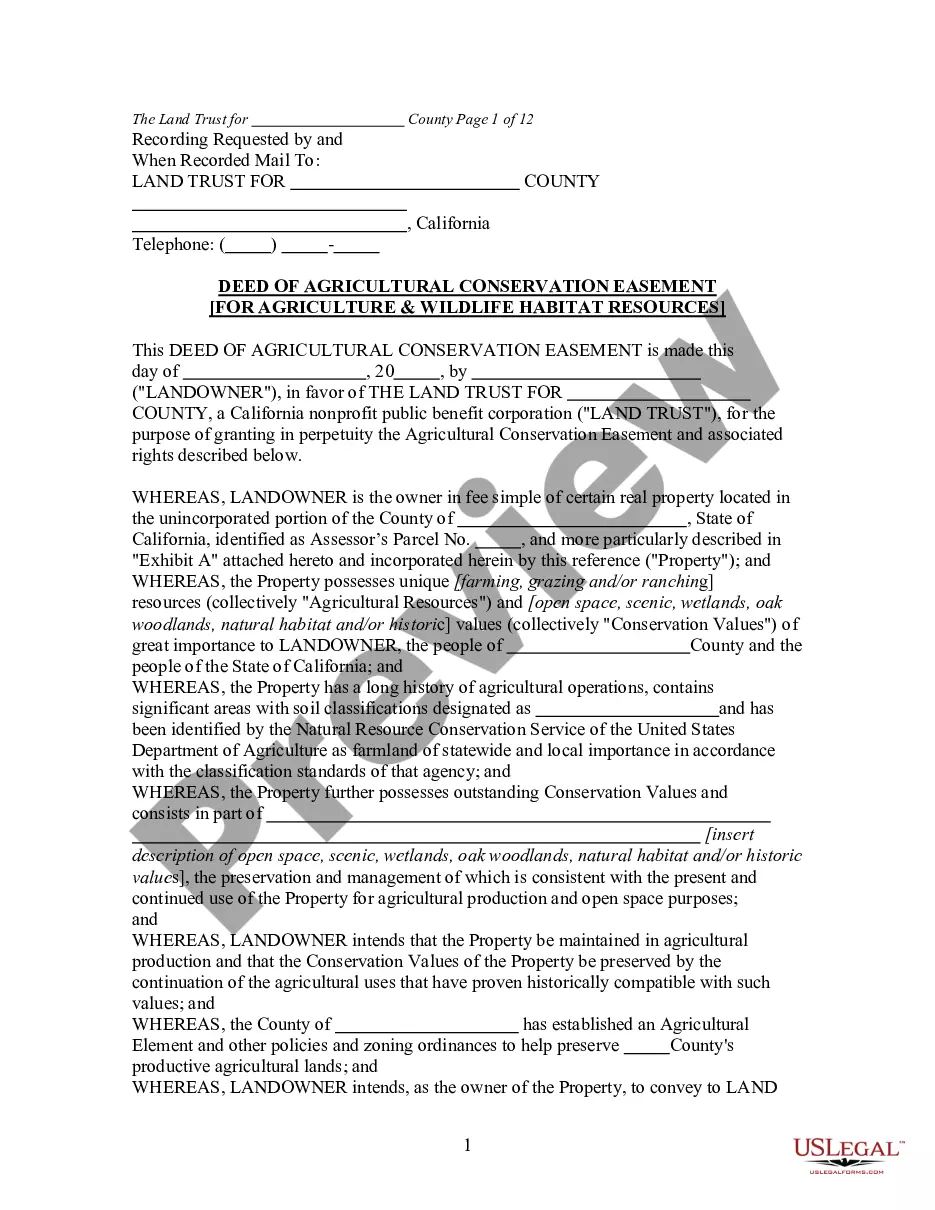
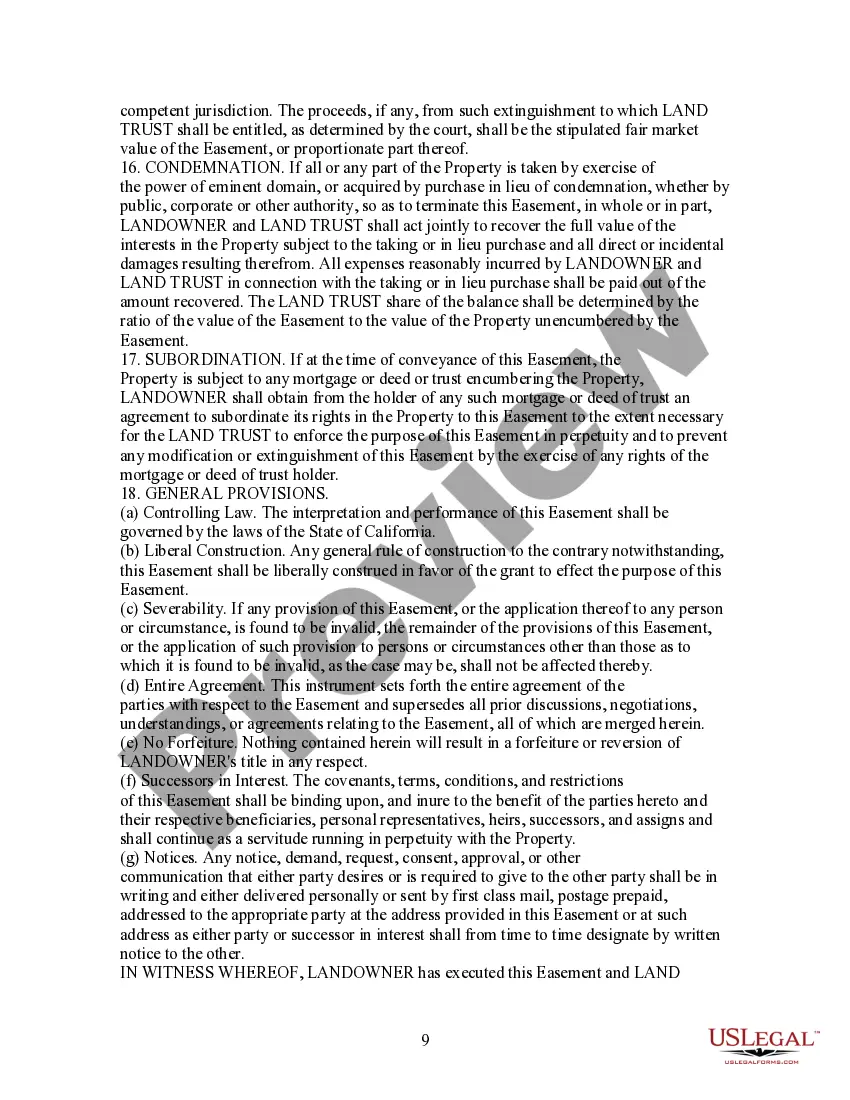
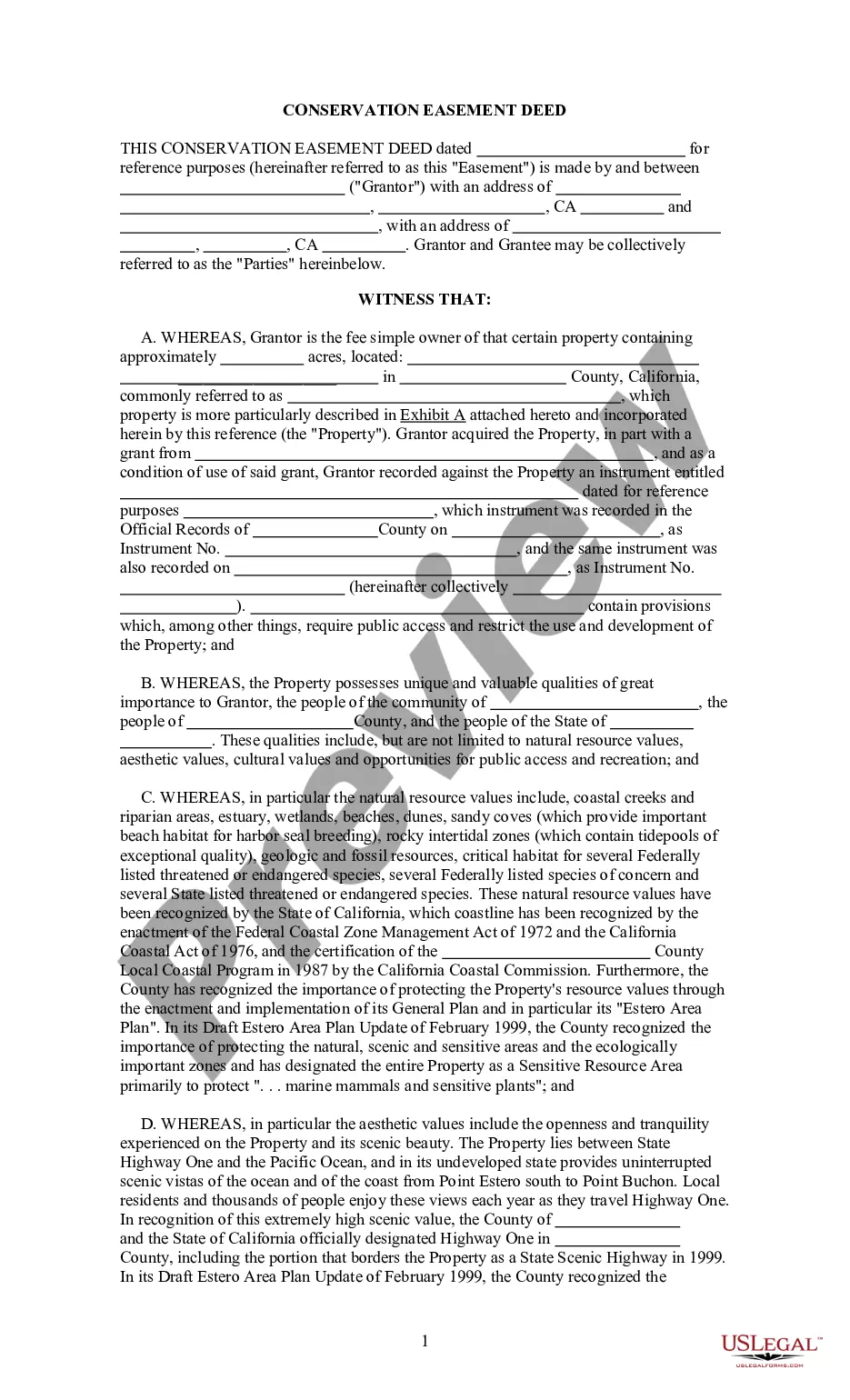
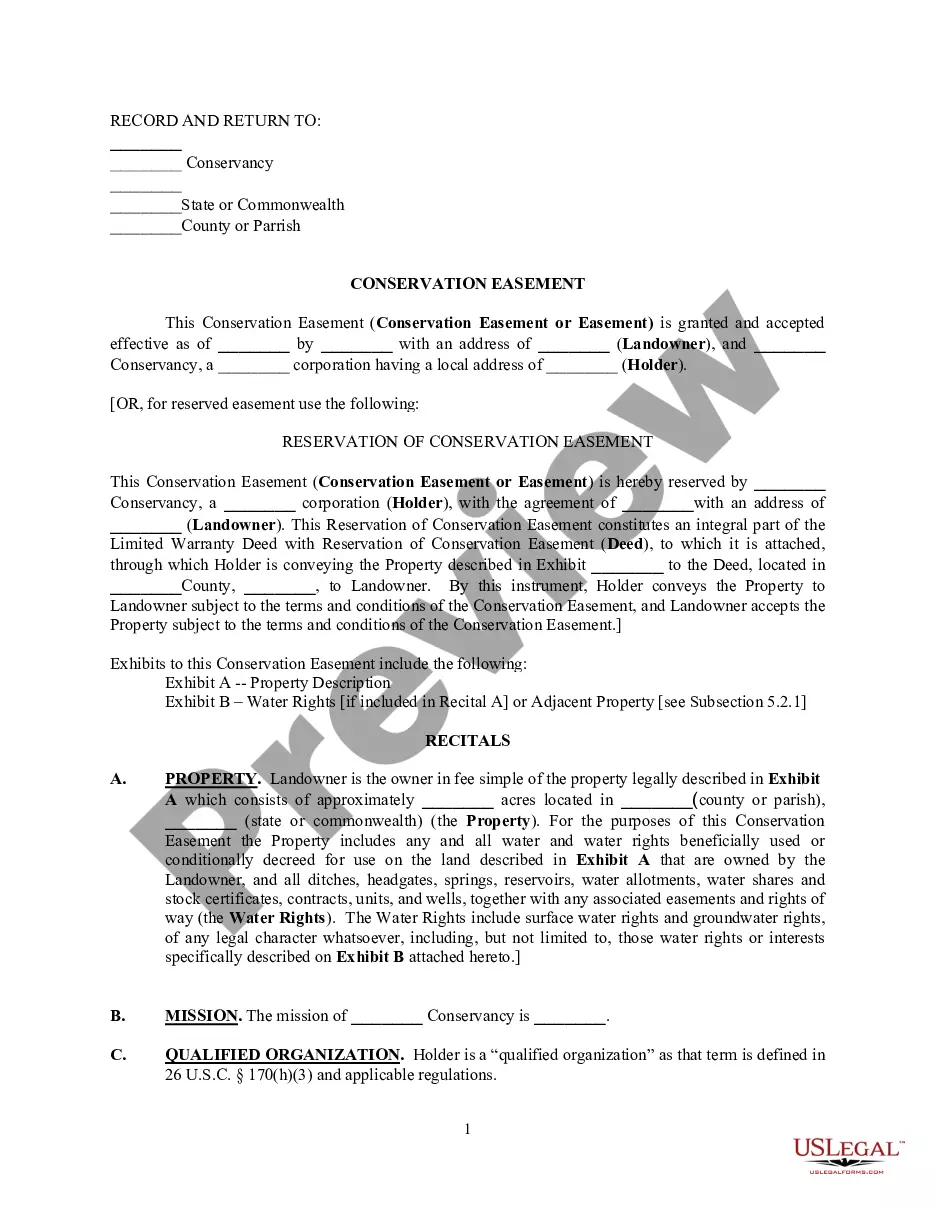
The Conservation Easement for Specific Resource Preservation is a legal document designed to protect and preserve certain land resources, such as agricultural areas, wetlands, and scenic vistas. This form allows property owners to convey their land use rights to a designated land trust, ensuring that the specific resources and conservation values of the property are maintained in perpetuity. Unlike other easements, this form specifically focuses on the agricultural resources and unique characteristics of the land being preserved.
Main sections of this form
- Purpose: Ensures the property remains in agricultural use and protects its conservation values.
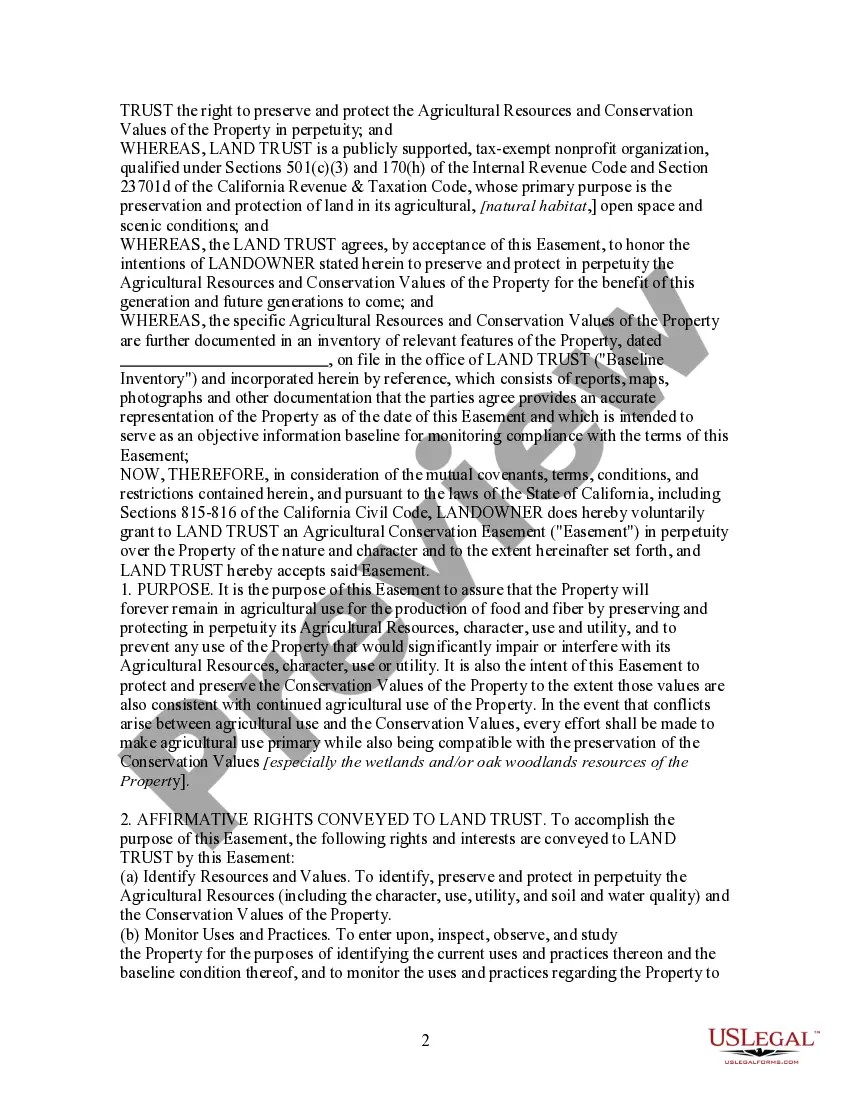
- Affirmative rights: Details rights conveyed to the land trust for monitoring and preserving the property.
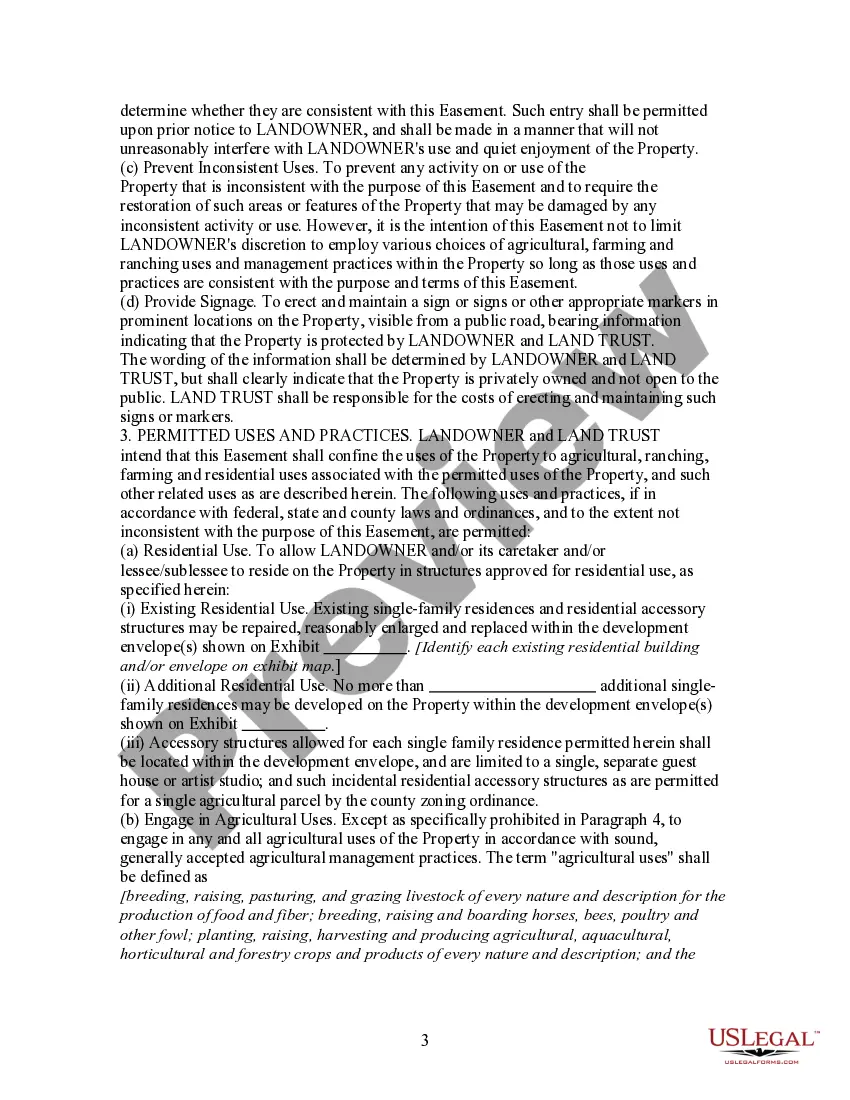
- Permitted uses: Lists allowed agricultural and residential activities on the property.
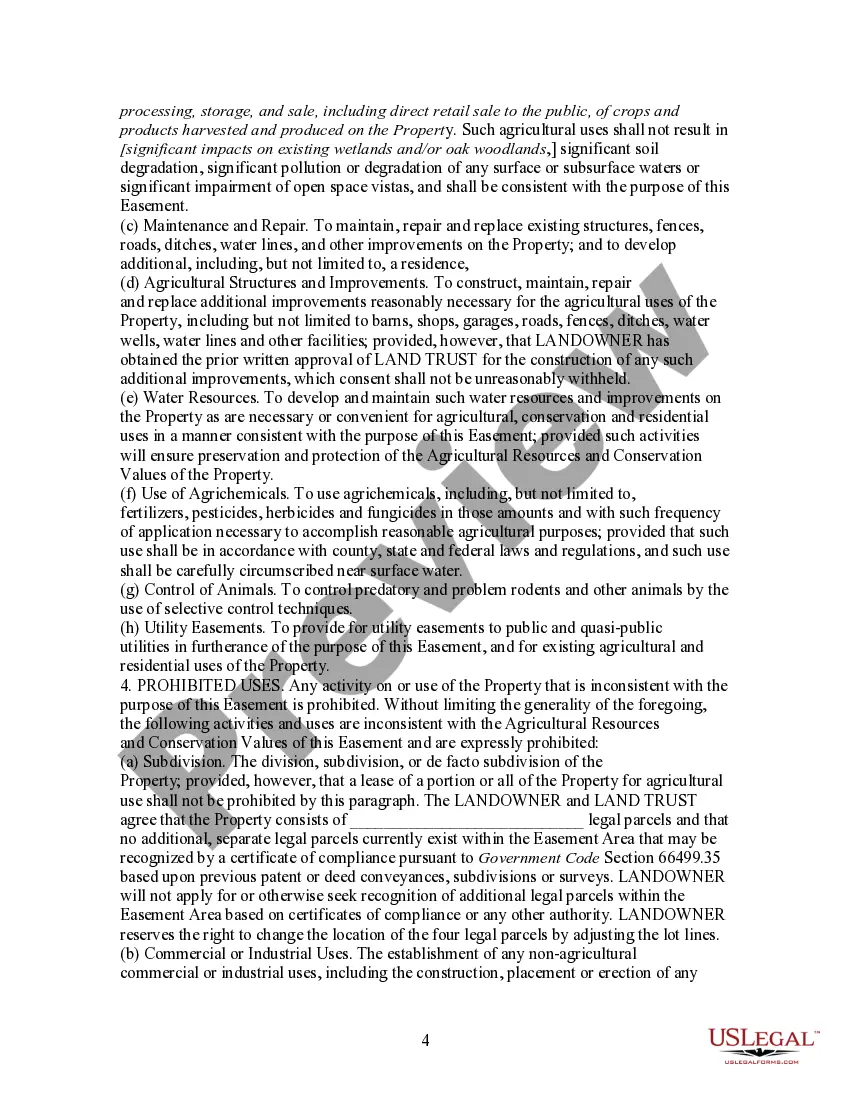
- Prohibited uses: Outlines activities that would conflict with the conservation values of the property.
- Reserved rights: Specifies rights retained by the landowner, such as water and mineral rights.
- Notice and approval: Process for notifying the land trust before initiating certain activities.
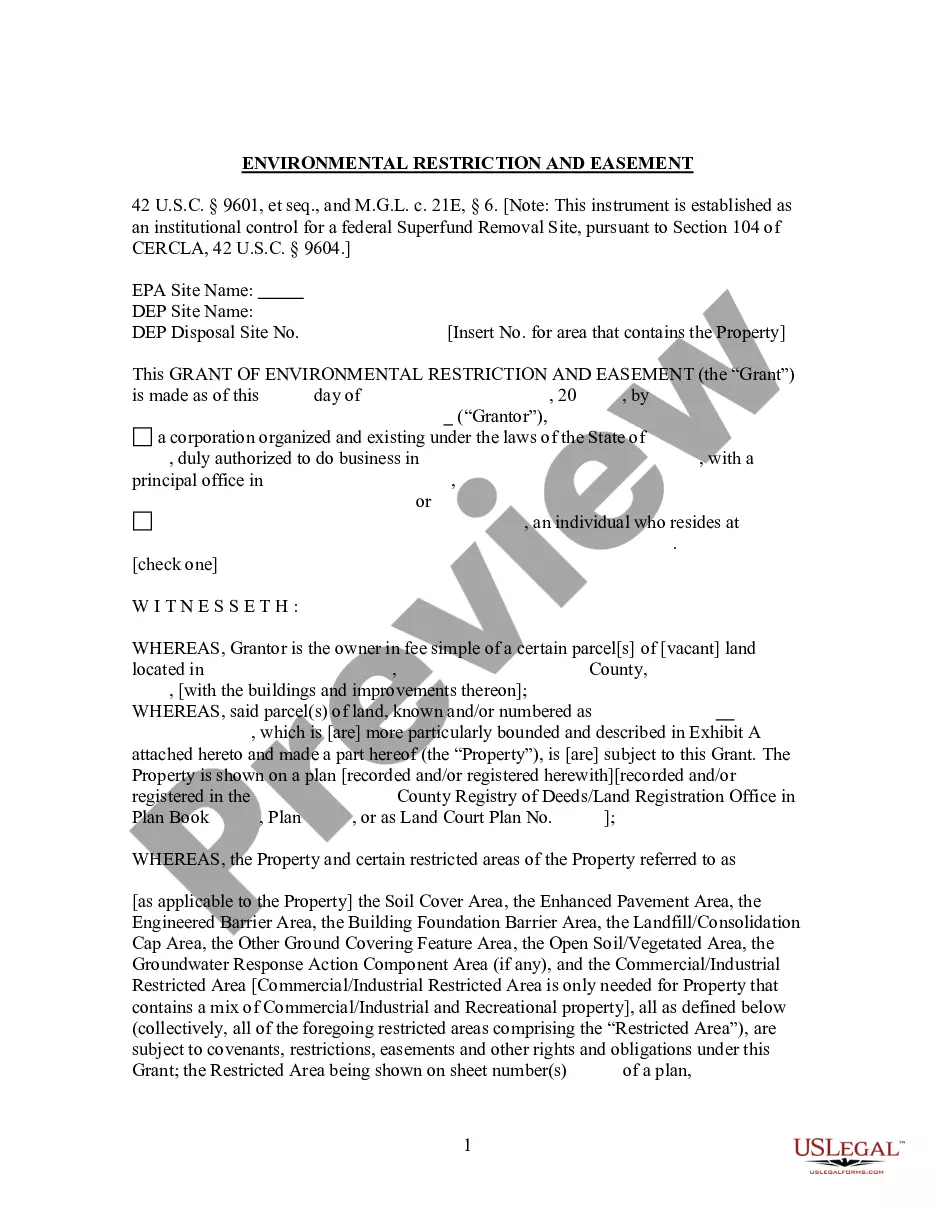
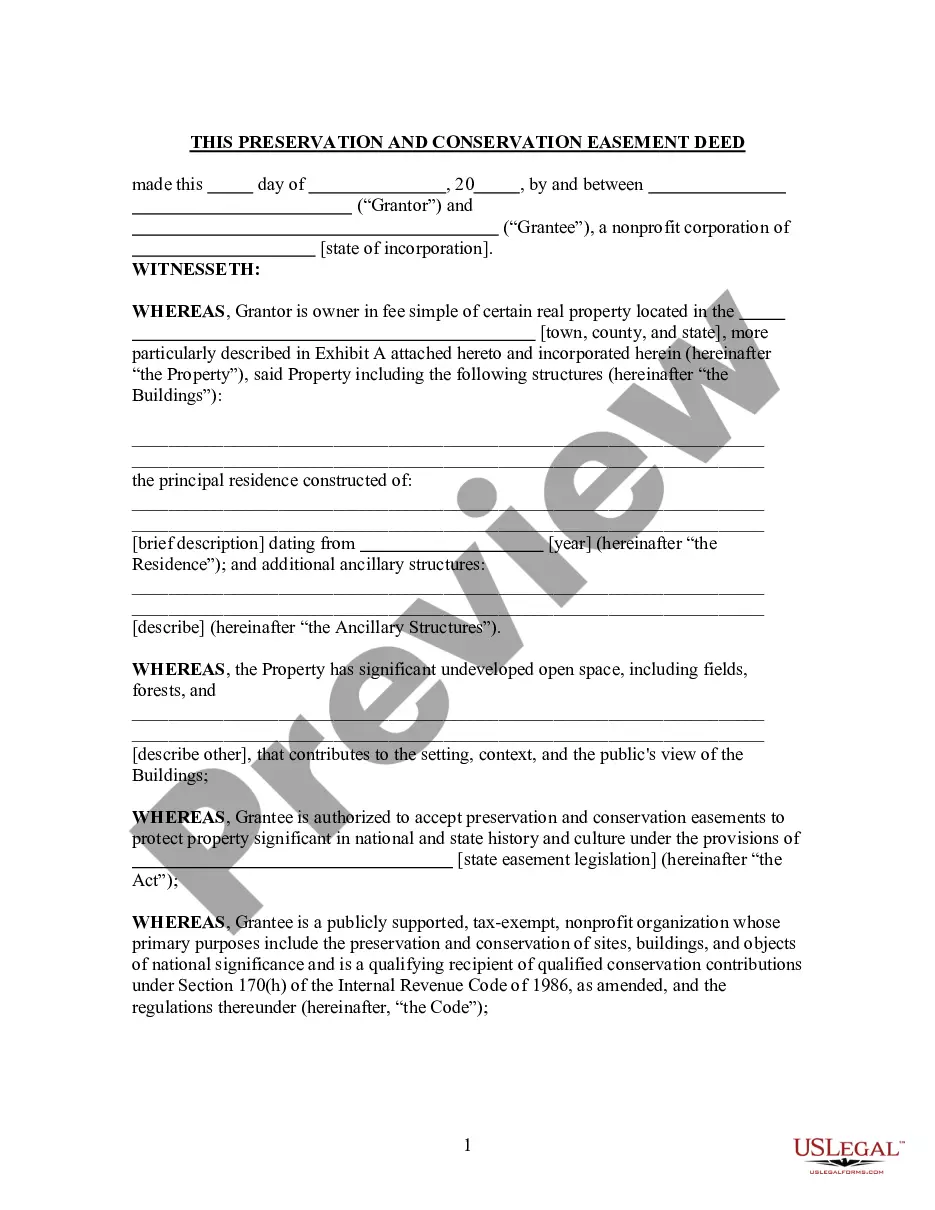
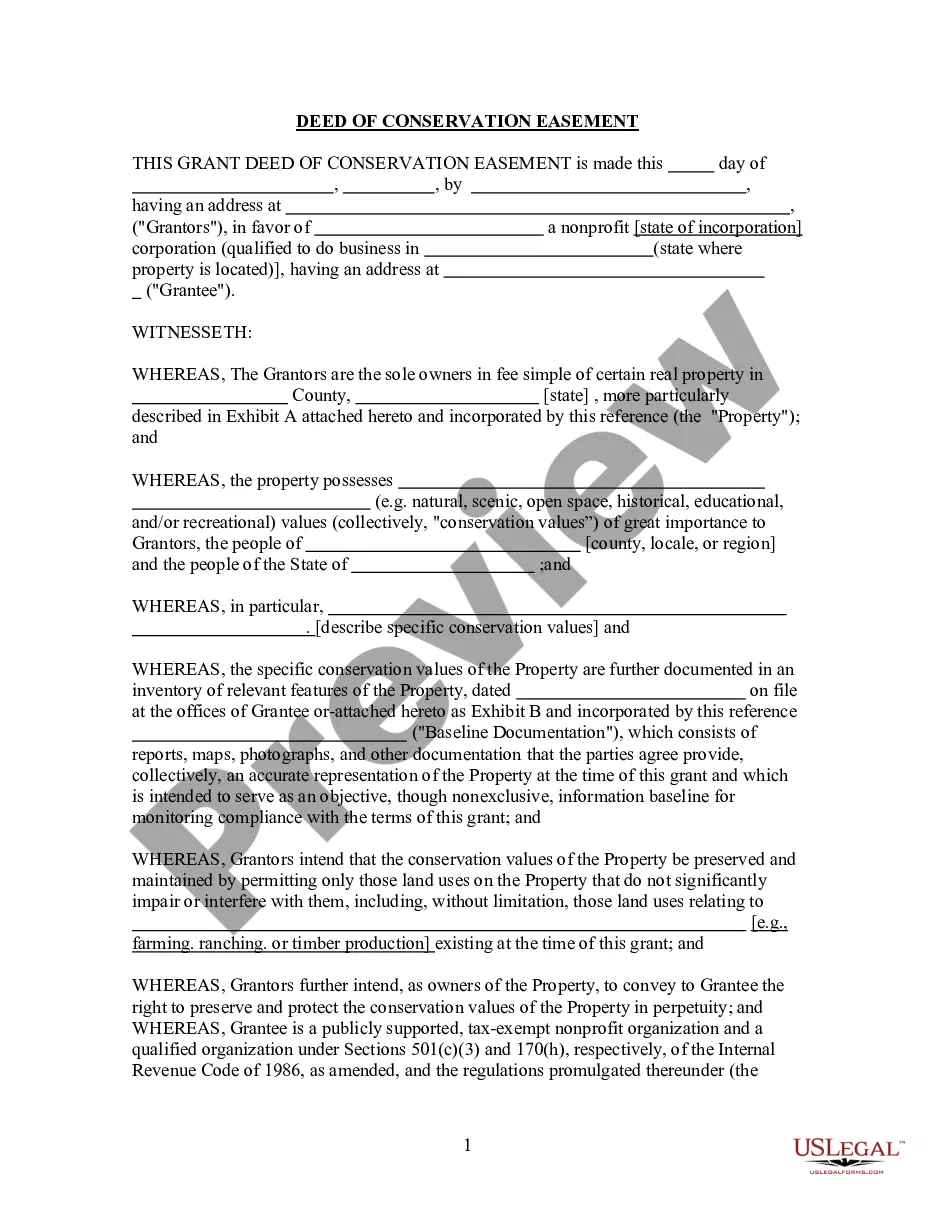
Situations where this form applies
This form is essential when a landowner or property owner wishes to ensure that their land's agricultural resources and unique characteristics are preserved. It is particularly relevant in situations where land might be developed or altered in ways that could harm its environmental value. Landowners looking to commit to sustainable practices and protect their land from incompatible uses should utilize this form.
Intended users of this form
- Landowners seeking to preserve environmental resources on their property.
- Agricultural producers looking to maintain agricultural practices in harmony with conservation efforts.
- Organizations or individuals involved in land trust initiatives.
- Farmers or ranchers interested in ensuring the longevity of their agricultural lands.
Instructions for completing this form
- Identify the parties involved, including the landowner and the land trust.
- Specify the property by providing an accurate description and land boundaries.
- Outline the conservation values and agricultural resources to be protected.
- Note the permitted and prohibited uses of the property.
- Include any reserved rights that the landowner wishes to maintain.
- Ensure both parties sign and date the agreement to validate the easement.
Notarization guidance
This form must be notarized to be legally valid. US Legal Forms provides secure online notarization powered by Notarize, allowing you to complete the process through a verified video call.
Get your form ready online
Our built-in tools help you complete, sign, share, and store your documents in one place.
Make edits, fill in missing information, and update formatting in US Legal Forms—just like you would in MS Word.
Download a copy, print it, send it by email, or mail it via USPS—whatever works best for your next step.
Sign and collect signatures with our SignNow integration. Send to multiple recipients, set reminders, and more. Go Premium to unlock E-Sign.
If this form requires notarization, complete it online through a secure video call—no need to meet a notary in person or wait for an appointment.
We protect your documents and personal data by following strict security and privacy standards.

Make edits, fill in missing information, and update formatting in US Legal Forms—just like you would in MS Word.

Download a copy, print it, send it by email, or mail it via USPS—whatever works best for your next step.

Sign and collect signatures with our SignNow integration. Send to multiple recipients, set reminders, and more. Go Premium to unlock E-Sign.

If this form requires notarization, complete it online through a secure video call—no need to meet a notary in person or wait for an appointment.

We protect your documents and personal data by following strict security and privacy standards.
Avoid these common issues
- Failing to clearly define the boundaries of the property.
- Not specifying all conservation values intended for preservation.
- Overlooking any specific local regulations that may apply.
- Neglecting to obtain necessary approvals before initiating activities.
Benefits of using this form online
- Convenience of easily downloading and customizing the form.
- Access to templates drafted by licensed attorneys to ensure legal compliance.
- Time-saving features that allow for quick completion.
- Safe storage of digital documents for future reference.
Legal use & context
- This easement is enforceable under California law and protects the agricultural resources of the property.
- All parties must adhere to the terms outlined in the easement for it to remain valid.
- Violations of agreement terms can lead to legal disputes, remedied through arbitration or court intervention.
Key takeaways
- The conservation easement is a tool for preserving valuable land resources.
- Landowners retain certain rights while committing to conservation goals.
- Understanding permitted and prohibited uses is crucial for compliance.
- Proper completion and adherence to legal requirements are essential for enforceability.
Looking for another form?
Form popularity
FAQ
To record a conservation easement, you must prepare a written agreement that outlines the terms and conditions of the easement. Once finalized, you file this document with your local county recorder's office to ensure public notice. Using platforms like uslegalforms can simplify this process, helping you navigate the legal requirements associated with California Conservation Easement For Specific Resource Preservation.
A conservation easement boundary defines the specific area within which the restrictions of the easement apply. This boundary helps protect the designated resources, like habitats or scenic views, as outlined in the California Conservation Easement For Specific Resource Preservation. Understanding these boundaries is essential for landowners as it ensures compliance and helps maintain the intended ecological benefits.
A conservation easement is a legal agreement that limits the development and use of a property to protect its conservation values. For instance, if a landowner wants to preserve a forest or a riverbank, they can place a conservation easement on their property. This allows them to retain ownership while ensuring that the land remains undeveloped in line with California Conservation Easement For Specific Resource Preservation objectives.
To report a conservation easement, you will need to fill out specific IRS forms, detailing the transaction. This can include submitting a Form 8283 for noncash charitable contributions, particularly when participating in a California Conservation Easement For Specific Resource Preservation. Using platforms like USLegalForms can simplify the process, providing you with necessary templates and guidance on proper reporting.
Exiting a conservation easement is not straightforward, but it is possible under certain conditions. If a California Conservation Easement For Specific Resource Preservation no longer fulfills its original purpose, landowners may seek legal avenues to modify or release the easement. Consulting with a local attorney who specializes in these matters is advisable to explore potential options.
In Georgia, a conservation easement operates similarly to those in California, focusing on preserving specific resources. A California Conservation Easement For Specific Resource Preservation helps landowners maintain their property while ensuring environmental protection. These easements provide tax benefits while supporting conservation efforts.
Indeed, a conservation easement is classified as a reportable transaction. If you donate or sell a California Conservation Easement For Specific Resource Preservation, you will need to report it to the IRS. This includes details about the nature of the transaction, which helps determine any tax benefits you may qualify for.
Yes, in many cases, conservation easements are considered reportable transactions. When you engage in a California Conservation Easement For Specific Resource Preservation, it may trigger reporting requirements on your tax returns. It is crucial to keep accurate records of the easement and consult with a tax professional for guidance on compliance.
There are several types of conservation easements, including agricultural easements, historic preservation easements, and habitat conservation easements. Each type has specific purposes and restrictions related to protecting lands of unique value. Familiarizing yourself with these varieties supports your decisions regarding California Conservation Easement For Specific Resource Preservation.
Blocking an easement typically involves legal challenges and depends on the specific terms of the easement agreement. Property owners may seek to challenge the easement in court, but they must provide valid grounds for doing so. Consulting with experts knowledgeable in California Conservation Easement For Specific Resource Preservation can help evaluate your situation.