California Grant Deed from Individual to Trust
What is this form?
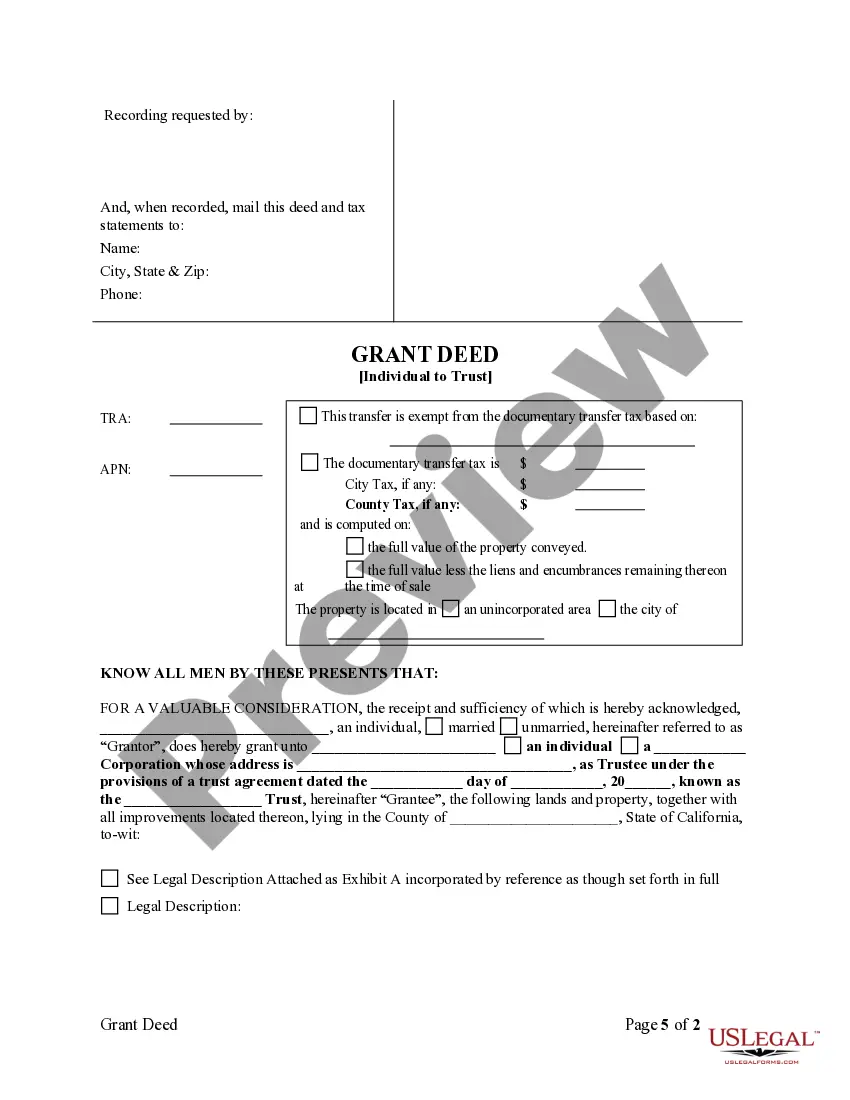
The Grant Deed from Individual to Trust is a legal document that allows an individual (grantor) to transfer ownership of a specific property to a trust (grantee). This form ensures that the grantor conveys and warrants the property rights, while specifying that all oil, gas, and mineral rights are reserved. It is essential for individuals looking to transfer property into a trust, distinguishing it from other deeds like Quitclaim Deeds or Warranty Deeds where the conveyance terms may differ.
Key components of this form
- Identification of the grantor and grantee.
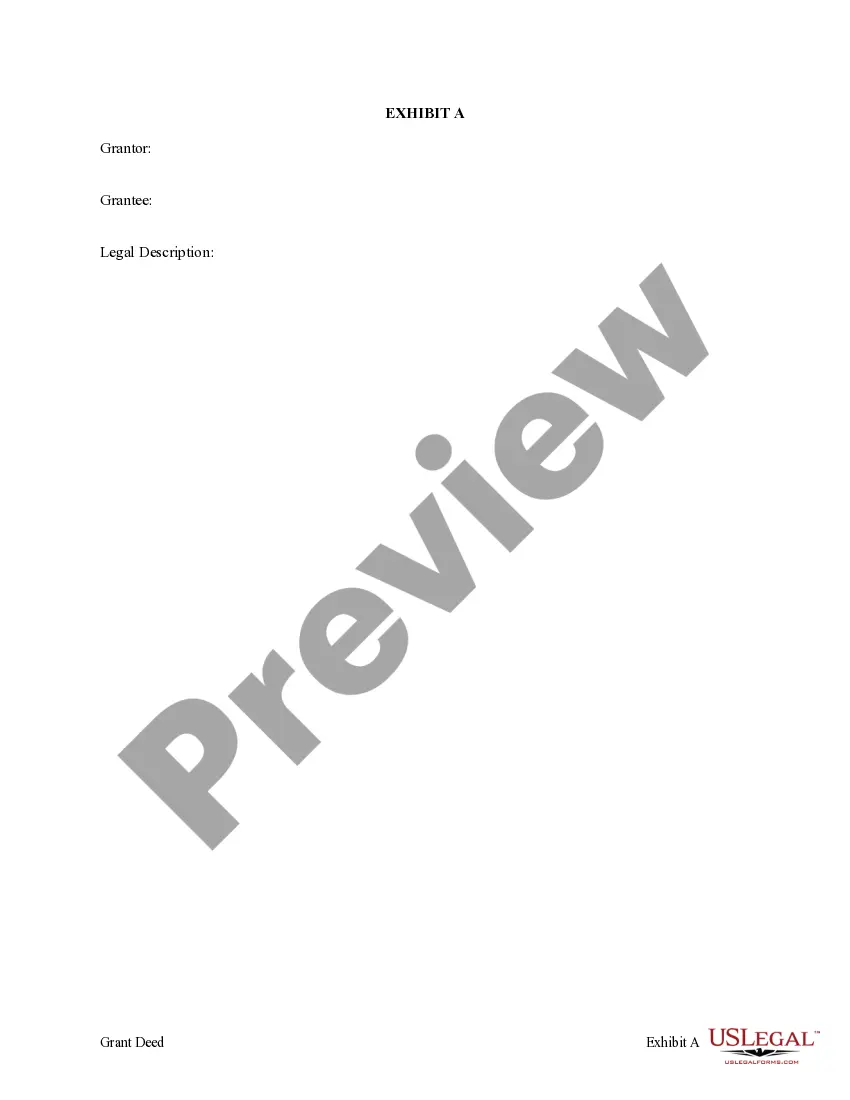
- Description of the property being transferred.
- Reservation of oil, gas, and mineral rights.
- Legal compliance with state statutory laws.
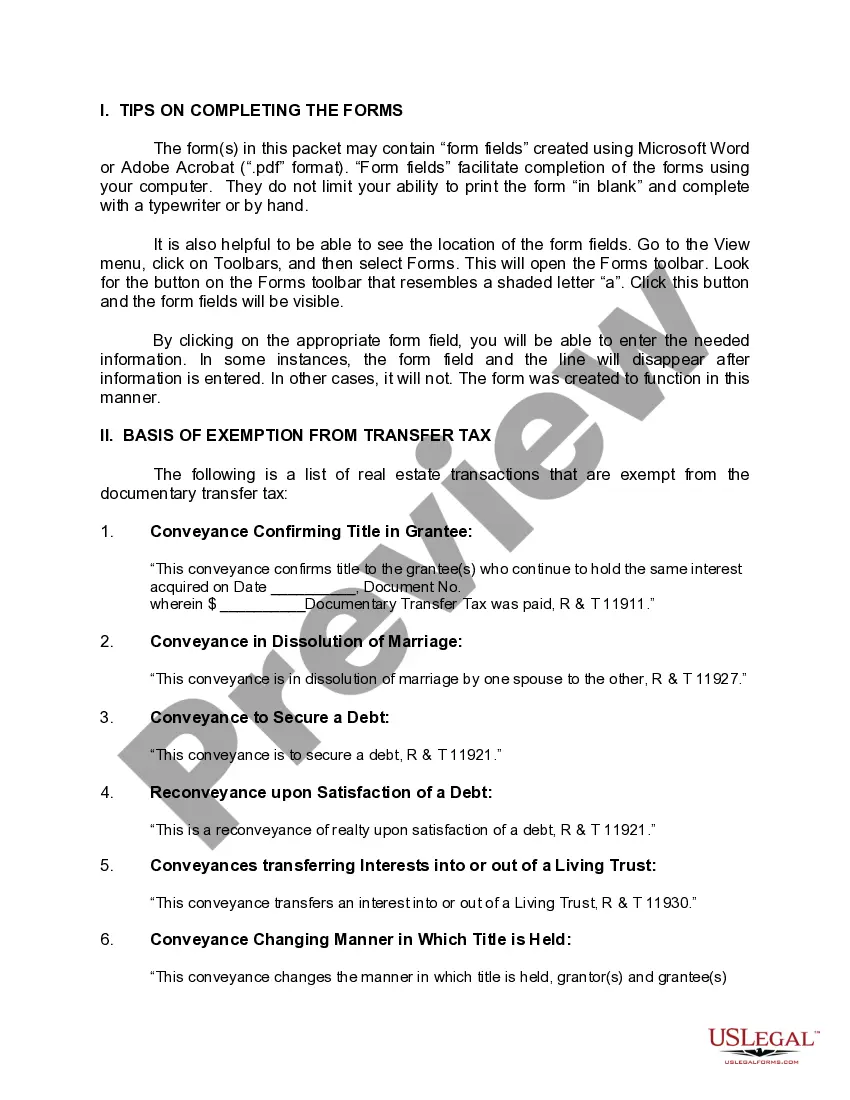
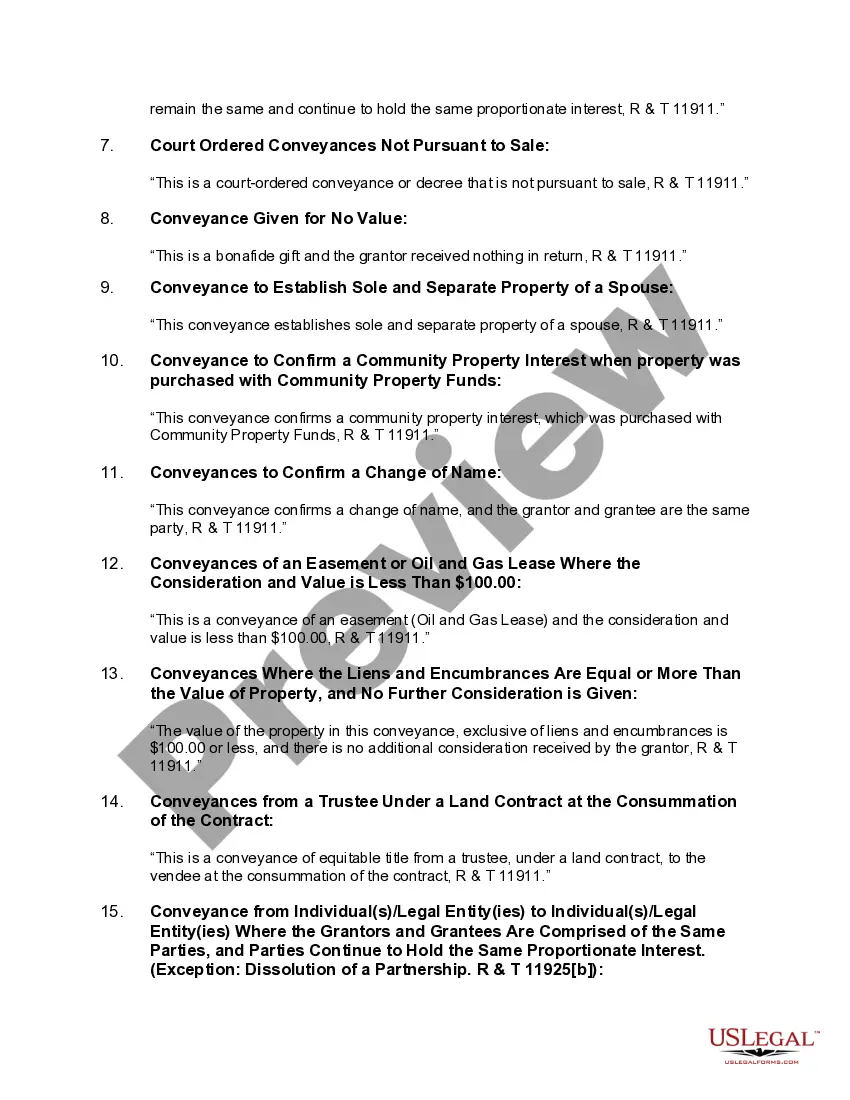
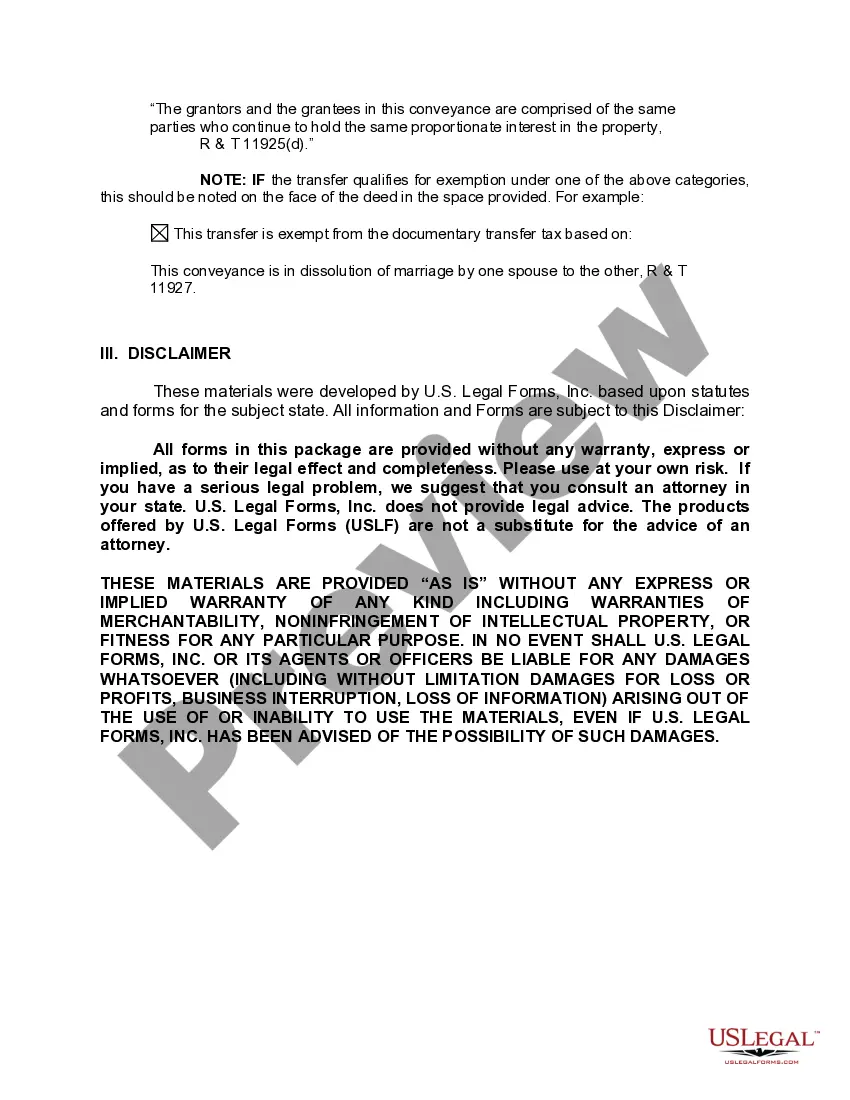
- Documentary transfer tax exemption options.


When this form is needed
This form is used when an individual wishes to transfer real estate into a trust, often for estate planning purposes. It is particularly useful when transferring a property to ensure that it is managed according to the trust's terms after the grantor's passing.
Who this form is for
- Individuals looking to place property into a trust for estate planning.
- Property owners who wish to transfer their real estate holdings while retaining control over the assets.
- Trustees managing property assets on behalf of a trust.
Steps to complete this form
- Identify the parties involved: the grantor (individual) and grantee (trust).
- Specify the legal description of the property to be transferred.
- Indicate any reserved rights, such as oil, gas, and mineral rights.
- Complete any required statements regarding the exemption from transfer tax.
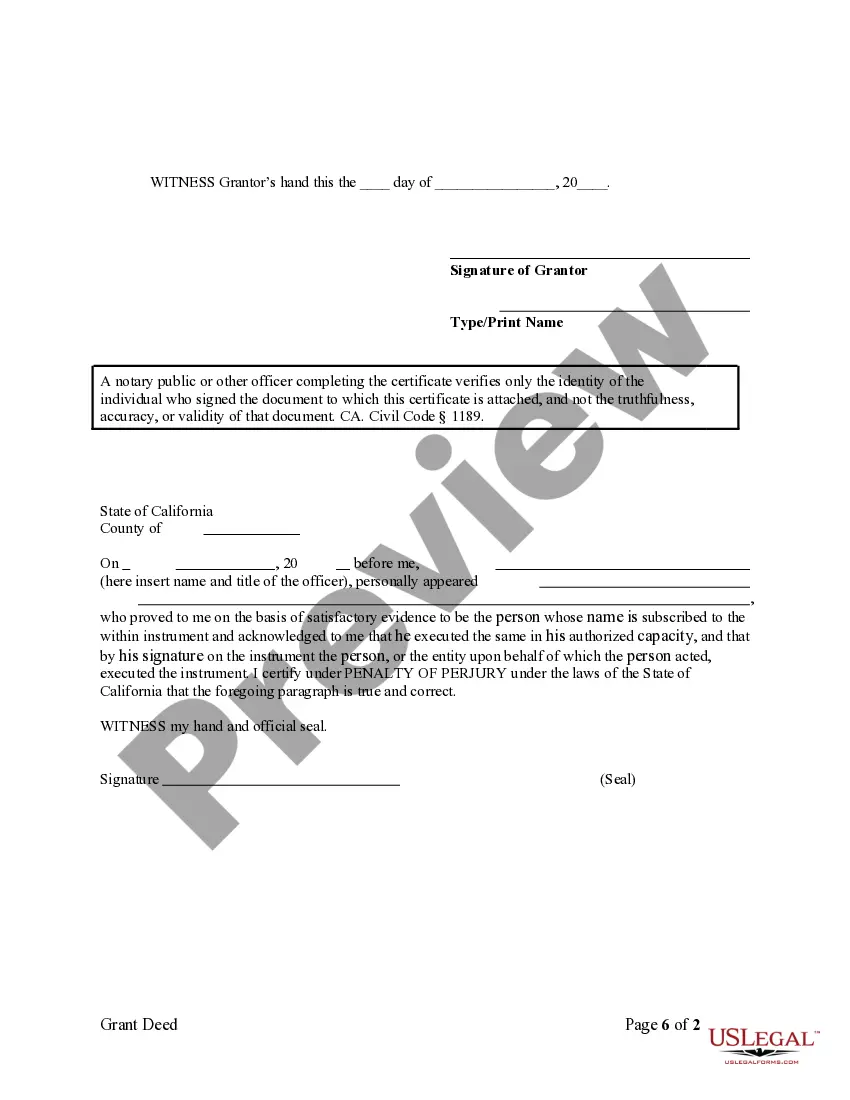
- Sign the deed in front of a notary, if required by local law.
Does this form need to be notarized?
This document requires notarization to meet legal standards. US Legal Forms provides secure online notarization powered by Notarize, allowing you to complete the process through a verified video call, available 24/7.
Get your form ready online
Our built-in tools help you complete, sign, share, and store your documents in one place.
Make edits, fill in missing information, and update formatting in US Legal Forms—just like you would in MS Word.
Download a copy, print it, send it by email, or mail it via USPS—whatever works best for your next step.
Sign and collect signatures with our SignNow integration. Send to multiple recipients, set reminders, and more. Go Premium to unlock E-Sign.
If this form requires notarization, complete it online through a secure video call—no need to meet a notary in person or wait for an appointment.
We protect your documents and personal data by following strict security and privacy standards.

Make edits, fill in missing information, and update formatting in US Legal Forms—just like you would in MS Word.

Download a copy, print it, send it by email, or mail it via USPS—whatever works best for your next step.

Sign and collect signatures with our SignNow integration. Send to multiple recipients, set reminders, and more. Go Premium to unlock E-Sign.

If this form requires notarization, complete it online through a secure video call—no need to meet a notary in person or wait for an appointment.

We protect your documents and personal data by following strict security and privacy standards.
Common mistakes to avoid
- Failing to accurately describe the property being transferred.
- Not reserving the necessary rights (oil, gas, minerals) if intended.
- Omitting signatures or notaries, which may invalidate the deed.
- Not checking for state-specific requirements that may apply.
Benefits of completing this form online
- Convenient access to ready-to-use legal templates.
- Editability to customize the form for specific needs.
- Reliability due to the forms being drafted by licensed attorneys.
Looking for another form?


Form popularity
FAQ
To file a California Grant Deed from Individual to Trust, start by preparing the grant deed form with accurate details about the property and the trust. After filling out the form, ensure it is signed by the grantor in the presence of a notary public. Next, file the completed grant deed with the local county recorder's office in the county where the property is located. For a streamlined process, consider using US Legal Forms to access templates and guidance specific to California transactions.
To transfer a California Grant Deed from Individual to Trust, first, you need to prepare a new grant deed that includes the legal description of the property and the name of the trust. Next, sign the deed before a notary public to ensure its validity. Once signed, you must file the deed with the county recorder's office where the property is located. This process effectively transfers the property into the trust, providing potential benefits like avoiding probate and simplifying estate management.
Yes, you can transfer ownership of a trust, subject to the terms of the trust document. This process can include assigning property titles such as real estate using a California Grant Deed from Individual to Trust. It is essential to review the trust's provisions and consult with a legal expert to ensure proper execution. This way, you can effectively manage how your assets are distributed according to your wishes.
Changing your suppressor from individual ownership to a trust is a viable option. You will need to complete the necessary paperwork and use a California Grant Deed from Individual to Trust for any associated property. This process helps streamline the management and transferability of your suppressor under the terms of the trust. Always check the latest regulations to ensure compliance.
Transferring an individual tax stamp to a trust is not a standard process. Typically, tax stamps apply to property transfers, and using a California Grant Deed from Individual to Trust can facilitate the ownership transfer of real estate. Speak to a tax professional to understand any implications regarding tax stamps for your specific situation. Proper guidance will help you navigate any complexities involved.
Yes, you can transfer an individual account to a trust using a California Grant Deed from Individual to Trust. This deed allows you to formally change the title of your property into the trust's name. By doing so, you ensure that your assets are managed according to your wishes. It's important to follow proper legal procedures to make this transition seamless.
Yes, you can transfer property from an individual to a trust in California. This is often accomplished by executing a California Grant Deed from Individual to Trust. It's important to ensure that the document is properly filled out, signed, and recorded with the local county office to make sure the transfer is legally valid and enforceable.
To transfer a deed to a living trust in California, begin by drafting your living trust agreement. After establishing the trust, complete a California Grant Deed, clearly indicating that the property is being transferred to the living trust. Once signed and notarized, record the deed with the county recorder's office to ensure proper legal standing.
While putting your house in a trust in California has benefits, there are some disadvantages to consider. Transferring property to a trust may involve upfront costs and require ongoing management. Additionally, if not set up properly, a trust can complicate estate matters or tax situations. It is wise to consult a professional for personalized advice when considering a California Grant Deed from Individual to Trust.
To put your property in a trust in California, start by establishing the trust itself, which may require legal assistance for best practices. Once you have the trust document, you will need to execute a California Grant Deed that transfers ownership of the property to the trust. Remember to record this deed with the county recorder to finalize the process and protect your assets under the trust.