California Grant Deed - Trust to Individual
What this document covers
The Grant Deed - Trust to Individual form is a legal document used when a trust, acting as the grantor, conveys property ownership to an individual, who serves as the grantee. This form is essential for formalizing the transfer of real estate from a trust to an individual, ensuring that the deed meets state laws while affirming the grantor's intent to transfer property rights securely and legally.
What’s included in this form
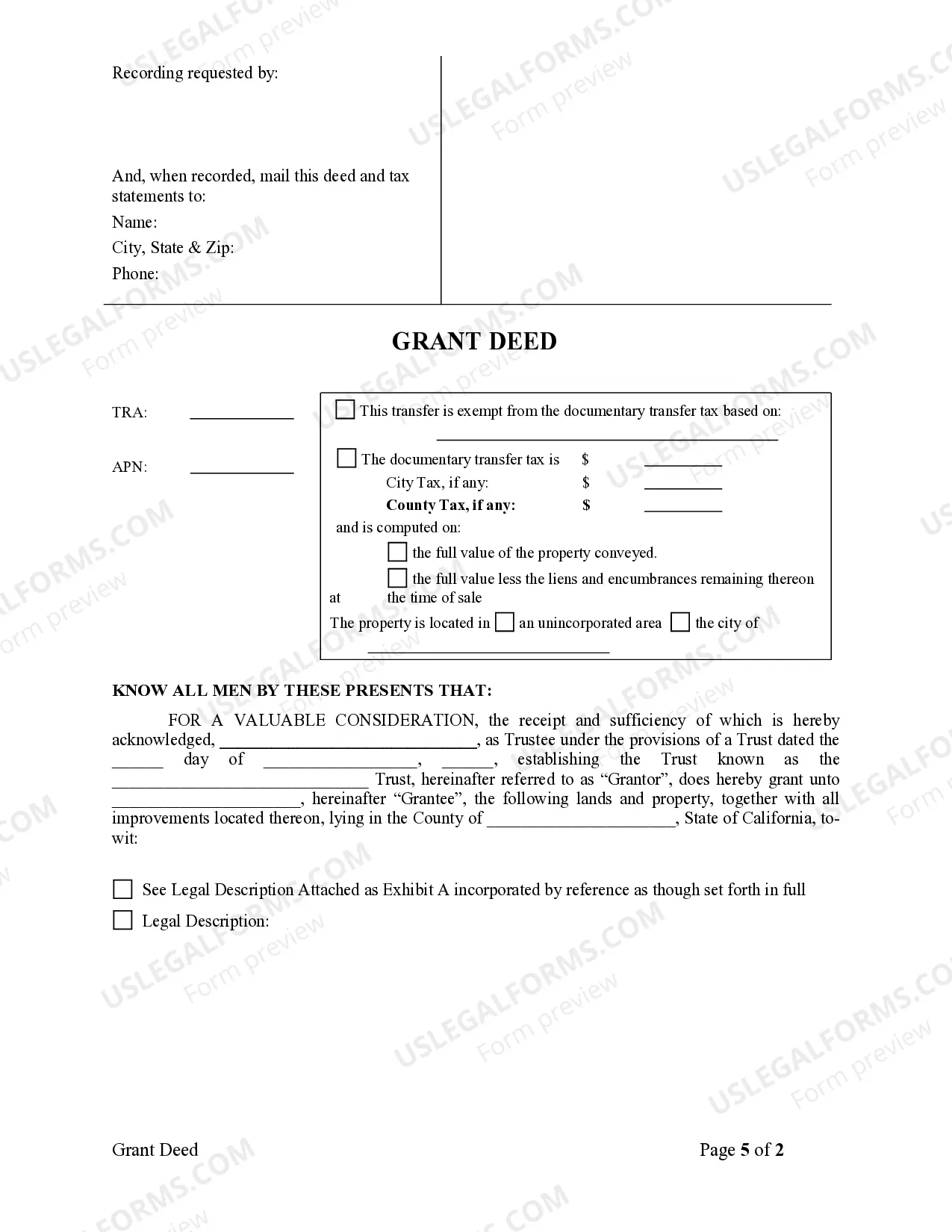
- Identification of the grantor (trust) and the grantee (individual).
- Description of the property being transferred, including legal description.
- Warranties provided by the grantor regarding the title of the property.
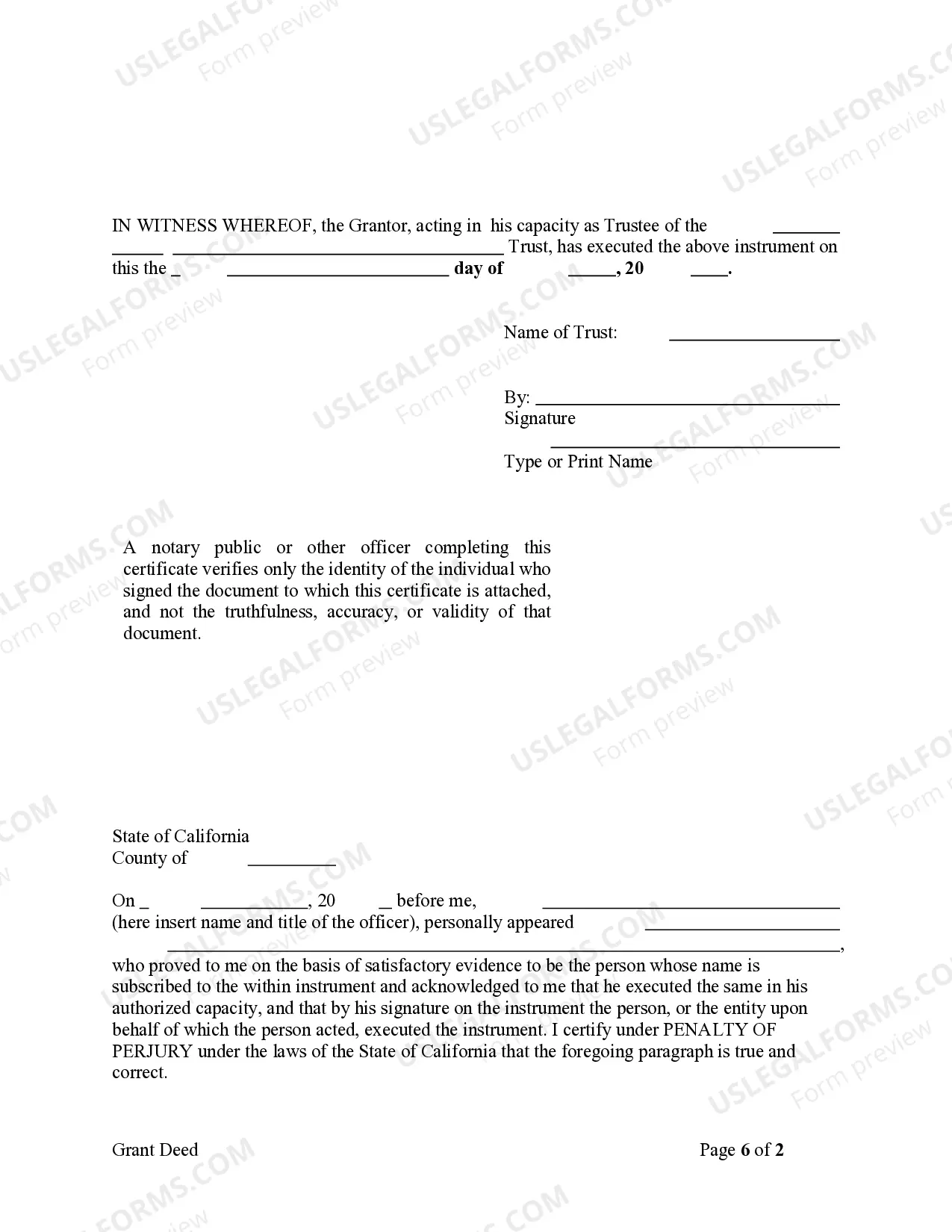
- Signature lines for the grantor (on behalf of the trust) and the notary.
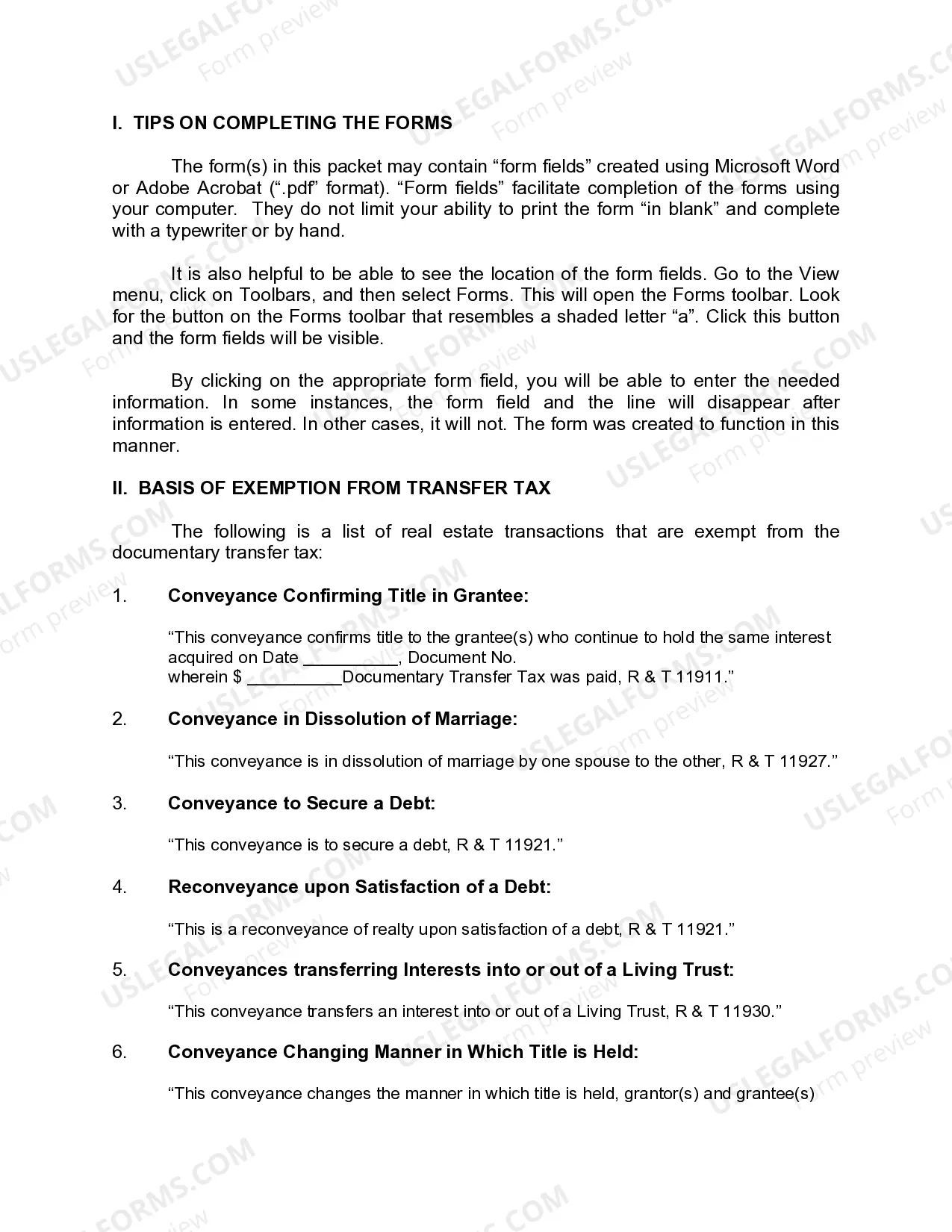
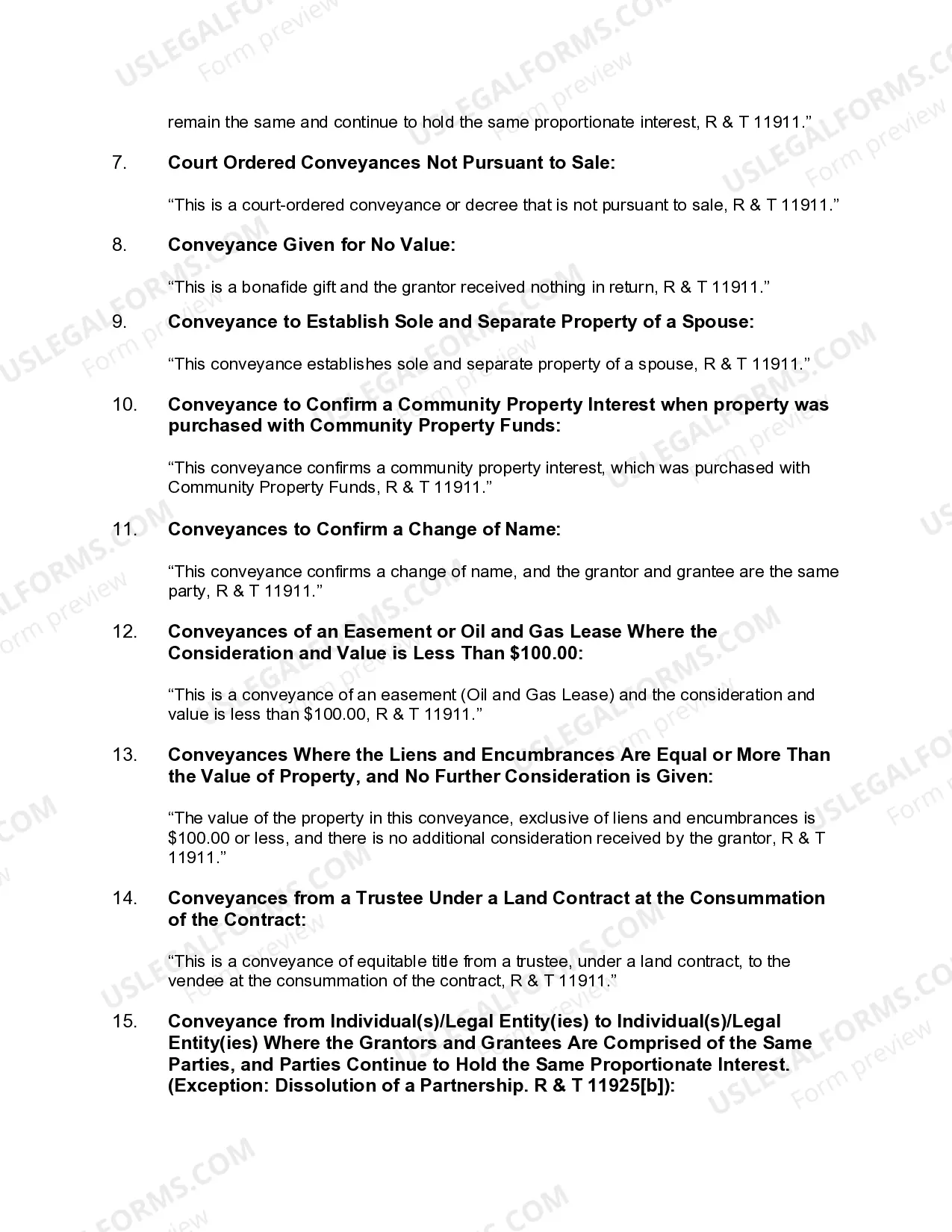
- Space to indicate any exemptions from documentary transfer tax.



Common use cases
This form should be used when a trust intends to transfer ownership of real estate to an individual. Common scenarios include settling an estate, transferring property to a beneficiary, or managing property held in a trust as part of a financial plan.
Who can use this document
- Trustees responsible for managing a trust's assets.
- Individuals receiving property from a trust as beneficiaries.
- Lawyers and legal representatives involved in estate planning or property transactions.
Instructions for completing this form
- Identify the trust as the grantor and the individual as the grantee.
- Provide a detailed legal description of the property being transferred.
- Include the date of the transfer and any relevant documentation numbers.
- Have the trust's authorized representative sign the deed.
- Get the form notarized to ensure its legal validity.
- Note any applicable tax exemptions by referencing the relevant code section.
Does this form need to be notarized?
This form must be notarized to be legally valid. US Legal Forms provides secure online notarization powered by Notarize, allowing you to complete the process through a verified video call.
Get your form ready online
Our built-in tools help you complete, sign, share, and store your documents in one place.
Make edits, fill in missing information, and update formatting in US Legal Forms—just like you would in MS Word.
Download a copy, print it, send it by email, or mail it via USPS—whatever works best for your next step.
Sign and collect signatures with our SignNow integration. Send to multiple recipients, set reminders, and more. Go Premium to unlock E-Sign.
If this form requires notarization, complete it online through a secure video call—no need to meet a notary in person or wait for an appointment.
We protect your documents and personal data by following strict security and privacy standards.

Make edits, fill in missing information, and update formatting in US Legal Forms—just like you would in MS Word.

Download a copy, print it, send it by email, or mail it via USPS—whatever works best for your next step.

Sign and collect signatures with our SignNow integration. Send to multiple recipients, set reminders, and more. Go Premium to unlock E-Sign.

If this form requires notarization, complete it online through a secure video call—no need to meet a notary in person or wait for an appointment.

We protect your documents and personal data by following strict security and privacy standards.
Common mistakes
- Failing to provide a complete legal description of the property.
- Not obtaining the required signatures and notarization.
- Overlooking the need to indicate any exemptions from transfer tax.
- Using outdated or incorrect forms that do not comply with current laws.
Benefits of completing this form online
- Immediate access to the latest legal form templates drafted by attorneys.
- Easy to download and fill out, ensuring convenience in property transactions.
- Ability to customize the form as needed to fit specific circumstances.
- Secure and organized storage of legal documents for future reference.
Looking for another form?

Form popularity
FAQ
Yes, a trust can gift property to an individual, but this action must align with the terms set forth in the trust document. The trustee should ensure that all legal procedures are followed to avoid disputes. Gifting property may also have tax implications, which should be carefully considered. To facilitate the gifting process through a California Grant Deed - Trust to Individual, consult a knowledgeable legal platform.
Yes, a trustee can sell trust property to themselves, but strict guidelines must be followed to avoid conflicts of interest. The sale must be at fair market value, and proper disclosures to the other beneficiaries are necessary. Engaging in these transactions requires care and legal guidance to ensure compliance with California laws regarding trust properties. Consider using uslegalforms as a resource for navigating these complexities.
While a trustee can distribute trust assets to themselves, this must be clearly allowed by the trust agreement. Transparency and fairness are crucial, as self-distribution may face scrutiny from other beneficiaries. It's wise to maintain clear records of any distributions to ensure compliance with trustee duties and legal standards. If you're unsure, consult a legal expert.
Yes, a trustee can sell trust property in California, provided they comply with the terms of the trust agreement. The trustee must act in the best interest of the beneficiaries and manage the sale fairly. Proper documentation and adherence to legal requirements are necessary to execute the sale effectively. For guidance on these transactions, consider leveraging platforms like uslegalforms.
To transfer property from a trust to an individual in California, the trustee must execute a California Grant Deed. This process typically includes preparing the deed, signing it in front of a notary, and then recording it with the county recorder’s office. It's essential to follow these steps accurately to ensure a smooth transfer of ownership. Utilizing a reliable legal service can simplify this process.
To remove someone from a grant deed in California, you typically need to complete a Grant Deed that specifies the removal. This legal step requires clear documentation and the agreement of all parties involved. Ensuring everything is correctly executed is crucial for maintaining a clear title. Using US Legal Forms can efficiently guide you through the process of creating the necessary paperwork.
The best way to transfer property title between family members is through a California Grant Deed. This approach is simple and ensures everything is recorded properly. Using a Grant Deed eliminates uncertainties about ownership and maintains a clear title. Resources available on platforms like US Legal Forms can help you draft this document correctly.
Yes, you can transfer a deed without an attorney in California, especially when using a California Grant Deed. The process is straightforward and can often be completed by filling out the proper forms. However, it's wise to ensure that all legal requirements are met to avoid complications later. Platforms like US Legal Forms provide resources and templates to guide you through this process easily.
To transfer property to a family member, a California Grant Deed is often the best option. This deed simplifies the transfer process and provides necessary protections for both parties. Additionally, it keeps the title clear and maintains a straightforward record of ownership. Consider using platforms like US Legal Forms to create your Grant Deed efficiently.
The most common way to transfer ownership in California is through a California Grant Deed. This legal document allows you to officially convey property from one party to another. By using a Grant Deed, you ensure that the title remains clear, and the recipient receives full legal rights to the property. It’s essential to properly execute this deed to avoid future legal issues.