Arkansas Warranty Deed from Individual to Individual
Understanding this form
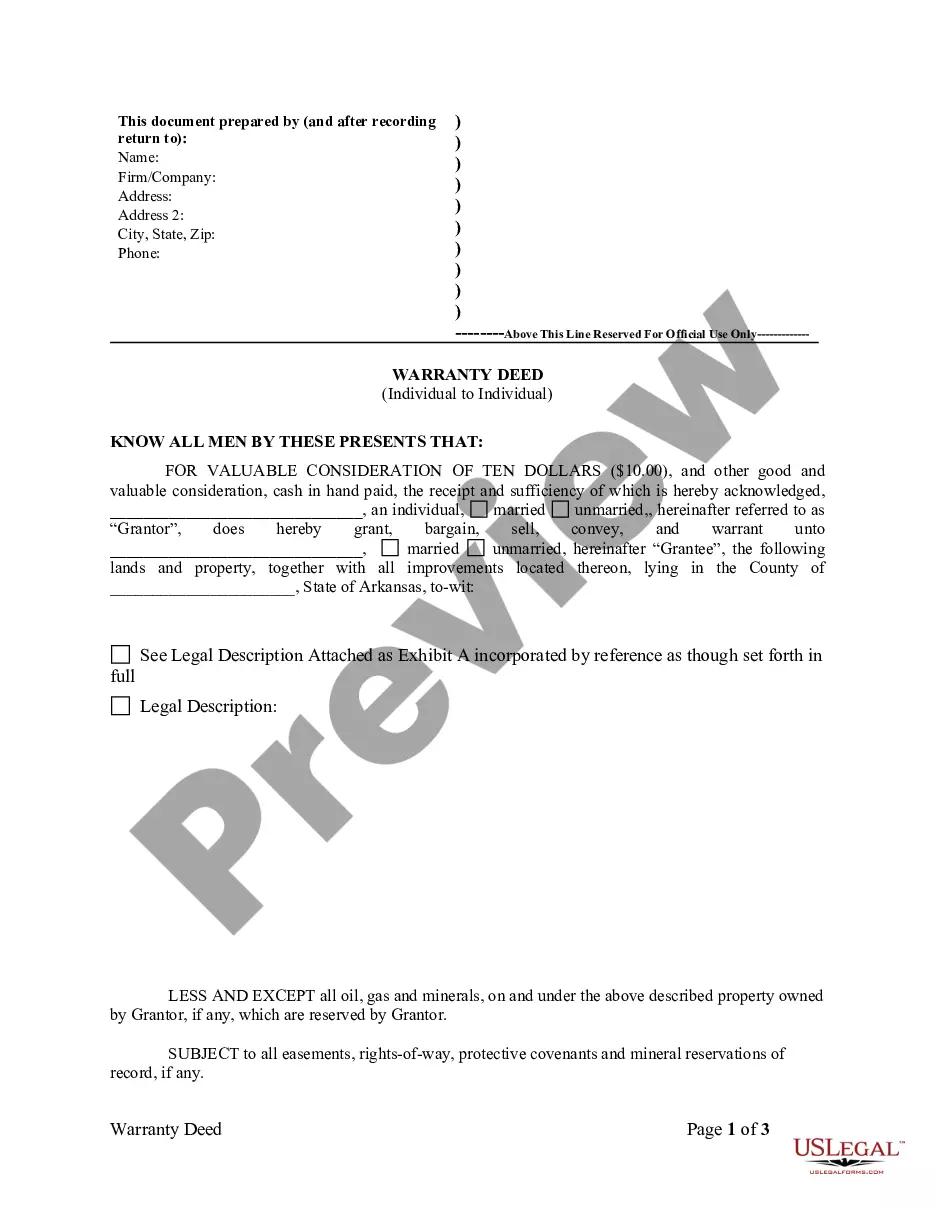
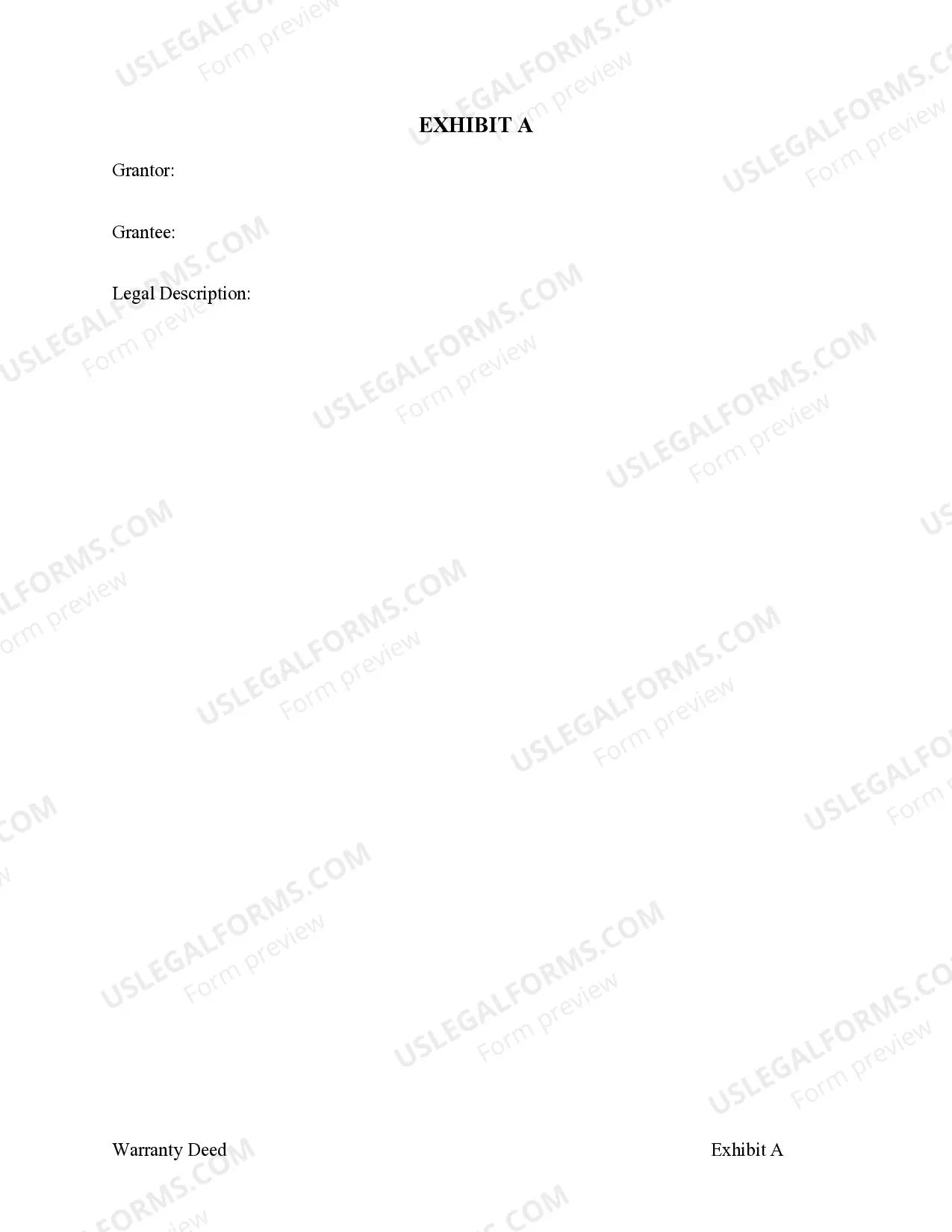
The Warranty Deed from Individual to Individual is a legal document used to transfer ownership of a property from one individual (the Grantor) to another individual (the Grantee). It legally guarantees that the Grantor has the right to sell the property and assures the Grantee of a clear title, meaning the property is free from any encumbrances that are not disclosed. This specific Warranty Deed serves individuals and is distinct from other deeds, such as Quitclaim Deeds, which do not provide warranties about the title.
Main sections of this form
- Identification of the Grantor and Grantee
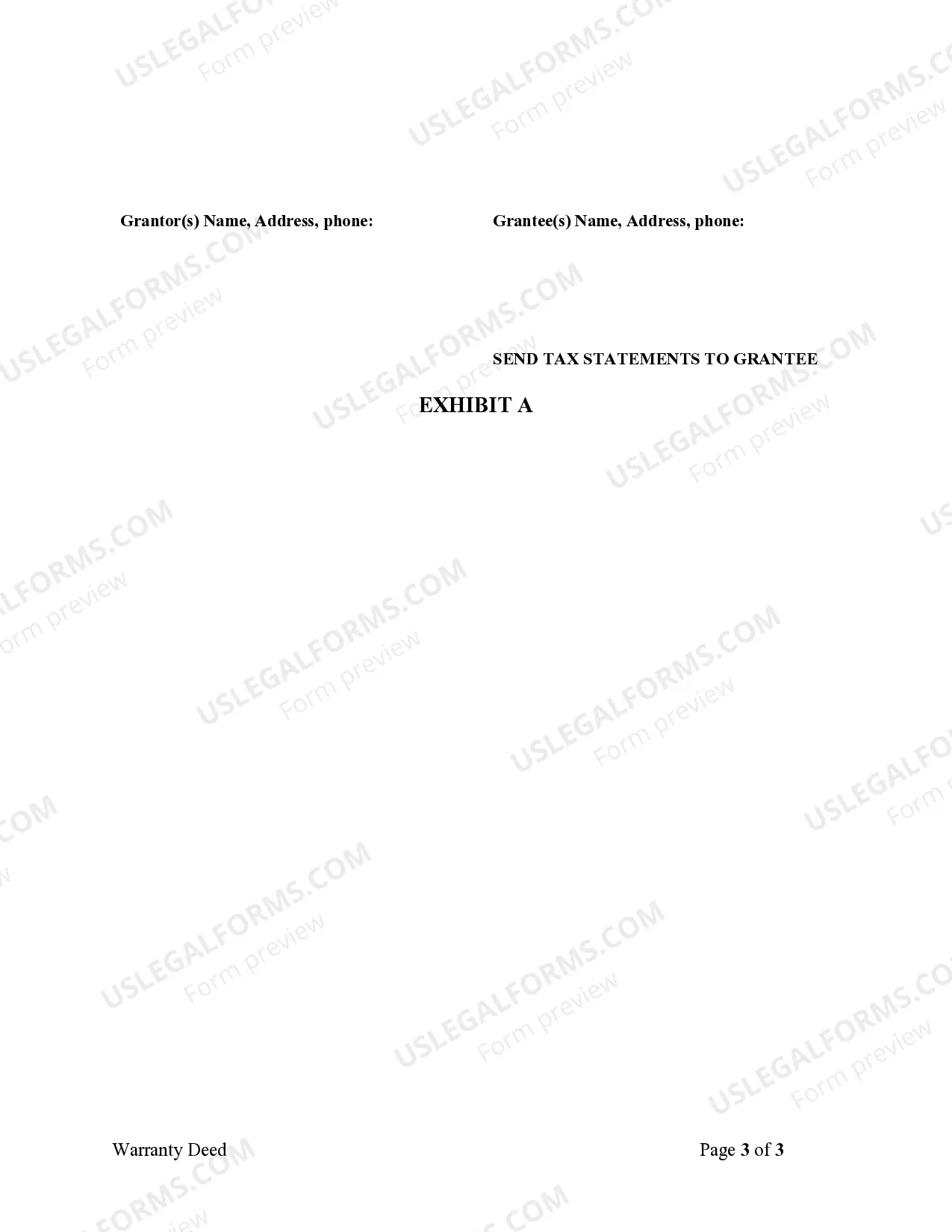
- Legal description of the property being transferred
- Statement of reservation regarding oil, gas, and mineral rights
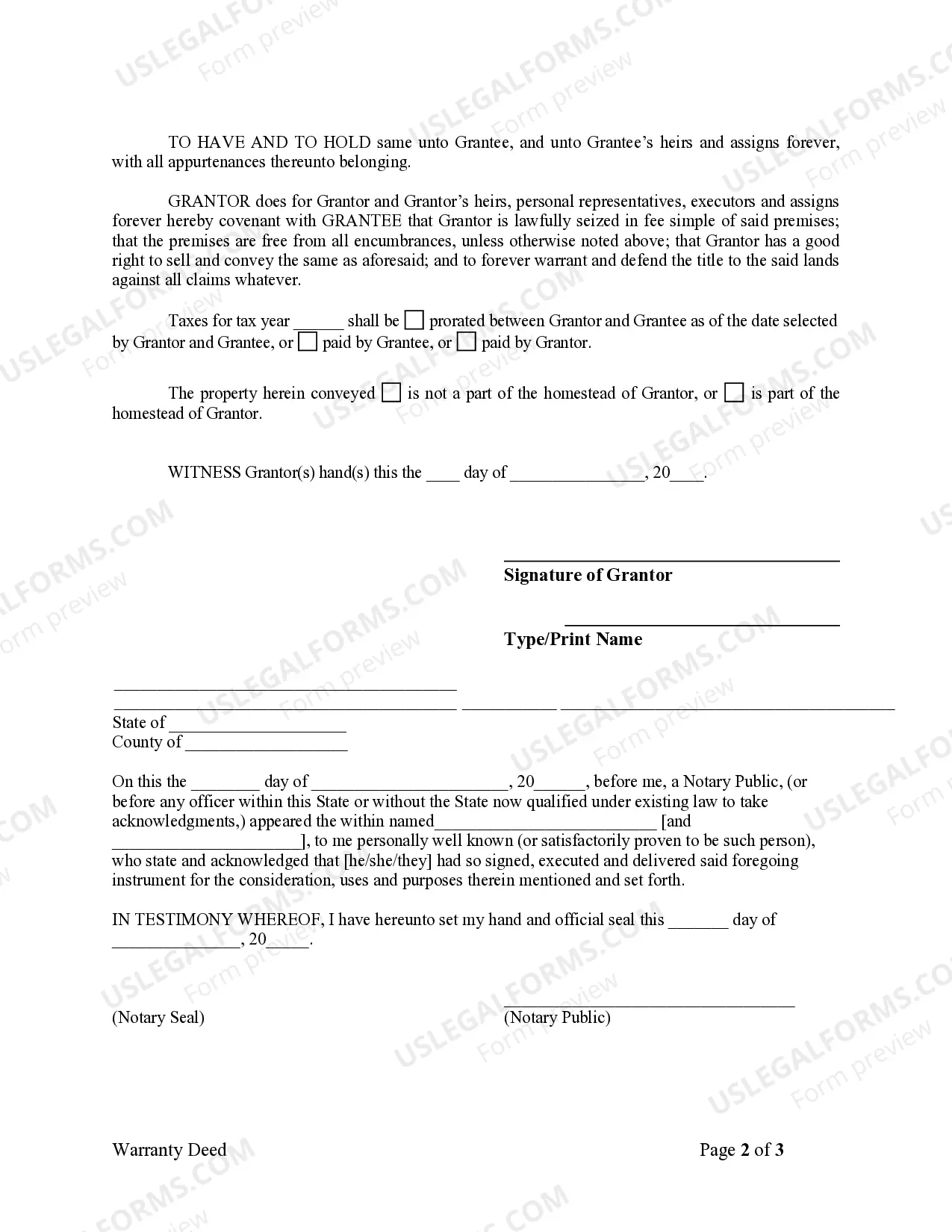
- Assurances about title ownership and encumbrances
- Proration of property taxes
- Signatures of parties involved and notarization details




Situations where this form applies
This form is necessary when an individual wants to transfer property ownership to another individual while ensuring that the property title is clear of liens or disputes. It is appropriate in various scenarios including sales of private property, gifting of property, or transferring ownership among family members. If there are specific reservations, such as mineral rights, it is essential to use this document to clarify those terms.
Who should use this form
- Individuals transferring property to another individual
- Family members gifting property to relatives
- Buyers or sellers in real estate transactions
- Anyone needing to ensure legal clarity about property ownership
Steps to complete this form
- Identify the Grantor (seller) and Grantee (buyer) along with their addresses.
- Provide a legal description of the property being conveyed.
- Specify any mineral rights or reservations to be noted in the deed.
- Indicate how property taxes will be handled between the parties.
- Ensure all parties sign the form in the presence of a notary.
- Record the completed deed with the appropriate county office if required.
Notarization requirements for this form
Yes, this form must be notarized to be legally valid. This helps to prevent fraud and ensures that the identities of the involved parties are verified. US Legal Forms offers integrated online notarization services that are secure and available 24/7, allowing you to complete the notarization conveniently from home.
Get your form ready online
Our built-in tools help you complete, sign, share, and store your documents in one place.
Make edits, fill in missing information, and update formatting in US Legal Forms—just like you would in MS Word.
Download a copy, print it, send it by email, or mail it via USPS—whatever works best for your next step.
Sign and collect signatures with our SignNow integration. Send to multiple recipients, set reminders, and more. Go Premium to unlock E-Sign.
If this form requires notarization, complete it online through a secure video call—no need to meet a notary in person or wait for an appointment.
We protect your documents and personal data by following strict security and privacy standards.

Make edits, fill in missing information, and update formatting in US Legal Forms—just like you would in MS Word.

Download a copy, print it, send it by email, or mail it via USPS—whatever works best for your next step.

Sign and collect signatures with our SignNow integration. Send to multiple recipients, set reminders, and more. Go Premium to unlock E-Sign.

If this form requires notarization, complete it online through a secure video call—no need to meet a notary in person or wait for an appointment.

We protect your documents and personal data by following strict security and privacy standards.
Common mistakes to avoid
- Failing to include a legal description of the property.
- Not specifying how taxes will be prorated or managed.
- Omitting the Grantor's reservations for mineral rights.
- Forgetting to have the form notarized, if required.
Benefits of using this form online
- Convenient access: Download the form anytime from anywhere.
- Editability: Tailor the document to your specific situation easily.
- Reliability: Forms are drafted by licensed attorneys and comply with legal standards.
What to keep in mind
- The Warranty Deed from Individual to Individual is essential for formal property transfers.
- It provides legal assurance against property claims for the Grantee.
- Complete the form accurately to prevent legal complications in the future.
Looking for another form?
Form popularity
FAQ
Yes, you can write your own Arkansas Warranty Deed from Individual to Individual, but it is crucial to follow the proper legal format. Ensure you include all necessary details, such as identification of the parties involved and a clear description of the property. While it is possible to create one yourself, using a reliable legal form service, like US Legal Forms, can provide you with templates that meet legal standards and reduce the risk of errors.
Yes, a warranty deed is a recorded deed. Recording a warranty deed provides public notice of the transfer of property and protects the interests of the grantee. This documentation ensures that anyone searching the property records will find evidence of the transfer. The recording helps prevent future disputes over ownership of the property.
To write up an Arkansas Warranty Deed from Individual to Individual, start by including the names and addresses of both the grantor and grantee. Clearly describe the property being transferred, including the legal description. Make sure to specify the warranty being provided, affirming that the seller has the right to convey the property without any claims. Lastly, both parties should sign the document, and it’s advisable to have it notarized.
Yes, you can obtain a copy of your Arkansas Warranty Deed from Individual to Individual online through various platforms. One convenient option is US Legal Forms, which allows you to access essential documents securely. By utilizing their easy-to-navigate interface, you can quickly find and print your warranty deed. This simplifies the process, making it efficient to maintain your property records.
Yes, you can sell a property with an Arkansas Warranty Deed from Individual to Individual. When selling, you simply ensure that the deed is honored and details of the transaction are documented properly. This legal protection provides assurance to the buyer, making the property more appealing.
While this FAQ focuses on Arkansas, transferring ownership in Illinois typically follows similar steps. You would need to prepare a deed that meets Illinois requirements and has both parties sign it. Then, file your deed with the appropriate local authority to finalize the transfer.
To transfer a warranty deed, start by preparing a new Arkansas Warranty Deed from Individual to Individual that specifies the transfer details. Both parties must sign the new deed, and then it should be recorded with the county clerk’s office. This official filing is crucial to ensure that the public records accurately reflect the ownership.
Yes, an Arkansas Warranty Deed from Individual to Individual can be transferred, but it requires proper documentation. The new owner must execute a new deed to reflect the change in ownership and file it with the appropriate local authority. It's advisable to consult with a legal expert to navigate the process smoothly.
One disadvantage of using an Arkansas Warranty Deed from Individual to Individual is that it offers the highest level of protection to the buyer but comes with potential liabilities for the seller. If issues arise regarding the title after the sale, the seller may be held responsible. Therefore, sellers should be aware of their obligations before signing.
To transfer ownership of a property in Arkansas, you typically execute an Arkansas Warranty Deed from Individual to Individual. This document must include the names of the parties involved, a description of the property, and the signatures of the parties. Additionally, you'll need to file the deed with the county clerk's office where the property is located.