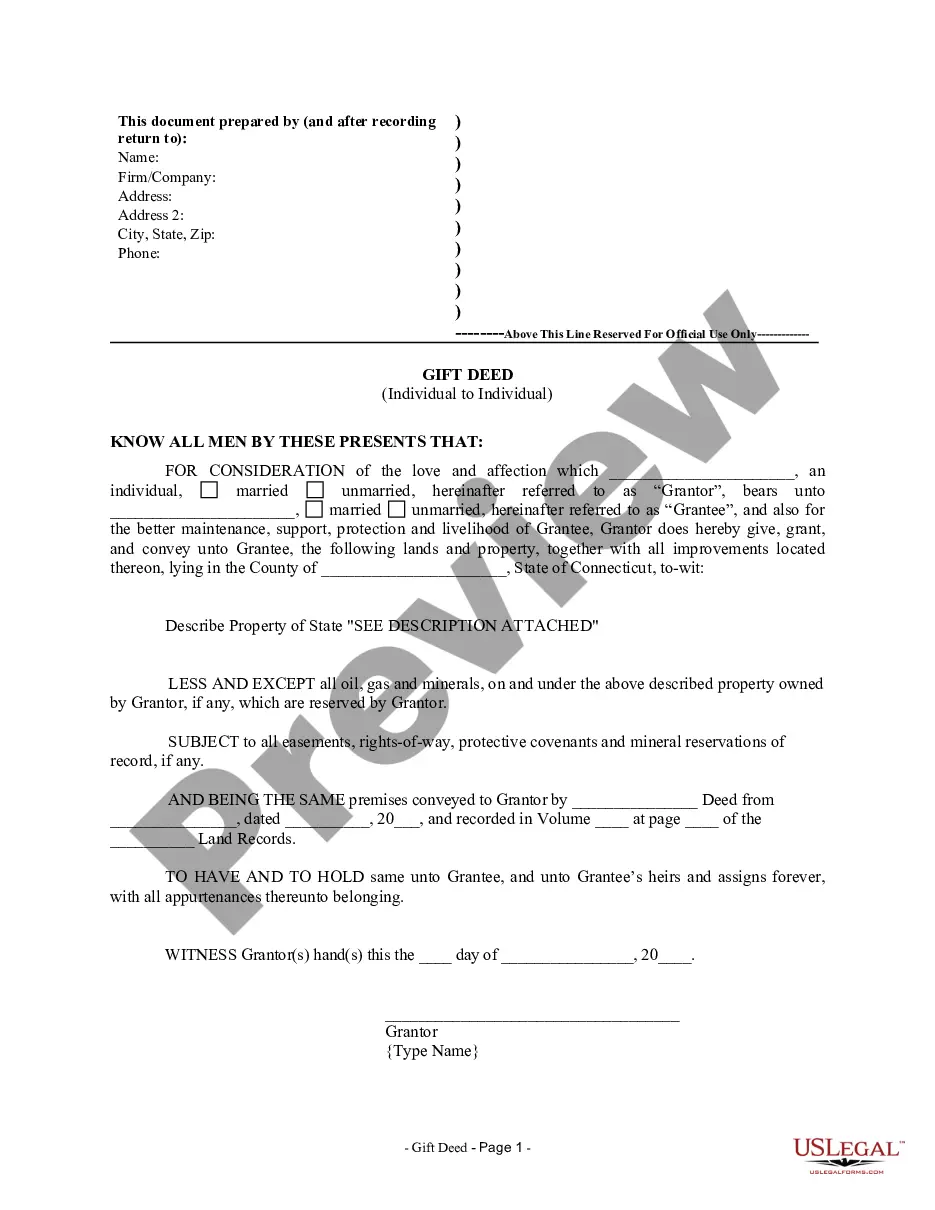
Alabama Quitclaim Deed by Two Individuals to Husband and Wife
Overview of this form
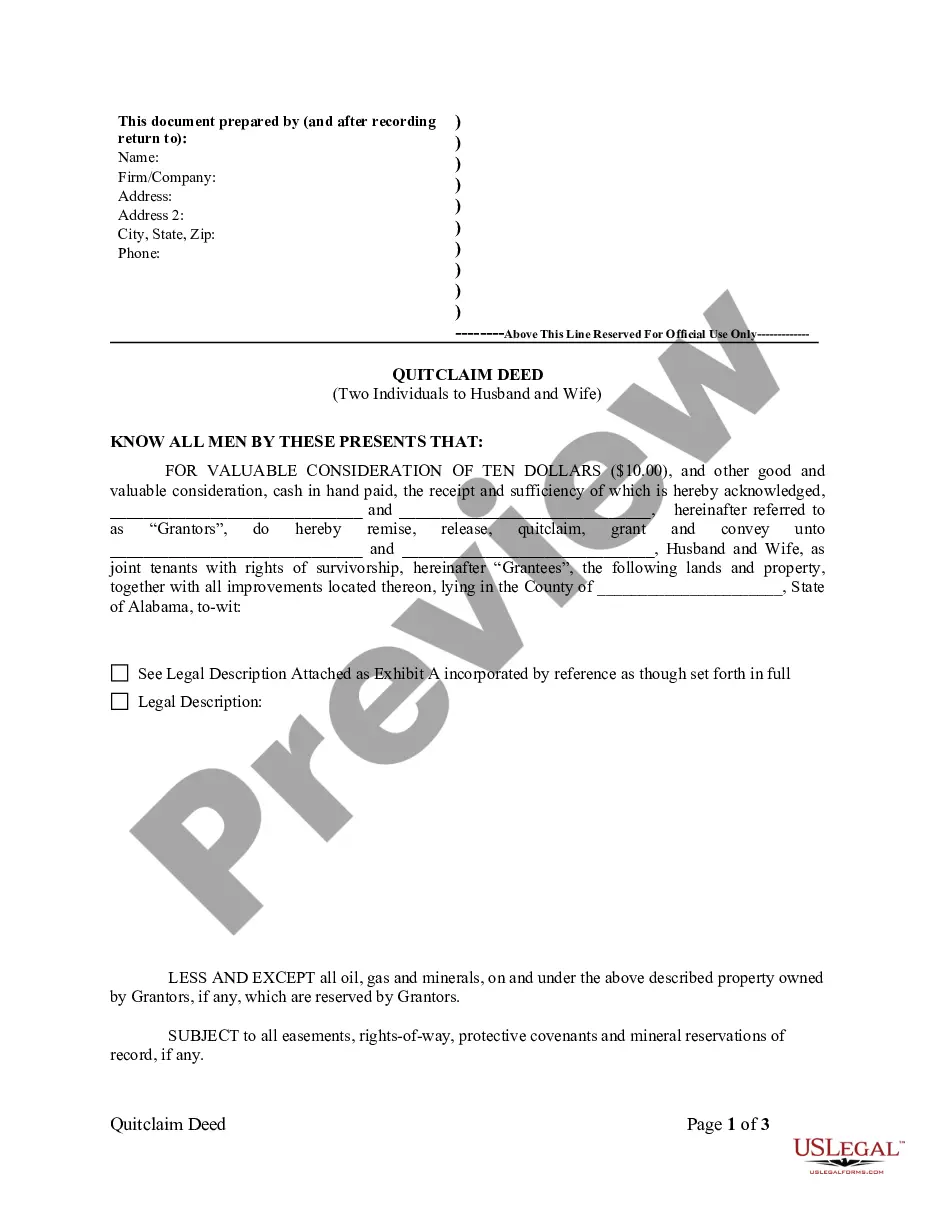
The Quitclaim Deed by Two Individuals to Husband and Wife is a legal document in which two individuals, referred to as grantors, transfer their interest in a property to a couple, the grantees, who are husband and wife. Unlike other types of deeds, a quitclaim deed does not guarantee that the grantors own the property; it simply conveys whatever interest they may have. This form is essential for situations where ownership rights are being exchanged without the assurance of a clear title, especially when transferring property between family members or changing ownership arrangements in marriage.
What’s included in this form
- Identification of the grantors and grantees
- Description of the property being transferred
- Statement regarding the reservation of oil, gas, and minerals
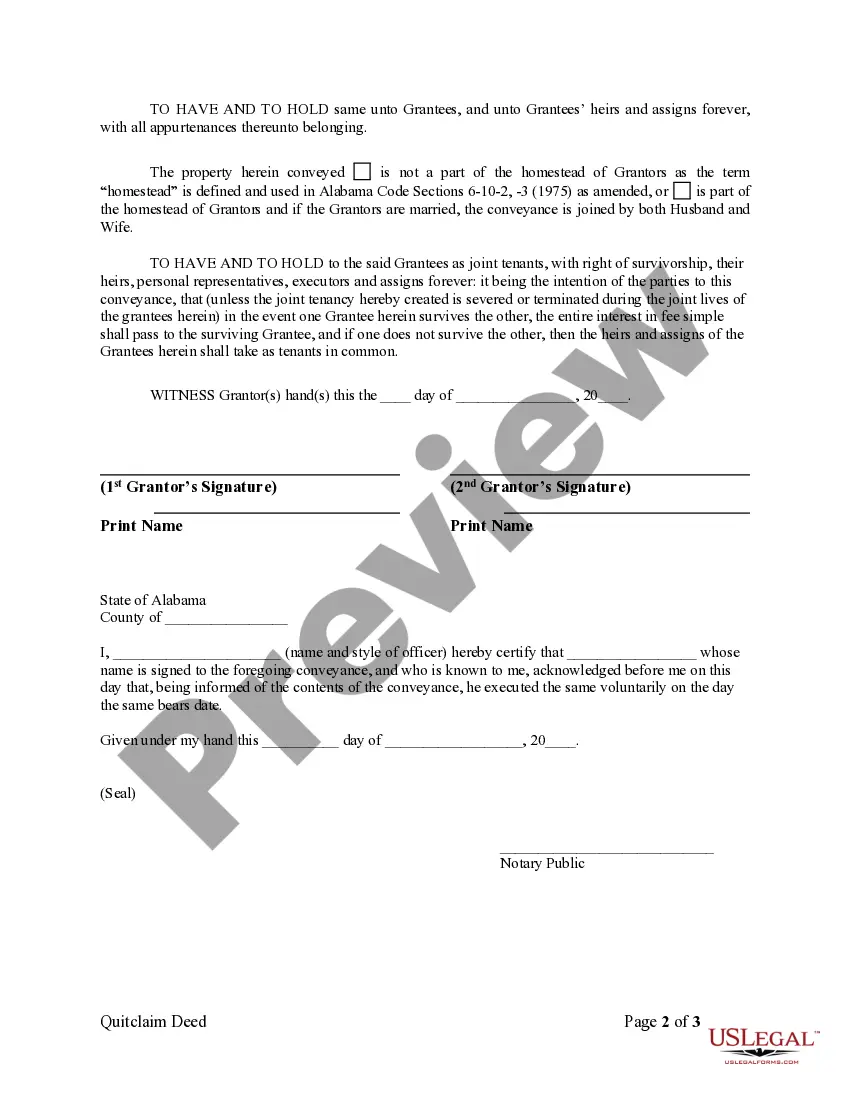
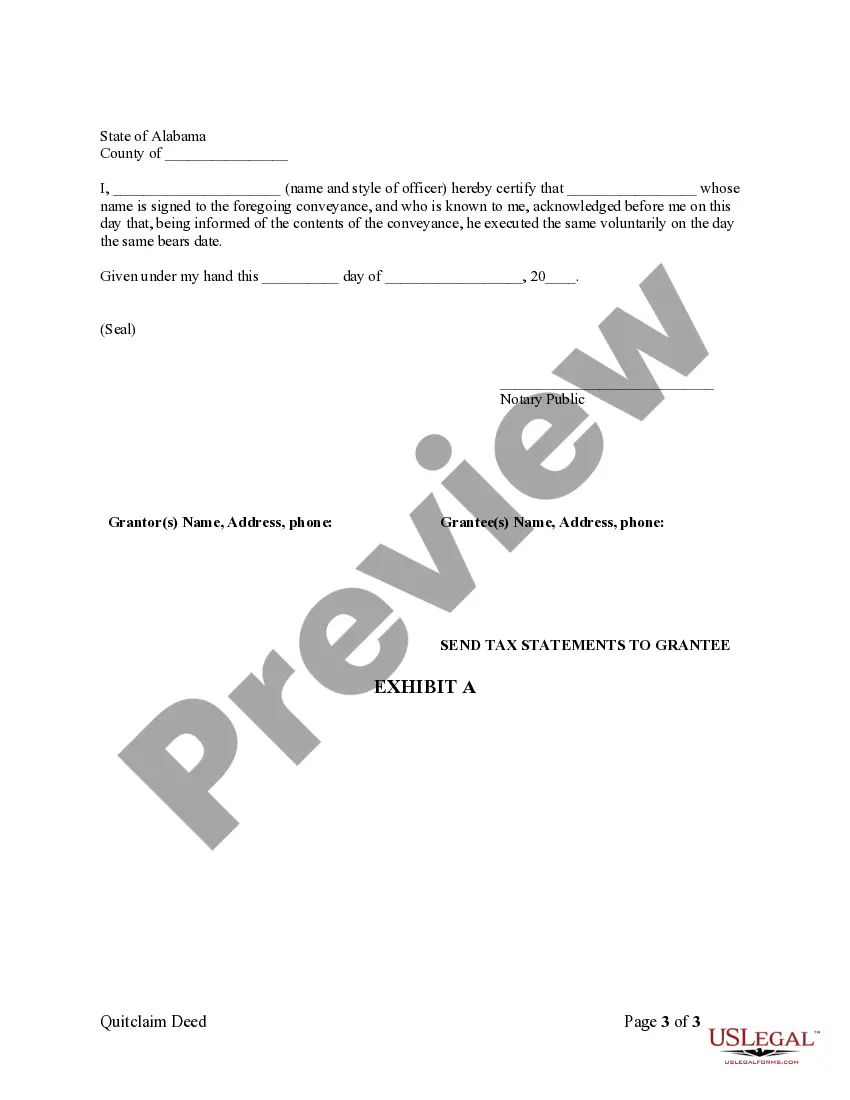
- Affidavit section for notarization
- Signatures of grantors and notary public





When to use this document
This form is typically used when two individuals wish to transfer property ownership to a husband and wife. Common scenarios include property transfers between family members, marital property changes after a divorce, or simply simplifying ownership after marriage. This quitclaim deed is suitable in circumstances where clarity of title is not a primary concern and where the parties have a mutual understanding of the transfer.
Who this form is for
This form is ideal for:
- Two individuals looking to transfer property to a married couple
- Married couples seeking to obtain shared ownership of a property
- Individuals who may not require a title guarantee but wish to formalize a transfer of property rights
How to complete this form
- Identify the parties involved by clearly stating the names and addresses of the grantors and grantees.
- Specify the property being transferred, including a legal description as an attachment, if necessary.
- State whether the property is part of the grantors' homestead, as defined by local law.
- Enter the date the deed is executed.
- Have both grantors sign the document in the presence of a notary public.
Does this form need to be notarized?
To make this form legally binding, it must be notarized. Our online notarization service, powered by Notarize, lets you verify and sign documents remotely through an encrypted video session.
Get your form ready online
Our built-in tools help you complete, sign, share, and store your documents in one place.
Make edits, fill in missing information, and update formatting in US Legal Forms—just like you would in MS Word.
Download a copy, print it, send it by email, or mail it via USPS—whatever works best for your next step.
Sign and collect signatures with our SignNow integration. Send to multiple recipients, set reminders, and more. Go Premium to unlock E-Sign.
If this form requires notarization, complete it online through a secure video call—no need to meet a notary in person or wait for an appointment.
We protect your documents and personal data by following strict security and privacy standards.

Make edits, fill in missing information, and update formatting in US Legal Forms—just like you would in MS Word.

Download a copy, print it, send it by email, or mail it via USPS—whatever works best for your next step.

Sign and collect signatures with our SignNow integration. Send to multiple recipients, set reminders, and more. Go Premium to unlock E-Sign.

If this form requires notarization, complete it online through a secure video call—no need to meet a notary in person or wait for an appointment.

We protect your documents and personal data by following strict security and privacy standards.
Avoid these common issues
- Failing to include the legal description of the property.
- Not having the form notarized when required.
- Incorrectly identifying the parties involved in the transfer.
- Leaving out the date or signatures.
Why complete this form online
- Convenience of downloading and completing at your own pace.
- Editability to suit specific needs before finalizing the document.
- Access to reliable templates drafted by licensed attorneys to ensure legal compliance.
Quick recap
- A quitclaim deed transfers property interest without guaranteeing ownership.
- Use this form when transferring property from two individuals to a couple.
- Ensure all parties are accurately identified and the document is notarized to validate the transfer.
Looking for another form?
Form popularity
FAQ
Quit Claim Deeds in Alabama So not only is the grantor not guaranteeing that there are no liens or encumbrances on the property, they aren't even guaranteeing they own the property. Our local property deed attorneys are currently charging $250 to prepare your quit claim deed for you to record yourself.
The drawback, quite simply, is that quitclaim deeds offer the grantee/recipient no protection or guarantees whatsoever about the property or their ownership of it. Maybe the grantor did not own the property at all, or maybe they only had partial ownership.
In most states you can file a disclaimer or deed of disclaimer that says specifically you were placed in title without your knowledge or consent and disclaim the deed.
Adding someone to your house deed requires the filing of a legal form known as a quitclaim deed. When executed and notarized, the quitclaim deed legally overrides the current deed to your home. By filing the quitclaim deed, you can add someone to the title of your home, in effect transferring a share of ownership.
But you might be wondering if an owner can transfer a deed to another person without a real estate lawyer. The answer is yes. Parties to a transaction are always free to prepare their own deeds.A quitclaim deed, for example, is far simpler than a warranty deed.
Find the most recent deed to the property. Create the new deed. Sign and notarize the deed. Record the signed, notarized original deed with the Office of the Judge of Probate.
Recording (§ 35-4-50) A quit claim deed should be filed in the office of the County Probate Judge along with any required fees. Signing (A§ 35-4-20) All quit claim deeds are to be signed with a notary public present or with two (2) witnesses.