Connecticut Boarding Stable Agreement - Horse Equine Forms
Understanding this form
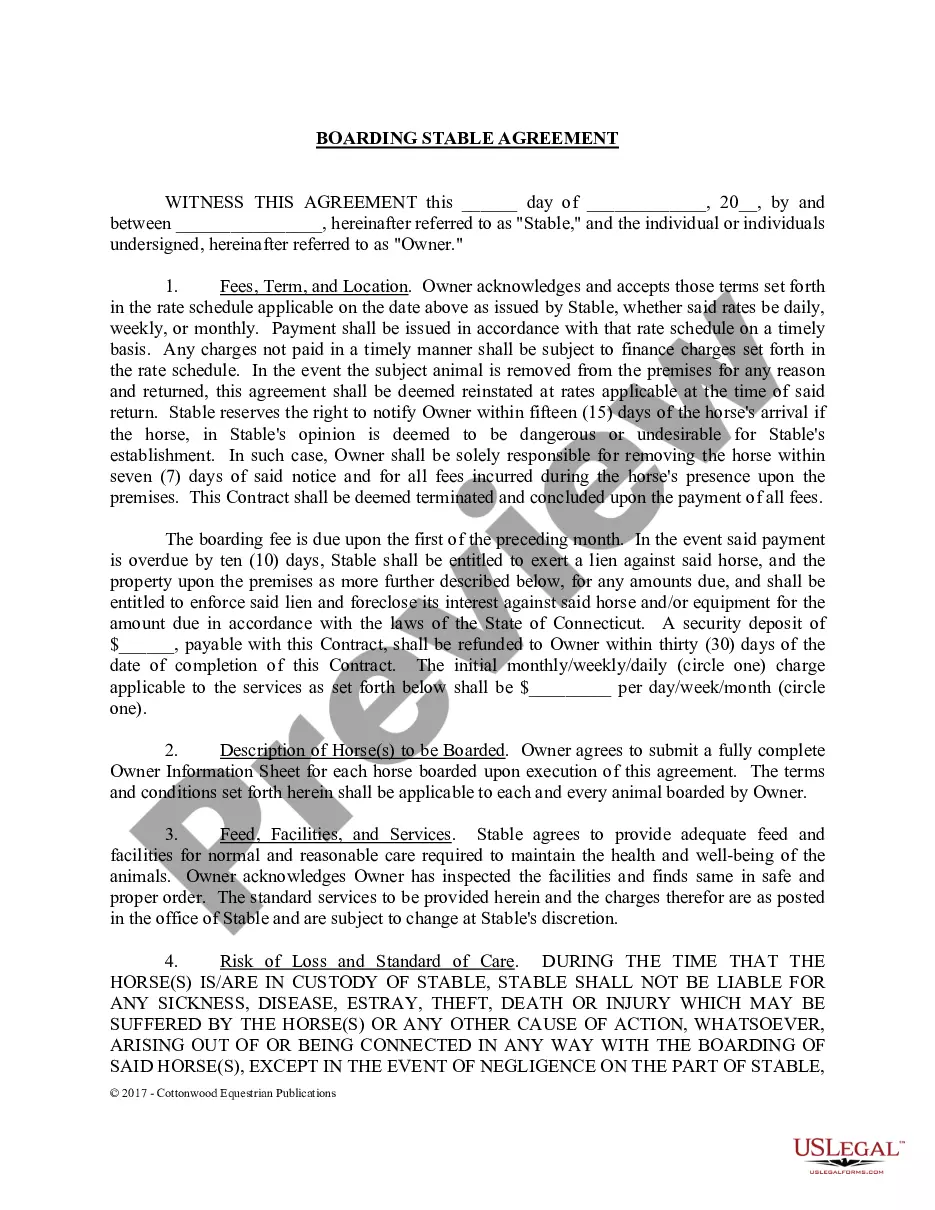
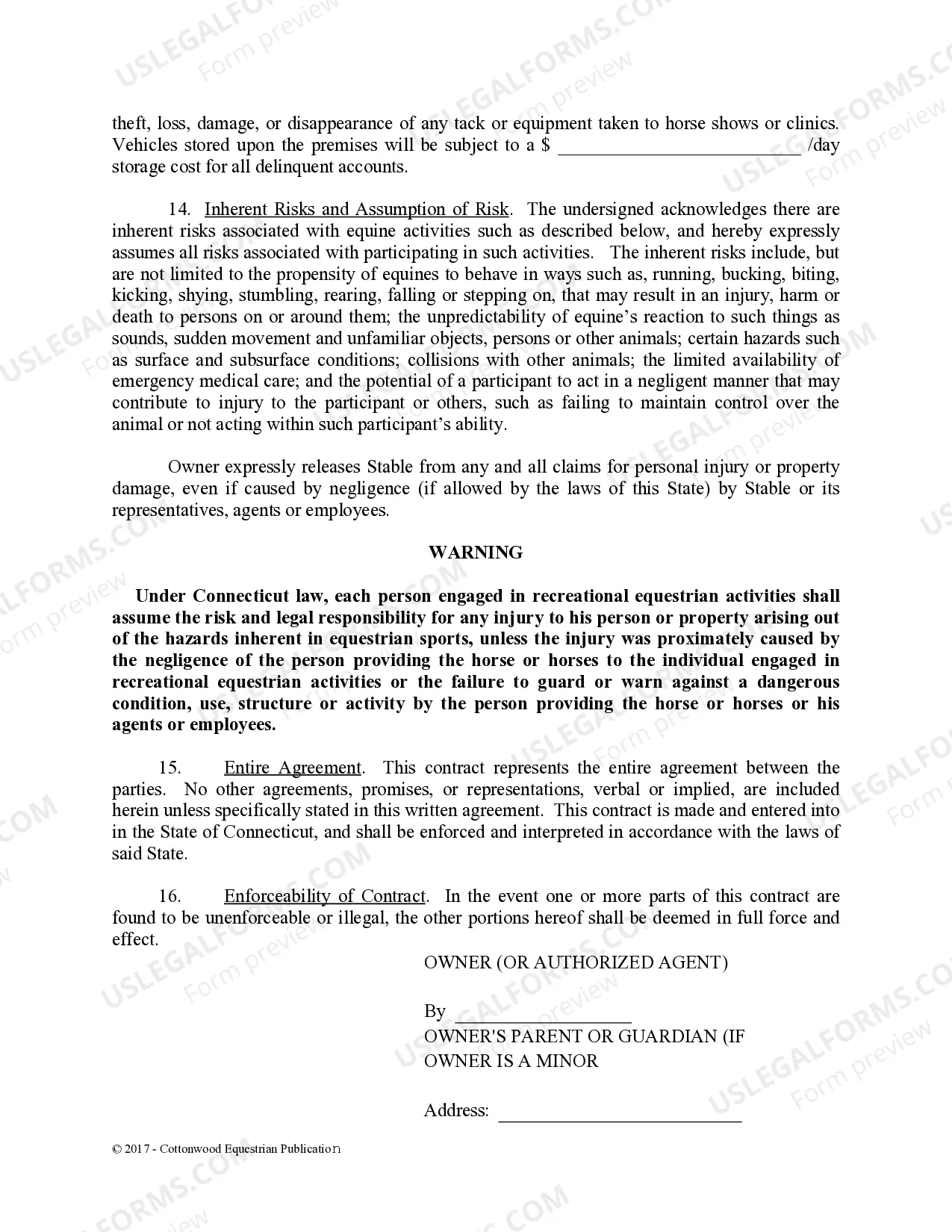
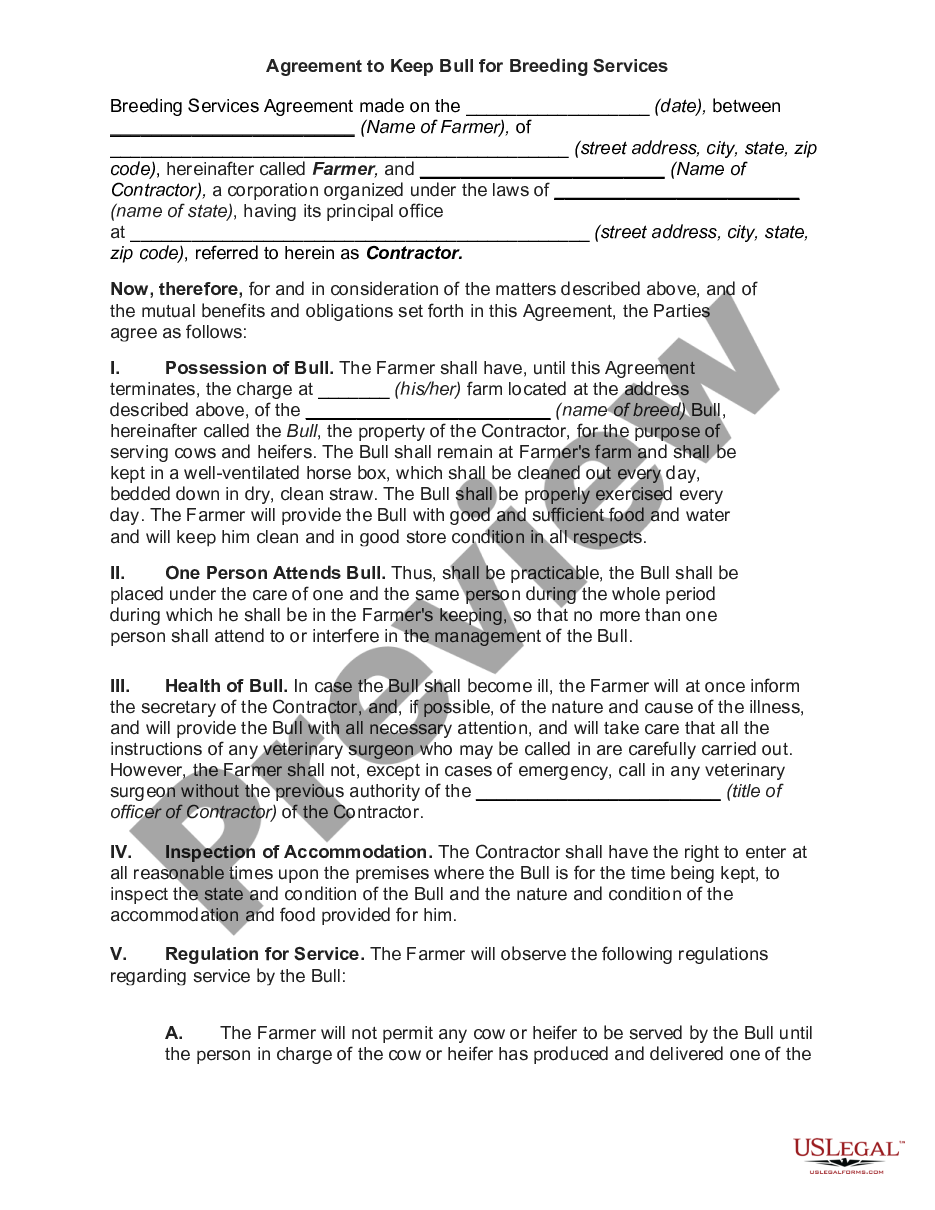
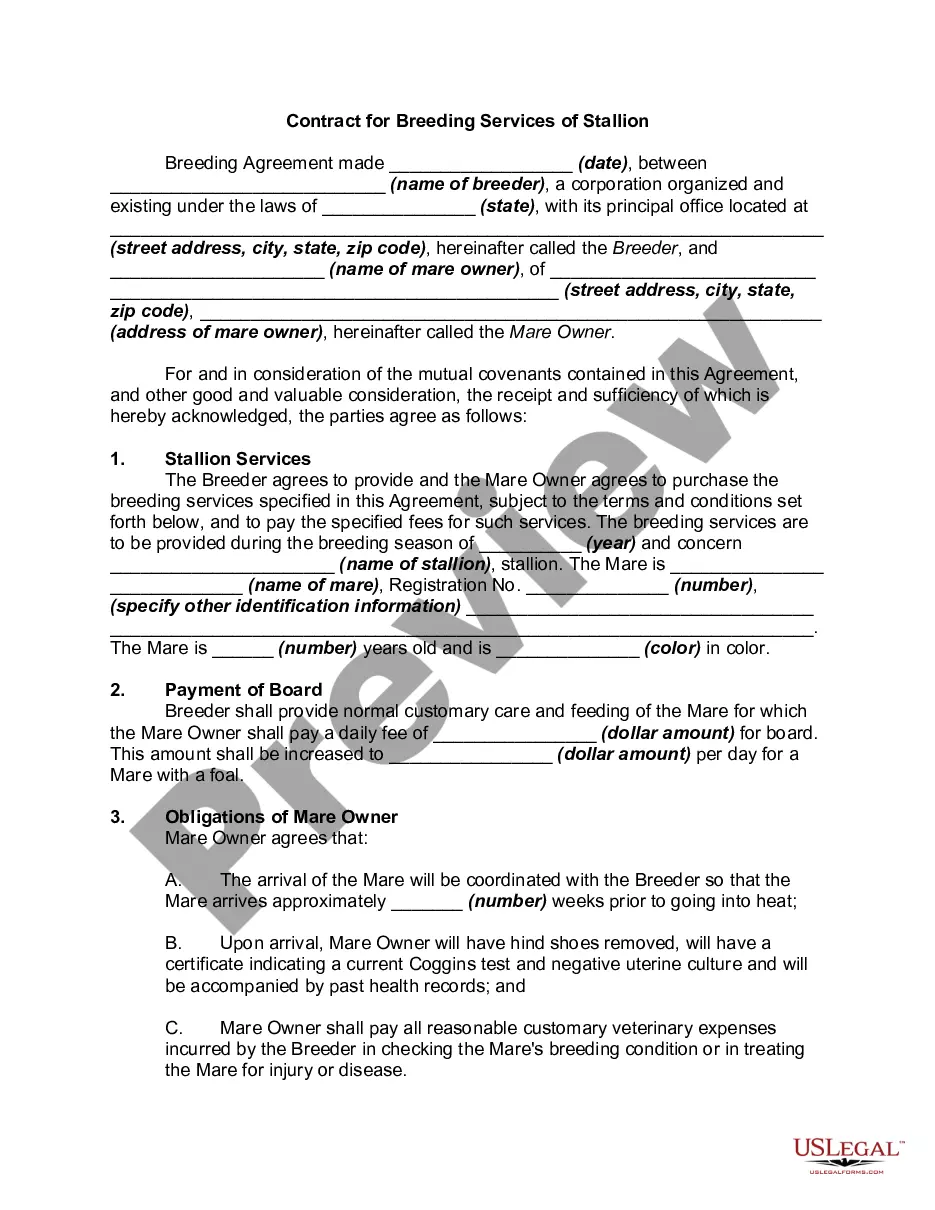
The Boarding Stable Agreement is a legal document that outlines the mutual responsibilities and commitments between a stable owner and a horse owner. This form is essential for establishing terms including fees, liability, standard of care, and emergency procedures. Its clarity and detail help ensure that both parties understand their rights and obligations, making it different from other basic boarding agreements in its comprehensive nature.
What’s included in this form
- Fees, term, and location: Details about payment schedules and conditions for fees.
- Description of horse(s): Requirements for providing complete information about each horse being boarded.
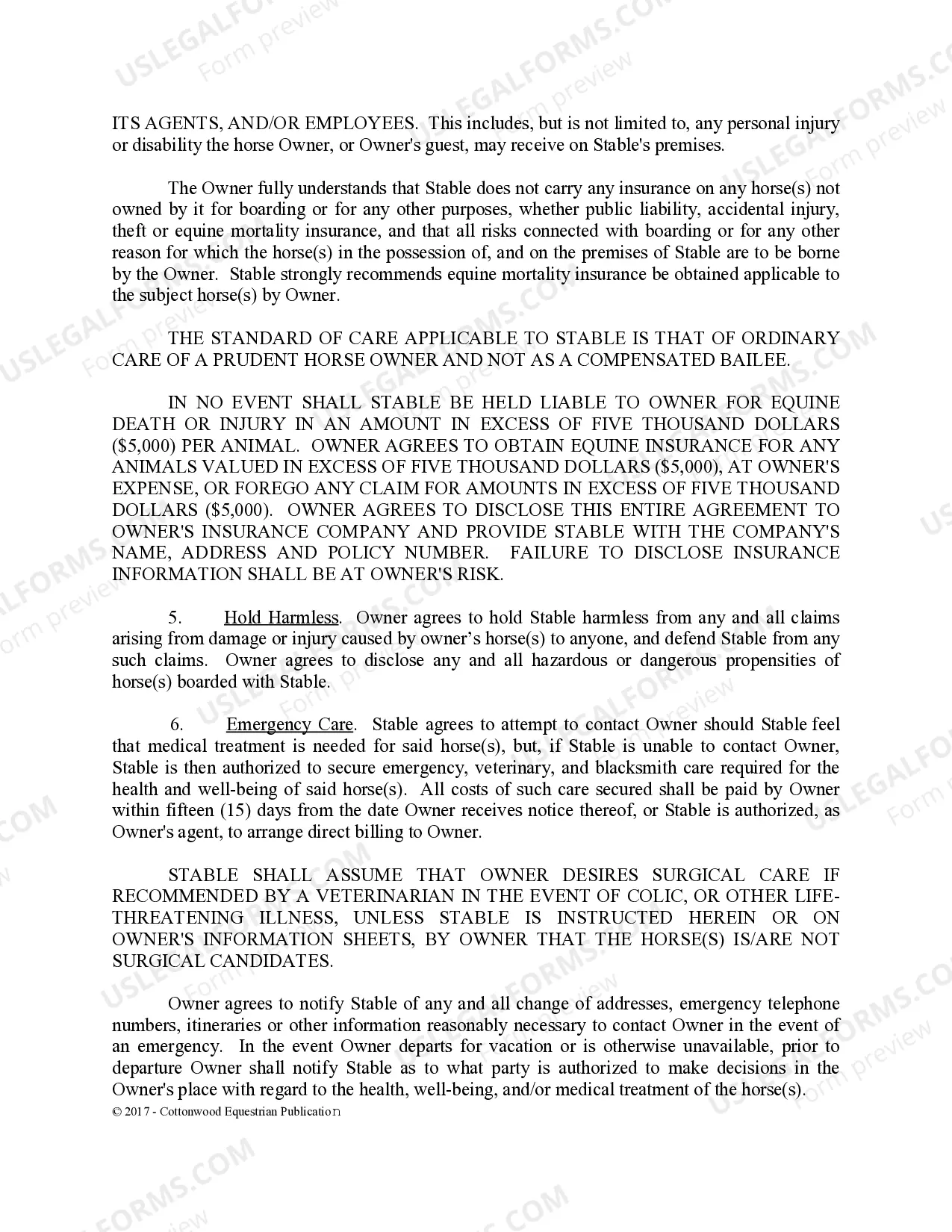
- Risk of loss and standard of care: Specifies liability regarding the horse's health and well-being while in custody of the stable.
- Emergency care provisions: Outlines protocols for veterinary care if the owner cannot be contacted.
- Hold harmless clause: Protects the stable from liability for injuries caused by the horse(s).
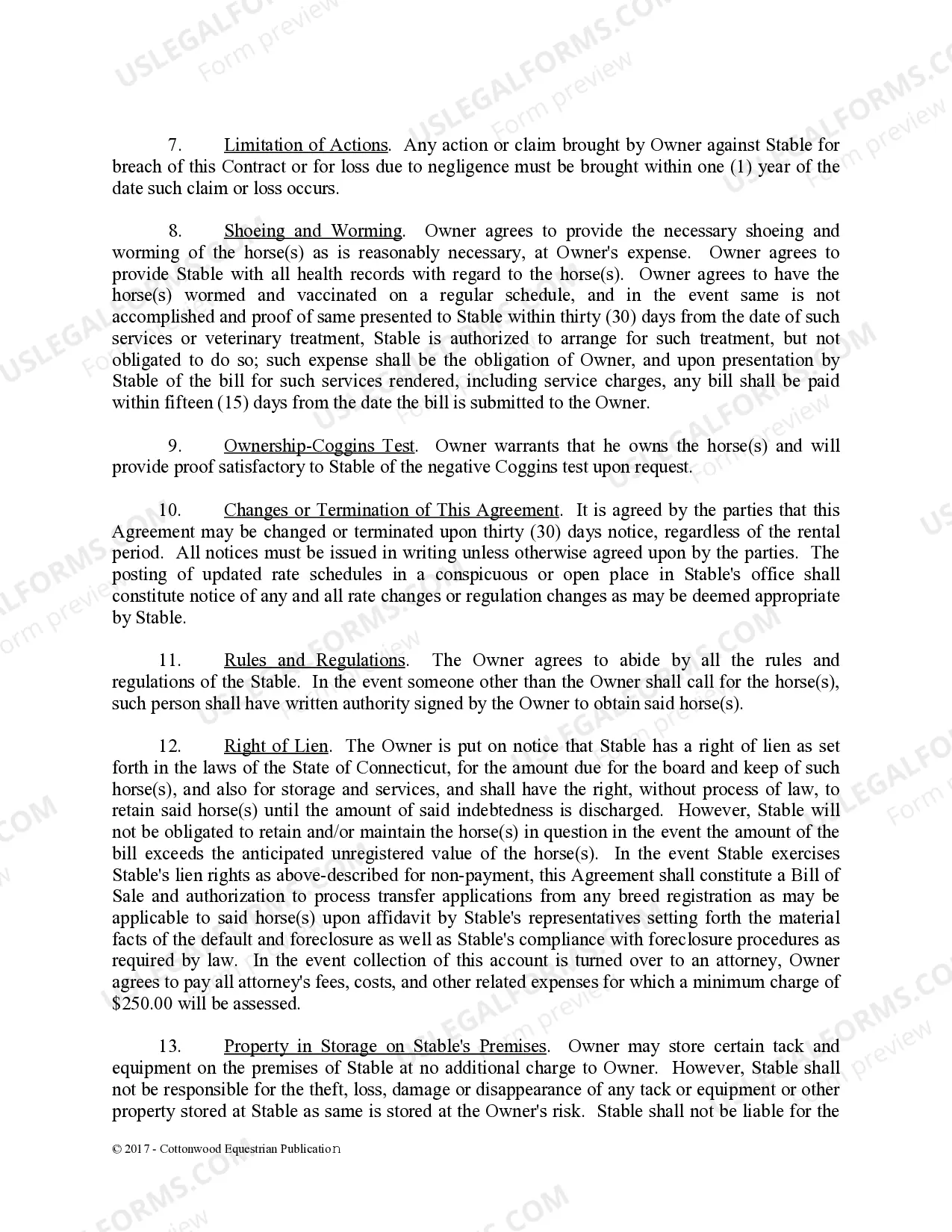
- Right of lien: Establishes the stable's right to retain the horse until fees are paid.
When to use this form
This agreement should be used when a horse owner plans to board their horse at a stable and requires a clear outline of the responsibilities and conditions for care. It is particularly important in situations where multiple horses are boarded, or when advanced care provisions are necessary, such as emergency vet treatments or handling difficult horses.
Who needs this form
- Horse owners needing a care agreement before boarding their horses.
- Stable owners looking to formalize their boarding services and establish clear terms.
- Individuals or businesses involved in equine activities who want to minimize liability and clarify standards of care.
How to prepare this document
- Identify the parties: Fill in the names of the stable owner and the horse owner.
- Specify fees: Enter the applicable rates for boarding (daily, weekly, or monthly).
- Describe the horse(s): Complete the section detailing each horse being boarded.
- Outline emergency care instructions: Provide information regarding veterinary care and contact preferences.
- Sign and date: Ensure all necessary parties sign the agreement to make it legally binding.
Notarization requirements for this form
This form does not typically require notarization to be legally valid. However, some jurisdictions or document types may still require it. US Legal Forms provides secure online notarization powered by Notarize, available 24/7 for added convenience.
Get your form ready online
Our built-in tools help you complete, sign, share, and store your documents in one place.
Make edits, fill in missing information, and update formatting in US Legal Forms—just like you would in MS Word.
Download a copy, print it, send it by email, or mail it via USPS—whatever works best for your next step.
Sign and collect signatures with our SignNow integration. Send to multiple recipients, set reminders, and more. Go Premium to unlock E-Sign.
If this form requires notarization, complete it online through a secure video call—no need to meet a notary in person or wait for an appointment.
We protect your documents and personal data by following strict security and privacy standards.

Make edits, fill in missing information, and update formatting in US Legal Forms—just like you would in MS Word.

Download a copy, print it, send it by email, or mail it via USPS—whatever works best for your next step.

Sign and collect signatures with our SignNow integration. Send to multiple recipients, set reminders, and more. Go Premium to unlock E-Sign.

If this form requires notarization, complete it online through a secure video call—no need to meet a notary in person or wait for an appointment.

We protect your documents and personal data by following strict security and privacy standards.
Typical mistakes to avoid
- Failing to provide complete information about the horse, which may lead to confusion later.
- Not reviewing the fee schedule regularly, leading to unexpected charges.
- Overlooking the need for emergency contact information, which could delay necessary care.
Why complete this form online
- Convenience of accessing and completing the form from anywhere.
- Editability allows customization specific to boarding arrangements.
- Reliability as the form is drafted by licensed attorneys to ensure legal validity.
Legal use & context
- The agreement establishes enforceable terms for the boarding arrangement.
- It defines liability limits pertaining to horse injuries and damages incurred while in the stable's care.
- Understanding the costs and requirements helps mitigate conflicts between the horse owner and stable owner.
Quick recap
- Clearly defines the terms of boarding between horse and stable owners.
- Addresses liability and care protocols to protect both parties.
- Essential for anyone considering boarding their horse to avoid misunderstandings.
Looking for another form?


Form popularity
FAQ
When boarding a horse, your primary responsibilities include providing adequate shelter, food, and medical care as needed. You must maintain cleanliness in the stables and ensure the safety of the horse in the surrounding environment. Establishing clear terms through a Connecticut Boarding Stable Agreement - Horse Equine Forms helps clarify these responsibilities, benefiting both the horse owner and the boarding facility.
Self-care horse boarding allows you to take an active role in the care of your horse. It typically includes feeding, grooming, and exercising your horse, as well as managing their living environment. By engaging in self-care, you can ensure your horse receives personalized attention according to its needs. To effectively manage the agreement, consider a Connecticut Boarding Stable Agreement - Horse Equine Forms to outline your responsibilities.
A horse boarder typically handles the care of the horse, including feeding, grooming, and ensuring general health and well-being. Responsibilities may also encompass safety, as outlined in the Connecticut Boarding Stable Agreement - Horse Equine Forms, which ensures clarity on care standards between the barn owner and the boarder. It is vital for boarders to maintain open communication with stable management about any specific needs. By understanding and adhering to these responsibilities, boarders foster a healthy environment for their horses.
Horse boarding can be a lucrative business, especially when managed effectively. By implementing a well-structured Connecticut Boarding Stable Agreement - Horse Equine Forms, you can clearly outline the terms and responsibilities, which helps in attracting and retaining clients. Understanding local market trends and managing costs effectively can further increase profitability. Ultimately, the success of a boarding operation often hinges on quality service and sound management practices.
Horse boarding usually includes feeding, watering, and daily care such as grooming and exercise, tailored to each horse's needs. Additionally, boarding agreements, like the Connecticut Boarding Stable Agreement - Horse Equine Forms, often specify the services provided, such as access to facilities and veterinary care. Knowing what to expect can enhance your experience.
Horse boarding typically requires a safe and clean environment, including adequate shelter, food, and care. You also need to have a clear written agreement, such as the Connecticut Boarding Stable Agreement - Horse Equine Forms, that outlines the responsibilities of both the boarder and the facility. Meeting these requirements provides peace of mind for both parties.
To board horses, you typically need a signed agreement, which often includes the Connecticut Boarding Stable Agreement - Horse Equine Forms. You also need to provide proof of vaccinations, health records, and any specific needs your horse may have. Understanding these requirements ensures a smooth boarding experience.
Insurance for horse boarding varies but generally includes liability insurance to protect against accidents and property damage. It's advisable to review your options carefully and consider the coverage that the Connecticut Boarding Stable Agreement - Horse Equine Forms might suggest. This can safeguard you and your investment in this wonderful experience.
A full board typically includes daily feeding, clean bedding, and regular turnout for your horse. Additionally, many facilities offer access to training and veterinary care, which can be detailed in the Connecticut Boarding Stable Agreement - Horse Equine Forms. This comprehensive approach ensures your horse receives all necessary care and attention.