Agreement with Retired Chief Executive Officer to Provide Transitional Services as a Consultant
About this form
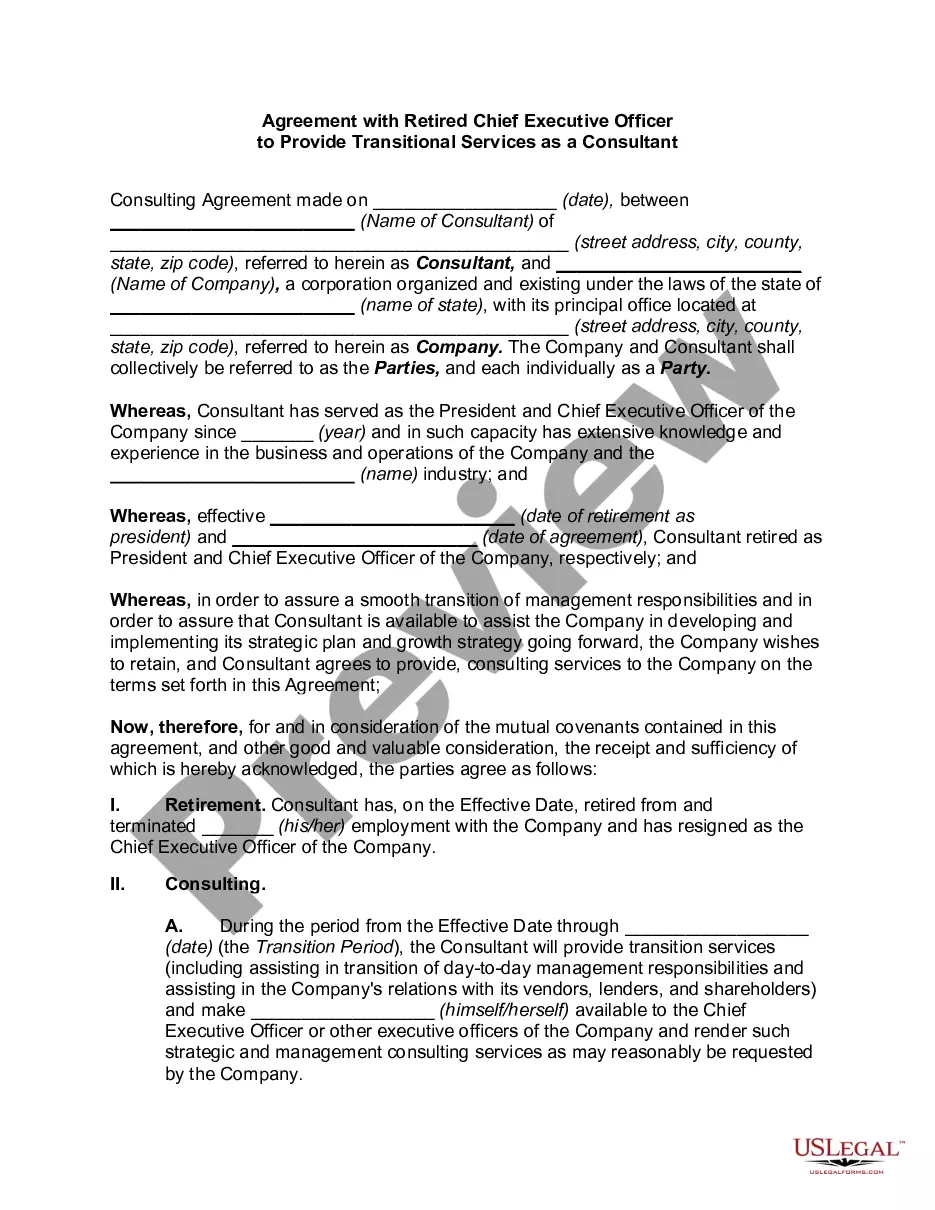
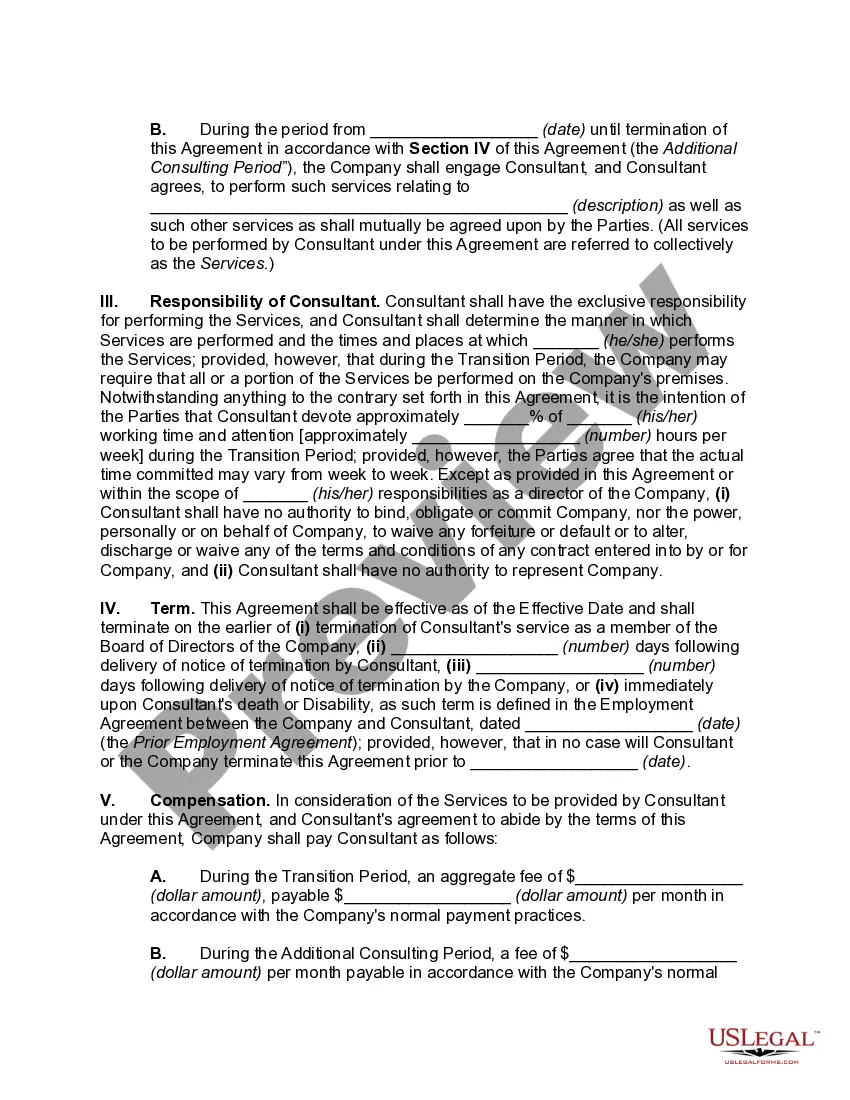
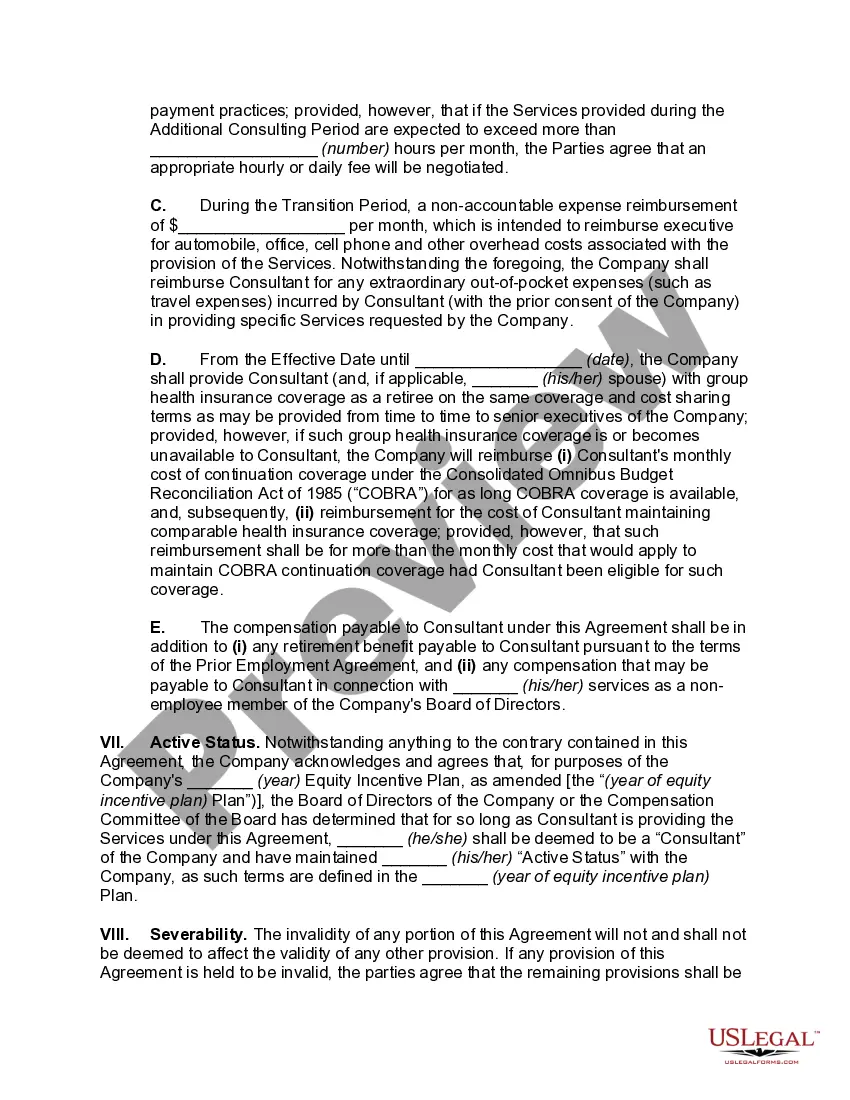
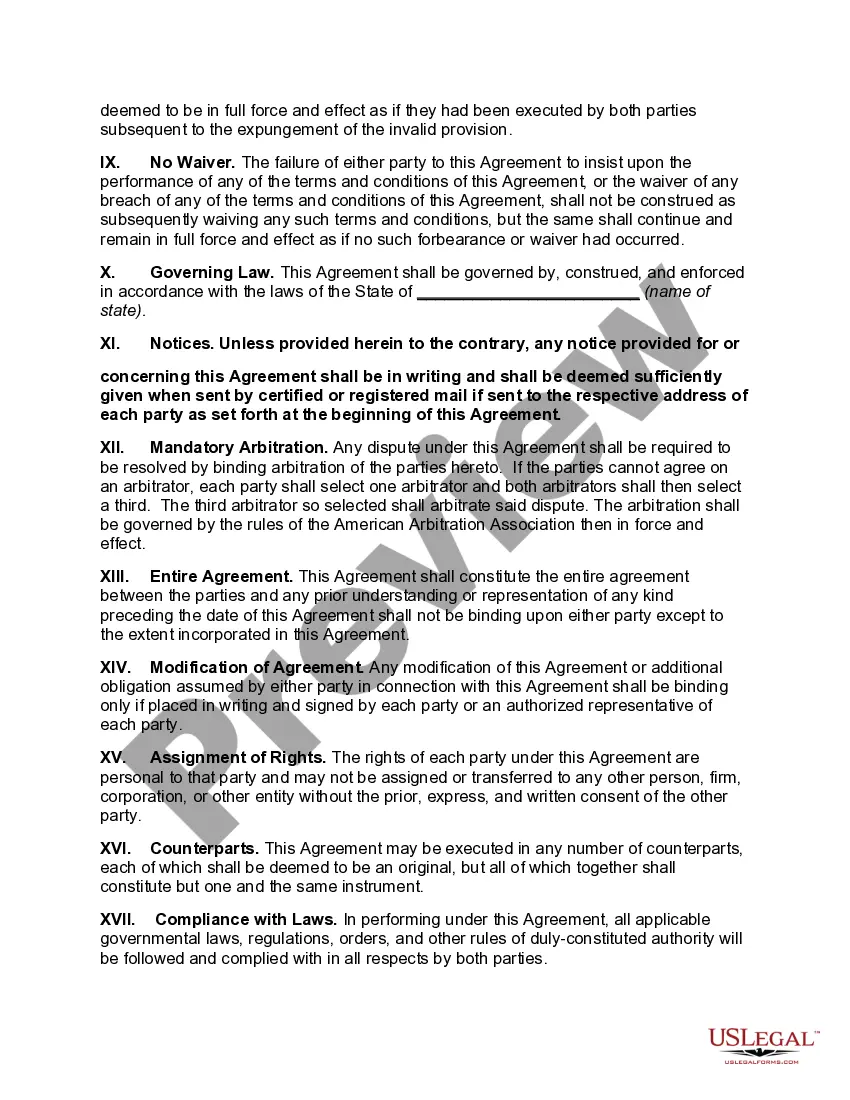
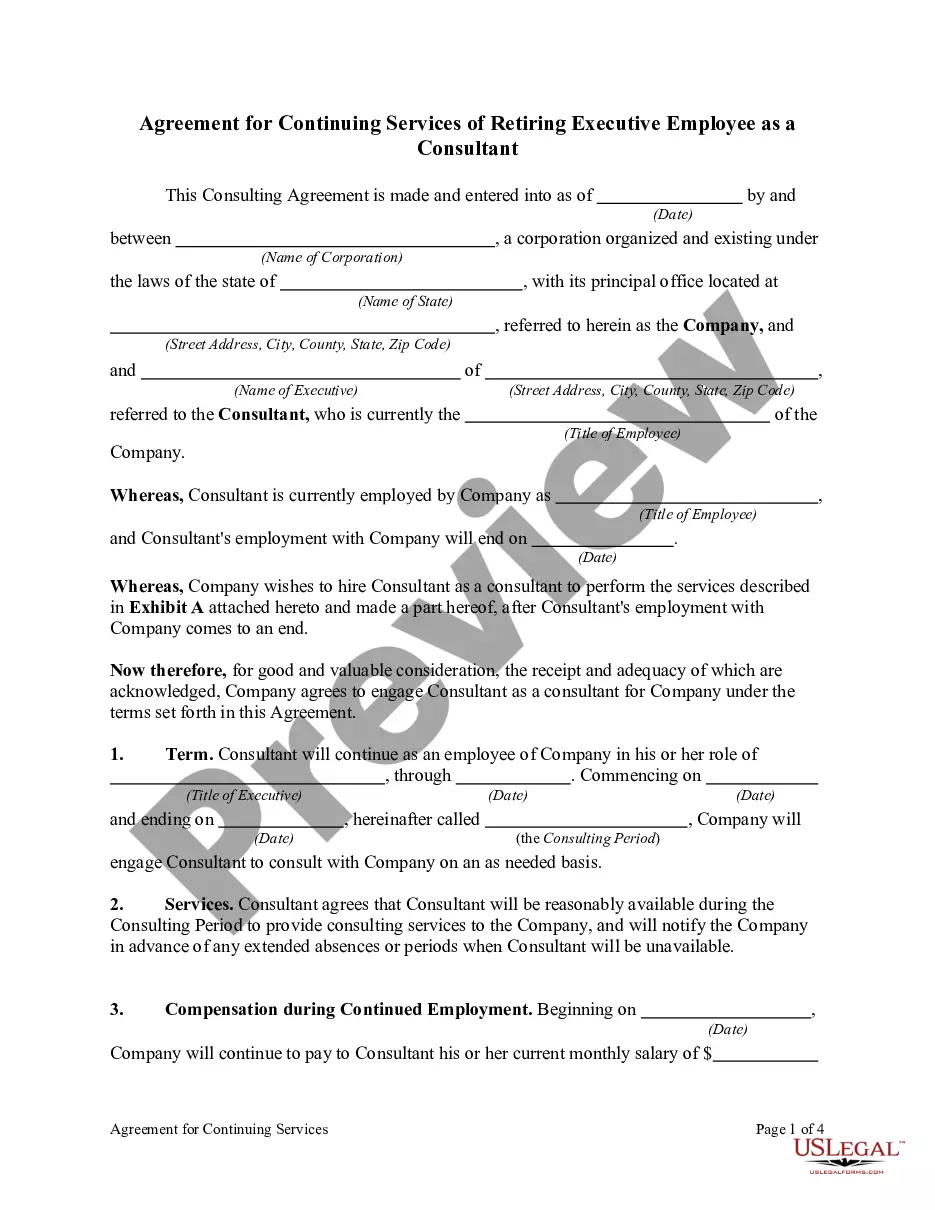
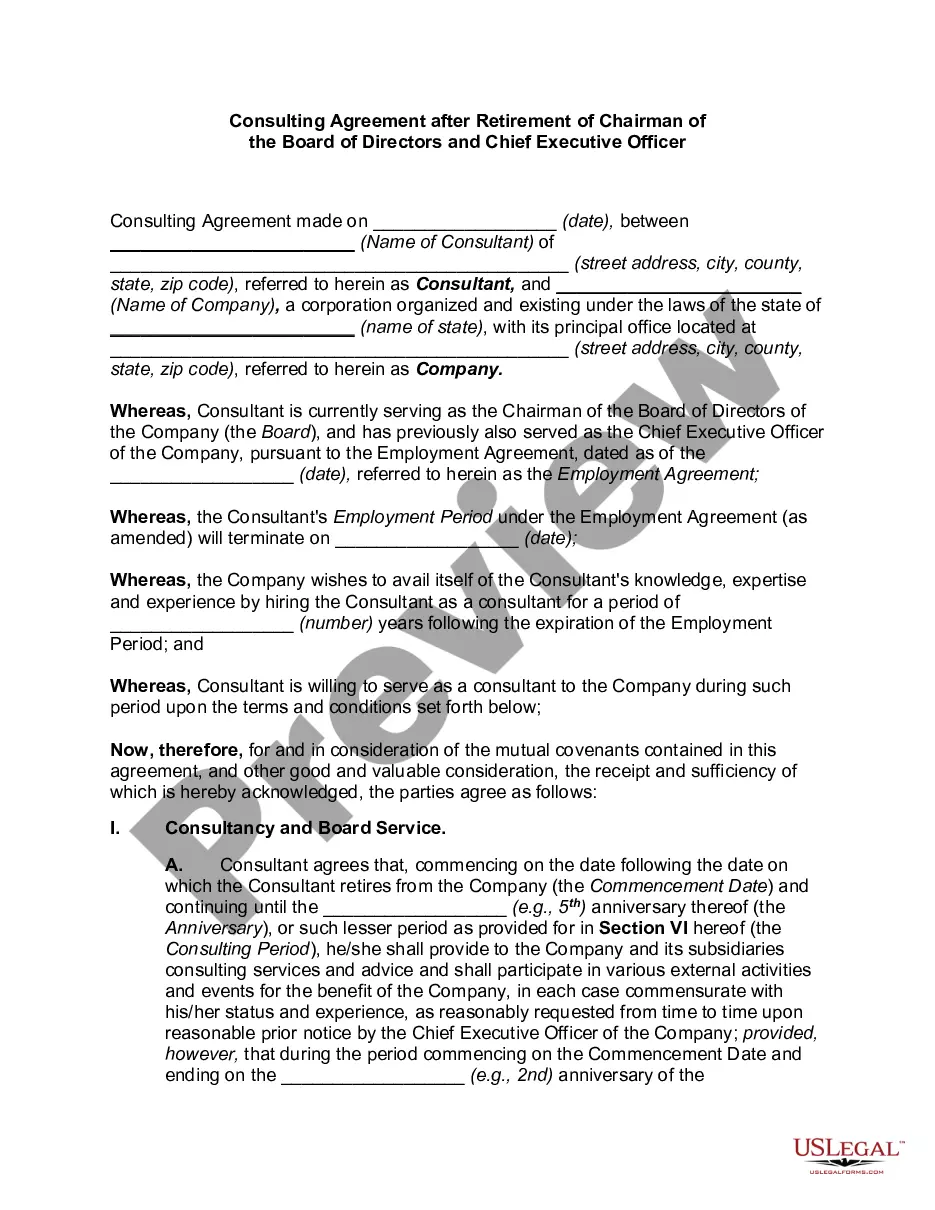
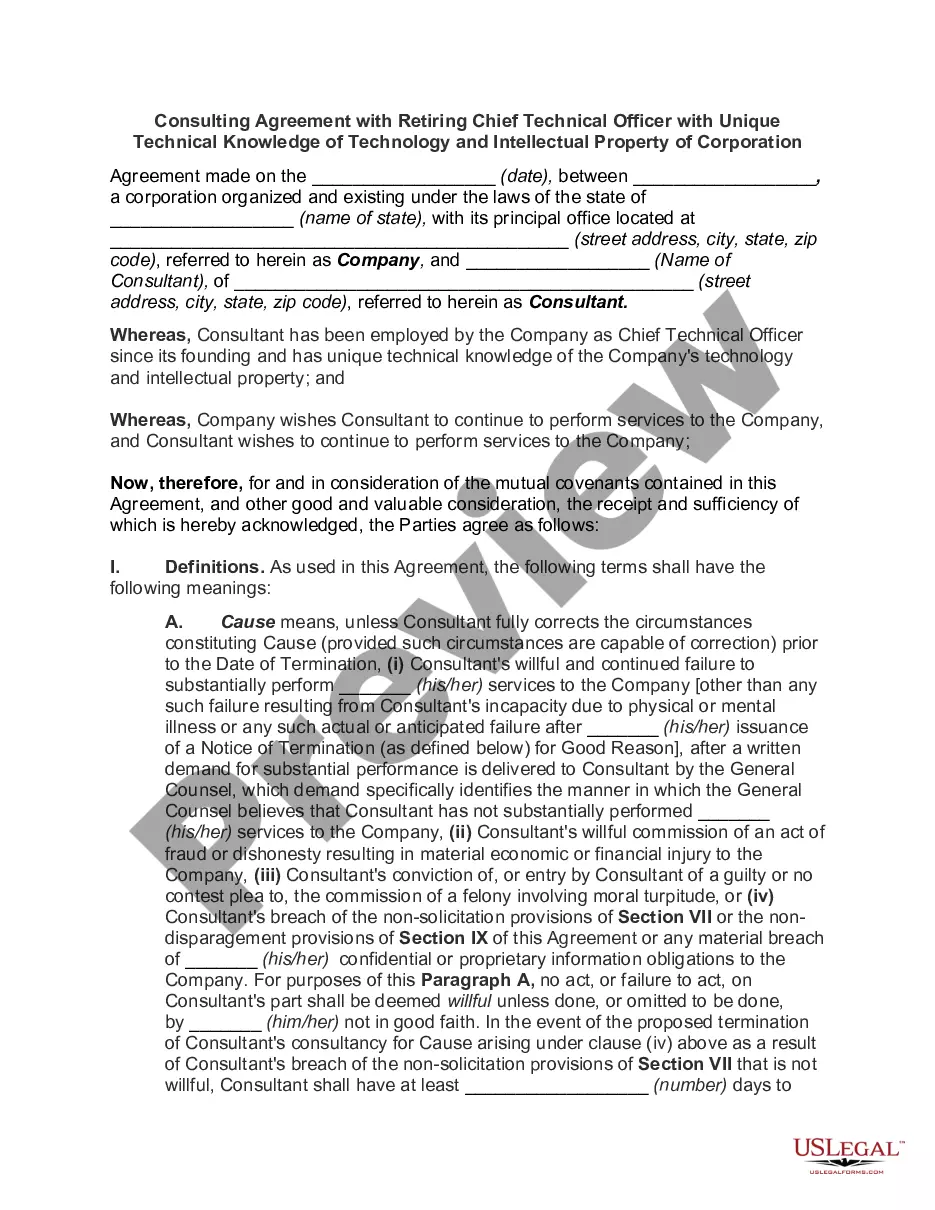
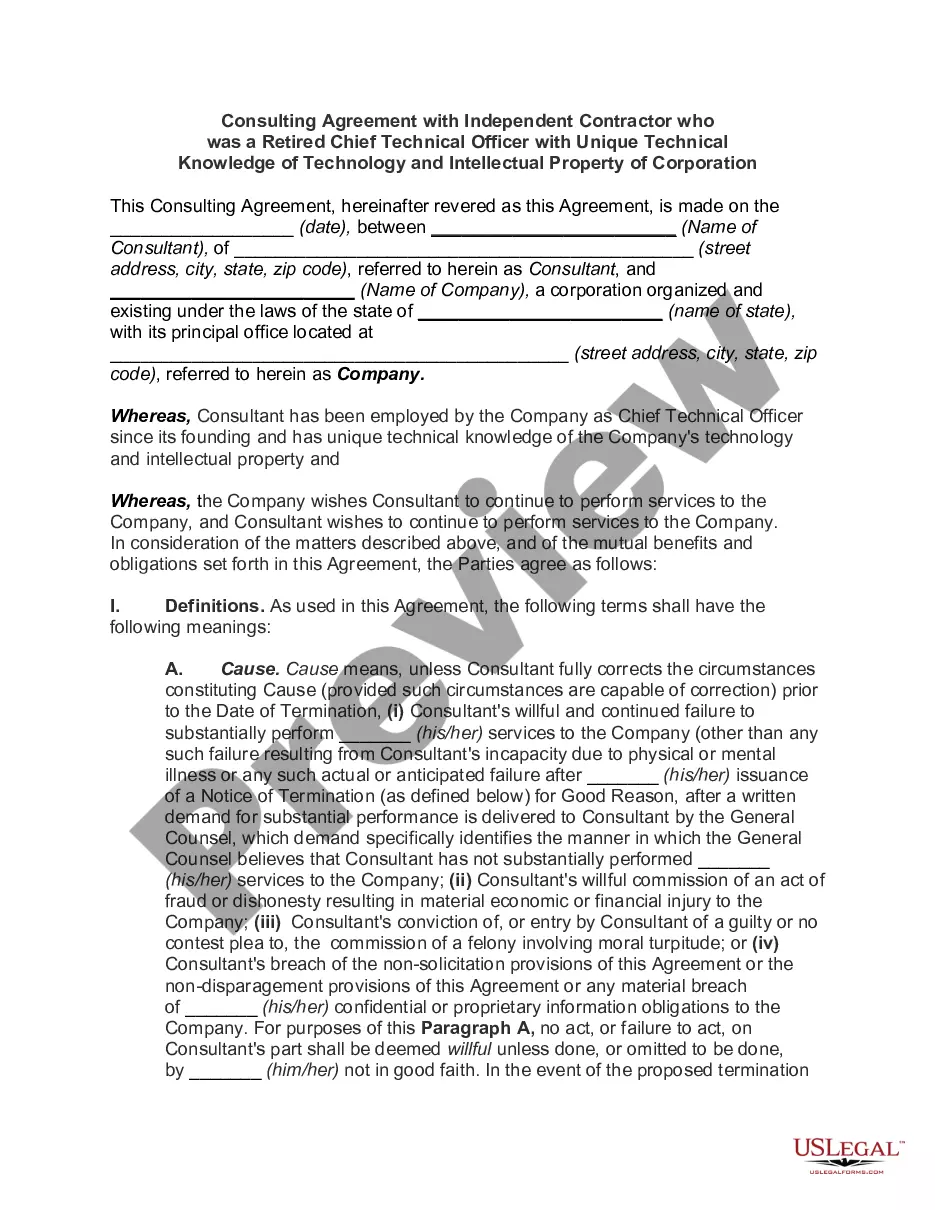
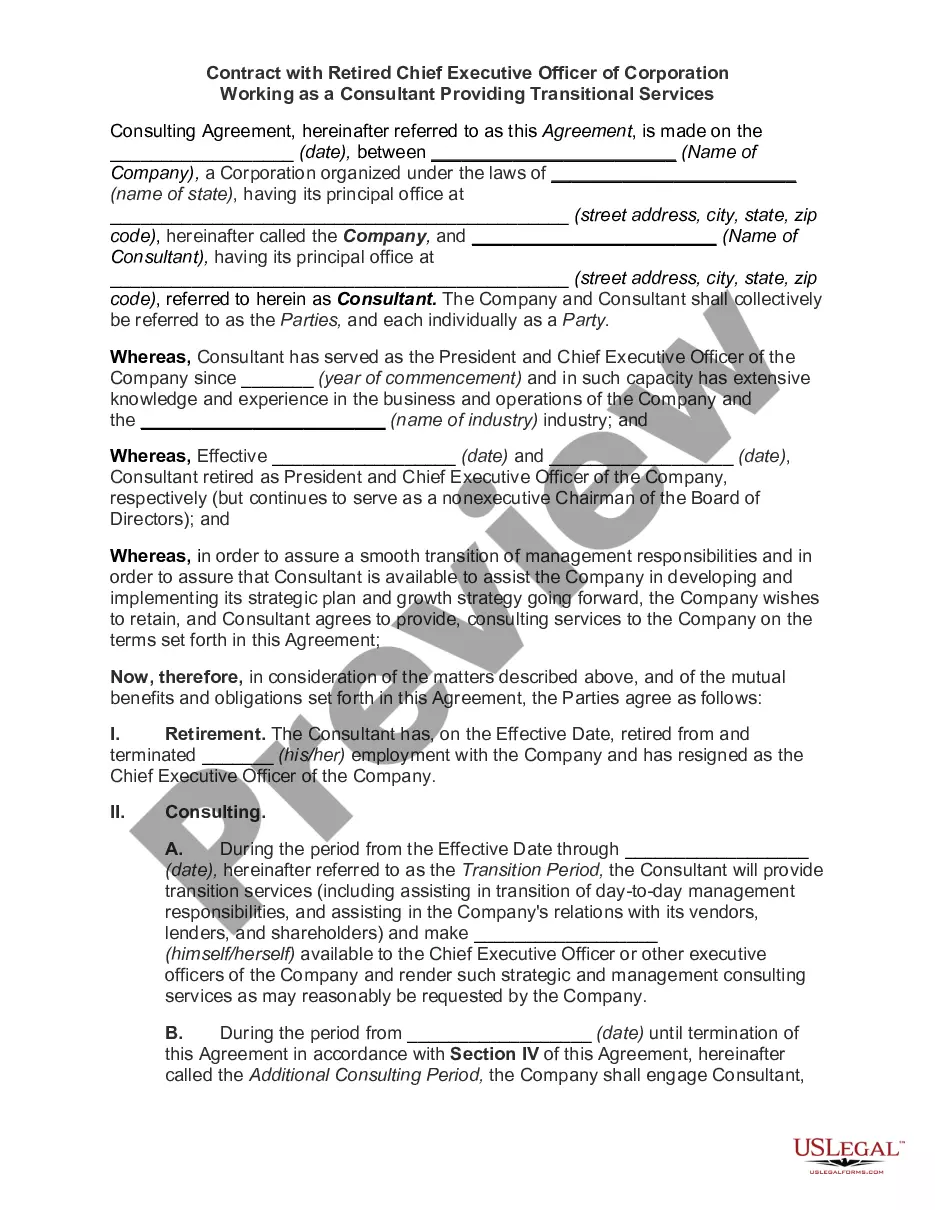
This Agreement with Retired Chief Executive Officer to Provide Transitional Services as a Consultant is a legal document that outlines the terms under which a retired CEO provides consulting services to their former company. This form is particularly useful for companies looking to ensure a smooth transition and leverage the extensive knowledge of their former executives. Unlike other consulting agreements, this specific form highlights the unique relationship between a retiree and their previous employer, allowing both parties to clearly define their expectations and responsibilities during the transition period.
What’s included in this form
- Identification of the Parties: Names and addresses of both the Consultant and the Company.
- Retirement Clause: Confirmation of the Consultant's retirement and the effective dates of the agreement.
- Consulting Periods: Definition of the Transition Period and Additional Consulting Period, including services to be provided.
- Consultant's Responsibilities: Outline of duties and expectations of the Consultant.
- Compensation Terms: Details on fees, payments, and reimbursement for expenses.
- Termination Conditions: Scenarios under which the agreement may be terminated.

Common use cases
This form is ideal for use when a company seeks the expertise of a retired Chief Executive Officer to guide it through a transition period. It is particularly relevant in scenarios where the company undergoes significant changes, such as a merger, restructuring, or other strategic initiatives. Companies may also use this agreement to retain critical insights from the outgoing CEO while ensuring ongoing support in the companyâs tactical execution.
Who should use this form
- Companies that have recently experienced a leadership change and need transitional guidance.
- Retired Chief Executive Officers looking to formalize their consulting roles with their former employers.
- HR departments or executives responsible for negotiating consulting agreements with former executives.
How to complete this form
- Identify the parties: Enter the names and addresses of both the Consultant and the Company.
- Specify dates: Fill in the effective dates for retirement and the duration of the consulting services.
- Detail the services: Clearly outline the consulting services to be provided during both the Transition and Additional Consulting Periods.
- Set compensation: Specify fee amounts, payment schedules, and any reimbursement details for expenses.
- Include termination clauses: List the conditions under which the agreement may be terminated by either party.
Does this form need to be notarized?
This form does not typically require notarization unless specified by local law. Ensure to check any state-specific requirements where the agreement will be executed.
Get your form ready online
Our built-in tools help you complete, sign, share, and store your documents in one place.
Make edits, fill in missing information, and update formatting in US Legal Forms—just like you would in MS Word.
Download a copy, print it, send it by email, or mail it via USPS—whatever works best for your next step.
Sign and collect signatures with our SignNow integration. Send to multiple recipients, set reminders, and more. Go Premium to unlock E-Sign.
If this form requires notarization, complete it online through a secure video call—no need to meet a notary in person or wait for an appointment.
We protect your documents and personal data by following strict security and privacy standards.

Make edits, fill in missing information, and update formatting in US Legal Forms—just like you would in MS Word.

Download a copy, print it, send it by email, or mail it via USPS—whatever works best for your next step.

Sign and collect signatures with our SignNow integration. Send to multiple recipients, set reminders, and more. Go Premium to unlock E-Sign.

If this form requires notarization, complete it online through a secure video call—no need to meet a notary in person or wait for an appointment.

We protect your documents and personal data by following strict security and privacy standards.
Mistakes to watch out for
- Failing to clearly define the scope of services, leading to misunderstandings.
- Neglecting to indicate specific termination conditions, which can cause disputes later.
- Inaccurately outlining compensation details, which could lead to payment issues.
Benefits of completing this form online
- Convenience: Easily download and print the agreement at any time.
- Editability: Customize the form to fit the specific needs of both parties.
- Reliability: Rely on professionally drafted content, ensuring legal compliance and clarity.
Legal use & context
- This agreement serves as a binding contract between the retired CEO and the company.
- It outlines roles, responsibilities, and compensation, minimizing potential legal disputes.
- Legal enforceability depends on adherence to both state and federal laws related to consultancy agreements.
What to keep in mind
- A consulting agreement is vital for defining the terms under which a retired CEO supports their former company.
- Clearly outline services and compensation to avoid future disputes.
- This form helps ensure successful transitions in leadership, benefiting both the company and the consultant.
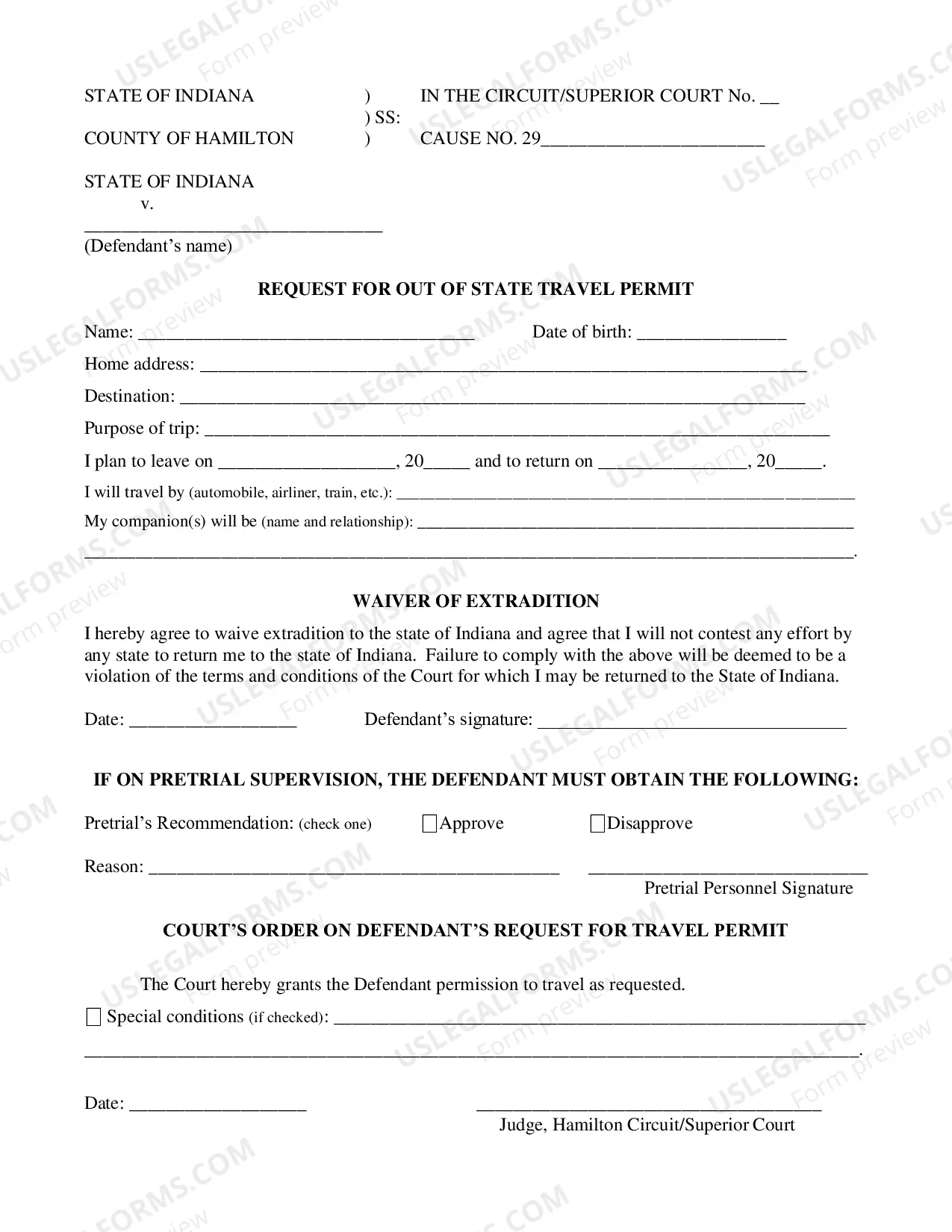
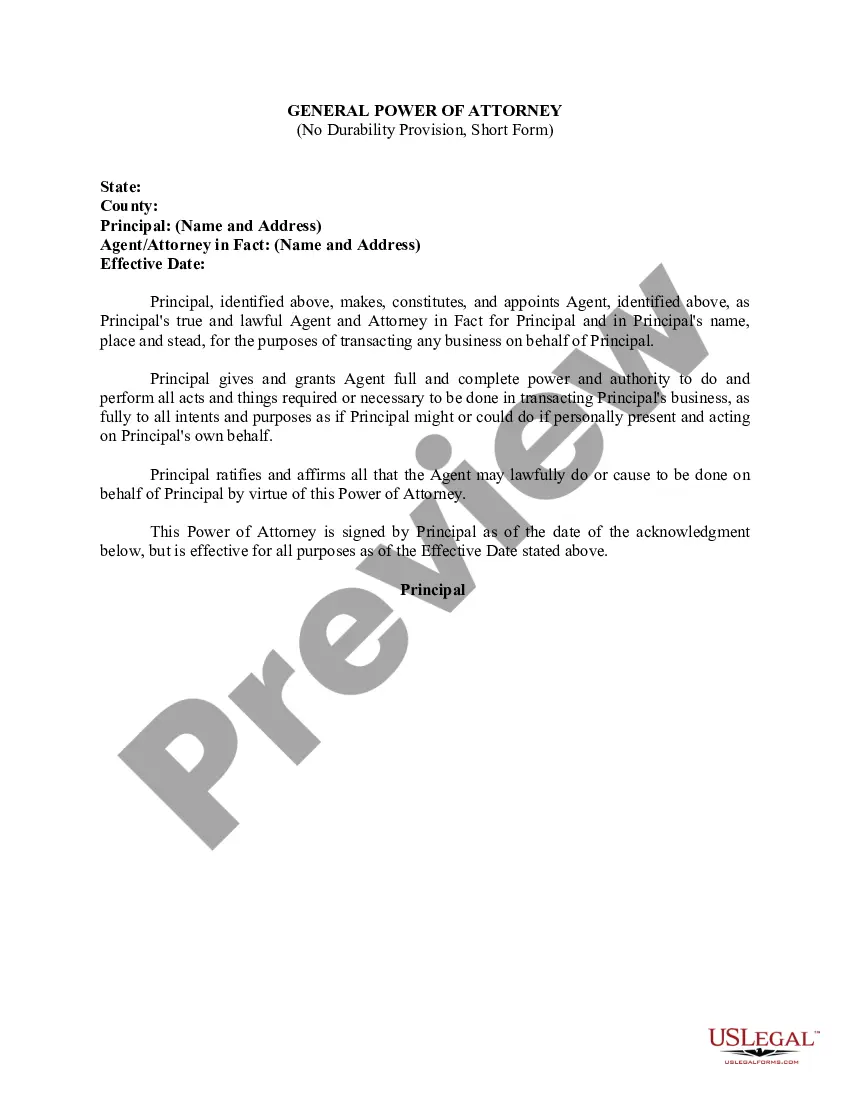
Looking for another form?
Form popularity
FAQ
Full names and titles of the people with whom you're doing business. Be sure they're all spelled correctly. Project objectives. Detailed description of the project. List of responsibilities. Fees. Timeline. Page numbers.
A consulting contract should have a termination provision. This will give the method for terminating the contract before the completion of services. The termination clause may contain the amount of notice that must be given by both parties and how any remuneration will be handled.
Consultant agreements are important because they outline what work will be done, as well as the terms of the agreement between the client and the consultant. A consultant agreement should be detailed and include compensation terms, contract termination, intellectual property ownership and confidentiality agreements.
An executive director's service agreement is very similar to a contract of employment. Both documents outline the rules, duties and reciprocal obligations that govern and underpin the relationship between the director and the company.
The consulting agreement is an agreement between a consultant and a client who wishes to retain certain specified services of the consultant for a specified time at a specified rate of compensation.
The market rate is the average price and range of pricing a typical customer will pay for your type of consulting service. If the average business consultant charges and receives $100 per hour, than the market rate is likely between $50 to $150 per hour.
A Transition Agreement is a contract between a company and a contractor to continue their services for a period of time after their original contract ends.
Protect yourself: Put your guidelines in writing -- and stick by them. Have a very clear discussion laying out your professional boundaries and ask your client to do the same. Come to an understanding about working hours and response times and agree on how you will schedule calls, meetings, and Skype sessions.
Recognize any contributions that have helped your team clarify future direction. Provide a brief summary of the strategic direction and explain how their services may not be aligned at this time. Offer references for their scope of work completed. Confirm the termination in writing or mode of agreed correspondence.