Connecticut Motion for Appointment of a Special Public Defender
About this form
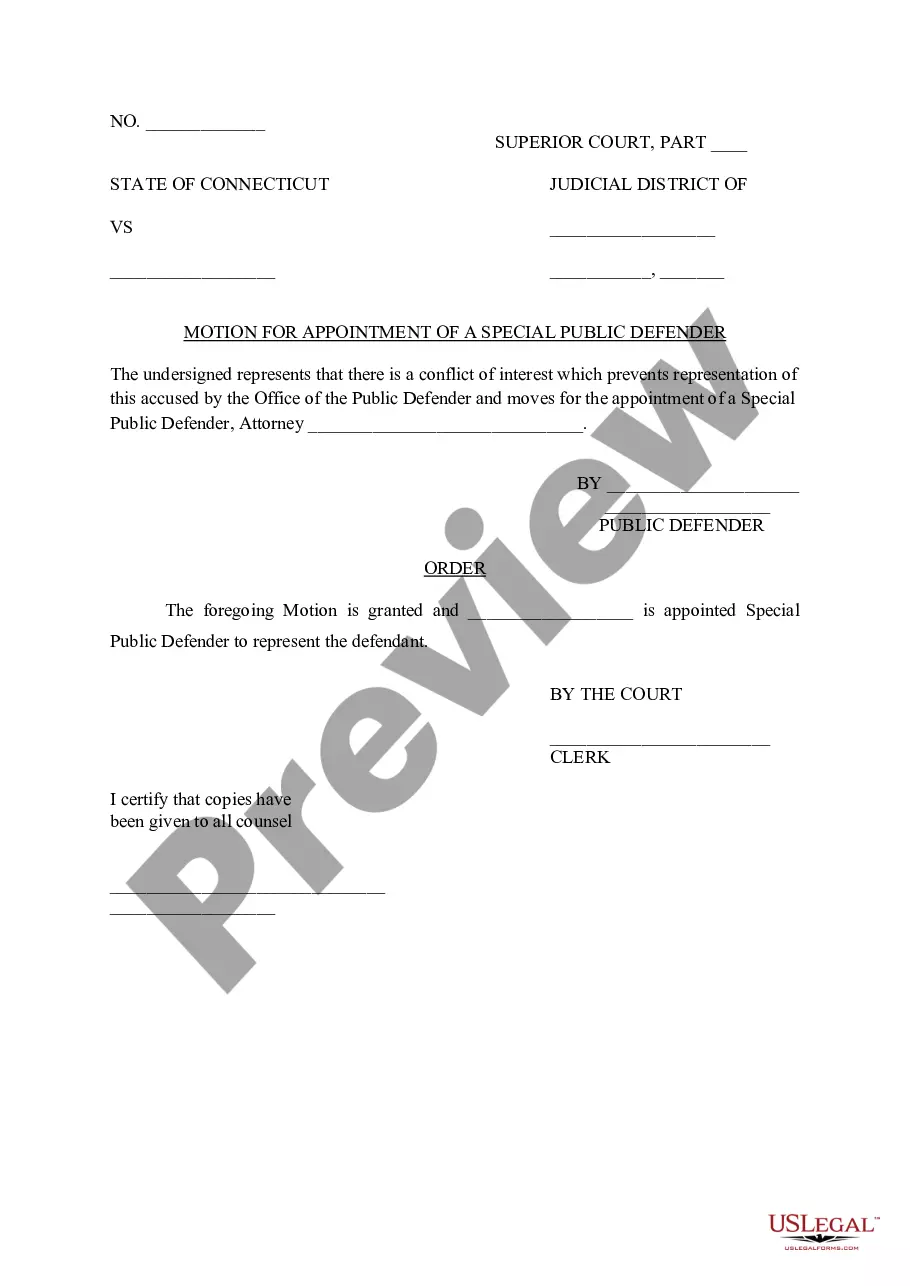
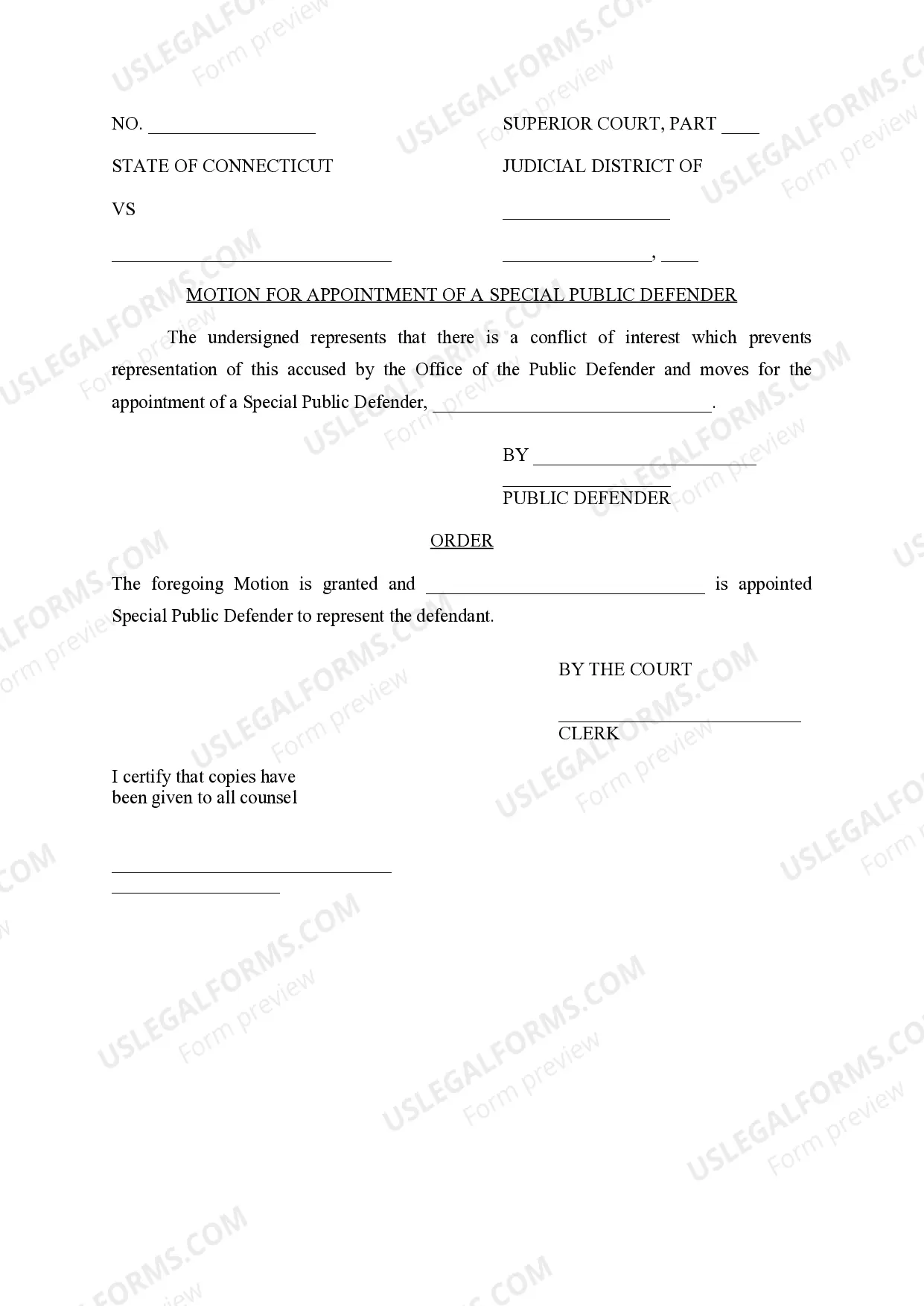
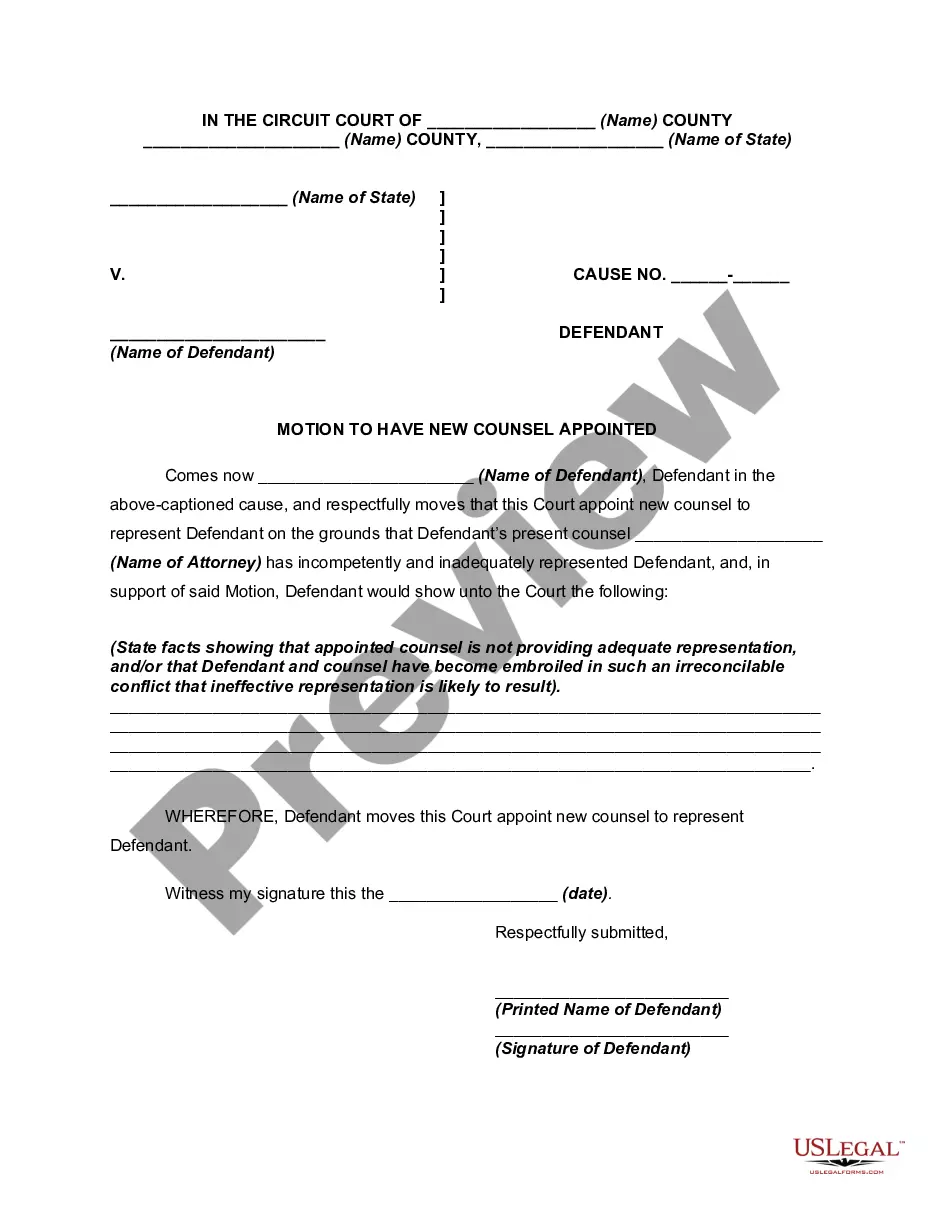
The Motion for Appointment of a Special Public Defender is a legal request submitted to the court when there is a conflict of interest with the assigned public defender. This form is essential for defendants who cannot afford to hire private counsel and need an alternative legal representative due to the conflict. It ensures that defendants receive appropriate legal representation in a fair and unbiased manner.
Key parts of this document
- Court information section to identify the relevant court and case number.
- Defendant's details, including their name and case specifics.
- Declaration of conflict of interest stating the reason for requesting a special public defender.
- Appointment of a special public defender with space for the attorneyâs name.
- Order section where the court grants the motion and appoints the defender.
- Certification section confirming that copies have been distributed to all relevant parties.
When to use this document
This form should be used when a defendant finds themselves in a situation where the public defender currently assigned to their case cannot represent them due to an inherent conflict of interest, such as a prior relationship with the defendant or a shared representation of co-defendants. This legal procedure is vital to ensure fair legal representation.
Intended users of this form
- Defendants who are assigned a public defender but require a different attorney due to a conflict of interest.
- Individuals who cannot afford private legal counsel and need to maintain proper defense representation.
- Legal representatives for defendants who need to formally request an alternate public defender.
How to prepare this document
- Identify the court and case number at the top of the form.
- Enter the names of the defendant and their charges in the appropriate sections.
- Clearly state the conflict of interest in the declaration section.
- Designate the attorney being requested as the special public defender.
- Sign the form, and ensure that copies are distributed to all necessary parties as indicated.
Is notarization required?
This form does not typically require notarization unless specified by local law. Always check with local court rules to ensure compliance with any specific requirements.
Get your form ready online
Our built-in tools help you complete, sign, share, and store your documents in one place.
Make edits, fill in missing information, and update formatting in US Legal Forms—just like you would in MS Word.
Download a copy, print it, send it by email, or mail it via USPS—whatever works best for your next step.
Sign and collect signatures with our SignNow integration. Send to multiple recipients, set reminders, and more. Go Premium to unlock E-Sign.
If this form requires notarization, complete it online through a secure video call—no need to meet a notary in person or wait for an appointment.
We protect your documents and personal data by following strict security and privacy standards.

Make edits, fill in missing information, and update formatting in US Legal Forms—just like you would in MS Word.

Download a copy, print it, send it by email, or mail it via USPS—whatever works best for your next step.

Sign and collect signatures with our SignNow integration. Send to multiple recipients, set reminders, and more. Go Premium to unlock E-Sign.

If this form requires notarization, complete it online through a secure video call—no need to meet a notary in person or wait for an appointment.

We protect your documents and personal data by following strict security and privacy standards.
Common mistakes to avoid
- Not providing adequate detail about the conflict of interest.
- Failing to sign the motion before submission.
- Leaving out required information about the defendant or case details.
Benefits of completing this form online
- Convenient access to a legally drafted form that can be downloaded quickly.
- Editability allows for adjustments tailored to individual needs without the hassle of paper forms.
- Reliability in using a form created by licensed attorneys, ensuring it meets legal standards.
Legal use & context
- Submitting a motion for a special public defender is a critical step in ensuring that legal representation is fair and unbiased.
- The court has the authority to grant this motion based on the information provided regarding the conflict.
- Successful completion of this form helps maintain the rights of the defendant to receive proper counsel.
What to keep in mind
- The form is necessary for defendants requiring alternative representation due to a conflict of interest with their assigned public defender.
- It is crucial to provide detailed information regarding the conflict and to follow all procedural rules when completing the form.
- Ensure all necessary information is included and properly signed to avoid delays in legal representation.
Looking for another form?
Form popularity
FAQ
The downsides of a public defender often stem from resource limitations and high caseloads, which can lead to a lack of personalized attention. Additionally, public defenders may have less flexibility in how they allocate time or resources to your case compared to private attorneys. Furthermore, you might feel that your specific needs are not fully addressed. However, it's important to recognize that a Connecticut Motion for Appointment of a Special Public Defender can still secure competent representation during challenging legal circumstances.
Public defenders primarily benefit individuals who do not have the financial means to hire a private attorney. This includes low-income individuals or those facing serious charges who cannot navigate the legal system alone. Additionally, public defenders often have experience dealing with similar cases, which can provide valuable insights into the legal process. If you're unsure about your eligibility, consider submitting a Connecticut Motion for Appointment of a Special Public Defender to explore your options.
While public defenders provide essential legal services, they often handle heavy caseloads, which may limit the time they can dedicate to your case. This can affect the depth of their preparation and the resources available to pursue your legal options. Additionally, some may feel that the attention given to their case is not as personal as it would be with a private attorney. Despite these drawbacks, filing a Connecticut Motion for Appointment of a Special Public Defender ensures you receive legal representation.
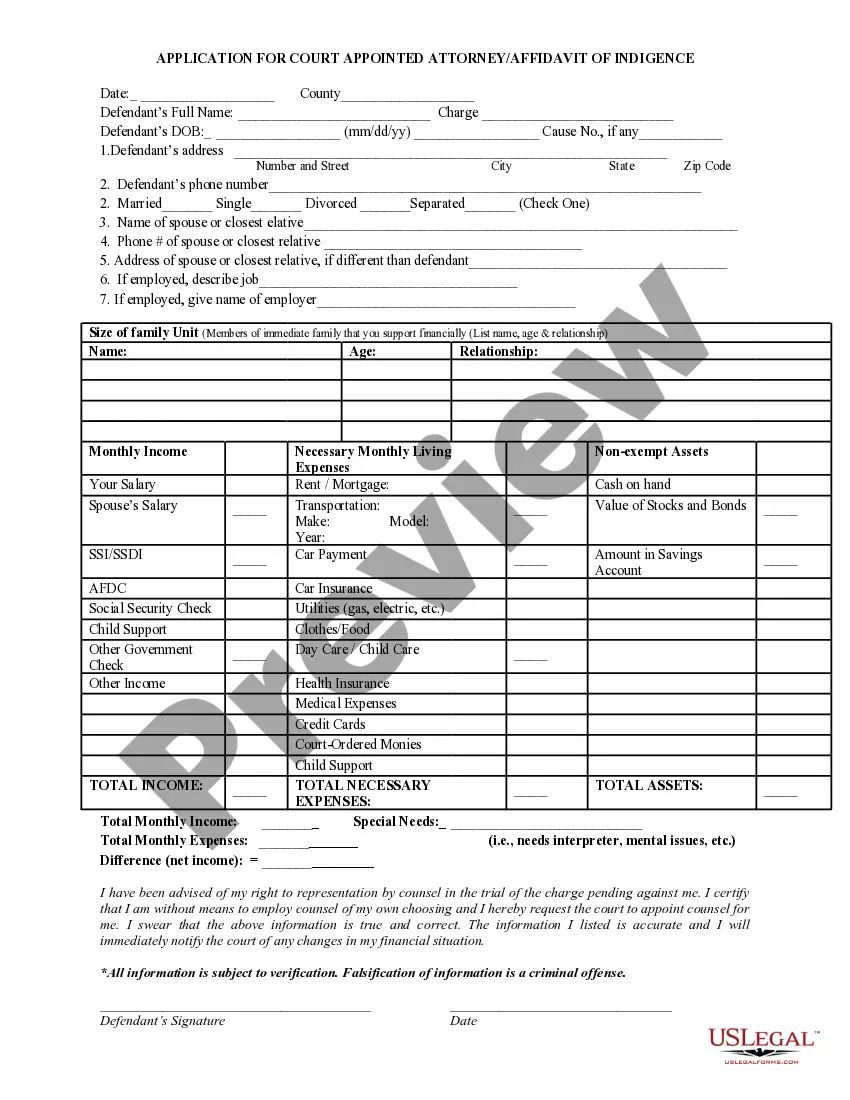
To get a public defender in Connecticut, you need to submit a Connecticut Motion for Appointment of a Special Public Defender. This process typically begins with a request during your initial court appearance or a scheduled hearing. The court will review your financial situation to determine if you qualify based on income and assets. If approved, a public defender will be assigned to your case.
You cannot guarantee a specific public defender, as assignments depend on the court’s discretion and availability. However, you can request a particular defender if you have had prior experience with them or believe they would be particularly effective for your case. It's valuable to convey your reasons clearly when submitting a Connecticut Motion for Appointment of a Special Public Defender.
The approval process for a public defender in Connecticut can vary, but it typically happens quickly once you file the necessary paperwork. After submitting your financial affidavit and the Connecticut Motion for Appointment of a Special Public Defender, the court will review your application. Most people receive a decision during their initial court hearing.
To apply for a public defender in Connecticut, you must complete a financial affidavit demonstrating your eligibility. This process usually occurs during your first court appearance. It's important to file a Connecticut Motion for Appointment of a Special Public Defender as soon as possible to ensure timely representation.
The success rate of public defenders varies widely based on the case type and circumstances. While specific statistics for Connecticut may fluctuate, public defenders often achieve favorable outcomes for many clients. Therefore, effective representation, alongside a Connecticut Motion for Appointment of a Special Public Defender, plays an essential role in your case.
You may not qualify for a public defender if your income exceeds the threshold set by Connecticut law. Additionally, if your charges do not warrant serious penalties, the court may decide against appointing a defender. Understanding these criteria is crucial in navigating the Connecticut Motion for Appointment of a Special Public Defender process.
In Connecticut, you generally do not get to choose your public defender. When you file a Connecticut Motion for Appointment of a Special Public Defender, the court assigns the defender based on availability and expertise. However, you can express concerns regarding your assigned defender to the court, which may consider your input.