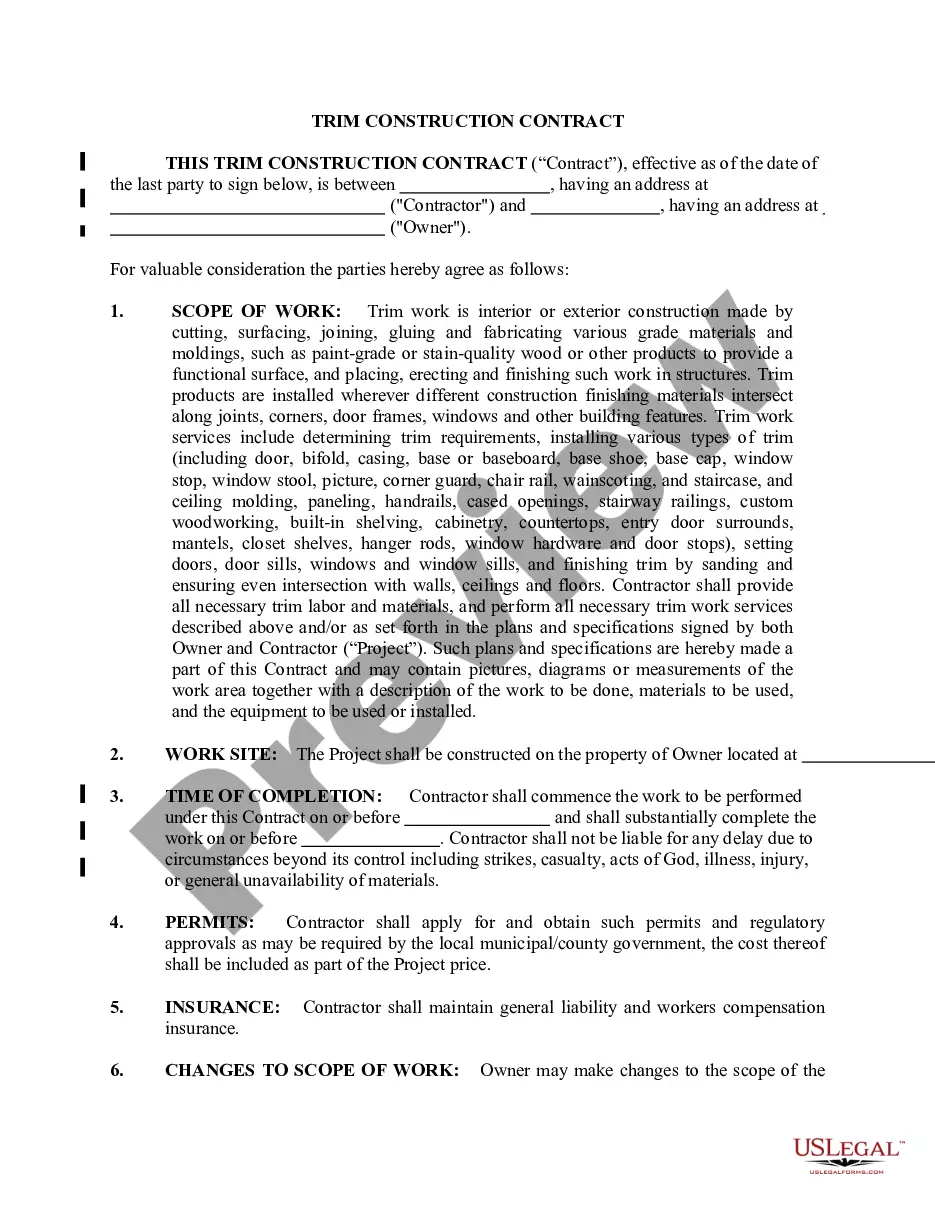
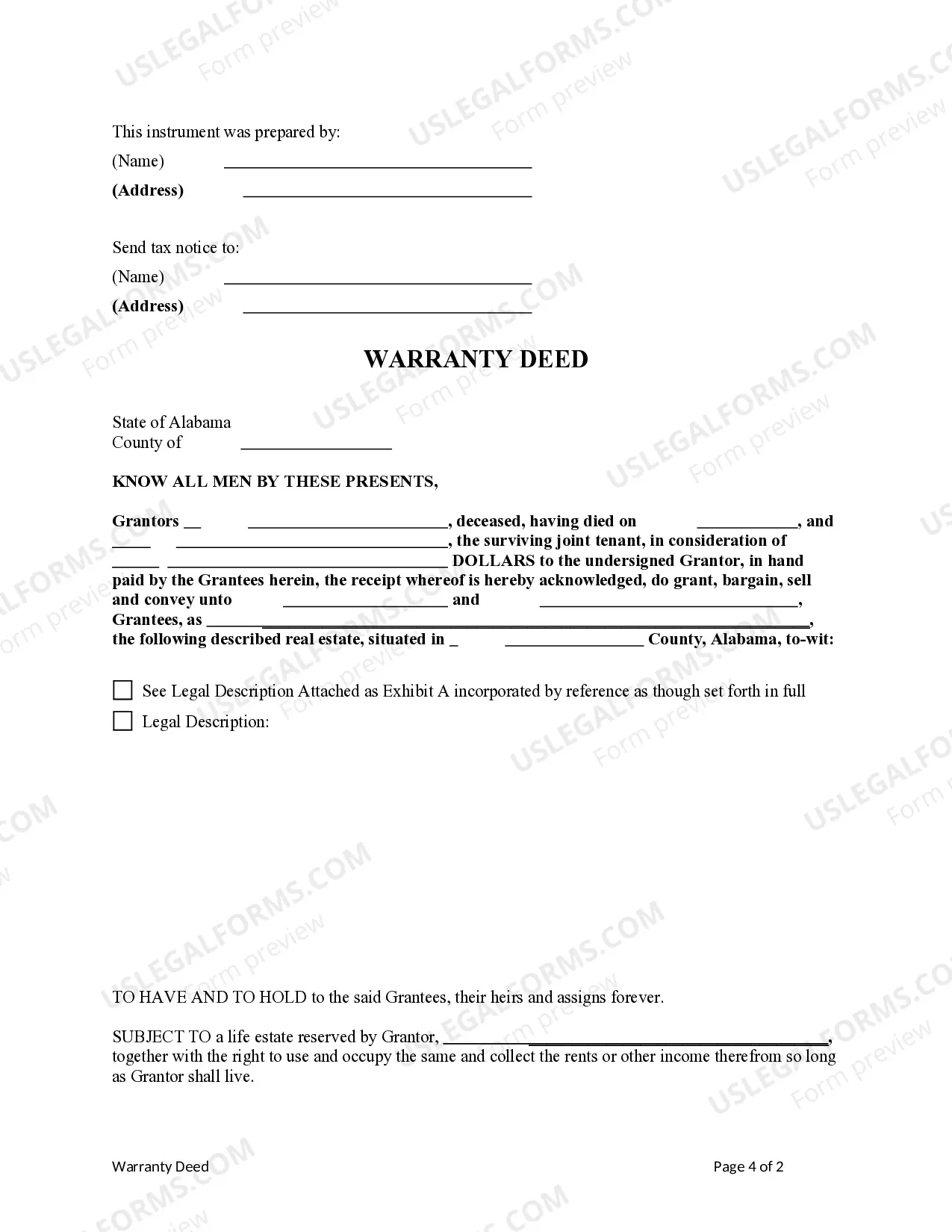
Alabama Warranty Deed from two individual Grantors, one being deceased, to two individuals with reserved Life Estate in surviving Grantor.
This Warranty Deed allows two individual Grantors, one of whom is deceased, to transfer property to two Grantees while reserving a Life Estate for the surviving Grantor. This legal document ensures that the property is conveyed with a guarantee of title and is compliant with statutory laws, distinguishing it from other deeds that may not offer such protections.
- Grantors: Identifying information for both individual Grantors, including the deceased.
- Grantees: Names and details of the two individuals receiving the property.
- Property description: Detailed legal description of the property being transferred.
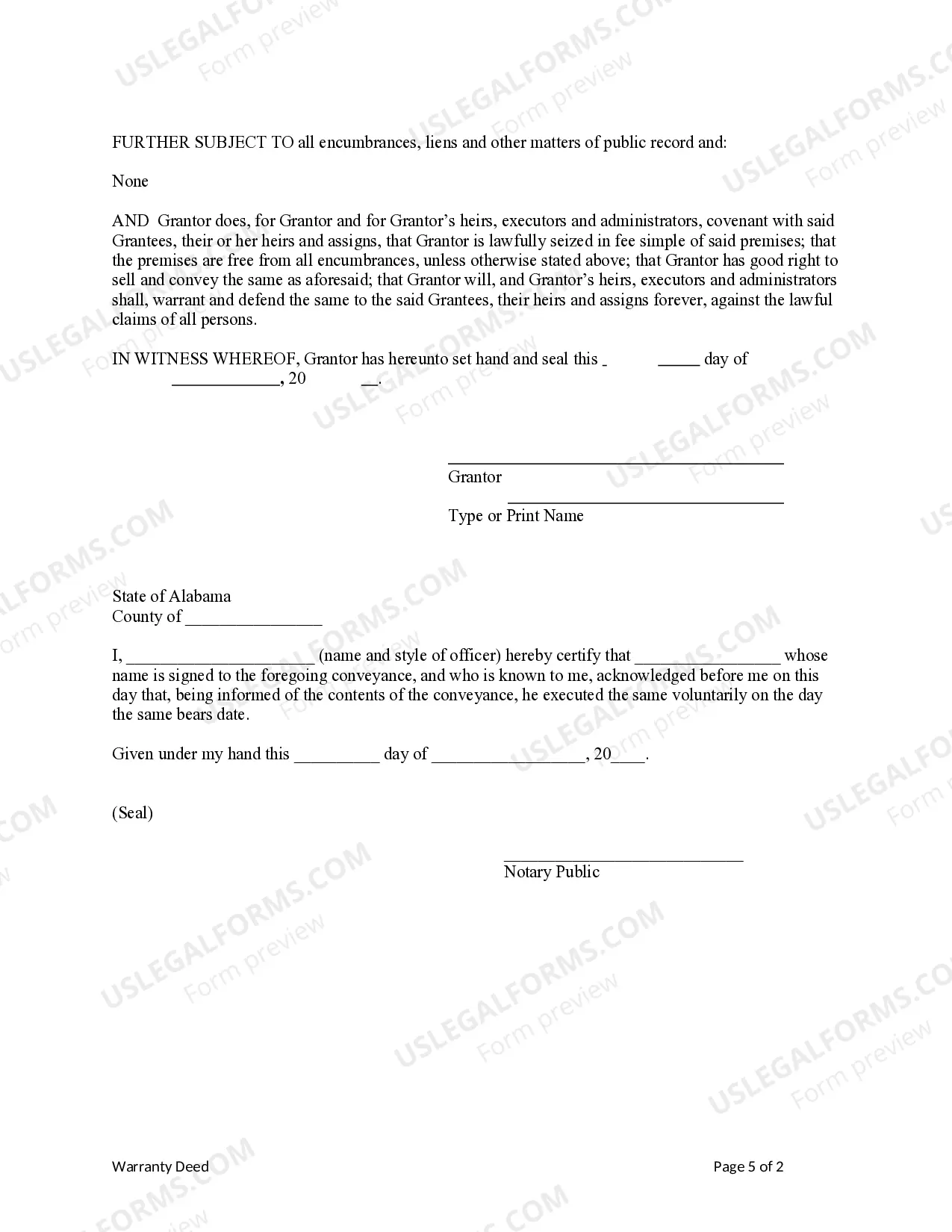
- Life Estate clause: Specifies that the surviving Grantor retains rights to the property for their lifetime.
- Signatures and notarization: Required signatures of Grantors and a notary public.


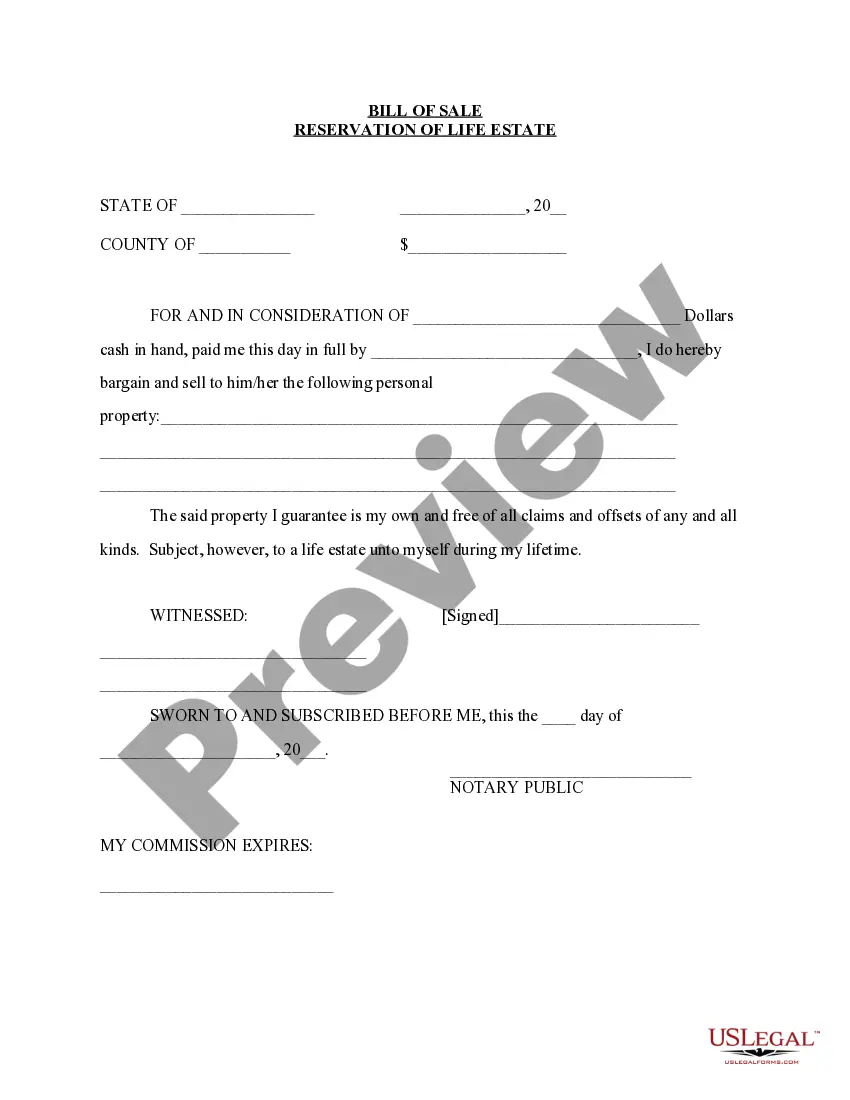

This form is useful when one of the joint Grantors has passed away and the surviving Grantor wishes to transfer property to two individuals while maintaining a Life Estate. It is commonly used in estate planning to ensure the surviving Grantor can continue to benefit from the property during their lifetime.
This form is suitable for:
- Homeowners who have joint tenancy property with a deceased partner.
- Individuals looking to transfer property with a reserved Life Estate.
- Heirs involved in estate planning and property transfer matters.
Follow these steps to complete the Warranty Deed:
- Identify the Grantors including the deceased individual and the surviving joint tenant.
- Enter the names of the Grantees who will receive the property.
- Provide a legal description of the property being conveyed.
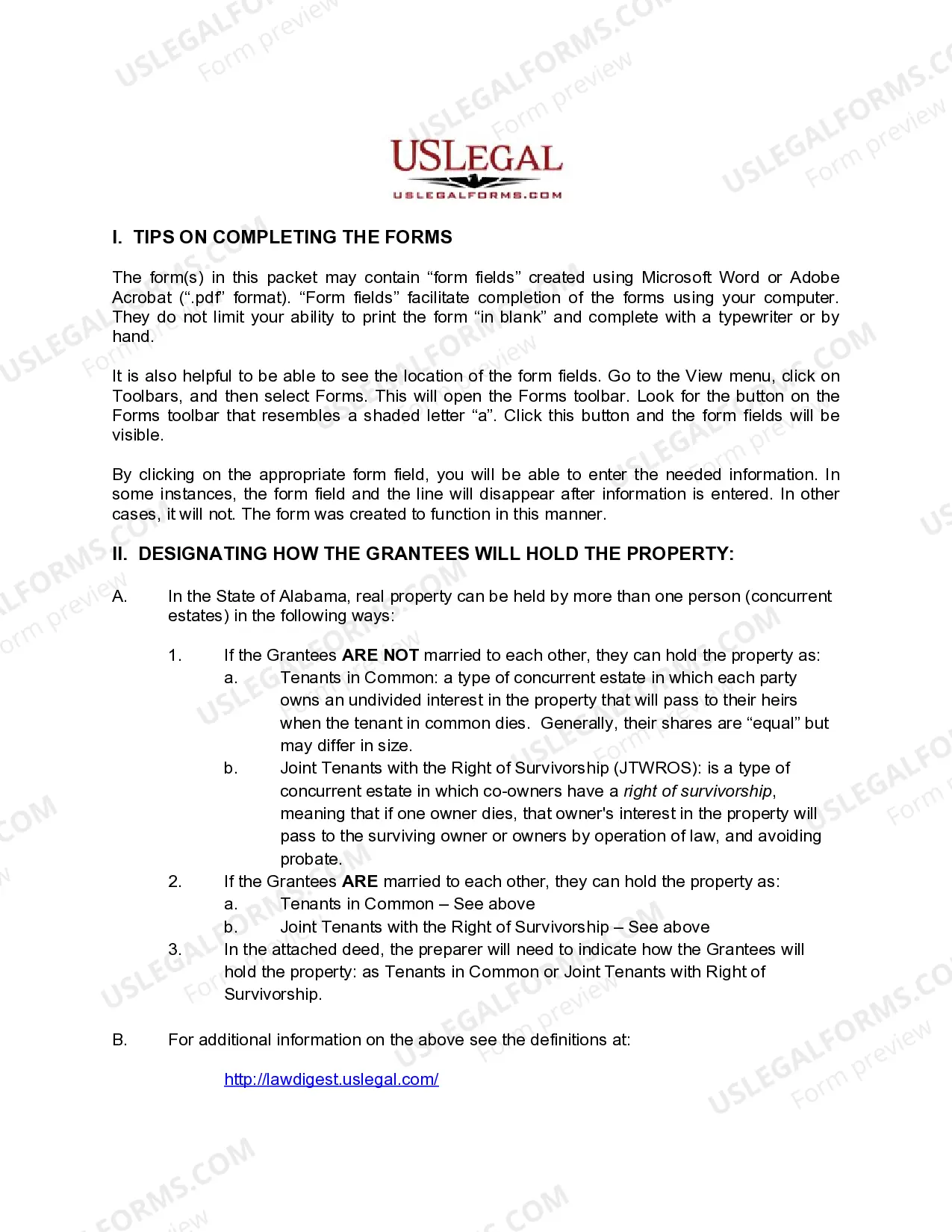
- Specify how the Grantees will hold the property (Tenants in Common or Joint Tenants with Right of Survivorship).
- Ensure that all parties sign the document in the presence of a notary public.
Does this document require notarization?
This form needs to be notarized to ensure legal validity. US Legal Forms provides secure online notarization powered by Notarize, allowing you to complete the process through a verified video call, available anytime.
Get your form ready online
Our built-in tools help you complete, sign, share, and store your documents in one place.
Make edits, fill in missing information, and update formatting in US Legal Forms—just like you would in MS Word.
Download a copy, print it, send it by email, or mail it via USPS—whatever works best for your next step.
Sign and collect signatures with our SignNow integration. Send to multiple recipients, set reminders, and more. Go Premium to unlock E-Sign.
If this form requires notarization, complete it online through a secure video call—no need to meet a notary in person or wait for an appointment.
We protect your documents and personal data by following strict security and privacy standards.
Make edits, fill in missing information, and update formatting in US Legal Forms—just like you would in MS Word.
Download a copy, print it, send it by email, or mail it via USPS—whatever works best for your next step.
Sign and collect signatures with our SignNow integration. Send to multiple recipients, set reminders, and more. Go Premium to unlock E-Sign.

If this form requires notarization, complete it online through a secure video call—no need to meet a notary in person or wait for an appointment.

We protect your documents and personal data by following strict security and privacy standards.
- Failing to include the full legal description of the property.
- Not correctly indicating the deceased Grantor.
- Omitting how the Grantees will hold the property.
- Not having the document notarized when required.
- Convenient online access to the legal form for immediate download.
- Editability allows for adjustments before finalizing the document.
- Ensures compliance with state laws for property transfer.
Looking for another form?
Form popularity
FAQ
If there is a single remainderman and they pass away before the life estate holder, the property passes in accordance with the will, trust, or laws of the state of the remainderman when the life estate ends.
What Is a Remainderman? A remainderman is a property law term that refers to the person who inherits or is entitled to inherit property upon the termination of the life estate of the former owner.
If the deceased was sole owner, or co-owned the property without right of survivorship, title passes according to his will. Whoever the will names as the beneficiary to the house inherits it, which requires filing a new deed confirming her title. If the deceased died intestate -- without a will -- state law takes over.
The owner of the life estate can remove or change the remaindermen if he or she (grantor or life tenant) wants. For a better view and options, one should consult with an attorney.
If one co-owner dies, their interest in the property automatically passes to the surviving co-owner(s), whether or not they have a will. As tenants in common, co-owners own specific shares of the property. Each owner can leave their share of the property to whoever they choose.
In most cases, the surviving owner or heir obtains the title to the home, the former owner's death certificate, a notarized affidavit of death, and a preliminary change of ownership report form. When all these are gathered, the transfer gets recorded, the fees are paid, and the county issues a new title deed.
When a joint owner dies, the process is relatively simple you just need to inform the Land Registry of the death. You should complete a 'Deceased joint proprietor' form on the government's website and then send the form to the Land Registry, with an official copy of the death certificate.
File a petition in probate court. The first step to transferring the property to the rightful new owners is to open up a case in probate court. Petition the court for sale and convey the property to the purchaser. Next, you must petition the court to sell the property.