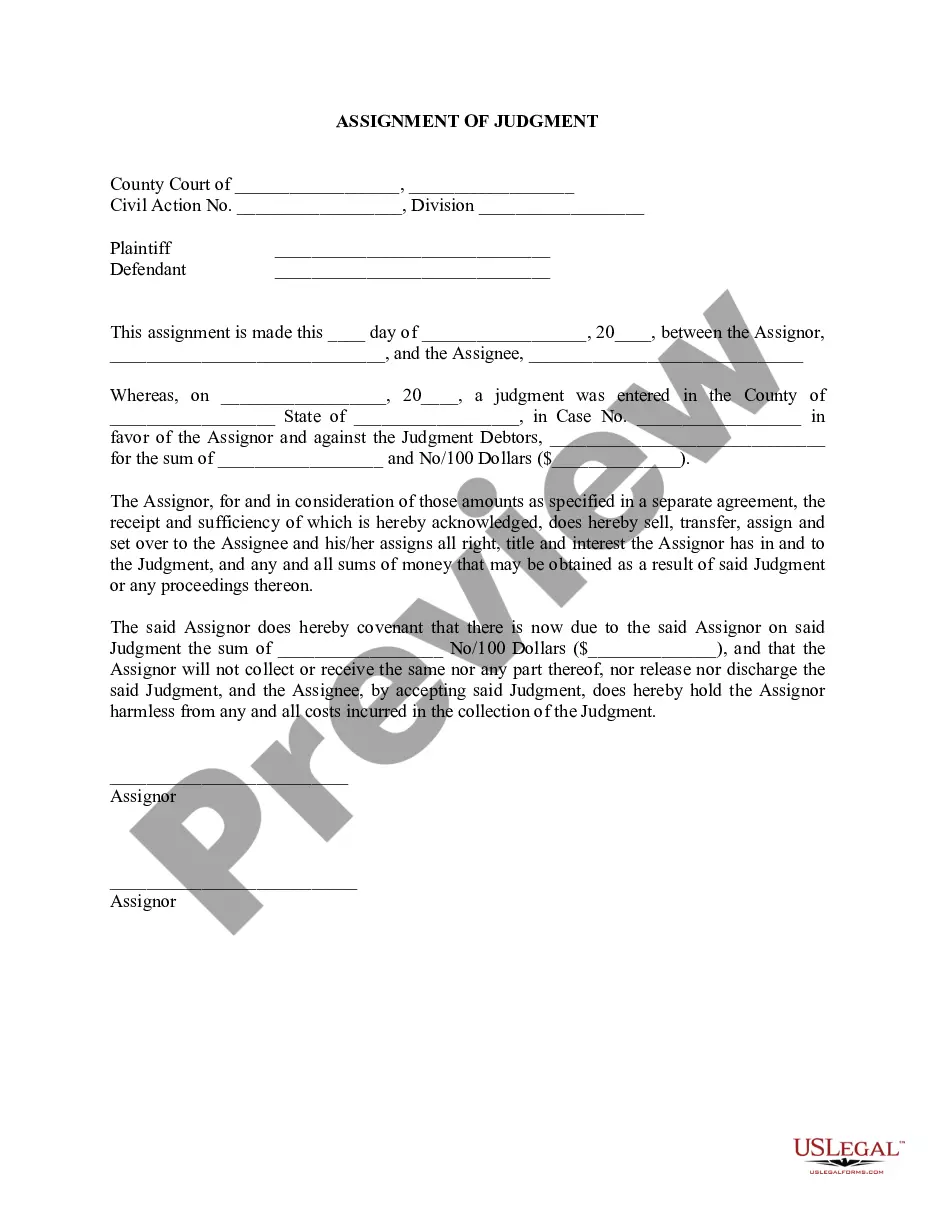
Alabama Security Contract for Contractor
Understanding this form
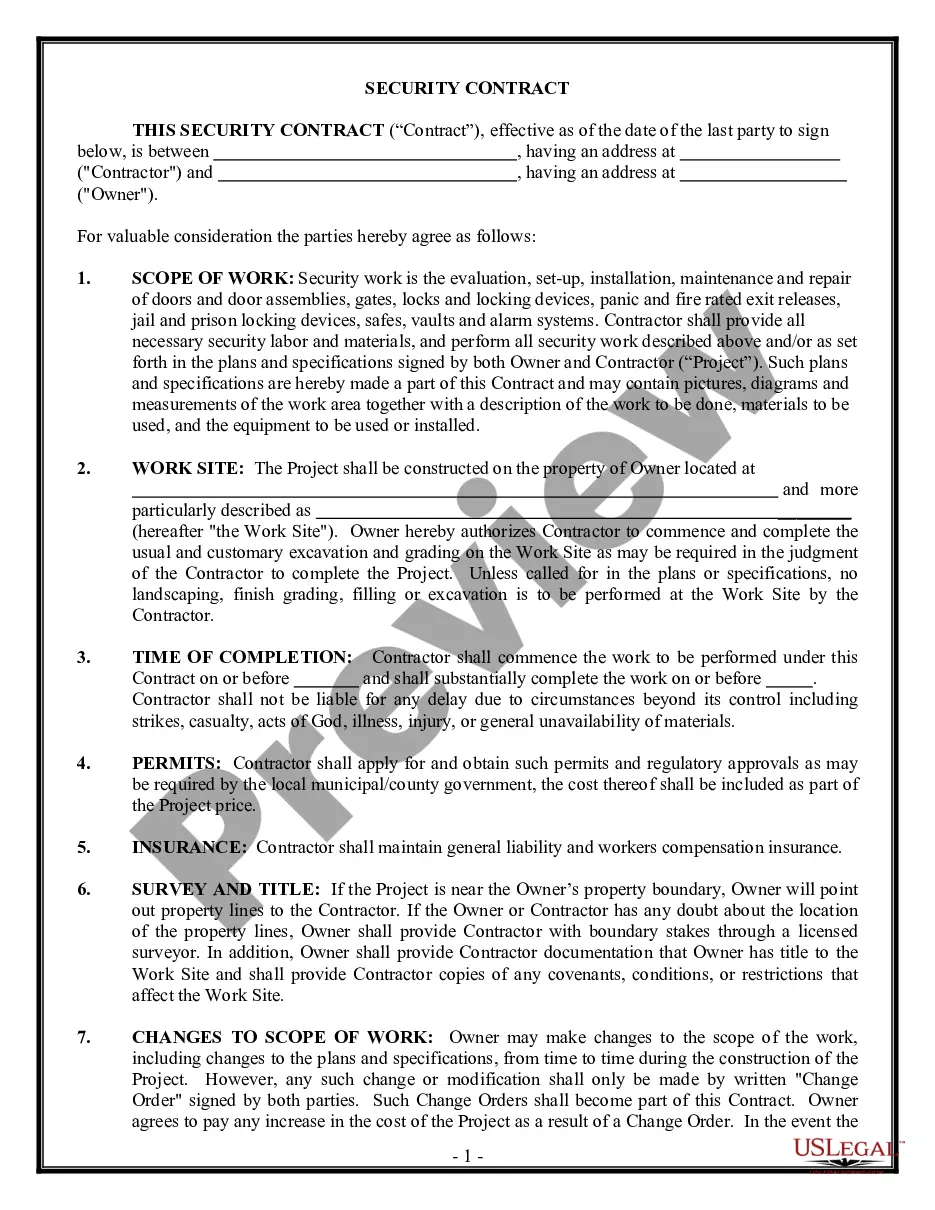
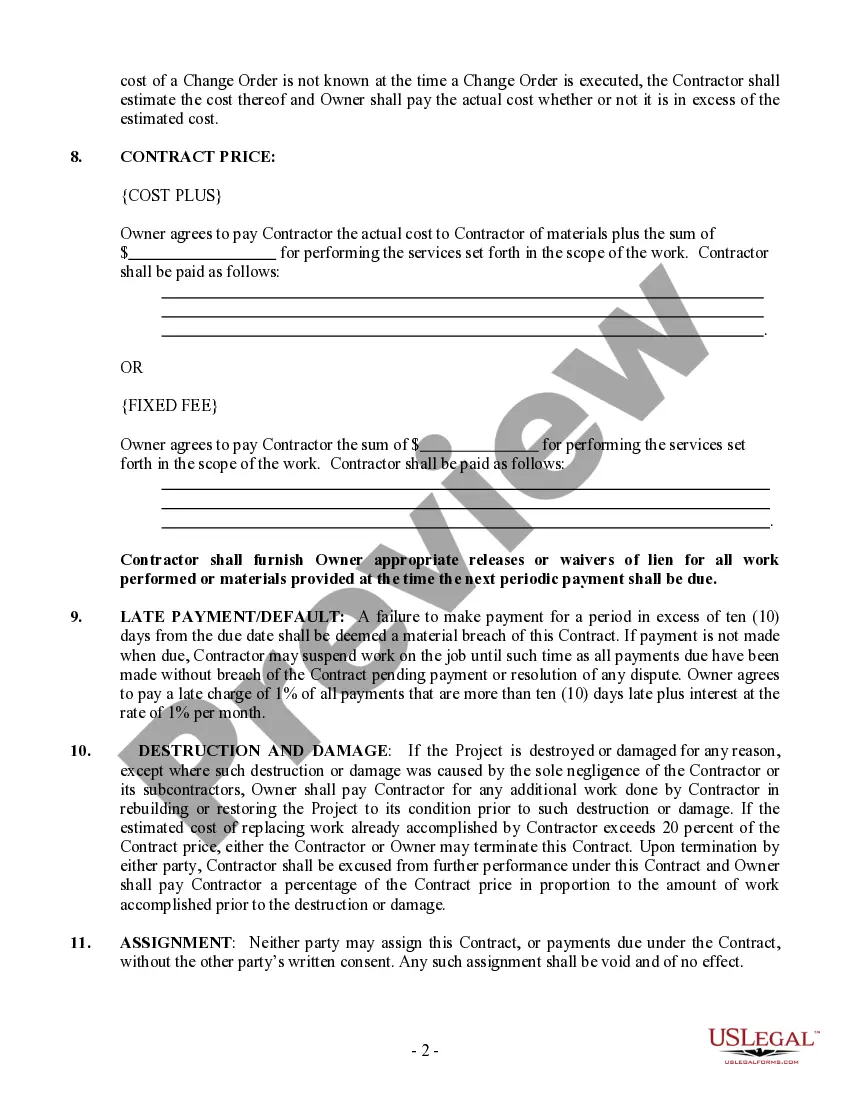
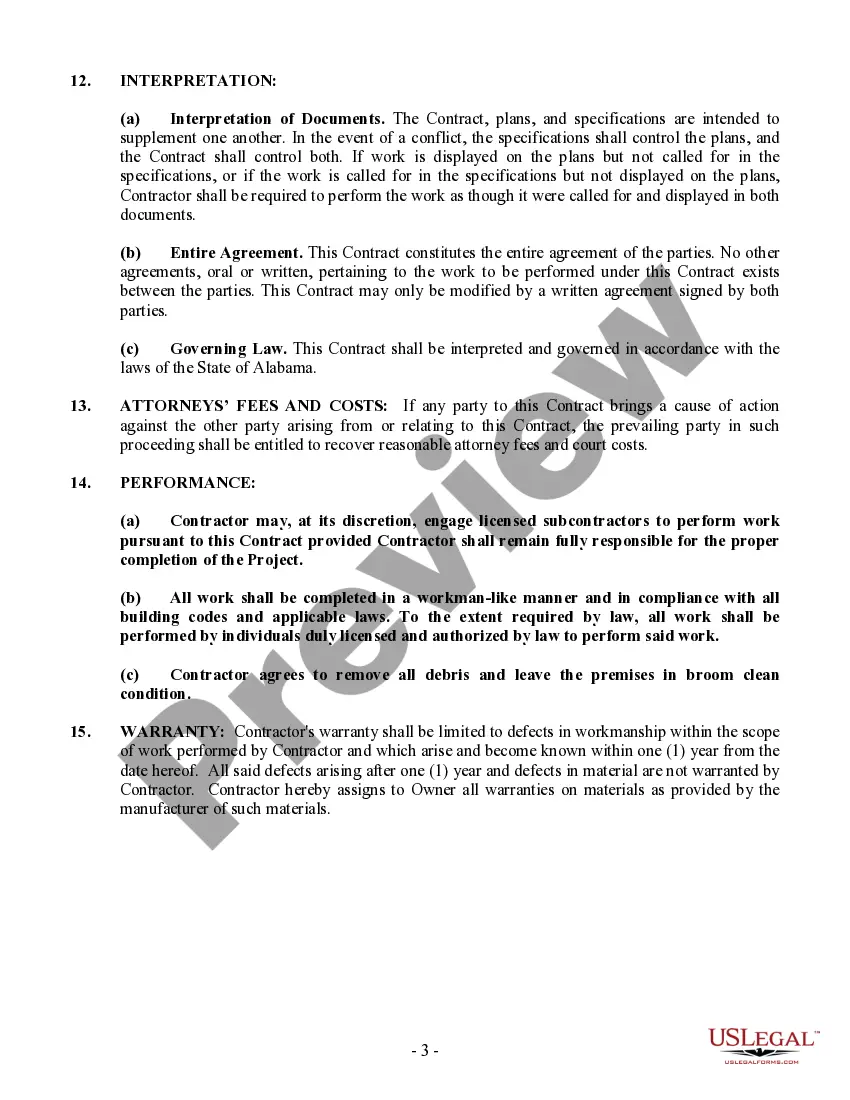
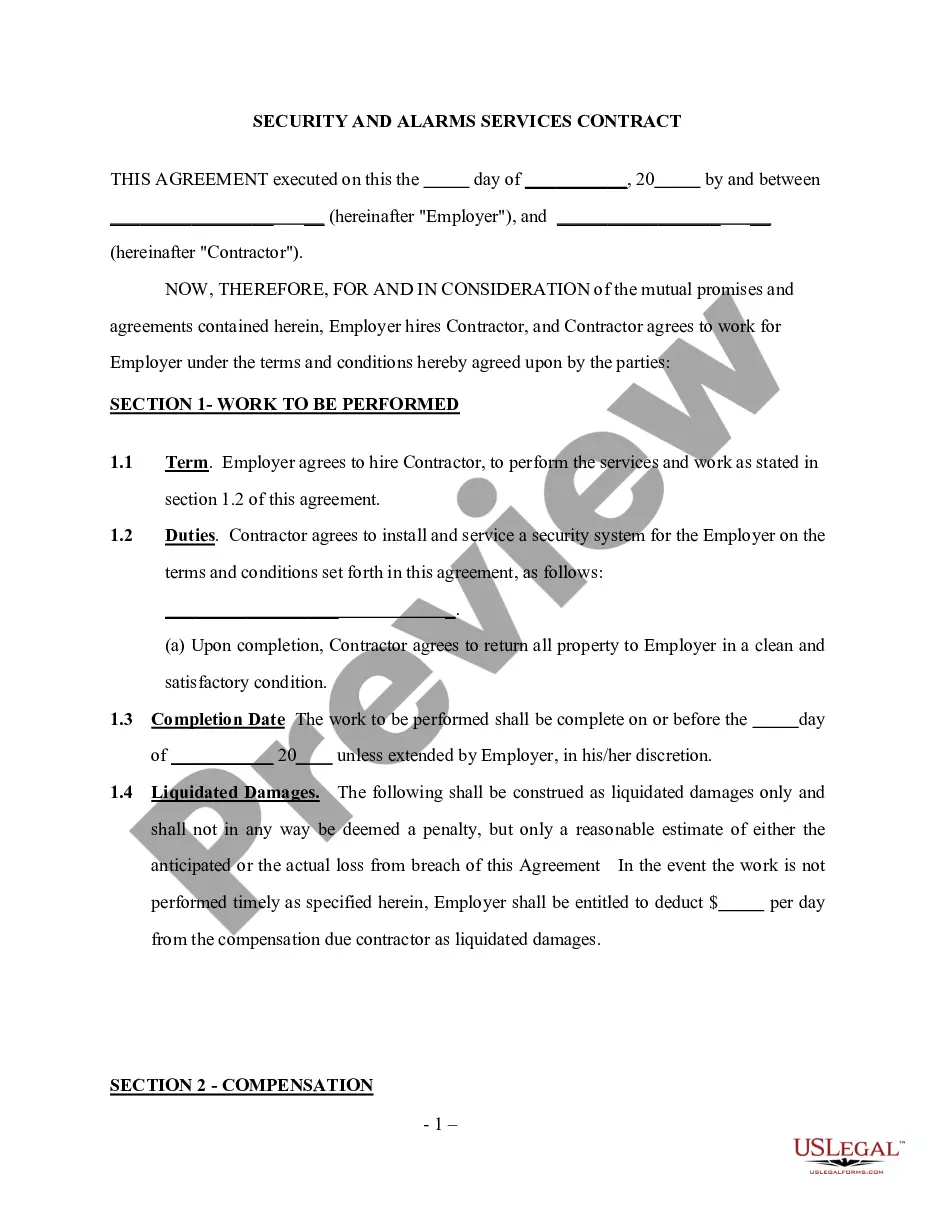
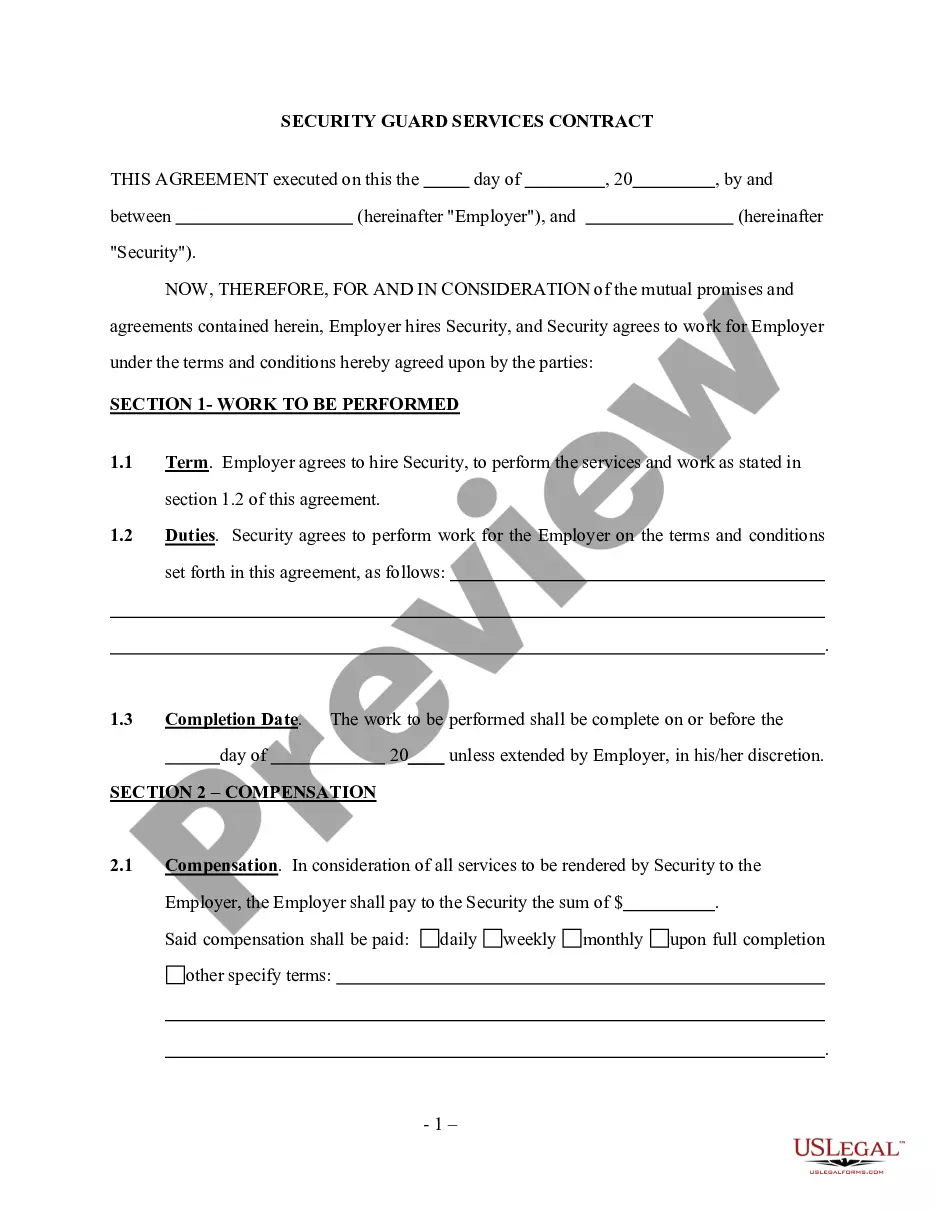
The Security Contract for Contractor is a legal document used to establish the terms and conditions between security contractors and property owners. It outlines payment arrangements, permits, insurance requirements, and provisions for changes to the scope of work. This specific form is created to comply with Alabama state laws, setting it apart from similar contracts used in other jurisdictions.
What’s included in this form
- Permits: The contractor is responsible for obtaining necessary permits and approvals.
- Insurance: The contractor must maintain general liability and workers compensation insurance.
- Change Orders: Allows the owner to request changes, which must be documented in writing.
- Contract Price: Defines how changes affect the project's cost.
- Termination: Addresses conditions under which the contract may be terminated due to damage.
- Entire Agreement: Specifies that the contract includes all terms agreed upon by both parties.
When to use this form
This form should be used when a property owner hires a security contractor to protect their property. It is applicable in various scenarios, including construction sites, corporate offices, and residential properties, where clear terms regarding security services need to be established.
Who needs this form
- Property owners needing security services for their premises.
- Security contractors offering their services to property owners.
- Individuals seeking a formal agreement to outline expectations and responsibilities.
How to complete this form
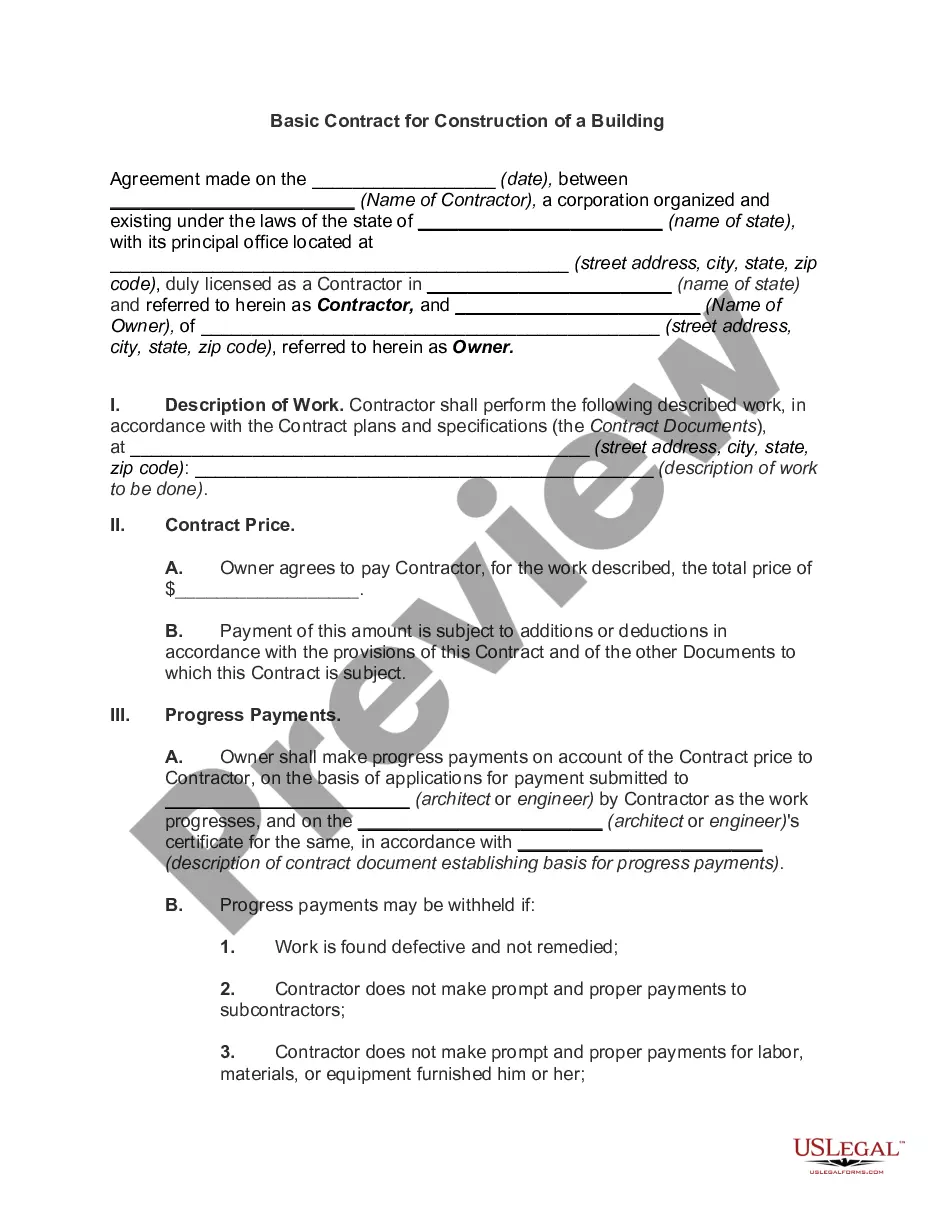
- Identify the parties: Clearly state the names and addresses of the property owner and contractor.
- Specify the project details: Describe the security services to be provided and relevant work site information.
- Outline payment terms: Decide whether the payment will be fixed fee or cost-plus, and indicate the contract price.
- Document insurance requirements: Ensure that the contractor's insurance details are included.
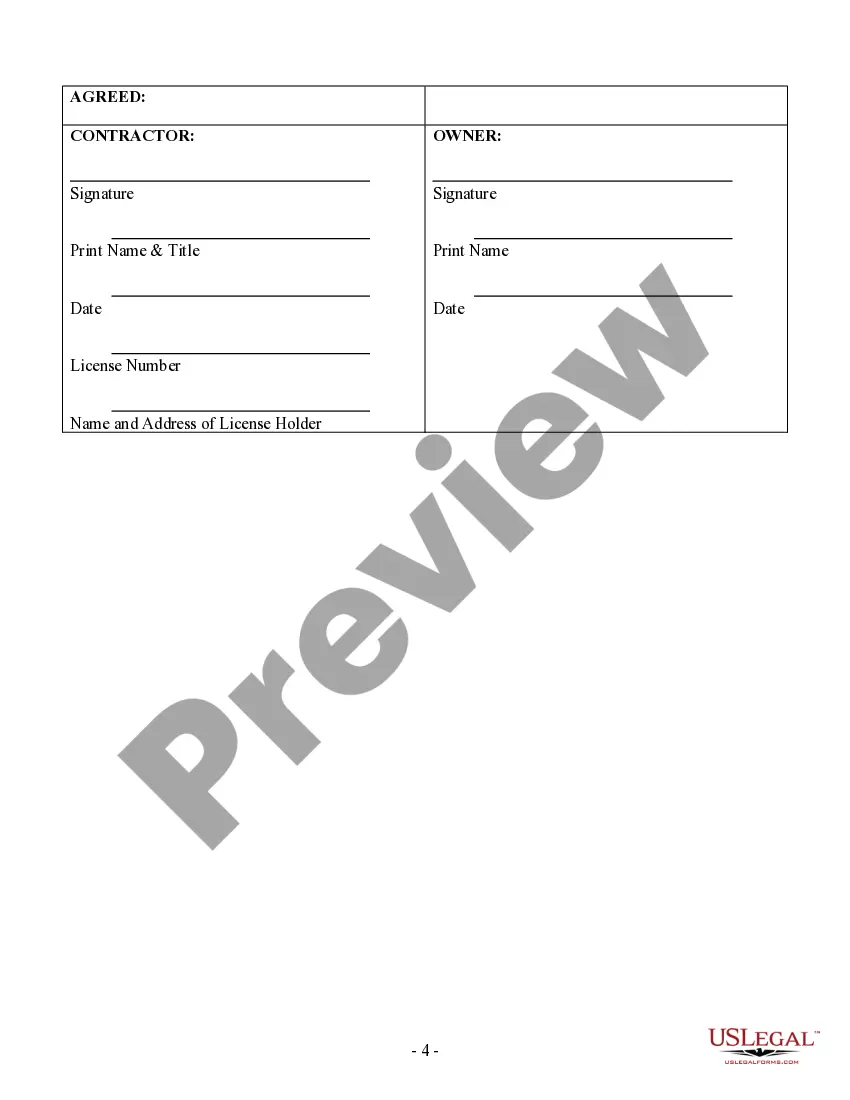
- Obtain signatures: Both parties must sign and date the contract to make it legally binding.
Notarization requirements for this form
This form does not typically require notarization unless specified by local law. However, having a notarized agreement can add an additional layer of security and validity.
Get your form ready online
Our built-in tools help you complete, sign, share, and store your documents in one place.
Make edits, fill in missing information, and update formatting in US Legal Forms—just like you would in MS Word.
Download a copy, print it, send it by email, or mail it via USPS—whatever works best for your next step.
Sign and collect signatures with our SignNow integration. Send to multiple recipients, set reminders, and more. Go Premium to unlock E-Sign.
If this form requires notarization, complete it online through a secure video call—no need to meet a notary in person or wait for an appointment.
We protect your documents and personal data by following strict security and privacy standards.

Make edits, fill in missing information, and update formatting in US Legal Forms—just like you would in MS Word.

Download a copy, print it, send it by email, or mail it via USPS—whatever works best for your next step.

Sign and collect signatures with our SignNow integration. Send to multiple recipients, set reminders, and more. Go Premium to unlock E-Sign.

If this form requires notarization, complete it online through a secure video call—no need to meet a notary in person or wait for an appointment.

We protect your documents and personal data by following strict security and privacy standards.
Avoid these common issues
- Failing to include all necessary details about the project and services.
- Not obtaining and documenting required permits.
- Omitting signatures, making the contract unenforceable.
Why complete this form online
- Convenient access to a legally vetted contract tailored to Alabama laws.
- Editability allows users to customize the form for specific needs.
- Reliable format ensures that all essential components are included and easily understood.
Legal use & context
- This contract is enforceable under Alabama law, provided it is completed correctly.
- Clear documentation helps prevent disputes regarding security services.
- Both parties are advised to seek legal counsel to ensure all terms meet their needs.
Key takeaways
- The Security Contract for Contractor is tailored for Alabama's legal standards.
- It provides clear terms on payment, scope, and responsibilities.
- Proper completion of the form can prevent disputes and ensure compliance.
Looking for another form?
Form popularity
FAQ
Begin with the Date and the Address of the Other Party. Start with the Basic Details of the Planned Work. Include Special Stipulations. State Whether There Will be a Further Agreement. Create an Area for Signatures. Sign and Date the Contract Letter.
Identifying/Contact Information. Title and Description of the Project. Projected Timeline and Completion Date. Cost Estimate and Payment Schedule. Stop Work Clause and Stop Payment Clause. Act of God Clause. Change Order Agreement. Warranty.
Name of contractor and contact information. Name of homeowner and contact information. Describe property in legal terms. List attachments to the contract. The cost. Failure of homeowner to obtain financing. Description of the work and the completion date. Right to stop the project.
If you run a small business that hires 1099 contractors, also known as independent contractors, it is vital that you have them sign an independent contractor contract. This is because there is a significant gray area between who is classified as an independent contractor and who is classified as an employee.
Contract Types Overview. Express and Implied Contracts. Unilateral and Bilateral Contracts. Unconscionable Contracts. Adhesion Contracts. Aleatory Contracts. Option Contracts. Fixed Price Contracts.
Both parties should sign the contract, and both should be bound by the terms and conditions spelled out in the agreement. In general that means the contractor will be obliged to provide specified materials and to perform certain services for you. In turn, you will be required to pay for those goods and that labor.
Go to Small Claims Court. Small claims court is a legal venue for homeowners who feel they are owed money back from a contractor. Hire an Attorney. File a Complaint with the State. Pursue a Bond Claim. Post Reviews.
#1: Review Your Bid. #2: Review Complete Plans. #3: Review All Specifications. #4: Visit the Job Site. #5: Review the Job Schedule. #6: Complete a Project Checklist. #7: Verify Project Funding. #8: Read Complete Contract.