Colorado Assignment of Judgment
Overview of this form
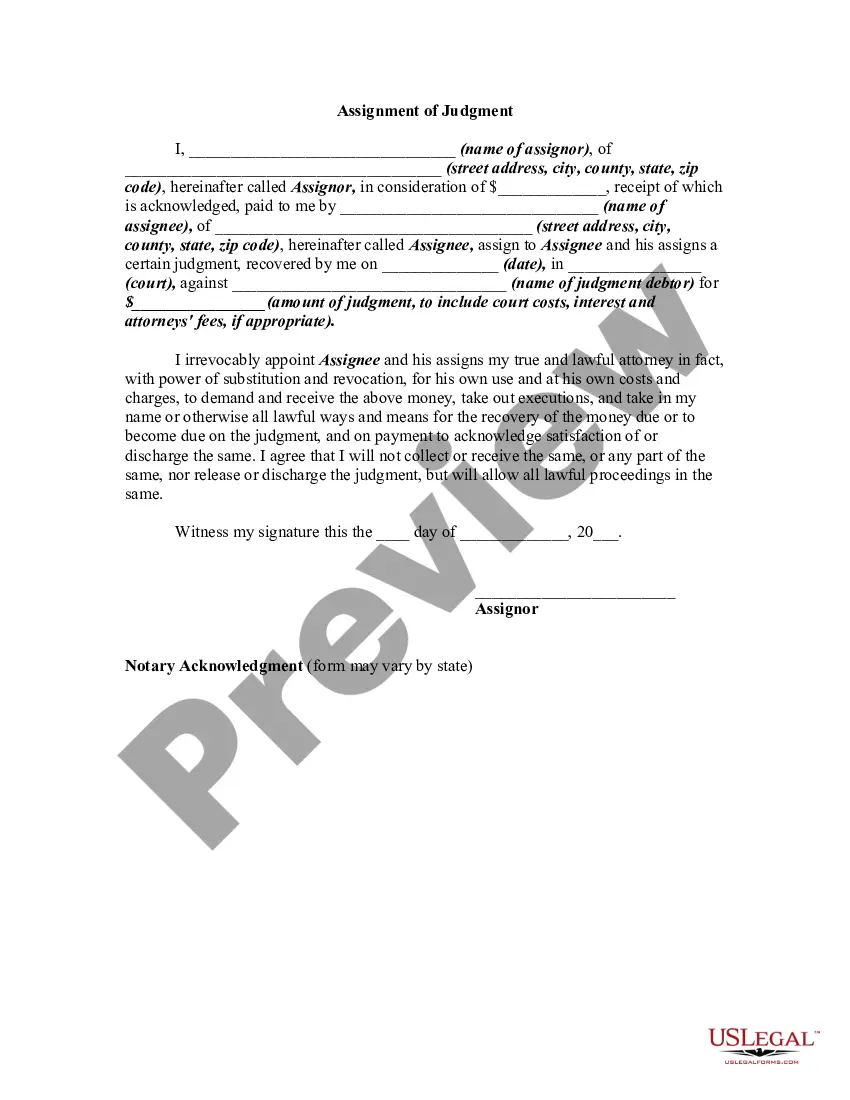
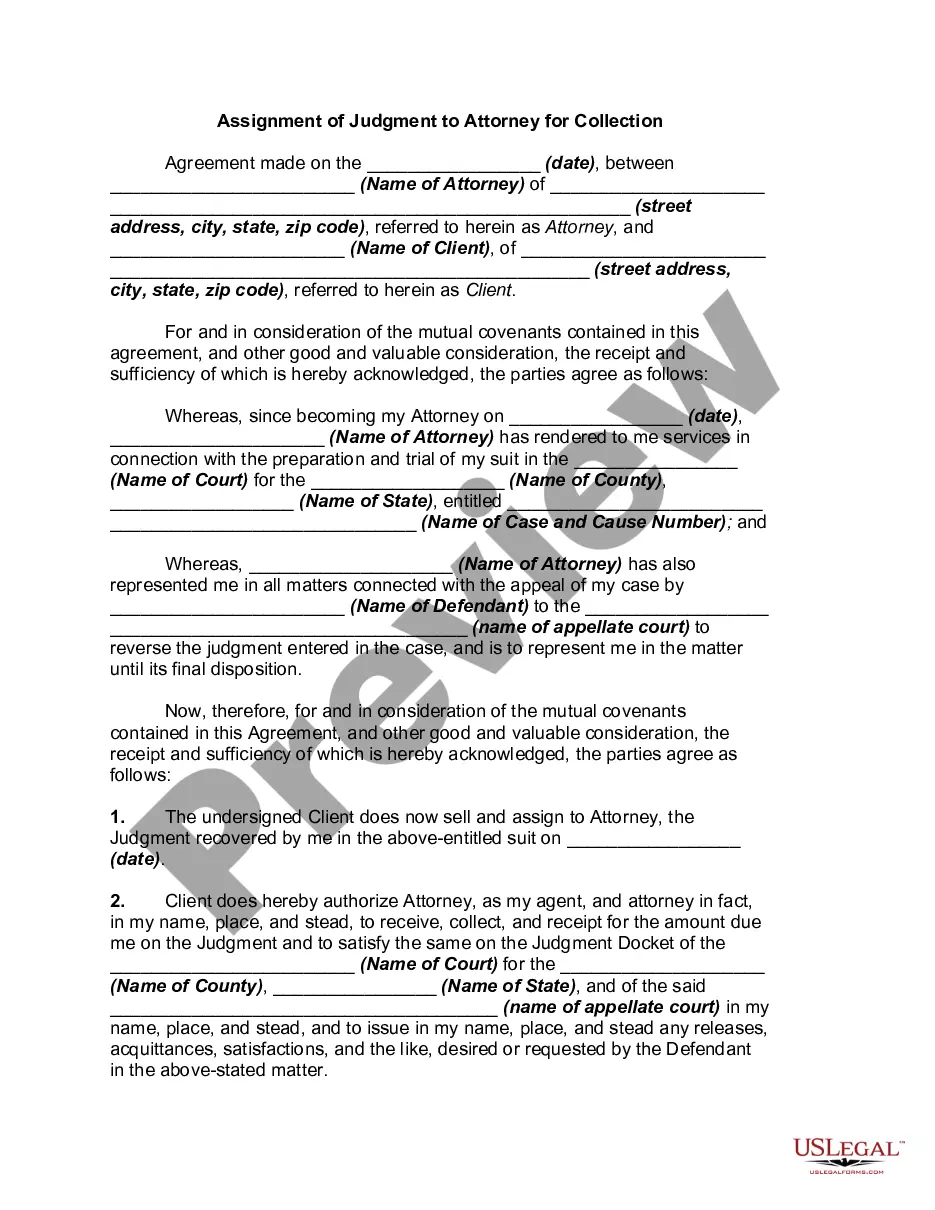
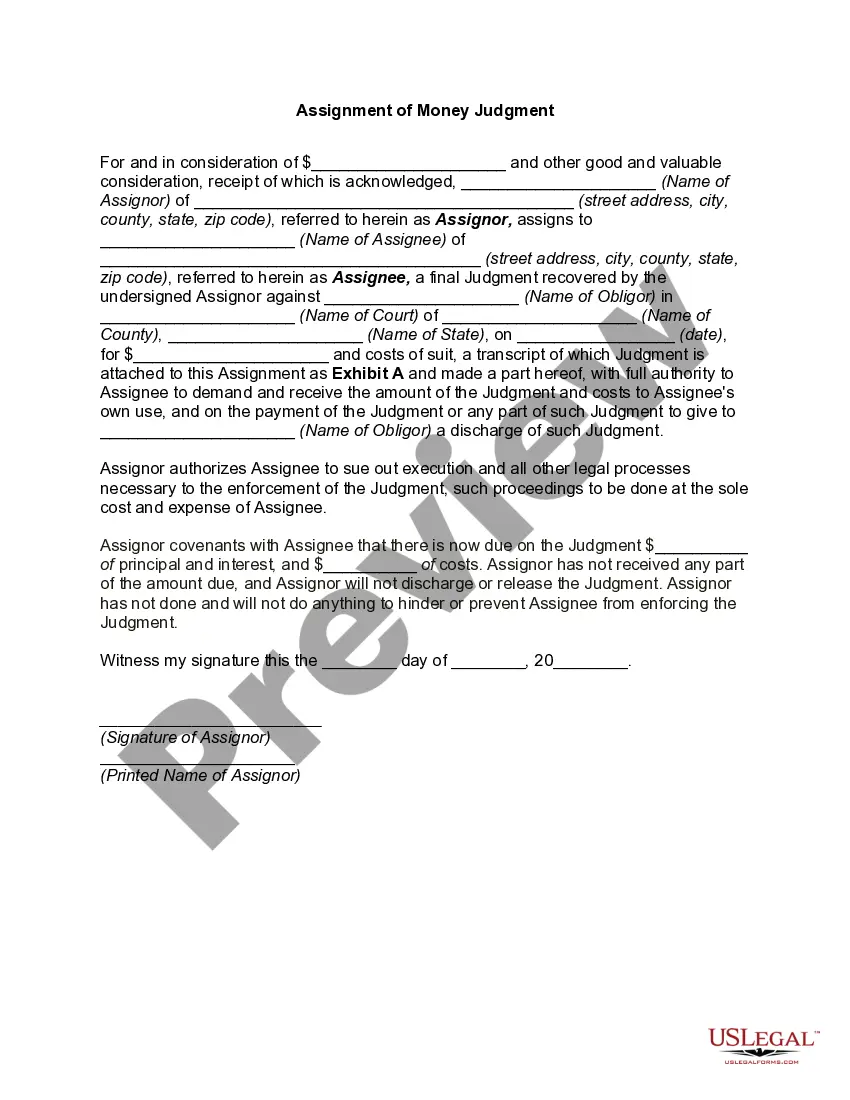
The Assignment of Judgment form is a legal document used to transfer the rights of a judgment from one party (the Assignor) to another party (the Assignee). This form allows the Assignee to enforce a judgment in cases where an acknowledgment of assignment has already been filed with the court. It serves a crucial purpose by allowing the Assignee to collect on the judgment as outlined in the original ruling, distinguishing it from similar forms that do not facilitate the transfer of judgment rights.
Key parts of this document
- Identification of the court and civil action number.
- Names of the Assignor and Assignee involved in the assignment.
- Details of the original judgment, including the amount awarded and the case reference.
- A clause confirming the Assignor's acknowledgment of the sum due from the judgment.
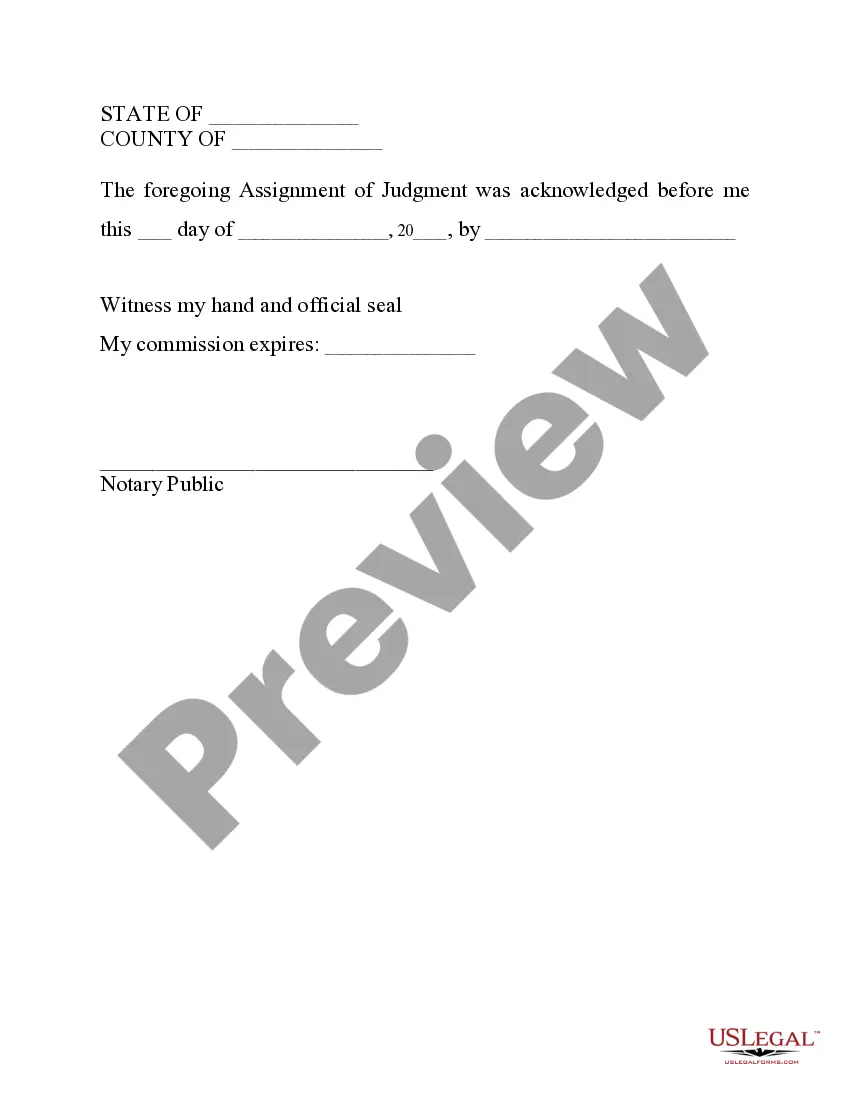
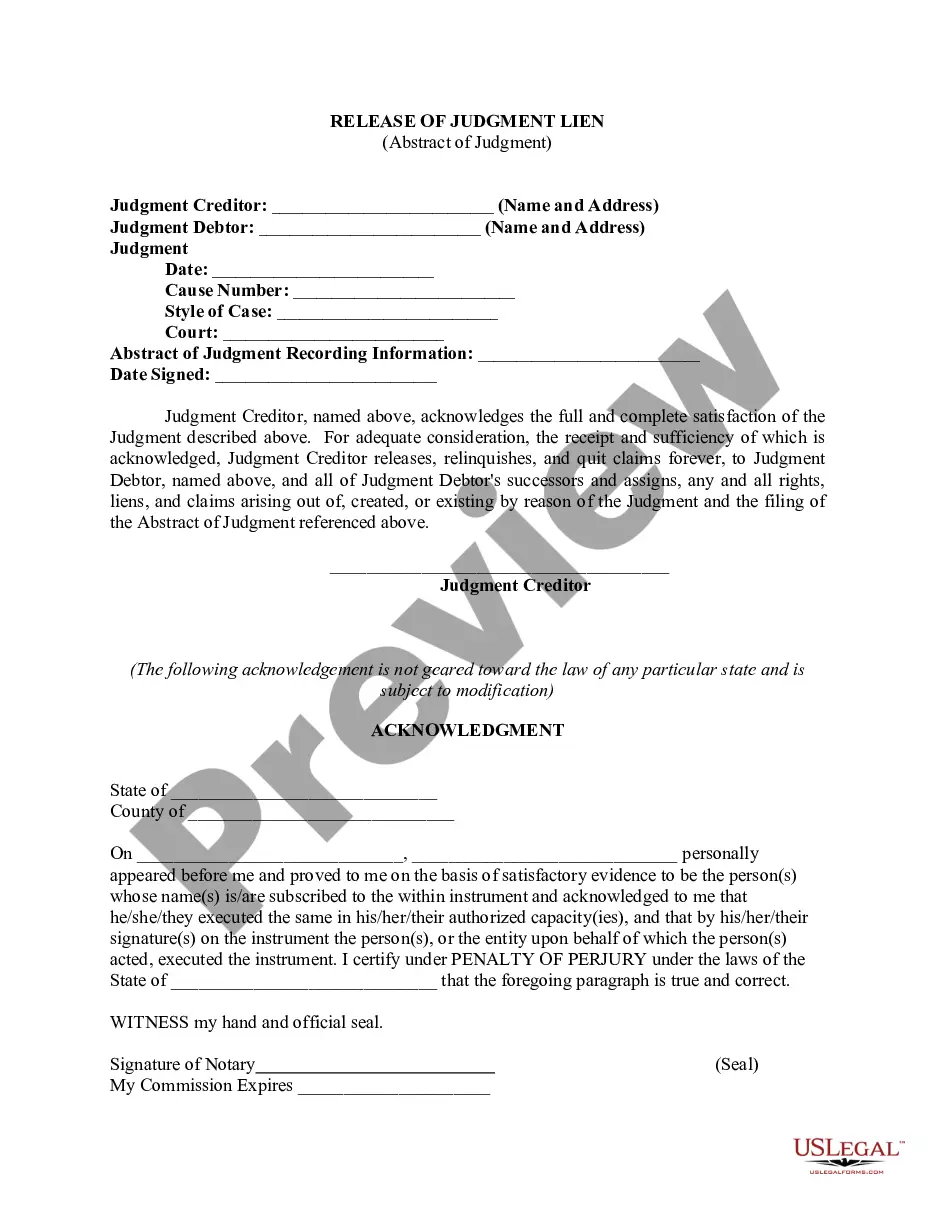
- Notarization section to confirm the authenticity of the assignment.

Common use cases
This form should be used when a judgment creditor wants to transfer their right to collect a judgment to another party, typically for reasons such as selling the judgment or assigning it for better collection prospects. It is ideal in cases where the Assignor decides they no longer want to manage the collection process themselves.
Intended users of this form
- Individuals or entities that have received a court judgment and wish to transfer their collection rights.
- Assignees who are willing to take over enforcement of the judgment.
- Legal professionals aiding clients in the assignment process.
How to prepare this document
- Identify the court and civil action number at the top of the form.
- Fill in the names of the Assignor (the party transferring the judgment) and Assignee (the party receiving it).
- Provide the date the original judgment was entered and details of the amount awarded.
- Ensure that the Assignor signs the form, indicating their agreement to transfer the rights.
- Have the signature notarized to validate the assignment.
Is notarization required?
Yes, this form must be notarized to be legally valid. The notarization confirms the identity of the parties involved and the authenticity of the signatures, ensuring that the assignment is legally binding. US Legal Forms offers integrated online notarization that is available 24/7, allowing for secure video calls and legal equivalence without the need for travel.
Get your form ready online
Our built-in tools help you complete, sign, share, and store your documents in one place.
Make edits, fill in missing information, and update formatting in US Legal Forms—just like you would in MS Word.
Download a copy, print it, send it by email, or mail it via USPS—whatever works best for your next step.
Sign and collect signatures with our SignNow integration. Send to multiple recipients, set reminders, and more. Go Premium to unlock E-Sign.
If this form requires notarization, complete it online through a secure video call—no need to meet a notary in person or wait for an appointment.
We protect your documents and personal data by following strict security and privacy standards.

Make edits, fill in missing information, and update formatting in US Legal Forms—just like you would in MS Word.

Download a copy, print it, send it by email, or mail it via USPS—whatever works best for your next step.

Sign and collect signatures with our SignNow integration. Send to multiple recipients, set reminders, and more. Go Premium to unlock E-Sign.

If this form requires notarization, complete it online through a secure video call—no need to meet a notary in person or wait for an appointment.

We protect your documents and personal data by following strict security and privacy standards.
Typical mistakes to avoid
- Failing to properly identify the court and civil action number.
- Not providing complete information about the parties involved.
- Omitting the date of the original judgment or the judgment amount.
- Not notarizing the document, which can affect its enforceability.
Benefits of completing this form online
- Convenience of immediate access and download of the form.
- Editability allows you to customize the form as needed.
- Reliability of attorney-drafted templates ensures legal soundness.
Looking for another form?
Form popularity
FAQ
After a judgment is entered, the winning party can begin collecting the awarded amount through various means. This often includes pursuing bank levies, wage garnishments, or seizing assets. Depending on your financial situation, you may need to evaluate your options carefully. Resources like USLegalForms can provide guidance on navigating the aftermath of a Colorado Assignment of Judgment to help you understand your rights and obligations.
Once a judgment is entered against you in Colorado, the creditor may take steps to collect the outstanding debt. This may involve seizing assets or garnishing wages. It is crucial to respond promptly to a judgment, as ignoring it can worsen your financial situation. Taking action, such as exploring options through the Colorado Assignment of Judgment, can help you manage your obligations responsibly.
In Colorado, various types of personal property can be seized to satisfy a judgment. This includes items like bank accounts, vehicles, and valuable collectibles. It is essential to note that some personal property may be exempt from seizure, ensuring that individuals have necessary resources to live. Understanding these details can help you navigate the Colorado Assignment of Judgment process more effectively.
The term assignment of judgment refers to the process in which a creditor transfers their rights to collect on a judgment to another party. This is often used in the context of the Colorado Assignment of Judgment, where a creditor may sell or assign their judgment to a third party. This allows the new party to pursue the collection effectively. Overall, this can streamline collections and help creditors recover owed debts.
Filing a judgment lien in Colorado involves submitting the appropriate forms to the county clerk's office where the debtor's property is located. It's essential to ensure that all details are correct to avoid any issues with the lien's enforceability. For those managing a Colorado Assignment of Judgment, this step is crucial for securing your legal rights.
To enforce a judgment in Colorado, you can utilize methods such as wage garnishment or property liens. The process often involves filing the necessary forms with the court to initiate enforcement actions. Knowing how to effectively enforce a Colorado Assignment of Judgment can significantly improve your chances of collection.
An assignment of judgment occurs when a judgment creditor transfers their rights to collect a judgment to another party. This legal tool allows the new creditor to pursue collection action on the assigned judgment. Understanding this concept is critical for anyone involved in a Colorado Assignment of Judgment, as it impacts your collection strategy.
A JDF form refers to a standardized legal document used in Colorado's court system. These forms cover various legal processes, including those related to the enforcement of judgments. If you're engaged in a Colorado Assignment of Judgment, using the appropriate JDF form can streamline your legal requirements.
The entry of judgment in Colorado refers to the official recording of a court's decision, making it enforceable. This step is vital as it establishes the legal rights of the winning party in a lawsuit. For those dealing with a Colorado Assignment of Judgment, understanding this process helps in executing your rights effectively.
A judgment lien in Colorado can be issued after a court has entered a final judgment in your favor. Once the judgment is recorded, it attaches to the debtor's property, allowing for enforcement actions. If you hold a Colorado Assignment of Judgment, knowing when a lien can be placed is crucial for effective collection.