Alaska Notice of Default in Payment of Rent as Warning Prior to Demand to Pay or Terminate for Residential Property
About this form
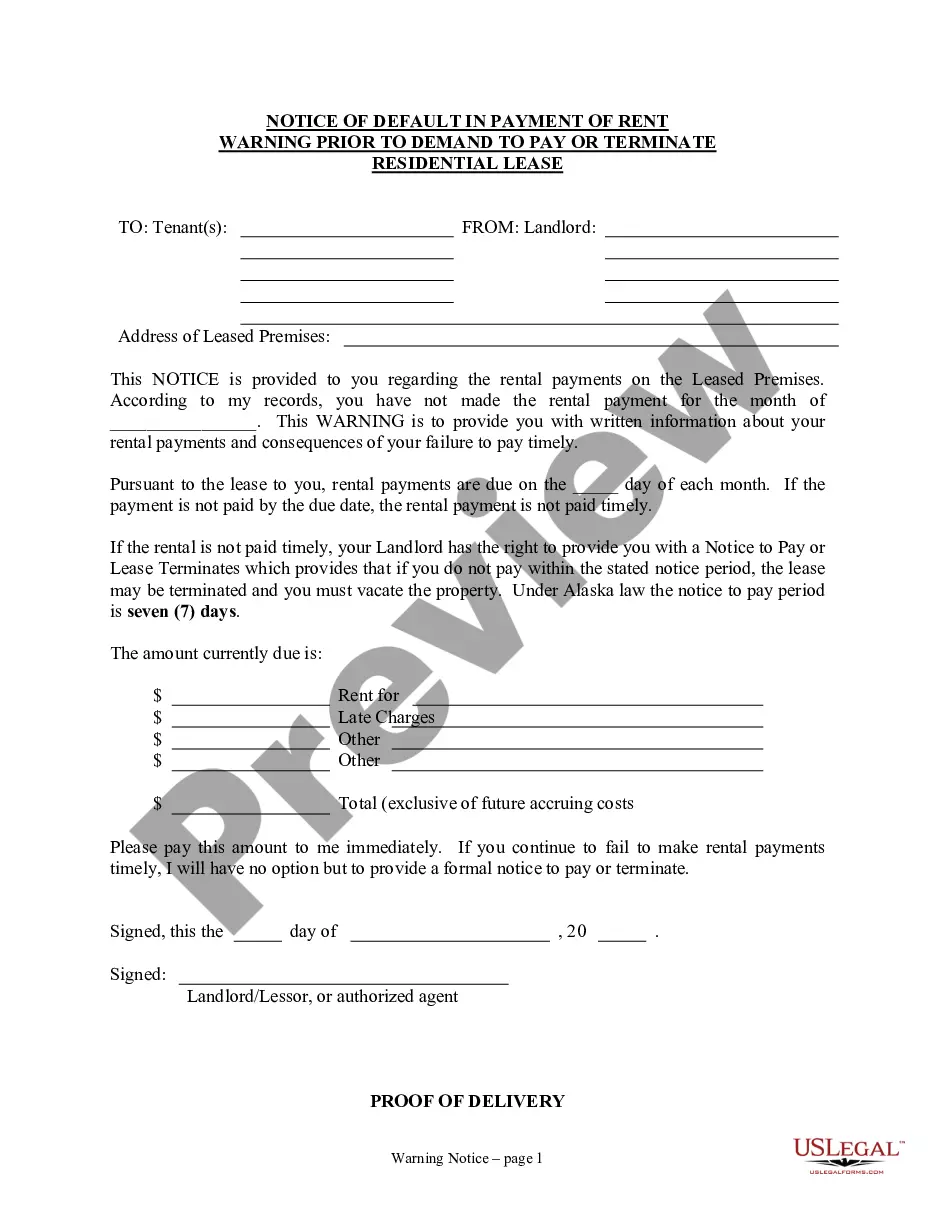
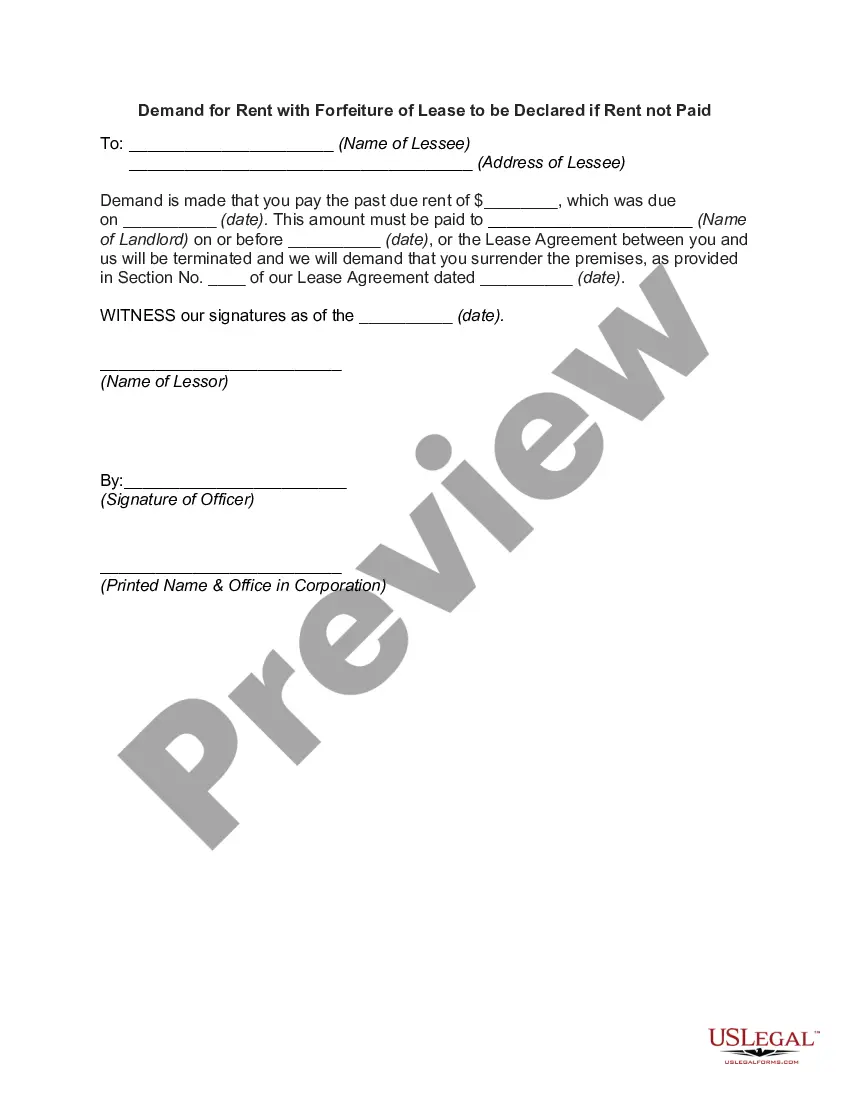
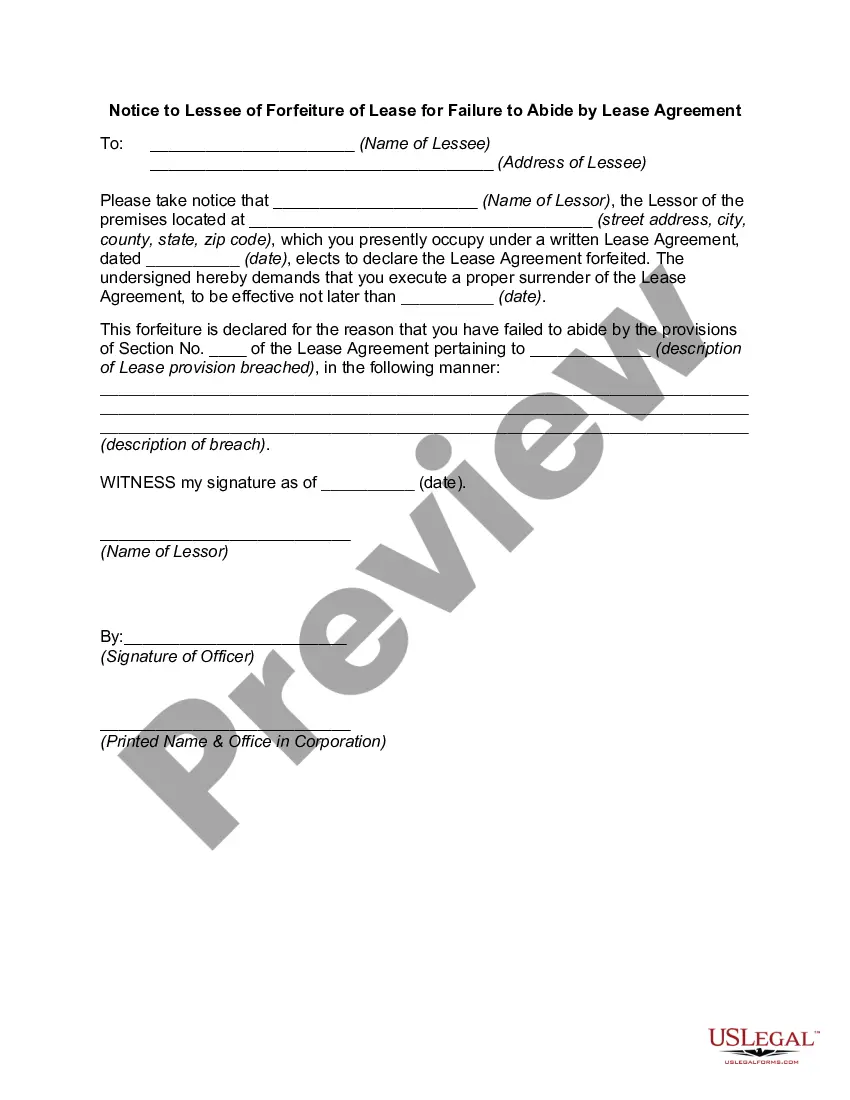
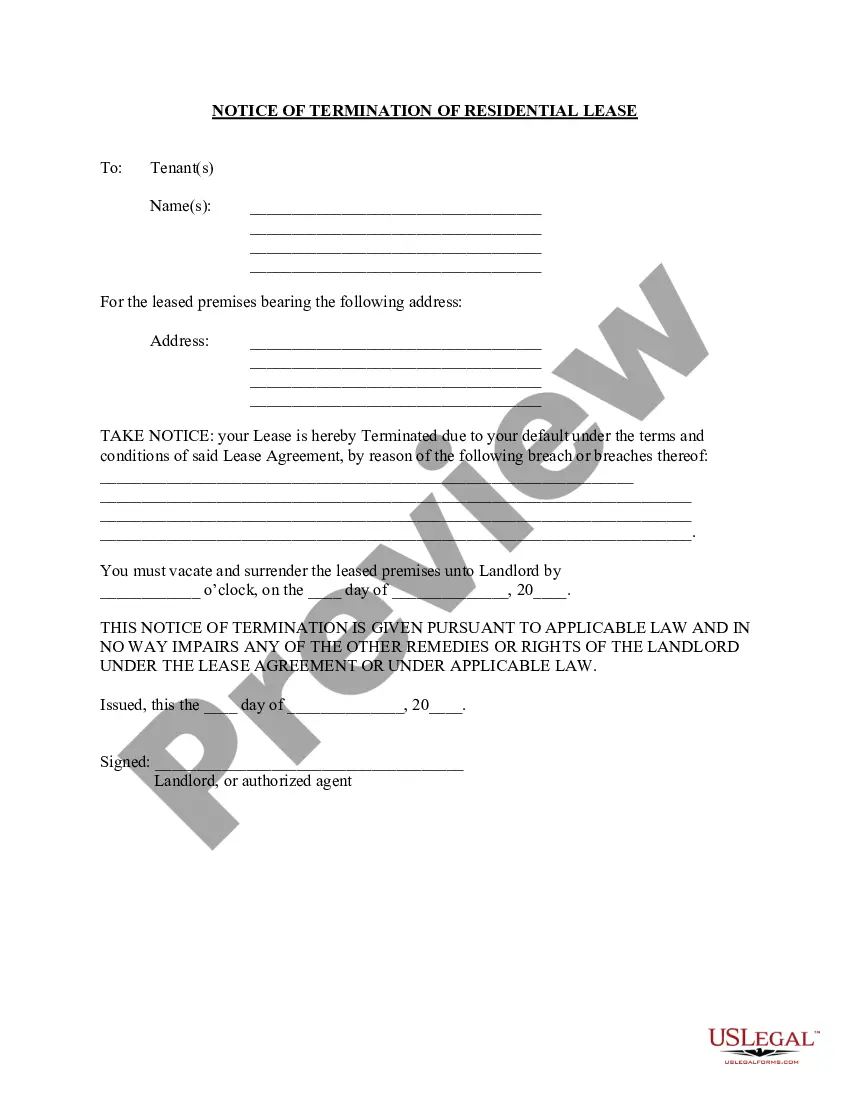
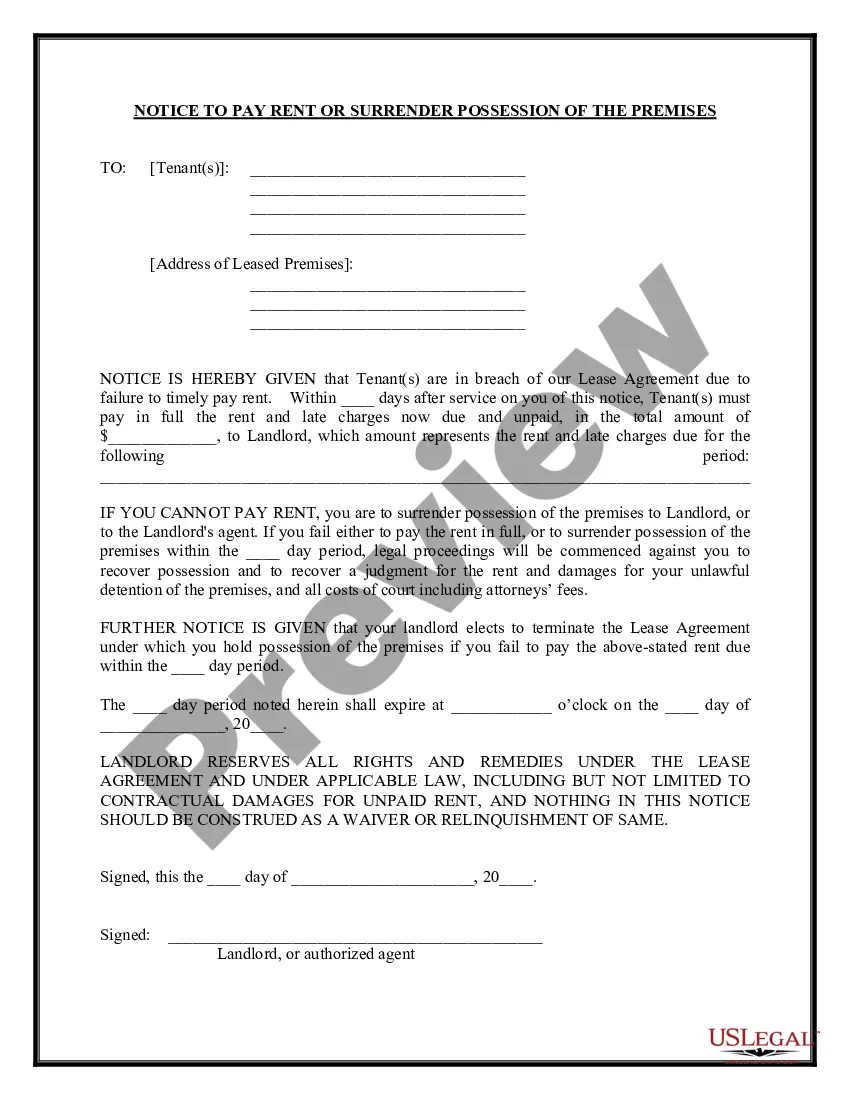
The Notice of Default in Payment of Rent as Warning Prior to Demand to Pay or Terminate for Residential Property is a legal document used by landlords to formally notify tenants of their failure to pay rent on time. This form serves as an initial warning before sending a formal demand to pay or terminate the lease. It outlines the rent due, the due date, and the potential consequences of continued non-payment, distinguishing it from more severe eviction notices.
Key parts of this document
- Identification of the landlord and tenant involved in the lease agreement.
- The address of the leased premises where the tenant resides.
- A statement regarding the missed rental payment along with the amount due.
- The due date of the rental payment as specified in the lease.
- Consequences of failing to pay rent, including the possibility of lease termination.
- Signature section for the landlord or authorized agent.
Situations where this form applies
This form should be used when a tenant has failed to pay rent by the agreed-upon deadline. It is a preliminary step that allows landlords to notify tenants of their payment default and remind them of their obligations under the rental agreement. Utilization of this form can help landlords maintain clear communication and provide tenants an opportunity to rectify the situation before moving to formal eviction proceedings.
Who should use this form
- Landlords managing residential rental properties.
- Property managers acting on behalf of landlords.
- Anyone involved in a landlord-tenant agreement seeking to formally notify a tenant of late rent payments.
How to complete this form
- Identify and enter the names of the landlord and tenant at the top of the form.
- Specify the address of the leased premises clearly.
- Fill in the amount of rent due and the month for which it was not paid.
- Clearly state the specific due date for rent as outlined in the lease.
- Sign and date the form to validate the notice.
Does this document require notarization?
This form usually doesn’t need to be notarized. However, local laws or specific transactions may require it. Our online notarization service, powered by Notarize, lets you complete it remotely through a secure video session, available 24/7.
Get your form ready online
Our built-in tools help you complete, sign, share, and store your documents in one place.
Make edits, fill in missing information, and update formatting in US Legal Forms—just like you would in MS Word.
Download a copy, print it, send it by email, or mail it via USPS—whatever works best for your next step.
Sign and collect signatures with our SignNow integration. Send to multiple recipients, set reminders, and more. Go Premium to unlock E-Sign.
If this form requires notarization, complete it online through a secure video call—no need to meet a notary in person or wait for an appointment.
We protect your documents and personal data by following strict security and privacy standards.
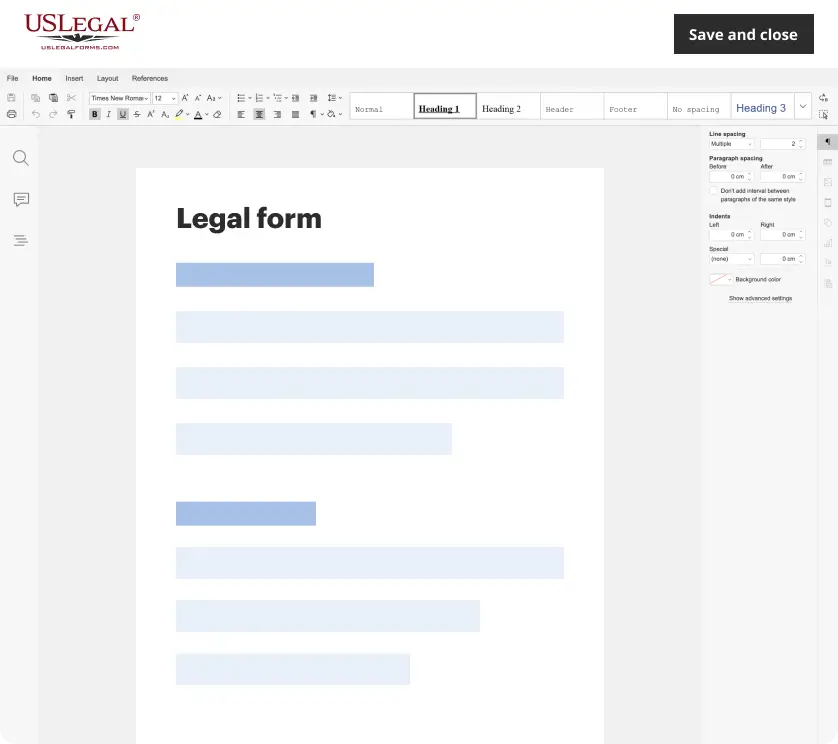
Make edits, fill in missing information, and update formatting in US Legal Forms—just like you would in MS Word.
Download a copy, print it, send it by email, or mail it via USPS—whatever works best for your next step.
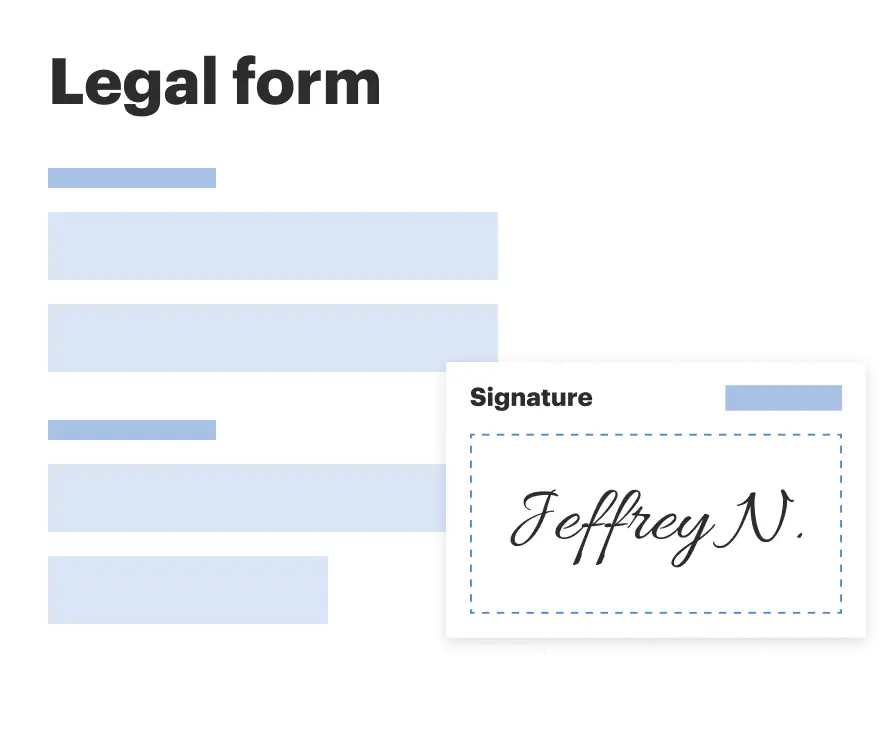
Sign and collect signatures with our SignNow integration. Send to multiple recipients, set reminders, and more. Go Premium to unlock E-Sign.
If this form requires notarization, complete it online through a secure video call—no need to meet a notary in person or wait for an appointment.
We protect your documents and personal data by following strict security and privacy standards.
Avoid these common issues
- Neglecting to fill out the correct due date for rent payments.
- Failing to specify all amounts owed, including late charges, if applicable.
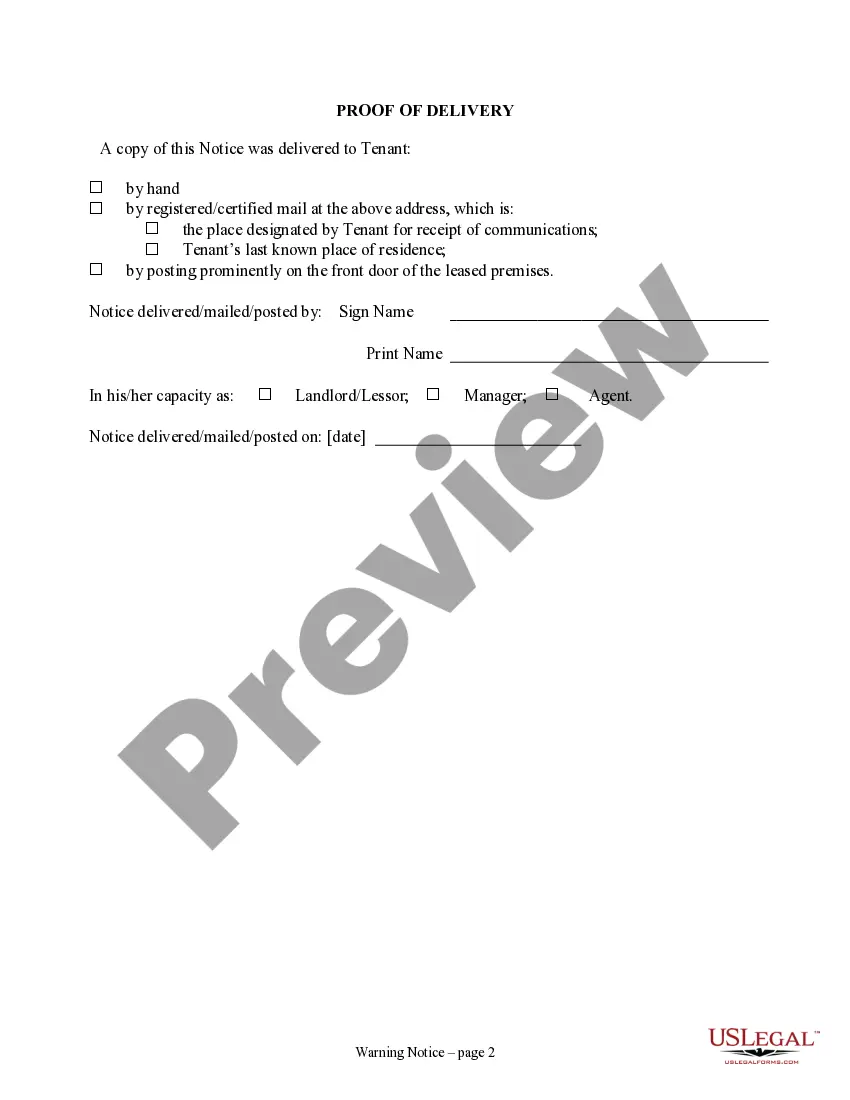
- Not providing proper proof of delivery to the tenant.
Benefits of using this form online
- Convenience of instant access to the form from anywhere.
- Editability allows landlords to customize details specific to their lease agreements.
- Reliability in having a legally vetted document that meets state requirements.
Looking for another form?
Form popularity
FAQ
If you've been given notice since 29 August 2020, your landlord must give you 6 months to leave. You might have to leave much sooner if you're evicted using a section 8 notice, depending on the reason for eviction.at least 6 months for any notice given on or after 24 July 2020.
The tenant must give 60 days notice before the last day of a tenancy year to be effective on the last day of the tenancy year.
Ignore It. If the amount owed is very small, you may simply choose not to pursue it after sending the Disposition of Deposit, and just move on. Bill Repeatedly. Negotiate With Them. Send It to Collections. Take Them to Small Claims Court.
You can start by using the tenant's security deposit (if any) to cover the unpaid rent. If the deposit doesn't cover the two month's rent, you can sue your former tenant in small claims court (or a similar civil court) for the back rent.
They must give the landlord at least 21 days notice of termination. Landlord Breaches the Agreement - the tenant can terminate the tenancy if the landlord breaches the agreement. If the landlord challenges the termination in the Tribunal, the breach must be serious enough to justify termination.
Pay any delinquent rent that is due to the landlord within the allotted time of the notice. Move out of the premises within the allotted time of the notice. File an answer with the judicial court. File a motion to stay with the court.
If the landlord serves a section 21 notice on the tenant, rent arrears will not be recovered as part of the possession claim. However, the landlord can bring a separate claim in the County Court to recover the outstanding sum. There is a court fee payable, which can vary depending on the value of the claim.
A. In a month-to-month tenancy, the landlord may raise the rent after giving the tenant 45 days' written notice.
Notice Requirements for California Tenants Unless your rental agreement provides a shorter notice period, you must give your landlord 30 days' notice to end a month-to-month tenancy. Be sure to check your rental agreement which may require that you give notice on the first of the month or on another specific date.