Alaska Letter from Landlord to Tenant that Sublease granted - Rent Paid by Subtenant, but Tenant Still Liable for Rent and Damages
What this document covers
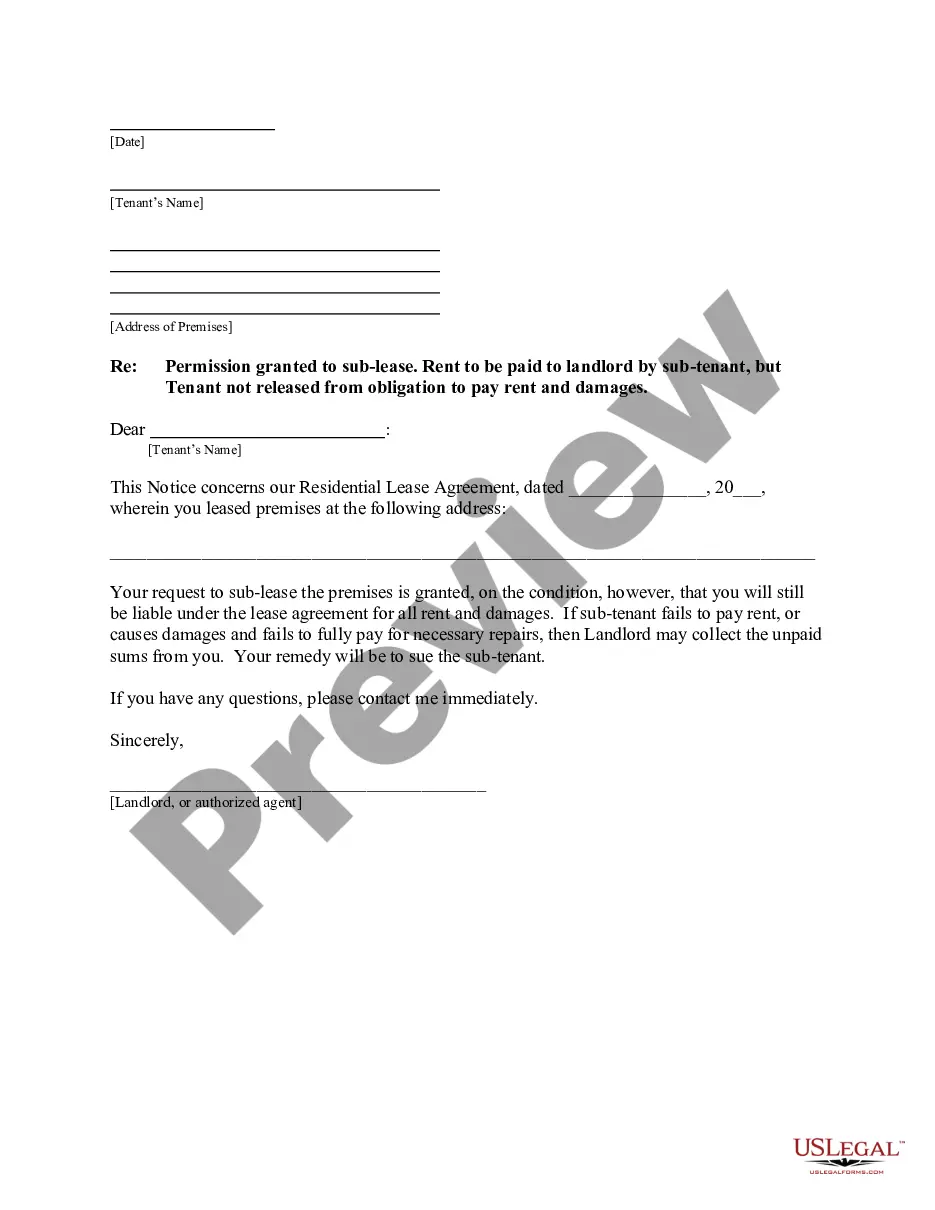
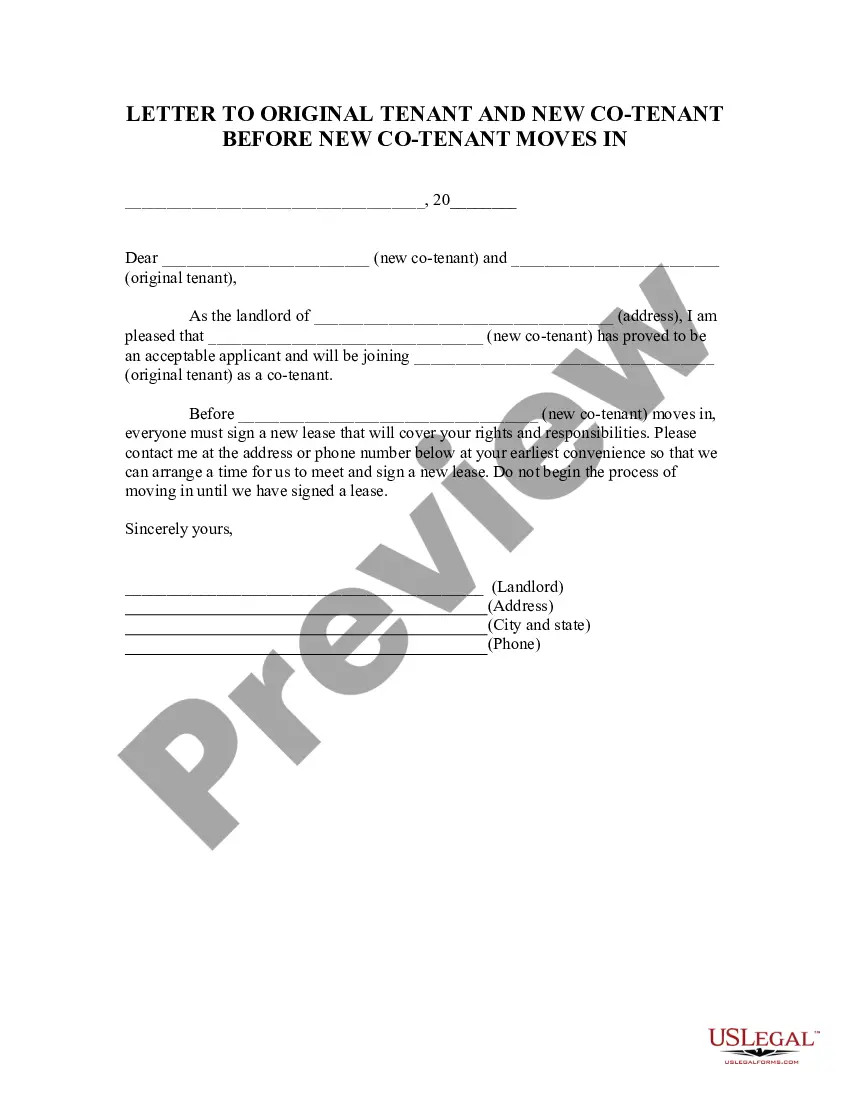
This form is a notification from the landlord to the tenant confirming that the sublease has been granted. It specifies that while the rent will be paid by the subtenant, the original tenant remains liable for all rent and damages under the lease agreement. This distinction is important in rental agreements, ensuring that the landlord is protected if the subtenant fails to meet their financial obligations.
Main sections of this form
- Statement of sublease approval from landlord to tenant.
- Clarification that the tenant remains liable for all rent and damages.
- Potential remedy for the landlord if the subtenant defaults.
- Contact information for the landlord or authorized agent.
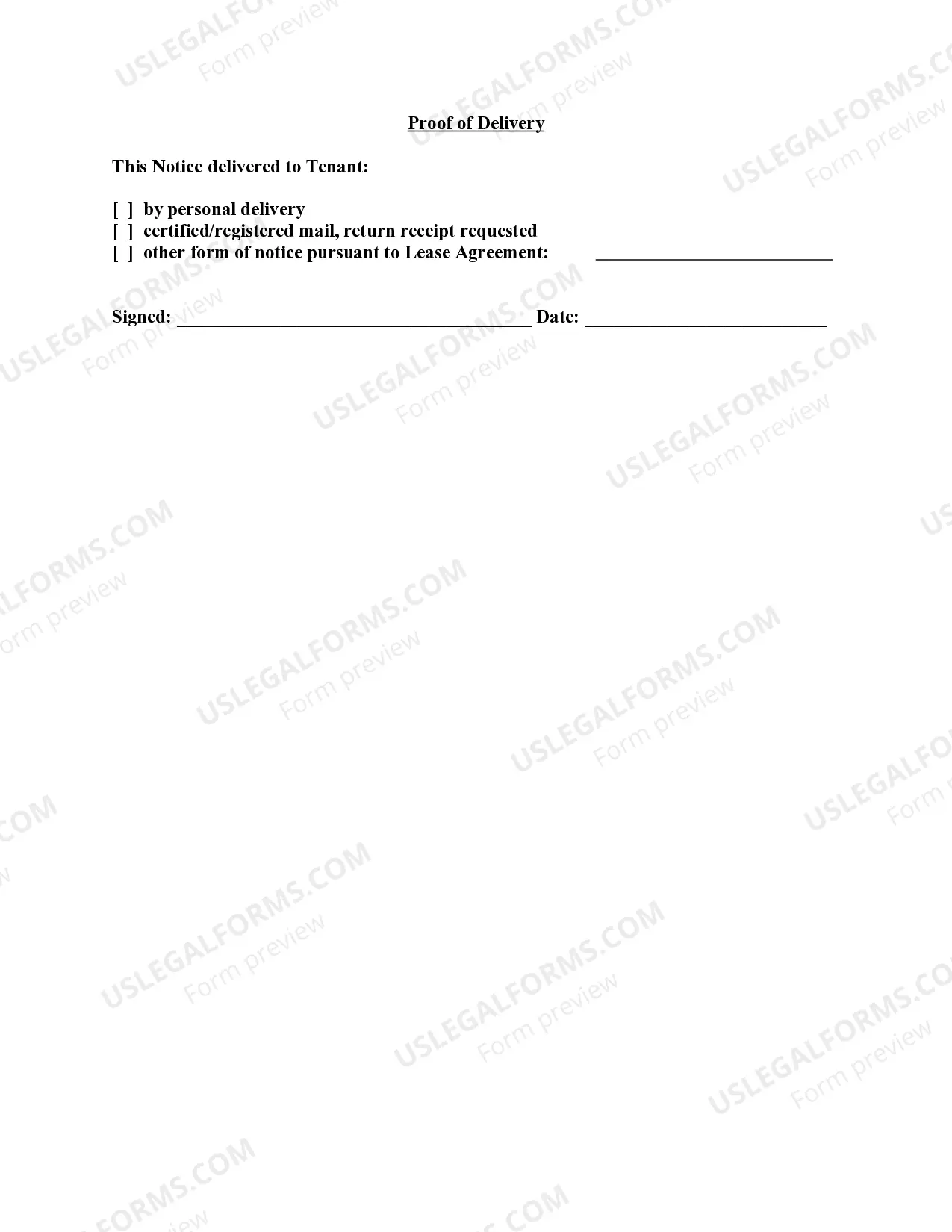
- Proof of delivery options for the notice.

Situations where this form applies
You should use this form when you have a tenant who is subleasing their rental property and you, as the landlord, want to communicate that the sublease is approved. It is essential to clarify that the original tenant will continue to be responsible for any unpaid rent or damages incurred by the subtenant. This form serves to formalize that understanding and protect your rights as a landlord.
Who should use this form
Eligible users of this form include:
- Landlords who have approved a sublease arrangement.
- Tenants who are subleasing their rental property.
- Property managers acting on behalf of landlords.
Instructions for completing this form
To complete this form, follow these steps:
- Identify the parties involved: specify the landlord and tenant names.
- Enter the details of the property being subleased.
- Confirm the approval of the sublease in the body of the letter.
- State the continued liability of the tenant for rent and damages.
- Provide your signature as the landlord or authorized agent.
- Choose the method of proof of delivery and ensure it is completed.
Notarization requirements for this form
This form does not typically require notarization unless specified by local law. Ensure to check any state-specific requirements to confirm this.
Get your form ready online
Our built-in tools help you complete, sign, share, and store your documents in one place.
Make edits, fill in missing information, and update formatting in US Legal Forms—just like you would in MS Word.
Download a copy, print it, send it by email, or mail it via USPS—whatever works best for your next step.
Sign and collect signatures with our SignNow integration. Send to multiple recipients, set reminders, and more. Go Premium to unlock E-Sign.
If this form requires notarization, complete it online through a secure video call—no need to meet a notary in person or wait for an appointment.
We protect your documents and personal data by following strict security and privacy standards.

Make edits, fill in missing information, and update formatting in US Legal Forms—just like you would in MS Word.

Download a copy, print it, send it by email, or mail it via USPS—whatever works best for your next step.

Sign and collect signatures with our SignNow integration. Send to multiple recipients, set reminders, and more. Go Premium to unlock E-Sign.

If this form requires notarization, complete it online through a secure video call—no need to meet a notary in person or wait for an appointment.

We protect your documents and personal data by following strict security and privacy standards.
Mistakes to watch out for
- Failing to specify the property address clearly.
- Not confirming the tenant's continued liability in the letter.
- Neglecting to provide contact information for queries.
- Not delivering the notice properly, which could lead to disputes.
Why use this form online
- Convenience of downloading and customizing the form online.
- Easily editable to suit specific rental situations.
- Reliable legal framework provided by documents created by licensed attorneys.
Main things to remember
- The form communicates that a sublease has been approved while keeping the original tenant liable.
- Clear accountability is established between the landlord, tenant, and subtenant.
- It is a vital document to prevent potential disputes regarding rental payments and damages.
Looking for another form?
Form popularity
FAQ
If a tenant fails to pay rent, breaks a rule, or significantly damages the property, then it is considered breach of contract and you have grounds for eviction. If there are people living in the unit that are not on the lease, then that is also breach of contract and you have grounds to evict them.
If your landlord breaches the warranty of habitability or the warranty of quiet enjoyment, you may be able to sue her to recover monetary damages.In some states, such as California and Arizona, you may be able to seek emotional distress damages if the landlord's actions were particularly egregious.
The landlord had a duty to reasonably maintain the property; The landlord knew or should have known of the dangerous condition; The landlord breached their duty by failing to repair/fix the dangerous condition;
Know your state's landlord/tenant laws. Read and respond to the court summons. Try to work out a settlement. Consider legal counsel. Show up for court. Look sharp and provide evidence.
If you're seeking damages for emotional distress caused by a landlord's discrimination, or punitive damages for especially blatant and intentional discrimination, a lawsuit may well be your best bet. Understand what's involved in suing your landlord. You may file a lawsuit in either federal or state court.
If a tenant is subletting without consent, it's likely they will have broken terms in their tenancy agreement. This breach of contract means that the landlord can take action to evict them from their home. Possession proceedings can be started quickly, but it's important to follow the correct legal process.
Month to Month Agreements: For month to month agreements, it is generally accepted for the tenant to notify the landlord at least 30 days in advance of their desire to move. For example, if the lease ends on October 31, then the tenant should let the landlord know they want to move by October 1, at the latest.
You can immediately file an eviction if the tenant refuses to leave the property.If you took a rental payment from the tenant after their lease expired, you'll need to provide all the normal notices. When your tenant overstays their lease, you will still, however, be required to go through the normal eviction process.
Benefits of Suing Your Landlord Filing a lawsuit does have some potential advantages for tenants. Could Motivate a Landlord to Settle Outside of Court: Notifying your landlord of your intention to sue him or her could motivate your landlord to do everything in their power to avoid actually going to court.