Alaska Buyer's Home Inspection Checklist
What is this form?
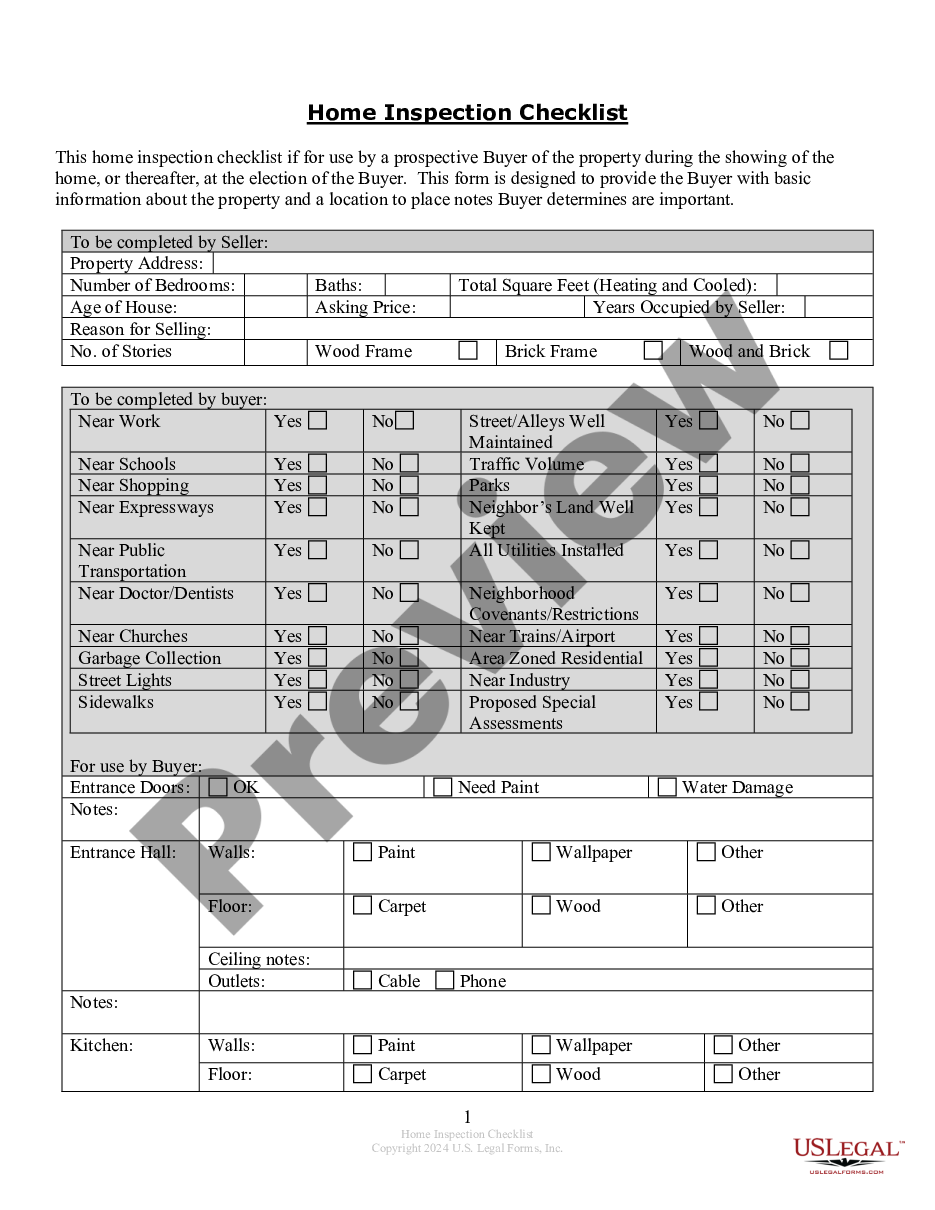
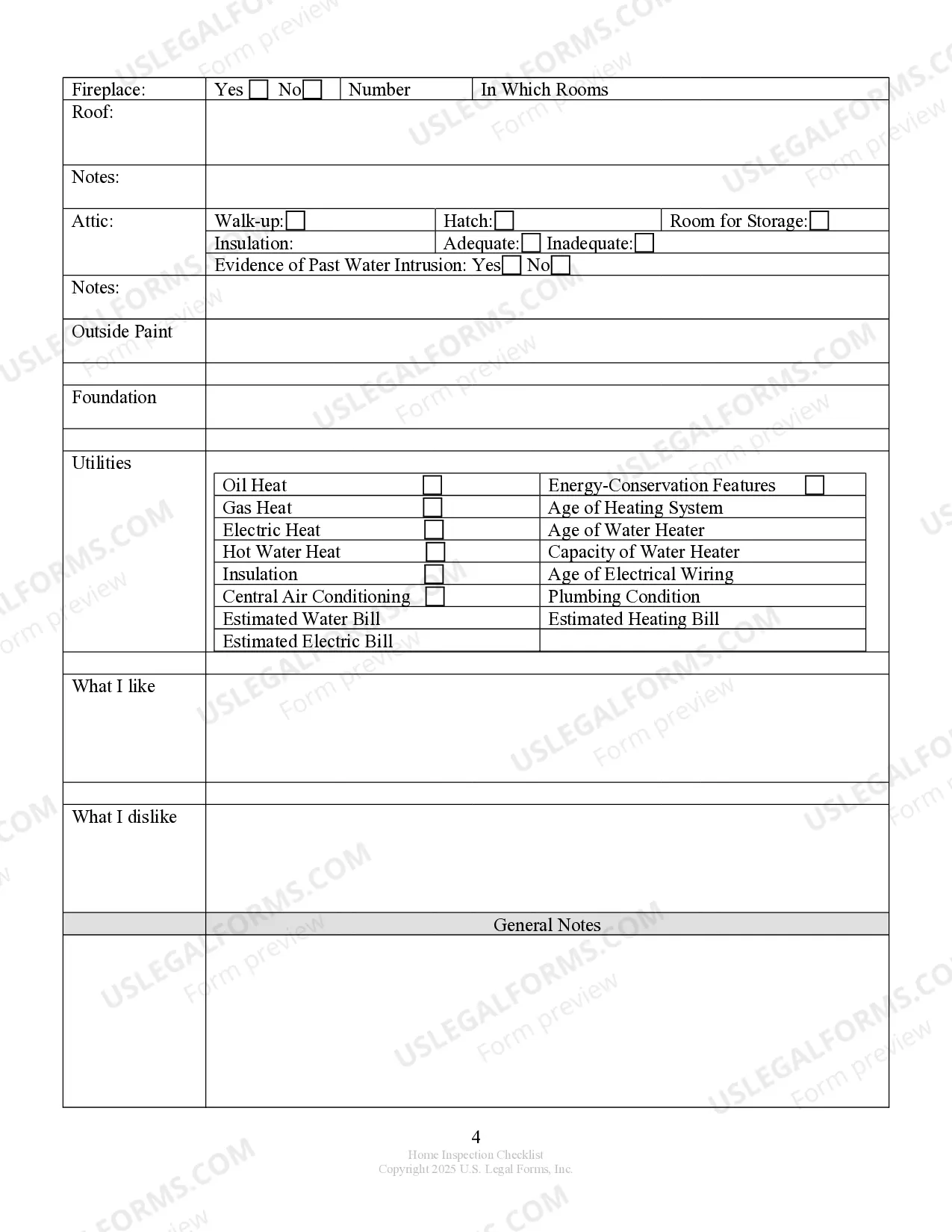
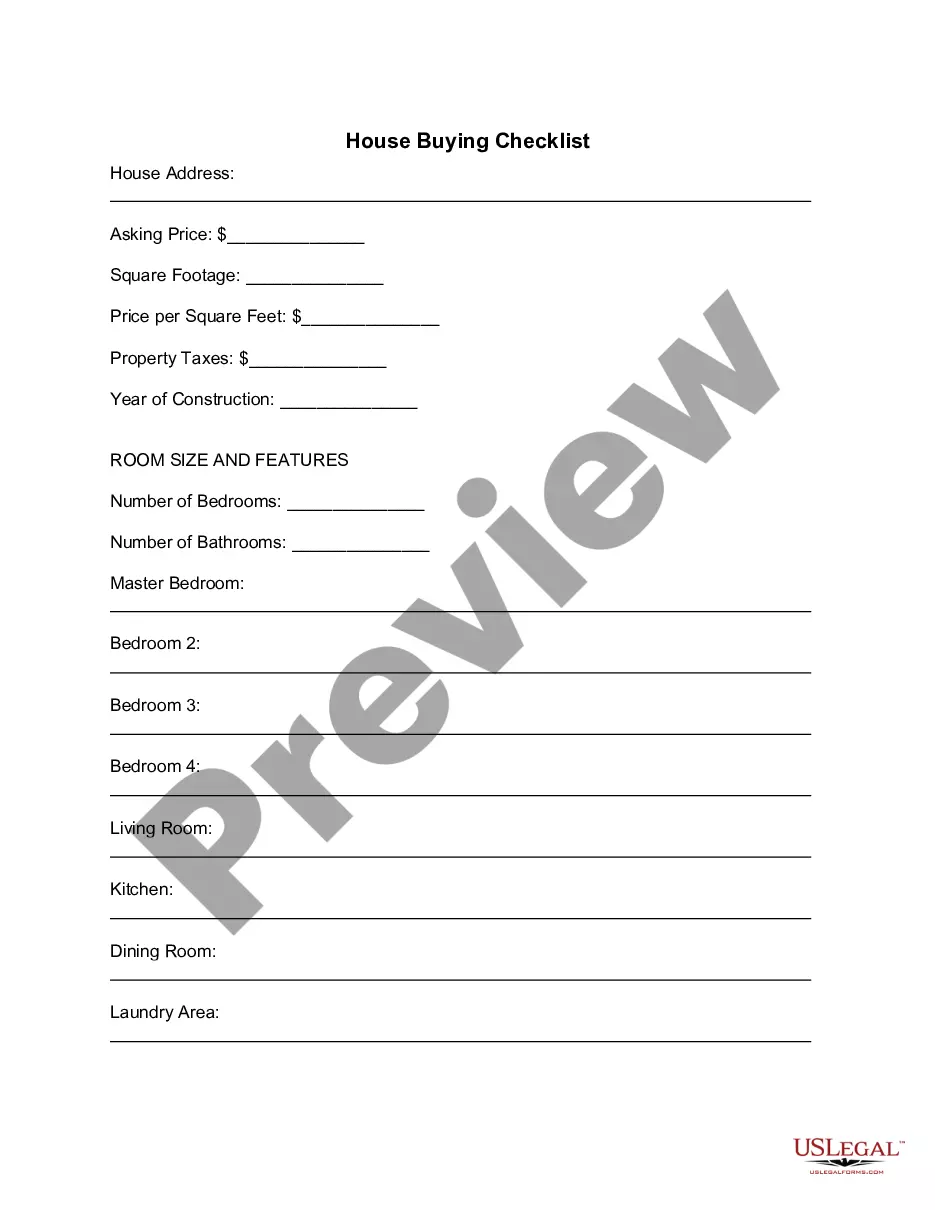
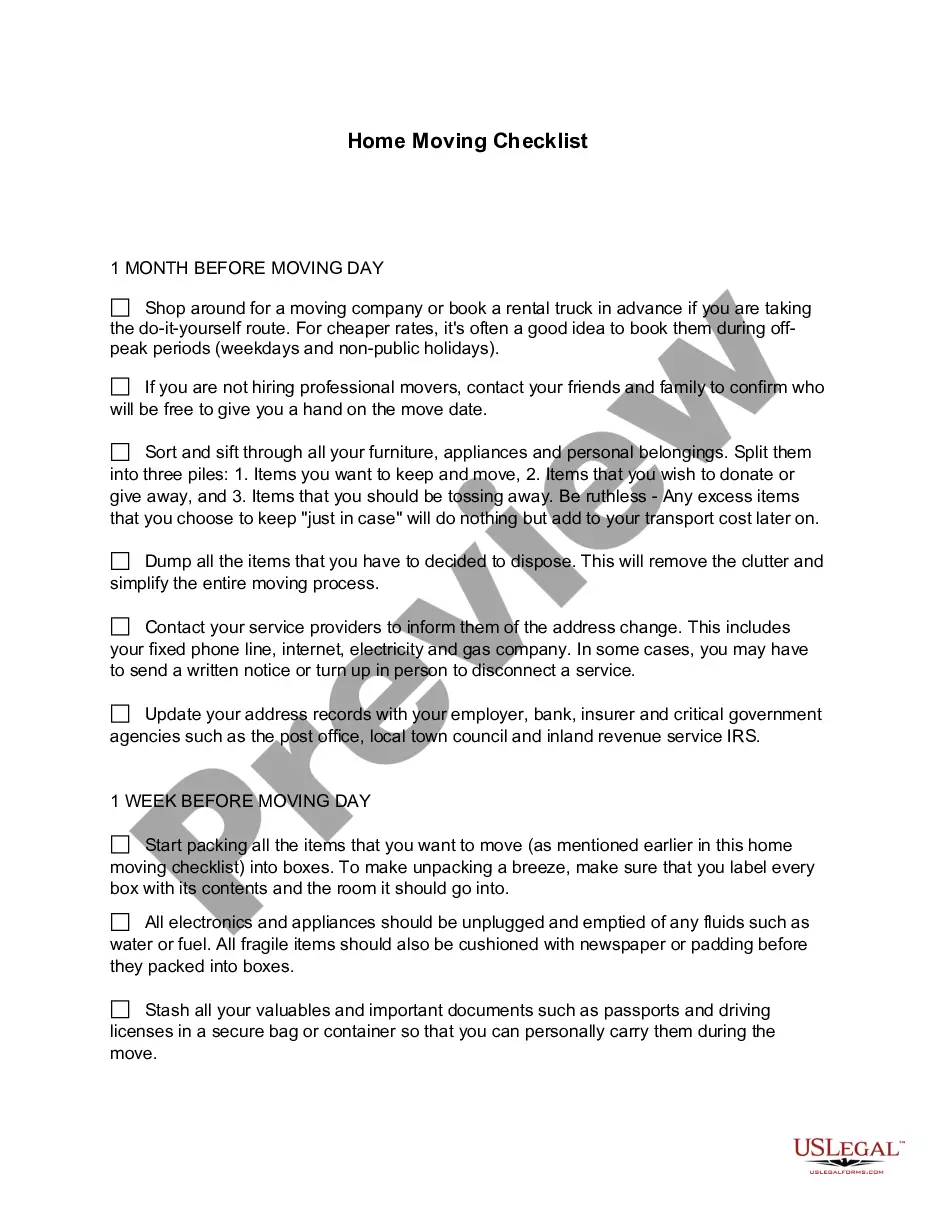
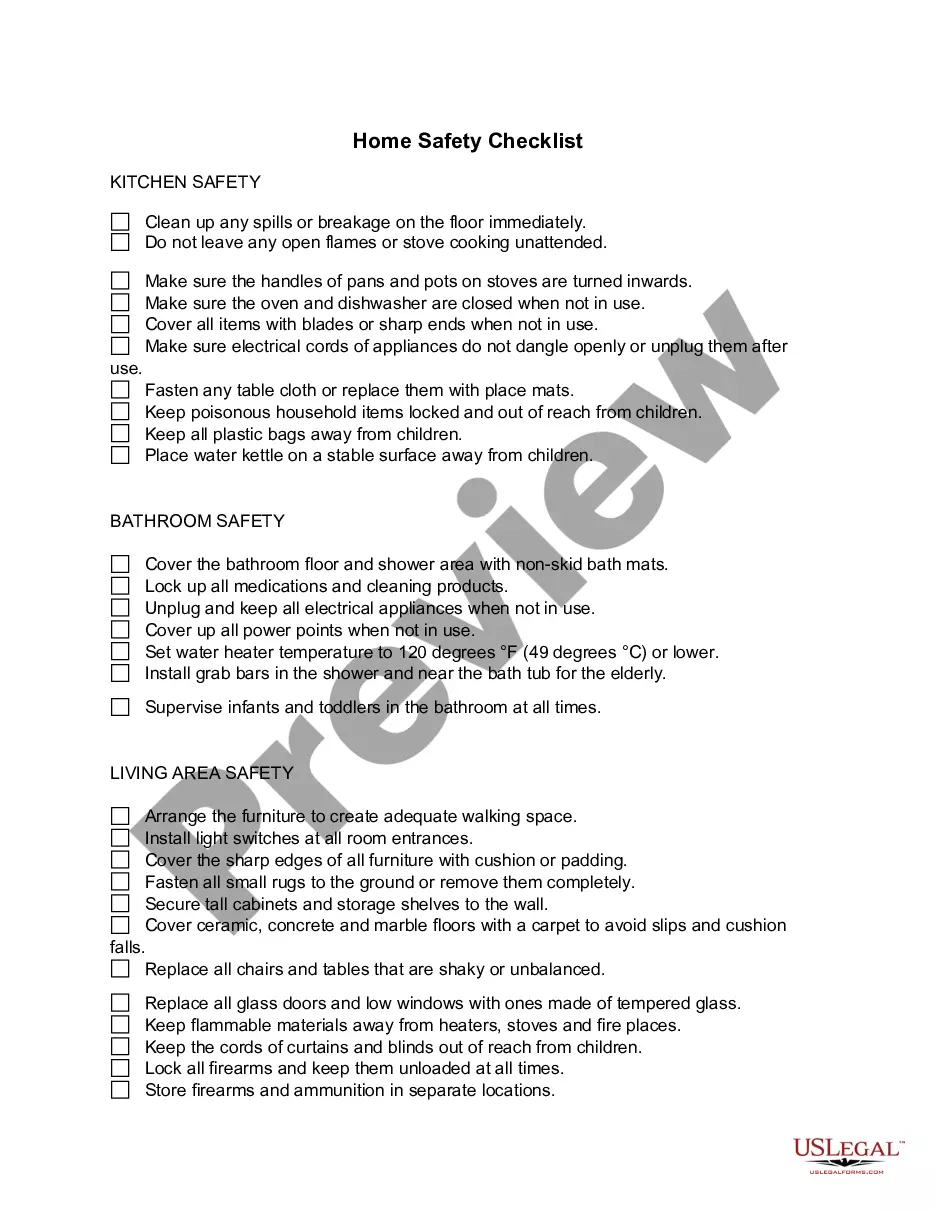
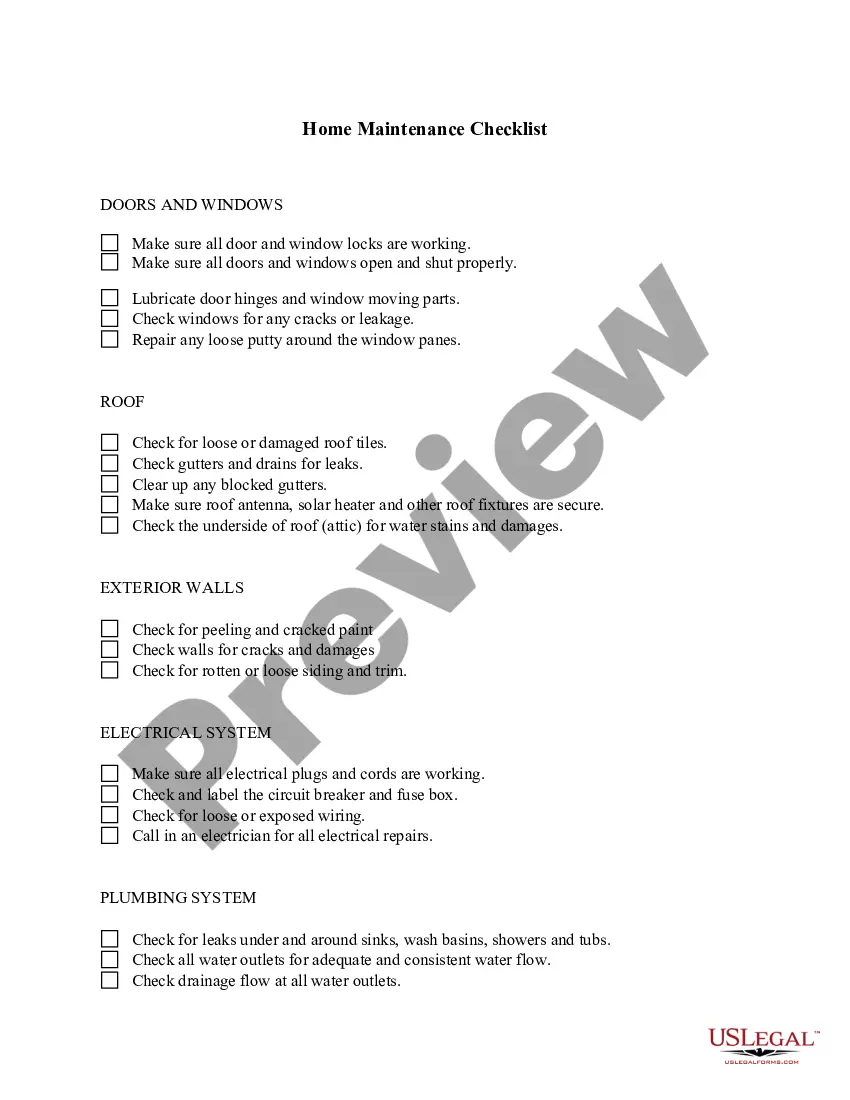
The Buyer's Home Inspection Checklist is a practical tool designed for prospective homebuyers in Alaska. This checklist assists buyers in assessing various aspects of a property during their initial viewing. By providing a comprehensive list of items to review or questions to ask the seller, this form ensures that buyers are well-informed before making an offer. Unlike other inspection forms, this checklist focuses specifically on the buyer's perspective during the home viewing process.
Main sections of this form
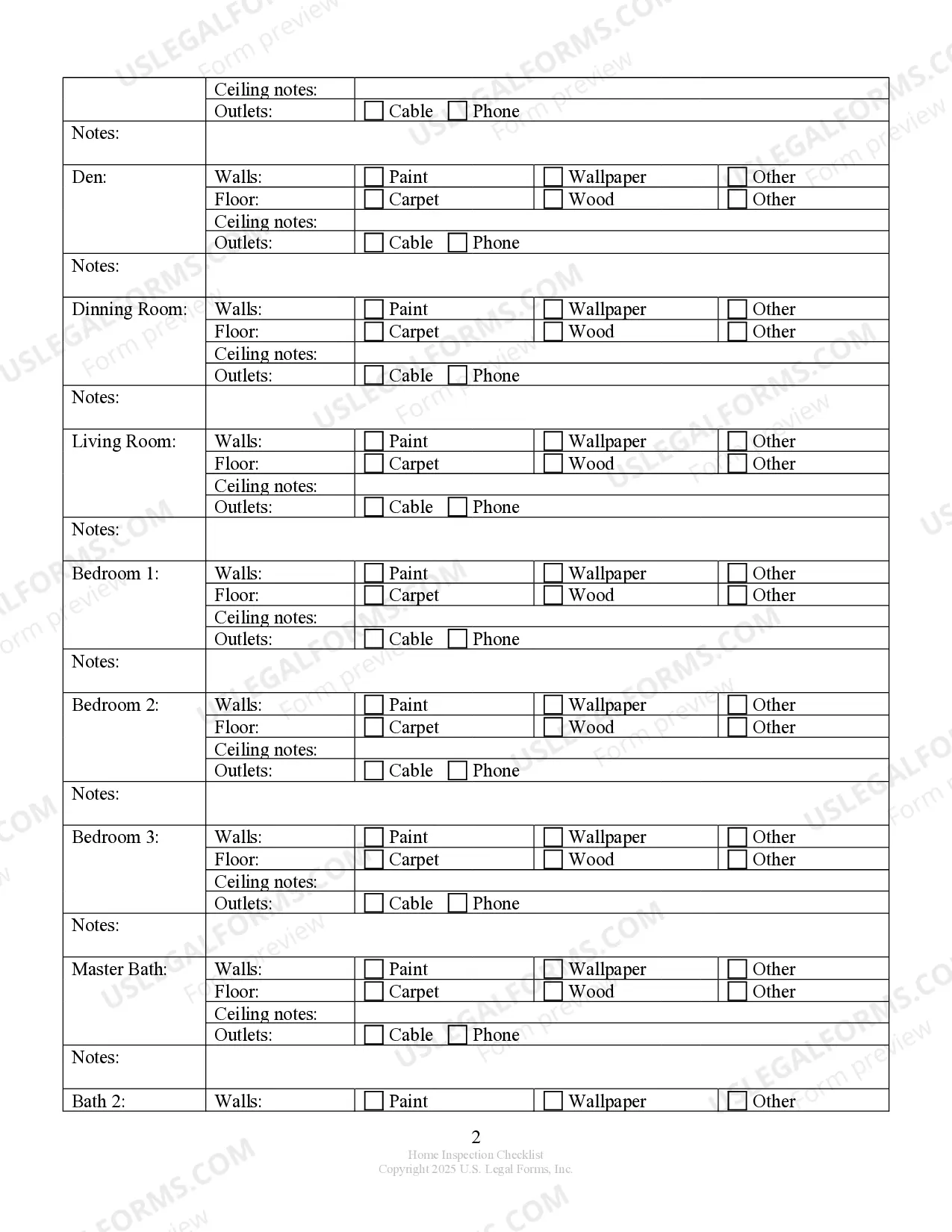
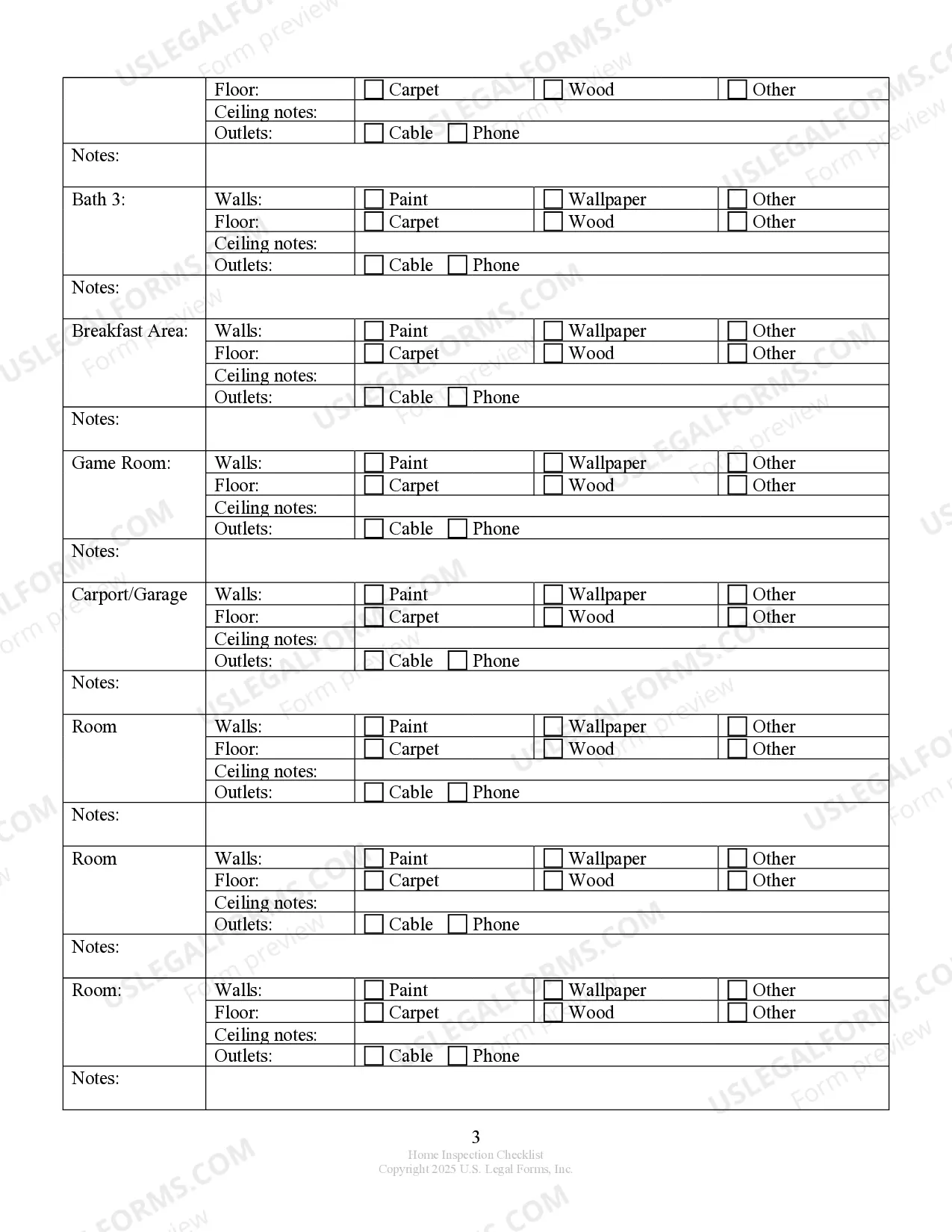
- Location to document notes about specific property features.
- Checklist items covering neighborhoods, utilities, and nearby amenities.
- Options for assessing the condition and maintenance of the exterior and surroundings.
- Space for additional comments and observations from the buyer.
Situations where this form applies
This form is useful during home viewings when you want to ensure that all important aspects of the property are thoroughly examined. Use it to guide your assessment of a property, either while visiting or shortly after, to keep track of your thoughts and decisions before proceeding with an offer.
Who should use this form
This form is intended for:
- Prospective homebuyers looking to purchase property in Alaska.
- Individuals who wish to have a structured approach to property evaluations.
- Buyers who may be considering multiple properties and need to keep track of details.
Steps to complete this form
- Begin by noting the property address and date of your visit at the top of the checklist.
- Evaluate the street and neighborhood conditions, marking "Yes" or "No" for each relevant item.
- Inspect utilities and local amenities, ensuring everything fits your needs.
- Take notes on any specific concerns or positive features you notice during the viewing.
- Review the checklist before making an offer, ensuring you have considered all listed aspects.
Is notarization required?
Notarization is generally not required for this form. However, certain states or situations might demand it. You can complete notarization online through US Legal Forms, powered by Notarize, using a verified video call available anytime.
Get your form ready online
Our built-in tools help you complete, sign, share, and store your documents in one place.
Make edits, fill in missing information, and update formatting in US Legal Forms—just like you would in MS Word.
Download a copy, print it, send it by email, or mail it via USPS—whatever works best for your next step.
Sign and collect signatures with our SignNow integration. Send to multiple recipients, set reminders, and more. Go Premium to unlock E-Sign.
If this form requires notarization, complete it online through a secure video call—no need to meet a notary in person or wait for an appointment.
We protect your documents and personal data by following strict security and privacy standards.

Make edits, fill in missing information, and update formatting in US Legal Forms—just like you would in MS Word.

Download a copy, print it, send it by email, or mail it via USPS—whatever works best for your next step.

Sign and collect signatures with our SignNow integration. Send to multiple recipients, set reminders, and more. Go Premium to unlock E-Sign.

If this form requires notarization, complete it online through a secure video call—no need to meet a notary in person or wait for an appointment.

We protect your documents and personal data by following strict security and privacy standards.
Avoid these common issues
- Neglecting to document observations immediately, which can lead to forgetfulness.
- Overlooking critical items in the checklist, such as utility installations or zoning.
- Failing to ask the seller about specific features or concerns noted during the inspection.
Advantages of online completion
- Convenient access to the checklist from any device, allowing for easy updates and notes.
- Editability that lets you customize the checklist according to your specific needs.
- Reliability as the form is drafted by licensed attorneys, ensuring it meets legal standards.
Summary of main points
- The Buyer's Home Inspection Checklist is essential for evaluating properties effectively.
- Use it to guide your observations during home viewings in Alaska.
- Documenting your findings systematically helps in making informed purchasing decisions.
Looking for another form?
Form popularity
FAQ
Provide open access to areas that need to be checked. Clear the perimeter. Check the roof. Keep a clean house. Replace any bulbs that are out. Make sure your toilets are functioning properly. Put in a fresh furnace return filter.
A home inspector will look at things like a home's foundation, structural components, roof, HVAC, plumbing, and electrical systems, then provide a written home inspection report with results.Buyers should attend the inspection so they can explore their new home in detail and ask questions during the process.
And yet, home inspectors don't check everything. For one, conditions such as mold, radon, or asbestos that require laboratory samples or equipment are the stuff of specialty inspections, which cost extra or must be conducted by other specialists.
Problem #1: Rundown roofing. Problem #2: Drainage issues. Problem #3: Faulty foundation. Problem #4: Plumbing problems. Problem #5: Pest infestations. Problem #6: Hidden mold. Problem #7: Failing heating systems. Problem#8: Electrical wiring.
Top reasons home inspections fail Electrical problems: The most common electrical issues include wiring that's not up to code, frayed wiring, or improperly wired electrical panels. Plumbing issues: Leaky pipes (and resulting water damage), failing water heaters, and sewer system problems are some of the most expensive.
Ask the seller to make the repairs themselves. Ask for credits toward your closing costs. Ask the seller to reduce the sales price to make up for the repairs. Back out of the transaction (if you have an inspection contingency in place) Move forward with the deal.
Clean furnace filter. Clean stove and oven. Empty storage from attic. Organize any closets that are access points to your attic or crawl space. Clear at least 4 to 6 inches of space around the perimeter of your home's exterior.
Foundation. Roof. Attic space. Rain gutters and downspouts. Exterior stucco or paint. Electrical panel, light switches, and power outlets. Thermostats and heating, cooling, and ventilation (HVAC) system. Plumbing fixtures, faucets, and water heater.