Living Trust - Revocable
About this form
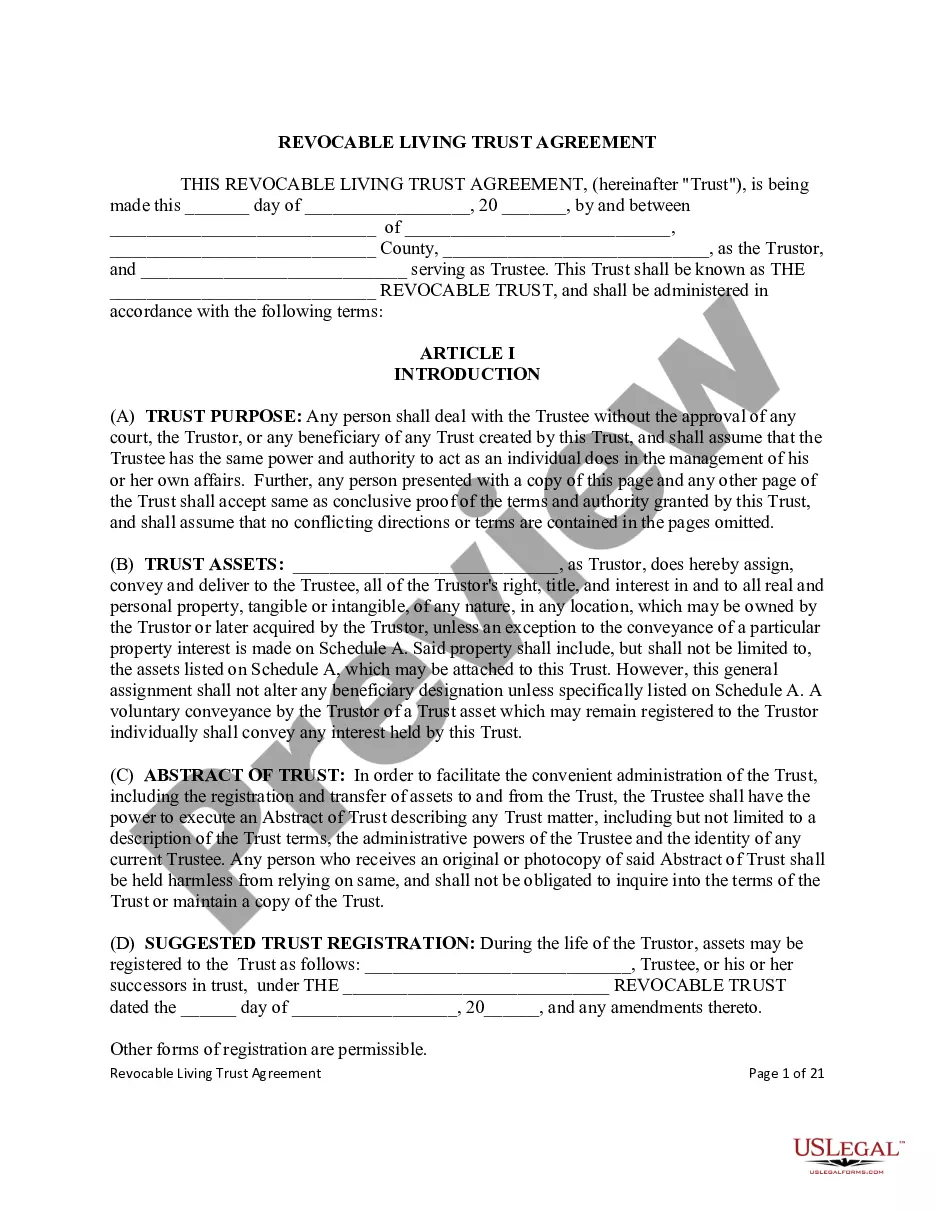
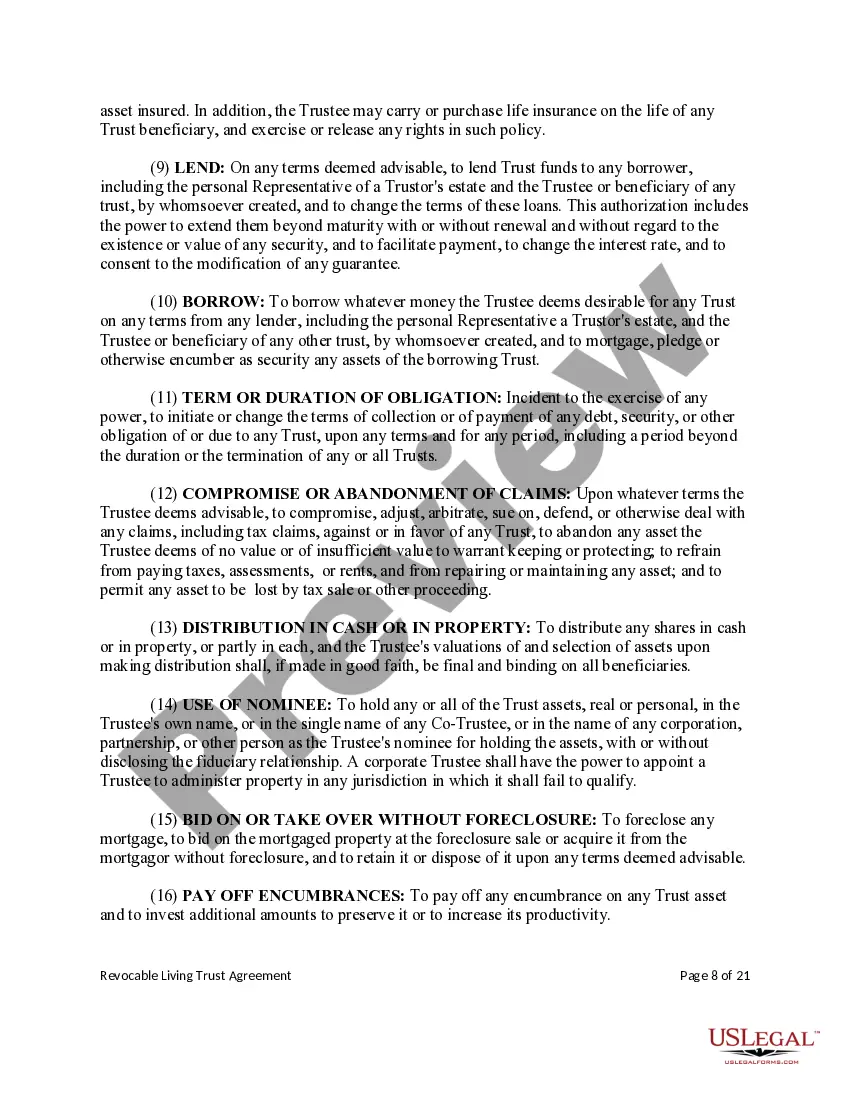
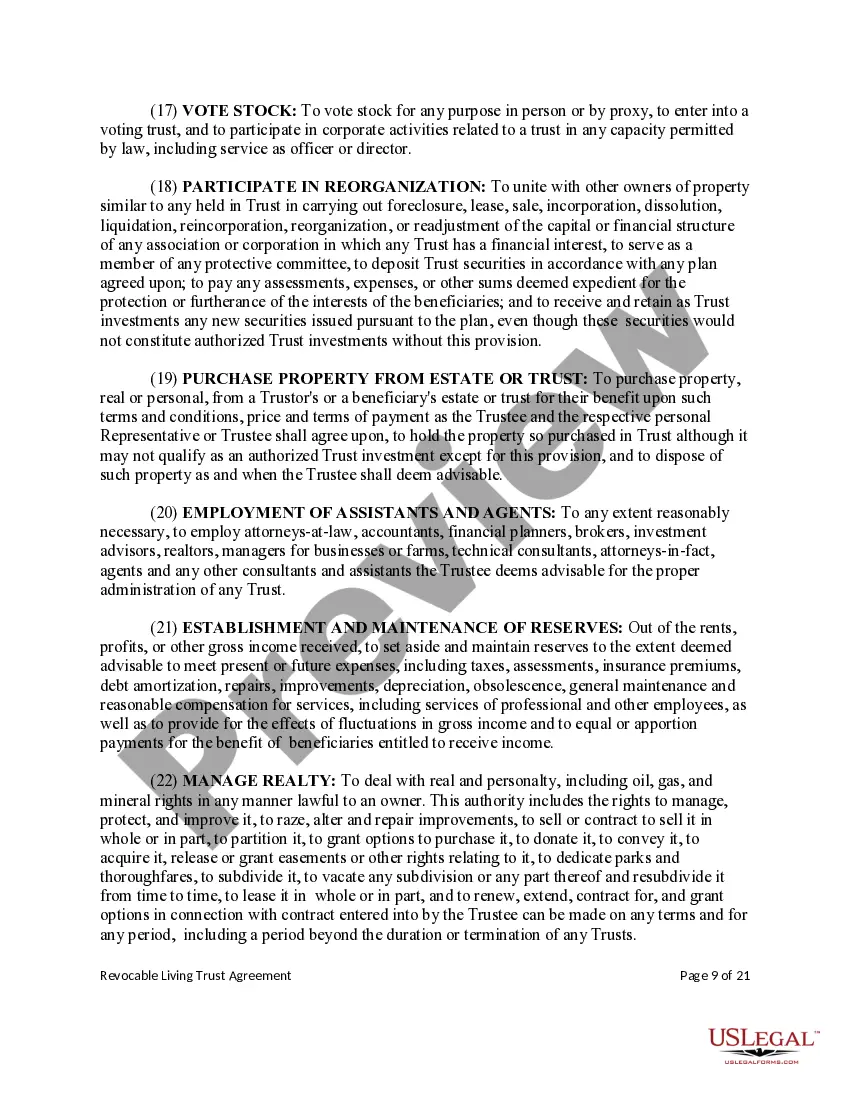
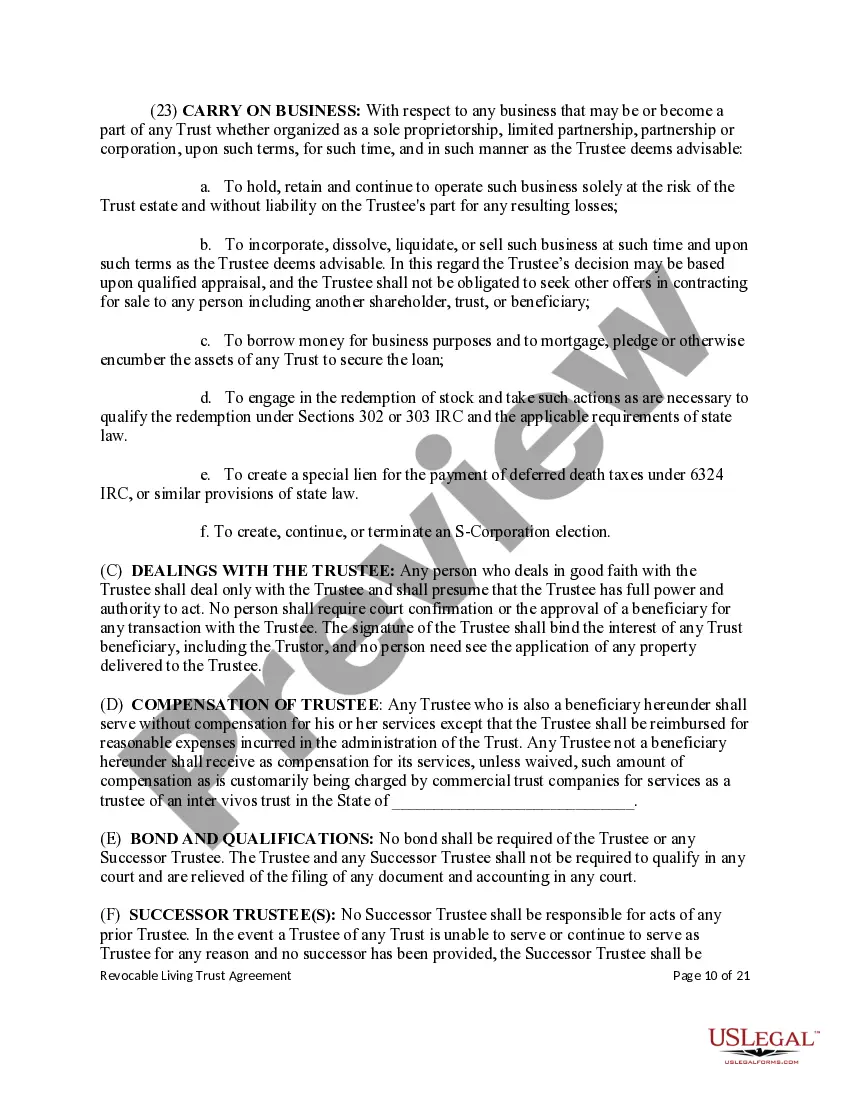
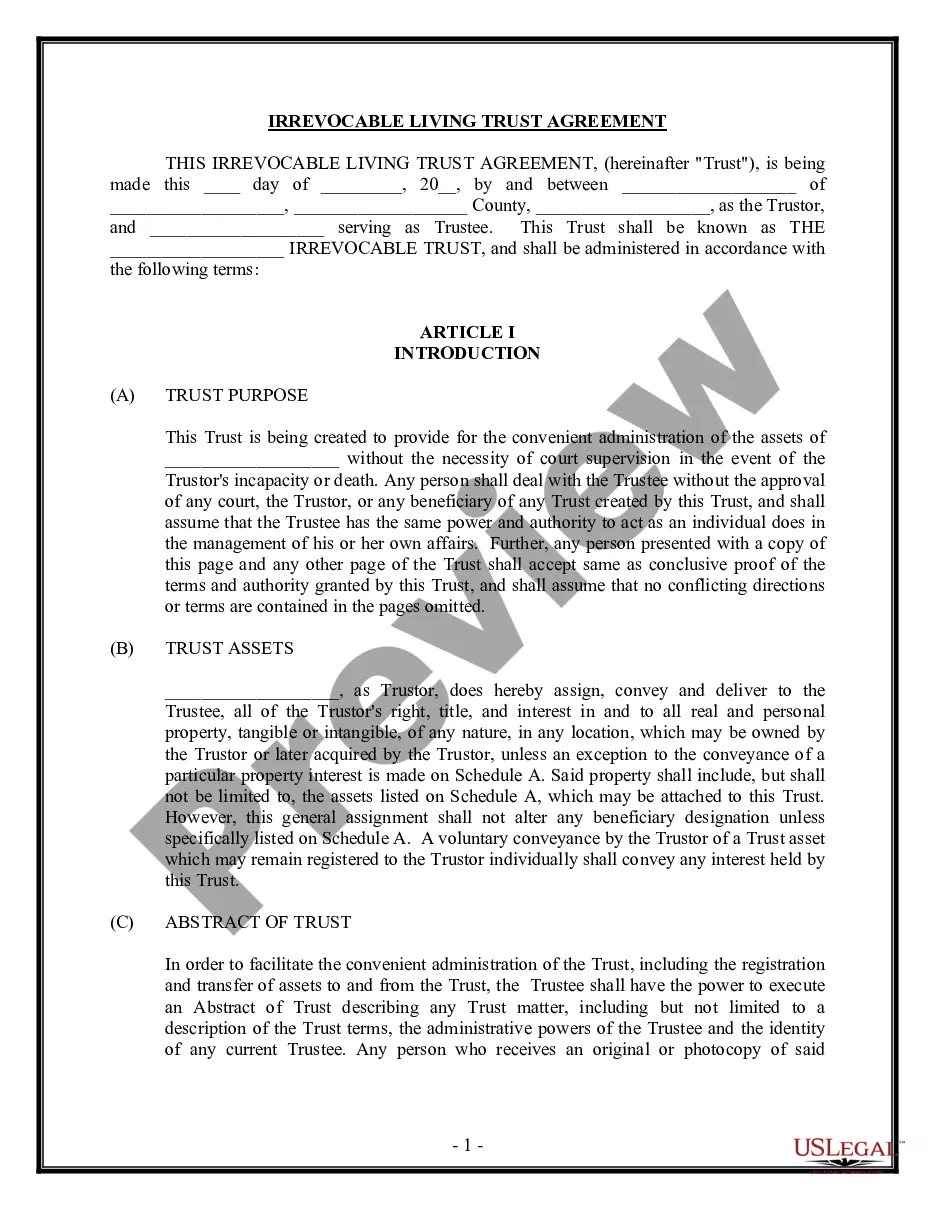
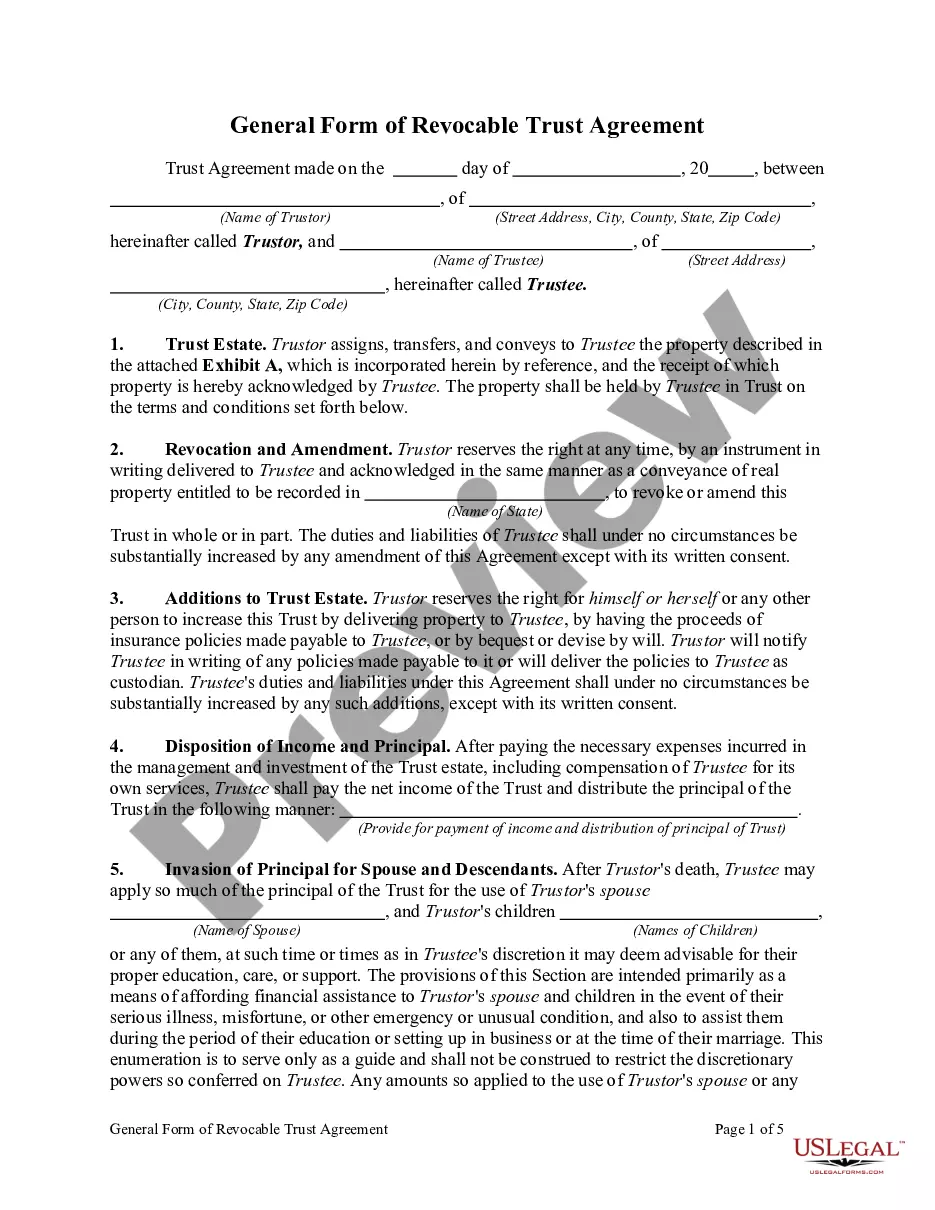
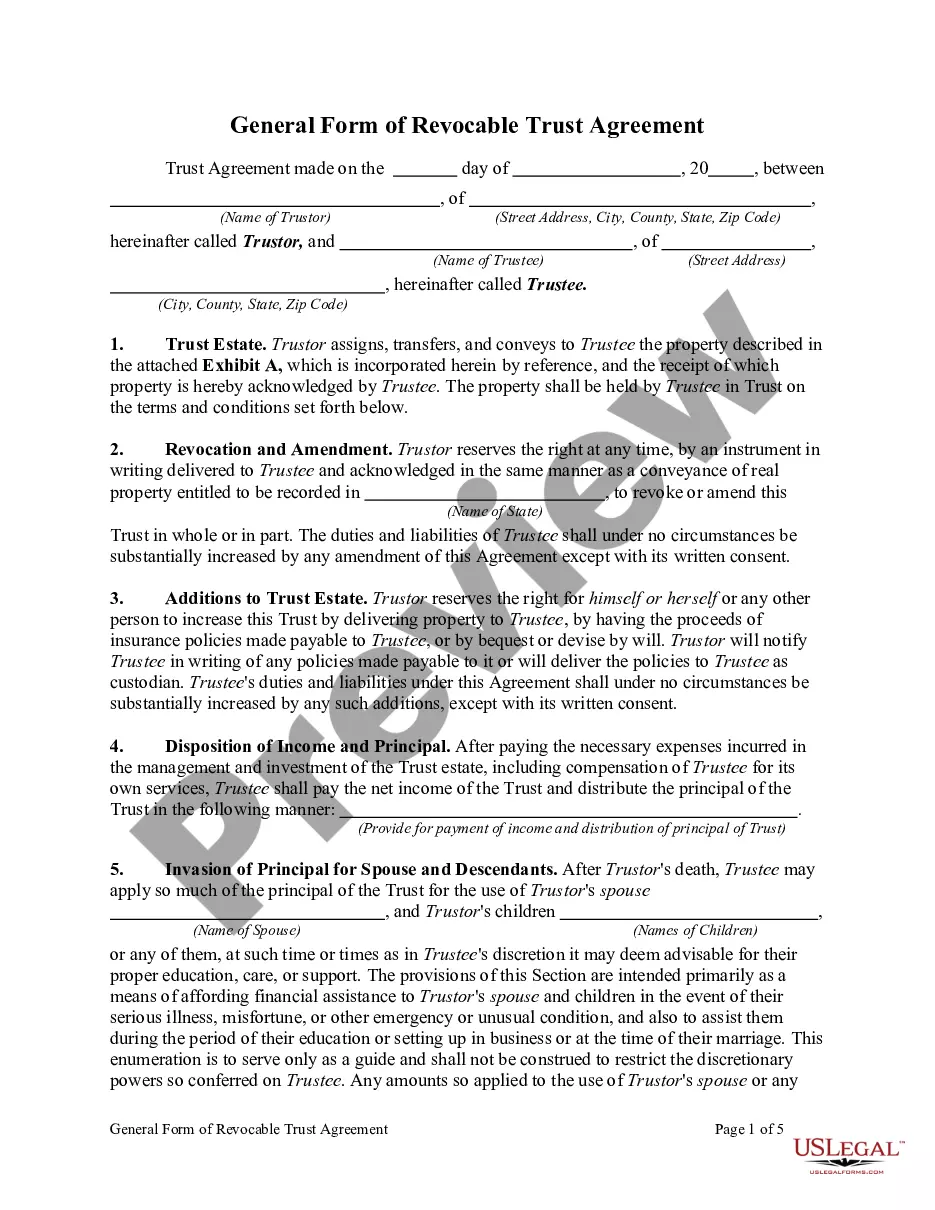
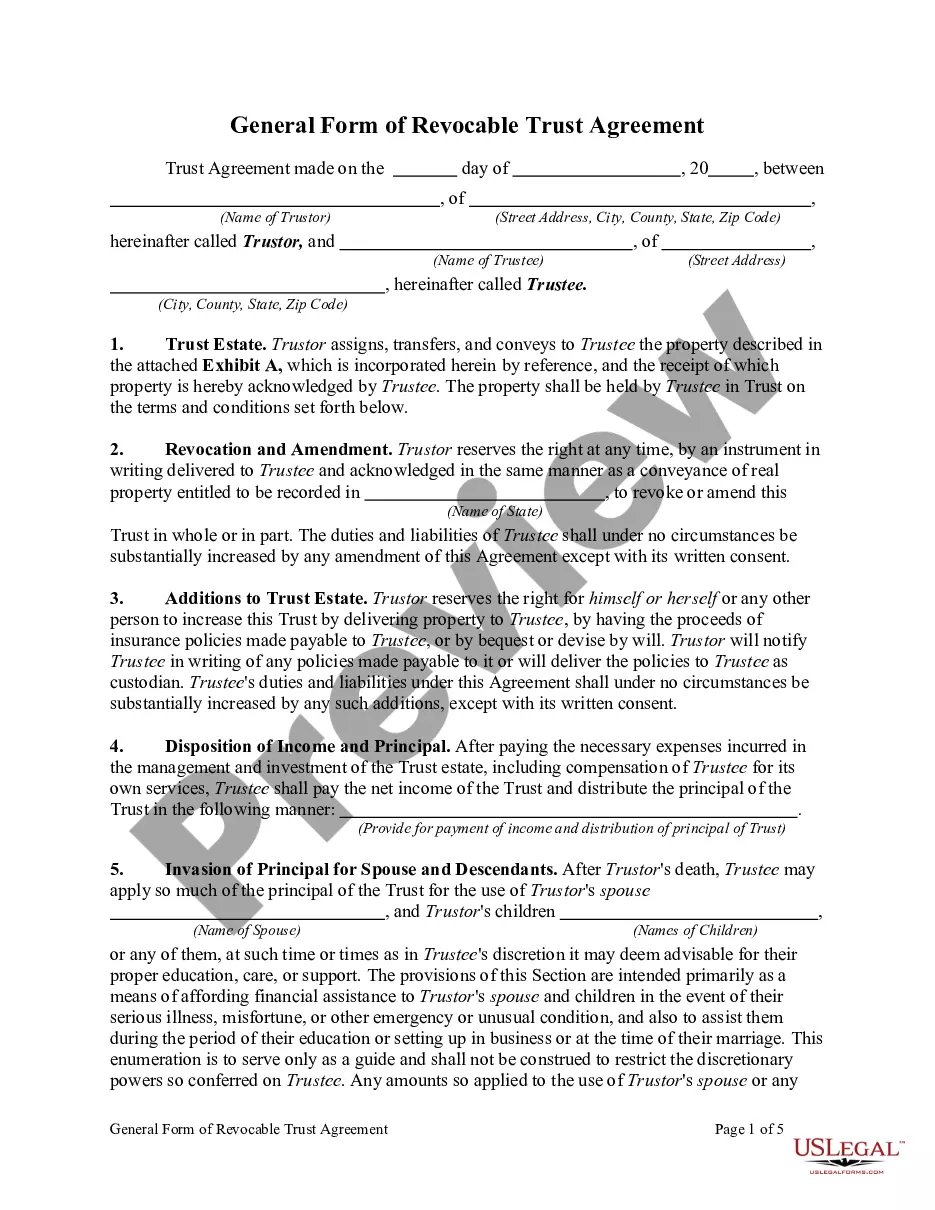
The Living Trust - Revocable is a legal document used to create a revocable living trust, allowing the Trustor (the individual creating the trust) to manage their assets during their lifetime and specify how they should be distributed after their death. This type of trust differs from a will in that it helps avoid the probate process, enabling a smoother transition of assets to beneficiaries without court involvement. It also allows for modifications or revocation at any time, as long as the Trustor is alive and competent.
- Abstract of Trust: Describes the trust terms, the powers of the Trustee, and identifies current Trustees.
- Tax Identification: Defines how the trust will be identified for tax purposes during the Trustor's lifetime and after death.
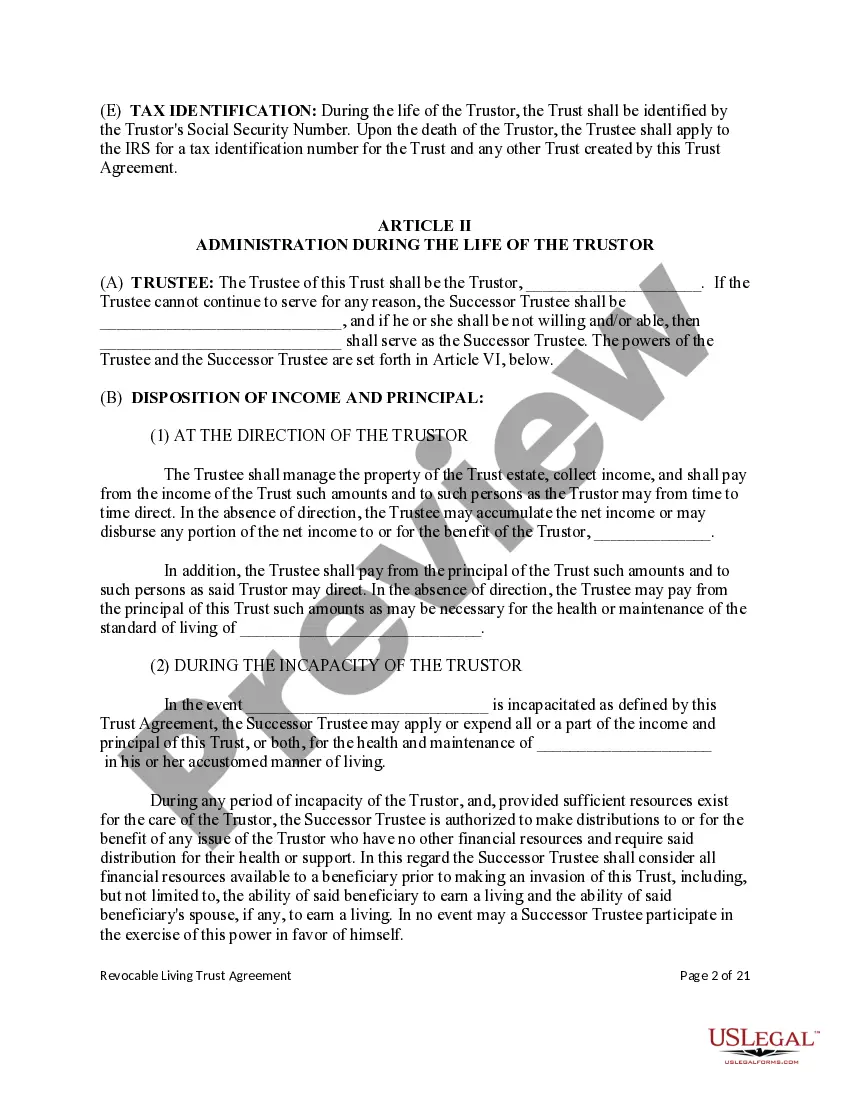
- Disposition of Income and Principal: Details the Trustor's ability to alter or revoke the trust and manage the trust property.
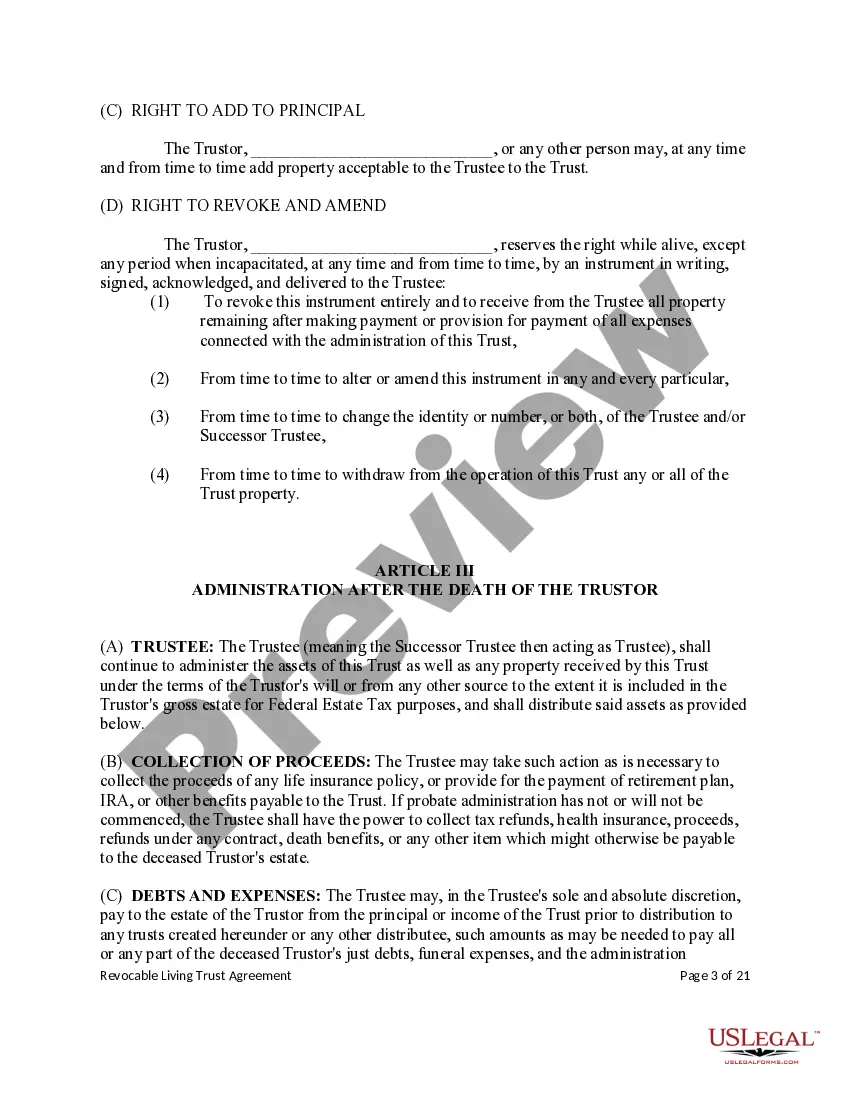
- Trustee Duties: Outlines the responsibilities of the Trustee before and after the Trustor's death, including asset management and debt payment.
- Power of Attorney: Appoints individuals who can act on behalf of the Trustor in managing the trust or other legal matters.
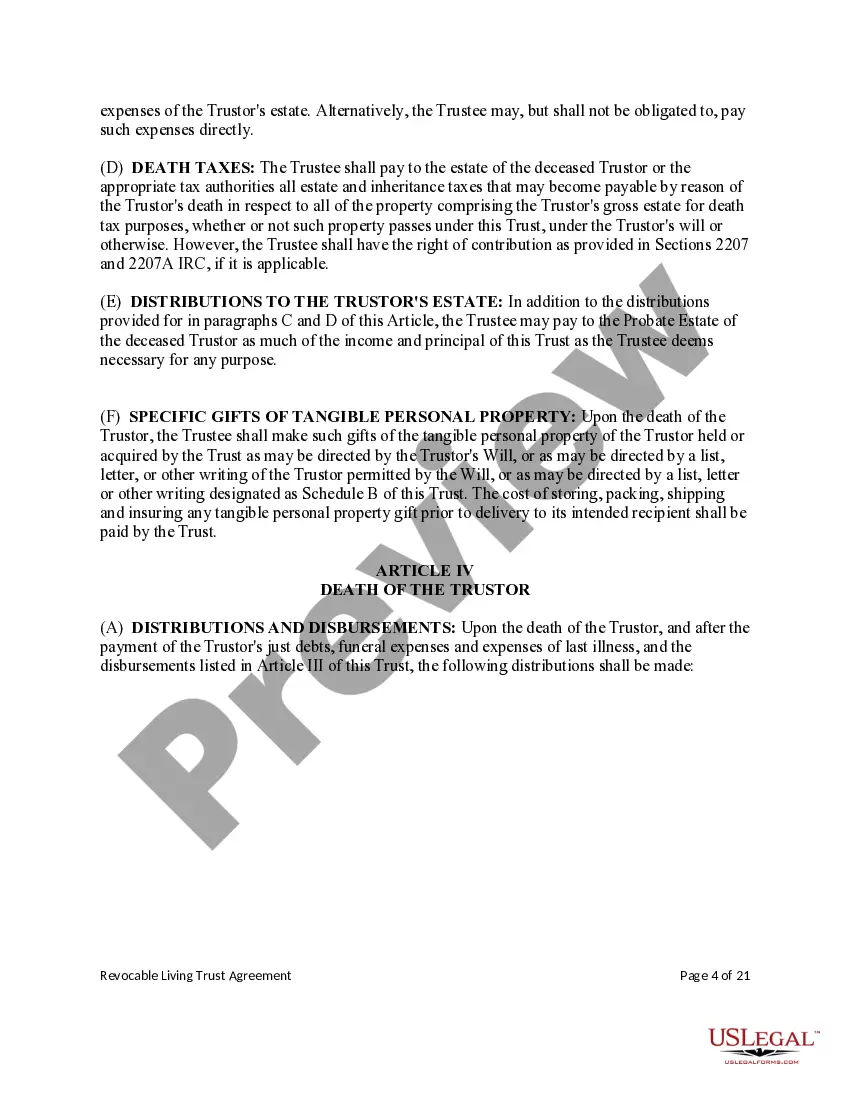
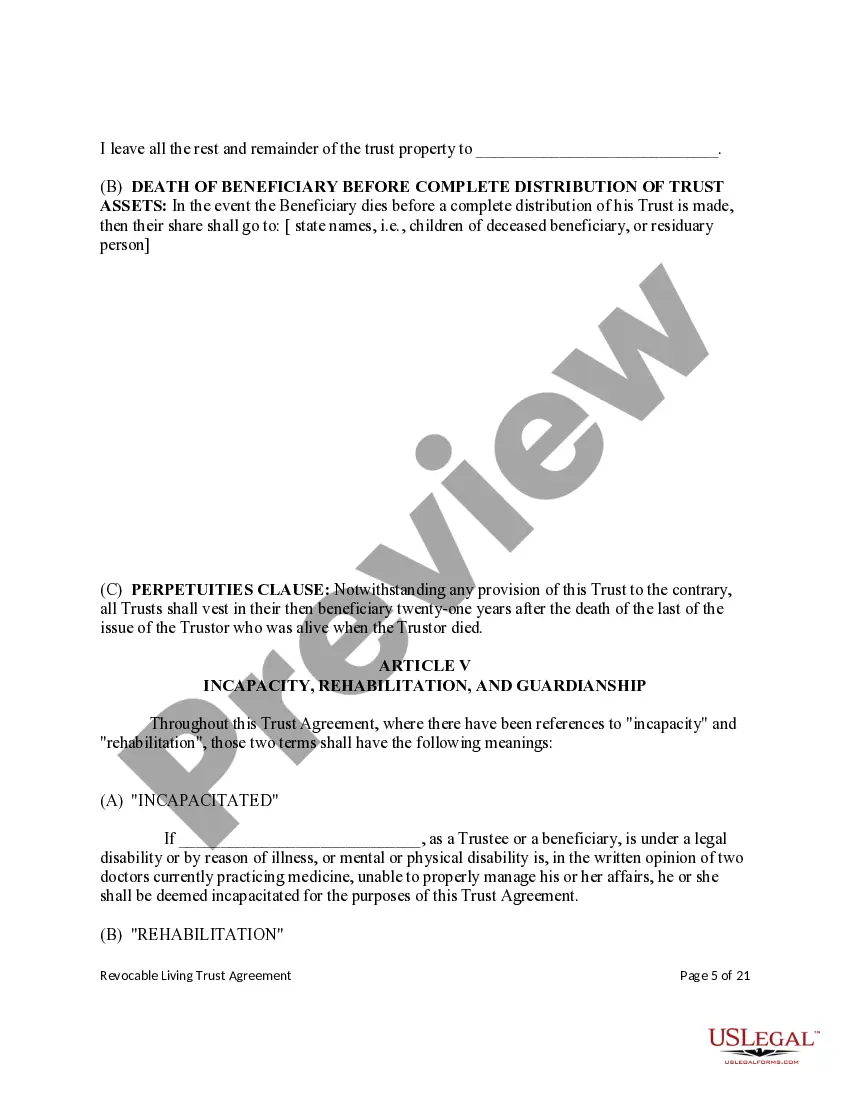
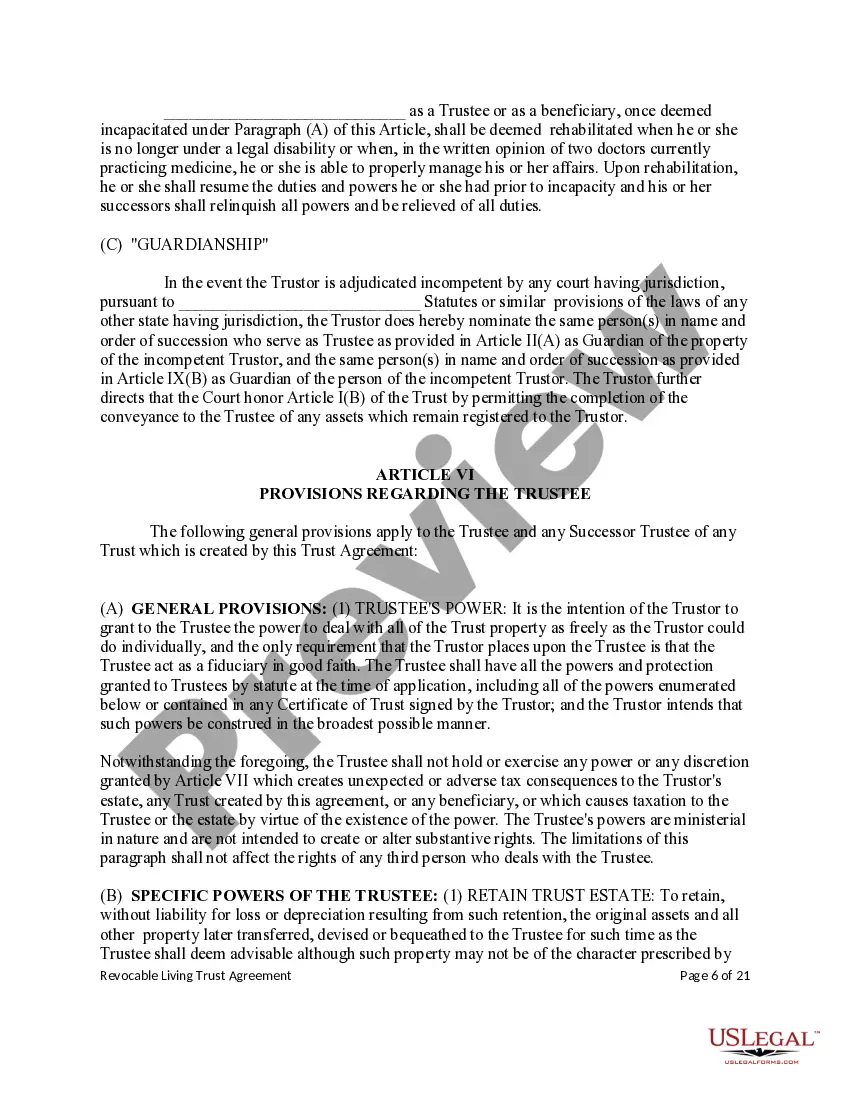
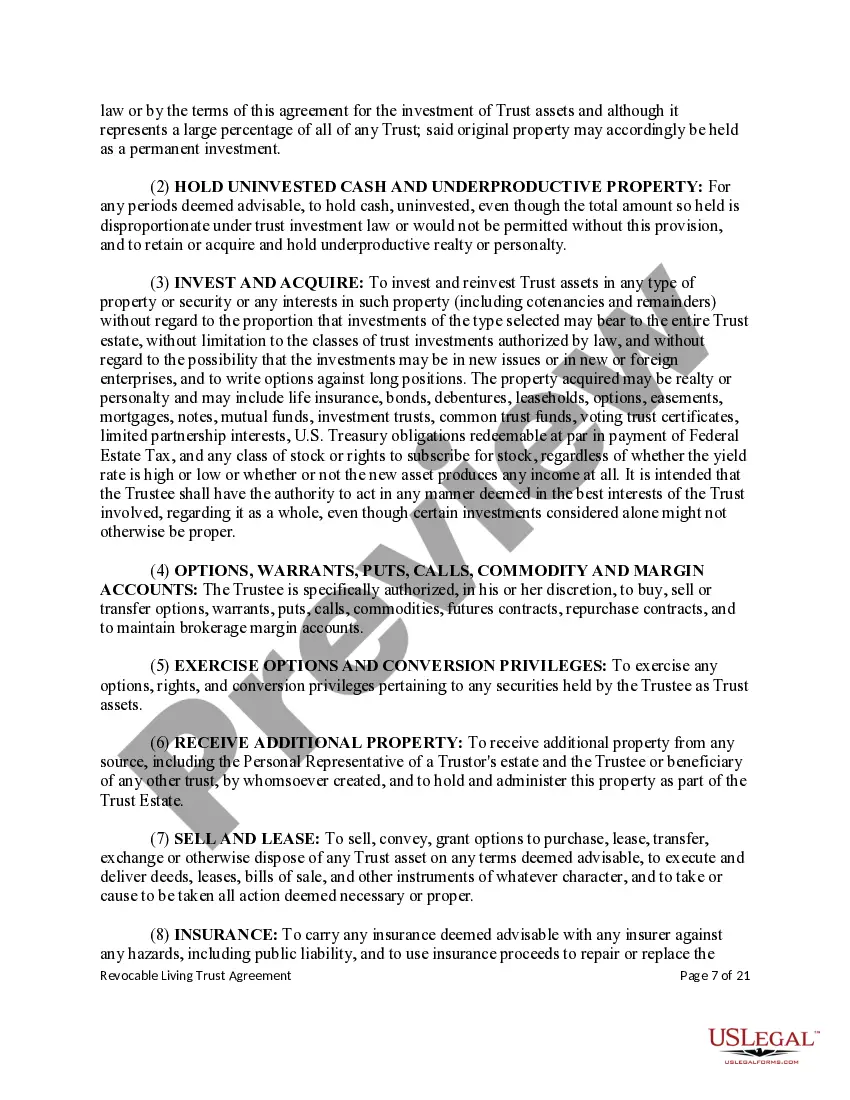

This form is essential when an individual wants to ensure that their assets are managed according to their wishes during their lifetime and distributed to selected beneficiaries after their death. It is particularly useful for those seeking to avoid the probate process, manage their estate efficiently, or provide for family members in the event of their incapacity or passing.
This form is intended for:
- Individuals seeking to create a comprehensive estate plan.
- Anyone wanting to manage their assets during their lifetime while specifying distribution after death.
- People looking to avoid the complexities and costs associated with probate.
To complete the Living Trust - Revocable, follow these steps:
- Identify the parties involved, including the Trustor and Trustee.
- Specify the assets to be included in the trust and how they will be managed.
- Designate beneficiaries and outline their rights to the trust assets after the Trustor's death.
- Complete the necessary sections regarding the Trustee's powers and responsibilities.
- Sign the document in the presence of witnesses if required by state law, ensuring all pages are dated.
This form does not typically require notarization unless specified by local law. However, it is important to check state-specific regulations to ensure validity.
- Failing to update the trust when major life changes occur, such as marriage or divorce.
- Not properly funding the trust by transferring assets into it.
- Omitting important details regarding asset management and distribution.
- Convenience: Easily create a legally binding trust document online, available for immediate download.
- Editability: Customize the form to fit specific needs without needing extensive legal knowledge.
- Reliability: The forms are prepared by licensed attorneys, ensuring compliance with legal standards.
- A revocable living trust is legally binding and can be enforced in court as necessary.
- The Trustor retains control over the trust assets, allowing for flexibility in management.
- The Living Trust - Revocable allows for asset management during the Trustor's life and simplifies asset transfer after death.
- It is suitable for anyone wanting to avoid probate and ensure their wishes are followed.
- It is easy to complete and can be tailored to individual requirements while being legally sound.






Form popularity
FAQ
Funding a Trust Is Expensive... This is the major drawback to using a revocable living trust for many people, but it's not worth the time, money, and effort to create one if the trust isn't fully funded.
Creation of a Trust To create a trust, the property owner (called the "trustor," "grantor," or "settlor") transfers legal ownership to a family member, professional, or institution (called the "trustee") to manage that property for the benefit of another person (called the "beneficiary").
A Revocable Living Trust DefinedAssets can include real estate, valuable possessions, bank accounts and investments. As with all living trusts, you create it during your lifetime.
Irrevocable Trust: An Overview. A revocable trust and living trust are separate terms that describe the same thing: a trust in which the terms can be changed at any time. Trusts are also a way to reduce tax burdens and avoid assets going to probate.
At the most basic level, a revocable living trust, also known simply as a revocable trust, is a written document that determines how your assets will be handled after you die.Assets you place in the trust are then transferred to your designated beneficiaries upon your death.
Key Takeaways. A revocable living trust is a trust document created by an individual that can be changed over time. Revocable living trusts are used to avoid probate and to protect the privacy of the trust owner and beneficiaries of the trust as well as minimize estate taxes.
As far as the Internal Revenue Service is concerned, trust property belongs to the grantor. The grantor names a trustee to manage the assets, but during their lifetime, most people name themselves in this position. A successor trustee is named to carry on when the grantor dies or becomes incapacitated.