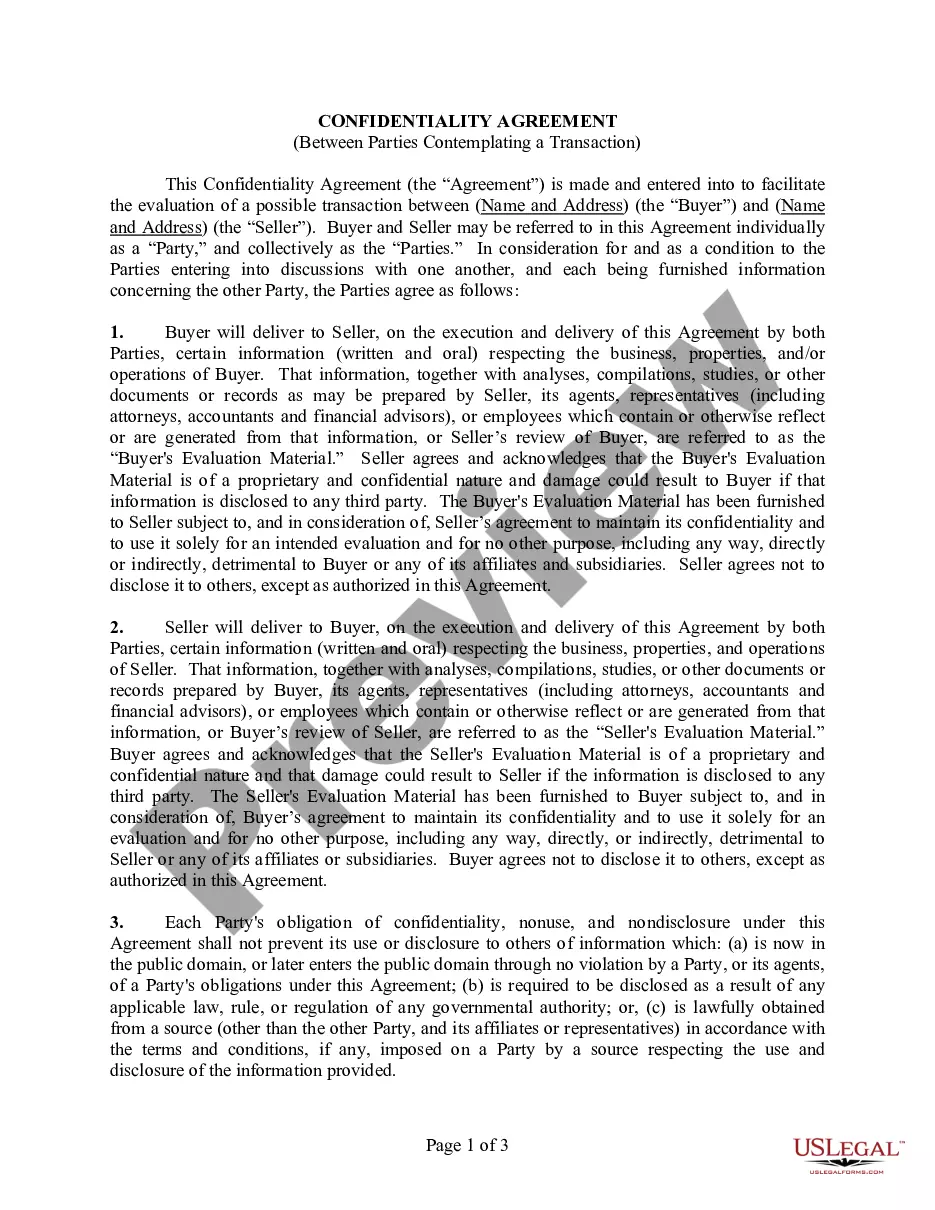
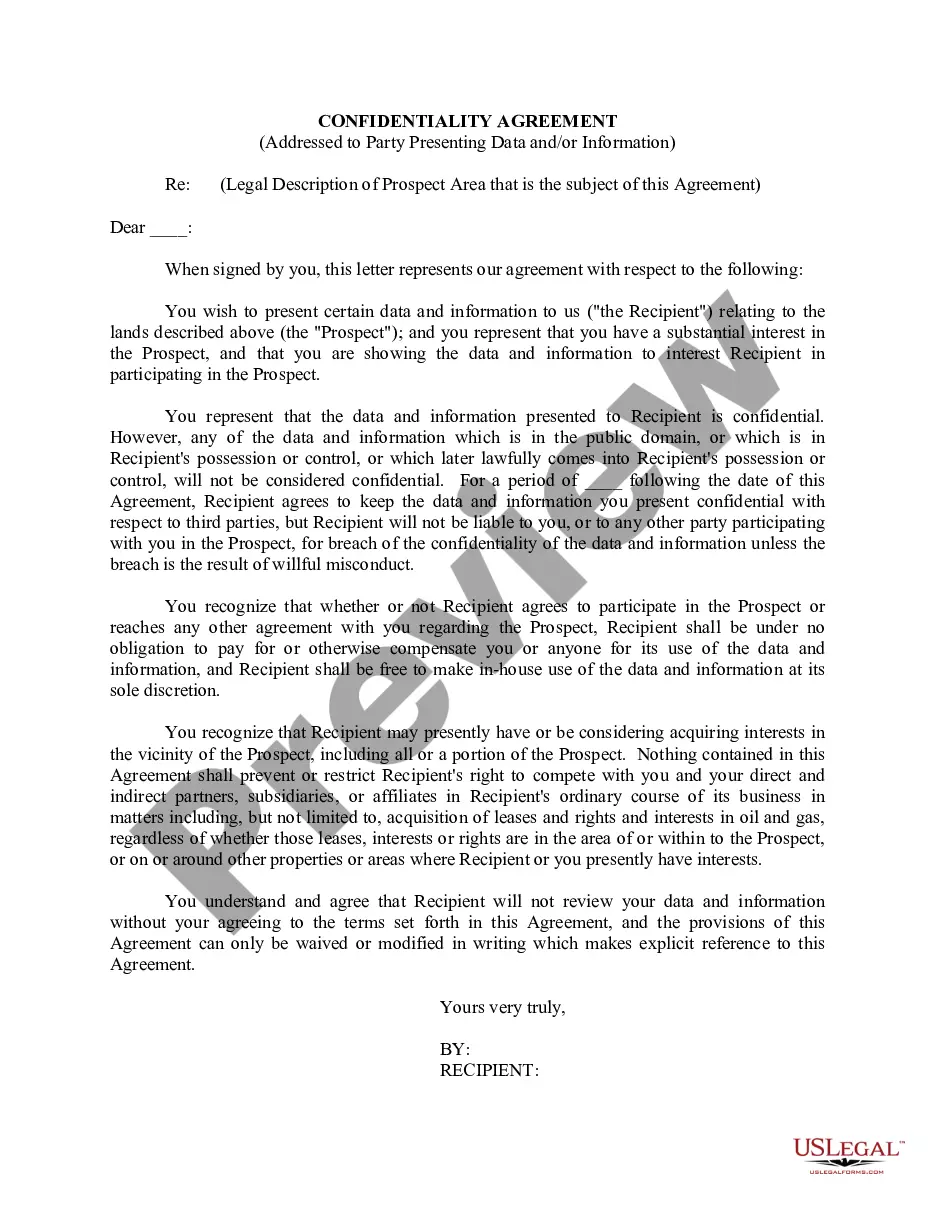
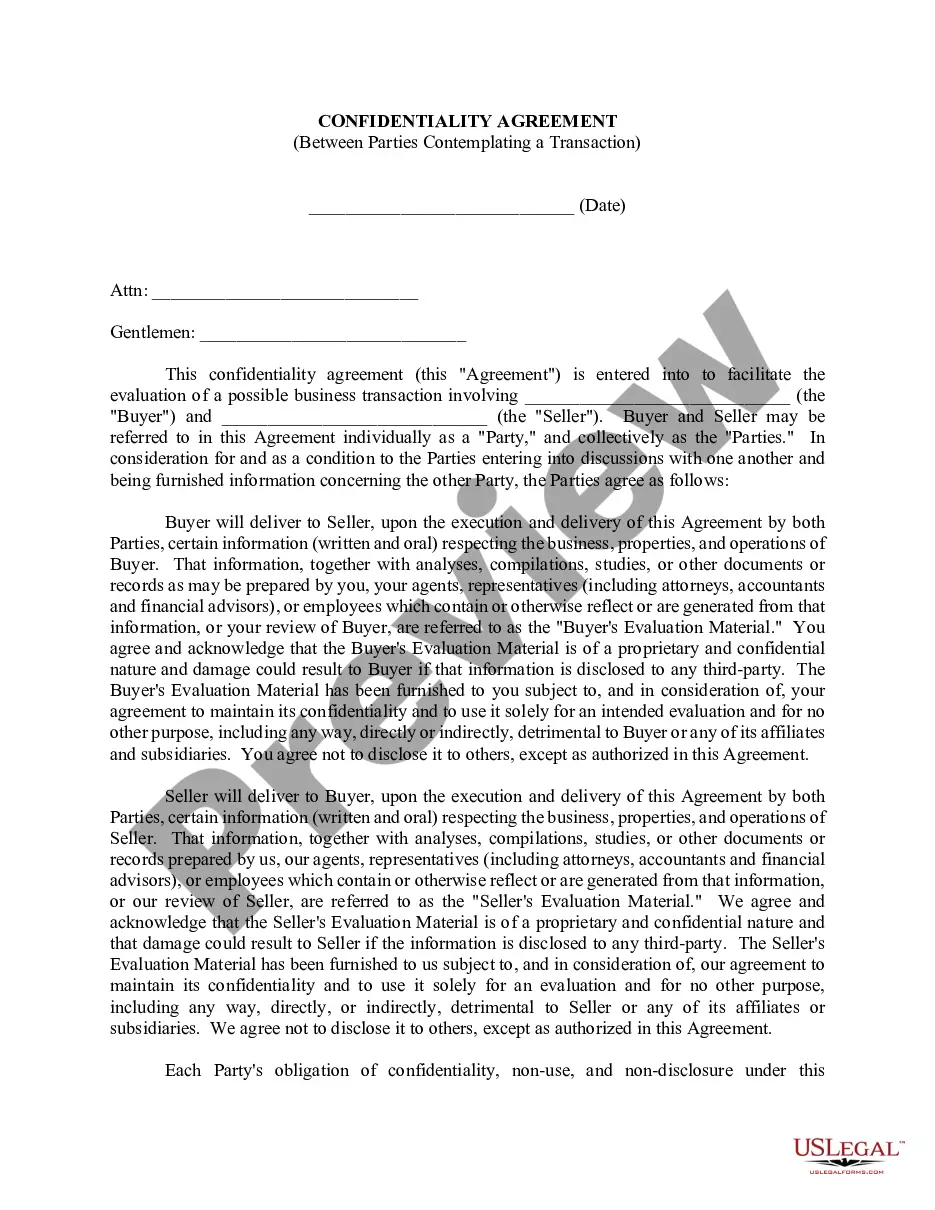
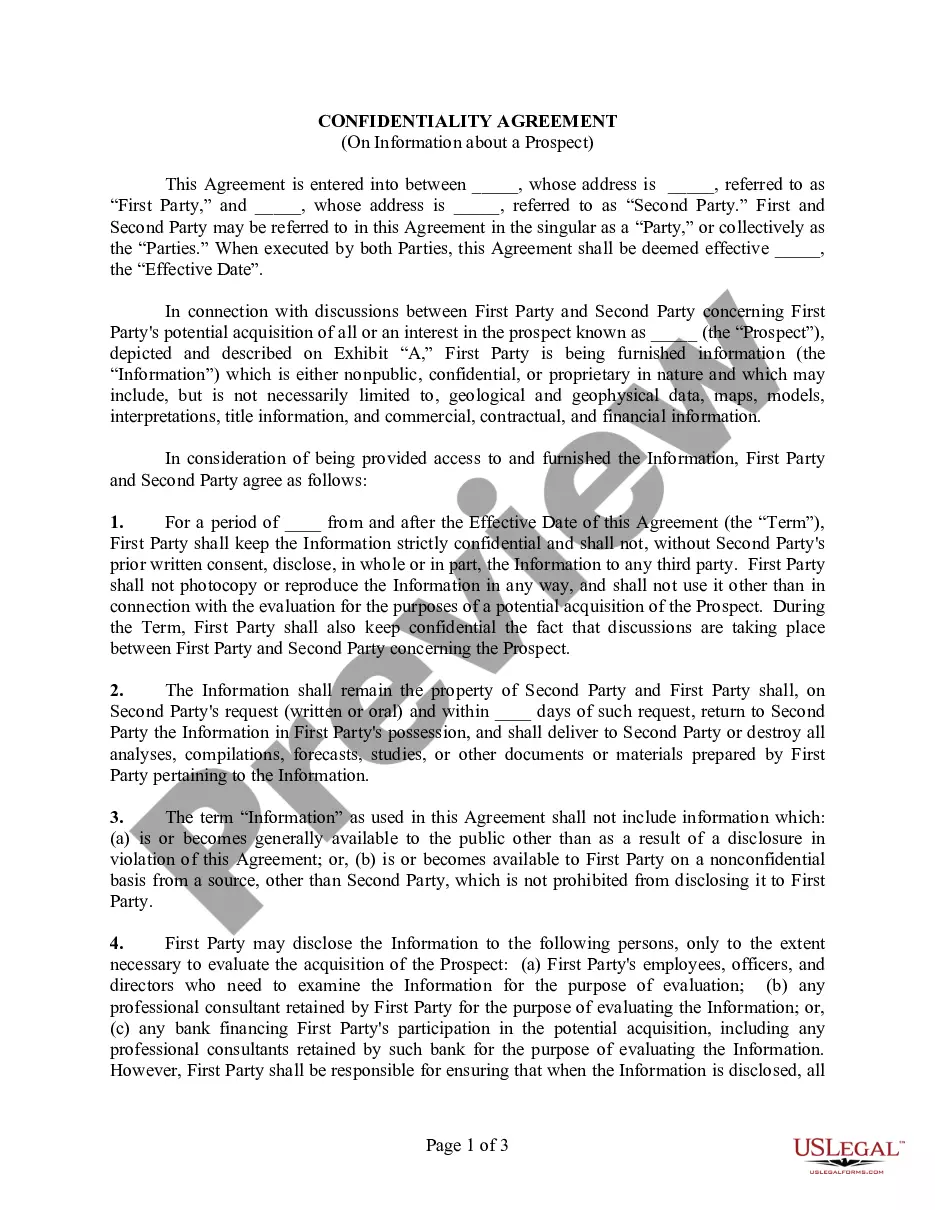
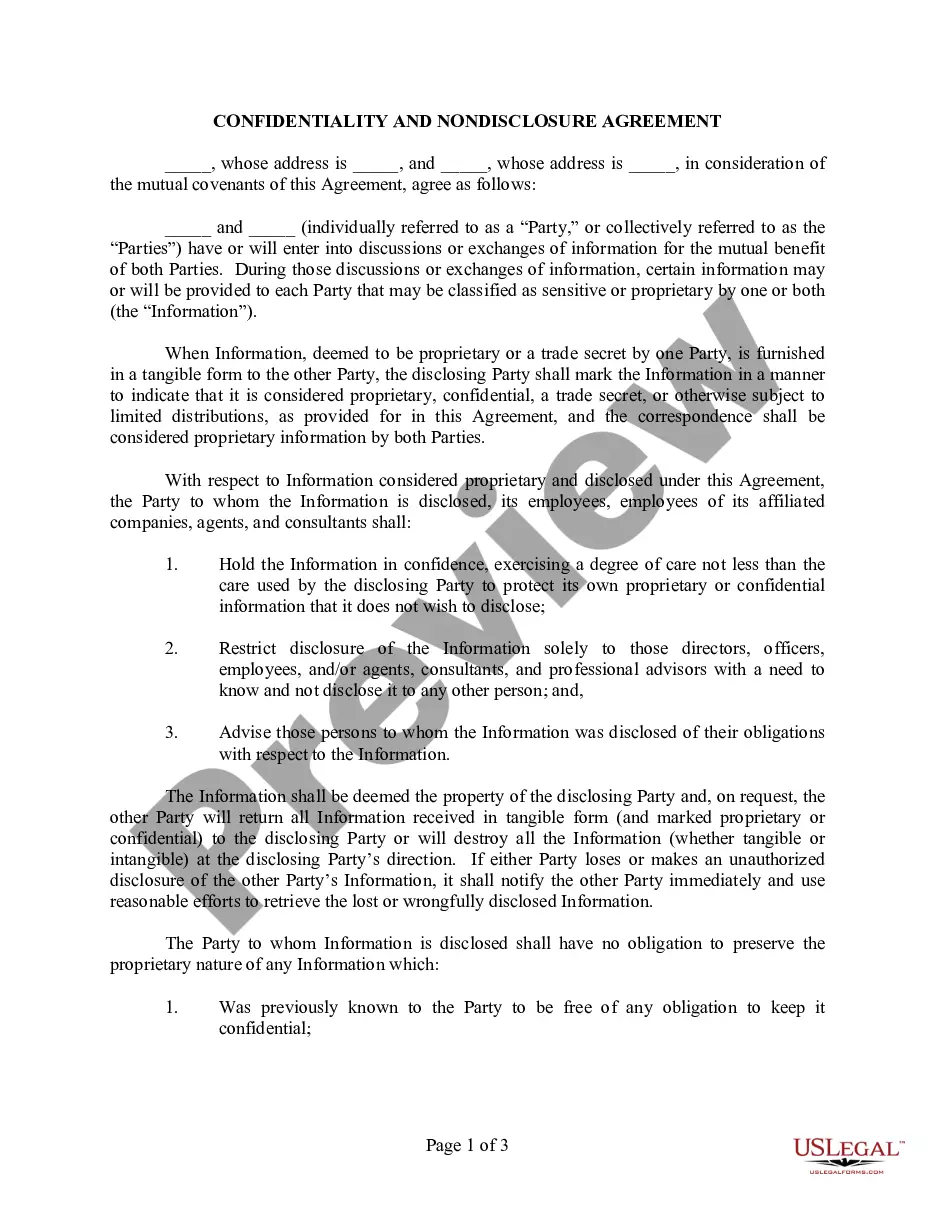
Confidentiality Agreement Between Former Employees
Description


Get your form ready online
Our built-in tools help you complete, sign, share, and store your documents in one place.
Make edits, fill in missing information, and update formatting in US Legal Forms—just like you would in MS Word.
Download a copy, print it, send it by email, or mail it via USPS—whatever works best for your next step.
Sign and collect signatures with our SignNow integration. Send to multiple recipients, set reminders, and more. Go Premium to unlock E-Sign.
If this form requires notarization, complete it online through a secure video call—no need to meet a notary in person or wait for an appointment.
We protect your documents and personal data by following strict security and privacy standards.

Make edits, fill in missing information, and update formatting in US Legal Forms—just like you would in MS Word.

Download a copy, print it, send it by email, or mail it via USPS—whatever works best for your next step.

Sign and collect signatures with our SignNow integration. Send to multiple recipients, set reminders, and more. Go Premium to unlock E-Sign.

If this form requires notarization, complete it online through a secure video call—no need to meet a notary in person or wait for an appointment.

We protect your documents and personal data by following strict security and privacy standards.
Looking for another form?

How to fill out Confidentiality Agreement (Between Parties Contemplating A Transaction)?
Managing legal documents can be daunting, even for the most experienced professionals.
When you are searching for a Non-Disclosure Agreement Between Previous Employees and do not have the opportunity to dedicate time to find the correct and updated version, the process can be anxiety-inducing.
US Legal Forms accommodates all needs you may have, ranging from personal to professional paperwork, all in a single location.
Utilize sophisticated tools to complete and oversee your Non-Disclosure Agreement Between Previous Employees.
Here are the steps to follow after accessing the form you desire: Confirm that this is the correct form by previewing it and reviewing its details.
- Access a valuable collection of articles, guides, and materials pertinent to your circumstances and needs.
- Save time and energy searching for the documents you require, and use US Legal Forms’ advanced search and Preview feature to locate the Non-Disclosure Agreement Between Previous Employees.
- If you are a member, Log In to your US Legal Forms account, search for the form, and obtain it.
- Check the My documents tab to discover the documents you have previously saved and also to organize your folders as needed.
- If it’s your first experience with US Legal Forms, create an account for unrestricted access to all the platform benefits.
- A comprehensive online form repository could significantly benefit anyone who seeks to handle these scenarios proficiently.
- US Legal Forms is a frontrunner in online legal documents, offering over 85,000 state-specific legal forms at any given time.
- With US Legal Forms, you can access legal and business documents specific to your state or county.
Form popularity
FAQ
Signing a non-disclosure agreement (NDA) after termination can be beneficial, depending on your circumstances. A confidentiality agreement between former employees can protect both parties by clearly outlining what information must remain confidential. Before you sign, consider the implications on your future employment opportunities and consult a legal professional if needed.
Yes, confidentiality clauses typically survive termination, meaning they remain in effect even after an employee leaves. This reinforces the importance of a confidentiality agreement between former employees, as it holds individuals accountable for the protection of sensitive information regardless of their employment status. Such clauses help ensure that trade secrets and proprietary data are not disclosed to competitors or public entities.
No, you should not backdate a confidentiality agreement between former employees. Backdating can lead to legal complications and may undermine the enforceability of the agreement. Instead, it is best to create the agreement with a current date that accurately reflects the terms and conditions agreed upon by both parties.
A confidentiality agreement between former employees is a legal document that ensures sensitive information shared during employment remains protected even after the individual leaves the company. This agreement helps prevent the misuse of proprietary data, trade secrets, and other confidential information. It serves as a safeguard, allowing businesses to maintain their competitive advantage while also protecting employee privacy.
Five examples of confidentiality include trade secrets, client lists, financial data, internal processes, and marketing strategies. These elements are vital to a company's competitive edge. Implementing confidentiality agreements between former employees can specifically protect these secrets from being disclosed post-employment, ensuring that valuable business information remains secure.
Filling out a confidentiality agreement requires careful attention to detail. Begin by ensuring that all parties' names and contact details are accurate. Next, clearly state what information is considered confidential, and outline the responsibilities for keeping that information secure. Including a clear confidentiality agreement between former employees will strengthen your legal position should a breach occur.
To fill out a confidentiality form, start by entering the names and contact information of all parties involved. Then, specify the type of confidential information that will be protected, along with the terms and conditions for its use and disclosure. Remember that a well-structured confidentiality agreement between former employees can prevent misunderstandings and safeguard your business interests.
An example of a confidentiality agreement is a document that binds an employee to keep sensitive company information secret during and after employment. This may include trade secrets, client lists, and proprietary processes. Such agreements are crucial when drafting confidentiality agreements between former employees, as they help prevent potential misuse of information after the employment ends.
To write a simple confidentiality statement, start by clearly defining the confidential information you wish to protect. Next, outline the obligations of the parties involved, specifically focusing on the requirement to keep that information private. Lastly, include a duration for the confidentiality obligations, particularly highlighting the importance of confidentiality agreements between former employees in preserving business secrets.