Property Partition Suit Without Tie
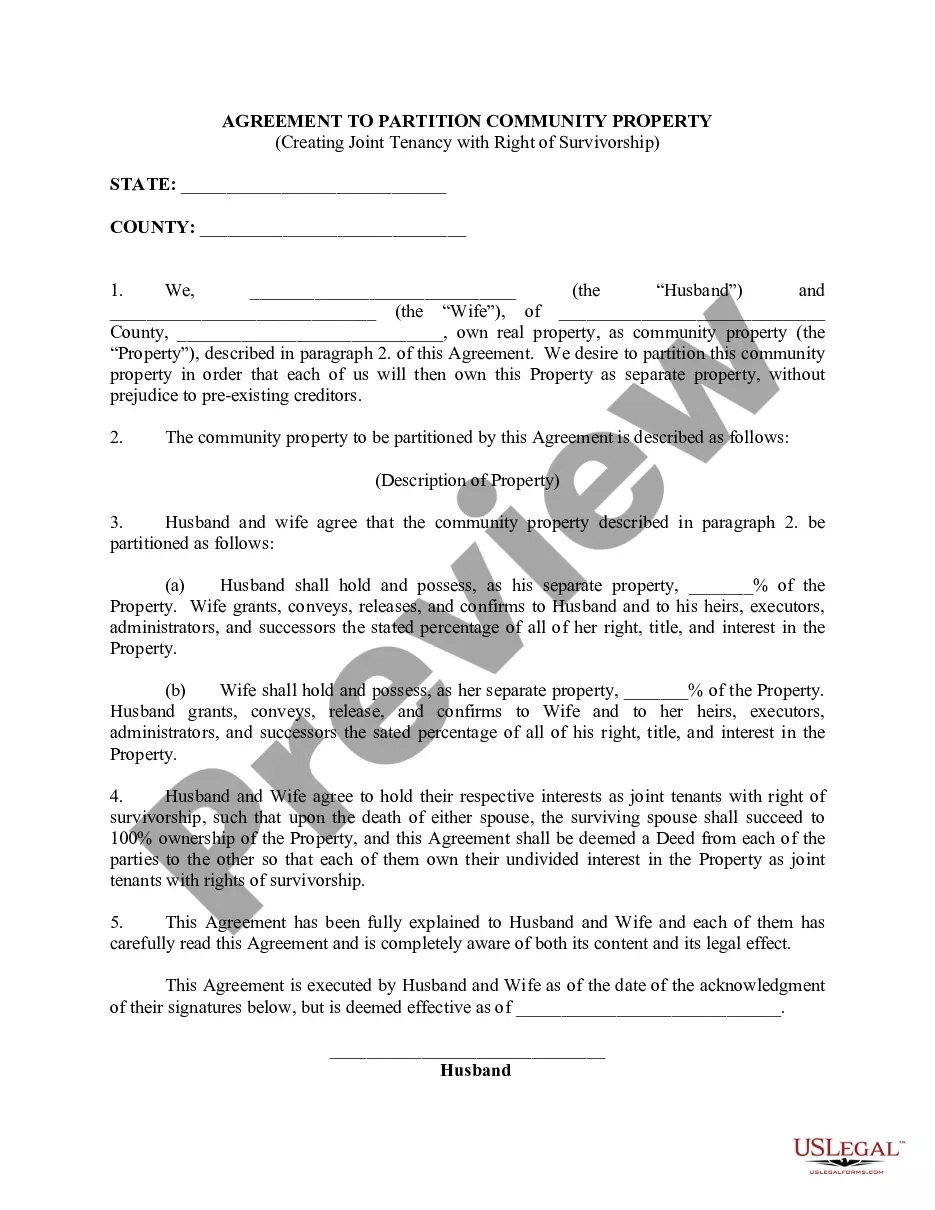
Description
Get your form ready online
Our built-in tools help you complete, sign, share, and store your documents in one place.
Make edits, fill in missing information, and update formatting in US Legal Forms—just like you would in MS Word.
Download a copy, print it, send it by email, or mail it via USPS—whatever works best for your next step.
Sign and collect signatures with our SignNow integration. Send to multiple recipients, set reminders, and more. Go Premium to unlock E-Sign.
If this form requires notarization, complete it online through a secure video call—no need to meet a notary in person or wait for an appointment.
We protect your documents and personal data by following strict security and privacy standards.

Make edits, fill in missing information, and update formatting in US Legal Forms—just like you would in MS Word.

Download a copy, print it, send it by email, or mail it via USPS—whatever works best for your next step.

Sign and collect signatures with our SignNow integration. Send to multiple recipients, set reminders, and more. Go Premium to unlock E-Sign.

If this form requires notarization, complete it online through a secure video call—no need to meet a notary in person or wait for an appointment.

We protect your documents and personal data by following strict security and privacy standards.
Looking for another form?

How to fill out Agreement To Partition Community Property Creating Joint Tenancy With Right Of Survivorship?
Regardless of whether it's for commercial reasons or personal matters, everyone must confront legal issues at some point in their lives.
Completing legal documents requires meticulous attention, starting with selecting the appropriate form template.
Once downloaded, you can fill out the form using editing software or print it and complete it by hand. With an extensive US Legal Forms catalog available, you don’t have to waste time searching for the right sample online. Utilize the library’s user-friendly navigation to find the suitable form for any circumstance.
- For instance, if you select an incorrect version of the Property Partition Suit Without Tie, it will be rejected upon submission.
- Thus, it is crucial to obtain a trustworthy source for legal documents such as US Legal Forms.
- If you need to acquire a Property Partition Suit Without Tie template, follow these straightforward steps.
- Retrieve the sample you require by utilizing the search bar or catalog browsing.
- Review the form’s description to verify it aligns with your case, state, and county.
- Click on the form’s preview to inspect it.
- If it is the wrong document, return to the search feature to find the Property Partition Suit Without Tie template you need.
- Download the template if it corresponds to your requirements.
- If you already possess a US Legal Forms account, simply click Log in to access previously saved templates in My documents.
- If you do not have an account yet, you may obtain the form by clicking Buy now.
- Select the appropriate pricing option.
- Complete the profile registration form.
- Choose your payment method: either a credit card or PayPal account.
- Select the document format you desire and download the Property Partition Suit Without Tie.
Form popularity
FAQ
Beating a property partition suit without tie requires a solid understanding of your rights and options. Engage legal support to present a strong defense, focusing on the reasons why partition is not in the best interest of all parties. Mediation or negotiation can also be effective strategies to resolve conflicts and prevent the suit from proceeding.
Yes, a property partition suit without tie can be dismissed under certain circumstances. If co-owners reach an agreement or if the court finds sufficient grounds for dismissal, the suit may be halted. It's essential to communicate with legal counsel to understand your options and the likelihood of dismissal based on specific case details.
Calculating your share in a property partition suit without tie involves determining the value of the property and your ownership percentage. Start by appraising the property to establish its market value, then multiply that value by your ownership share. This clear calculation can simplify negotiations and help co-owners reach an agreement more smoothly.
Co-owners may file a property partition suit without tie to resolve disagreements about the use or sale of a property. When communication breaks down and co-owners cannot agree on the property’s future, a partition suit can provide a legal resolution. This action allows one or more owners to exit the shared ownership, ensuring that the property is fairly divided or sold.
If you are considering a property partition suit without tie, you may want to explore other options first. Alternatives include negotiating a buyout among co-owners, creating a joint ownership agreement, or mediating disputes through a neutral third party. These methods can save time, reduce costs, and preserve relationships among co-owners.
Yes, a partition suit can often be avoided through open communication and cooperation among co-owners. Establishing clear agreements about property use or seeking mediation can prevent disputes from escalating. Tools and resources from US Legal Forms can assist you in drafting agreements that promote harmony and help you avoid the need for a property partition suit without tie.
Winning a partition lawsuit requires clear evidence of ownership and the intent to partition. You should gather documents that prove your interest in the property and show how a partition is justified. Strong legal support, like that provided by US Legal Forms, can help you navigate the complexities of a property partition suit without tie, increasing your chances of success.
There are several alternatives to a property partition suit without tie that you may consider. Mediation can help co-owners reach an agreement on how to divide the property or sell it. Another option is negotiation, where parties discuss their interests and find a mutually beneficial solution. Utilizing legal resources, such as US Legal Forms, can guide you through these alternatives effectively.