Rights Regarding Shares Formula
Description
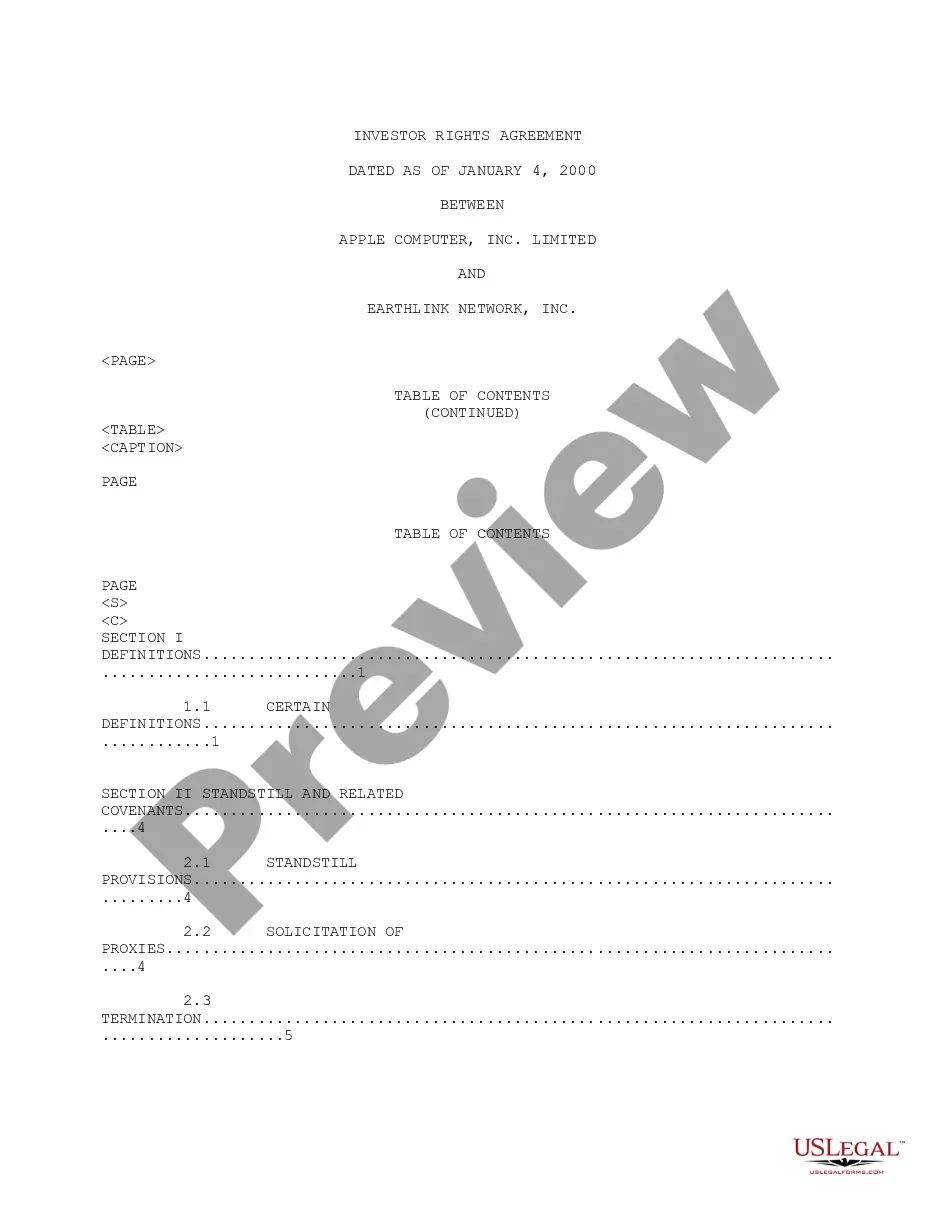
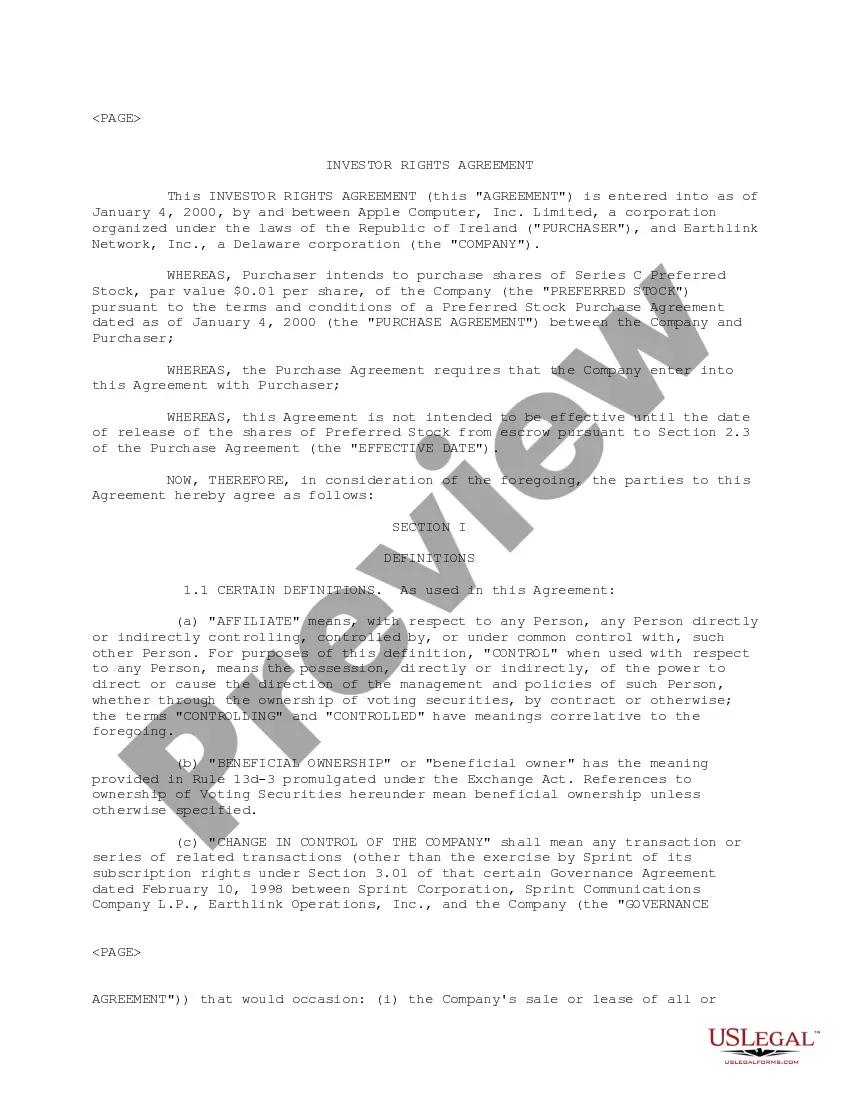





How to fill out Investor Rights Agreement Regarding The Purchase Of Series C Preferred Stock Shares?
It's well known that you cannot become a legal specialist instantly, nor can you acquire the skills to swiftly create the Rights Regarding Shares Formula without having a dedicated background.
Compiling legal documents is a lengthy process that requires particular education and expertise. So why not leave the creation of the Rights Regarding Shares Formula to the experts.
With US Legal Forms, one of the largest legal document repositories, you can access everything from court forms to templates for internal corporate communication.
Select Buy now. Once the transaction is finalized, you can download the Rights Regarding Shares Formula, complete it, print it, and send or deliver it to the required individuals or organizations.
You can revisit your documents from the My documents tab at any moment. If you are an existing client, you can simply Log In, and find and download the template from the same section.
Regardless of the nature of your documents—whether financial, legal, or personal—our website is here to assist you. Experience US Legal Forms today!
- Start your journey on our website to get the document you require within minutes.
- Find the necessary form by utilizing the search bar at the top of the page.
- Preview it (if this feature is available) and review the accompanying description to decide if the Rights Regarding Shares Formula meets your needs.
- If you require a different form, restart your search.
- Create a complimentary account and select a subscription plan to acquire the form.
Form popularity
FAQ
A rights share issue is an offering of rights given to a company's existing shareholders, allowing them to purchase additional shares directly from the company at a discounted price, rather than buying them through the secondary market.
A stockholder usually receives 1 right for each stock owned at the rights record date, when the rights certificates are issued to shareholders as of the rights record date. This gives the stockholder the right, but not the obligation, to buy additional shares of stock at the subscription price.
The calculation of the Theoretical Ex-Rights Price (TERP) involves a specific formula: TERP = [(Number of existing shares * Price per share) + (Number of new shares * Rights issue price)] / Total number of shares after the rights issue.
Advantages. Companies generally offer rights when they need to raise money. Examples include when there is a need to pay off debt, purchase equipment, or acquire another company. In some cases, a company may use a rights offering to raise money when there are no other viable financing alternatives.
If you know the market cap of a company and you know its share price, then figuring out the number of outstanding shares is easy. Just take the market capitalization figure and divide it by the share price. The result is the number of shares on which the market capitalization number was based.