Easement Vs Right Of Way With Ease
Description
Get your form ready online
Our built-in tools help you complete, sign, share, and store your documents in one place.
Make edits, fill in missing information, and update formatting in US Legal Forms—just like you would in MS Word.
Download a copy, print it, send it by email, or mail it via USPS—whatever works best for your next step.
Sign and collect signatures with our SignNow integration. Send to multiple recipients, set reminders, and more. Go Premium to unlock E-Sign.
If this form requires notarization, complete it online through a secure video call—no need to meet a notary in person or wait for an appointment.
We protect your documents and personal data by following strict security and privacy standards.

Make edits, fill in missing information, and update formatting in US Legal Forms—just like you would in MS Word.

Download a copy, print it, send it by email, or mail it via USPS—whatever works best for your next step.

Sign and collect signatures with our SignNow integration. Send to multiple recipients, set reminders, and more. Go Premium to unlock E-Sign.

If this form requires notarization, complete it online through a secure video call—no need to meet a notary in person or wait for an appointment.

We protect your documents and personal data by following strict security and privacy standards.
Looking for another form?
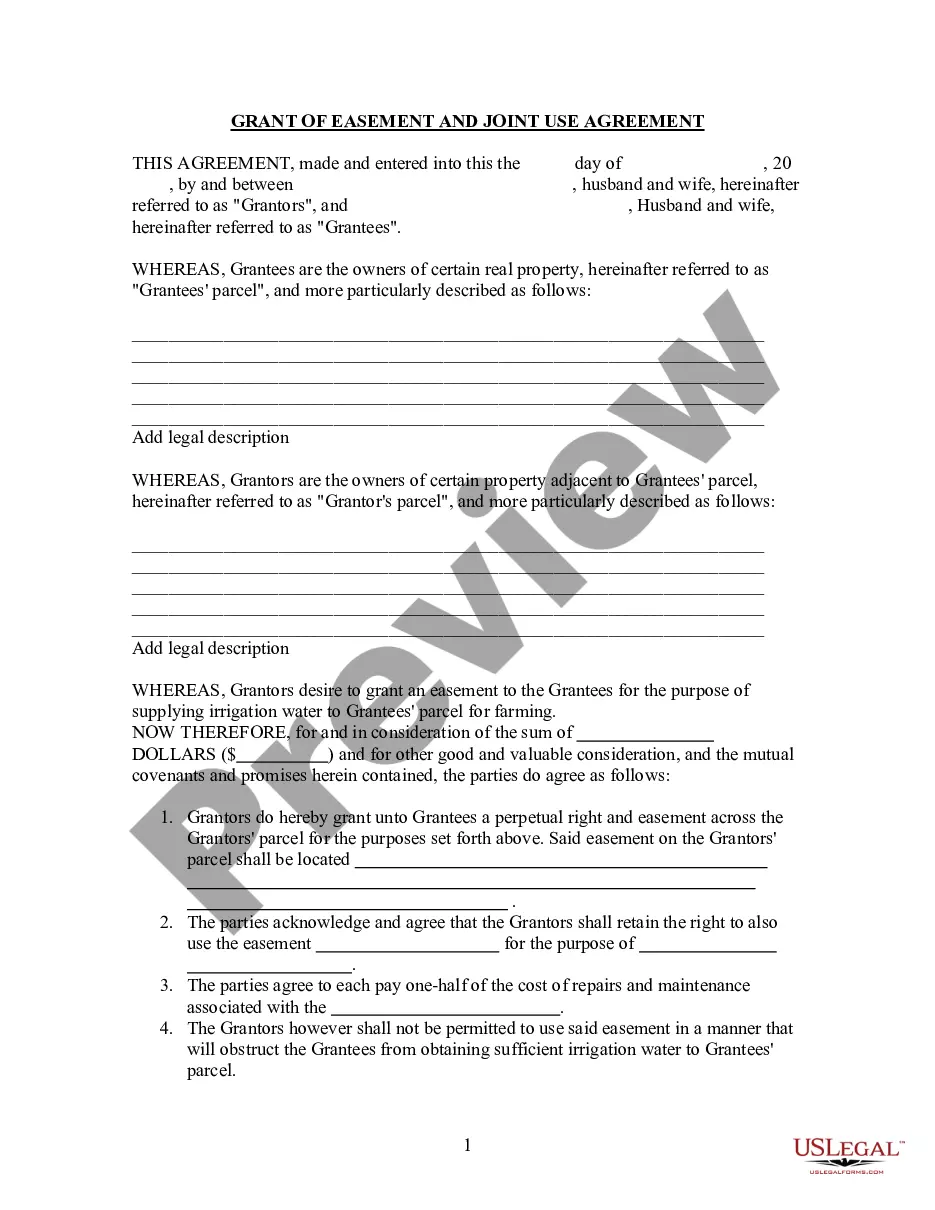
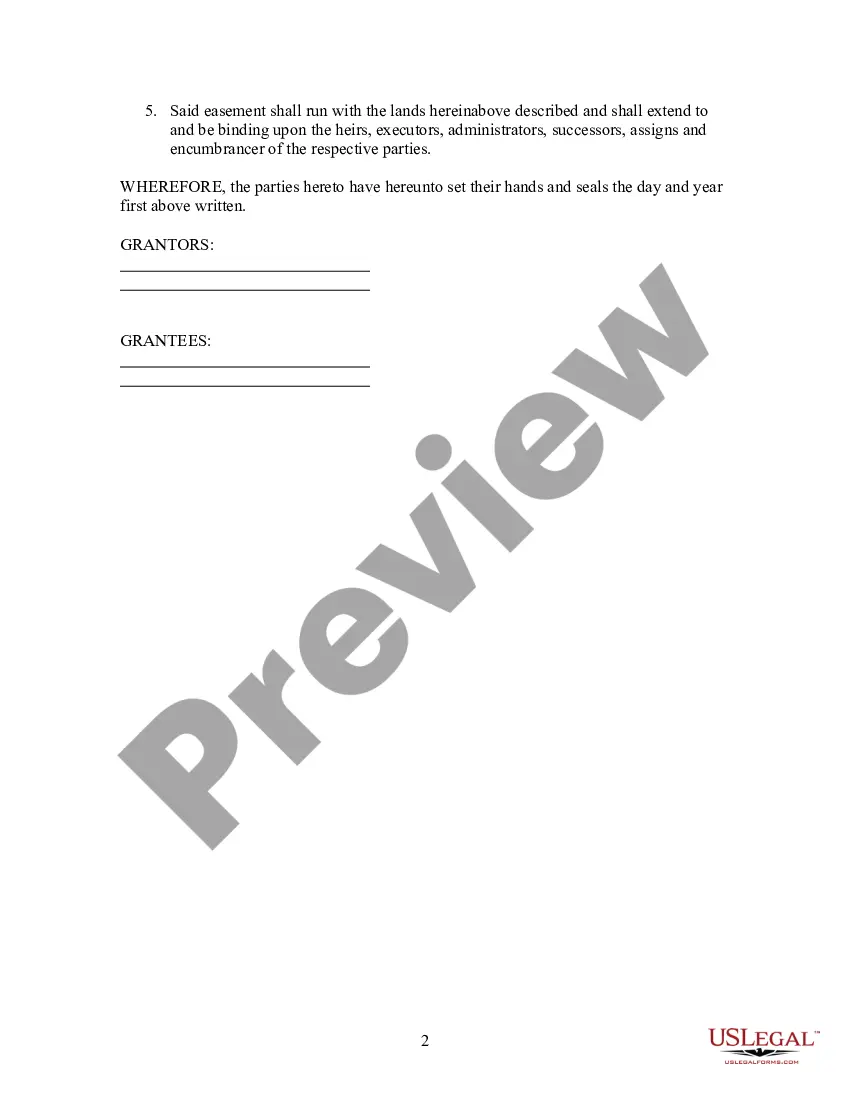
How to fill out Grant Of Easement And Joint Use Agreement?
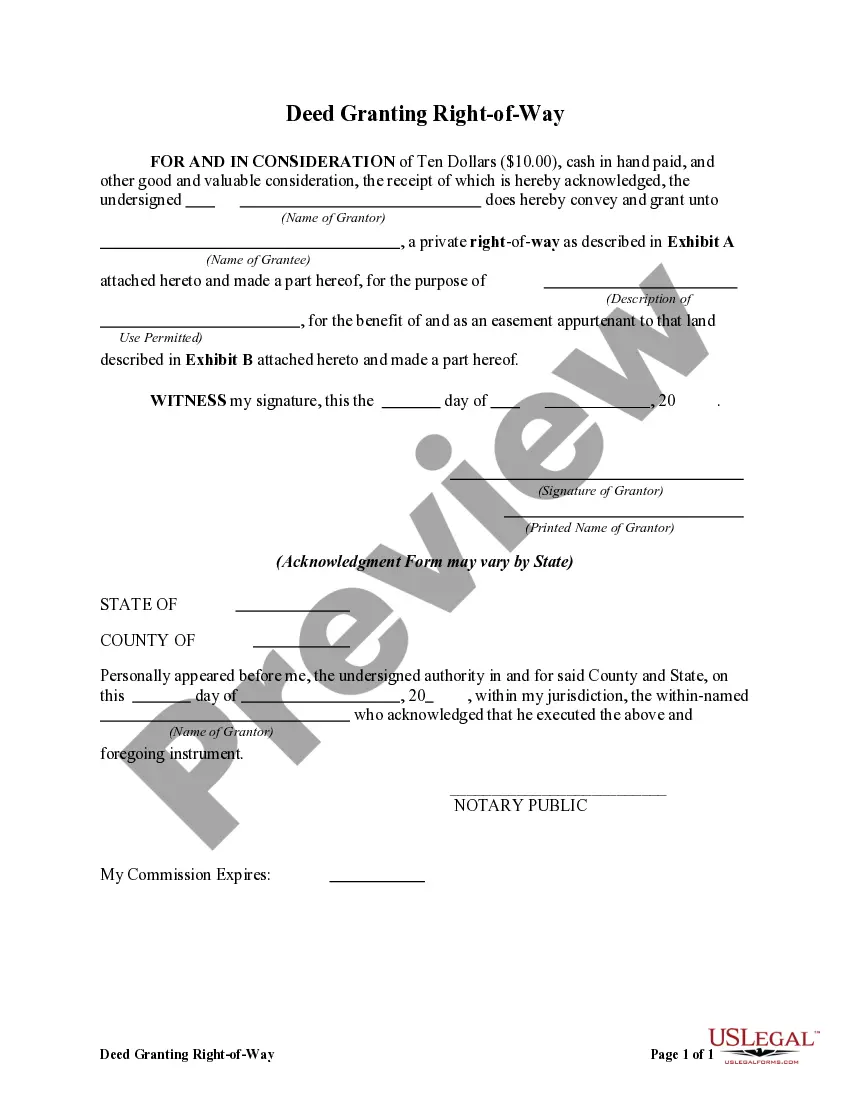
The Easement Vs Right Of Way With Ease you view on this page is a reusable legal framework crafted by experienced attorneys in accordance with national and state regulations.
For over 25 years, US Legal Forms has supplied individuals, entities, and legal practitioners with more than 85,000 authenticated, state-specific documents for any professional and personal occasion. It’s the fastest, most uncomplicated, and most reliable method to acquire the documentation you require, as the service assures the utmost level of data protection and anti-malware safeguards.
Select the format you desire for your Easement Vs Right Of Way With Ease (PDF, Word, RTF) and save the sample on your device.
- Search for the document you require and examine it.
- Look through the file you searched and preview it or review the form description to ensure it meets your specifications. If it doesn’t, utilize the search bar to find the appropriate one. Click Buy Now when you have located the template needed.
- Register and Log In.
- Choose the pricing plan that best fits you and create an account. Use PayPal or a credit card to make a swift payment. If you already possess an account, Log In and check your subscription to proceed.
- Obtain the fillable template.
Form popularity
FAQ
The easement does not technically need to be recorded, but an unrecorded agreement may not be ultimately enforceable in a court of law, so ensure that any written agreement is properly and legally recorded to avoid contentions in the future.
In California, a user of land may establish a prescriptive easement by proving that his or her use of another's land was: (1) continuous and uninterrupted for five years; (2) open and notorious; and (3) hostile. The first two requirements are relatively straightforward.
An easement may be recorded in the public real estate records or other regulatory agency records; however, an easement may exist without recordation.
Execution: The Easement must be executed on behalf of both the Grantor and the Grantee, and all signatures must be acknowledged by a Notary Public. Recording: The Easement must be recorded in the Office of the County Recorder of the county in which the Land is located.
To establish a prescriptive easement in California, the adverse use of the land must be open, notorious, and continuous for at least five years. The open element requires the easement user to engage with the land in an open way, which can usually be ascertained by whether it appears the user is doing so in secret.