Grant of Easement and Joint Use Agreement
Overview of this form
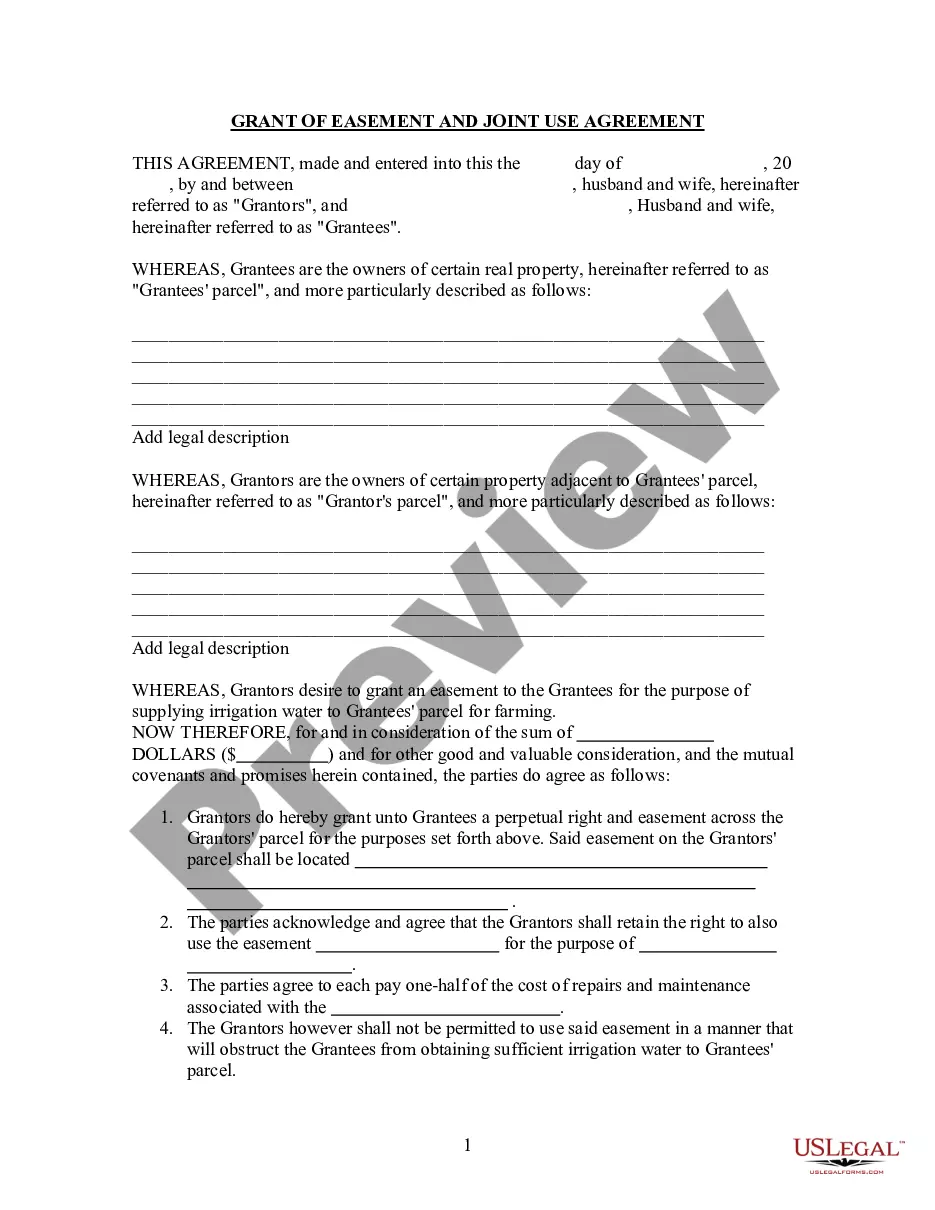
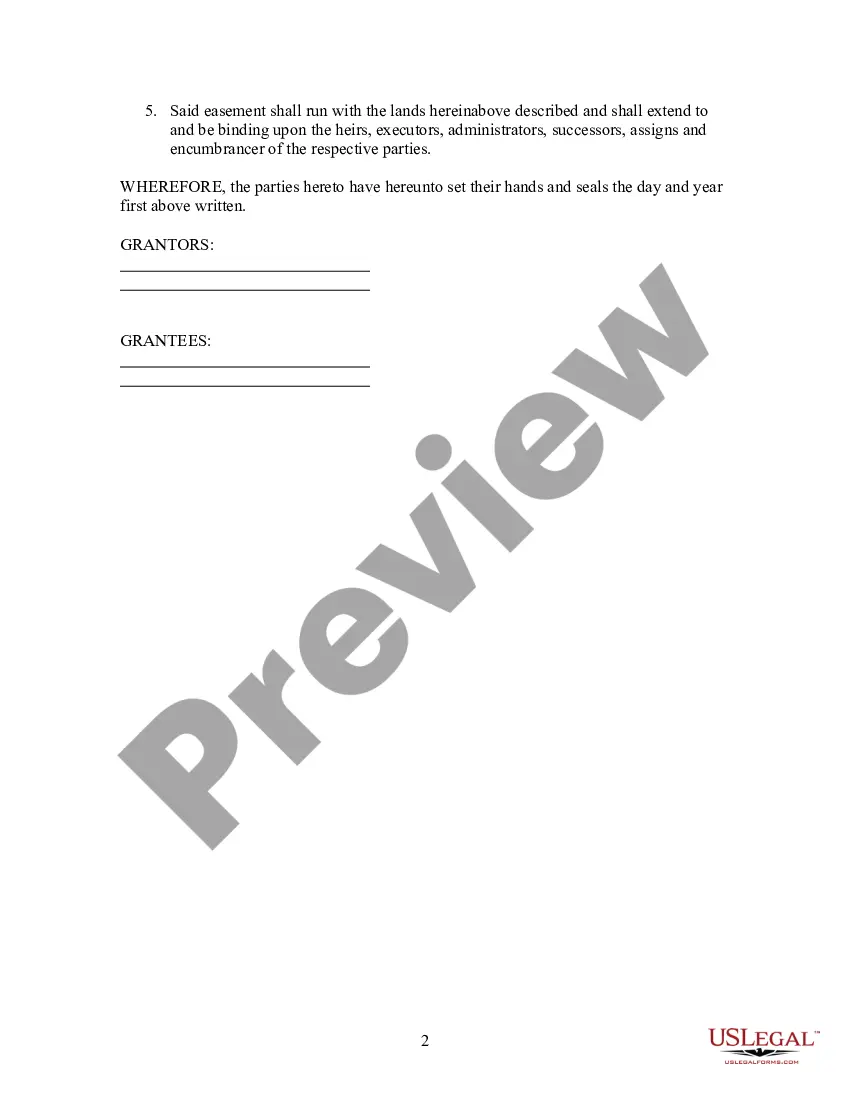
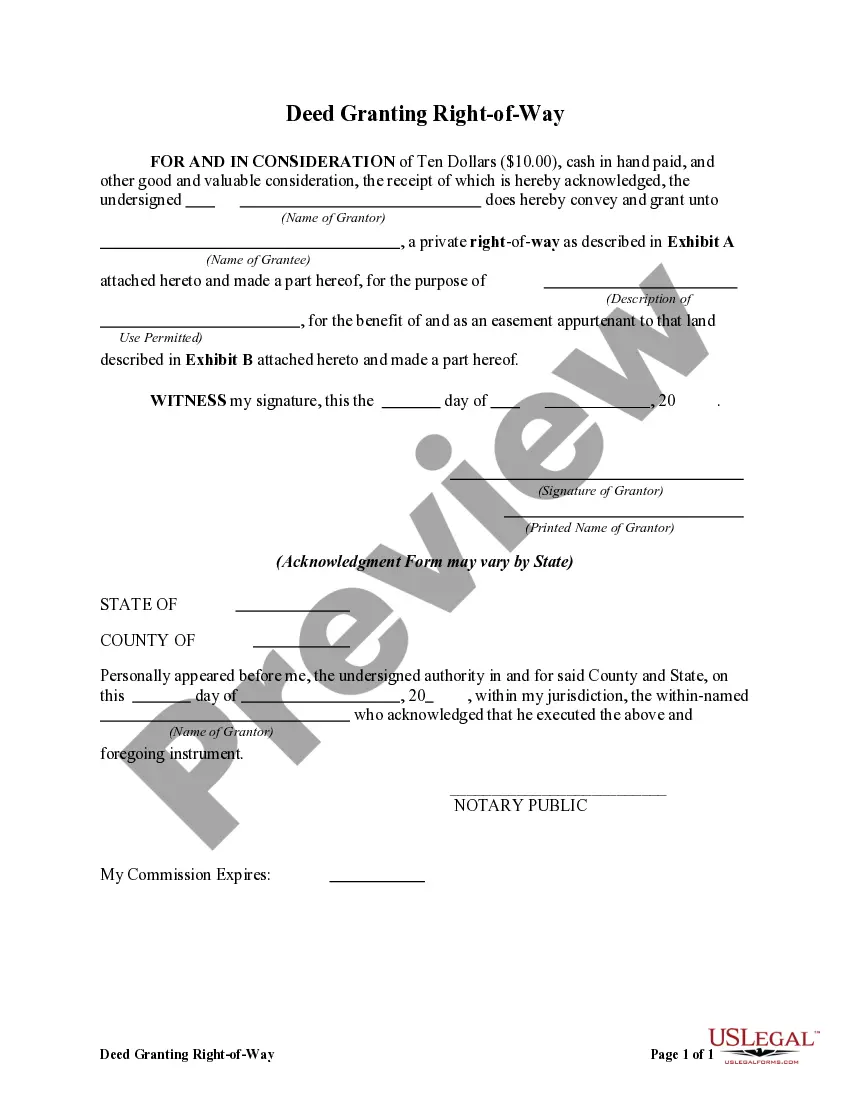
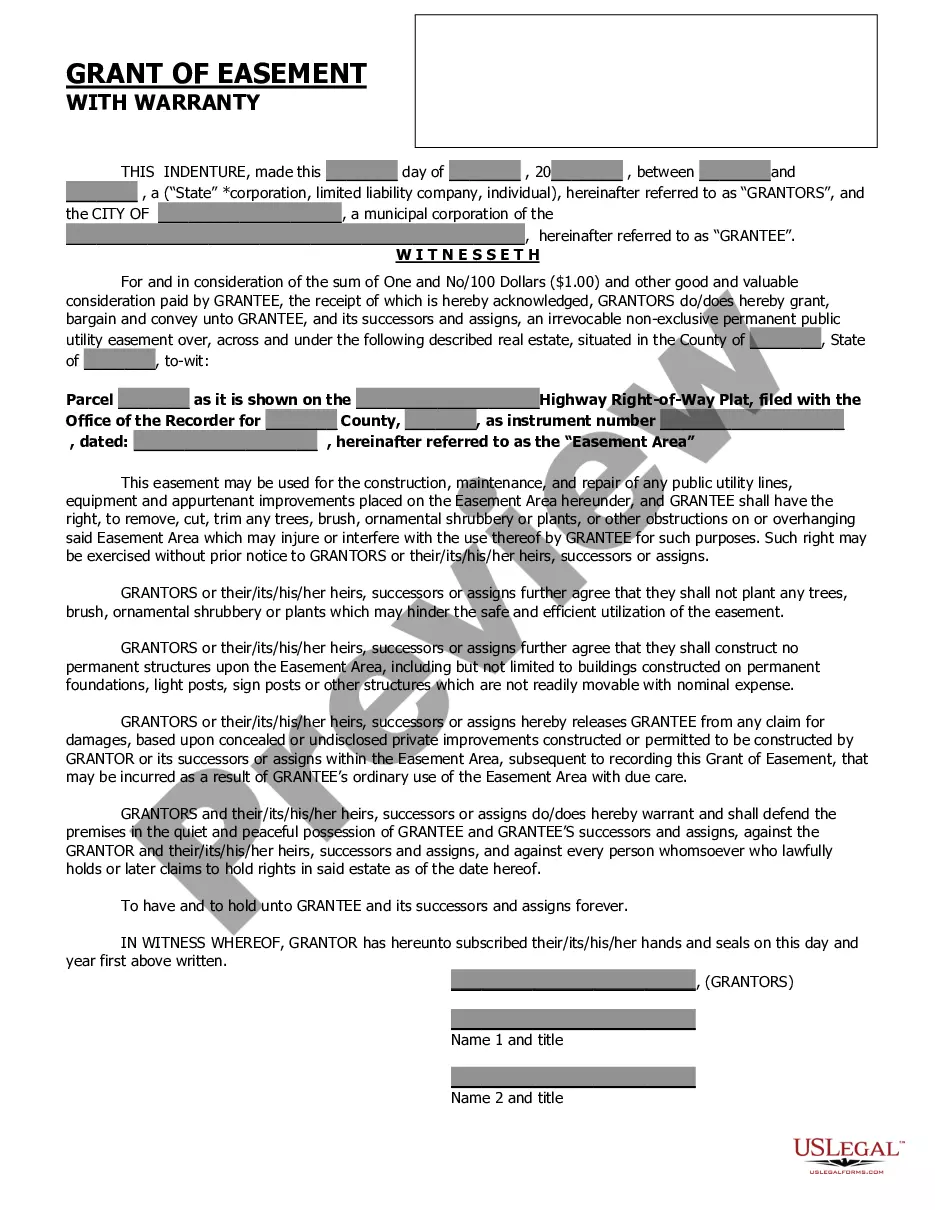
The Grant of Easement and Joint Use Agreement is a legal document that allows one party to use another party's property for specific purposes, such as supplying irrigation water for farming. Unlike other property agreements, this form not only grants easement rights but also outlines shared responsibilities between the landowners involved. It is essential for establishing clear terms of use between the Grantors and Grantees concerning the easement area.
What’s included in this form
- Identification of the Grantees and Grantors, including legal property descriptions.
- Description of the easement purpose, specifically for supplying irrigation water.
- Binding terms for the easement, which extend to heirs and successors.
- Signatures of the parties involved, indicating their consent to the agreement.
When to use this document
This form is typically used when a property owner (the Grantor) agrees to allow another party (the Grantee) to use part of their land for specific purposes, such as providing irrigation for agricultural activities. It's essential when both parties want to formalize their rights and obligations, preventing future disputes regarding property use.
Who should use this form
- Property owners looking to grant specific usage rights to others.
- Farmers who need reliable irrigation access from adjacent properties.
- Real estate professionals managing property easement agreements.
- Individuals involved in land transactions that require shared use agreements.
How to prepare this document
- Identify the parties involved by filling in the names of the Grantees and Grantors.
- Specify the property by providing the legal descriptions of both the Grantee's and Grantor's parcels of land.
- Clearly state the purpose of the easement, ensuring it specifies irrigation water supply for farming.
- Include sufficient details about any conditions or limitations related to the easement.
- Have both parties sign and date the document to finalize the agreement.
Is notarization required?
To make this form legally binding, it must be notarized. Our online notarization service, powered by Notarize, lets you verify and sign documents remotely through an encrypted video session.
Get your form ready online
Our built-in tools help you complete, sign, share, and store your documents in one place.
Make edits, fill in missing information, and update formatting in US Legal Forms—just like you would in MS Word.
Download a copy, print it, send it by email, or mail it via USPS—whatever works best for your next step.
Sign and collect signatures with our SignNow integration. Send to multiple recipients, set reminders, and more. Go Premium to unlock E-Sign.
If this form requires notarization, complete it online through a secure video call—no need to meet a notary in person or wait for an appointment.
We protect your documents and personal data by following strict security and privacy standards.

Make edits, fill in missing information, and update formatting in US Legal Forms—just like you would in MS Word.

Download a copy, print it, send it by email, or mail it via USPS—whatever works best for your next step.

Sign and collect signatures with our SignNow integration. Send to multiple recipients, set reminders, and more. Go Premium to unlock E-Sign.

If this form requires notarization, complete it online through a secure video call—no need to meet a notary in person or wait for an appointment.

We protect your documents and personal data by following strict security and privacy standards.
Mistakes to watch out for
- Failing to provide complete and accurate legal descriptions of the properties involved.
- Not specifying the exact purpose of the easement, leading to misunderstandings.
- Neglecting to include provisions for future changes to the agreement.
- Forgetting to obtain signatures from both parties, making the agreement unenforceable.
Why use this form online
- Immediate access to a professionally drafted legal document tailored for easement agreements.
- Convenient download options, allowing for easy storage and distribution.
- Editability to customize details to fit specific needs before printing.
- Reliable guidance to navigate the form's completion, minimizing errors.
Looking for another form?

Form popularity
FAQ
Generally speaking, an easement is a more serious property right; it is the legal right to use someone else's land for a particular purpose. Easements are often recorded at the county clerk's office and encumber your property's title.Here, however, you probably do not need to take the step of granting an easement.
Give the document a simple title: Grant of Easement is sufficient. Identify the parties. You need to explain who the parties are to the agreement. The person granting the easement to his property is the Grantor and the person gaining access to the property is the Grantee.
An easement is a nonpossessory right to use and/or enter onto the real property of another without possessing it. It is "best typified in the right of way which one landowner, A, may enjoy over the land of another, B".
The Good Relationship. The person with the property often has a working or good relationship with neighbors.The easement is sometimes a necessity because of restrictions of the land the other person owns or is leasing such as a company or organizational situation.
Cross easements are reciprocal easements created by contract, the one being granted in favor of premises of one party in consideration of a grant by such party in favor of premises of the other party.
If an authority has an easement registered over your land, they have the right to access the easement to maintain or repair the easement land or their equipment on the land.
An easement deed allows a party that is not the owner to use a portion of the land. It is a written agreement between two parties that spells out what part of the property is available for access and how it may be used. Since you are granting an easement to your land, you can set any terms and conditions you like.
An easement is a limited right to use another person's land for a stated purpose. Examples of easements include the use of private roads and paths, or the use of a landowner's property to lay railroad tracks or electrical wires.