Debt Collector For Previous Owner
Description
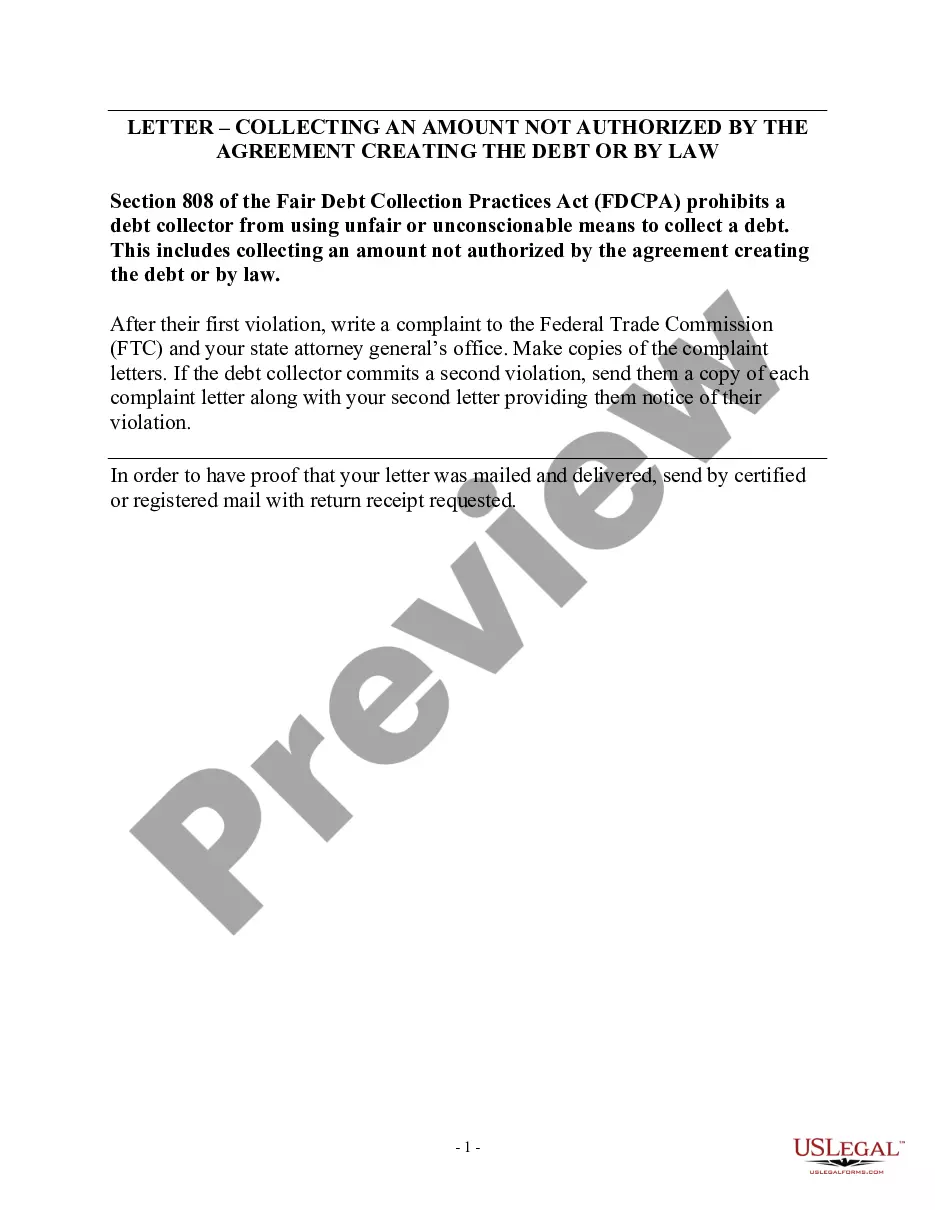
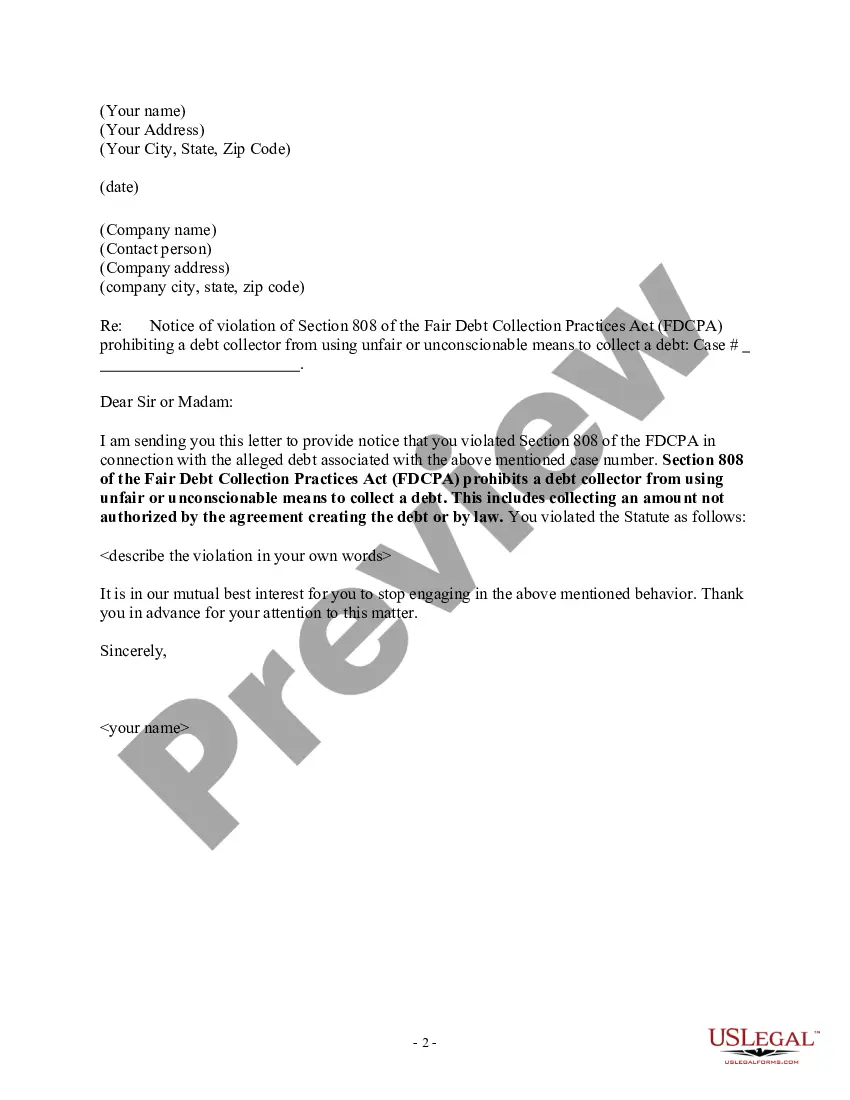
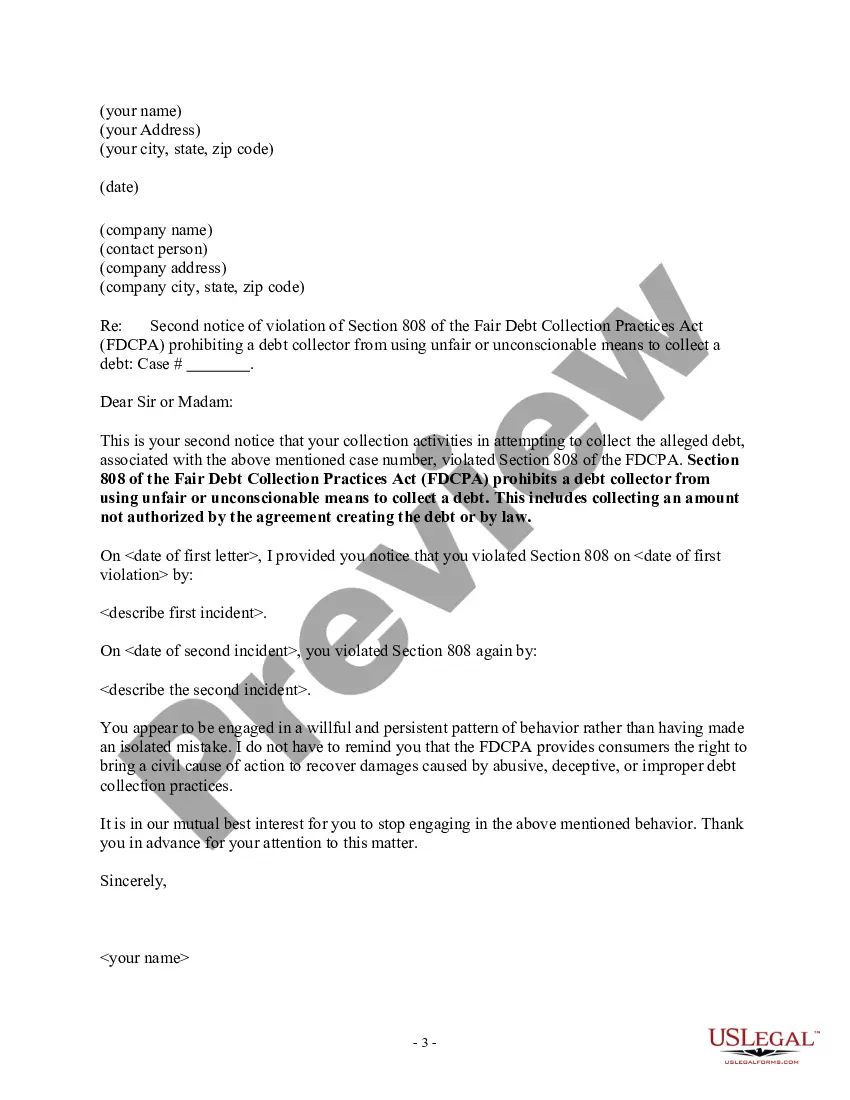
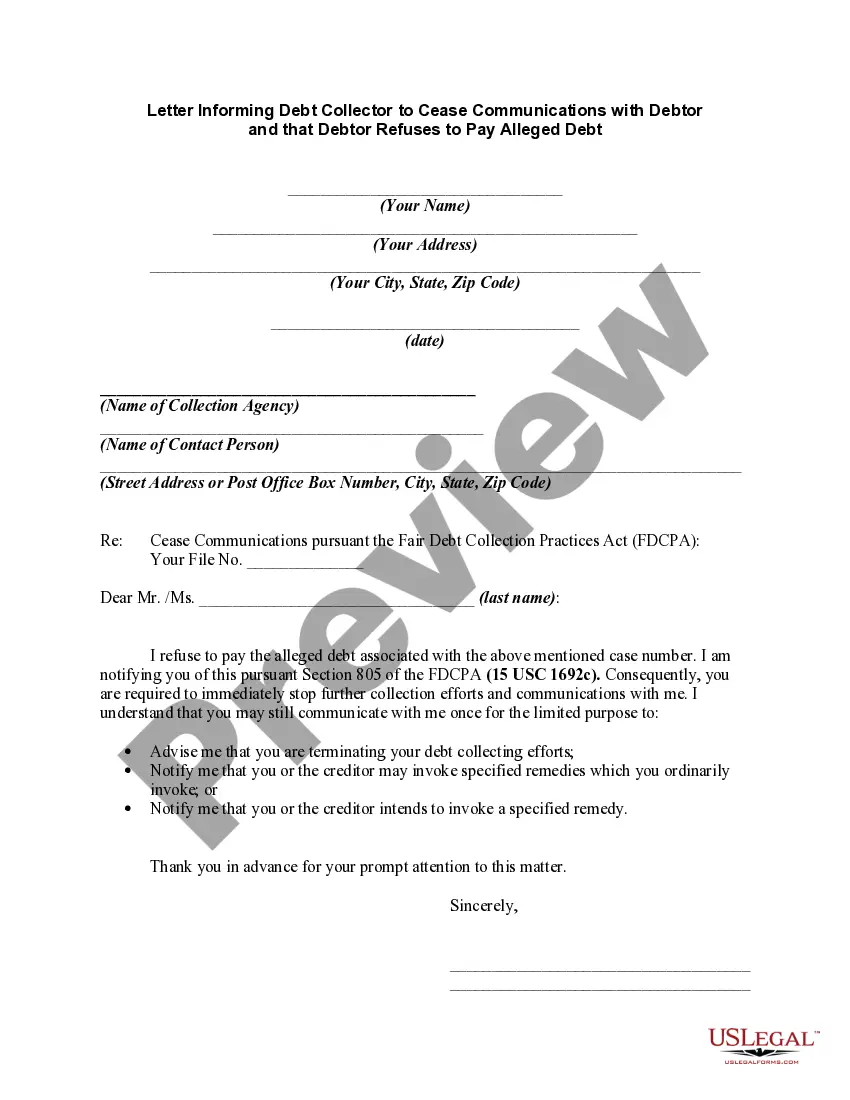
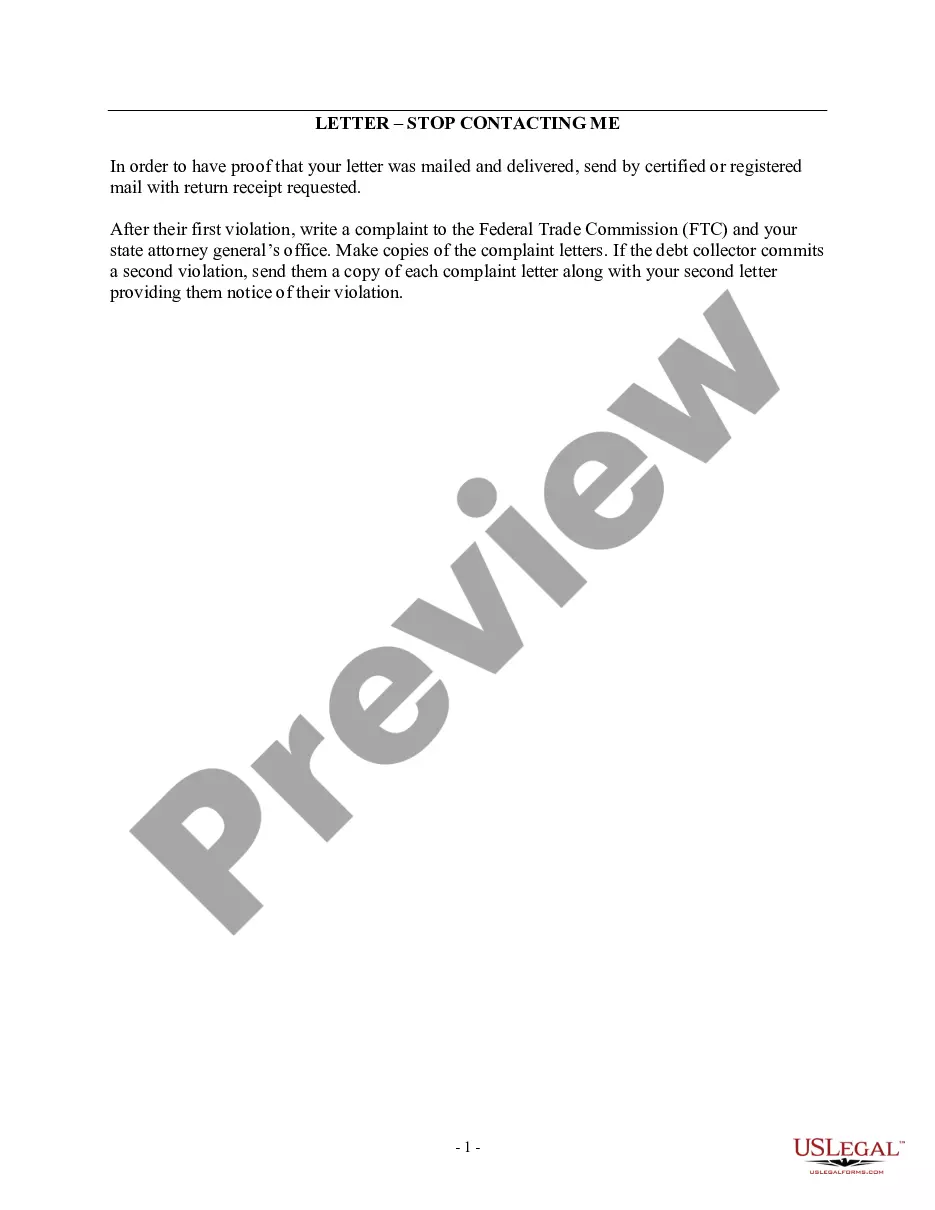
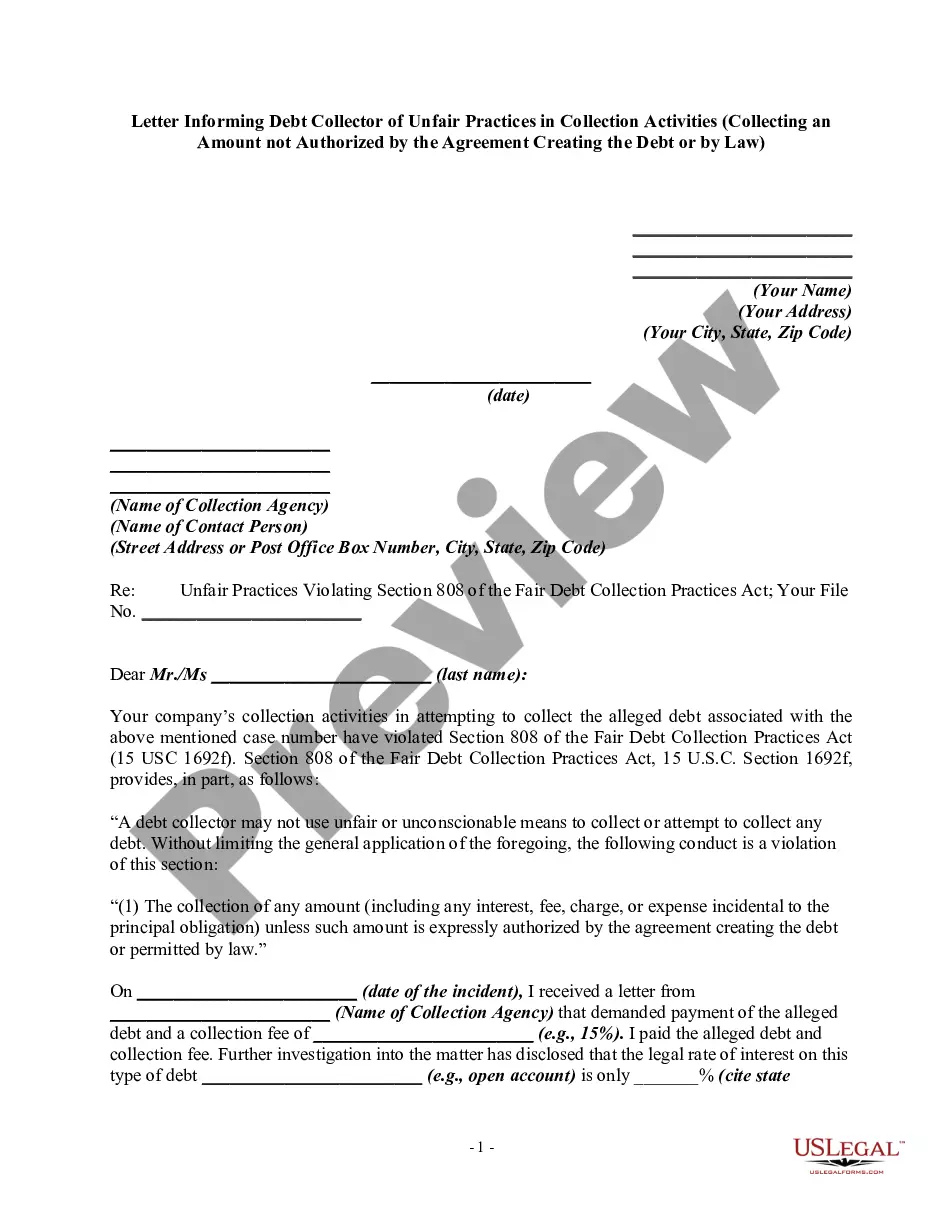

How to fill out Notice To Debt Collector - Collecting An Amount Not Authorized By Agreement Or By Law?
Whether for professional reasons or for private issues, everyone must handle legal matters at some point in their lives.
Filling out legal paperwork requires meticulous care, beginning with selecting the appropriate form template.
Once saved, you can fill out the form using editing software or print it and complete it manually. With an extensive US Legal Forms catalog available, you need not waste time searching for the right template across the internet. Utilize the library's straightforward navigation to discover the correct form for any circumstance.
- Locate the template you require by utilizing the search box or catalog browsing.
- Review the document's details to ensure it aligns with your specific situation, state, and county.
- Click on the document's preview to inspect it.
- If it is not the correct document, return to the search tool to find the Debt Collector For Previous Owner template you need.
- Download the file if it fulfills your requirements.
- If you already possess a US Legal Forms account, simply click Log in to access earlier saved documents in My documents.
- If you do not have an account yet, you can acquire the form by clicking Buy now.
- Select the appropriate payment option.
- Fill out the account signup form.
- Choose your payment method: either a credit card or a PayPal account.
- Select the file format you prefer and download the Debt Collector For Previous Owner.
Form popularity
FAQ
If a debt has been sold, you may still be responsible for it, but the new debt collector must validate the debt before pursuing payment. Understand that your responsibility may depend on the nature of the original agreement and the state laws governing such debts. It’s vital to communicate with the new debt collector for previous owner and request the debt's details to clarify your standing.
When speaking with a debt collector, avoid admitting that you owe the debt, and do not provide them with any personal information you are not comfortable sharing. You should also refrain from making promises you cannot keep about payments. Staying calm and respectful while knowing your rights is critical when dealing with a debt collector for previous owner.
A debt collector must prove three essential things: first, they need to confirm that you owe the debt; second, they must show that they have the legal right to collect on it; and third, they should provide documentation supporting their claims. Understanding these points can significantly affect your discussions with a debt collector for previous owner. Always ask for documentation to verify these claims.
Debt collectors often do not want you to know that they must provide proof of the debt they claim you owe. Many collectors rely on fear and intimidation rather than valid claims. Additionally, they may not disclose the statute of limitations on the debt, which could benefit you if the debt is old. This knowledge empowers you when dealing with a debt collector for previous owner.
To outsmart a debt collector, begin by understanding your rights. Familiarize yourself with the Fair Debt Collection Practices Act, which protects you from abusive tactics. Keep records of all communications and ask for written verification of the debt. This strategy not only puts you in control but also helps you handle communications with the debt collector for previous owner more effectively.
The 777 rule for debt collectors outlines the legal framework that regulates communication practices between debt collectors and consumers. This rule serves to minimize stress on individuals, especially when debts involve previous owners. Familiarizing yourself with this rule can help you navigate interactions with debt collectors effectively and confidently.
The 777 rule refers to specific regulations governing debt collectors and their practices. It aims to protect consumers from harassment and provides guidelines on how often a debt collector can contact you, especially if the debt has been sold from a previous owner. Understanding this rule helps you know your rights, and it can empower you when dealing with debt collectors.
Yes, you can dispute a collection that has been sold to a debt collector for a previous owner. When you receive a notice from a debt collector, review the details carefully. If the debt isn't yours or you believe it was incorrectly assigned, you have the right to challenge it. It's important to provide clear documentation to support your claim.
Yes, you can dispute a debt even if it has been sold to a collection agency, including a debt collector for a previous owner. You have the right to request verification of the debt, which means the collector must provide documentation proving you owe the amount they claim. If you believe the debt is inaccurate or not yours, you should communicate this to the collection agency, as they are obligated to investigate your claim. Utilizing platforms like UsLegalForms can help you navigate the dispute process efficiently and ensure that your rights are protected.