False Imprisonment For Shoplifting
Description
Get your form ready online
Our built-in tools help you complete, sign, share, and store your documents in one place.
Make edits, fill in missing information, and update formatting in US Legal Forms—just like you would in MS Word.
Download a copy, print it, send it by email, or mail it via USPS—whatever works best for your next step.
Sign and collect signatures with our SignNow integration. Send to multiple recipients, set reminders, and more. Go Premium to unlock E-Sign.
If this form requires notarization, complete it online through a secure video call—no need to meet a notary in person or wait for an appointment.
We protect your documents and personal data by following strict security and privacy standards.

Make edits, fill in missing information, and update formatting in US Legal Forms—just like you would in MS Word.

Download a copy, print it, send it by email, or mail it via USPS—whatever works best for your next step.

Sign and collect signatures with our SignNow integration. Send to multiple recipients, set reminders, and more. Go Premium to unlock E-Sign.

If this form requires notarization, complete it online through a secure video call—no need to meet a notary in person or wait for an appointment.

We protect your documents and personal data by following strict security and privacy standards.
Looking for another form?





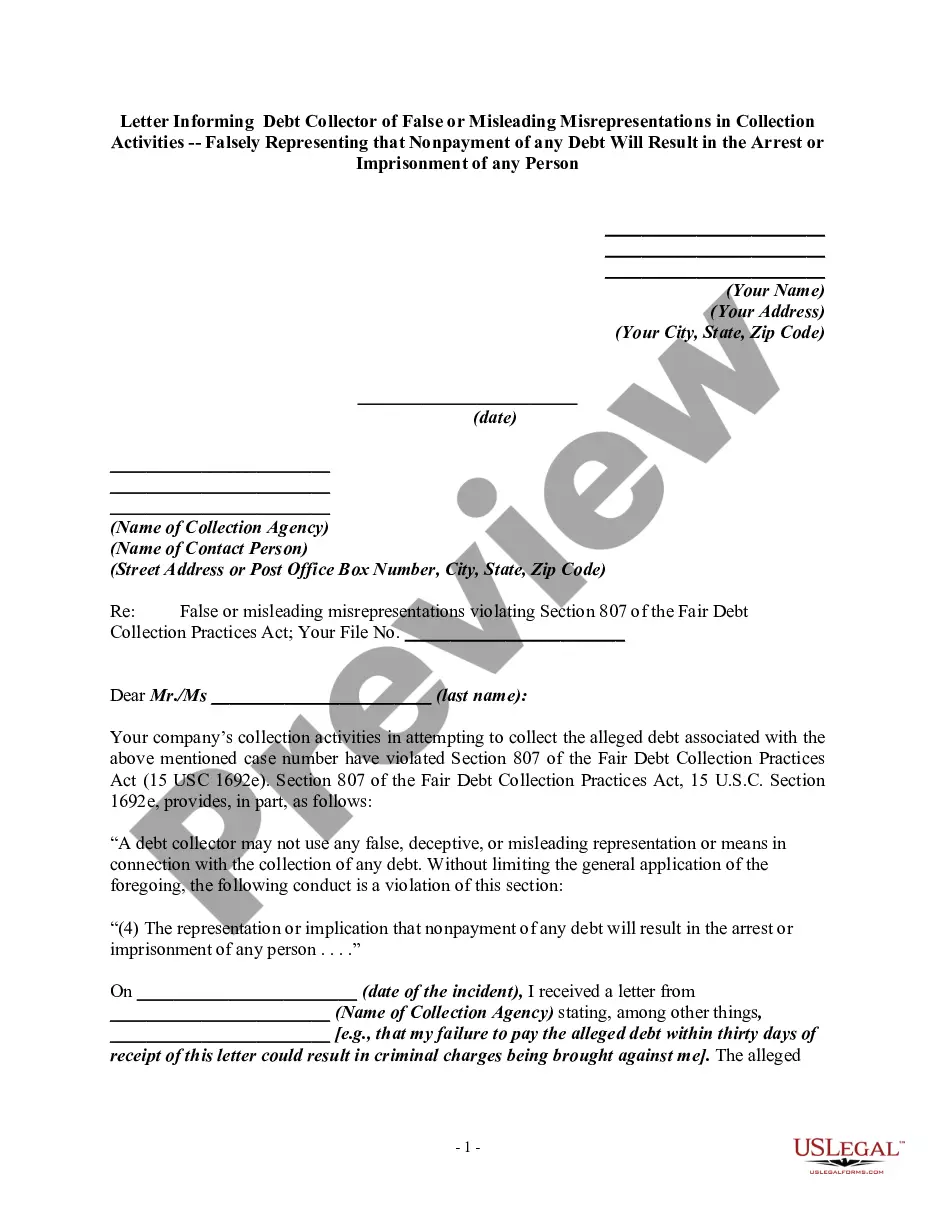
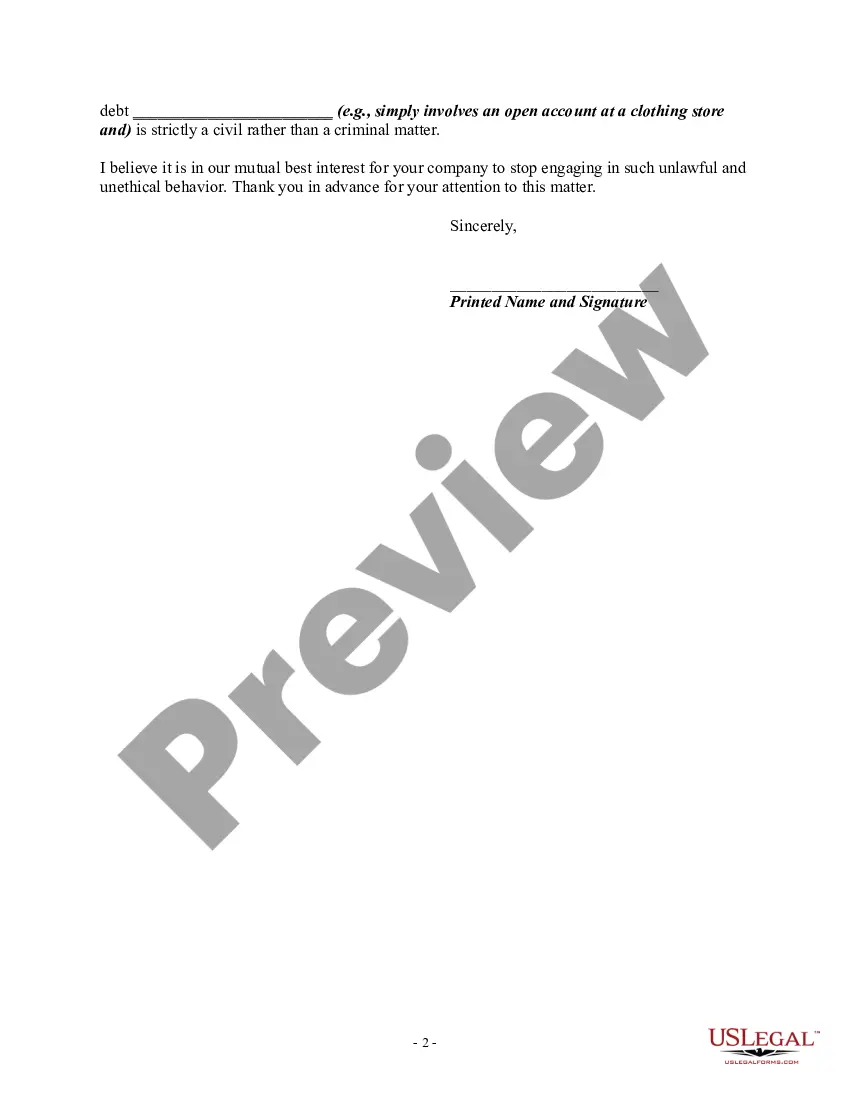
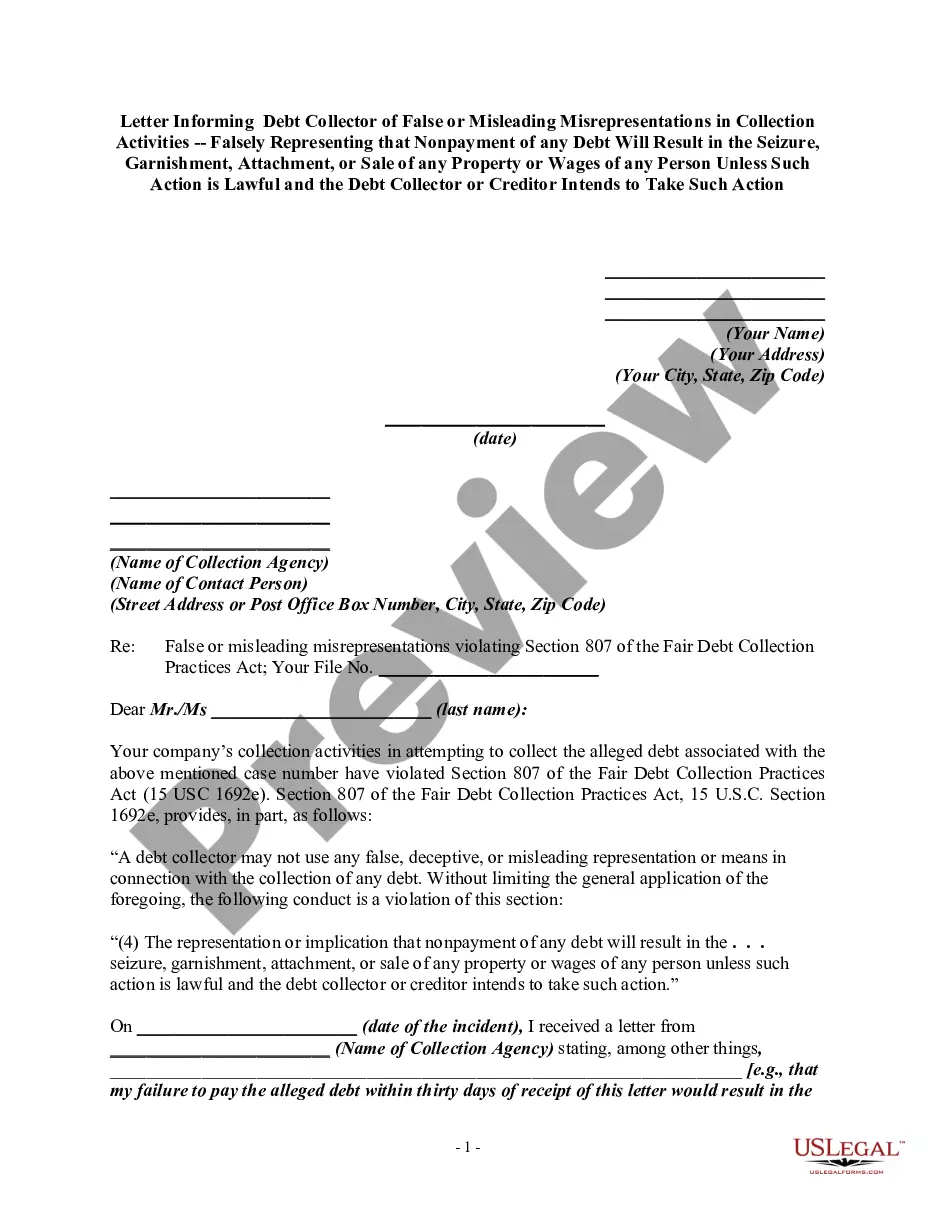
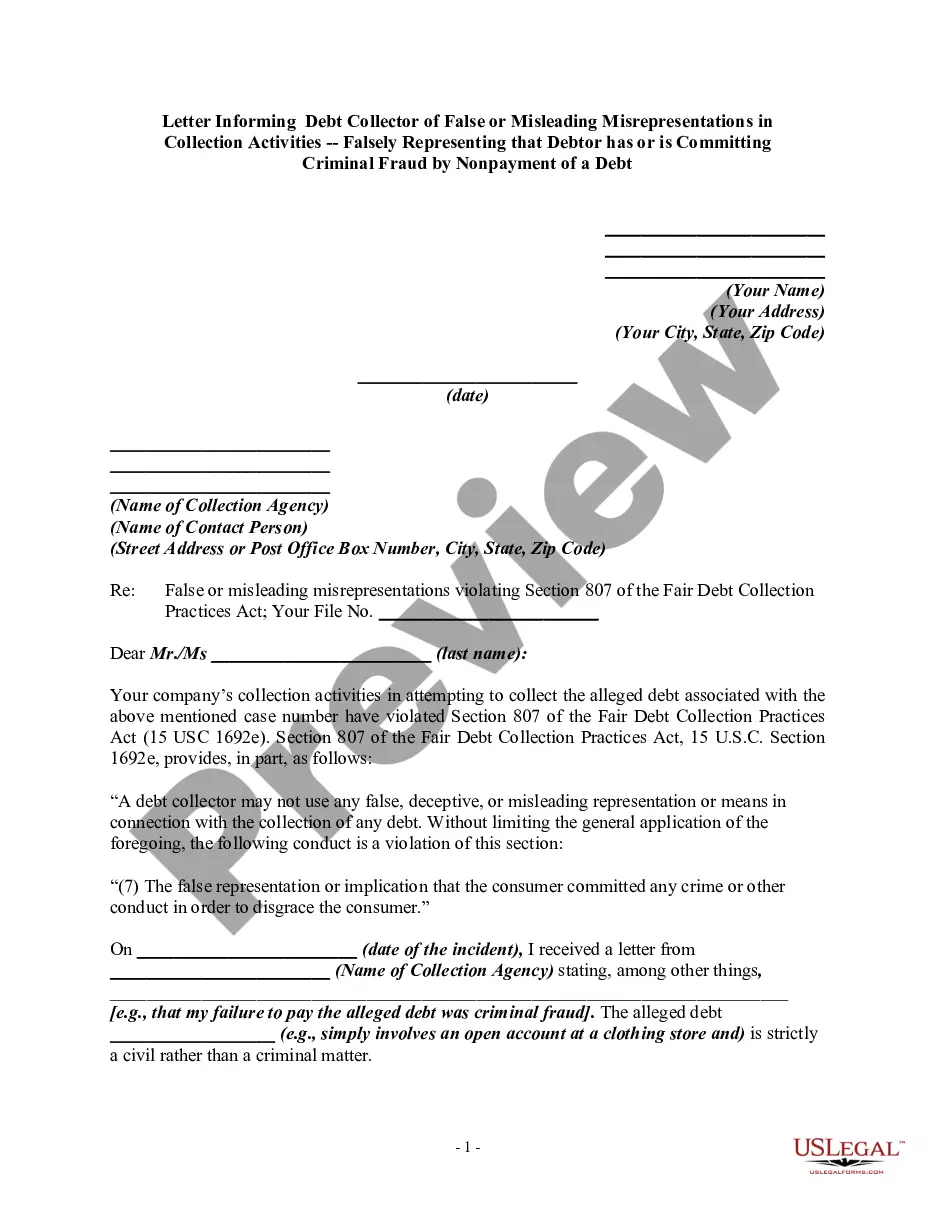
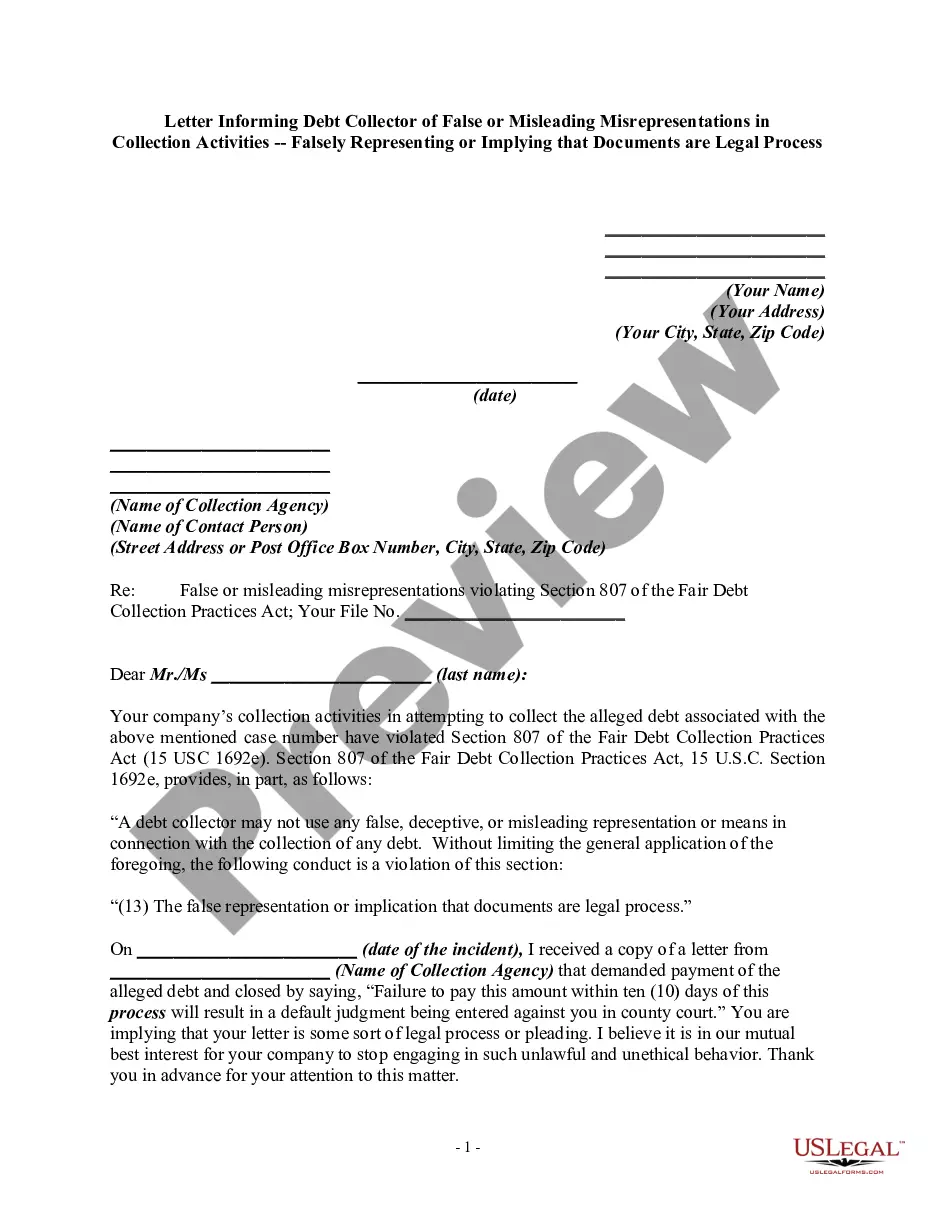
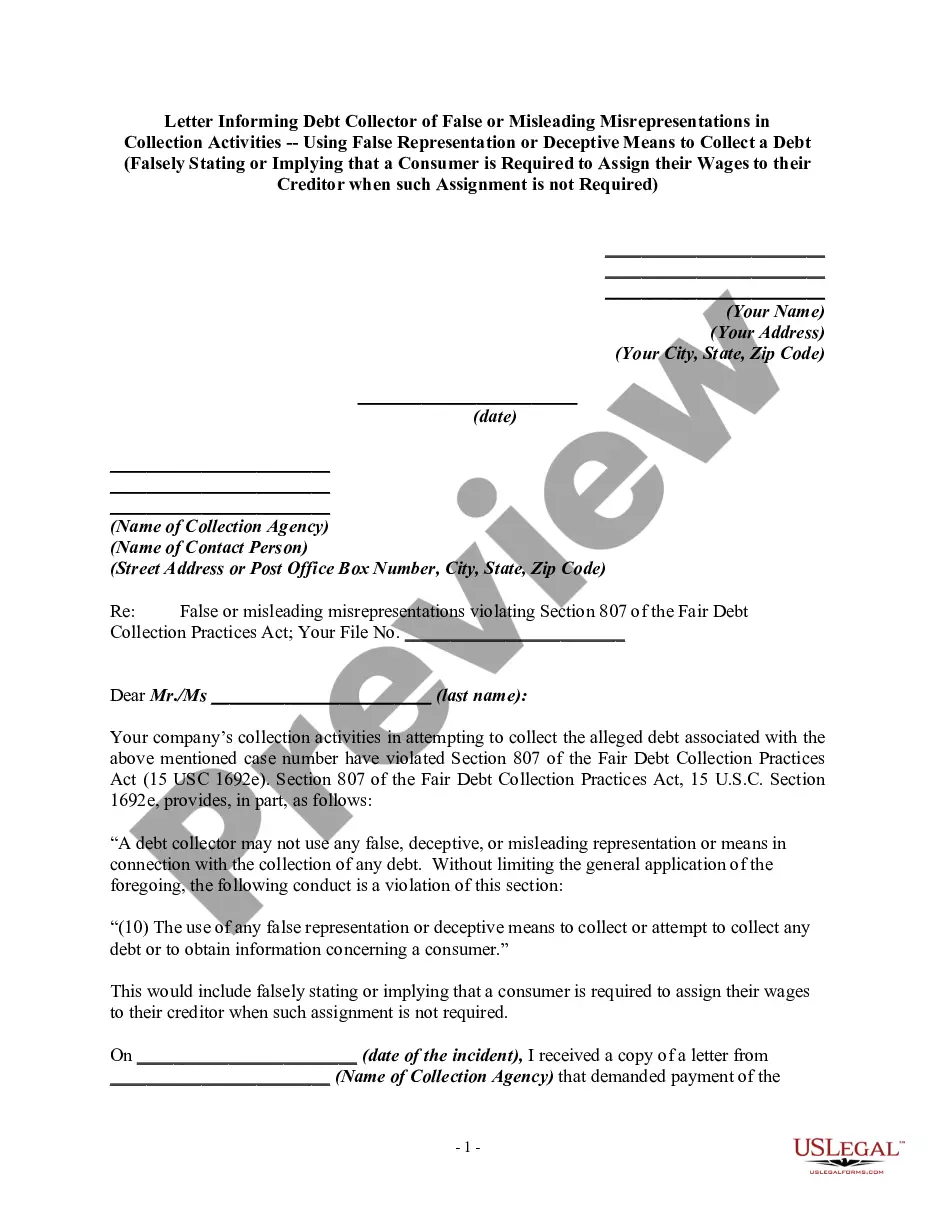
How to fill out Letter Informing Debt Collector Of False Or Misleading Misrepresentations In Collection Activities - Falsely Representing That Nonpayment Of Any Debt Will Result In The Arrest Or Imprisonment Of Any Person?
It’s clear that you cannot become a legal specialist overnight, nor can you learn how to swiftly prepare False Imprisonment For Shoplifting without a specific background. Compiling legal documents is a lengthy procedure that demands a certain education and expertise. So why not entrust the preparation of the False Imprisonment For Shoplifting to the professionals.
With US Legal Forms, one of the most comprehensive legal template collections, you can access everything from court documents to templates for internal corporate communication. We understand how vital compliance and adherence to federal and local regulations are. That’s why, on our site, all templates are location-specific and current.
Here’s how you can initiate your journey on our website and acquire the document you need in just minutes.
You can revisit your documents from the My documents tab at any time. If you’re an existing client, you can simply Log In, and find and download the template from the same tab.
Regardless of the intent of your forms—whether financial and legal, or personal—our website has you covered. Experience US Legal Forms today!
- Locate the form you require using the search bar at the top of the page.
- Preview it (if this option is available) and review the supporting description to determine if False Imprisonment For Shoplifting is what you need.
- Restart your search if you need any other form.
- Create a free account and select a subscription option to purchase the form.
- Click Buy now. Once the transaction is finished, you can retrieve the False Imprisonment For Shoplifting, complete it, print it, and send or mail it to the necessary individuals or organizations.
Form popularity
FAQ
If you are falsely accused of shoplifting, the first step is to remain composed and calmly explain your situation to the authorities. Document all details of the incident and gather any evidence you can find. Additionally, consider reaching out to US Legal Forms to access legal resources that can help you navigate the complexities of false imprisonment for shoplifting and protect your rights.
Proving you didn’t steal something involves collecting evidence that supports your innocence. This may include receipts, witness accounts, or surveillance footage showing your actions. If you are facing false imprisonment for shoplifting, it is crucial to document everything thoroughly and seek legal assistance to ensure your rights are protected.
To prove false imprisonment, you must demonstrate that you were confined without consent and without lawful justification. This can involve showing that the store or its employees restricted your freedom of movement. Documenting the incident and seeking legal advice from platforms like US Legal Forms can help you gather the necessary information to support your claim.
If you find yourself wrongly accused of shoplifting, remain calm and avoid confrontation. Clearly communicate your innocence to the store personnel and ask for the situation to be reviewed. Collect any evidence that supports your case, and consider consulting with a legal expert who specializes in false imprisonment for shoplifting to guide you through the process.
To prove your innocence in a false imprisonment for shoplifting case, gather any evidence that supports your claim. This could include receipts, video footage, or witness statements. You should also document the details of the incident, such as the time and place. Utilizing legal resources, like US Legal Forms, can help you understand your rights and build a strong defense.
A shopkeeper will not be subject to false imprisonment if the following actions are taken: There is probable cause to suspect that the person shoplifted. The suspect is detained for a reasonable amount of time. The suspect is reasonably detained.
False imprisonment under Penal Code 236 PC is detaining a customer without probable cause or for a limited duration may lead to false imprisonment charges. However, when appropriately executed, the merchant's privilege becomes a viable legal defense against false imprisonment charges.
Shoplifting false imprisonment is defined as the unlawful restraint of a retail theft suspect that affects their freedom of movement. Usually, this involves confining a person within fixed boundaries like an office or room.
Consent. Consent to restraint is a defense to a charge of false imprisonment. If a person gives express or implied consent to the violation of their liberty, no false imprisonment occurs. To consent, a person must assent freely and voluntarily and know the nature of the act they are or will be experiencing.
To prove a false imprisonment claim as a tort in a civil lawsuit, the following elements must be present: There was a willful detention; The detention was without consent; and. The detention was unlawful.