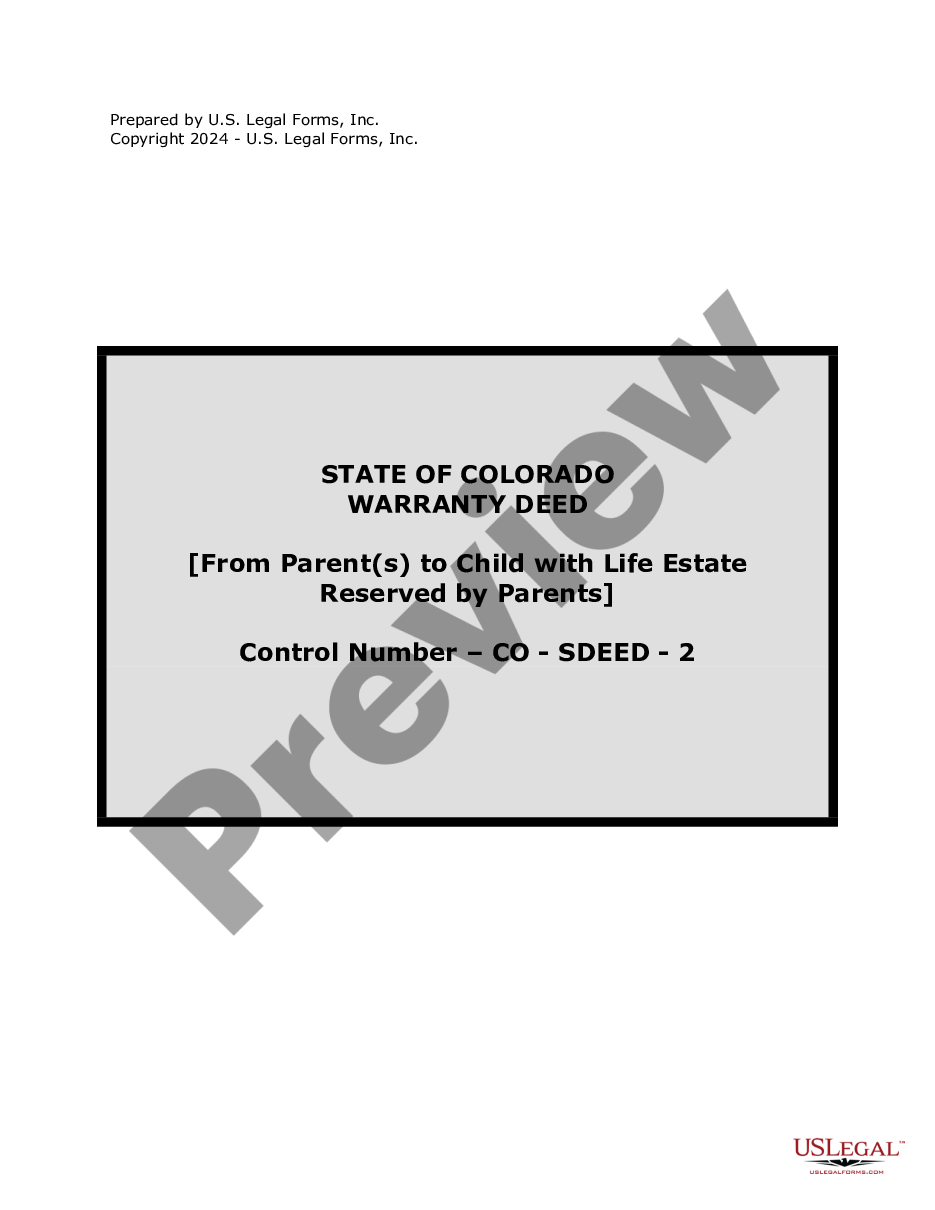
Alabama Petition For Mental Health Commitment
Overview of this form
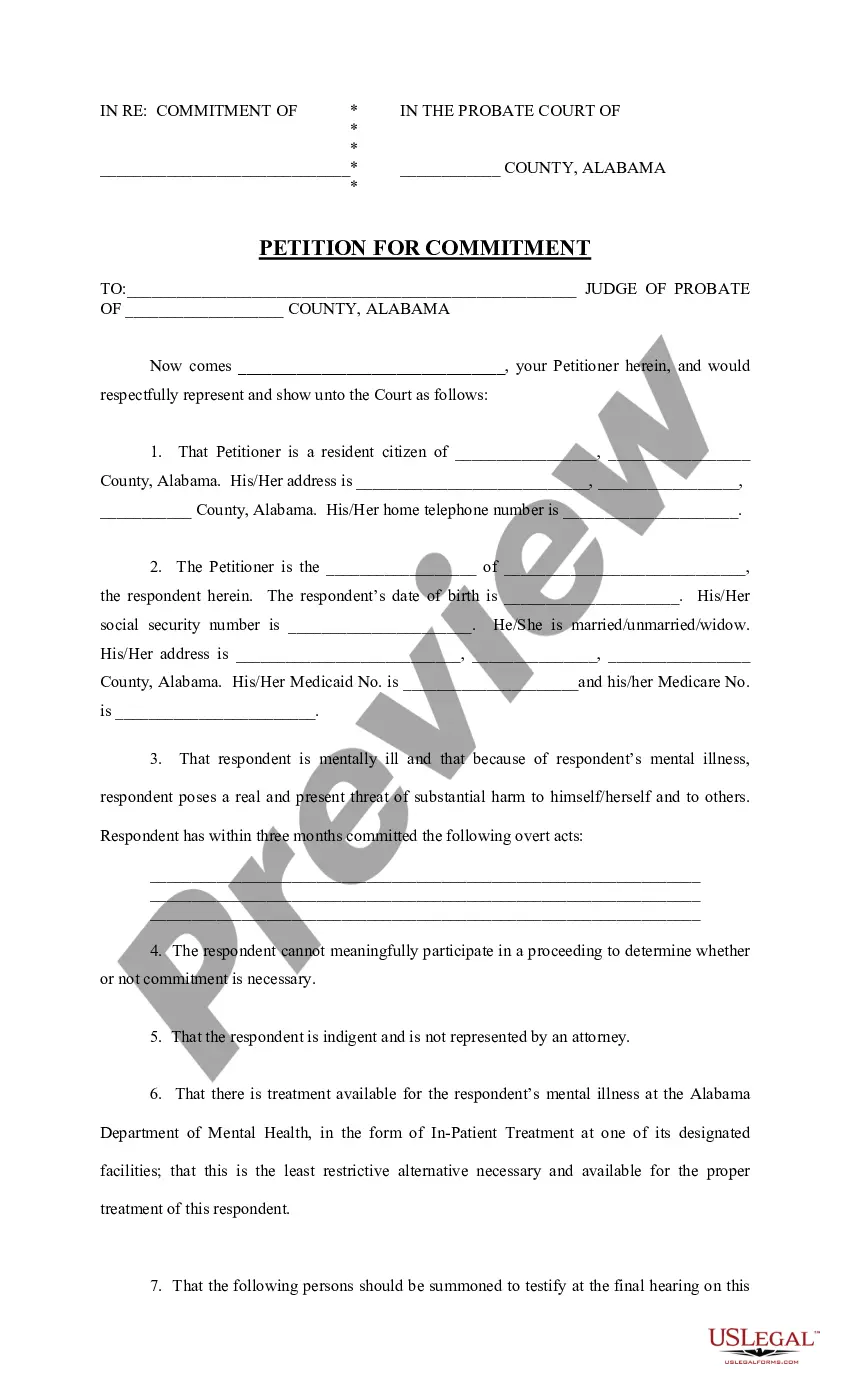
The Petition for Mental Health Commitment is a legal document used to request a court hearing for an individual who is believed to be mentally ill and poses a serious threat to themselves or others. This form differs from other mental health-related documents as it specifically seeks a court order for commitment to the state Department of Mental Health for treatment and safety. It aims to ensure proper legal protocols are followed for individuals in crisis.
What’s included in this form
- Petitioner's details: Name, address, and contact information of the person filing the petition.
- Respondent's details: Name, date of birth, and identifying information of the individual undergoing commitment proceedings.
- Statement of threat: Description of actions or behaviors indicating that the respondent poses a threat to themselves or others.
- Indigence declaration: Information regarding the respondent's financial status and need for legal representation.
- Treatment availability: Details on potential treatment options available at the Department of Mental Health.
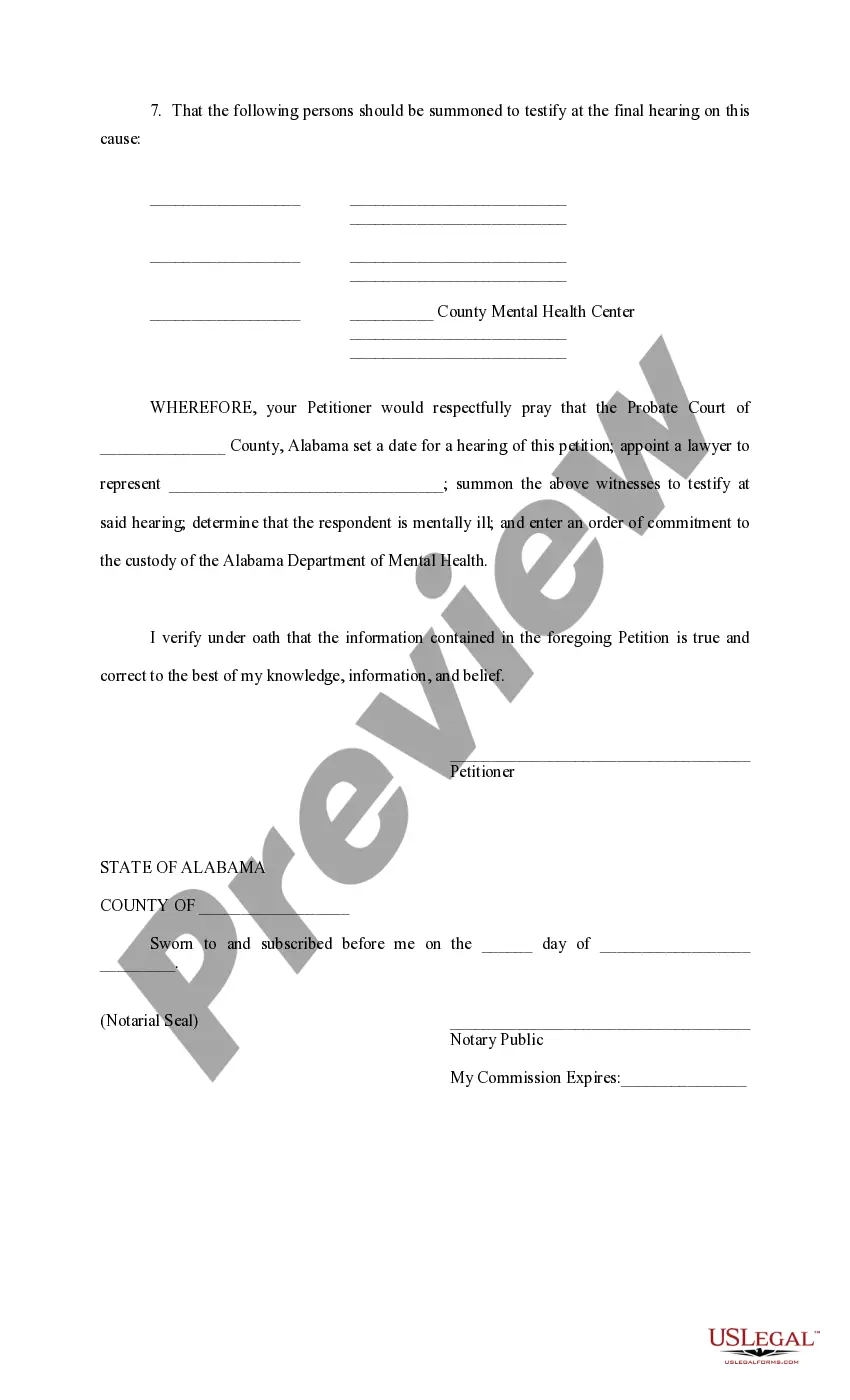
- Witnesses: Names of individuals who may testify about the respondent's mental health status during the hearing.
When to use this document
This form should be used in situations where an individual is displaying signs of severe mental illness that endanger their life or the safety of others. It is particularly relevant when the person has shown recent behavior that raises concerns for their mental stability, such as threats of self-harm or harm to others, and when immediate intervention is necessary to ensure their safety and proper treatment.
Who can use this document
- Family members or close friends of an individual exhibiting dangerous behavior due to mental illness.
- Caregivers or guardians concerned about the mental health of someone in their care.
- Professionals in mental health or social services who have witnessed concerning behaviors.
- Any individual in a position to advocate for the safety and well-being of someone struggling with severe mental illness.
Completing this form step by step
- Identify the petitioner: Fill in your name, address, and contact details at the top of the form.
- Identify the respondent: Complete the section detailing the respondent's personal information, including their mental health background.
- Document threatening behaviors: Clearly describe any actions or incidents that demonstrate the respondent's mental health crisis and potential threat.
- Attach necessary supporting documents: Include information regarding treatment options and potential witnesses who can support the case during the hearing.
- Sign and date the petition: Ensure all signatures are present and the petition is sworn in, alongside any required notarization.
Notarization requirements for this form
To make this form legally binding, it must be notarized. Our online notarization service, powered by Notarize, lets you verify and sign documents remotely through an encrypted video session.
Get your form ready online
Our built-in tools help you complete, sign, share, and store your documents in one place.
Make edits, fill in missing information, and update formatting in US Legal Forms—just like you would in MS Word.
Download a copy, print it, send it by email, or mail it via USPS—whatever works best for your next step.
Sign and collect signatures with our SignNow integration. Send to multiple recipients, set reminders, and more. Go Premium to unlock E-Sign.
If this form requires notarization, complete it online through a secure video call—no need to meet a notary in person or wait for an appointment.
We protect your documents and personal data by following strict security and privacy standards.

Make edits, fill in missing information, and update formatting in US Legal Forms—just like you would in MS Word.

Download a copy, print it, send it by email, or mail it via USPS—whatever works best for your next step.

Sign and collect signatures with our SignNow integration. Send to multiple recipients, set reminders, and more. Go Premium to unlock E-Sign.

If this form requires notarization, complete it online through a secure video call—no need to meet a notary in person or wait for an appointment.

We protect your documents and personal data by following strict security and privacy standards.
Typical mistakes to avoid
- Failing to provide complete and accurate information about the respondent's behaviors.
- Not including the necessary details about treatment options or potential witnesses.
- Omitting the required signatures or not notarizing the document when necessary.
- Submitting the form in the wrong jurisdiction or without confirming local court requirements.
Why complete this form online
- Convenience: Easily access and complete the form from your home without needing to visit a legal office.
- Editability: Make necessary changes to ensure that all information is accurate before submission.
- Comprehensiveness: Obtain guidance on completing the form, minimizing errors and omissions.
Looking for another form?
Form popularity
FAQ
The Alabama Petition For Mental Health Commitment is a legal document used to request a court hearing to commit an individual believed to be mentally ill to the state Department of Mental Health for treatment and safety. It is used when the person poses a serious threat to themselves or others and immediate court intervention is sought to ensure protection and proper treatment.
Fill in the petitioner’s full name, address, and contact information, then provide the respondent’s name, date of birth, and identifying information. These details identify who is filing and who is the subject of the commitment, helping the court locate the correct parties and contact them for proceedings.
The statement of threat should describe actions or behaviors indicating the respondent poses a threat to themselves or others. Include specific incidents, dates, locations, and any observable patterns to give the court a clear basis for evaluating risk and the need for a hearing.
The indigence declaration provides information about the respondent’s financial status and need for legal representation. It helps determine whether the respondent may qualify for appointed counsel or other support, ensuring due process while the petition proceeds.
Witnesses should be individuals who can testify about the respondent’s mental health status, such as family members, caregivers, or professionals who have observed relevant behavior or treatment needs. Their names and potential testimony are listed to prepare for the hearing.
This form specifically seeks a court order to commit the individual to the state Department of Mental Health for treatment and safety. It includes petitioner and respondent details, a threat description, an indigence declaration, treatment availability, and witness information, setting it apart from forms focused on evaluation or non-court processes.