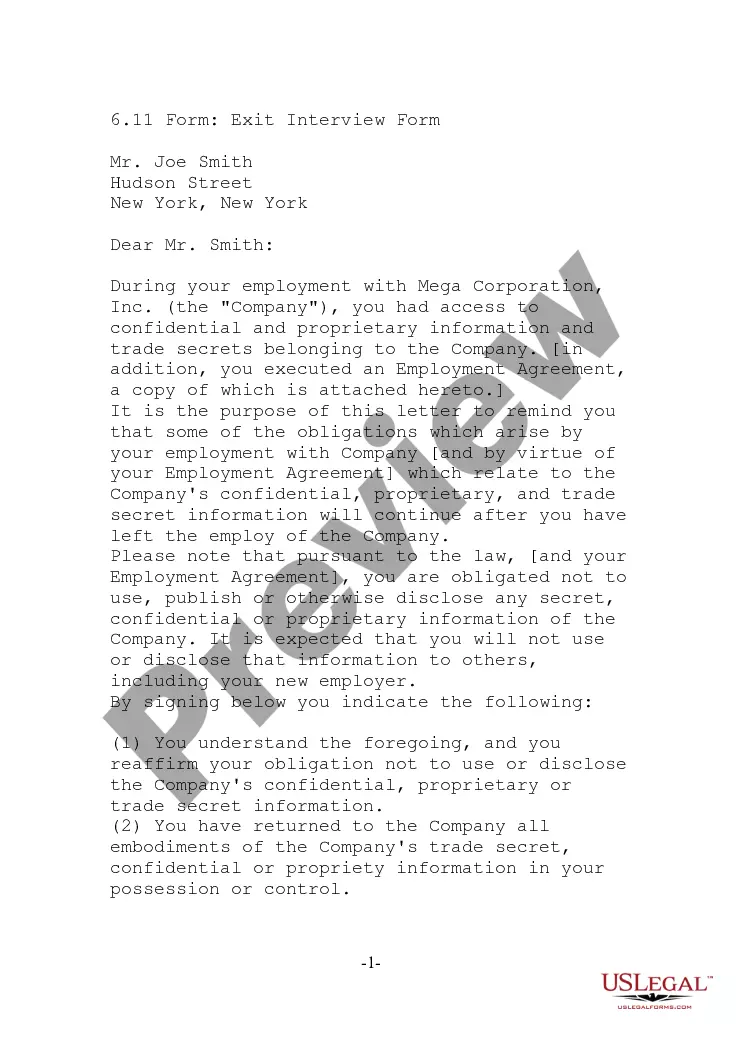
Exit Interview Confidentiality Statement With Therapist
Description
Get your form ready online
Our built-in tools help you complete, sign, share, and store your documents in one place.
Make edits, fill in missing information, and update formatting in US Legal Forms—just like you would in MS Word.
Download a copy, print it, send it by email, or mail it via USPS—whatever works best for your next step.
Sign and collect signatures with our SignNow integration. Send to multiple recipients, set reminders, and more. Go Premium to unlock E-Sign.
If this form requires notarization, complete it online through a secure video call—no need to meet a notary in person or wait for an appointment.
We protect your documents and personal data by following strict security and privacy standards.

Make edits, fill in missing information, and update formatting in US Legal Forms—just like you would in MS Word.

Download a copy, print it, send it by email, or mail it via USPS—whatever works best for your next step.

Sign and collect signatures with our SignNow integration. Send to multiple recipients, set reminders, and more. Go Premium to unlock E-Sign.

If this form requires notarization, complete it online through a secure video call—no need to meet a notary in person or wait for an appointment.

We protect your documents and personal data by following strict security and privacy standards.
Looking for another form?






How to fill out Employee Exit Interview Confidentiality Agreement Notification And Acknowledgment?
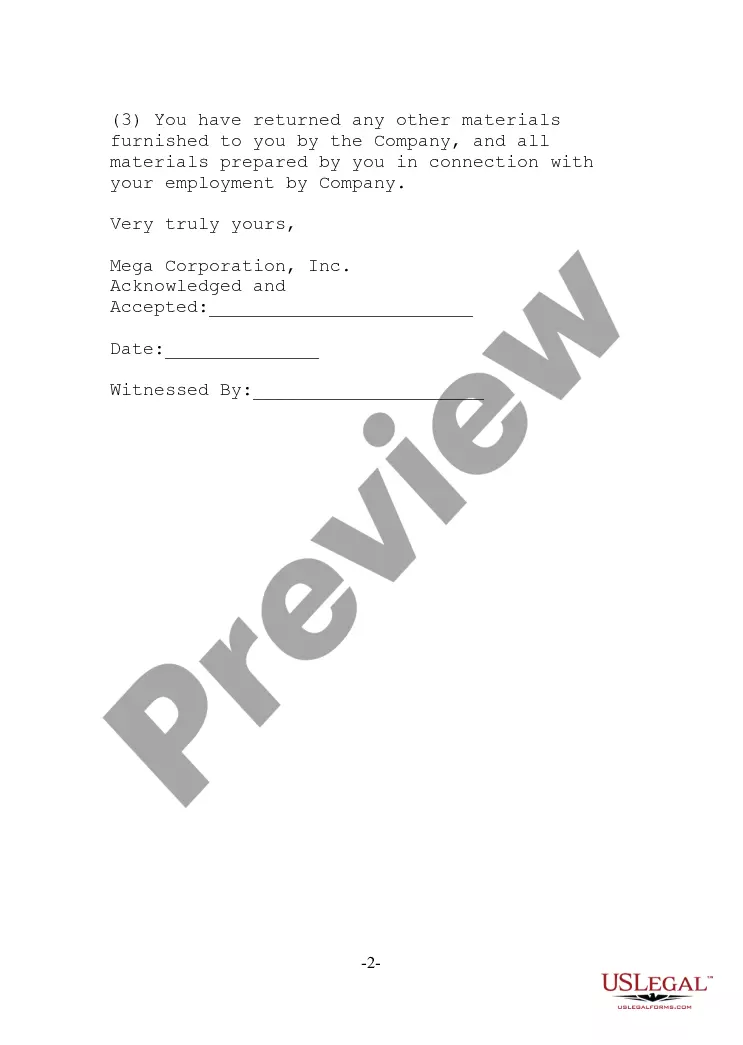
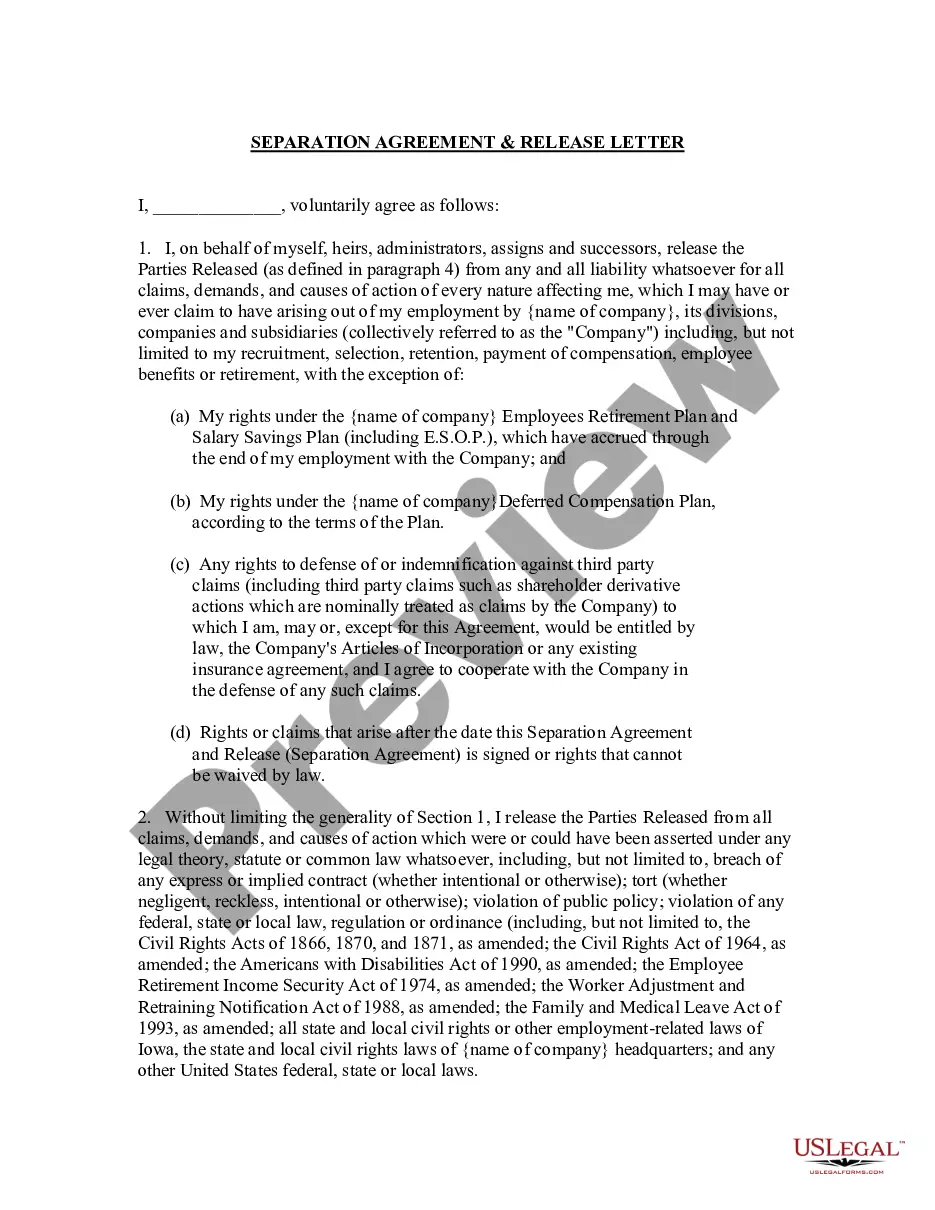
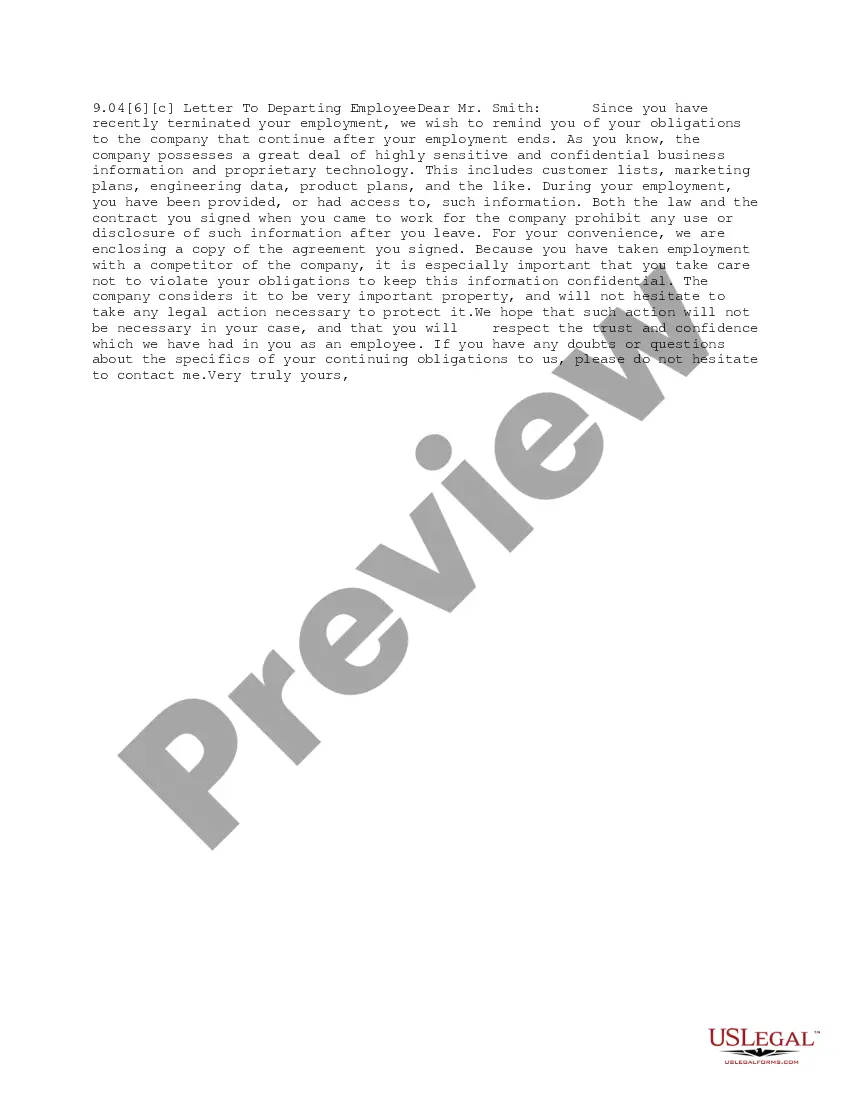
The Exit Interview Confidentiality Agreement With Therapist presented on this page is a reusable formal document crafted by professional attorneys in compliance with federal and local laws and regulations.
For over 25 years, US Legal Forms has supplied individuals, organizations, and lawyers with more than 85,000 validated, state-specific forms for any business and personal circumstance. It’s the quickest, simplest, and most reliable method to acquire the paperwork you require, as the service ensures bank-level data security and anti-malware safeguards.
Select the format you desire for your Exit Interview Confidentiality Agreement With Therapist (PDF, Word, RTF) and save the document on your device. Complete the template manually by printing it out or use an online multi-functional PDF editor to swiftly and accurately fill out and sign your form with an eSignature. Reaccess your documents anytime needed; revisit the My documents tab in your profile to redownload any previously acquired forms. Register for US Legal Forms to have confirmed legal templates for all of life’s scenarios readily available.
- Search for the document you require and review it.
- Browse through the template you sought and preview it or check the form description to confirm it meets your requirements. If it doesn’t, utilize the search feature to find the correct one. Click Buy Now when you have found the template you need.
- Choose and Log In.
- Select the pricing plan that fits you and establish an account. Use PayPal or a credit card for a fast payment. If you already possess an account, Log In and verify your subscription to proceed.
- Obtain the editable template.
Form popularity
FAQ
What not to say in an exit interview - 5 phrases to avoid ?My manager was a nightmare to work for.? ... ?The pay is terrible.? / ?I'm not being paid enough.? ... ?Let me tell you what's wrong with this company?? ... ?Everyone in my department wants to leave.? ... ?It was impossible to do my job with such poor resources.?
The sections of the form can include the following: Reasons for leaving. Job descriptions and how employees feel about them now versus when they started. Perspectives of the company culture. Views of the work environment. Feedback about the available technology tools and resources offered.
During the exit interview, you should protect the privacy of the employee and any other individuals or groups that may be mentioned. You should avoid asking or disclosing any personal or sensitive information that is not relevant to the purpose of the interview, such as health, financial, or family matters.
Stick to the facts: When explaining why you're leaving due to a toxic work environment, it's important to stick to the facts and avoid being overly emotional or negative. Focus on specific behaviours or situations that you experienced, and be prepared to provide examples if asked.
Ideally the employee would complete this in advance of the meeting, and this forms the basis of the discussion which can be explored further during the meeting.