Credit Shelter Trust Example
Description

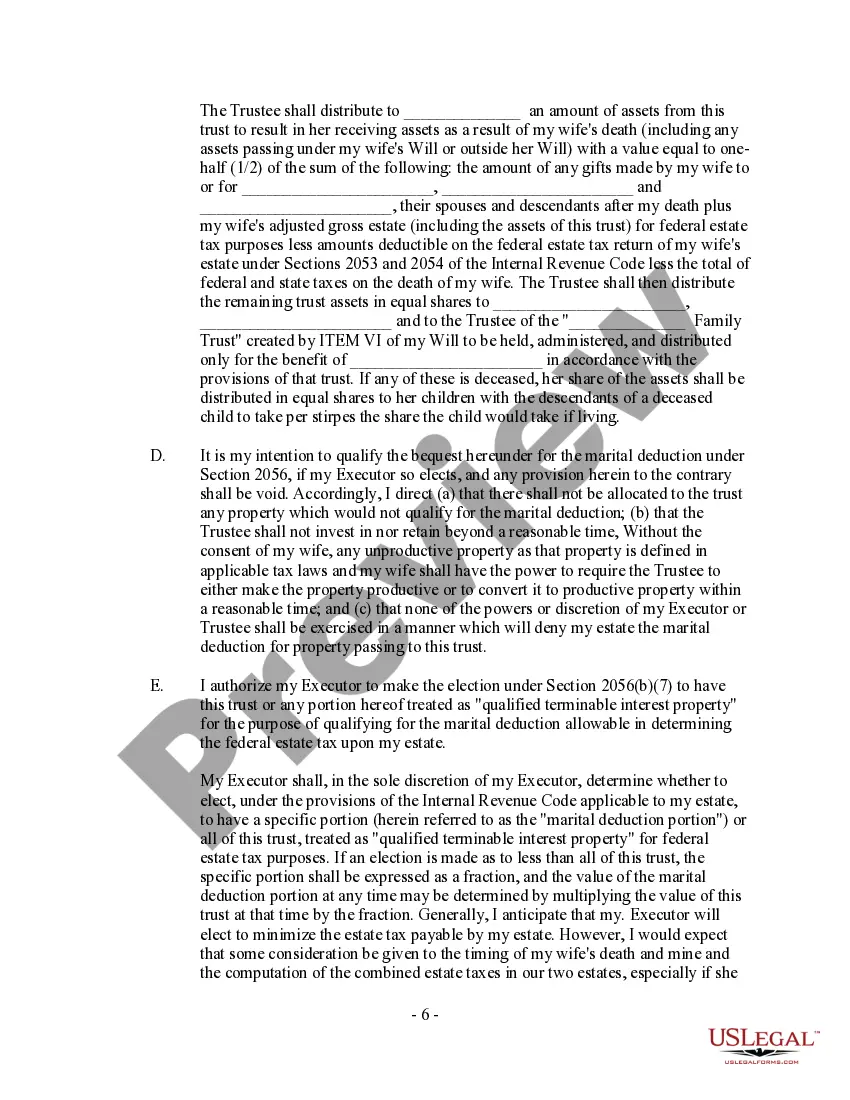
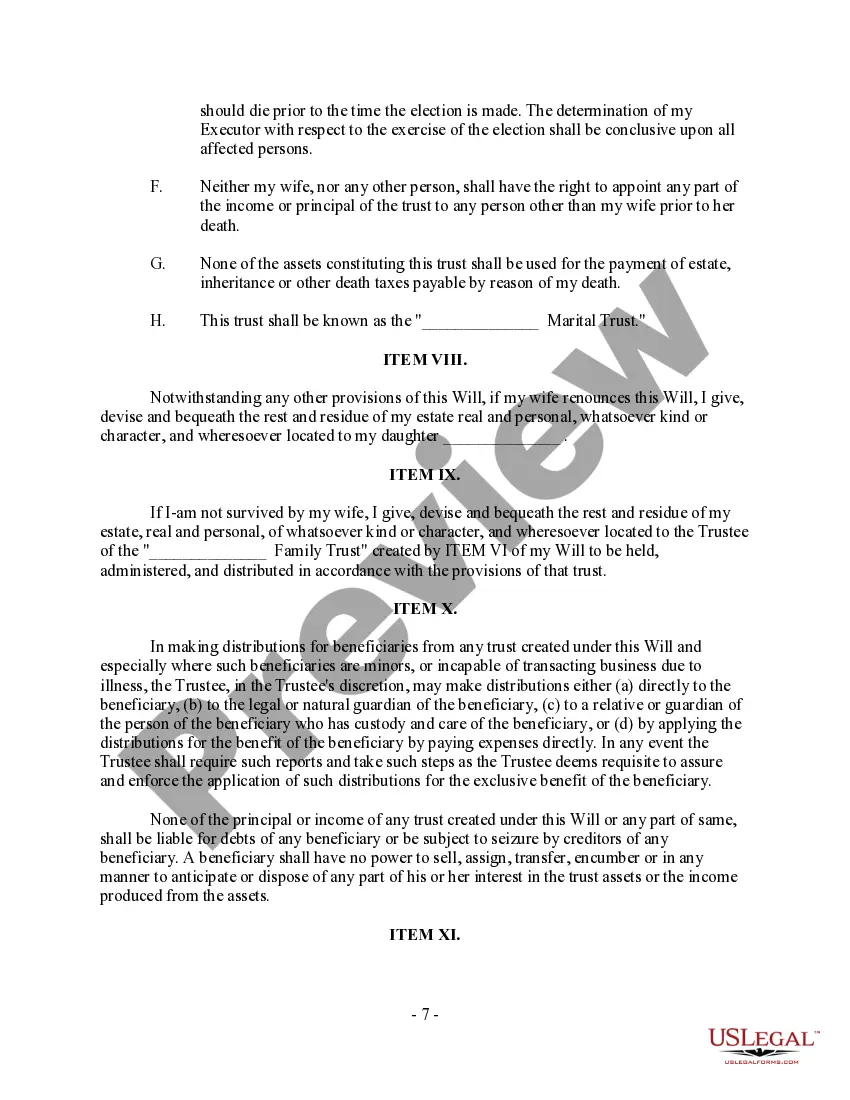
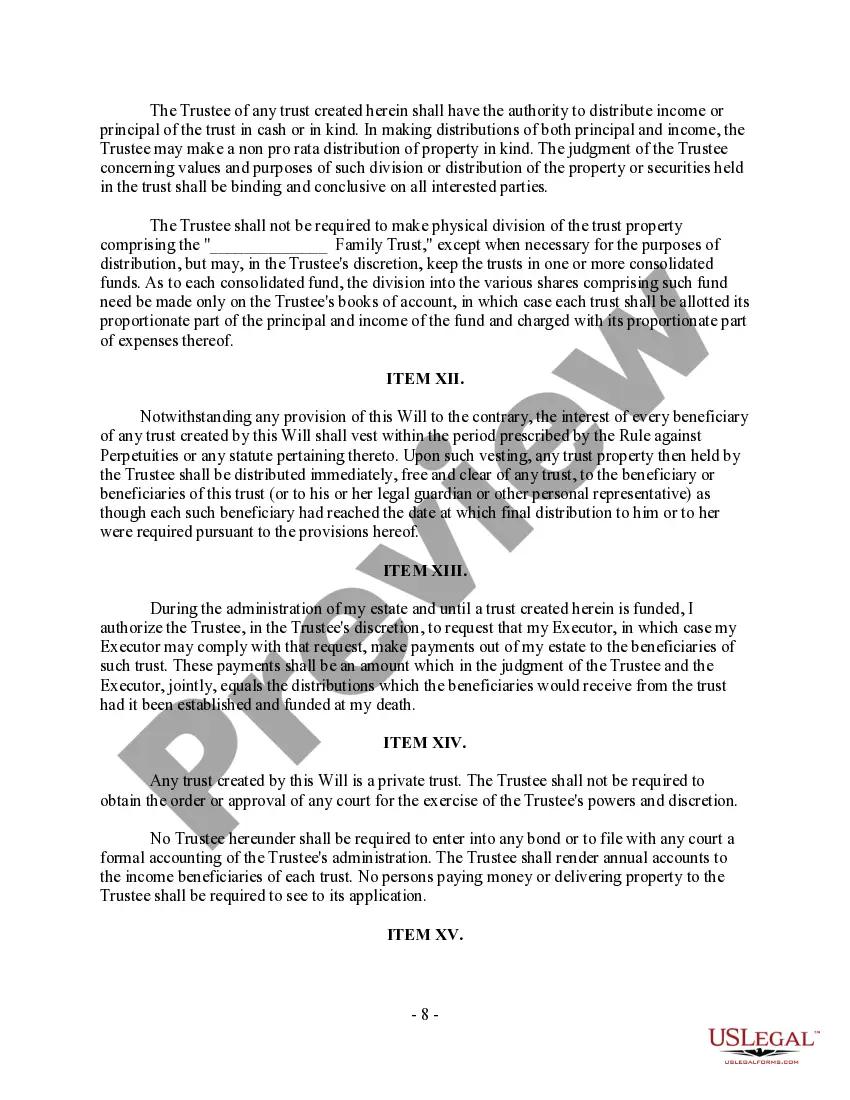
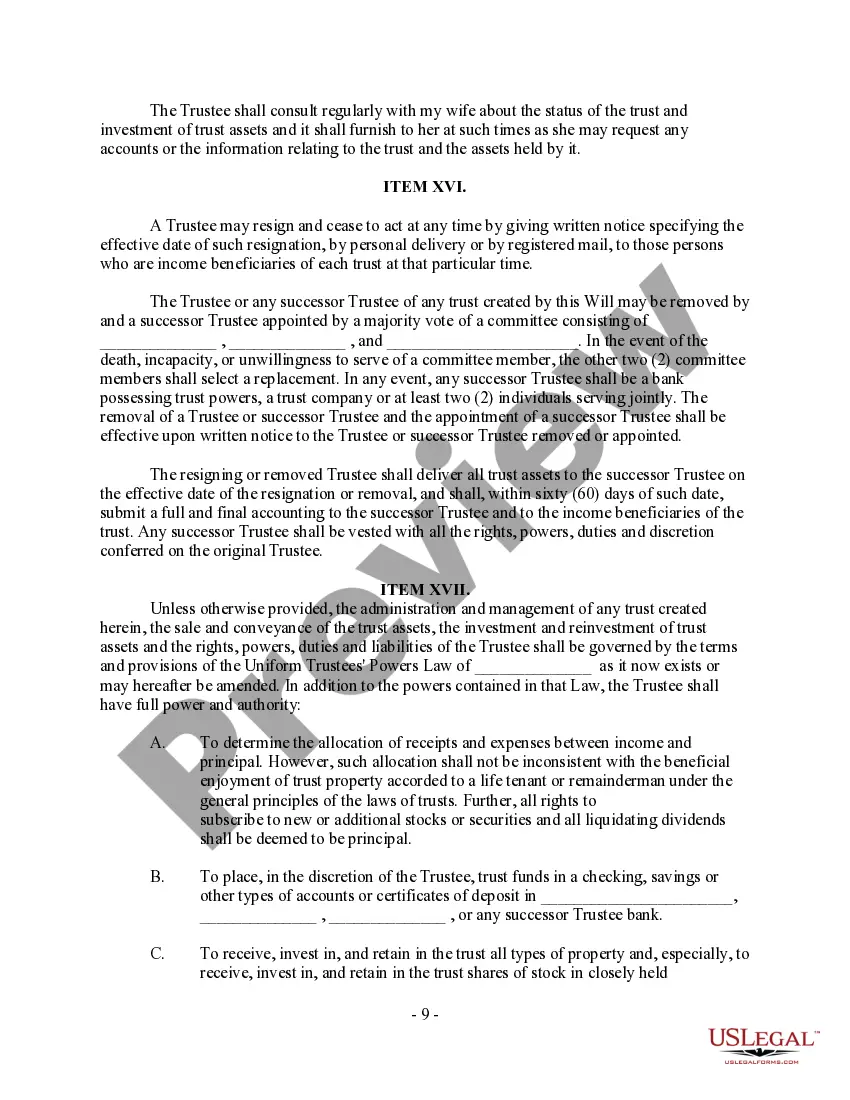



Get your form ready online
Our built-in tools help you complete, sign, share, and store your documents in one place.
Make edits, fill in missing information, and update formatting in US Legal Forms—just like you would in MS Word.
Download a copy, print it, send it by email, or mail it via USPS—whatever works best for your next step.
Sign and collect signatures with our SignNow integration. Send to multiple recipients, set reminders, and more. Go Premium to unlock E-Sign.
If this form requires notarization, complete it online through a secure video call—no need to meet a notary in person or wait for an appointment.
We protect your documents and personal data by following strict security and privacy standards.

Make edits, fill in missing information, and update formatting in US Legal Forms—just like you would in MS Word.

Download a copy, print it, send it by email, or mail it via USPS—whatever works best for your next step.

Sign and collect signatures with our SignNow integration. Send to multiple recipients, set reminders, and more. Go Premium to unlock E-Sign.

If this form requires notarization, complete it online through a secure video call—no need to meet a notary in person or wait for an appointment.

We protect your documents and personal data by following strict security and privacy standards.
Looking for another form?




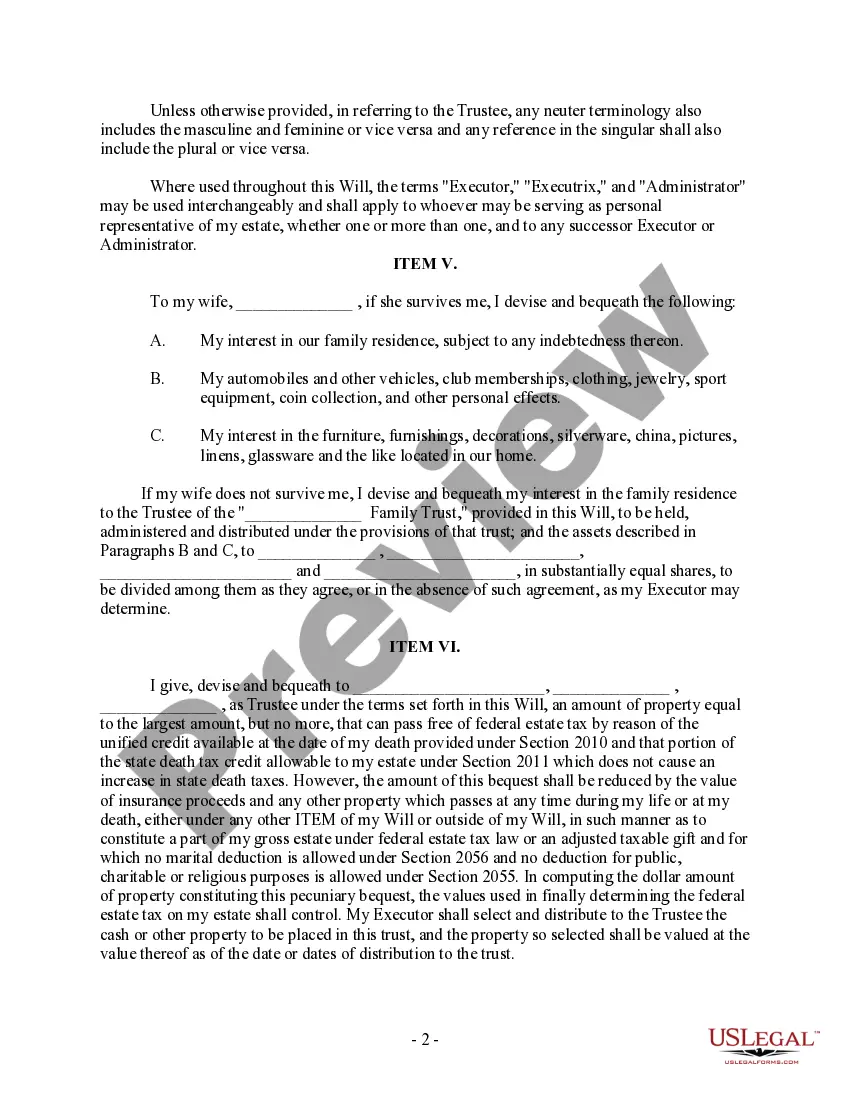
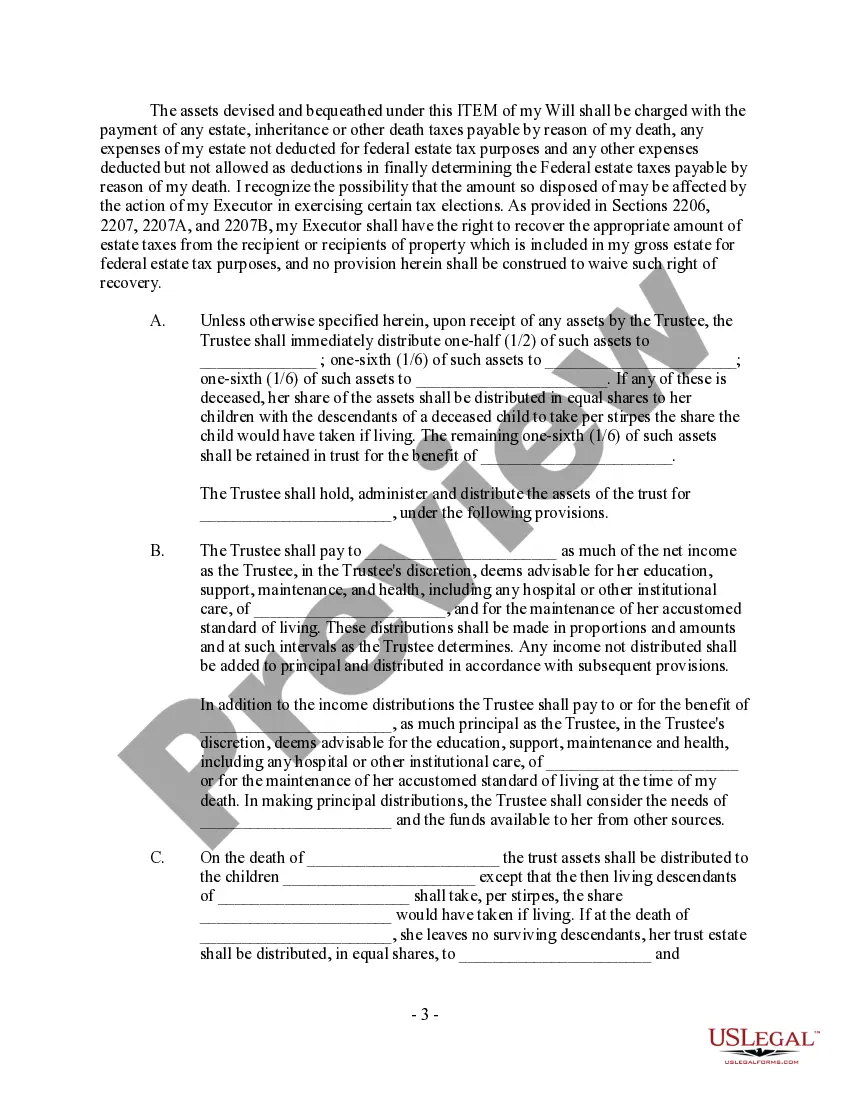
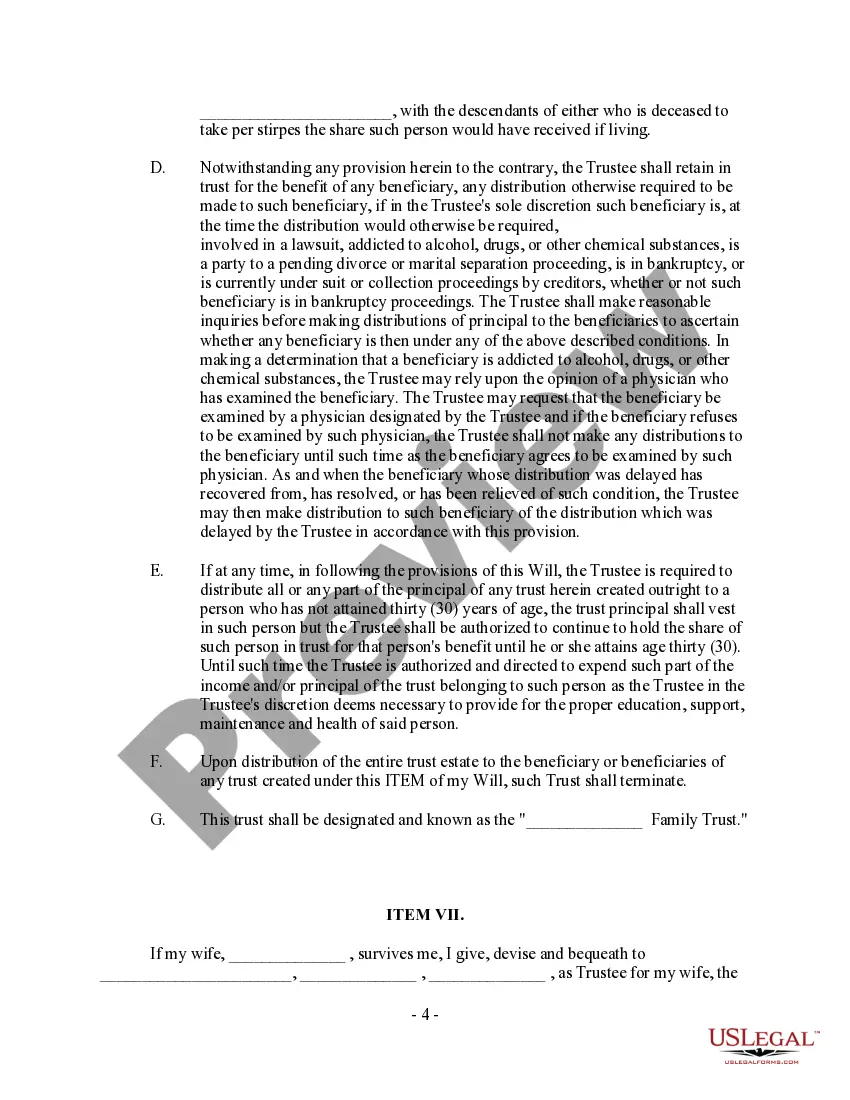
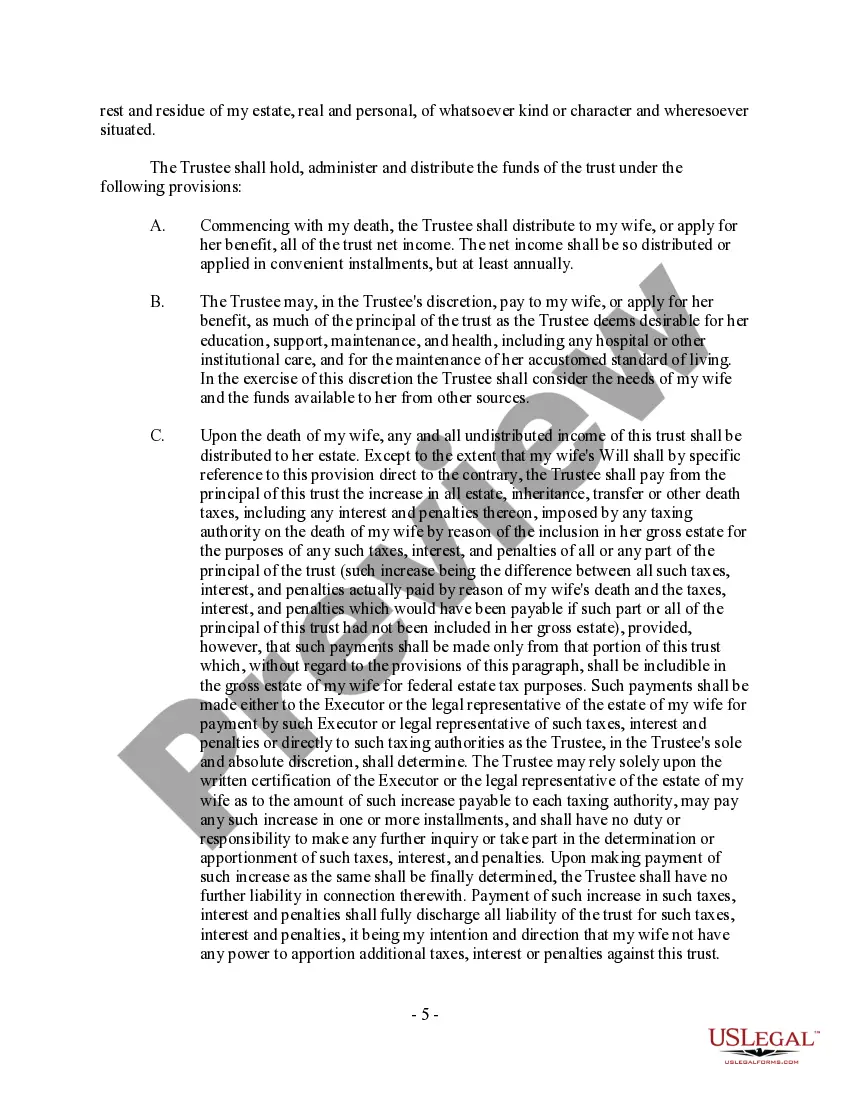
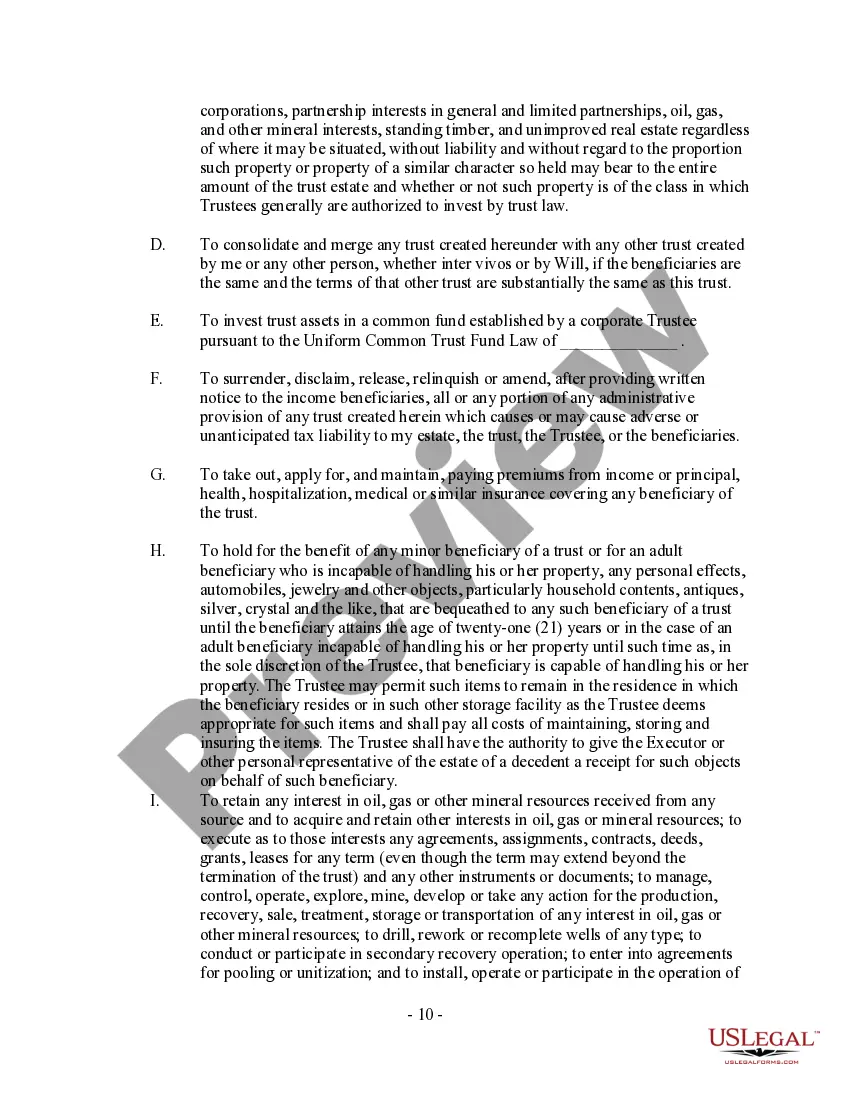
How to fill out Complex Will - Credit Shelter Marital Trust For Spouse?
- Begin by accessing your US Legal Forms account. If you're a returning user, simply log in and verify your subscription status.
- In case you're new to US Legal Forms, explore the extensive library of legal documents. Look for the credit shelter trust example and review its description to ensure it meets your needs.
- If the current document isn't suitable, use the Search tab to look for alternative templates that fit your requirements more closely.
- Once you find the right document, click on the 'Buy Now' button. You'll need to choose a subscription plan, which requires account registration.
- Proceed with payment by entering your credit card information or selecting PayPal for secure transactions.
- After your purchase, download the form to your device, ensuring you can access it anytime from the My Forms section of your profile.
In conclusion, US Legal Forms provides a robust collection of legal templates, empowering individuals and attorneys alike to efficiently complete necessary documents with confidence.
Start your journey towards establishing a credit shelter trust today by visiting US Legal Forms and exploring our extensive resources!
Form popularity
FAQ
One of the disadvantages of a credit shelter trust is the complexity involved in setting it up and maintaining it. Additionally, assets in the trust may not receive a step-up in basis, potentially increasing capital gains taxes for heirs when they eventually sell those assets. Furthermore, ongoing administration costs could arise, which is something to consider when planning your estate.
The maximum amount for a credit shelter trust typically aligns with the federal estate tax exemption limit, which can change from year to year. For 2023, the exemption is set at $12.92 million per individual. It’s essential to stay updated on these limits, as they directly affect how much can be sheltered from estate taxes using a credit shelter trust.
An example of a credit shelter trust could involve a married couple where one partner passes away, leaving behind an estate valued at $5 million. The couple could establish a trust to hold $2 million, allowing the remaining assets to pass to the surviving spouse without incurring estate taxes. This ensures that the trust's assets can be managed and distributed to heirs tax-efficiently.
To create a credit shelter trust, you should first consult with an estate planning attorney experienced in this area. They will help you draft the necessary documentation, outlining how the trust should operate and how assets will be allocated. Afterward, you need to fund the trust with the appropriate assets to ensure it is effective in minimizing estate taxes when dealing with your estate.
A credit shelter trust example includes a situation where a couple establishes a trust that allows them to designate a specific portion of their combined assets to be sheltered from estate taxes upon the death of the first spouse. For instance, if one spouse passes away with an estate valued above the exempt amount, the assets placed in the credit shelter trust will bypass the surviving spouse's estate, thus reducing tax liability. This structure effectively utilizes the estate tax exemption, ensuring greater wealth transfer to heirs.
A credit shelter trust is also referred to as an AB trust or a bypass trust. This type of trust allows individuals to take advantage of the estate tax exemption, typically benefiting married couples. With a credit shelter trust, one spouse's assets can be held in trust, providing financial support for the surviving spouse while avoiding additional estate taxes.
A credit shelter trust works by allowing you to transfer wealth to beneficiaries without incurring estate tax on that amount. When you pass away, your assets in the trust are not included in your taxable estate, thereby reducing potential tax burdens. The surviving spouse can access the income generated by the trust during their lifetime, ensuring their financial needs are met. For practical examples, exploring a credit shelter trust example through platforms like USLegalForms can help clarify its functionality.
Distributions from a credit shelter trust can be taxable to the recipient, depending on the circumstances. Generally, the income generated within the trust may be subject to taxes when distributed to beneficiaries. However, the principal amount, typically funded by the trust, is not taxable as it consists of what you originally allocated. Consulting a tax professional can provide tailored guidance based on your specific situation.
A credit shelter trust, also known as a bypass trust, is designed to minimize estate taxes while providing for your beneficiaries. Essentially, it allows a portion of your estate to pass to your heirs without incurring taxes at your death. This trust holds your assets and allows your surviving spouse to benefit from the income while preserving the principal for other beneficiaries. A credit shelter trust example would illustrate how assets are allocated to optimize tax benefits.
You can name a credit shelter trust with clarity and purpose. Typically, you may choose a name that reflects the intent, like 'Family Credit Shelter Trust' or 'Trust for Beneficiary Name'. This approach ensures that the title conveys its function and facilitates easy identification for all parties involved. Utilizing a unique name helps in documenting the trust and distinguishing it from others.