Restricted Shares
Description

Get your form ready online
Our built-in tools help you complete, sign, share, and store your documents in one place.
Make edits, fill in missing information, and update formatting in US Legal Forms—just like you would in MS Word.
Download a copy, print it, send it by email, or mail it via USPS—whatever works best for your next step.
Sign and collect signatures with our SignNow integration. Send to multiple recipients, set reminders, and more. Go Premium to unlock E-Sign.
If this form requires notarization, complete it online through a secure video call—no need to meet a notary in person or wait for an appointment.
We protect your documents and personal data by following strict security and privacy standards.

Make edits, fill in missing information, and update formatting in US Legal Forms—just like you would in MS Word.

Download a copy, print it, send it by email, or mail it via USPS—whatever works best for your next step.

Sign and collect signatures with our SignNow integration. Send to multiple recipients, set reminders, and more. Go Premium to unlock E-Sign.

If this form requires notarization, complete it online through a secure video call—no need to meet a notary in person or wait for an appointment.

We protect your documents and personal data by following strict security and privacy standards.
Looking for another form?




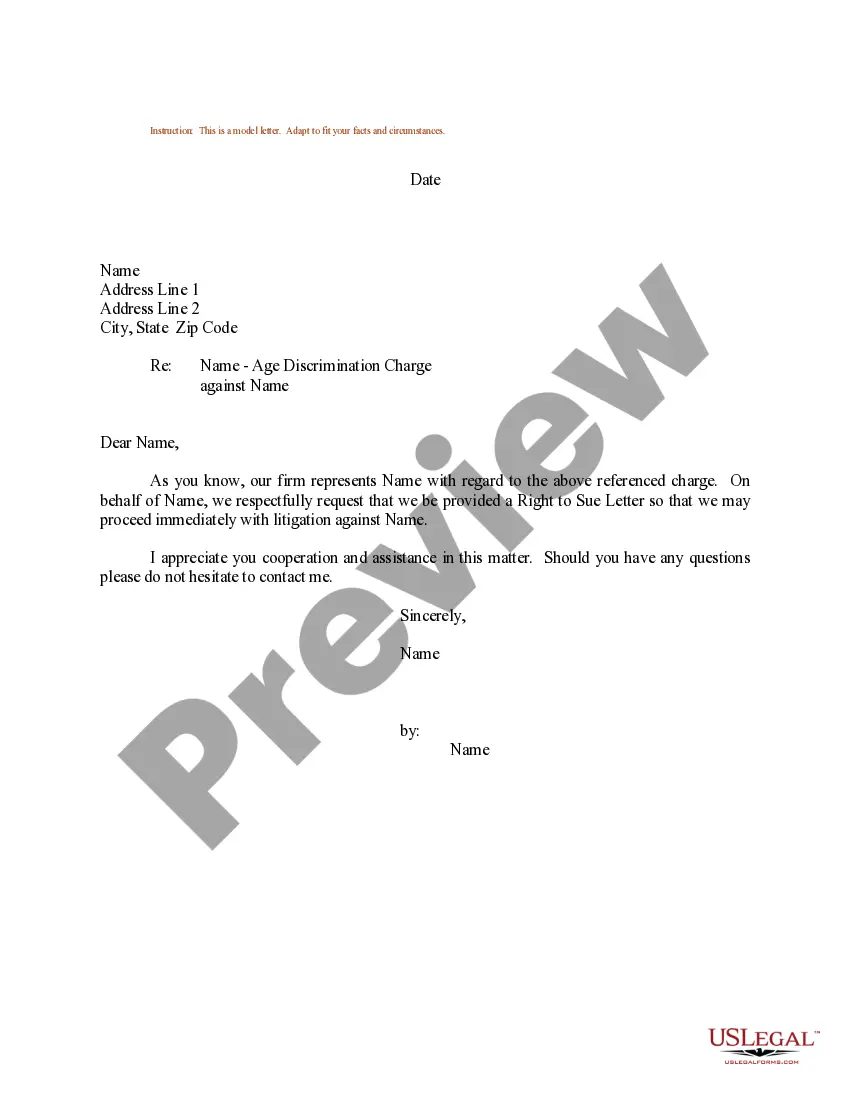

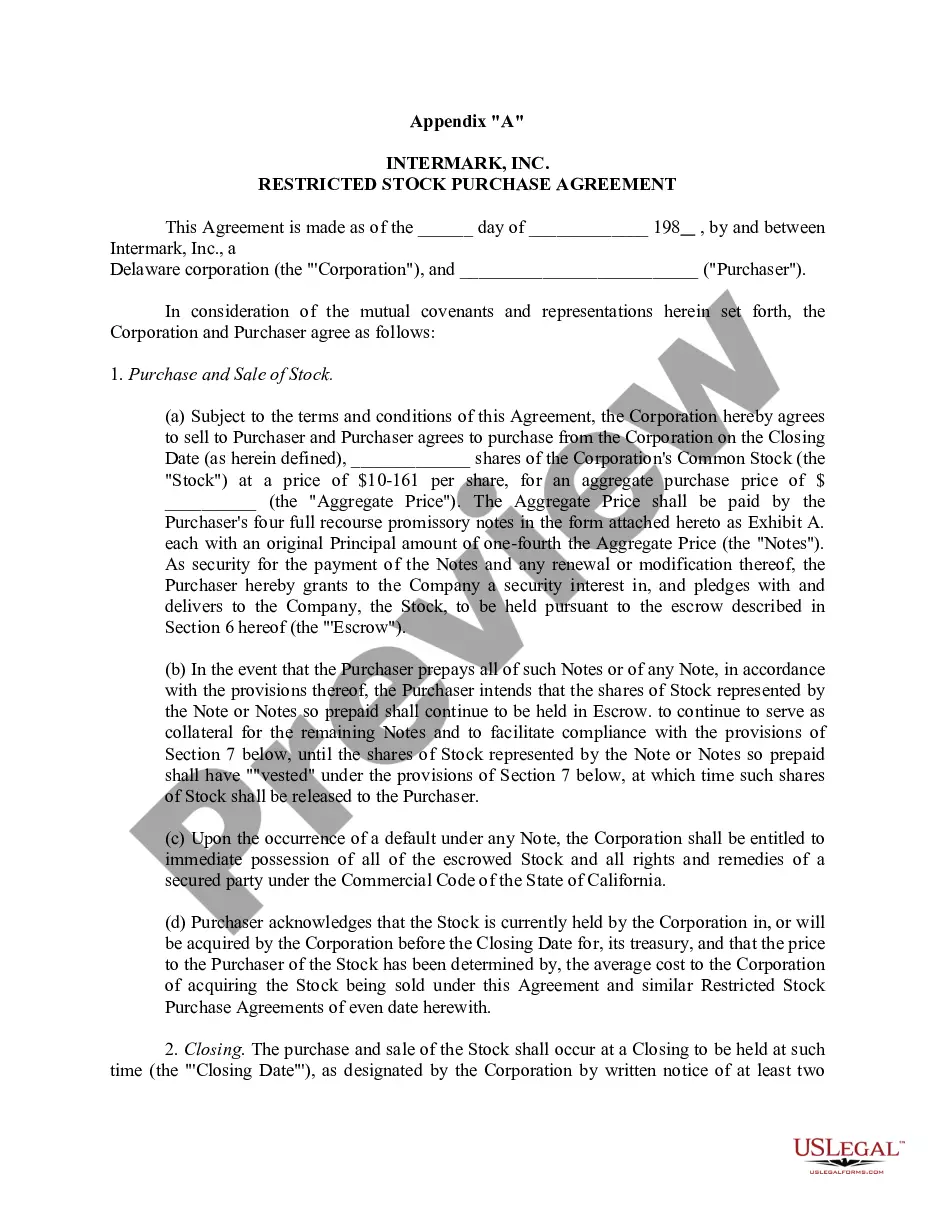
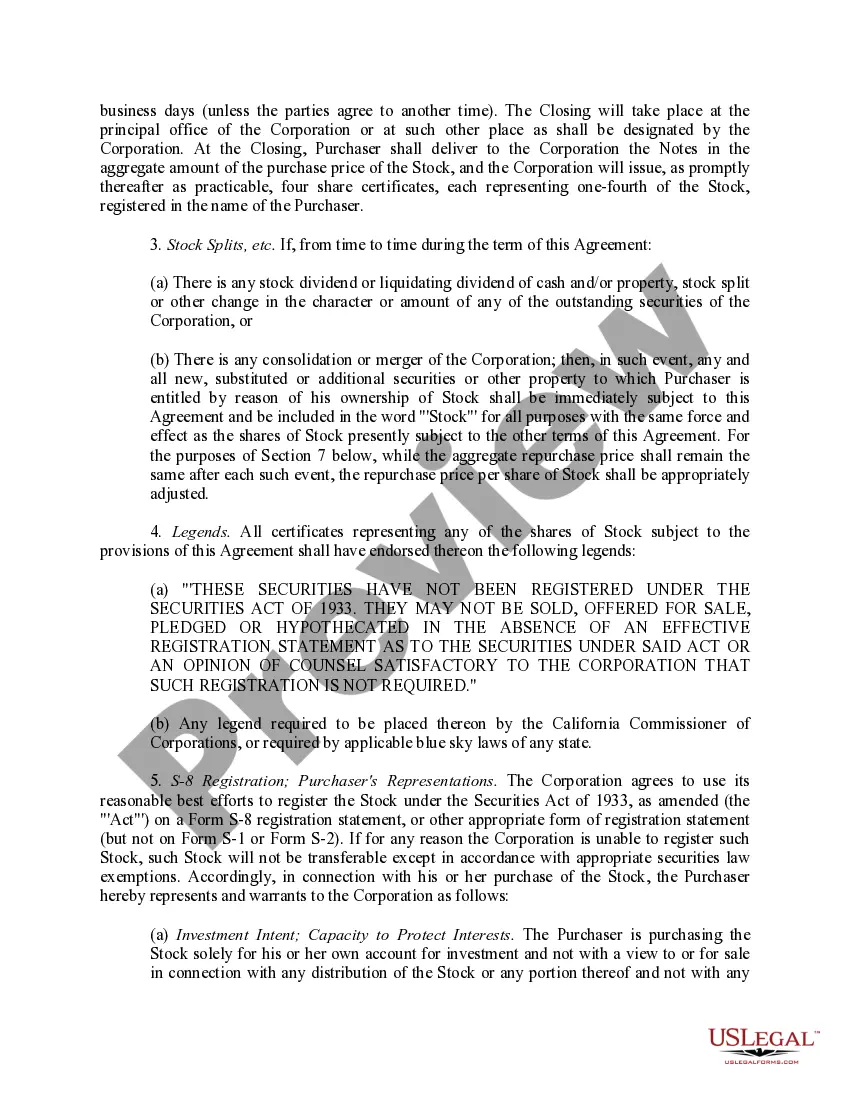
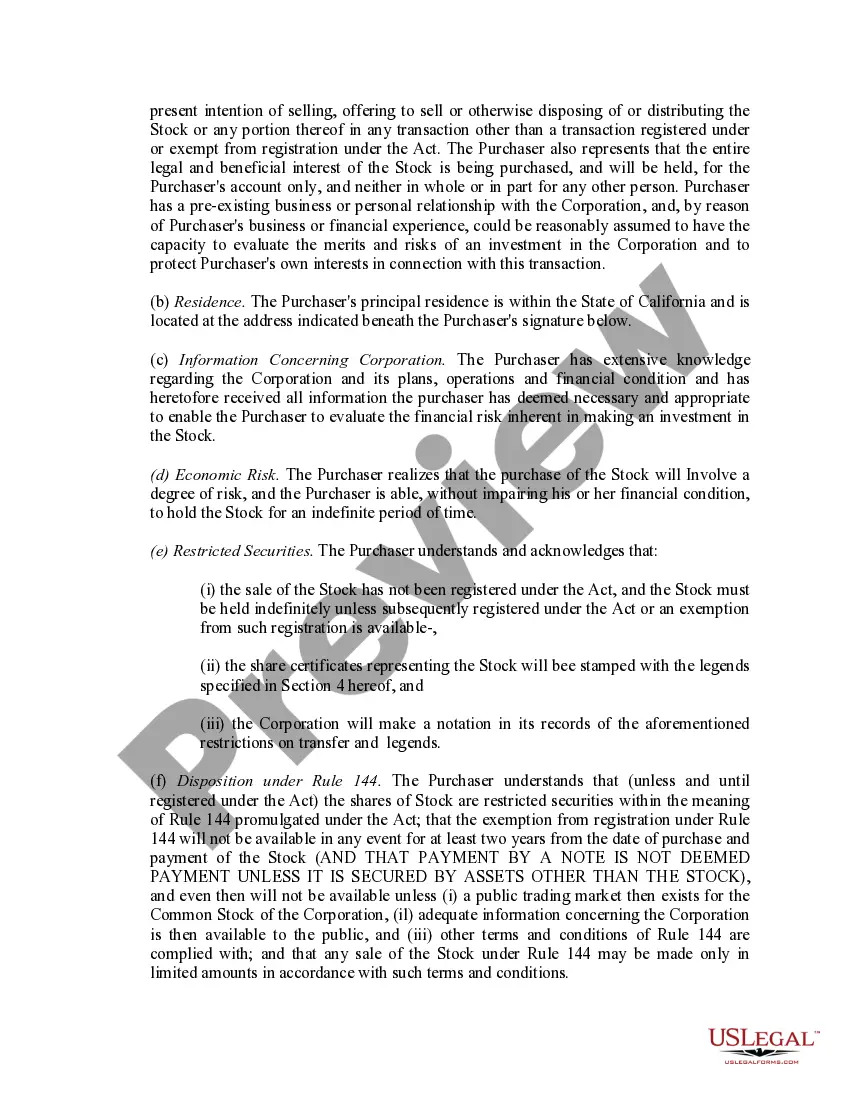
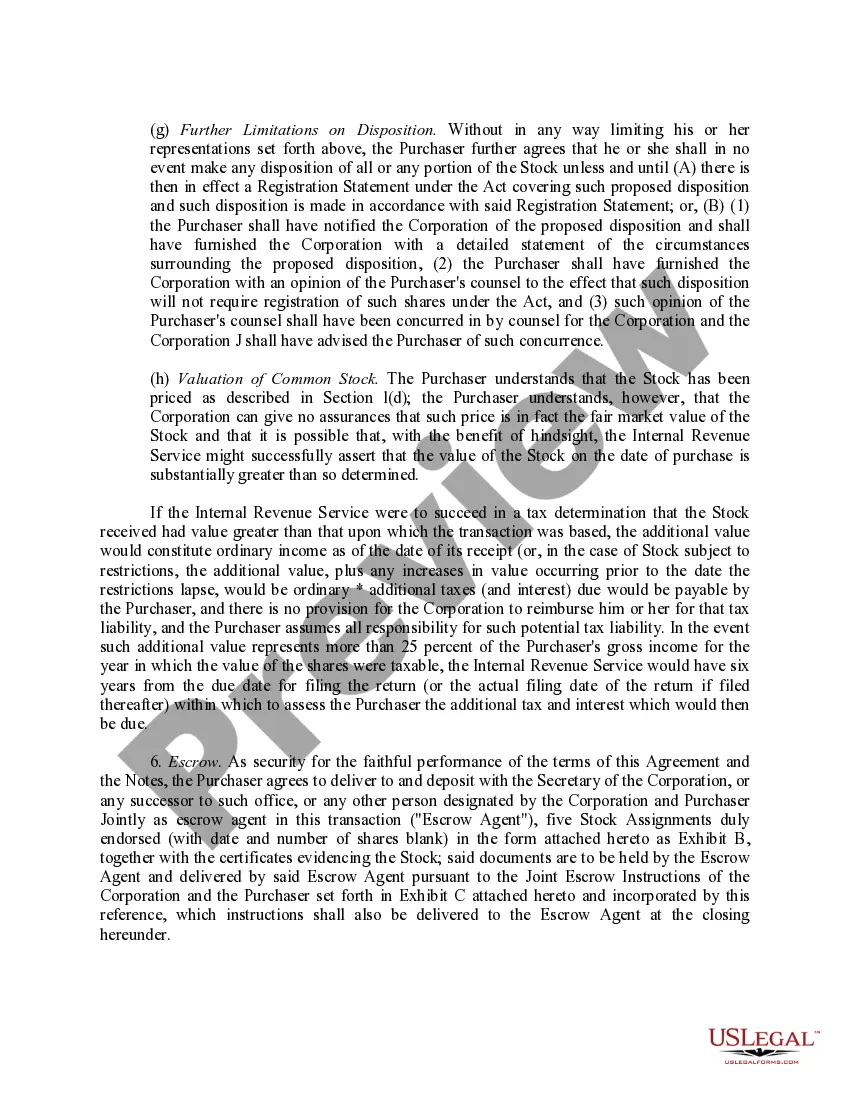
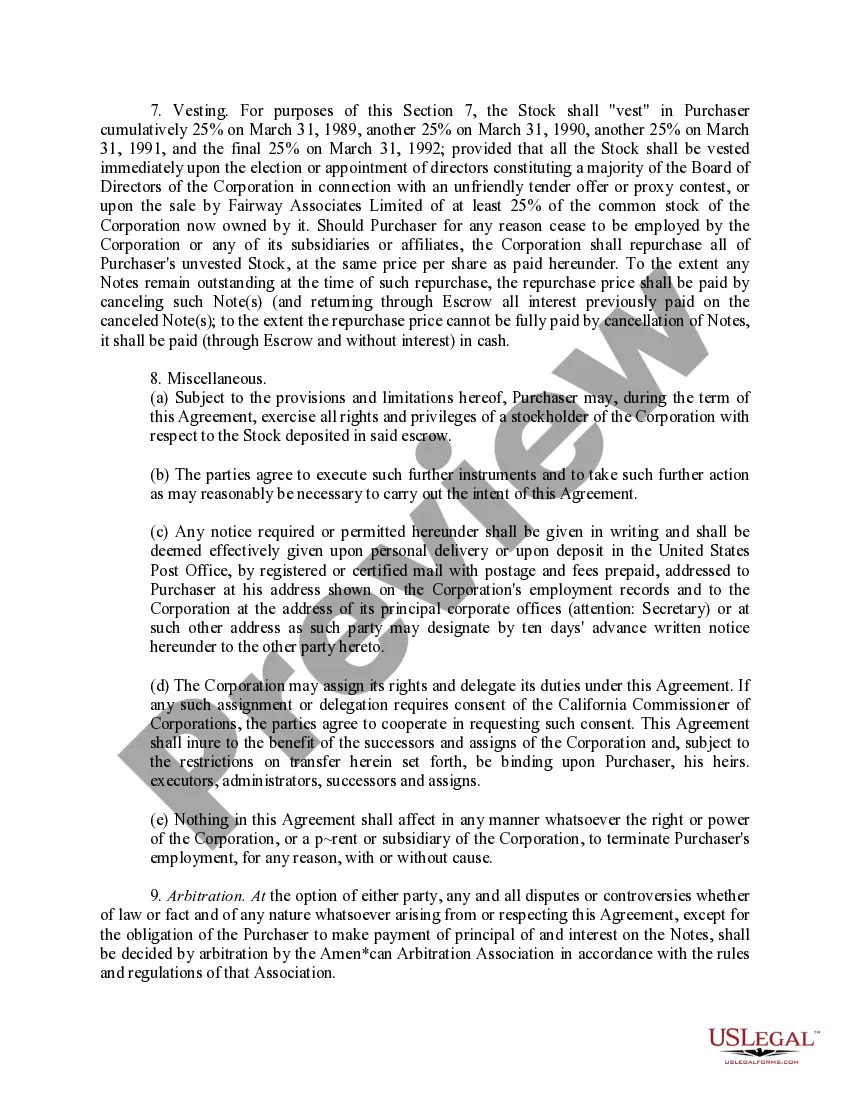
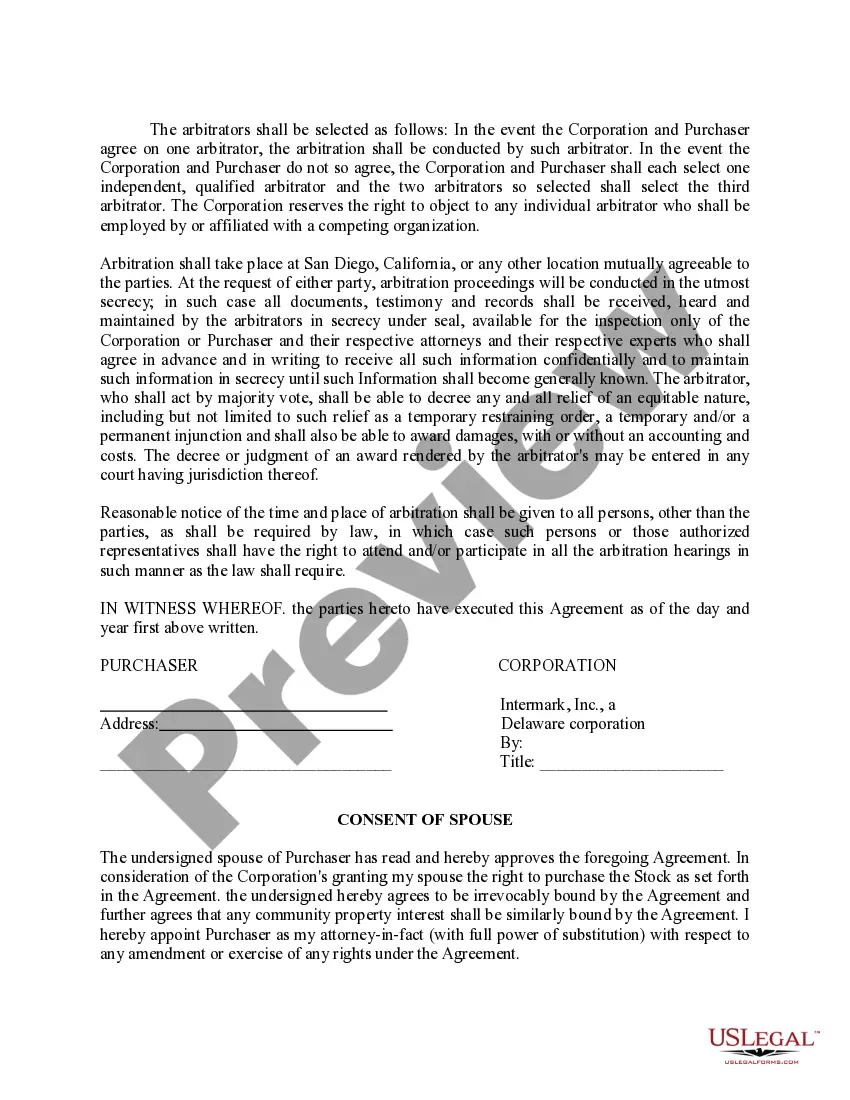
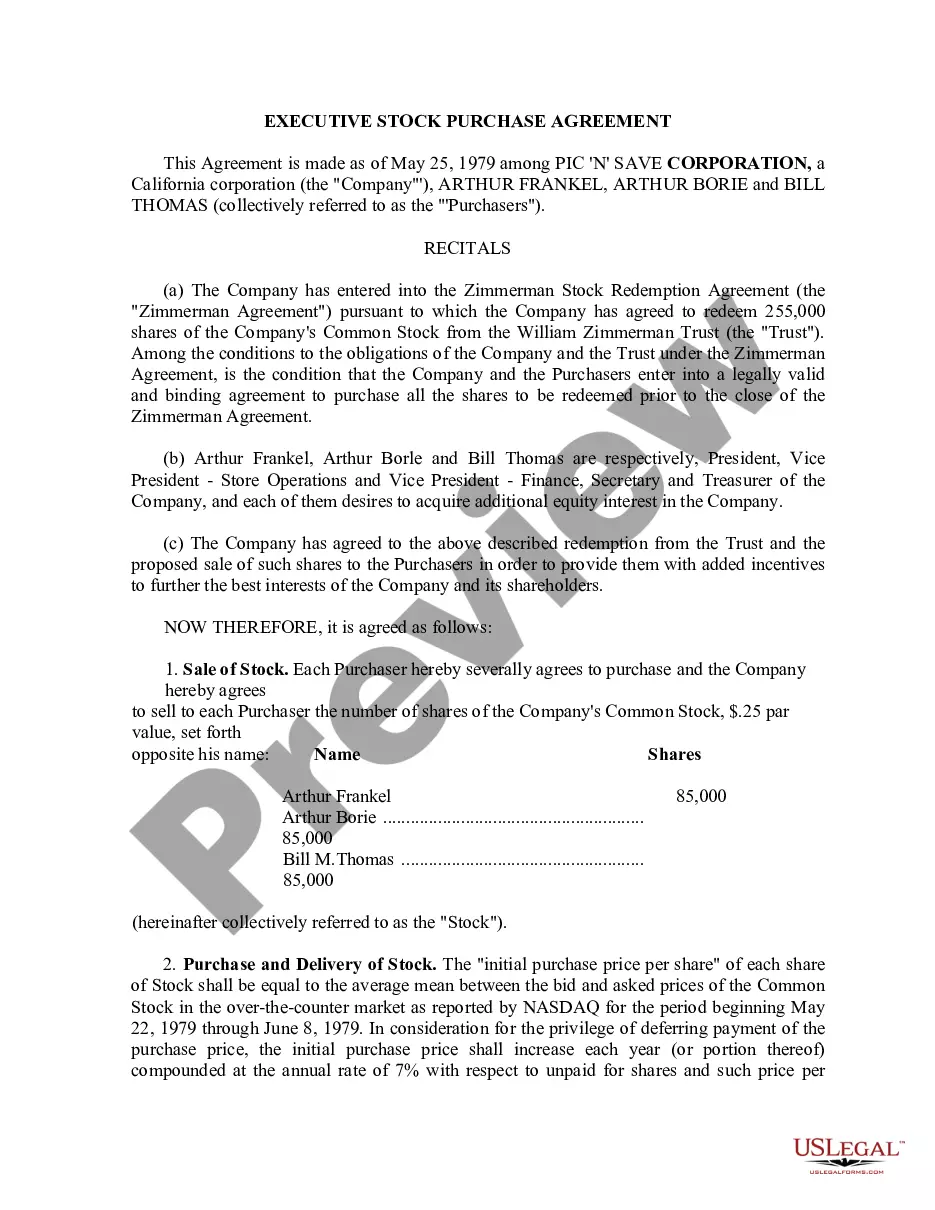
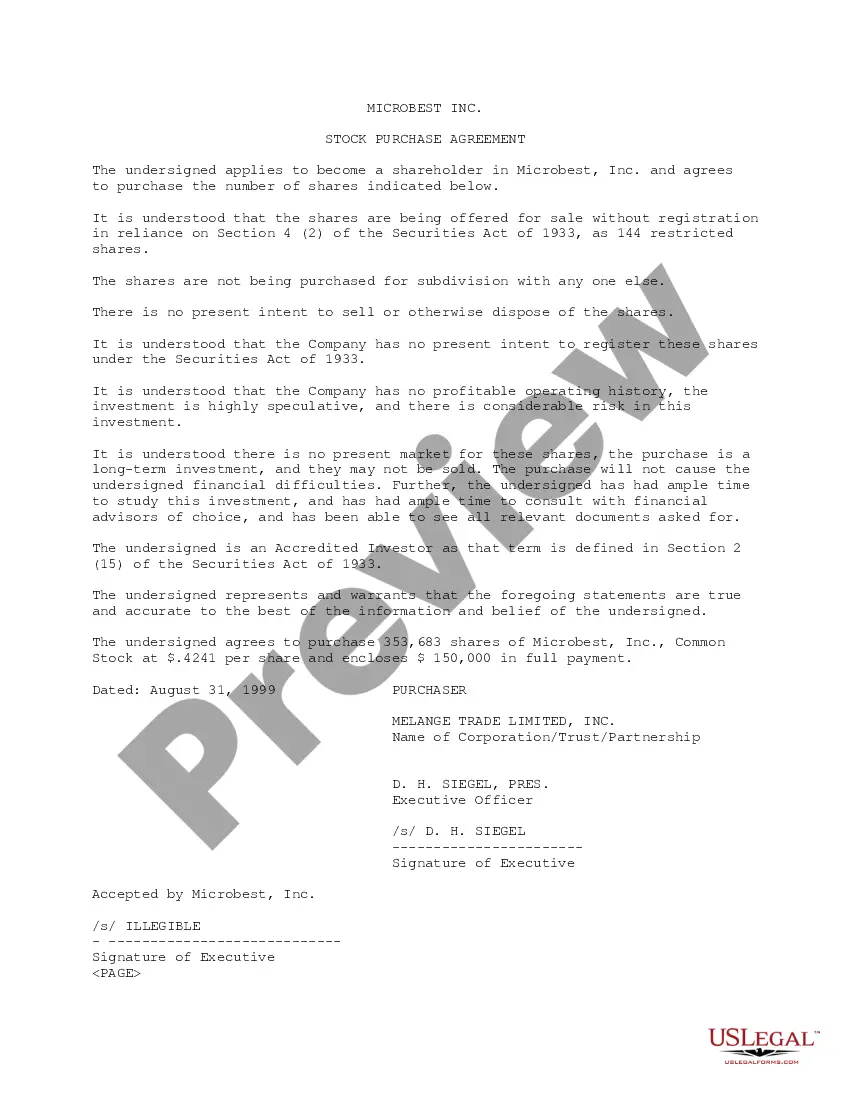
How to fill out Sample Restricted Stock Purchase Agreement Between Intermark, Inc. And Purchasers?
- Log in to your existing US Legal Forms account. Ensure your subscription is active; if it’s expired, renew according to your payment plan.
- Browse through the available forms related to restricted shares. Use the Preview mode to validate that the chosen form complies with your jurisdiction’s requirements.
- If you need a different template, utilize the Search feature to find the appropriate form that fits your criteria.
- Purchase the necessary document by clicking on the Buy Now button and selecting your preferred subscription plan. Registration for an account may be needed to access the forms library.
- Complete your purchase by entering your payment information, whether through a credit card or PayPal account.
- Once your transaction is successful, download the template directly to your device. You can also access it later in the My Forms section of your profile.
US Legal Forms stands out with its vast collection of legal documents, boasting over 85,000 fillable forms. This extensive library, combined with the availability of legal expertise, ensures that you have reliable support for drafting your restricted shares documentation.
Ready to streamline your legal documentation process? Visit US Legal Forms today to get started!
Form popularity
FAQ
Deciding whether to keep or sell your RSUs depends on your financial situation and market conditions. Keeping RSUs can lead to potential appreciation in value, but selling may provide immediate liquidity. Weighing the current tax implications and the future predicted growth of your company is critical. Consulting with experts through platforms like USLegalForms can provide guidance tailored to your situation.
The term 'restricted' in shares refers to ownership limitations placed on certain stocks. These limitations can prevent the sale or transfer of shares until specific conditions are fulfilled, often designed to protect the company and its employees. Understanding these restrictions is vital to effectively manage your investment strategies and expectations regarding restricted shares.
Selling restricted shares can be complicated due to the restrictions placed on them. Generally, you can only sell them under certain conditions, like after they have vested or if the sale follows legal guidelines. Always check for compliance with SEC regulations to avoid penalties. Utilizing resources from platforms like USLegalForms can help clarify the rules around selling restricted shares.
While both RSUs and restricted shares come with restrictions, the primary difference lies in ownership. Restricted shares are actual shares issued upfront, subject to vesting, while RSUs represent a promise to deliver shares in the future based on vesting criteria. Understanding these distinctions is critical for employees assessing their compensation packages and their potential future value.
Selling restricted securities is possible, but it comes with legal constraints and requires adherence to specific regulations. Generally, securities laws state that you cannot sell restricted shares to the public unless they are registered with the SEC or the sale falls under an exemption. It is important to consult legal resources or platforms, like USLegalForms, to navigate this process effectively.
Restricted shares are stocks that are not fully transferable until certain conditions are met, which often include a vesting period. Typically, companies grant restricted shares to employees as part of their compensation packages. The main purpose is to incentivize employees to stay with the company longer and align their interests with shareholders. This unique structure makes restricted shares an attractive option for both companies and employees.
If you sell your Restricted Stock Units (RSUs) immediately after they vest, you may face short-term capital gains tax. This means the gains will be taxed as ordinary income, which might be at a higher rate. Consider consulting with a tax professional for strategies regarding RSUs and understanding how the sales process affects your tax situation, especially when dealing with restricted shares.
When you sell restricted stock, you must comply with specific legal requirements tied to the restrictions. This typically includes holding the shares for a certain period before sale. Additionally, selling restricted shares may involve reporting the sale on your taxes to avoid penalties. It’s essential to understand these factors to ensure you make informed decisions.
To politely ask for a higher offer, express gratitude for the opportunity and share your excitement about the role. Clearly outline your skills and how they can benefit the company, while citing industry standards for compensation. This well-prepared approach can lead to a fruitful negotiation regarding your restricted shares.
Restricted shares are primarily obtained through employer grants as part of an employee’s compensation package. Typically, these shares come with specific vesting schedules, during which you may need to meet performance milestones or remain with the company. Engaging in open discussions about your compensation can help you secure more restricted shares.